建设银行

Search documents
手机银行TOP50再无民营 生态壁垒高筑草根绝迹
Jing Ji Guan Cha Wang· 2026-02-18 05:47
Core Insights - The monthly active users (MAU) of mobile banking apps in China have stabilized between 648 million and 739 million, indicating that user growth has reached a ceiling, marking the end of a decade-long traffic dividend period [2] - User behavior has shifted significantly, with average session duration decreasing from 4.9 minutes in 2023 to approximately 2.7 minutes by mid-2025, reflecting a preference for high-frequency, short-duration, and function-oriented usage [2] - Major state-owned banks have solidified their market dominance, with all six major state-owned banks ranking in the top ten for MAU, led by Agricultural Bank of China with 249 million MAU [2] Industry Dynamics - The core competitive advantage of state-owned banks lies in their "full-scenario integration" capabilities, providing financial services deeply embedded in public services such as government, social security, healthcare, and education [3] - Joint-stock banks are adopting specialized development strategies, with China Merchants Bank leading its peers with 71.85 million MAU, while Ping An Bank and Citic Bank are leveraging AI technology to enhance service processes and maintain user engagement [3] - Local banks are experiencing polarization, with some city commercial banks maintaining MAU above 3 million due to their deep understanding of local markets, while private banks like WeBank and MYbank have fallen out of the top 50 due to challenges in customer acquisition and retention [3] Future Trends - As the industry standard for single-session usage time becomes 3 minutes, banks must rethink their value creation strategies [4] - AI-driven service process optimization, real-time risk control systems, and multi-device collaboration within ecosystems are reshaping the competitive landscape [4] - Key factors for institutional success in the future will include precise user insights, prudent risk management, and robust ecosystem integration capabilities [4]








流量红利枯竭 存量博弈下银行APP被迫断臂求生
Jing Ji Guan Cha Wang· 2026-02-18 05:44
Core Insights - The Chinese mobile banking market is transitioning from "scale expansion" to "value cultivation," indicating a saturation of user growth and the end of the traffic dividend period [2] - Different types of banks are exhibiting varied development trends in this new landscape [2] State-Owned Commercial Banks - The six major state-owned banks dominate the mobile banking market, with Agricultural Bank of China leading with over 250 million monthly active users (MAUs) [2] - The top three banks, including Industrial and Commercial Bank of China and China Construction Bank, have MAUs of nearly 200 million and over 100 million, respectively [2] - All six major banks reported positive month-on-month growth in MAUs, with ICBC leading at a 6.1% growth rate [2] Joint-Stock Commercial Banks - Joint-stock banks are seeking to carve out a niche in the saturated market, with China Merchants Bank leading among them with over 70 million MAUs [3] - Some banks like Everbright Bank and CITIC Bank showed significant month-on-month growth rates of 11.0% and 9.2%, respectively [3] - The performance of joint-stock banks is mixed, with some experiencing negative growth [3] Urban Commercial Banks - Urban commercial banks are growing rapidly, with 17 banks making it to the top 50 list, led by Ningbo Bank with 3.644 million MAUs and a growth rate of 43.9% [3] - The growth is attributed to localized strategies that enhance customer engagement [3] Rural Commercial Banks and Credit Cooperatives - Rural commercial banks and credit cooperatives also performed well, with 17 banks in the top 50, led by Fujian Rural Credit with 781.6 thousand average MAUs [4] - 12 out of these 17 banks reported positive month-on-month growth [4] Private Banks - Private banks are facing significant challenges, with only WeBank making it to the top 50 list in the first half of 2025, experiencing a 27.3% decline in MAUs [4] - The competitive landscape has shifted, making it difficult for online-only private banks to maintain their initial advantages [4] Conclusion - State-owned banks leverage "ecosystem" advantages to solidify their market position, while joint-stock banks focus on "professional" opportunities [5] - Urban commercial banks establish a strong local presence, whereas private banks struggle to survive in the competitive environment [5] - The future of banking will require a focus on creating irreplaceable value for users through technology and insights into user behavior [5]

2.7分钟定生死 手机银行存量厮杀谁在“断臂”,谁在“吃肉”?
Jing Ji Guan Cha Wang· 2026-02-18 04:57
Core Insights - The report by iResearch indicates that the monthly active users (MAU) of mobile banking apps in China have stabilized after fluctuating between 648 million and 739 million, signaling a ceiling in user growth and a shift from acquiring new users to enhancing existing user engagement [2] - User behavior is undergoing a structural reversal, with the effective daily usage time per device dropping from 4.9 minutes in 2023 to around 2.7 minutes by mid-2025, leading to a focus on high-frequency, short-duration, and functional usage [2] - Financial institutions are compelled to streamline operations and focus resources on core transaction scenarios to survive in this competitive landscape, where efficiency and precision are paramount [2] Mobile Banking Market Overview - The top three banks in terms of MAU are Agricultural Bank of China (2.49 billion), Industrial and Commercial Bank of China (1.94 billion), and China Construction Bank (1.09 billion), with all six major state-owned banks ranking in the top ten [3][5][6] - Private banks, represented by WeBank and MYbank, have faced significant setbacks, with many dropping out of the top 50 MAU rankings by 2025 [4] Competitive Landscape - State-owned banks are solidifying their dominance through extensive customer bases and integrated ecosystems, leveraging services embedded in high-frequency life scenarios such as government services and healthcare [7] - Joint-stock commercial banks are adopting a "specialized and precise" survival strategy, with China Merchants Bank leading among them with 71.85 million MAU, focusing on wealth management and intelligent interaction [8][10] - Regional banks are thriving by deeply engaging with local markets, while private banks struggle due to high customer acquisition costs and lack of local ecosystem support [13][14] Future Outlook - The mobile banking market is transitioning from a phase of scale expansion to one of value cultivation, with state-owned banks building moats through ecosystems, joint-stock banks seeking niches through specialization, and regional banks solidifying their local roots [14] - The ability to create irreplaceable value in a limited user engagement environment will be crucial, with technology applications such as AI reshaping service processes and enhancing risk management [15][16]


智通ADR统计 | 2月18日
智通财经网· 2026-02-17 23:17
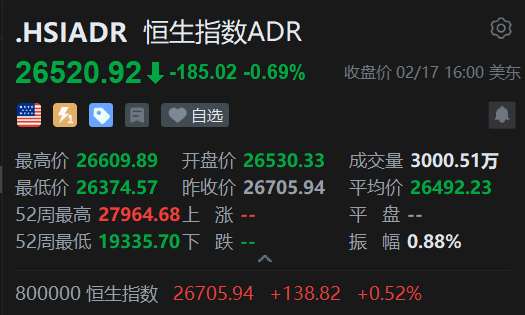
大型蓝筹股涨跌不一,汇丰控股收报135.316港元,较香港收市涨0.83%;腾讯控股收报530.511港元,较香港收市跌0.47%。 | 序号 | 名称 | 港股代码 | 最新价 | 涨跌额 | 涨跌幅 | ADR代码 | ADR换算价(I | | --- | --- | --- | --- | --- | --- | --- | --- | | 1 | 腾讯控股 | O 00700 | 533.000 | +1.000 | 0.19% | TCEHY | 530 | | 2 | 阿里巴-W | 09988 | 154.700 | -0.700 | -0.45% | BABA | 151 | | 3 | 汇丰控股 | 00005 | 134.200 | -1.500 | -1.11% | HSBC | 135 | | 4 | 建设银行 | 00939 | 8.010 | +0.050 | 0.63% | CICHY | 7 | | 5 | 小米集团-W | 01810 | 36.660 | -0.180 | -0.49% | XIACY | 36 | | 6 | 友邦保险 | 01299 | 82.350 | ...
从“存定期”到“多元配置”:五位普通投资者的理财变奏曲
Sou Hu Cai Jing· 2026-02-17 12:52
时值春节,一场静悄悄的理财观念变革正在投资者的家庭中悄然发生。曾经"有钱就存定期"的传统思 维,正被黄金ETF、基金定投、股票等多元配置方式逐步替代。 近日,中国证券报记者采访了几位背景迥异的投资者,听他们讲述在资本市场深化改革、金价上行的背 景下,如何调整自己的"钱袋子"。 在东部某省二线城市,事业单位退休职工老陈(化名)的炒股经验已超过十五年。往年春节前,年终奖 和子女孝敬的钱,他习惯性存入银行定期。"图个安稳,利息虽不高,但心里踏实。" 今年,老陈做出了改变。他把大约30%的闲钱配置了黄金ETF(518800),50%仍存定期,20%留作股 票补仓。"金价涨得太凶了,全球央行都在买黄金,我觉得作为避险资产值得配一点。" 2026年1月末,我国央行黄金储备报7419万盎司,较2025年12月末小幅增长,这是央行自2024年11月以 来连续第15个月增持黄金。世界黄金协会预计,当前金价上涨趋势有望在2026年延续。 "年纪大了,更看重保值。"老陈坦言,他是在金价回调到4800美元左右分批买入的,不追高。市场波动 时,他会减持部分股票,增持黄金对冲风险。对于2026年A股,他看好科技成长主线,但强调不会全仓 ...
中国建设银行取得面向主机系统的测试数据处理方法及系统专利
Sou Hu Cai Jing· 2026-02-17 09:26
Group 1 - The core point of the article is that China Construction Bank has obtained a patent for a testing data processing method and system aimed at host systems, with the patent granted under announcement number CN115495356B and the application date being September 2022 [1] Group 2 - China Construction Bank, established in 2004 and located in Beijing, primarily engages in monetary financial services, with a registered capital of 26,160,038.1459 million RMB [1] - The bank has made investments in 37 companies and participated in 5,000 bidding projects, indicating its active role in the market [1] - In terms of intellectual property, the bank holds 1,890 trademark records and 5,000 patent records, along with 149 administrative licenses [1]
黄金白银上演心跳游戏,普通人还能不能淘金了?
Sou Hu Cai Jing· 2026-02-16 22:14
Core Viewpoint - The precious metals market experienced extreme volatility at the beginning of 2026, with gold prices initially soaring above $5600 per ounce before plummeting below $4500, while silver saw daily declines exceeding 15% [1][3]. Group 1: Market Dynamics - The immediate trigger for the volatility was the nomination of Kevin Warsh as the next Federal Reserve Chairman, which reversed market expectations for interest rate cuts and strengthened the dollar, putting pressure on gold and silver prices [3]. - The U.S. Labor Department reported that the core Producer Price Index (PPI) for December 2025 exceeded economists' expectations, indicating that inflation is becoming more embedded in the economy, which may prolong the Fed's neutral monetary policy [3]. - The Chicago Mercantile Exchange (CME) raised margin requirements for gold and silver, exacerbating the volatility as high-leverage positions were forced to liquidate, leading to a liquidity crunch [3][5]. Group 2: Institutional Responses - Major financial institutions, including banks, have implemented measures to mitigate risks associated with the market's volatility, such as increasing minimum investment amounts for gold accumulation products and adjusting margin requirements for silver contracts [7][15]. - The Shanghai Gold Exchange and Shanghai Futures Exchange have also taken steps to manage risk by adjusting margin and trading limits for silver futures [5]. Group 3: Long-term Outlook - Despite the short-term volatility, many fund managers believe that the long-term bullish trend for gold remains intact, supported by structural factors such as ongoing central bank purchases and a weakening dollar credit system [7][9]. - UBS Wealth Management has raised its gold price target for the first three quarters of 2026 to $6200 per ounce, reflecting strong demand from central banks [9]. Group 4: Investment Strategies - Experts recommend that ordinary investors adopt differentiated strategies, such as using dollar-cost averaging to mitigate the impact of market volatility on investment returns [11][12]. - Investment in gold ETFs and bank accumulation products is advised over direct futures trading, with a suggested allocation of 5% to 15% of household financial assets to precious metals [12][14]. - Specific trading strategies include positioning in gold and silver ETFs when prices fall within certain ranges, while maintaining strict risk management practices [14].

黄金跌了价,2026年2月16日,国内黄金新价格、人民币黄金新价格
Sou Hu Cai Jing· 2026-02-16 21:39
Group 1: Gold Market Prices - As of February 16, 2026, the domestic gold market shows a mixed trend with a real-time trading price of 1119 CNY per gram and a basic gold price set at 1125 CNY per gram [1] - The price range for jewelry brand gold products is between 1300-1579 CNY per gram, with major brands like Chow Tai Fook and Luk Fook uniformly priced at 1529 CNY per gram, while Lao Feng Xiang is slightly higher at 1548 CNY per gram [2] - The Shanghai Gold Exchange reports that the AuT D contract price is 1108.50 CNY per gram, down 1.47% from the previous day, and the Au9999 contract is at 1109.00 CNY per gram, with a decline of 1.20% [2] Group 2: Bank Gold Bar Pricing - Major banks are quoting investment gold bars in the range of 1121-1145 CNY per gram, with differences attributed to handling fees and brand premiums [4] - Among state-owned banks, Industrial and Commercial Bank of China is at 1143.43 CNY per gram, and China Construction Bank at 1141.30 CNY per gram, while joint-stock banks are slightly lower [5] - China Gold and Cai Bai Jewelry report prices of 1139 CNY per gram and 1137 CNY per gram respectively, while jewelry brands like Chow Tai Fook and Lao Feng Xiang have gold bar prices reaching 1342-1403 CNY per gram, exceeding bank channel prices [6] Group 3: Investment Case Studies - Investor Xue Di, with a strategy of gradual accumulation since 2023, turned an initial capital of 2.8 million CNY into over 5.6 million CNY by January 2026, emphasizing gold's value preservation [8] - In contrast, investor Shi Yue faced losses after buying at a high of 1200 CNY per gram, leading to an average cost of 1185.73 CNY per gram and a significant weekly loss [8] - Investor Tian Rui missed the opportunity to purchase gold at 553 CNY per gram in 2023, now facing much higher prices, highlighting the importance of timing in investment success [8] Group 4: Pricing Power Shift and Supply Variables - Since 2025, the pricing logic of gold has undergone structural changes, moving from a negative correlation with U.S. Treasury real interest rates to a new model influenced by global debt levels and central bank gold purchases [9] - In 2025, global gold demand reached a record high of 5002 tons, with central bank purchases of 863 tons stabilizing the market, indicating a shift in the pricing system towards a tripartite structure involving Asian demand, North American demand, and central bank purchases [9] - Supply dynamics are also changing, as seen in Ghana, where gold production reached a record 6 million ounces in 2025, with artisanal mining surpassing large commercial mines, indicating a surge in informal supply channels [10] Group 5: Consumer Awareness and Investment Strategies - Consumers are advised to be cautious of "one-price" gold products that may not clearly indicate weight, potentially leading to high per-gram prices upon resale [12] - For genuine investors, transparency is crucial, with institutions like China Construction Bank and Agricultural Bank of China offering gold bars at only a slight premium over market prices, making them preferable for risk-averse investments [12] - The strategic reserve demand from global central banks, alongside U.S. monetary policy expectations and geopolitical risk factors, supports high gold prices, emphasizing the distinction between jewelry and investment-grade gold [12]





黄金一夜变天!最新报价,全国价差竟这么大?
Sou Hu Cai Jing· 2026-02-16 21:05
今天早上,我打开手机就看到黄金价格又上热搜了。 2026年2月11日,农历腊月二十四,国际金价像坐过山车 一样,伦敦现货黄金最高冲到5023.52美元一盎司,但短短几小时后就暴跌到4789.50美元,收盘时停在4863.98 美元,跌了2.01%。 国内金价也跟着跳水,上海黄金交易所的AU9999合约从早盘的1121元跌到收盘1094元一 克,单日跌幅超过4%。 可奇怪的是,品牌金店里的足金首饰价格却纹丝不动,周大福、周生生这些大牌标价 1550元以上,比银行金条贵出400多元一克。 我朋友昨天在周大福买订婚三金,每克花了1560元,今天发现工 行金条只要1138元,直呼"亏了一部手机钱"。 这种价差不是偶然现象。 我对比了全国不同渠道的报价,发现黄金市场已经分成清晰的"价格梯队"。 品牌金 店方面,周生生足金饰每克1555元领跑,周大福、老庙黄金紧跟1550元,菜百首饰相对便宜,也要1528元一 克。 银行投资金条就实惠多了,工商银行如意金条1143.32元一克,建设银行龙鼎金条1141元,只比上海金交 所基础价高20元左右。 最夸张的是深圳水贝批发市场,裸金报价只要1282元一克,加上二三十元工费,总成本 ...
急跌!2月15日金价大跳水,金条降价,金店最新价出炉
Sou Hu Cai Jing· 2026-02-16 19:24
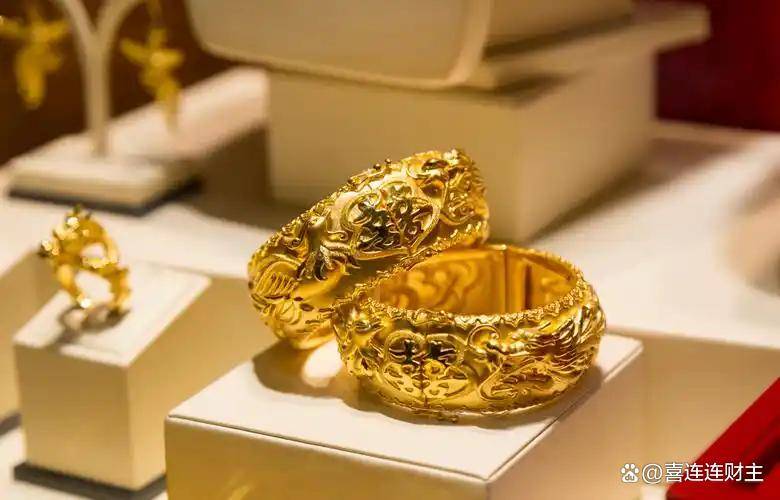
Group 1 - The global gold market experienced a dramatic surge, with London spot gold prices exceeding $5000 per ounce, marking a single-day increase of over $120, which has heightened investor interest [1] - In contrast, the Shanghai Gold Exchange reported a significant drop in gold TD contract prices, closing at 1108.5 RMB per gram, down 16.55 RMB from the previous trading day, indicating a notable decline [1][3] - Major banks adjusted their physical gold bar prices, with Industrial and Commercial Bank of China quoting 1114.55 RMB per gram, while China Construction Bank's price reached 1140.30 RMB per gram, reflecting additional costs for packaging and services [3] Group 2 - Retail prices for gold jewelry in brand stores differ significantly from investment gold bars, with prices for gold jewelry from Chow Tai Fook and others ranging from 1480 to 1560 RMB per gram, exceeding the bank gold bar prices by over 400 RMB [3][5] - The price difference in jewelry is attributed to craftsmanship costs, brand premiums, and operational expenses such as rent and marketing, indicating that jewelry is primarily a consumer product rather than an investment [5] - For those looking to liquidate old gold jewelry, the recovery price for 999 purity gold is approximately 1110 to 1120 RMB per gram, which is lower than bank gold bar prices due to the need for profit margins by recovery agents [5][7] Group 3 - The surge in international gold prices is driven by global macroeconomic data and increased market risk aversion, leading to significant capital inflows into gold as a traditional safe-haven asset [7] - Domestic gold prices are influenced by the exchange rate of the RMB against the USD; if the RMB appreciates while international gold prices rise, the domestic price increase may be offset or even lead to a decline [7] - Consumers are advised to clarify their purpose for purchasing gold; for investment, options like bank gold bars or gold ETFs are recommended due to their closer alignment with raw gold prices, while for gifts or weddings, brand jewelry may be more suitable [7][9] Group 4 - Caution is advised when selecting purchasing channels; banks and brand stores are considered safer options due to transparent pricing and regulatory compliance [8] - Consumers should be wary of offers that seem too good to be true, such as significantly higher recovery prices or low sales prices, as these may indicate unregulated practices [8] - The rise of online platforms has introduced risks, including misleading promotions and potential fraud, emphasizing the need for consumers to verify the authenticity of gold products [8][9]