
浦发银行

Search documents
“业绩亮眼+部署升级” 银行业以高质量发展护航“十五五”开局
Jin Rong Shi Bao· 2026-02-04 01:47
Core Viewpoint - The banking industry is focusing on supporting the real economy through strategic transformation and risk management, with a clear emphasis on high-quality development and service to key sectors [1][3][8]. Group 1: Performance of Listed Banks - Several A-share listed banks, including China Merchants Bank, CITIC Bank, and Shanghai Pudong Development Bank, have reported significant growth in both operating income and net profit for 2025, indicating a recovery in profitability [2]. - CITIC Bank and Shanghai Pudong Development Bank have both entered the "10 trillion yuan club," with total assets of 10.13 trillion yuan and 10.08 trillion yuan respectively, marking growth rates of 6.28% and 6.55% year-on-year [2]. - The overall trend for joint-stock banks in 2025 is characterized by stable scale, optimized structure, risk control, and improved efficiency, showcasing strong resilience against economic cycles [2]. Group 2: Strategic Focus on Real Economy - The banking sector is shifting from "scale expansion" to "high-quality development," with a focus on precise strategies to support the real economy and address cyclical fluctuations [3][6]. - Major state-owned banks have emphasized the importance of serving the real economy in their 2026 operational plans, aligning their actions with national strategic directives [4]. - Agricultural Bank of China is prioritizing support for rural revitalization, while Bank of China aims to enhance its global capabilities and services [4]. Group 3: Digital Transformation and Innovation - Digital transformation is becoming a key support for banks to enhance their service efficiency to the real economy, with initiatives like "AI+" being implemented to innovate service models and improve decision-making [5]. - Postal Savings Bank is pursuing a comprehensive upgrade strategy focusing on digitalization and value-driven growth, aiming for high-quality development [5]. Group 4: Financial Resource Allocation - The banking industry is actively channeling more financial resources into key areas such as expanding domestic demand, technological innovation, and supporting small and micro enterprises [6][8]. - Banks are adjusting their strategic layouts to focus on the "five major financial articles," enhancing the precision and effectiveness of their services to the real economy [6]. - Notable growth in technology finance loans has been reported, with Hangzhou Bank and Nanjing Bank showing increases of 23.44% and 19.49% respectively [6][7]. Group 5: Regional and Sectoral Support - Banks are increasingly focusing on regional development and industrial upgrades, with initiatives to strengthen local financial services and support manufacturing sector transformations [7]. - The emphasis on supporting small and micro enterprises has led to significant growth in inclusive finance loans, with Hangzhou Bank and Nanjing Bank reporting increases of 17.06% and 17.46% respectively [7]. - The banking sector is aligning its services with national strategies in areas such as technological innovation, green development, and rural revitalization [8].
黄金白银继续暴跌 轮到银行股机会了?
Di Yi Cai Jing· 2026-02-04 01:02
Core Viewpoint - The A-share market experienced significant declines in various sectors, particularly in metals and banks, with a notable focus on bank stocks as a safe haven amid volatility in precious metals prices [1][3][4]. Group 1: Market Performance - On February 2, A-share non-ferrous metals led the decline with a drop of 7.62%, while steel, chemicals, coal, and oil and gas sectors also fell over 5% [1]. - The Shanghai Composite Index closed down 2.48%, with over 4,600 stocks declining and a trading volume of approximately 2.61 trillion yuan, a decrease of nearly 250 billion yuan from the previous trading day [3][4]. - The banking sector showed resilience, with certain banks like Citic Bank and Shanghai Bank posting gains of 2.64% and 1.62%, respectively, amidst the overall market downturn [4]. Group 2: Bank Sector Analysis - The banking sector has seen a significant correction, with the China Securities Bank Index dropping 6.76% as of January 30, with major banks like Pudong Development Bank and Agricultural Bank of China experiencing declines of 19.29% and 12.5%, respectively [4][5]. - Analysts believe that the peak of fund outflows from the banking sector has passed, with the sector's valuation becoming more attractive, as the median price-to-book (PB) ratio is around 0.57 and the median dividend yield has risen to over 4.5% [5][6]. - Recent reports indicate that passive fund outflows have been a major factor in the banking sector's recent adjustments, but the selling pressure is expected to diminish, allowing for potential recovery in bank stock prices [6][7]. Group 3: Institutional Insights - Institutions are starting to show interest in bank stocks, with reports indicating that active funds had reduced their holdings in bank stocks by 1.3 billion shares by the end of the fourth quarter [7]. - Several regional banks have announced stock buyback plans, which have been positively received by the market, reinforcing confidence in the banking sector's fundamentals [7].




北汽蓝谷新能源科技股份有限公司关于子公司签订募集资金专户存储三方监管协议的公告
Shang Hai Zheng Quan Bao· 2026-02-03 19:08
证券代码:600733 证券简称:北汽蓝谷 公告编号:临2026-012 北汽蓝谷新能源科技股份有限公司 关于子公司签订募集资金专户存储三方监管协议的公告 本公司董事会及全体董事保证本公告内容不存在任何虚假记载、误导性陈述或者重大遗漏,并对其内容 的真实性、准确性和完整性承担法律责任。 一、募集资金基本情况 经中国证券监督管理委员会《关于同意北汽蓝谷新能源科技股份有限公司向特定对象发行股票注册的批 复》(证监许可〔2025〕2576号)同意注册,北汽蓝谷新能源科技股份有限公司(以下简称"北汽蓝 谷"或"公司")向特定对象发行股票793,650,793股,每股面值人民币1.00元,每股发行价格为人民币7.56 元,募集资金总额为人民币5,999,999,995.08元,扣除不含税发行费用人民币56,928,936.55元后,实际募 集资金净额为人民币5,943,071,058.53元。募集资金已于2026年1月20日到位,到位情况业经致同会计师 事务所(特殊普通合伙)审验并出具致同验字(2026)第110C000018号《验资报告》。 二、《募集资金专户存储三方监管协议》的签订情况和募集资金专户的开立情况 为规 ...

银行花式让利 春节购车金融战升温
Bei Jing Shang Bao· 2026-02-03 15:49
Core Viewpoint - The automotive finance market is experiencing intense competition as banks implement various promotional strategies to attract consumers during the Spring Festival buying season, including interest-free first payments and low-interest loans [1][2]. Group 1: Marketing Strategies - Multiple banks, including Ping An Bank, SPD Bank, and Bank of Communications, are enhancing their automotive finance offerings with diverse plans to lower the purchasing threshold for consumers [1]. - SPD Bank offers a 7-year low-interest loan for Tesla vehicles, with an annualized rate as low as 0.49% after state subsidies, and a minimum monthly payment of 1788 yuan [2]. - Shanghai Bank provides a range of automotive finance discounts, with monthly rates as low as 0.15%, translating to an annualized rate of approximately 3.31% to 3.45% [3]. Group 2: Regulatory Actions - Many banks have initiated self-regulatory actions to prevent unfair competition in the automotive finance sector, with significant regional differences in commission standards [4][5]. - In Henan, banks have set a tiered commission structure, with maximum returns ranging from 3% for one-year products to 15% for five-year products [4]. - The Yunnan banking sector has adopted a strict "zero commission" principle to eliminate improper competition and protect consumers from inflated financing costs [5][6]. Group 3: Industry Analysis - Analysts suggest that the surge in automotive finance marketing is driven by the traditional peak buying season during the Spring Festival, with banks aiming to capture concentrated consumer demand [3][7]. - The differences in regional commission regulations reflect the varying maturity and competitive landscape of the automotive finance market across different areas [7][8]. - For sustainable development, the industry must establish a balanced financial ecosystem that promotes value creation and collaboration among banks, dealers, and consumers [8].
丈量地方性银行(2):浙江163家区域性银行全梳理-20260203
GF SECURITIES· 2026-02-03 13:31
Investment Rating - The industry investment rating is "Buy" [2] Core Insights - The report provides a comprehensive analysis of 163 regional banks in Zhejiang Province, highlighting their asset and liability structures, profitability, and asset quality [6][20] - The asset growth rate for major city commercial banks in Zhejiang is 9.4%, which is lower than the 14.2% growth rate of listed city commercial banks, while major rural commercial banks show an asset growth rate of 8.0%, exceeding the 6.7% growth rate of listed rural commercial banks [6][25] - The report indicates that the loan-to-asset ratio for city commercial banks is projected to reach 55.5% in 2024, an increase of 95 basis points year-on-year, while rural commercial banks will see a decrease to 59.3%, down 19 basis points [31] - Profitability metrics show that the average Return on Assets (ROA) for city commercial banks in Zhejiang is 0.78%, slightly above the average of listed city commercial banks, while rural commercial banks have an average ROA of 0.82%, which is below the average of listed rural commercial banks [6][31] - The asset quality of regional banks in Zhejiang is reported to be better than that of listed banks, with non-performing loan ratios lower by 16 basis points for city commercial banks and 9 basis points for rural commercial banks compared to their listed counterparts [6][31] Summary by Sections Section 1: Economic Structure of Zhejiang Province - Zhejiang Province is focused on high-quality development and aims to become a model for common prosperity [13] - The province's GDP is heavily concentrated in cities like Hangzhou, Ningbo, and Wenzhou, with Hangzhou accounting for 24.3% of the total GDP in 2025 [15] Section 2: Overview of 163 Regional Banks - The report categorizes the banks into city commercial banks, rural banks, and others, with a total of 163 banks in the region [20] - The distribution of registered capital among these banks is relatively balanced, with 63 banks having over 500 million yuan in registered capital [22] Section 3: Asset and Liability Structure - The asset growth of major city and rural commercial banks has been declining since 2019, with city banks showing a growth rate of 9.4% in the first half of 2025 [25] - The liability structure indicates that customer deposits account for 77.5% of liabilities for city commercial banks, which is higher than the 66.2% for listed city banks [44] Section 4: Profitability and Asset Quality - The average ROE for city commercial banks in Zhejiang is 11.98%, slightly lower than the average of listed city banks [6][31] - The report highlights that the non-performing loan ratio for city commercial banks is lower than that of listed banks, indicating better asset quality [6][31]


春节购车金融战升温:银行花式让利,高返佣“潜规则”凉凉
Bei Jing Shang Bao· 2026-02-03 13:18
Core Viewpoint - The automotive finance market is experiencing intense competition as banks launch various promotional offers to attract consumers during the Spring Festival buying season, including interest-free loans and long-term low-interest financing options [1][3][4]. Group 1: Promotional Strategies - Multiple banks, including Ping An Bank, Shanghai Bank, and others, are intensifying their automotive finance offerings with measures such as interest-free first payments, interest subsidies, and extended low-interest loan periods to lower the barriers for consumers [1][3]. - For instance, Shanghai Bank offers a monthly interest rate of 0.20%-0.25%, translating to an annualized rate of approximately 4.40%-5.68%, with special promotional rates as low as 0.15% per month [4]. - Additionally, promotional activities include loyalty programs and point rewards for consumers who engage with specific automotive brands [3][4]. Group 2: Regulatory Actions - In response to the competitive landscape, various banks have initiated self-regulatory actions to prevent unfair competition in automotive finance, with notable differences in commission standards across regions [5][6]. - For example, banks in Henan have established a tiered commission structure, while banks in Yunnan have adopted a strict "zero commission" policy to eliminate improper competition [5][6]. - The regulatory measures aim to maintain market order and prevent practices that could lead to inflated consumer financing costs [6][9]. Group 3: Market Dynamics - Analysts suggest that the surge in automotive finance offerings is driven by the traditional peak buying season during the Spring Festival, with banks aiming to capture concentrated consumer demand [4][8]. - The differences in regional commission regulations reflect the varying maturity levels of automotive finance markets and competitive dynamics, indicating a tailored approach to regulation [8][9]. - The industry is encouraged to shift from price-based competition to a value-creating ecosystem that benefits all stakeholders, including banks, dealers, and consumers [10].


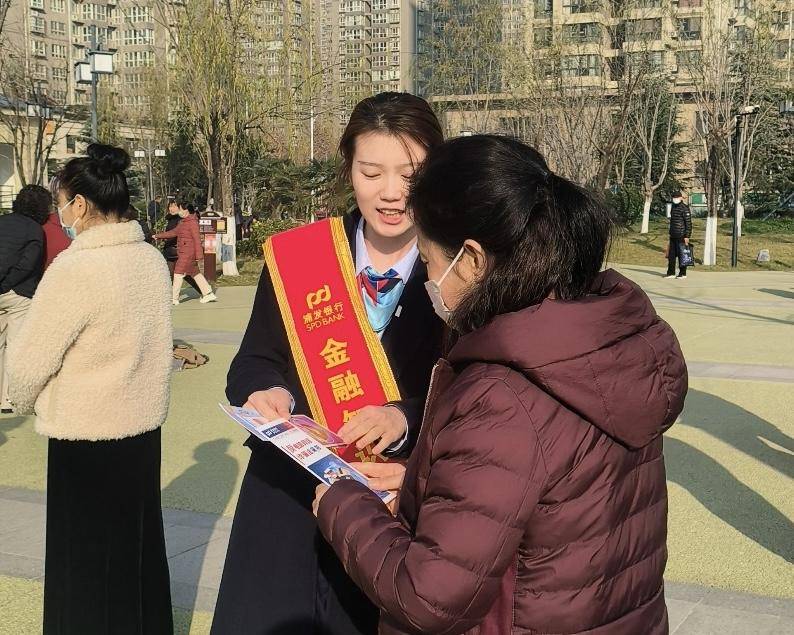
金融宣讲进公园 传递理性投资消费理念
Sou Hu Cai Jing· 2026-02-03 12:21
活动现场,支行工作人员结合群众在日常消费、理财投资、金融反诈等方面的高频需求与潜在风险,通过发放宣 传折页、现场答疑解惑、典型案例分析等方式,围绕合理规划收支、辨别虚假理财陷阱、防范电信网络诈骗、正 确选择金融产品等核心内容展开科普,引导大家远离盲目投资、非理性消费。 2月1日,浦发银行开元路支行走进未央区开元公园,开展金融知识普及主题活动。活动聚焦市民核心金融服务需 求,以专业讲解、趣味互动等,将理性消费、科学投资的理念精准传递,用贴心服务为大众筑牢财产安全防线。 此次活动将金融服务从柜台延伸到户外,让专业的金融知识变得接地气、易理解、好掌握。浦发银行开元路支行 相关负责人表示,未来将持续聚焦大众多元化金融需求,开展更多暖心便民的金融知识宣传活动,切实守护群众 财产安全。 文/图 西安报业全媒体首席记者 翟小雪 ...
电话会议纪要(20260201)
CMS· 2026-02-03 10:35
Macro Insights - The Federal Reserve paused interest rate cuts during the January meeting, with Powell indicating a higher threshold for future cuts due to reduced inflation and employment risks[2] - The upcoming change in tariff base mid-year is expected to facilitate monetary easing under the new chairmanship, reflecting the Fed's policy independence[2] Market Strategy - A-shares are expected to experience volatility in February, with a lack of catalysts before the Spring Festival leading to decreased market activity[4] - Post-Spring Festival, policy catalysts are anticipated to accelerate, potentially improving index performance[4] Investment Recommendations - Focus on cyclical and technology sectors, with particular attention to semiconductor and AI-related stocks, as well as sectors benefiting from the 14th Five-Year Plan[5] - Recommended index combinations include large-cap indices like CSI 1000 and ChiNext 50, with a preference for growth styles over value[5] Liquidity and Fund Flows - February is projected to see continued net inflows of incremental funds, with foreign capital expected to flow in before the Spring Festival[7] - The stock market experienced net outflows in January, but financing is becoming a primary source of incremental capital[7] Sector Performance - Industrial profits turned positive in December, with high growth areas identified in resource products and AI-driven sectors[8] - The insurance sector is expected to perform strongly in 2026, with significant growth in new policy premiums driven by favorable market conditions[15]
中信、华泰、国泰等十大券商高目标个股曝光!62股被赋予50%上行预期!
私募排排网· 2026-02-03 10:00
Core Viewpoint - The A-share market is expected to enter a slow bull phase in 2025, with major indices significantly rising. As the annual report preview window approaches in early 2026, institutional investors are likely to focus on stocks with long-term growth potential and valuation revaluation space [2][3]. Group 1: Target Price Insights from Citic Securities - Citic Securities has identified 12 stocks with a target price increase of over 50%, indicating a recovery in market confidence. The focus is on sectors that can articulate a logical recovery narrative, particularly in consumer and real estate chains [2][3]. - Among the stocks covered, the highest target price increase is for Baili Tianheng, with a target price of 1322 CNY compared to a closing price of 269.69 CNY, representing a potential upside of 390.19% [3][4]. Group 2: Target Price Insights from Huatai Securities - Huatai Securities has identified 15 stocks with a target price increase of over 50%, focusing on sectors with sustainable recovery capabilities, particularly in price increase chains, high-end manufacturing, and AI [5][6]. - The highest target price increase is for Tianci Materials, with a target price of 80.5 CNY compared to a closing price of 40.04 CNY, indicating a potential upside of 101.05% [6]. Group 3: Target Price Insights from Guotai Junan - Guotai Junan has identified 13 stocks with a target price increase of over 50%, with China Railway leading at a target price of 9.07 CNY against a closing price of 5.37 CNY, representing a potential upside of 68.90% [8][9]. - The firm emphasizes the long-term potential of the "transformation bull" market, supported by improved regulatory governance and economic transformation [8]. Group 4: Target Price Insights from GF Securities - GF Securities has identified three stocks with significant target price increases, including Pudong Development Bank with a target price of 15.65 CNY compared to a closing price of 10.06 CNY, indicating a potential upside of 55.57% [10][11]. - The firm anticipates a strong seasonal market effect during the spring, particularly around the Chinese New Year [10]. Group 5: Target Price Insights from Guotai Securities - Guotai Securities has identified three stocks with target price increases over 50%, including Betta Pharmaceuticals with a target price of 71.95 CNY against a closing price of 45.70 CNY, representing a potential upside of 57.44% [13][15]. - The firm highlights the importance of technology and overseas expansion as key drivers for future growth [13]. Group 6: Target Price Insights from Dongwu Securities - Dongwu Securities has identified three stocks with the highest target price increases, including Tianci Materials with a target price of 79.20 CNY compared to a closing price of 40.40 CNY, indicating a potential upside of 97.80% [19][20]. - The firm expects a strong performance in the market as it transitions towards technology and cyclical sectors [19]. Group 7: Target Price Insights from Guojin Securities - Guojin Securities has identified China Pacific Insurance as the only stock with a target price increase over 50%, with a target price of 73.18 CNY against a closing price of 44.36 CNY, representing a potential upside of 64.97% [16][18]. - The firm believes that the insurance sector is entering a new cycle of growth driven by both volume and price increases [16].





浦发银行信用卡支持消费者将Visa卡绑定Apple Pay,让境外支付体验更便捷、更安全
Zhong Guo Jin Rong Xin Xi Wang· 2026-02-03 09:04
Core Viewpoint - Shanghai Pudong Development Bank (SPDB) has announced the support for its Visa credit card holders to bind their cards to Apple Pay, enhancing the value and service quality for cardholders [1] Group 1: Payment Features - Apple Pay allows consumers to make payments in various scenarios, including overseas merchants, mobile apps, and online websites [1] - In-store payments can be completed by double-clicking the side button on an iPhone or Apple Watch, enabling contactless payment without opening any other apps [2] - Payments made through apps or websites on iPhone and iPad are faster and more convenient, eliminating the need to create accounts or repeatedly enter personal information [2] Group 2: Security and Privacy - Security and privacy are central to Apple Pay, with actual card numbers not stored on devices or Apple servers [3] - A unique device account number is generated using Visa's tokenization technology, which is encrypted and securely stored in the device's secure element [3] Group 3: Card Setup - Setting up Apple Pay is straightforward, requiring users to open the Wallet app on their iPhone and follow prompts to add the SPDB Visa credit card [4] - Cards can also be added directly through the SPDB app, allowing immediate use on compatible devices [4] Group 4: Rewards and Benefits - Cardholders can continue to enjoy the same rewards and benefits as with the physical card, along with exclusive offers for Apple Pay transactions [5] - New promotions include a 100% cashback on the first Apple Pay transaction (up to $3) and 2% cashback on overseas transactions, with a monthly cap of $15 [5] - Additional exclusive benefits are available for travel and overseas living scenarios through Visa's offerings [5]

