三只松鼠

Search documents
日联科技:国内头部食品公司如海天味业、中粮集团、卫龙美味、涪陵榨菜等均是公司客户
Mei Ri Jing Ji Xin Wen· 2026-02-12 10:45
Group 1 - The company, 日联科技, has confirmed its involvement in the production safety testing for leading domestic food companies [1] - The company's X-ray detection technology and products are widely used in the food foreign object detection sector [1] - Notable clients of the company include 海天味业, 中粮集团, 三只松鼠, 卫龙美味, and 涪陵榨菜 [1]




三只松鼠:公司在坚果等核心产品的生产线上,已广泛应用自动化设备辅助生产
Zheng Quan Ri Bao Zhi Sheng· 2026-02-12 10:37
Core Viewpoint - The company emphasizes the importance of smart manufacturing and automation upgrades in its production processes, particularly for core products like nuts, to enhance production efficiency and product stability [1] Group 1: Smart Manufacturing and Automation - The company has widely implemented automated equipment in the production lines of its core products, which has effectively improved production efficiency and product stability [1] - The automation efforts strengthen the company's quality control capabilities, providing solid supply chain support for its high-end cost-performance strategy [1] - The company plans to continue advancing its smart manufacturing initiatives to further enhance operational efficiency and core competitiveness [1]
三只松鼠:公司高度重视智能制造与自动化升级
Ge Long Hui· 2026-02-12 07:48
Core Viewpoint - The company emphasizes the importance of smart manufacturing and automation upgrades in its production processes, particularly for core products like nuts, to enhance production efficiency and product stability [1] Group 1 - The company has widely implemented automated equipment in the production lines of its core products, which has effectively improved production efficiency and product stability [1] - The automation efforts strengthen the company's quality control capabilities, providing solid supply chain support for its high-end cost-performance strategy [1] - The company plans to continue advancing its smart manufacturing initiatives to further enhance operational efficiency and core competitiveness [1]
三只松鼠(300783.SZ):公司已在巧克力与坚果融合品类上布局
Ge Long Hui· 2026-02-12 07:40
Core Viewpoint - The company is focusing on the chocolate category through its sub-brand Qiaokeguo, which aligns with its product expansion strategy [1] Group 1: Product Strategy - The company has laid out plans to integrate chocolate and nuts, leveraging its supply chain advantages in nuts to introduce high-end, cost-effective products [1]
三只松鼠(300783.SZ):坚定贯彻“高端性价比”总战略,向品质化和差异化持续升级
Ge Long Hui· 2026-02-12 07:40
Core Viewpoint - The company is committed to its "high-end cost performance" strategy and is continuously upgrading towards quality and differentiation, despite facing profit declines due to structural issues in the sales season and rising raw material prices [1] Group 1: Strategic Focus - The company is focusing on community retail opportunities by launching a new store model called "Lifestyle Hall" with a full range of proprietary brands [1] - The company is actively optimizing its sales structure by refining traditional store types, integrating channel resources, and reducing inefficient product categories [1] Group 2: Financial Performance - Profit decline is attributed to the structural misalignment during the 2025 sales peak season and significant increases in nut raw material prices [1] - The company is closely monitoring market fluctuations in its stock price and aims to balance corporate value and market capitalization through steady operations and high-quality development [1]
三只松鼠(300783.SZ):公司高度重视智能制造与自动化升级
Ge Long Hui· 2026-02-12 07:40
Core Viewpoint - The company emphasizes the importance of smart manufacturing and automation upgrades in its production processes, particularly for core products like nuts, to enhance production efficiency and product stability [1] Group 1: Smart Manufacturing and Automation - The company has widely implemented automated equipment in the production lines of its core products, which has effectively improved production efficiency and product stability [1] - The automation efforts strengthen the company's quality control capabilities, providing solid supply chain support for its high-end cost-performance strategy [1] - The company plans to continue advancing its smart manufacturing initiatives to further enhance operational efficiency and core competitiveness [1]
坚果200块一斤,你要拿多少年终奖才敢走进薛记炒货?
3 6 Ke· 2026-02-11 05:50
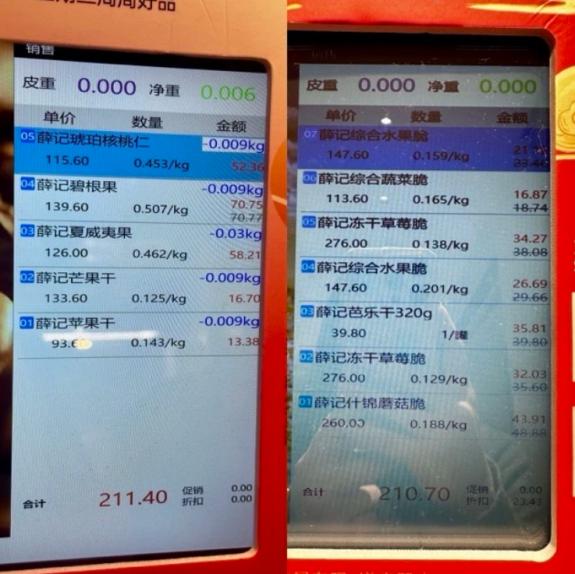
Core Viewpoint - The article discusses the rising popularity and high pricing of Xueji Snacks, a brand known for its premium nuts and snacks, drawing comparisons to other high-end brands and exploring consumer behavior and perceptions around its pricing strategy [2][4][12]. Group 1: Pricing and Consumer Behavior - Xueji Snacks has gained notoriety for its high prices, with products like sunflower seeds priced at 23.8 yuan per jin and cashews nearing 100 yuan per jin, yet it remains popular among consumers [4][12]. - Despite the high prices, consumers express a desire for the products, often feeling compelled to purchase after trying samples in-store, indicating a psychological tactic employed by the brand [6][8][12]. - The brand's strategy of allowing customers to sample products before purchase creates a dilemma for consumers, as they may feel pressured to buy after tasting [11][19]. Group 2: Brand Positioning and Market Strategy - Xueji Snacks positions itself as a high-end snack brand, with store designs reminiscent of jewelry shops, which contributes to its premium image [6][14]. - The brand's marketing emphasizes quality, sourcing ingredients from core production areas and utilizing advanced preservation techniques, justifying its higher price point [14][21]. - Xueji Snacks has expanded rapidly, with over 1,100 stores projected by the end of 2025, indicating a strong growth strategy despite potential market saturation [21][25]. Group 3: Consumer Expectations and Market Challenges - There is a growing divide in consumer expectations, with some seeking affordable options while others are willing to pay for premium quality, posing a challenge for Xueji Snacks to balance its high-end positioning with broader market appeal [23][25]. - The brand faces competition from other snack companies that offer more affordable alternatives, which may impact its long-term sustainability if it cannot justify its pricing to consumers [23][25]. - Feedback from consumers indicates a desire for transparency in pricing and product quality, suggesting that Xueji Snacks must adapt to maintain customer loyalty and avoid being perceived as overpriced [25].

2026年1月飞瓜快手直播电商行业月报-20260210
Fei Gua Shu Ju· 2026-02-10 14:25
Investment Rating - The report does not explicitly state an investment rating for the industry Core Insights - The January e-commerce data indicates a strong consumer demand driven by the New Year shopping festival, with significant growth in various product categories, particularly in food and beverages [4][5][14] - The promotional activities during the New Year festival have successfully stimulated consumer purchasing behavior, leading to a notable increase in sales and promotional heat [5][6] - The report highlights the importance of seasonal marketing strategies, particularly around key events such as the Spring Festival and Valentine's Day, to capture consumer interest and drive sales [41][45][48] Summary by Sections January E-commerce Data Review - The sales heat in January showed a 1.87% increase, while promotional heat rose by 0.91% compared to December [5] - The New Year shopping festival, starting on January 15, created a robust shopping environment, enhancing consumer enthusiasm for stocking up on goods [5][6] Industry Marketing Situation - The food and beverage sector experienced a surge in sales, with gift box products becoming a focal point for consumers [14] - Key growth categories included snacks, beverages, and alcoholic drinks, with notable increases in sales heat and promotional activities [9][10][22][25] January Category Sales Overview - The report details various categories with significant sales growth, including: - Snacks: Sales heat increased by 192.10% [22] - Beverages: Notable growth in plant-based drinks and fruit juices, with GMV growth rates of 80.7% and 598.2% respectively [27] - Alcohol: Beer sales heat surged by 1026.8%, with Qingdao Beer leading the market [28][29] February E-commerce Trend Forecast - The report outlines key marketing dates in February, including Valentine's Day and the Spring Festival, emphasizing the need for brands to align their marketing strategies with these events [41][42] - Suggested focus areas for February include skincare, beverages, and seasonal products to leverage consumer sentiment during these holidays [45][48] Monthly Rankings - The report includes a ranking of top-selling brands across various categories, highlighting the competitive landscape and consumer preferences [62][64][66]
食品饮料行业:2026量贩零食市场简析报告
Jia Shi Zi Xun· 2026-02-10 14:23
Investment Rating - The report does not explicitly state an investment rating for the snack retail industry Core Insights - The snack retail industry is characterized as a "hard discount" retail format that significantly reduces prices compared to traditional supermarkets, achieving approximately 25% lower prices through direct sourcing and streamlined supply chains [4][6] - The industry is rapidly penetrating lower-tier markets, capturing market share from traditional small stores and outdated supermarkets, driven by a flat supply chain and digital management capabilities [4][41] - Future developments in the industry will see the evolution from single snack stores to comprehensive "community discount supermarkets," expanding product categories to include daily necessities and providing a one-stop shopping experience [4][42] Summary by Sections Industry Definition - The snack retail industry is defined as a vertical "hard discount" retail format that separates and revolutionizes traditional supermarket snack sales through concentrated procurement and operational efficiency [5][7] Business Model - The core business model of the snack retail industry is based on "high turnover, low margin," creating a win-win ecosystem through operational efficiency [12][13] Industry History - The development of the snack retail industry can be divided into four stages: exploration (2010-2020), expansion (2021-2022), integration (2023-2024), and quality and efficiency (2025-present) [10][11] Demand Analysis - The Chinese snack and beverage retail market is projected to grow from CNY 3,171.2 billion in 2019 to CNY 4,044.9 billion by 2024, with the snack retail channel being one of the fastest-growing segments [32][34] - Lower-tier cities are expected to be the main growth drivers for the snack retail market, contributing 62% of the GMV by 2024 [34] Competitive Landscape - The industry has formed a dual oligopoly with major players like "Mingming Hen Mang" and "Wancheng Group" controlling over 70% of the market share [23][24] - The competitive focus has shifted from store quantity to supply chain efficiency and brand development [29][30] Future Opportunities - The industry is expected to continue its deep penetration into lower-tier markets, leveraging the combination of brand and low prices to capture market share from traditional stores [41] - The transition to "community discount supermarkets" will create new growth opportunities by expanding product offerings [42][44] Supply Chain Efficiency - The industry's competitive advantage lies in its streamlined supply chain, which significantly reduces markup rates compared to traditional retail formats [45]
18位消费创始人和投资人这样观测潮水的方向丨2026前瞻
36氪· 2026-02-10 09:40
Core Viewpoint - The consumption sector is expected to rebound in 2025 after a period of stagnation, with significant activity in the consumer IP, offline retail, and AI integration sectors [5][9]. Group 1: Consumer IP - The consumer IP sector is highlighted as a focal point, with companies like Pop Mart achieving a market value of 400 billion, igniting interest in the industry [5][11]. - The shift towards self-owned IP is emphasized, with companies like Miniso planning to split its TOP TOY brand for independent listing, indicating a trend towards brand ownership and innovation [5][11]. - The market is moving towards original design as a core driver, with a paradigm shift from reliance on licensing and channels to creating unique IP that resonates emotionally with consumers [13][14]. Group 2: Offline Retail - The offline retail landscape is undergoing significant transformation, with traditional supermarkets like Yonghui implementing "fat reform" to adapt to changing consumer needs [6][18]. - The competition is evolving from product-centric to full-chain operational capabilities, with a focus on building trust and efficiency in supply chains [21][22]. - Community-based retail models are emerging as key players, with companies like Mingming Hen Mang achieving a market value nearing 100 billion, indicating a shift towards localized and efficient retail solutions [6][19]. Group 3: Consumption + AI - 2025 is identified as the "year of AI in consumption," with a convergence of technology maturity, user acceptance, and commercial imagination pointing towards a potential explosion in AI-driven consumer products [28][29]. - The focus is on creating emotionally engaging experiences through AI, with various product forms expected to emerge, including AI companions and immersive gaming experiences [28][30]. - The integration of AI into consumer products is anticipated to redefine user interactions, emphasizing the importance of understanding specific scenarios to enhance the value of technology [28][31]. Group 4: Consumer Brands - The competition among consumer brands is shifting towards depth in consumer engagement rather than breadth, with a focus on hard innovation and visible quality improvements [33]. - Brands are expected to adapt to channel-specific demands, moving away from a one-size-fits-all approach to tailored offerings that resonate with distinct consumer segments [34]. - The trend of Chinese dining brands expanding overseas is gaining momentum, with an emphasis on local integration and community responsibility as critical factors for success in foreign markets [35].