
秦川机床

Search documents
2025年陕西省宝鸡市新质生产力发展研判:强链壮群加速推进,宝鸡市新质生产力规模持续拓展[图]
Chan Ye Xin Xi Wang· 2025-07-10 01:25
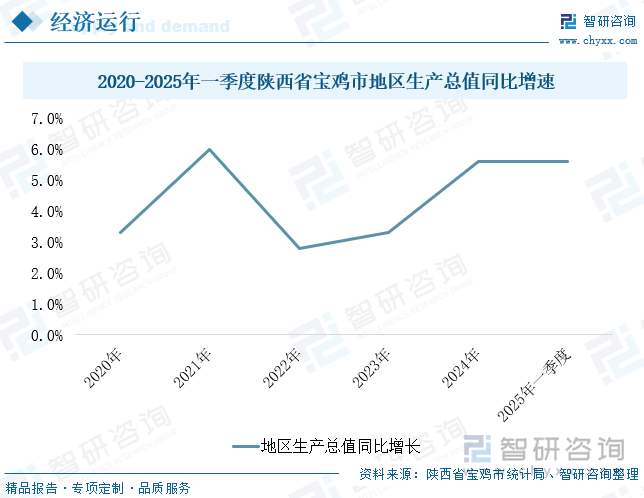
Core Viewpoint - Baoji City, as the second largest city in Shaanxi Province and a significant industrial base in the western region, has achieved remarkable progress in economic development and industrial transformation through innovation-driven strategies, particularly in the titanium industry, which is globally leading in scale [1][16]. Group 1: Economic Performance - In 2024, Baoji's GDP grew by 5.6% year-on-year, with the primary industry increasing by 2.7%, the secondary industry by 5.4%, and the tertiary industry by 5.8%, indicating a stable and positive economic trend [4][5]. - The industrial economy maintained strong growth in early 2025, with a 9.4% year-on-year increase in industrial added value, driven significantly by mining (+13.7%) and manufacturing (+10.7%) [8][10]. Group 2: Industrial Development - Baoji has established a modern industrial system characterized by the "45511" framework, focusing on four trillion-level advantageous industries and five hundred billion-level emerging industries [1][16]. - The "Baohan Tian Industrial Mother Machine Cluster" was recognized as a national advanced manufacturing cluster, contributing to Baoji's entry into the "Top 100 Advanced Manufacturing Cities" in China, ranking 84th [1][16]. Group 3: New Quality Productive Forces - The concept of New Quality Productive Forces emphasizes innovation as the main driving force, aiming to break away from traditional economic growth models and enhance productivity with high-tech, high-efficiency, and high-quality characteristics [3][12]. - Baoji's policies have been aligned with the New Quality Productive Forces framework, promoting high-quality development through various measures and initiatives [12][14]. Group 4: Industry Space Layout - Baoji's industrial spatial layout is designed around a "core leading, three belts coordinating, and multi-point supporting" model, integrating urban development with ecological protection and industrial cluster development [18][20]. - The city is focusing on strategic emerging industries such as high-end equipment manufacturing, automotive parts, and new materials, while also enhancing its agricultural and ecological sectors [22][20]. Group 5: Future Development Trends - The future development of Baoji's new quality productive forces will focus on the deep integration of high-end and intelligent manufacturing, enhancing the value chain and core competitiveness [25]. - There is an emphasis on cultivating strategic emerging industries and future industries, such as artificial intelligence and hydrogen energy equipment, to create new economic growth points [26]. - Baoji aims to promote green low-carbon development and strengthen regional cooperation to achieve sustainable economic, social, and environmental development [27].

制造成长周报(第19期):杭州召开国际人形机器人展览会 蚂蚁集团首次投资灵巧手
Xin Lang Cai Jing· 2025-06-25 11:09
Industry Dynamics - The humanoid robot sector is experiencing significant developments, with various companies announcing new projects and partnerships, including Midea's successful deployment of its self-developed humanoid robot in factories and the release of the Star Motion Q5 intelligent robot [1] - The 3D printing equipment production in May saw a year-on-year increase of 40% [1] Government News - The China Securities Regulatory Commission (CSRC) announced support for companies in cutting-edge technology sectors to apply the fifth set of listing standards on the Sci-Tech Innovation Board [2] - Several strategic partnerships were formed in the humanoid robot sector, including Demar Technology's agreement with Zhiyuan Robotics and Qinan Co.'s investment in Moxian Technology [2] Key Focus Stocks - The week highlights key stocks such as Longxi Co., Jindi Co., Yirui Technology, Yingliu Co., and Dingyang Technology [3] Investment Insights 1. Humanoid Robots: Focus on value and positioning, emphasizing suppliers with strong capabilities and identifying incremental opportunities in the market, particularly in components like joint modules, dexterous hands, reducers, and motors [4] 2. AI Infrastructure: Continued growth in capital expenditure for data centers driven by AI demand, with key beneficiaries including Hanzhong Precision, Ice Wheel Environment, and Yingliu Co. [4] 3. Low-altitude Economy: Rapid advancements in the low-altitude economy, with a focus on core components such as engines and motors, highlighting companies like Yingliu Co. and Zongshen Power [5] 4. 3D Printing: As an additive manufacturing technology, 3D printing is expected to open market opportunities across various sectors, with key players including Bolite and Huazhou High-Tech [5] 5. Nuclear Fusion: Progress in nuclear fusion energy is seen as a long-term direction for energy transformation, with companies like Yingliu Co. and Jiangsu Shentong being highlighted [5]

磨床深度报告汇报
2025-06-24 15:30
Summary of Grinding Machine Industry Conference Call Industry Overview - The global grinding machine market is approximately 6 billion RMB, with China accounting for 20% or about 1.2 billion RMB [1][4] - Domestic grinding machines hold a 52% market share in China, but there is a significant net import gap of 590 million USD, indicating reliance on imports for high-end markets [1][4] - China's grinding machine exports account for about 26%, which is significantly lower than Germany (80%) and Japan (56%), highlighting the need for improvement in global competitiveness, especially in high-precision grinding machines [1][6] Market Structure and Dynamics - The grinding machine industry can be classified by processing method and precision. Basic models, including external, internal, and surface grinders, contribute 70% of sales value [2] - The market concentration for the top five companies (CR5) in the grinding machine sector is only 30%, indicating a highly fragmented market, except for surface grinders, which have a higher concentration of 20%-30% [12] - The demand for thread grinding machines may see a potential elasticity gain of 50% when humanoid robots reach mass production of 1 million units [2][17] Key Components and Technology Barriers - The main costs in grinding machines are structural components, CNC drive systems, and spindles, with spindle costs being the highest and presenting the most significant technical barriers [1][8] - The slow progress in the localization of CNC systems in the grinding machine industry is primarily due to reliance on foreign brands like Siemens, Fanuc, and Mitsubishi [10] - Key components such as ball screws, worktables, and linear guides are mostly sourced externally, which impacts the consistency and yield rates of the machines [11] Company Highlights - **Qinchuan Machine Tool**: Focuses on rolling functional components and grinding machine integration, with several subsidiaries and a strong position in various machine tool sectors [18] - **Rifa Precision**: Transitioned from bearing grinding to thread grinding, achieving a revenue of 530 million RMB in 2023 with a net profit margin of 13% [19] - **Huachen Equipment**: Specializes in CNC roller grinding machines, with a revenue of 380 million RMB in 2024 and a gross margin of 28.4% [20][21] - **Tsinshang Machine Tool**: Established in 2013, it has been actively participating in the market with significant investments in new technologies [22] Future Trends and Capital Operations - The capital operation in the grinding machine industry has been slow, but there is a shift as downstream customers begin to acquire companies to integrate components and equipment [13] - The industry is moving towards high-end equipment manufacturing, with significant attention from the capital market on companies' developments in this area [27] Conclusion - The grinding machine industry in China is characterized by a significant reliance on imports for high-end products, a fragmented market structure, and ongoing challenges in technology localization. However, key players are making strides in innovation and market positioning, indicating potential growth opportunities in the future.
机械设备灵巧手深度梳理:指尖跃动无垠星河,巧手编织璀璨经纬-20250623
Tianfeng Securities· 2025-06-23 08:43
Industry Rating - The industry investment rating is maintained at "Outperform" [1] Core Viewpoints - The current focus on dexterous hands is due to their flexibility in operation, which is crucial for the generalization capabilities of robots. The industry is witnessing significant advancements, particularly led by Tesla, with various manufacturers following suit in dexterous hand development [2][12] - The value of dexterous hands is substantial, accounting for approximately 17% of the total cost of Tesla's Optimus second generation, indicating a vast market potential. The willingness of customers to pay is driven by the ability to solve practical problems, suggesting a premium space for functional inflation [2][20] - The market for dexterous hands is characterized by widespread participation across various segments, including the main body, dexterous hands, and components, which is expected to accelerate technological development and reduce component costs [2][21] Summary by Sections Industry Trends - Dexterous hands are essential for the generalization capabilities of robots, with a focus on their perception and execution abilities. The industry is transitioning towards dexterous hand capabilities as a key area of development [5][11] - The current stage of development emphasizes the importance of dexterous hands in executing generalized tasks and using human-designed tools, with a requirement of at least 17 degrees of freedom to approach human hand functionality [11][12] Market Participation - The dexterous hand market includes a variety of participants, such as manufacturers of the main body, dexterous hand companies, and component suppliers. This diversity is expected to foster rapid technological advancements and cost reductions [21][24] - Key players in the dexterous hand segment include companies like Reiser Intelligent, Yongchuang Intelligent, and Jiangsu Leili, among others, focusing on different aspects of the dexterous hand technology [2][21] Cost Structure - The cost structure of dexterous hands is influenced by the complexity of technology and the number of components involved. The estimated BOM cost for a dexterous hand with 17 drives and 5 sensors is approximately 51,800 yuan, with the drive and transmission components accounting for 64% of the total cost [30][26] - The high value of dexterous hands is reflected in their significant cost contribution to the overall robot assembly, with potential market value reaching 170 billion yuan if production scales up [20][21] Technological Development - The current focus is on enhancing the hardware capabilities of dexterous hands, with a competitive landscape that includes both rigid and flexible transmission solutions. The industry is in a phase of "stacking materials" to improve foundational hardware capabilities [36][42] - The development trajectory of dexterous hands is expected to follow a path similar to that of autonomous driving technology, transitioning from hardware enhancement to algorithmic improvements and cost reductions over time [42][45]




机器人关节轴承深度报告汇报
2025-06-16 15:20
Summary of Key Points from the Conference Call Industry Overview - The humanoid robot sector is currently experiencing weak market sentiment, influenced by North American key customer audits and Huawei supply chain information, with overall valuations remaining high despite a recent decline in market expectations [1][2][3] - The global bearing market was valued at $120 billion in 2021 and is expected to exceed $243 billion by 2030, with China accounting for over 50% of production but still dominated by foreign companies in high-end sectors, indicating significant room for domestic substitution [3][13] Core Insights and Arguments - The humanoid robot industry is projected to achieve breakthroughs in technology commercialization in North America during the second half of the year, particularly in August and September [1][5] - Companies like Tesla and Meta are leveraging video data to enhance robot adaptability and zero-shot learning capabilities, which could significantly improve the intelligence of humanoid robots [1][5] - The humanoid robot Optimus is expected to use 14 cross roller bearings and 28 angular contact bearings per unit, leading to a potential demand increase of over 3 billion RMB if production reaches 1 million units [1][9] Investment Opportunities - Recommended companies with investment potential include: - **Dechang Electric Control Holdings**, **Ruisheng Technology**, and **Hammernaut**, which currently have low market expectations for robotics, making their valuations relatively cheap [1][6] - **Hengli Hydraulic** and **Top Group**, whose market values reflect expectations for only 50,000 humanoid robots, indicating low valuations [1][6] - Other notable companies in the bearing sector include **Longxi Co.** (joint bearings), **International Seiko** (special bearings), and **Changsheng Bearings** (self-lubricating bearings), which are well-positioned to benefit from the growth in humanoid robots [3][17] Additional Important Insights - The demand for bearings in the equipment manufacturing sector is critical, as nearly all machinery requires bearings for support, with prices varying significantly based on size and application [8] - The complexity of domestic bearing production processes and reliance on foreign equipment for high-end products pose challenges for the Chinese bearing industry, highlighting the need for advancements in manufacturing technology [14][15] - The global grinding machine market is projected to grow from $3.7 billion in 2023 to $5.1 billion by 2030, with a significant portion of high-end machines still imported, indicating a substantial opportunity for domestic manufacturers [16] Conclusion - The humanoid robot industry is at a pivotal moment with potential technological advancements and market opportunities, particularly in the bearing sector, which is essential for the development of these robots. The focus on domestic companies with low current valuations presents a strategic investment opportunity as the market evolves.
研判2025!中国行星滚柱丝杠行业产业链、市场规模及重点企业分析:技术突破与市场爆发共振,高端传动领域迎来发展新纪元[图]
Chan Ye Xin Xi Wang· 2025-06-10 01:32
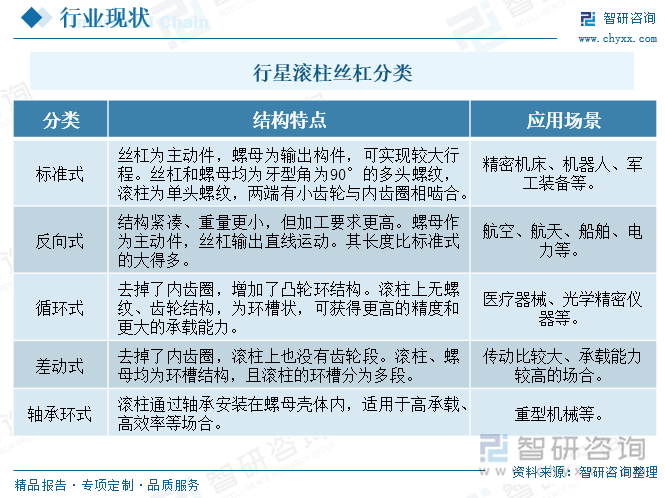
Industry Overview - The planetary roller screw is a high-precision transmission device widely used in aerospace, robotics, medical devices, and precision instruments, with increasing demand driven by rapid development in these sectors [1][14] - The global market size for planetary roller screws is projected to reach $4.4 billion in 2024, representing a year-on-year growth of 91.30% [1][14] - Domestic companies have achieved significant breakthroughs in technology, with leading manufacturers like Nanjing Technology and Qinchuan Machine Tool overcoming challenges in material heat treatment and precision grinding [1][14] Industry Development History - The industry has evolved through four main stages, starting from its inception in the 1950s to 1970s, followed by a technology exploration phase from the 1980s to 2010, an initial industrialization phase from 2010 to 2015, and a rapid development phase from 2016 to present [5][6] - The rapid development phase has seen the adoption of planetary roller screws in Tesla's Optimus robot, with each unit using 14 screws, significantly boosting market demand [6][12] Industry Supply Chain - The supply chain includes upstream raw materials (alloy steel, stainless steel), components (screws, nuts, rollers), and production equipment (grinding machines, heat treatment equipment) [9] - The downstream applications encompass humanoid robots, aerospace, new energy equipment, industrial automation, and automotive industries [9] Market Size - The demand for planetary roller screws is particularly high in the humanoid robot sector, where precision, load capacity, and reliability are critical [1][14] - The production of humanoid robots in China is expected to reach 1,940 units in 2024, marking a year-on-year increase of 139.51% [12] Key Companies' Performance - The competitive landscape is characterized by international giants dominating the high-end market, while domestic manufacturers are rapidly catching up in the mid-to-low-end segments [16] - Companies like Nanjing Technology and Qinchuan Machine Tool are making strides in precision and production capacity, with Nanjing Technology achieving G3-level precision and Qinchuan Machine Tool entering Tesla's supply chain [16][18] Industry Development Trends 1. **Technological Breakthroughs**: The industry is experiencing rapid advancements in material science and processing technology, with domestic companies achieving product lifespans exceeding 50 million cycles [22] 2. **Application Explosion**: The humanoid robot sector is a key driver of demand, with projections indicating that global humanoid robot production could reach 5 million units by 2030 [23] 3. **Industry Integration and Globalization**: Companies are enhancing competitiveness through vertical integration and global expansion, with notable mergers and acquisitions expected to accelerate the entry of domestic firms into high-end markets [25]




外骨骼机器人走入民用领域!“全市场唯一百亿规模”的机器人ETF(562500)上涨0.72%
Mei Ri Jing Ji Xin Wen· 2025-06-04 06:20
Group 1 - The Robot ETF (562500) has seen a 0.72% increase as of 13:53 today, with significant gains from stocks such as Greentown Harmony (+5.24%), Xinjie Electric (+3.15%), and Qinchuan Machine Tool (+2.46%) [1] - The trading volume for the Robot ETF has exceeded 340 million yuan, leading among comparable funds with a turnover rate of 2.64%, indicating active market participation [1] - In the past four trading days, the Robot ETF has attracted a total of 38.28 million yuan in inflows [1] Group 2 - Various scenic spots, including Taishan, Huangshan, and Laoshan, have introduced exoskeleton robot-assisted climbing services, enhancing visitor experience with features like emergency calls and site explanations [1] - The introduction of 500 exoskeleton robots at Taishan has resulted in a 23% year-on-year increase in the number of visitors aged 60 and above, totaling 303,000 from January 1 to May 29 this year, compared to 246,000 last year [1] - CITIC Securities expresses a strong outlook on embodied intelligence, recommending exploration of investment opportunities in areas such as exoskeleton robots, dexterous hands, sensors, and robotic dogs, without being limited to humanoid robots [1] Group 3 - The Robot ETF (562500) is the only robot-themed ETF in the market with a scale exceeding 10 billion yuan, covering various segments including humanoid robots, industrial robots, and service robots, facilitating investors' access to the entire robot industry chain [2]
机器人企业订单井喷,机器人指数ETF(159526)近1周新增规模同类第一!
Xin Lang Cai Jing· 2025-06-04 05:12
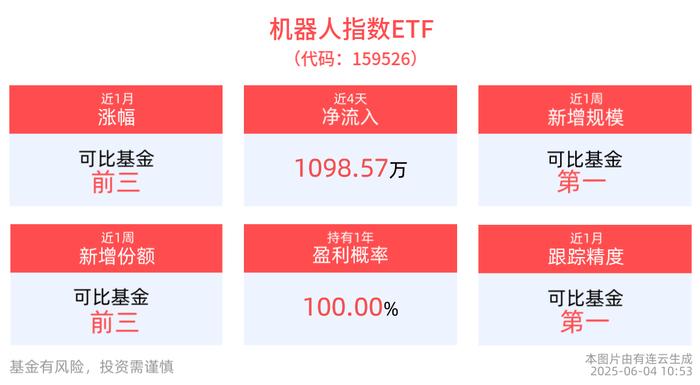
Group 1 - The core viewpoint of the news highlights the performance of the China Robot Index and its related ETF, indicating a positive trend in the robotics sector with notable stock increases among key companies [1][3] - As of June 4, 2025, the China Robot Index rose by 0.52%, with significant gains from component stocks such as Yingfeng Environment (up 4.06%) and Xinjie Electric (up 2.56%) [1] - The China Robot Index ETF (159526) experienced a trading volume of 910.42 million yuan, with a turnover rate of 1.68% [3] Group 2 - The China Robot Index ETF has shown significant growth in scale, with an increase of 665.66 million yuan over the past week, ranking first among comparable funds [3] - The ETF's share count increased by 9 million shares in the past week, also placing it among the top three in terms of new shares [3] - The top ten weighted stocks in the China Robot Index account for 50.96% of the index, with notable companies including Huichuan Technology and Keda Xunfei [3] Group 3 - In terms of market developments, Yushu Technology has secured projects close to its total for 2024 within the first five months of 2025, while Leju Robotics reported a 200% increase in orders for Q1 2025 [4] - The humanoid robot sector is experiencing a divergence, with previously high-performing stocks undergoing corrections, prompting a focus on undervalued AI and robotics applications [4] - Long-term investment opportunities are suggested in areas such as sensors, dexterous hands, robotic dogs, and exoskeleton robots, beyond just humanoid robots [4]
5月份超七成混基正收益 华宝医药生物混合A涨11.5%
Zhong Guo Jing Ji Wang· 2025-06-03 23:40
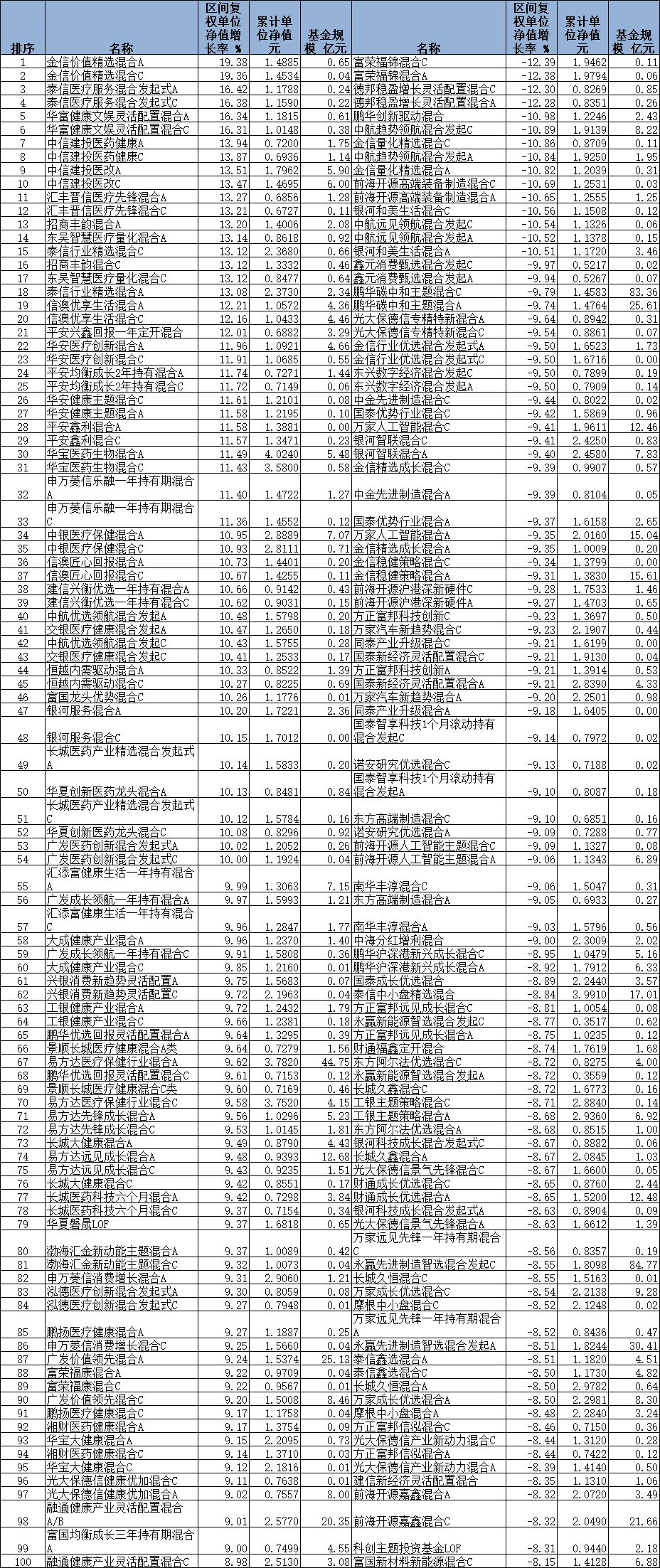
Core Viewpoint - In May 2025, over 70% of the 8,451 comparable mixed funds experienced net value increases, indicating a positive trend in the market [1] Fund Performance Summary - A total of 54 mixed funds achieved a monthly increase of over 10%, with Jinxin Value Selected Mixed A and C leading at 19.38% and 19.36% respectively [2] - Jinxin Value Selected Mixed A and C, established on September 1, 2017, reported year-to-date returns of 32.65% and 32.60%, and cumulative returns of 48.85% and 49.57% as of May 30, 2025 [2] - The top ten holdings of Jinxin Value Selected Mixed A and C focus on the pharmaceutical and biotechnology sectors, particularly in innovative industries [2] - Huabao Pharmaceutical and Biological Mixed A achieved a monthly increase of 11.49%, with a year-to-date return of 41.55% and a cumulative return of 381.22% since its inception [3] Fund Decline Summary - 15 mixed funds saw declines exceeding 10% in May, with Furong Fuxin Mixed C and A at the bottom with -12.39% and -12.38% respectively [4] - Furong Fuxin Mixed C and A focus on humanoid robotics, with their top holdings including Huachen Equipment and Qinchuan Machine Tool [4] Fund Manager Insights - The current fund manager for Jinxin Value Selected Mixed A and C is Zhao Haoran, who has a background in financial research and joined Jinxin Fund in August 2022 [2] - Huabao Pharmaceutical and Biological Mixed A is managed by Zhang Jintao, who has extensive experience in investment research across various financial institutions [3] - Furong Fuxin Mixed C and A are co-managed by Li Yanzheng and Mao Yunhong, both of whom have significant experience in research and fund management [4]
秦川机床(000837) - 关于持股5%以上股东持股比例被动稀释触及5%整数倍的权益变动公告
2025-06-03 11:17
证券代码:000837 证券简称:秦川机床 公告编号:2025-45 秦川机床工具集团股份公司 关于持股 5%以上股东持股比例被动稀释 触及 5%整数倍的权益变动公告 本公司及董事会全体成员保证信息披露的内容真实、准确、完整,没有虚假 记载、误导性陈述或重大遗漏。 秦川机床工具集团股份公司(以下简称"公司")实施首期限制性股票激励 计划,首次授予登记已完成,定向增发股份已于 2025 年 6 月 3 日上市,具体内 容详见 2025 年 5 月 29 日刊登在巨潮资讯网(http://www.cninfo.com.cn)上的《关 于公司首期限制性股票激励计划首次授予登记完成的公告》(公告编号:2025-44)。 本次股权激励计划实施完成前公司总股本为 1,007,422,837 股,实施完成后公司 总股本增加至 1,020,005,837 股。公司控股股东法士特集团持股数量不变,持股 比例由 35.28%被动稀释至 34.84%,第二大股东陕西产投持股数量不变,持股比 例由 10.05%被动稀释至 9.92%,触及跨越 5%的整数倍。现将具体情况公告如下: | 股东名称 | 住所 | 是否为第一大股东或 | ...