
雷鸟创新

Search documents
支付宝联手雷鸟,AI眼镜脱离手机也能支付了|独家
Tai Mei Ti A P P· 2025-08-14 02:30
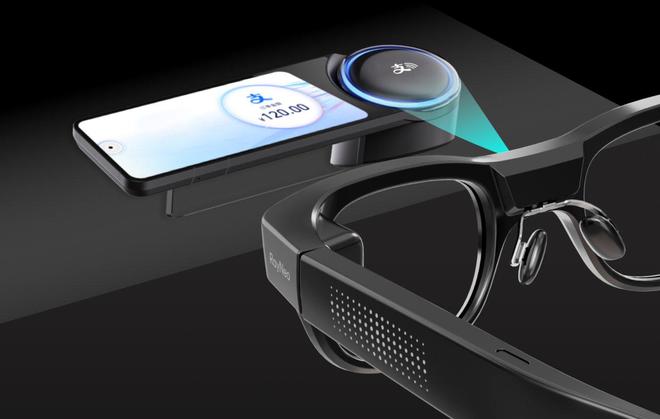
Core Insights - The collaboration between Thunderbird Innovation and Ant Group has led to the launch of the Thunderbird X3 Pro, the world's first AI glasses that support "Alipay Tap to Pay" functionality, allowing users to complete payment processes directly through the glasses [2][3] - The AI glasses industry is at a critical turning point, transitioning from technology validation to large-scale implementation, with payment integration reshaping the value chain of AI and AR glasses [2] Group 1: Product Features - The Thunderbird X3 Pro allows users to complete the entire payment process on the glasses without needing to connect to a smartphone, enabling a "look and pay" experience [3] - Users can initiate payments by pressing a button on the glasses, scanning a blue ring, and confirming payment with a voice command, eliminating the need for voice activation or manual input of payment amounts [3] Group 2: Security Measures - Thunderbird Innovation has implemented a comprehensive risk control system in collaboration with Ant Group to ensure payment security, including voiceprint recognition to respond only to authorized users [3] - Users have the ability to adjust payment limits, disable payment permissions, or unlink devices through Alipay, ensuring full control over their payment accounts [3] Group 3: Market Growth and Future Plans - According to Counterpoint, global smart glasses shipments are expected to grow by 110% year-on-year in the first half of 2025, with a projected compound annual growth rate of over 60% from 2024 to 2029 [4] - In China, smart glasses shipments are anticipated to reach 2.75 million units in 2025, reflecting a 107% year-on-year increase [4] - Thunderbird plans to expand payment capabilities to additional products, including the Thunderbird V3 and V3 Slim, and develop new service capabilities such as QR code pickup, bike sharing, utility payments, and price comparison [4]

深圳机器人产业蓬勃发展,人工智能加快应用,低空经济加速“起飞” 新质生产力推高“工业第一城”
Shen Zhen Shang Bao· 2025-08-08 16:43
Group 1 - Shenzhen's industrial added value for large-scale enterprises grew by 4.3% year-on-year in the first half of 2025, with an acceleration of 0.1 percentage points compared to the first quarter [1] - The growth is supported by strategic emerging industries, with a notable development in the robotics sector, including the success of UBTECH's humanoid robot "TianGong Ultra" in a global marathon event [1] - High-tech product output in Shenzhen saw significant increases, with civilian drones, industrial robots, and 3D printing equipment growing by 59.0%, 38.0%, and 35.8% respectively [1] Group 2 - The application of artificial intelligence is accelerating across various sectors, with significant developments from companies like DJI and Tencent, supported by policies and computing power [2] - Shenzhen's low-altitude economy is rapidly developing, with the Qianhai Shekou area emerging as a hub for leading companies like Fengyi Technology [2] - The production of new energy vehicles in Shenzhen is notable, with BYD's "Shenzhen" roll-on/roll-off ship recently transporting 6,817 vehicles to Europe [2] Group 3 - Strategic emerging industries in Shenzhen are experiencing robust growth, with an expected increase of 10.5% in added value for 2024, accounting for 42.3% of the regional GDP [3] - The number of national high-tech enterprises in Shenzhen has surpassed 25,000, with significant additions to specialized and innovative small giant enterprises [3] - The added value of artificial intelligence, robotics, and low-altitude industries grew by 12.7%, 15.9%, and 26.4% respectively, while new energy vehicle production surged by 69.2%, representing 22.3% of the national total [3]

最高超亿元,2家AR相关企业获融资
Sou Hu Cai Jing· 2025-08-05 10:18
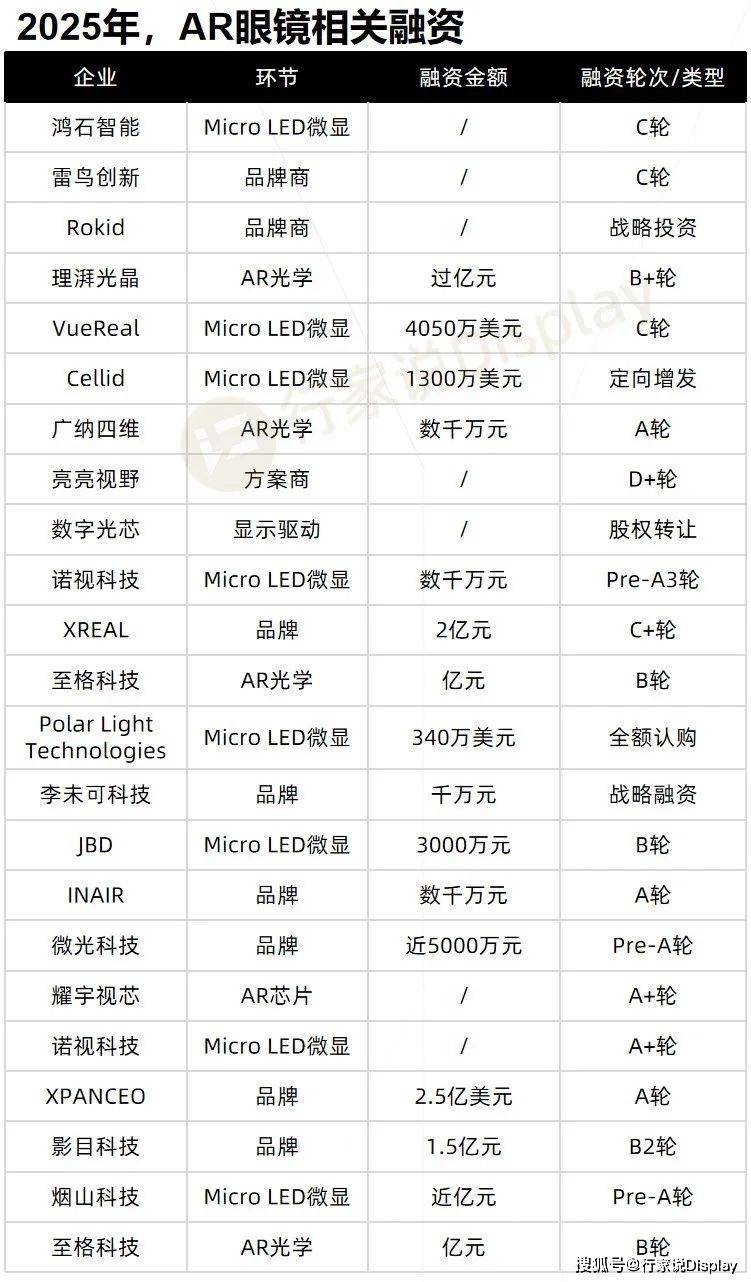
Group 1 - The core viewpoint of the articles indicates that the AR glasses sector is entering a financing boom, with multiple companies securing significant funding recently [1][2][5] - Chip Screen Semiconductor has completed a multi-million Pre-A round financing led by Zhonghang Capital, focusing on 8-inch silicon-based Micro LED production [1][5] - ZhiGe Technology, an AR optical manufacturer, has achieved two rounds of financing totaling over 100 million yuan within six months, indicating strong investor interest in AR technology [1][4] Group 2 - The financing data shows that terminal brand manufacturers are securing large amounts of funding, which constitutes a major share of AR-related financing, while upstream core hardware is becoming a hot investment area [4][5] - Major companies like Meta, Samsung, Apple, and Alibaba are actively investing in AR glasses, reflecting confidence in the AR technology market [5][6] - The industry is moving from concept to commercial realization, as evidenced by the increasing number of financing events and the involvement of large tech firms [6]
百镜大战:智能眼镜市场的商业逻辑与未来形态
混沌学园· 2025-08-04 10:54
Core Viewpoint - The smart glasses market is experiencing a significant surge, with global shipments expected to increase by 210% in 2024, surpassing 2 million units for the first time, driven by successful collaborations like Meta's with Ray-Ban [2][3]. Market Dynamics - The Chinese market is entering a competitive phase referred to as the "Hundred Glasses War," with major players like Xiaomi, Alibaba, Baidu, Tencent, and ByteDance making strategic moves [3]. - The competition is not merely about hardware specifications but involves deeper business models, ecosystem strategies, and future computing paradigms [5]. Technology Pathways - The smart glasses market is fragmented due to the lack of unified underlying technology, leading to three distinct technological pathways: - **AI-Enhanced Audio/Camera Glasses**: These resemble regular glasses and focus on hands-free AI interaction without a display [7][8]. - **Wearable AR Display Devices**: This pathway emphasizes screen projection for a personal virtual experience, with varying optical solutions [9][10]. - **Industrial/Enterprise AR Headsets**: Targeting the enterprise market with advanced features and high performance [11][12]. Strategic Players - **Meta**: Holds a dominant position with a 50.8% market share in AR/VR, leveraging partnerships to integrate technology with fashion brands [14]. - **XREAL**: Focuses on providing superior wearable display experiences, emphasizing core technology over market hype [15]. - **Thunderbird Innovation and Rokid**: Aim to balance technological ideals with market realities, targeting younger demographics [16][17]. - **Xiaomi and Huawei**: Xiaomi positions its AI glasses as a strategic entry point into a broader ecosystem, while Huawei adopts a more cautious approach [18][19]. Underlying Logic - The shift from "independent device" to "distributed AI" is crucial for understanding the strategies of Xiaomi and other players [20]. - Xiaomi's approach involves creating new dimensions of value through distributed computing and predictive services, moving beyond traditional smartphone models [24][26]. Business Model Innovations - Xiaomi's model emphasizes value creation from the entire ecosystem rather than just the hardware, with a focus on ongoing intelligent services [28]. - The potential for user lifetime value is significantly enhanced through this ecosystem approach, allowing for hardware to be sold at low margins to attract users [28]. Insights for Innovators - The article suggests that startups should avoid direct competition with giants on visible features and instead focus on unique dimension innovations [36][37]. - Identifying overlooked elements and creating new value dimensions can provide significant opportunities in the competitive landscape [39][40]. Future Outlook - The outcome of the "Hundred Glasses War" is likely to be a gradual evolution of multiple successful models rather than a single dominant product [41]. - The market for smart glasses is projected to grow from $878.8 million in 2024 to $4.1293 billion by 2030, with a compound annual growth rate of 29.4% [48].


“工业第一城”深圳蓄势卡位新兴产业
2 1 Shi Ji Jing Ji Bao Dao· 2025-08-01 07:18
Core Insights - Shenzhen's industrial output showed resilience in the first half of the year, with a year-on-year growth of 4.3% in industrial added value for enterprises above designated size, indicating a slight acceleration from the first quarter [1][7] - High-tech product output in Shenzhen continued to grow rapidly, with significant increases in the production of civilian drones (59.0%), industrial robots (38.0%), and 3D printing equipment (35.8%) [1][6] - The strategic emerging industries in Shenzhen contributed over 1.5 trillion yuan to the added value, accounting for nearly 45% of the city's GDP [1] Industrial Performance - In the first half of the year, Shenzhen's industrial technology transformation investment surged by 47.1%, reflecting a strong commitment to upgrading production equipment and technology [10] - The city's advanced manufacturing and high-tech manufacturing sectors have seen a steady increase in their share of the overall industrial output, particularly in the electronic information manufacturing sector, which has shown a recovery over the past four months [3][11] - Comparatively, other major industrial cities in China, such as Suzhou (8.0%), Wuxi (6.7%), and Chongqing (5.6%), have outpaced Shenzhen's growth, raising concerns about maintaining its status as the "Industrial Capital" [2][7] Innovation and Emerging Industries - Shenzhen's industrial landscape is characterized by a strong focus on innovation, with a market-driven mechanism that allows for rapid responses to market demands and promotes technological commercialization [8][11] - The city has seen a proliferation of new enterprises in emerging sectors, such as robotics, drones, and AI, with companies like Huawei, DJI, and UBTECH leading the charge [1][5][9] - The integration of AI and smart hardware into traditional industries is driving digital transformation and creating new growth opportunities, as evidenced by advancements in the eyewear sector with AI-enabled products [5][6] Future Outlook - Moving forward, Shenzhen aims to strengthen its technological innovation capabilities and enhance its research and development in emerging industries and future technologies [11] - The city is expected to continue fostering a robust ecosystem for innovation, supported by a diverse range of enterprises from large corporations to specialized small and medium-sized enterprises [9][11] - The upcoming industrial projects and reforms aimed at supporting innovation are anticipated to further solidify Shenzhen's position in the high-tech manufacturing landscape [10][11]
直击WAIC:让用户排长队体验的智能眼镜,今年究竟有什么新东西?
3 6 Ke· 2025-07-31 11:00
Core Insights - The rapid development of artificial intelligence technology has made AI hardware a hot investment area, with OpenAI acquiring an AI hardware company for $6.5 billion, highlighting the growing interest in this sector [1] - In May 2025, China saw 87 financing events in the AI industry, with AI hardware being the most active segment, accounting for 42 of these events [1] - The WAIC 2025 showcased a shift from large model parameters to scenario-based applications, with AI hardware products prominently displayed [1] AI Glasses Market - Smart glasses have emerged as a key segment within AI hardware, with several companies, including Alibaba, Rokid, and XREAL, showcasing their latest products at WAIC [2][6] - Global shipments of AI glasses are projected to grow from 340,000 units in 2023 to 2 million units by 2028, indicating a significant market potential [4] - The success of AI glasses hinges on identifying practical use cases and achieving commercialization [4][24] Product Features and Competition - Various brands are focusing on different aspects of smart glasses, such as functionality and display capabilities, with products like Rokid Glasses and LAWK series emphasizing daily usability [9][12] - XREAL One Pro and Halliday AI glasses prioritize display features, with XREAL enhancing the field of view and Halliday utilizing a unique retinal imaging technology [13][14] - The competition is intensifying as companies aim to create lightweight, user-friendly designs while integrating advanced functionalities [19][20] Sales Performance and Market Dynamics - The AI glasses market is witnessing a surge in sales, with Rokid Glasses reportedly selling 300,000 units and Xiaomi's AI glasses achieving over 20,000 units in just three days [28] - However, high return rates and product homogeneity are emerging challenges, with reports indicating a return rate of up to 40% for Xiaomi's AI glasses [30][32] - The industry's growth is contingent on developing products that offer compelling reasons for consumers to adopt and regularly use smart glasses [32]


以稳促进 向新发力 深圳经济含“金”量足含“新”量高
Sou Hu Cai Jing· 2025-07-31 00:41
Economic Overview - Shenzhen's GDP for the first half of the year reached 18,322.26 billion yuan, with a year-on-year growth of 5.1% at constant prices, indicating a stable and improving economic performance despite external pressures [1] - The economic report highlights Shenzhen's ability to maintain growth amidst significant international changes and high baseline indicators, showcasing strong resilience and vitality [1] Industrial Development - The city continues to focus on high-end, intelligent, and green manufacturing, with advanced manufacturing and high-tech manufacturing value added steadily increasing [3][4] - Investment in industrial technology transformation grew by 47.1% in the first half of the year, reflecting a robust industrial development [4] Innovation and Technology - High-tech product output saw rapid growth, with civilian drones, industrial robots, and 3D printing equipment increasing by 59.0%, 38.0%, and 35.8% respectively [5] - Shenzhen is home to a growing number of innovative enterprises, with 37 companies listed in the 2025 Global Unicorn List, indicating strong innovation vitality [5] Investment and Infrastructure - A total of 798 major projects with an investment of approximately 3.2 trillion yuan are planned for 2025, with 1,786.5 billion yuan invested in the first half of the year, achieving a progress rate of 58.1% [7] - Infrastructure investment increased by 7.7%, supporting overall investment growth [7] Consumer Market - The total retail sales of consumer goods reached 4,948.68 billion yuan, with a year-on-year growth of 3.5%, indicating a positive trend in consumer spending [8] - The "old-for-new" policy has benefited over 11 million people, driving sales of related products by approximately 468.51 billion yuan [8] Foreign Trade - Shenzhen's total import and export value reached 2.17 trillion yuan in the first half of the year, accounting for 9.9% of the national total, with exports at 1.31 trillion yuan and imports at 858.6 billion yuan, both showing significant growth [10] - The city has expanded its trade relationships, particularly with countries involved in the Belt and Road Initiative and RCEP members, enhancing its market stability [10] Future Outlook - Despite the positive growth, challenges remain, including external uncertainties and insufficient domestic demand, necessitating further efforts in fixed investment and industrial growth [11] - The focus will be on enhancing investment, consumption, and export dynamics to achieve high-quality development [11]
2025年中国AI眼镜行业研究报告
艾瑞咨询· 2025-07-31 00:02
Core Viewpoint - The article discusses the potential of AI glasses to become a transformative technology akin to the "iPhone moment," suggesting that they may redefine user interaction with the world and integrate seamlessly into daily life [2][3]. AI Glasses Definition and Classification - AI glasses are innovative wearable devices that integrate artificial intelligence with traditional eyewear, enhancing functionality and practicality [3]. - They can be categorized into five types based on integrated technologies or hardware, all aimed at improving user efficiency and experience [3]. Market Growth and Trends - The global shipment of AI glasses is projected to reach 20 million units by 2028, driven by rapid advancements in AI and AR technologies [9]. - In September 2023, Meta and Ray-Ban launched the Ray-Ban Meta AI smart glasses, achieving over 2 million units in sales, indicating a surge in the smart glasses market [9]. Industry Landscape - Various manufacturers are entering the AI glasses market, focusing on the deep integration of AI models and AR technology, leading to a diverse range of lightweight and multifunctional products [14]. - Major brands include Bose, Huawei, Xiaomi, and others, each offering distinct AI glasses products tailored to different user needs [15]. Consumer Insights - A significant portion of consumers (61%) have either purchased or plan to purchase smart glasses, with a notable preference for AI-enabled models [25]. - The price range of 2000-3000 RMB is widely accepted among consumers, reflecting a strong market foundation for AI glasses [25][28]. User Preferences and Concerns - Users prioritize functionality, comfort, and natural interaction when considering AI glasses, with audio playback, photography, and navigation being key features [32]. - Concerns regarding price, functionality, and privacy persist among potential buyers, indicating areas for improvement in product offerings [34]. Supply Chain and Technological Advancements - The AI glasses market is experiencing a shift from niche products to mainstream demand, driven by technological advancements and improved supply chain capabilities [42]. - Key developments include breakthroughs in hardware performance, increased localization of components, and the expansion of manufacturer ecosystems [42]. Retail and Marketing Strategies - Effective retail strategies emphasize experiential marketing and the integration of online and offline channels to enhance consumer engagement and drive sales [45]. - The focus on personalized services and customer experiences is crucial for converting interest into actual purchases [45]. Future Outlook - The AI glasses industry is expected to evolve towards greater technological innovation and functional integration, with a strong emphasis on user experience and ecosystem collaboration [47].

论坛| 时间即货币! 杜雨博士苏州AI大会演讲剖析AI新赛点
未可知人工智能研究院· 2025-07-29 05:23
Core Viewpoint - The article discusses the growth and potential of the AI industry in Suzhou, highlighting investment opportunities and the importance of AI in scientific research and manufacturing processes [1][7]. Group 1: AI Investment Landscape - In the Chinese primary market, AI investment volume has increased by 19.3% year-on-year, making it a standout sector amidst a challenging environment [3]. - China's global market share in AI has risen from 5% in 2018 to 20% in 2024, driven by advancements in large models [3]. Group 2: Suzhou's Industrial Foundations - Suzhou's industrial strengths are anchored in two key sectors: biomedicine and high-end equipment manufacturing, which account for 52.7% and 49.4% of the city's industrial output, respectively [4]. Group 3: Emerging Opportunities - Three major trends in AI are identified: 1. Embodied intelligence and humanoid robots, with a projected global market size of 193.8 billion USD by 2035 [5]. 2. Broadly defined embodied intelligence hardware, including AI toys, AI glasses, and in-car smart terminals, with successful case studies emerging [5]. 3. AI for Science, where five research fields are undergoing a paradigm shift driven by data and algorithms [5]. Group 4: Competitive Advantage - The essence of the AI competition is framed as a race against time, emphasizing that those who can halve the cycles of research, manufacturing, and services will gain a significant advantage [7].
智能眼镜,下一代超级终端?
Zhong Guo Qing Nian Bao· 2025-07-28 23:14
Core Viewpoint - The smart glasses market is experiencing significant growth, with major companies entering the field, leading to a competitive landscape referred to as the "Battle of Hundreds of Glasses" [1][6][10]. Market Overview - By 2025, global smart glasses shipments are expected to reach 14.518 million units, with China accounting for 2.907 million units, representing year-on-year growth of 42.5% and 121.1% respectively [1][6]. - The surge in demand is evidenced by a 7-fold increase in AI glasses sales during the "618" shopping festival and a 70% increase in AR glasses users [1]. Product Types - Smart glasses can be categorized into five types: basic audio glasses, glasses with cameras, AI+AR glasses, split AR glasses, and VR glasses [2]. - The majority of products on the market fall into the second category, with Xiaomi's AI glasses being a notable example [2]. Consumer Trends - The user base is shifting from tech enthusiasts to mainstream consumers, with a growing interest in practical features such as voice assistance, photography, translation, and navigation [5][6]. - The demand for smart glasses is being driven by the need for portable devices that facilitate information interaction and real-time assistance [7]. Technological Advancements - Recent advancements in AI and AR technologies have made smart glasses more viable, with improvements in display quality, weight, and battery life [8][10]. - Key technologies include micro-display and optical waveguide technologies, which have reached a level of maturity that allows multiple companies to enter the market [8]. Industry Competition - The competitive landscape is characterized by the entry of various players, including tech giants, internet companies, and traditional eyewear manufacturers, all vying for market share [6][10]. - The market is witnessing a rapid evolution, with new products and features being introduced regularly [6]. Future Outlook - Experts suggest that while smart glasses have the potential to become the next major interface for AI interaction, they still face challenges in performance, weight, and battery life [10][11]. - The industry is expected to undergo further technological and market development over the next 5 to 10 years before smart glasses can achieve mainstream adoption [10][12].