华润啤酒

Search documents
寸土寸金的深圳,这个区放出“宠”企空间大招
Sou Hu Cai Jing· 2025-12-13 13:06
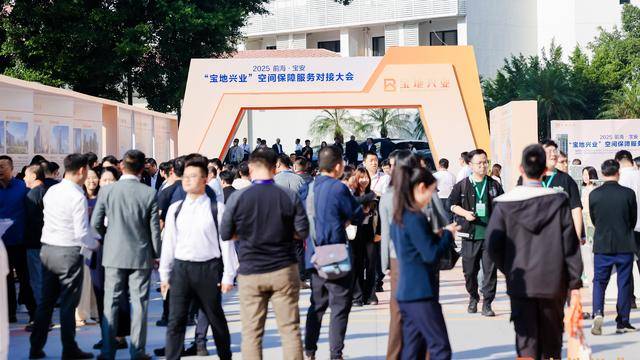
Core Viewpoint - The article highlights the strategic advantages of Bao'an in Shenzhen, emphasizing its role as a key area for industrial development within the Greater Bay Area, supported by significant land and space offerings for businesses [1][3][5]. Group 1: Strategic Location and Economic Potential - Bao'an's strategic position in the Greater Bay Area is underscored, making it a vital hub for innovation and economic activity, similar to Silicon Valley's role in the San Francisco Bay Area [3][5]. - The area has seen a transformation from a peripheral zone to a central urban area, enhancing its attractiveness for businesses looking to establish a presence in the region [3][6]. - Major infrastructure developments, such as the Shenzhen Airport's "three-runway era" and the Shenzhong Channel, are enhancing Bao'an's connectivity and economic potential [6][21]. Group 2: Industrial Ecosystem and Business Environment - Bao'an boasts a robust industrial ecosystem with nearly 560,000 enterprises and five trillion-level industrial clusters, creating a conducive environment for business growth [8][10]. - The region is home to over 380 national-level "little giant" enterprises and 7,397 national high-tech enterprises, indicating a strong innovation capacity and economic dynamism [10][21]. - The local government is actively enhancing the business environment by providing substantial land and space resources, including over 300 hectares of industrial land and 20 million square meters of quality industrial space [15][18]. Group 3: Innovative Business Services - The introduction of a "space supermarket" concept allows businesses to select industrial space based on their specific needs, enhancing the efficiency of the space allocation process [18][20]. - Bao'an's government is committed to creating a supportive ecosystem for businesses, offering various types of spaces tailored to different stages of enterprise development, from startups to established firms [20][21]. - The focus on a full-chain support system aims to position the local government as a partner for businesses, fostering long-term growth and collaboration [21].

华润啤酒携手歪马送酒推出“雪花全麦白啤” 加码即时零售新赛道
Zheng Quan Ri Bao Wang· 2025-12-12 10:16
Core Insights - The launch of "Snowflake Whole Wheat White Beer" marks a significant collaboration between China Resources Beer and the instant retail platform Yima Songjiu, indicating a shift from traditional supply and sales relationships to deep integration and value co-creation [1][2] Group 1: Product Launch - "Snowflake Whole Wheat White Beer" is the first customized product developed through the strategic agreement signed in March 2025 between China Resources Beer and Yima Songjiu [1] - The product is priced competitively at 7.5 yuan per can (500ml) and 74.9 yuan per box (12 cans), aiming to penetrate the market with a strong value proposition [1] - The product was launched on December 5, available exclusively through Yima Songjiu's network of over 2,000 terminals, offering an average delivery time of 15 minutes [1] Group 2: Strategic Collaboration - The partnership addresses the long-standing challenge of disconnection between traditional beer companies and end consumers, utilizing consumer data from instant retail platforms to guide product development [2] - The launch exemplifies the ability of traditional beer companies and emerging instant retail platforms to collaborate effectively, responding quickly to market demands and creating popular products [2] - The ongoing strategic collaboration is expected to foster a more agile, efficient, and personalized beer consumption ecosystem, benefiting the entire beverage industry [2]

借AI之力,破局营销增长:AI+创新科技大会—AI+营销论坛圆满收官
Xi Niu Cai Jing· 2025-12-12 07:25
Core Insights - The AI+ Innovation Technology Conference held in Shanghai focused on how AI can reshape marketing growth, attracting over 200 industry experts and marketing elites, with 82.8% from brand companies and around 40% in senior management positions [1][4]. Group 1: AI in Marketing - The forum discussed various topics including AI's role in reconstructing marketing operations, practical applications in the beauty and maternal industries, and insights into consumer behavior in the AI era [1]. - Deloitte's partner highlighted the expanding breadth and depth of AI applications, emphasizing the need for companies to leverage AI for brand, talent, and data asset development [5]. - Natural brand Chando shared its AI implementation journey, focusing on transforming from traditional models to consumer-facing platforms, and the importance of data governance [6]. Group 2: Industry Challenges and Opportunities - IPG's Chief Strategy Officer discussed the rapid transformation of the marketing ecosystem due to AI, identifying challenges such as talent shortages and data security concerns [8]. - A roundtable discussion featured experts exploring whether AI serves as a cost-reduction tool or a value-creation engine in marketing [13]. - The CEO of AIGC Innovation Base presented on the practical applications of AI in retail, emphasizing the need for internal AI communities to enhance operational efficiency [14][15]. Group 3: Case Studies and Future Directions - The Chief Product Officer of Kidswant detailed the company's digital transformation journey, highlighting the launch of a large language model for the maternal and infant industry [17]. - White Elephant Food Group's design head discussed the evolution of AIGC from a productivity tool to a creative partner, showcasing successful marketing campaigns driven by AI [18]. - The CEO of SenChuang QiRui shared insights on AI's role in e-commerce, presenting solutions for cost reduction and operational efficiency, predicting a new era for AI in the industry [20]. Group 4: Awards and Recognition - The conference concluded with the iDigital Annual Digital Marketing Awards and AI Innovation Awards, recognizing contributions and innovations in the digital marketing and AI sectors over the past year [21].

平安证券(香港)港股晨报-20251212


Ping An Securities Hongkong· 2025-12-12 02:41
Market Overview - The Hong Kong stock market experienced fluctuations, with the Hang Seng Index closing at 23,831 points, down 145 points or 0.61% [1] - The Hang Seng Technology Index fell by 0.83%, with a market turnover of HKD 182.48 billion [1] - In the US market, the Dow Jones increased by 1.34% to a record high of 48,704.01 points, while the S&P 500 rose by 0.21% [2] Investment Opportunities - The report emphasizes the attractiveness of low-valuation, high-dividend sectors in the Hong Kong market, suggesting that these areas remain appealing for capital allocation [3] - Key sectors to focus on include artificial intelligence, semiconductors, industrial software, and state-owned enterprises with low valuations and high dividends [3] - The report highlights the potential for long-term growth in technology sectors, particularly in companies leading in semiconductors and robotics [3] Company Performance - Meituan-W and Xiaomi Group-W saw increases of 1.50% and 0.96% respectively, while Hua Hong Semiconductor and Horizon Robotics experienced declines of 4.80% and 3.34% [1] - Oracle's stock dropped nearly 11% following concerns over high valuations in the tech sector, despite the overall market benefiting from the Federal Reserve's interest rate cuts [2] - The report suggests monitoring companies in the copper mining and smelting sectors, such as China Nonferrous Mining (1258.HK) and Luoyang Molybdenum (3993.HK), due to rising copper prices driven by demand from AI data centers and electric vehicles [9]
薪酬新规透视 | 鹏华陈璇淼5只产品跑输三年基准,4只跑输超20%,持仓高度重合格力电器、贵州茅台等个股
Xin Lang Cai Jing· 2025-12-11 09:53
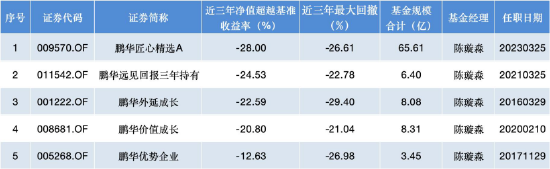
Core Viewpoint - The recent reform of the compensation system in the public fund industry has drawn significant market attention, marking the arrival of an "era of performance" where nearly a thousand fund managers face potential salary reductions due to underperformance [1][7]. Summary by Relevant Sections Compensation Reform - According to the new guidelines from the Asset Management Association of China, if a fund manager's product returns are more than 10 percentage points below the performance benchmark over the past three years and the fund's profit margin is negative, their performance-based compensation must be reduced by at least 30% [8]. - Fund companies are required to assess the performance of fund managers managing multiple products based on weighted criteria such as fund size and management duration, excluding funds managed for less than a year from evaluation [8]. Performance Data - As of December 10, there are 9,430 funds with performance data over the past three years, of which 1,615 funds have underperformed their benchmarks by more than 10 percentage points, and 56 funds have underperformed by over 50 percentage points [8]. - Notable underperforming funds include Guangfa High-end Manufacturing A, Fangzheng Fubon Innovation Power A, and Zheshang Smart Economic Dynamics A, with underperformance rates of 82.38%, 75.34%, and 69.84% respectively [8]. Focus on Fund Managers - The performance of senior fund managers over the past three years has become a focal point in the industry, particularly for Chen Xuanmiao from Penghua Fund, whose multiple products have shown poor performance [8]. - Data indicates that all five products managed by Chen Xuanmiao have negative returns compared to their benchmarks, with significant underperformance [8]. Specific Fund Performance - The Penghua Jiangxin Selected A fund has underperformed its benchmark by 28%, while Penghua Vision Return has underperformed by 24.53%, and other funds managed by Chen have similar negative returns [10]. - These funds have experienced notable net value declines, with maximum drawdowns ranging from 21% to 30% [10]. Portfolio Analysis - The top ten holdings across Chen Xuanmiao's five funds show a high degree of overlap, with a significant focus on consumer, pharmaceutical, and some undervalued cyclical sectors [10]. - Key stocks in the top holdings include Gree Electric Appliances, Kweichow Moutai, Renfu Pharmaceutical, and Mindray Medical, all of which are present in all five products [13]. Industry Transformation - The binding of fund managers' performance compensation to specific product benchmarks, rather than solely to fund size and management fees, indicates a profound restructuring of the asset management industry's operational rules [12]. - This shift signifies a fundamental change in industry values, emphasizing long-term investment philosophy, sustainable performance, and overall research capabilities of firms [12].

2025深圳国际高性能医疗器械展启幕
Nan Fang Ri Bao Wang Luo Ban· 2025-12-11 09:22
Core Viewpoint - The 2025 Shenzhen International High-Performance Medical Device and Innovative Pharmaceutical Exhibition aims to create an industry exchange platform, focusing on the theme of "Innovative Drugs and Devices, Collaborative Win-Win" to showcase cutting-edge achievements in the pharmaceutical and medical device industries and promote cooperation between Shenzhen and Hong Kong [1] Group 1: Exhibition Overview - The exhibition will take place in Hong Kong on December 11 and in Shenzhen from December 18 to 20, featuring a dual-city model [1] - The Hong Kong segment will focus on international clinical trials, technology and product exports, cell and gene therapy, AI in medical devices, and brain science [1] - The Shenzhen segment will cover the entire pharmaceutical and medical device supply chain, showcasing high-performance medical devices and innovative pharmaceuticals, including biomanufacturing, AI+healthcare, aesthetic devices, and home health [1] Group 2: Participation and Forums - The exhibition will feature over 300 participating companies and institutions, including global leaders like Siemens Healthineers, Medtronic, and Abbott, as well as domestic pioneers [2] - More than 20 high-level sub-forums will be held, addressing key topics such as policy interpretation, cutting-edge technology, clinical practice, market trends, and investment financing [2] - Notable experts and over 2,500 industry leaders will attend the opening ceremony and forums to share insights [2] Group 3: Highlights and Achievements - The exhibition will showcase five major highlights: high standards, broad fields, complete supply chains, new achievements, and a comprehensive ecosystem [3] - Significant technological advancements in Shenzhen's pharmaceutical and medical device sectors will be announced during the opening ceremony [3] - Shenzhen's medical device industry has been integrated into the "20+8" key industrial clusters, with a projected growth in output value from 128 billion to 157.6 billion yuan from 2020 to 2024, maintaining an annual growth rate of 5.3% [3]
即时零售迎“奇点”,巨头激战正酣
Zhong Guo Ji Jin Bao· 2025-12-11 08:32
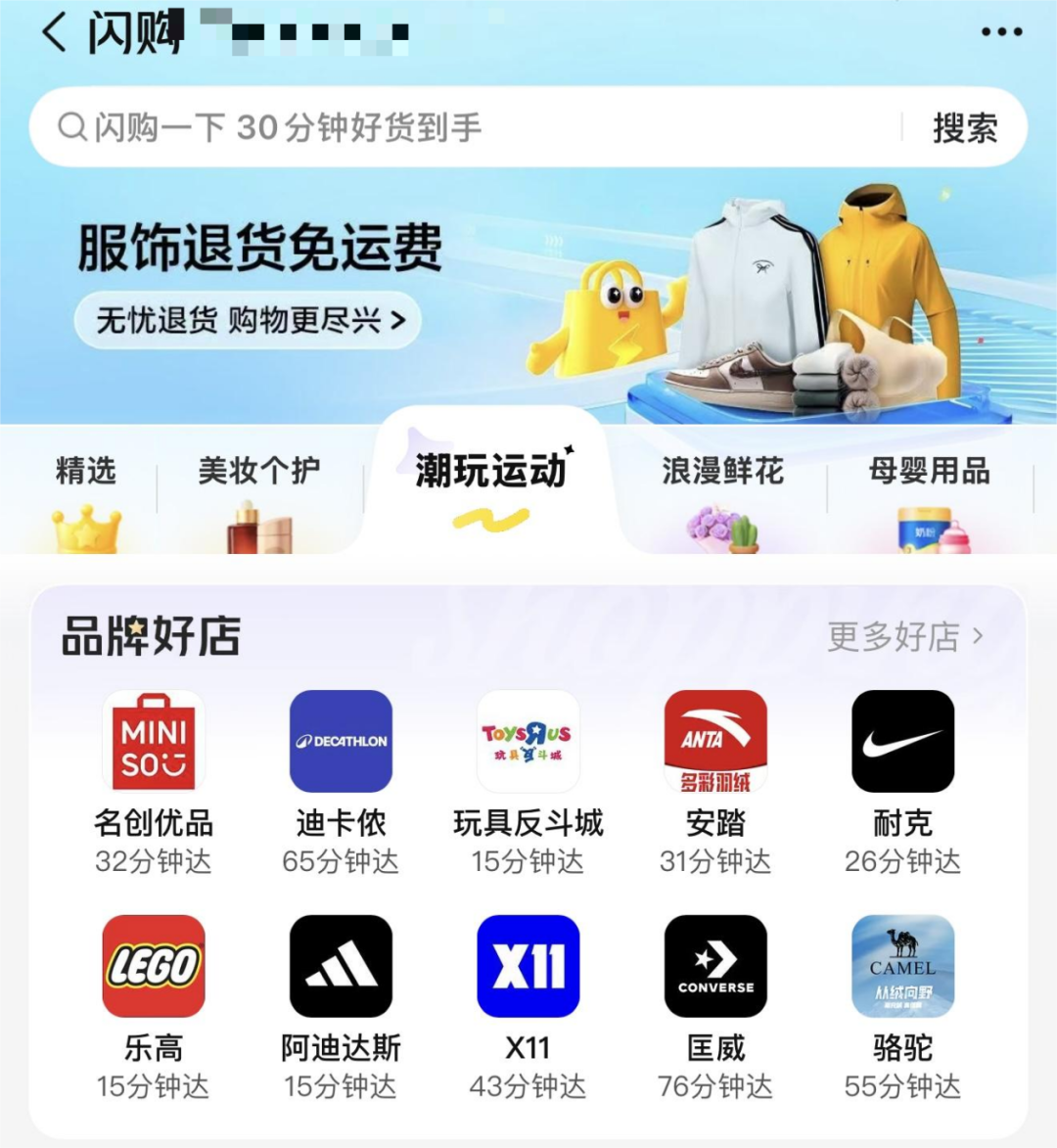
Core Insights - The instant retail market is projected to reach 971.4 billion yuan by 2025, with a year-on-year growth of 24.4%, nearing the trillion yuan mark [1][3] - Major e-commerce platforms are heavily investing in instant retail, with Alibaba, JD, and Meituan collectively spending nearly 60 billion yuan in Q3 this year [3] - Instant retail is evolving from a decade-long journey of O2O and community group buying to a more robust business model that emphasizes speed and convenience [3][4] Market Expansion - The instant retail industry is experiencing rapid growth, with expectations to hit 2 trillion yuan by 2030, maintaining a compound annual growth rate of 25% [3] - The shift towards instant retail is reshaping investment values in sectors like beauty, apparel, and food and beverage [2][3] Consumer Behavior - The "post-95" generation prioritizes delivery speed, with over 50% wanting same-day or even half-day delivery, indicating a strong demand for instant retail services [3][4] - Instant retail aligns with the consumer desire for immediate gratification, enhancing the shopping experience for younger demographics [4] Channel Transformation - The beauty and personal care sector is rapidly adopting instant retail due to its product characteristics, such as high price points and urgent demand scenarios [5] - Sportswear brands like Li Ning and Anta are also entering the instant retail space, leveraging local store networks for quick delivery [5][7] Operational Innovations - Qingdao Beer has successfully integrated instant retail, achieving a tenfold increase in GMV from 2 billion yuan to nearly 20 billion yuan in five years, with a compound annual growth rate exceeding 50% [8] - Instant retail is enabling traditional retail businesses to transition from a "goods and venue" mindset to an "instant service" model [9] Competitive Landscape - The instant retail market is currently characterized by intense competition, with major players engaged in a subsidy war that has led to significant cash flow challenges [11][12] - Despite increased sales through instant retail channels, many companies are struggling with profitability due to high platform fees and operational costs [12] Strategic Recommendations - Retail brands need to explore business models that are more compatible with instant retail and enhance their supply chain capabilities to thrive in this evolving landscape [12]


价值研究所|即时零售迎“奇点”,巨头激战正酣
Zhong Guo Ji Jin Bao· 2025-12-11 08:31
Core Insights - The instant retail market in China is projected to reach 971.4 billion yuan by 2025, with a year-on-year growth of 24.4%, nearing the trillion yuan mark [2][3] - Major e-commerce platforms are heavily investing in instant retail, with Alibaba, JD, and Meituan collectively spending nearly 60 billion yuan in the third quarter of this year [3] - The business model of instant retail, which focuses on rapid delivery from local warehouses, has evolved over the past decade and is now gaining traction among consumers, particularly the younger demographic [4][5] Market Expansion - The instant retail sector is expanding rapidly, with expectations to reach 2 trillion yuan by 2030, maintaining a compound annual growth rate of 25% [3] - Instant retail has transitioned from a focus on fresh produce to a broader range of products, including beauty and apparel, which are well-suited for quick delivery due to their high demand for timeliness [5][7] Consumer Behavior - The younger generation, particularly those born after 1995, prioritize delivery speed, with over 50% expecting same-day or even half-day delivery [3][4] - Instant retail aligns with the "immediate purchase and delivery" mindset of younger consumers, enhancing their shopping experience and brand loyalty [4] Channel Transformation - The shift towards instant retail is prompting a re-evaluation of market shares, with brands that embrace new channels likely to stand out [5] - Beauty products are among the fastest-growing categories in instant retail due to their high price points and urgent demand scenarios [5][7] Operational Innovations - Companies like Qingdao Beer have adapted their operations to leverage instant retail, achieving a nearly tenfold increase in gross merchandise volume (GMV) from 2 billion yuan to approximately 20 billion yuan over five years [8] - Instant retail is also enabling traditional retail businesses to transition from a "goods and venue" mindset to an "instant service" model, opening new growth avenues [8][10] Competitive Landscape - Despite the rapid growth, the instant retail sector is still in its early stages, with major players engaged in a subsidy war that raises questions about long-term profitability [10][11] - Retail brands face challenges from high platform fees and competition from e-commerce platforms that are also developing their own private label products, which can undermine traditional brands [11] Future Outlook - The future of retail is expected to be multi-faceted, with no single model completely replacing the others, as companies strive to find business models that fit the instant retail paradigm [11] - Companies that can enhance their supply chain responsiveness through digital transformation are likely to thrive in the instant retail era [11]

价值研究所|即时零售迎“奇点”,巨头激战正酣
中国基金报· 2025-12-11 08:21
Core Viewpoint - The instant retail market in China is expected to reach 971.4 billion yuan in 2025, with a year-on-year growth of 24.4%, indicating a significant shift in consumer behavior towards faster delivery services [2][5]. Market Expansion - The instant retail industry is expanding rapidly, with projections indicating a market size of 2 trillion yuan by 2030 and a compound annual growth rate of 25% [5]. - Major e-commerce platforms like Alibaba, JD, and Meituan have invested nearly 60 billion yuan in instant retail in Q3 this year, highlighting the high investment and growth potential in this sector [5]. Consumer Behavior - The "post-95" generation values delivery speed more than previous generations, with over 50% preferring same-day or even two-hour delivery [5][6]. - Instant retail meets the demand for immediate gratification, reshaping consumer experiences and brand connections [6]. Channel Transformation - The beauty and personal care sector is experiencing significant growth in instant retail, with brands like Betaini and Proya quickly adapting to this model due to the high demand for timely delivery [8]. - Sportswear brands such as Li Ning and Anta are also entering the instant retail space, enhancing consumer convenience through local store fulfillment [10]. Operational Innovations - Qingdao Beer has successfully integrated instant retail, achieving a tenfold increase in GMV from 2 billion yuan to nearly 20 billion yuan in five years, with a compound annual growth rate exceeding 50% [11]. - Instant retail allows for cold chain delivery, ensuring product quality for sensitive items like fresh beer and frozen foods [10]. Market Dynamics - Instant retail is creating new growth avenues for retail companies, shifting from traditional "goods and space" models to "instant service" approaches [11]. - The "Good Idea Snack Paradise" brand has seen a 200% increase in order volume over three months, with over 90% of new customers coming from online channels [12]. Competitive Landscape - Despite the rapid growth, major players are currently in a "burning cash" phase, with significant cash flow losses reported by Meituan, Alibaba, and JD [13]. - Retail brands face challenges from aggressive platform subsidies and competition from private label products, necessitating a reevaluation of their business models [14]. - Companies that can enhance supply chain efficiency through digital transformation are likely to thrive in the instant retail era [14].

国家发改委、国家能源局重要通知!
中国能源报· 2025-12-11 07:13
12月11日,国家发改委、国家能源局发布《关于优化集中式新能源发电企业市场报价的通知(试行)》。其中指出,参与集中报价的 新能源发电企业,原则上集中后的总装机规模不应超过所在省(区、市)电力市场单个最大燃煤发电厂装机规模(不含特高压输电通 道配套电源)。原则上仅允许同一集团(同一母公司、同一控股股东、同一实际控制人等)内同一省(区、市)的新能源发电企业进 行集中报价,禁止跨集团、跨省(区、市)集中报价。禁止具有竞争关系的经营者达成固定或变更商品关系的垄断协议。 以下为原文 国家发展改革委 国家能源局关于优化集中式 新能源发电企业市场报价的通知(试行) 发改能源〔2025〕147 6号 各省、自治区、直辖市及新疆生产建设兵团发展改革委、能源局,北京市城市管理委员会,天津市、辽宁省、甘肃省工业和信息化局 (厅)、重庆市经济和信息化委员会,国家能源局各派出机构,中国核工业集团有限公司、国家电网有限公司、中国南方电网有限责任 公司、中国华能集团有限公司、中国大唐集团有限公司、中国华电集团有限公司、国家电力投资集团有限公司、中国长江三峡集团有限 公司、国家能源投资集团有限责任公司、华润(集团)有限公司、中国广核集团有限 ...