华电国际

Search documents
公用事业行业周报(2025.12.01-2025.12.05):煤价加速回落,风电开发积极性优于光伏-20251207
Orient Securities· 2025-12-07 09:46
Investment Rating - The report maintains a "Positive" investment rating for the utility sector [4]. Core Insights - Coal prices are rapidly declining, and the enthusiasm for wind power development is higher than that for photovoltaic (PV) projects [2][7]. - The utility sector is expected to continue to be a valuable dividend asset, with low-priced utility assets worth attention [7]. - The report suggests that the profitability of the thermal power industry is expected to continue to grow, with improved commercial models [7]. Summary by Sections Coal Market - Coal prices have decreased across the board, with the Qinhuangdao port Shanxi Q5500 thermal coal price at 785 RMB/ton as of December 5, 2025, down 31 RMB/ton (3.8%) week-on-week [7][13]. - Coal inventories at ports and power plants are rising, leading to increased pressure on coal traders to lower prices [7][23]. Renewable Energy - The report anticipates a slowdown in new PV installations in 2026, while wind power investment enthusiasm is expected to be stronger due to higher project profitability [7]. - The report highlights that the current stage of wind power projects has higher returns compared to PV, leading to greater investment interest in wind energy [7]. Utility Sector Performance - The utility sector index rose by 0.1% but underperformed compared to the CSI 300 index, which increased by 1.3% [38]. - The report indicates that the utility sector is still a favorable long-term investment option, particularly in a low-interest-rate environment [7]. Investment Recommendations - The report recommends several stocks within the thermal power sector, including Huadian International, Guodian Power, and Huaneng International, among others [7]. - For hydropower, it suggests focusing on high-quality river basin projects, with specific stocks mentioned [7]. - The report also notes the long-term growth certainty in nuclear power and suggests companies like China General Nuclear Power [7].






“十四五”期间 雄安新区地区生产总值年均增长17.1%
Zhong Guo Jing Ying Bao· 2025-12-04 11:17
Core Insights - The "14th Five-Year Plan" period has seen Xiong'an New Area achieve an average annual GDP growth of 17.1%, with an annual investment scale maintained at 200 billion yuan, totaling over 1 trillion yuan in completed investments [1][2] Group 1: Economic Development - Xiong'an New Area is positioned as a key area for the relocation of non-capital functions from Beijing, with significant progress in the relocation of central enterprises [1][2] - The first batch of central enterprise headquarters projects has been established, including China Star Network, China Sinochem, and China Huaneng, with additional projects such as China Datang and several universities and hospitals underway [1][2] Group 2: Infrastructure and Public Services - Major infrastructure projects, including the East-West Axis Railway and the Beijing-Xiong'an High-speed Railway, have been completed, with key projects like the National Trade Center and cultural facilities progressing as planned [2] - Public service functions in Xiong'an have been upgraded, with facilities such as the Xiong'an Sports Center and Xiong'an Library enhancing the city's cultural soft power [2] Group 3: Innovation and Industry - The innovation-driven development strategy has taken root in Xiong'an, with over 200 key enterprises in fields such as aerospace information, artificial intelligence, and digital technology [3] - A modern industrial system is forming, supported by various industrial platforms and policies aimed at promoting strategic emerging industries and upgrading traditional industries [3]
我国首个“沙戈荒”新能源外送基地进入全容量并网发电冲刺阶段
Ren Min Ri Bao· 2025-12-03 07:57
Core Viewpoint - The "Shagohuang" renewable energy export base in Hami, Xinjiang, is entering the final stage of full-capacity grid-connected power generation, with over 70% of its installed capacity coming from renewable sources [1][3]. Group 1: Project Overview - The "Shagohuang" renewable energy base covers an area of approximately 1,651 square kilometers and has a total installed capacity of 14.2 million kilowatts [3]. - The project employs a "wind-solar-thermal-storage integrated" model, allowing various energy and storage technologies to work together, ensuring stable energy supply [3][4]. - Once fully operational, the base is expected to deliver 36 billion kilowatt-hours of green electricity annually through the Hami-Chongqing ±800 kV UHV project [3]. Group 2: Resource Utilization - Hami has abundant land and renewable resources, with 66.57% of its 142,100 square kilometers being Gobi desert, providing ample space for large-scale renewable energy development [2]. - The region experiences nearly 200 days of wind speeds above level 8 and has annual sunshine hours ranging from 3,100 to 3,300, making it one of the sunniest areas in China [2]. Group 3: Energy Stability and Technology - The base features the largest "Shagohuang" grid-type energy storage system in the country, addressing challenges posed by extreme weather and the intermittent nature of renewable energy [4][5]. - The innovative grid-type energy storage system enhances the stability of the power grid by actively adjusting output in response to fluctuations, unlike traditional storage systems [5]. Group 4: Economic Efficiency - The project focuses on optimizing technology to improve power generation efficiency and reduce transmission losses, ultimately providing low-cost electricity [7]. - The integrated control system allows for real-time monitoring and optimal dispatch of both renewable and coal power, potentially increasing renewable energy absorption capacity by 3% [8][9]. - The construction of a medium-voltage direct current system reduces conversion losses and enhances stability, allowing for more efficient transmission of generated electricity [10]. Group 5: Water Resource Management - The project has implemented a centralized cooling tower system, significantly reducing water consumption by over 60% compared to traditional coal power plants [13].
中泰国际每日晨讯-20251203
ZHONGTAI INTERNATIONAL SECURITIES· 2025-12-03 02:30
2025 年 12 月 3 日 星期三 欧盟 11 月通胀率初值为 2.2%,皆高于市场预期的 2.1%及 10 月终值 2.1%。 行业动态: 汽车行业方面,新势力车企周二跑输大盘。蔚来(9866 HK)公布 11 月交付量同比+76.3%,环比-10%,前 11 月完成全年目 标 63%。并且根据国内媒体报道,一辆蔚来 EC6 在上海发生事故,车身断裂。受消息影响,蔚来周二下跌 6.7%至三个月低 位。小鹏汽车(9868 HK)11 月交付量同比+19%,环比-12.6%,是近六个月来首次环比下跌。周二小鹏股价下跌 5.5%。理想 汽车(2015 HK)11 月交付量同比-31.9%,环比+4.5%。股价下跌 0.8%。理想汽车仅完成全年目标销量 56.6%。临近年底, 新能源汽车行业没有出现市场先前预期的"翘尾"行情。 昨日港股医药行业主要企业多数微跌。三生制药(1530 HK)公布按照每股配售股份 29.62 港元的价格向不少于六名承配人 配售合共 1.05 亿股配售股份。配售价较前一个交易日收市价低 6.5%,三生制药昨日股价下跌。配售数量占扩大后已发行 股份总数约 4.14%,我们认为影响有限。公 ...
戈壁崛起“能源绿洲”
Ren Min Ri Bao· 2025-12-03 00:45
Core Viewpoint - The establishment of the "Shagohuang" renewable energy base in Hami, Xinjiang, aims to leverage abundant wind and solar resources in desert and Gobi areas, contributing significantly to China's clean energy transition and enhancing energy supply stability [1][2][3]. Group 1: Project Overview - The "Shagohuang" renewable energy base covers an area of approximately 1,651 square kilometers with a total installed capacity of 14.2 million kilowatts [3]. - The project employs a "wind-solar-fire-storage integrated" model, allowing for the complementary operation of various energy sources and storage technologies [3][5]. - Once fully operational, the base is expected to deliver 36 billion kilowatt-hours of green electricity annually through the Hami-Chongqing ±800 kV UHV project [3]. Group 2: Resource Utilization - Hami has a land area of 142,100 square kilometers, with Gobi desert covering 94,600 square kilometers, providing ample underutilized land for large-scale renewable energy development [2]. - The region experiences nearly 200 days of wind speeds exceeding level 8 annually and boasts 3,100 to 3,300 hours of sunshine per year, making it one of the sunniest areas in the country [2]. Group 3: Energy Stability and Storage - The base features the largest "Shagohuang" grid-type energy storage system in the country, designed to ensure the safe and stable operation of the power system [4]. - The grid-type storage system enhances the ability to actively stabilize the grid, addressing the intermittent nature of renewable energy generation [5][6]. Group 4: Economic Efficiency - The project focuses on optimizing technology to enhance power generation efficiency and reduce transmission losses, ultimately providing low-cost electricity to consumers [8]. - The integrated control room allows for real-time monitoring and optimal dispatch of both renewable and coal power, potentially increasing renewable energy absorption capacity by 3% [9][10]. Group 5: Technological Innovations - The base is implementing a medium-voltage direct current system to connect solar power directly, reducing conversion losses and improving stability [11]. - A combined cooling tower system has been introduced, significantly reducing water consumption by over 60% per megawatt-hour of electricity generated [13]. Group 6: Future Implications - The continuous optimization of technology at the base is expected to provide a replicable model for future "Shagohuang" renewable energy projects and contribute to the development of a new power system in China [14].
戈壁崛起“能源绿洲”(产经观察·收官之际看工程)
Ren Min Ri Bao· 2025-12-02 22:33
Core Viewpoint - The Xinjiang Tianshan North Gobi Energy Base is China's first "desert-gobi-wasteland" renewable energy export base, with over 70% of its installed capacity coming from renewable sources, and is nearing full capacity grid-connected power generation [2][6]. Group 1: Project Overview - The Xinjiang Tianshan North Gobi Energy Base covers an area of approximately 1,651 square kilometers and has a total installed capacity of 14.2 million kilowatts [6]. - The project employs a "wind-solar-fire-storage integrated" model, allowing for the coordination of various energy and storage technologies to ensure stable energy supply [6][9]. - Once fully operational, the base is expected to deliver 36 billion kilowatt-hours of green electricity annually through the Hami-Chongqing ±800 kV UHV project [6]. Group 2: Resource Utilization - Hami, where the base is located, has abundant land resources, with 66.57% of its 142,100 square kilometers being Gobi desert, providing excellent conditions for large-scale renewable energy development [3]. - The region experiences nearly 200 days of wind speeds above level 8 annually and has 3,100 to 3,300 hours of sunshine per year, making it one of the sunniest areas in the country [3]. Group 3: Energy Stability and Flexibility - The base features the largest "Gobi" grid-type energy storage system in the country, which is crucial for maintaining the stability of the power system in the face of extreme weather and the intermittent nature of renewable energy [7][8]. - The coal power units associated with the base are designed to operate flexibly, with a minimum output capacity of 20%, allowing them to adjust their output based on the availability of renewable energy [9]. Group 4: Economic Efficiency - The project focuses on optimizing technology to enhance the economic efficiency of power generation and transmission [10]. - The integrated control room for coal and renewable energy projects allows for real-time adjustments to optimize the mix of energy sources based on demand, potentially increasing renewable energy absorption by 3% [12][13]. - The base has implemented a mid-voltage direct current system to reduce transmission losses and improve stability by minimizing conversion processes [13]. Group 5: Water Resource Management - The coal power project has integrated cooling systems to reduce water consumption, achieving a water usage rate of 0.13 cubic meters per megawatt-hour, which is over 60% more efficient than traditional systems [15].

我国首个“沙戈荒”新能源外送基地进入全容量并网发电冲刺阶段 戈壁崛起“能源绿洲”(产经观察·收官之际看工程)
Ren Min Ri Bao· 2025-12-02 22:02
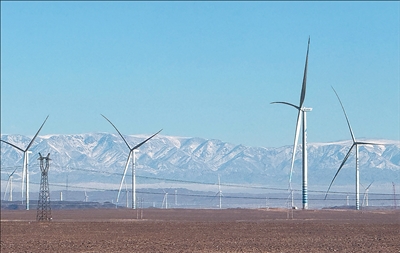
Core Viewpoint - The establishment of the "Shagohuang" renewable energy base in Hami, Xinjiang, aims to leverage the region's abundant wind and solar resources to facilitate the "Jiangdian into Yu" project, with over 70% of the energy capacity coming from renewable sources [1][3]. Group 1: Resource Utilization - The Hami region has a vast land area of 142,100 square kilometers, with 94,600 square kilometers of desert, providing ample space for large-scale renewable energy development [2]. - Hami experiences nearly 200 days of wind speeds exceeding level 8 annually and has an annual sunshine duration of 3,100 to 3,300 hours, making it one of the sunniest areas in the country [2]. Group 2: Project Specifications - The Xinjiang Tianshan North Gobi Energy Base covers approximately 1,651 square kilometers and has a total installed capacity of 14.2 million kilowatts [3]. - The project employs a "wind-solar-fire-heat-storage integrated" model, allowing for the complementary operation of various energy sources and storage technologies [3]. Group 3: Environmental Impact - Upon completion, the project is expected to generate an additional 14.2 billion kilowatt-hours of green electricity annually, saving 4.27 million tons of standard coal and reducing carbon dioxide emissions by 11.72 million tons [3]. Group 4: Energy Stability - The base features the largest "Shagohuang" grid-type energy storage system in the country, which is crucial for ensuring the safe and stable operation of the power system [4]. - The grid-type energy storage system enhances the ability to manage fluctuations in renewable energy generation, addressing challenges posed by extreme weather and the intermittent nature of renewable sources [5][6]. Group 5: Economic Efficiency - The project focuses on optimizing technology to improve the efficiency of electricity generation and transmission, thereby reducing losses and providing low-cost electricity [8]. - The integrated control room for coal and renewable energy projects allows for real-time adjustments to optimize the mix of energy sources based on demand, potentially increasing renewable energy absorption capacity by 3% [9][10]. Group 6: Water Resource Management - The project has implemented a combined cooling tower system, reducing water consumption to 0.13 cubic meters per megawatt-hour, achieving over 60% water savings [13]. - Continuous technological upgrades have led to improved coal consumption rates and higher steam pressures, contributing to the stability of green power supply for the "Jiangdian into Yu" initiative [14].
华电400MW渔光互补项目EPC总承包招标!
Xin Lang Cai Jing· 2025-12-02 11:59
Core Points - The announcement for the EPC general contracting tender for the 400MW fish-solar complementary photovoltaic power station project in Huadian Gulei Development Zone was published on December 1, with Huadian Zhangzhou Energy Co., Ltd. as the tenderer [1][5] - The project is located in Shaxi Town, Gulei Port Economic Development Zone, Zhangzhou, Fujian Province, and includes a 220kV booster station (with a 40MW/80MWh energy storage system) and a photovoltaic power station with a total installed capacity of 516.0064MWp (400MW AC) [1][5] Tender Details - The tender is divided into three sections: - Section One includes the construction of a 220kV booster station (with a 40MW/80MWh energy storage system) and the eastern photovoltaic area (installed capacity of 96.6238MWp DC, 74.7MW AC) - Section Two involves the construction of the central photovoltaic area with an installed capacity of 192.283MWp (148.2MW AC) - Section Three covers the western photovoltaic area with an installed capacity of 227.0996MWp DC (177MW AC) [6][7] - The project is scheduled to commence construction on December 30, 2025 [7] Bidder Requirements - Bidders must have good financial status, commercial reputation, and relevant qualifications, as well as at least one EPC general contracting performance record of a centralized photovoltaic power generation project of 100MWp or more from January 1, 2020, to the bid submission deadline [2][7] - Joint bids are accepted for all three sections [3][7] Submission Timeline - The deadline for submission and opening of bids is set for December 22, 2025, at 9:00 AM [4][8]
申万公用环保周报(25/11/24~25/11/28):多地规范售电批零价差欧亚气价震荡下跌-20251201
Shenwan Hongyuan Securities· 2025-12-01 11:08
王璐 A0230516080007 wanglu@swsresearch.com 莫龙庭 A0230523080005 molt@swsresearch.com 傅浩玮 A0230522010001 fuhw@swsresearch.com 朱赫 A0230524070002 zhuhe@swsresearch.com 站玩人行业 证券分析师 联系人 朱赫 A0230524070002 zhuhe@swsresearch.com 申万宏源研究微信服务号 — 申万公用环保周报(25/11/24~25/11/28) 本期投资提示: 公用事亦 2025 年 12 月 01 日 相关研究 多地规范售电批零价差 欧亚 第12年 请务必仔细阅读正文之后的各项信息披露与声明 电力:广东发函规范售电批零价差。广东电力交易中心发布关于征求广东电力零售市场交易结算 有关事项意见的函(广东交易函〔2025〕11 号)。自 2026 年起,拟对各售电公司月度平均度电 批零差价高于差价收益上限 0.01 元/千瓦时的部分,按照 1:9 比例由售电公司与零售用户分享。今 年以陕西、安徽、四川、山东、新疆为代表的多个省区相继出台针对售电公 ...
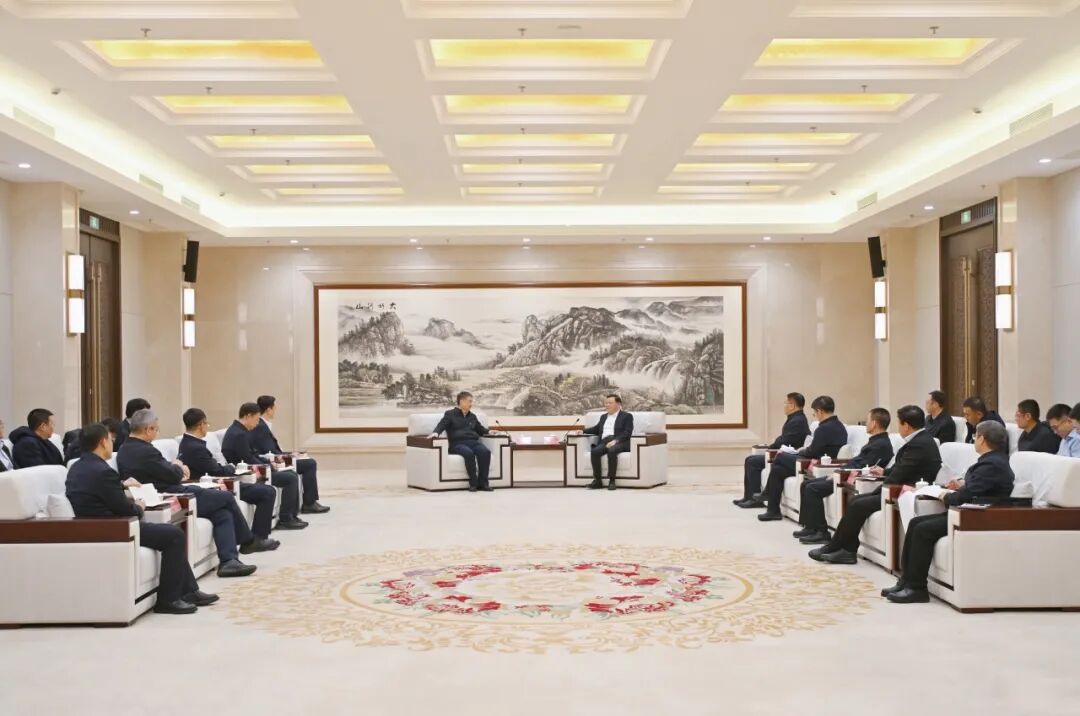
中核、中石油、华能、华电、国能、三峡,先后与这一省高层会谈
Zhong Guo Dian Li Bao· 2025-12-01 10:50
Core Insights - Multiple state-owned energy enterprises, including China National Nuclear Corporation, China National Petroleum Corporation, and China Huaneng Group, are intensifying cooperation with Inner Mongolia Autonomous Region and Baotou City in areas such as renewable energy development, intelligent coal mining, green electricity conversion, clean energy base construction, and nuclear industry [1][3][5][6][10] Group 1: Cooperation and Strategic Development - The leadership of China Huaneng Group met with Inner Mongolia's top officials to discuss collaboration in modern energy economy and the development of a clean, low-carbon energy system during the 14th Five-Year Plan [3][5] - Inner Mongolia aims to enhance traditional energy security and increase renewable energy utilization, indicating significant cooperation potential with China Huaneng [3][5] - China Huaneng Group plans to increase investment in Inner Mongolia, focusing on energy supply security and the construction of large clean energy bases [5] Group 2: China National Petroleum Corporation's Engagement - China National Petroleum Corporation's chairman met with Inner Mongolia's government officials to discuss practical cooperation and the integration of oil and gas with renewable energy [6] - The company aims to advance its refining transformation and digitalization efforts while contributing to the energy sector's modernization in Inner Mongolia [6] Group 3: China National Nuclear Corporation's Focus - China National Nuclear Corporation's leadership engaged with Baotou City officials to strengthen strategic cooperation in the nuclear industry [8][10] - The corporation emphasized the importance of aligning its development strategy with Baotou's industrial advantages, particularly in steel, rare earths, and equipment manufacturing [10] - There is a mutual interest in establishing a nuclear fuel industry cluster and promoting technological innovation in Baotou [10]