
海康威视

Search documents
智能工厂发展报告
中国信通院· 2026-01-19 08:26
Investment Rating - The report does not explicitly provide an investment rating for the industry Core Insights - The report highlights the significant progress in the development of smart factories in China, with over 15 leading smart factories, more than 500 excellent smart factories, and over 35,000 basic smart factories established, indicating a robust growth trend in the sector [9][10] - The evolution of smart factories is characterized by five core directions: expansion of factory construction, innovation in R&D design paradigms, upgrading of production capabilities, optimization of production management, and advancement in operational management [10][41] - The report emphasizes the need for the manufacturing industry to transition from quantity-driven growth to quality-driven improvements, addressing the challenges posed by global economic slowdowns and changing market demands [17][18] Summary by Sections Overall Trends - The report identifies four main drivers for the transformation of smart factories: industrial upgrades, changing market demands, technological advancements, and international cooperation [17][19] - It outlines a future vision for smart factories that includes the integration of AI across all manufacturing processes, leading to autonomous decision-making and enhanced collaboration within the manufacturing ecosystem [20][41] Industry Practices - The report describes a four-tiered system for cultivating smart factories, which includes basic, advanced, excellent, and leading levels, aimed at promoting digital transformation in manufacturing [41][42] - It notes that over 90% of manufacturing sectors are now covered by smart factory initiatives, with a focus on enhancing traditional industries and empowering consumer-driven sectors [50][49] Regional Development - The report discusses the regional disparities in smart factory development, with eastern regions leading and central regions making breakthroughs, highlighting the importance of localized strategies [12][49] Technology and Industry - The report emphasizes the need for a deep integration of technology and manufacturing systems, advocating for a shift towards a more resilient and intelligent industrial foundation [12][53] Future Outlook - The report envisions a next-generation smart manufacturing landscape characterized by autonomous manufacturing, ecological collaboration, and a focus on sustainability [12][41]
中国人形机器人,引爆全球订单
3 6 Ke· 2026-01-19 05:48
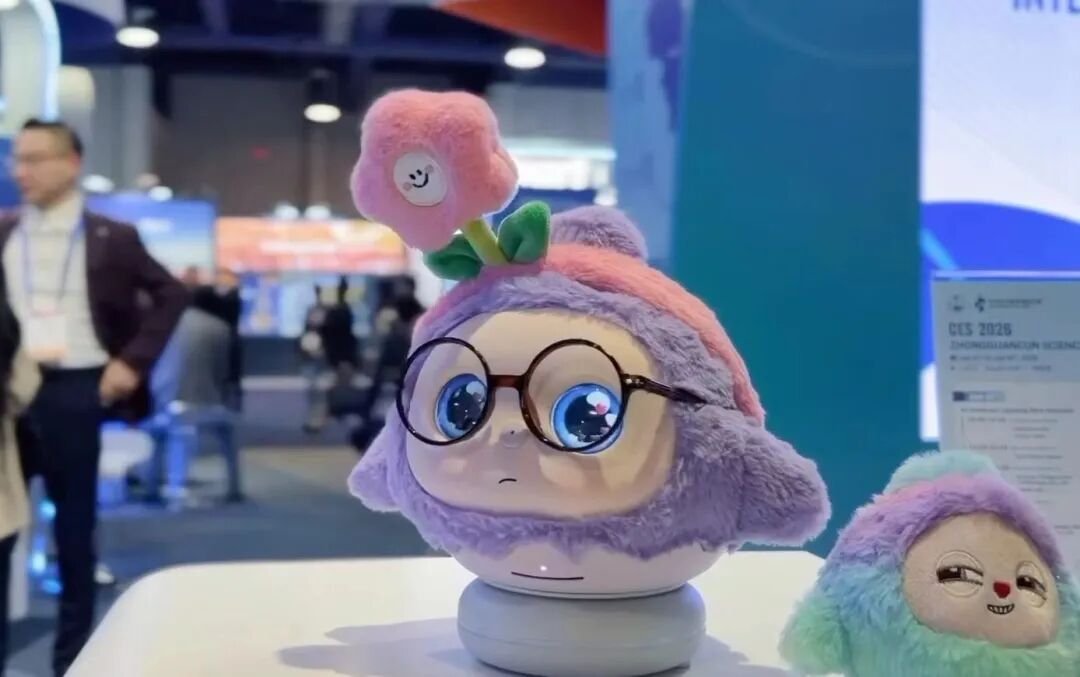
Core Insights - The Chinese robotics industry is transitioning from a "follower" to a "leader" in global technology competition, particularly in humanoid robots, as evidenced by strong performance at the 2026 CES and significant growth in the Middle East market [1][2][7] - The global humanoid robot market is expected to see a shipment volume of 13,000 units by 2025, with Chinese manufacturers like Zhiyuan and Yushu capturing significant market shares [6][12] CES Performance - The 2026 CES showcased a record number of Chinese robotics companies, breaking previous stereotypes of low-end manufacturing, with humanoid robots being the main attraction [2][3] - Companies like Accelerated Evolution reported that their Booster K1 robots were fully pre-ordered during the event, indicating strong market demand [2] Market Trends in the Middle East - The Middle East is emerging as a key market for Chinese robotics, with a 32% annual compound growth rate, driven by high purchasing power and a preference for high-end products [7][8] - Local distributors in the Middle East emphasize the importance of high-quality, technologically advanced products, as lower-end offerings could harm brand image [7] Emotional Companion Robots - LOVEAXI's AI companion robot, "lovi," gained significant attention at CES, highlighting the potential for emotional support robots in global markets [3][5] - The company noted that cultural differences between Asian and Western markets necessitate tailored product positioning and marketing strategies [6] Supply Chain and Component Strength - The rapid rise of Chinese robotics in the global market is supported by strong capabilities in core components and supply chains, with companies like Lingzi achieving significant overseas sales [10][12] - Lingzi's partnerships with top global institutions and companies demonstrate the recognition of Chinese core hardware in high-end markets [12] Localization and Market Entry Challenges - Chinese robotics companies face challenges in market entry and cultural integration, particularly in mature markets like Europe and North America, where compliance with local standards is crucial [15][16] - Companies are adopting strategies such as establishing local subsidiaries and emphasizing cultural respect to overcome these challenges [16] Strategic Evolution - The Chinese robotics industry is evolving from simple product exports to a more complex ecosystem that includes technology and standard exports [16] - The collaboration among various players in the robotics supply chain is becoming more sophisticated, with upstream component suppliers, midstream manufacturers, and downstream integrators working together [16]



消费行业2026年春节机会
2026-01-19 02:29
Summary of Conference Call Records Industry Overview - **Consumer Industry**: The consumer industry is expected to see opportunities during the 2026 Spring Festival, particularly in the export chain and food sectors. Key companies like Jiangxin Home, Zhongxin Co., and Gongchuang Turf are projected to maintain steady growth in 2026 [1][2]. - **Agriculture Sector**: The 2026 Central Document No. 1 will focus on food security, poverty alleviation, and agricultural technology. Grain production has exceeded 1.4 trillion jin for two consecutive years, but supply and demand remain tight, necessitating improvements in yield [1][4]. - **Alcohol Industry**: The white liquor market is facing a pessimistic outlook for the Spring Festival, with expected sales declines of nearly double digits due to the impact of alcohol bans and high inventory levels from the previous year [1][7]. Key Companies and Their Performance - **Jiangxin Home**: Transitioning from OEM to OBM, with over 1,000 brand stores established. Stable performance is expected despite short-term stock price fluctuations due to currency changes [3]. - **Zhongxin Co.**: Anticipated profits exceeding 600 million yuan in 2026, with a current PE ratio of about 13 times. The company is performing well in Thailand's pulp molding production [3]. - **Gongchuang Turf**: Expected to maintain a 20% growth rate in 2026, with double-digit revenue growth continuing into the fourth quarter [3]. - **Anjixin Foods**: Projected revenue growth of nearly 20% in December, indicating a rebound in the food supply sector [1][9]. Investment Opportunities - **Export Chain**: Companies in the light industry are expected to perform well, with a positive outlook for Jiangxin Home, Zhongxin Co., and Gongchuang Turf [2]. - **Research Services**: Companies like Haoyuan Pharmaceutical, Baiaosaitu, and Nami Technology are well-positioned to benefit from the overseas expansion of innovative drugs [2][13]. - **AI in Home Appliances**: The potential for AI applications in home appliances is significant, with companies like Ugreen launching AI NAS to integrate localized computing power [2][14]. Agricultural Focus Areas - **High-Standard Farmland Construction**: Aiming to build 1.35 billion mu of high-standard farmland by 2030, with an investment of over 150 billion yuan annually [5]. - **Biotechnology**: Continued emphasis on the commercialization of genetically modified crops, with a focus on increasing planting areas and supporting regulations [5][6]. Consumer Behavior Insights - **White Liquor Sales**: The sales rhythm for white liquor during the Spring Festival is unclear, with expectations of a significant decline in sales due to changing consumer purchasing habits [7]. - **Non-Alcoholic Gifts**: Demand is shifting towards non-alcoholic gifts, including snacks and beverages, as consumers adapt to new purchasing trends [8]. Travel and Dining Sector - **Travel Industry**: Companies like Ctrip are expected to benefit from increased travel flow during the Spring Festival, with significant growth in hotel bookings and dining reservations [10][12]. - **Dining Sector**: Haidilao is highlighted as a key investment opportunity due to its improving turnover rates and potential for rapid expansion under new leadership [10][11]. Challenges and Innovations - **Smart Home Industry**: The smart home sector faces challenges such as high costs and the need for standardization across devices, but it remains a promising area for future growth [17][19]. - **Robotic Innovations**: Companies like Roborock are innovating in the robotic cleaning space, enhancing user interaction through AI capabilities [20]. This summary encapsulates the key insights and opportunities discussed in the conference call, providing a comprehensive overview of the consumer, agriculture, and technology sectors.
贾国龙再发声:“从来不存在两岁的西蓝花”;马斯克向OpenAI微软索赔千亿美元;欧盟多国考虑对930亿欧元美国商品加征关税...
Sou Hu Cai Jing· 2026-01-19 02:25
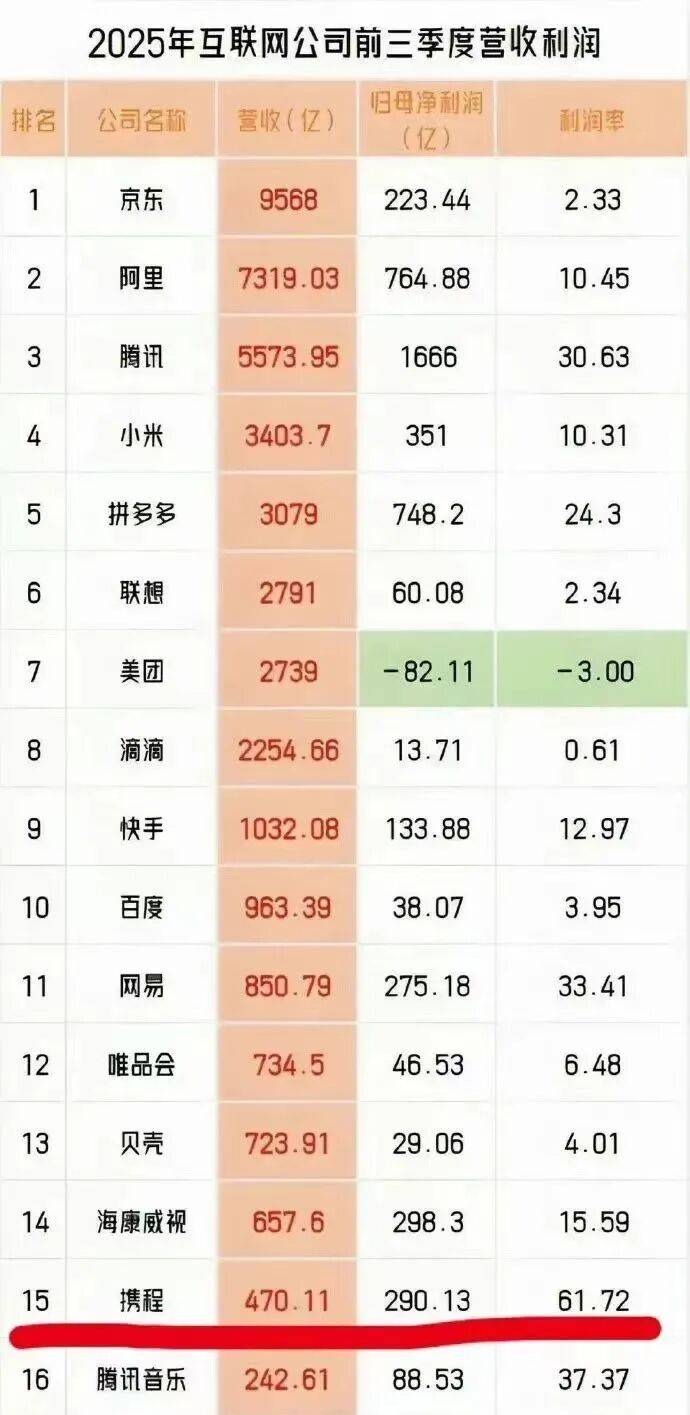
Group 1: Internet Company Revenue and Profit - JD.com leads the revenue chart with 956.8 billion, followed by Alibaba at 731.9 billion and Tencent at 557.4 billion [1] - Alibaba's net profit stands at 76.5 billion, significantly higher than JD.com's 22.3 billion, while Tencent shows a strong profit of 166.6 billion [1] - The profit margin for Tencent is notably high at 30.63%, compared to Alibaba's 10.45% and JD.com's 2.33% [1] Group 2: Market Trends and Insights - The data indicates a competitive landscape among major internet companies, with varying revenue and profit margins suggesting different business strategies and operational efficiencies [1] - The significant profit margins of Tencent may indicate a focus on high-margin services, while JD.com and Alibaba are still scaling their operations [1] Group 3: Financial Performance Overview - The overall financial performance of the top internet companies reflects a diverse range of growth strategies, with some companies prioritizing revenue growth while others focus on profitability [1] - The financial results for the third quarter of 2025 highlight the ongoing evolution of the internet sector in China, with implications for future investment opportunities [1]


特斯拉将重启Dojo 3超级计算机项目,AI人工智能ETF(512930)备受关注
Xin Lang Cai Jing· 2026-01-19 02:19
Group 1 - The core viewpoint of the news is the strategic return of Tesla in the AI computing power sector with the restart of the Dojo 3 supercomputer project, following the completion of the AI5 chip design [1] - As of January 19, 2026, the CSI Artificial Intelligence Theme Index (930713) has seen a slight increase of 0.13%, with notable gains from component stocks such as Aobo Zhongguang (up 5.19%) and Beijing Junzheng (up 3.36%) [1] - The AI Artificial Intelligence ETF (512930) is experiencing a state of market indecision, with the latest price at 2.4 yuan [1] Group 2 - Citic Securities' research report highlights a high certainty in the development of computing power by 2026, with supernode technology reaching a pivotal opportunity, and an optimistic outlook on domestic computing chip and system-level manufacturers [2] - The CSI Artificial Intelligence Theme Index includes 50 listed companies that provide foundational resources, technology, and application support for artificial intelligence, reflecting the overall performance of AI-related securities [2] - As of December 31, 2025, the top ten weighted stocks in the CSI Artificial Intelligence Theme Index account for 58.08% of the index, including companies like Zhongji Xuchuang and New Yisheng [2]

AI人工智能ETF(512930)连续5天净流入,浙江广电华智数媒推出短剧AI智能剪辑系统DramaFlow
Xin Lang Cai Jing· 2026-01-19 01:52
Group 1 - The core viewpoint of the news highlights the performance of the China Securities Artificial Intelligence Theme Index, with notable stocks such as Beijing Junzheng leading the gains at 3.75% and AI ETF pricing at 2.38 yuan [1] - Zhejiang Guangdian Huazhi Shumei and DramaByte launched the DramaFlow AI intelligent editing system at the "AI + Micro Short Drama" industry development conference, which aims to enhance editing efficiency and quality while significantly reducing labor costs [1] Group 2 - Citic Securities' report anticipates a high certainty in computing power development by 2026, with supernode technology reaching a pivotal opportunity, and suggests focusing on domestic computing chip and system-level manufacturers for investment opportunities [2] - The China Securities Artificial Intelligence Theme Index consists of 50 listed companies involved in providing resources, technology, and application support for artificial intelligence, reflecting the overall performance of AI-related securities [2] - As of December 31, 2025, the top ten weighted stocks in the index include companies like Zhongji Xuchuang and Hikvision, accounting for 58.08% of the total weight [2]

智通A股限售解禁一览|1月19日





智通财经网· 2026-01-19 01:04
Core Viewpoint - On January 19, a total of 17 listed companies had their restricted shares unlocked, with a total market value of approximately 8.181 billion yuan [1]. Summary by Category Restricted Share Unlocking - The following companies had restricted shares unlocked: - Vanadium Titanium Co., Ltd. (Stock Code: 000629) - 4.0126 million shares from equity incentive [1] - Guodian NARI Technology Co., Ltd. (Stock Code: 600406) - 11.883 million shares from equity incentive [1] - Huayi Group Co., Ltd. (Stock Code: 600623) - 356,100 shares from equity incentive [1] - Western Securities Co., Ltd. (Stock Code: 002673) - 360 million shares from A-share issuance to original shareholders [1] - Chang Aluminum Co., Ltd. (Stock Code: 002160) - 237 million shares from A-share issuance to legal persons [1] - Hikvision Digital Technology Co., Ltd. (Stock Code: 002415) - 29.2208 million shares from equity incentive [1] - Jieshun Technology Co., Ltd. (Stock Code: 002609) - 258,100 shares from equity incentive [1] - Yaoji Technology Co., Ltd. (Stock Code: 002605) - 975,000 shares from equity incentive [1] - Subote Co., Ltd. (Stock Code: 603916) - 629,000 shares from equity incentive [1] - Yipin Hong Co., Ltd. (Stock Code: 300723) - 150,000 shares from equity incentive [1] - Shandong Fiberglass Group Co., Ltd. (Stock Code: 605006) - 112,200 shares from equity incentive [1] - Keta Bio-Pharmaceutical Co., Ltd. (Stock Code: 300858) - 2.0053 million shares from A-share issuance to legal persons [1] - Xinlei Co., Ltd. (Stock Code: 301317) - 112 million shares from pre-issuance restrictions [1] - Zhiwei Intelligent Co., Ltd. (Stock Code: 001339) - 293,500 shares from equity incentive [1] - Demingli Co., Ltd. (Stock Code: 001309) - 247,500 shares from equity incentive [1] - Jiuzhou Yigui Co., Ltd. (Stock Code: 688485) - 600,000 shares [1] - Yingfang Software Co., Ltd. (Stock Code: 688435) - 36.3174 million shares [1]
2025年GDP30强看区域经济:长三角10席,珠三角6席,川渝、京津冀各3席
Sou Hu Cai Jing· 2026-01-18 13:44
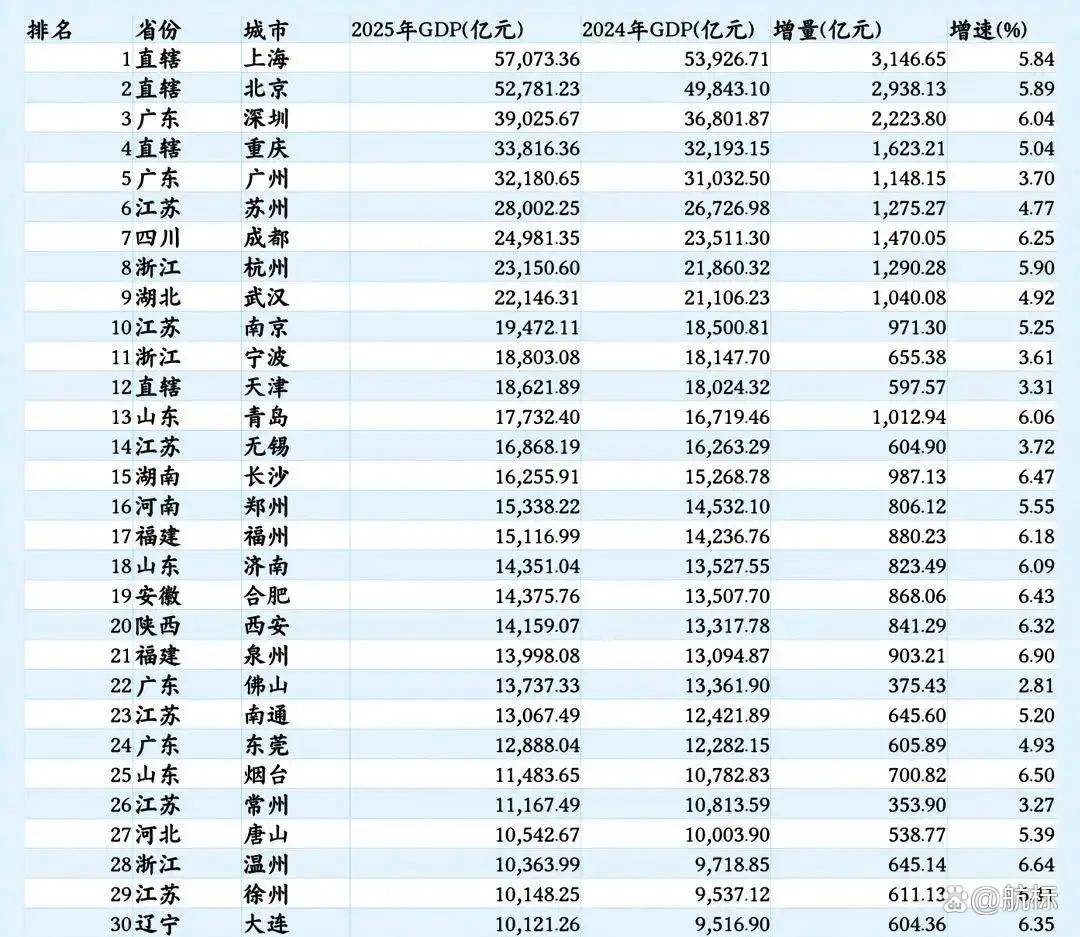
Core Insights - The 2025 GDP ranking of cities shows that the Yangtze River Delta, Pearl River Delta, Chengdu-Chongqing, and Beijing-Tianjin-Hebei economic zones occupy 22 out of 30 positions, accounting for over 80% of the list, reflecting China's economic resilience and regional coordinated development strategy [1] Group 1: Yangtze River Delta - The Yangtze River Delta holds 10 positions in the top 30, with Shanghai leading at a GDP of 57,073.36 billion yuan and a growth of 5.84%, contributing 3,146.65 billion yuan to the total increment [2] - Hangzhou leads the new first-tier cities in the Yangtze River Delta with a growth rate of 5.90%, where the digital economy's core industries account for 37% of its GDP [3] Group 2: Pearl River Delta - The Pearl River Delta has 6 cities in the top 30, with Shenzhen achieving a GDP of 39,025.67 billion yuan and a growth rate of 6.04%, marking it as a dual champion [4] - Dongguan, with a GDP of 12,888.04 billion yuan, shows resilience in its transformation from a "world factory" to a "smart manufacturing hub" [5] Group 3: Chengdu-Chongqing - The Chengdu-Chongqing region has 3 cities in the top 30, with Chengdu leading at a growth rate of 6.25% and an increment of 1,470.05 billion yuan [7] - Chongqing's GDP stands at 33,816.36 billion yuan with a growth rate of 5.04%, indicating challenges in traditional industrial transformation [7] Group 4: Beijing-Tianjin-Hebei - The Beijing-Tianjin-Hebei region has 3 cities in the top 30, with Beijing's GDP at 52,781.23 billion yuan and an increment of 2,938.13 billion yuan [8] - Tianjin shows steady growth at 3.31%, with its biopharmaceutical industry revenue exceeding 800 billion yuan [8] Group 5: Overall Economic Insights - The data reflects the comprehensive results of regional strategic positioning, industrial layout, and infrastructure investment, showcasing differentiated growth across the four economic zones [11]
计算机周观点第 31 期:千问发布 AI 助手,C 端进入超级 Agent 时代-20260118
GUOTAI HAITONG SECURITIES· 2026-01-18 13:43
Investment Rating - The report maintains an "Overweight" rating for the computer sector [4]. Core Insights - In January, Qianwen App achieved over 100 million monthly active users (MAU) and fully integrated with Alibaba's ecosystem to create a "Super Agent" [3][4]. - Alibaba Cloud is significantly increasing its investment in AI infrastructure, aiming to capture 80% of the incremental AI cloud market in China by 2026 [4]. - The brain-computer interface (BCI) industry is experiencing dual drives from policy and capital, with a focus on medical applications and ambitious targets set for 2027 and 2030 [4]. - AI4S is benefiting from policy support, with significant potential for applications in pharmaceuticals and new materials, as well as global innovation in AI applications [4]. Summary by Sections Qianwen App and AI Assistant - Qianwen App's MAU surpassed 100 million within two months of launch, integrating over 400 new features and becoming the first AI assistant to achieve a full-service chain from "search-decision-payment-fulfillment" [4]. Alibaba Cloud Investment - Alibaba Cloud plans to invest over 380 billion yuan in AI infrastructure over the next three years, with a goal to dominate the AI cloud market in China by 2026 [4]. Brain-Computer Interface Industry - The Shanghai government has issued a plan for BCI development, targeting high-quality "brain control" by 2027 and establishing a global innovation hub by 2030 [4]. - Zhejiang Qiang Brain Technology recently raised approximately 2 billion yuan for R&D and production, focusing on non-invasive technologies for rehabilitation [4]. AI4S Policy Support - The Chinese government has prioritized AI4S in its policy framework, with extensive support for its development across various sectors [4]. - Major tech companies like Apple and Google are collaborating to enhance their AI capabilities, indicating a robust market for AI innovations [4].


光大周度观点一览:光研集萃(2026年1月第2期)-20260118
EBSCN· 2026-01-18 12:08
Strategy Overview - The report suggests that the market may experience fluctuations, and it is advisable to maintain a steady approach before the Spring Festival. Structural interest rate cuts are expected to support economic recovery, leading to improved economic data in the first quarter. However, the market is unlikely to sustain its previous rapid growth, and a shift towards a more stable and oscillating market is anticipated. Post-Spring Festival, a new upward momentum is expected [1] Key Industries Computer - AI application hype is transitioning from peak excitement to a more rational phase. Focus should be on large-cap stocks with practical application cases and positive earnings expectations. Three major opportunities in China's AI applications are identified: deepening industrial applications, overseas expansion, and hardware and algorithm restructuring [2] Electric New Energy - In the energy storage and lithium battery upstream sector, investment priorities are outlined for lithium carbonate, lithium hexafluorophosphate, and other materials. AI power demand remains strong, and the hydrogen and ammonia sector is expected to receive more investment during the 14th Five-Year Plan period. The State Grid plans to invest 4 trillion yuan in fixed assets during the 14th Five-Year Plan, with a focus on ultra-high voltage and microgrid investments [2] Nonferrous Metals - The report is optimistic about gold, copper, aluminum, lithium, and tin due to the transition towards a metal-intensive energy landscape. Gold prices are expected to rise due to the interest rate cycle and weakened dollar credit. Copper prices are projected to increase to $14,000 per ton due to supply tightness and demand from data centers and energy storage [2] Chemical Industry - The chemical sector is moving towards "intelligent manufacturing" driven by AI policies. Companies are adopting various paths to implement AI in manufacturing, including self-developed models and partnerships with AI startups. Key companies in this sector are highlighted for their potential in leveraging AI for new materials and fine chemicals [2] High-end Manufacturing - The report suggests focusing on the robotics sector and high-demand PCB and liquid cooling equipment due to short-term investment direction shifts. The anticipated rollout of Tesla's Optimus V3 in Q1 2026 is expected to create investment opportunities in the supply chain [2] Automotive - The automotive market in 2026 is expected to be driven by policy support, with a slight decline in domestic retail sales of passenger vehicles. However, the export of new energy vehicles is projected to maintain rapid growth. Structural investment opportunities in auto parts are recommended [2] Financial Sector - The insurance sector is expected to perform well due to a favorable liability side and high equity market exposure. The banking sector is anticipated to benefit from policies aimed at promoting consumption and investment [2] Real Estate - The report indicates a significant decline in new home transaction volumes in major cities, with a slight increase in average prices. Leading state-owned enterprises are expected to benefit from improved competitive structures [2]