申洲国际

Search documents
十五五规划,提振消费将是系统性大工程
2025-11-03 02:35
Summary of Key Points from Conference Call Records Industry Overview - The conference call discusses the **Chinese consumer market** and various sectors including **home appliances**, **textiles and apparel**, **food and beverage**, and **high-end consumption** [1][2][3][4][5][6][7][8][9][10][11][12][13][14][15][16][17][18][19][20][21][22][23][24][25][26][27][28][29][30][31][32][33][34][35][36][37][38][39]. Core Insights and Arguments Government Initiatives - The **15th Five-Year Plan** emphasizes enhancing consumer spending through measures such as promoting employment, increasing wage income, stabilizing expectations, and improving the social security system [1][4][6]. - Short-term measures include a **central subsidy** of **300 billion** in 2025, with expectations for continued large-scale subsidies in 2026, albeit with a broader scope to avoid over-reliance on subsidies [1][5][6]. Consumer Market Trends - The consumer market has shifted from a bull market post-2020 to a prolonged bear market starting in 2021, primarily due to weakened purchasing power and consumption downgrade [2]. - The **A-share** consumer sector has lagged, while the **Hong Kong stock market** saw a rise in new consumption sectors in late 2024 and early 2025 [2]. Sector-Specific Insights - **Home Appliances**: Companies like **Midea** and **Haier** are expected to grow due to international competitiveness and channel reforms, despite concerns over subsidy reductions [1][13]. - **Television Industry**: **Hisense** and **TCL** are positioned to benefit from increased Mini LED penetration, enhancing brand positioning and average pricing [1][14]. - **Textiles and Apparel**: The sector is undergoing structural upgrades with rising demand for health-oriented and fashionable clothing. Despite fluctuations in overseas demand, international expansion is expected to improve order situations by 2026 [1][22][24][25]. - **Food and Beverage**: Investment opportunities lie in new consumption channels and health-oriented products, with policy support expected to stimulate demand [3][37][38]. Long-term Market Outlook - The overall market outlook for 2026 is cautious, with expectations of improved overseas business due to China's efficiency in the supply chain and technological advancements [12]. - The **high-end consumption market** is anticipated to benefit from wealth improvements and policy optimizations, particularly in sectors like luxury goods and entertainment [32]. Additional Important Insights - The **service consumption sector** is highlighted as a crucial employment channel, with increased supply in events like concerts and sports benefiting from policy optimizations [3][31]. - The **internationalization of Chinese consumer industries** is progressing, with significant competitiveness in technology and manufacturing sectors, although challenges remain in textiles and apparel [11][24][27]. - The **outdoor apparel market** is emerging as a growth area, with traditional brands expanding their product lines [26]. - The **packaging industry** is experiencing consolidation, with major players like **Aoruijin** and **Baosteel** capturing significant market share [18]. This summary encapsulates the key points discussed in the conference call, providing a comprehensive overview of the current state and future outlook of the Chinese consumer market and related industries.
小吊牌藏着“利润剪刀差”:高端服饰定价倍率超10倍!同厂不同价背后,波司登们如何抢“话语权”
Mei Ri Jing Ji Xin Wen· 2025-11-01 06:20
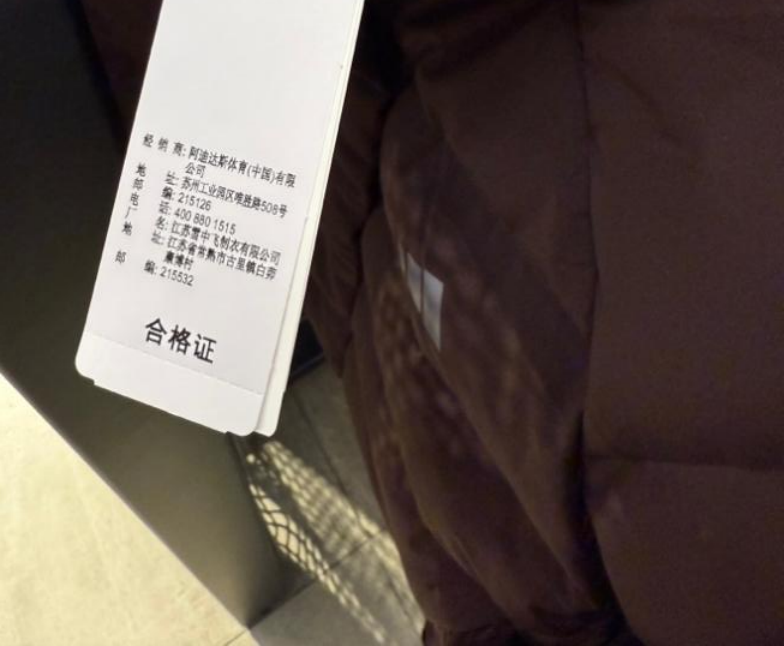
Core Insights - The discussion around the pricing of international brands like Adidas and Nike has intensified, particularly regarding their reliance on Chinese manufacturers like Xuezhongfei, which has led to questions about brand value and consumer perception [1][2]. Group 1: Brand Perception and Consumer Behavior - Consumers are increasingly skeptical of brand premiums and are focusing on the actual value and quality of products, comparing specifications and prices rather than simply relying on brand names [2][9]. - The shift in consumer behavior indicates a preference for products that align with personal values, such as sustainability, rather than just brand prestige [9][18]. - The traditional brand premium model is being challenged as consumers demand transparency and justification for higher prices [7][9]. Group 2: Evolution of Chinese Manufacturing - Chinese manufacturers like Xuezhongfei and Shenzhou International are evolving from mere subcontractors to strategic partners with international brands, showcasing their manufacturing capabilities and quality standards [5][18]. - The Chinese apparel industry has developed a comprehensive and specialized supply chain that is difficult to replicate, maintaining its competitive edge despite some production moving to Southeast Asia [16][18]. - The transformation of Chinese manufacturing is marked by a shift from low-end processing to high-end manufacturing, with a focus on quality, efficiency, and innovation [18]. Group 3: Financial Performance and Market Dynamics - Xuezhongfei, under Bosideng, reported a 26.4% year-on-year increase in its OEM business revenue, indicating a growing market presence and recognition of its manufacturing capabilities [10]. - The financial performance of Bosideng's OEM business highlights the increasing importance of manufacturing partnerships in driving revenue growth [10][12]. - The concentration of major clients poses risks for manufacturers, emphasizing the need for diversification in client relationships to mitigate potential revenue losses [12][18].


买阿迪达斯羽绒服的人,被上了一课?
3 6 Ke· 2025-10-31 13:46
Core Insights - The controversy surrounding Adidas's down jackets being produced by the OEM Snow Flying has highlighted the brand's reliance on outsourcing production to third-party manufacturers, allowing it to focus on high-value activities like design and marketing [3][6][9] Group 1: Outsourcing and Production Strategy - Adidas has almost entirely outsourced its production, with very few products manufactured in-house, primarily high-end items produced in Germany [6][9] - The company has historically closed its own factories in China, relying on a network of OEMs concentrated in regions like Guangdong and Fujian for manufacturing [6][7] - The global production strategy includes expanding capacity in countries like Vietnam and Indonesia to optimize costs and mitigate risks [7][9] Group 2: Market Dynamics and Consumer Sentiment - The price difference between Adidas and Snow Flying products has led consumers to question the value of purchasing branded items when cheaper alternatives are available [4][9] - There is a growing consumer awareness regarding the origins of products, with many now scrutinizing manufacturing labels for transparency [19] Group 3: Financial Performance and Business Model - The outsourcing model has allowed Adidas to operate with a lighter asset base, significantly reducing fixed asset investments and risks [14] - In 2024, Adidas's revenue in Greater China grew by 10%, with a gross margin of 51.7% in Q2 2025, showcasing the financial benefits of the light asset model compared to traditional heavy asset models [14][15] Group 4: Challenges and Quality Control - The shift to outsourcing has raised concerns about quality control, with reports of product defects linked to manufacturing in regions like Vietnam and Cambodia [15][17] - The relationship between brands and OEMs is complex, balancing the need for production capacity with the risk of OEMs producing competing products [17]

买阿迪达斯羽绒服的人,被上了一课?
36氪· 2025-10-31 13:36
Core Viewpoint - The article discusses the outsourcing model of major brands like Adidas, highlighting how they rely on third-party manufacturers for production while focusing on design, research, and marketing to maximize profits [3][10]. Group 1: Outsourcing Model - Adidas has outsourced its production to factories like Xuezhongfei and Bosideng, indicating that the brand has minimal in-house manufacturing capabilities [7][10]. - The outsourcing strategy allows Adidas to maintain a "light asset" operation, reducing fixed asset investments and risks while enabling quick adjustments to production based on market changes [17][19]. - The concentration of shoe manufacturing in regions like Guangdong and Fujian is due to the complete industrial chain and mature supply chain [8]. Group 2: Global Production Strategy - Adidas has expanded its production capacity overseas, particularly in Vietnam and Indonesia, to optimize costs and mitigate risks associated with supply chain disruptions [8][10]. - The company has shifted its production base from China to Southeast Asia since 2013, with Cambodia becoming the largest manufacturing country for Adidas apparel by 2021 [14][16]. - Recent adjustments have seen an increase in products manufactured in China, reflecting a strategic shift to regain consumer trust in the Chinese market [16][18]. Group 3: Quality Control and Consumer Awareness - The reliance on third-party manufacturers poses challenges in quality control, with past incidents of product quality issues reported [19][21]. - Consumers are becoming more aware of the production origins of their purchases, leading to a demand for transparency in the supply chain [22][23]. - The article emphasizes the importance of product labeling, as consumers can identify manufacturers through tags, which can influence purchasing decisions [22][23].

重塑中国智造价值链:安踏的“创新联合体”破局之路
华尔街见闻· 2025-10-31 12:00
Core Viewpoint - The era of "technological sovereignty" has fundamentally changed the logic of global industrial competition, making technological innovation a necessity for survival and development rather than an option [1][6]. Group 1: Industry Innovation and Collaboration - The establishment of the "Sports Goods Industry Innovation Consortium" led by Anta aims to create an open and collaborative innovation platform to overcome common technological bottlenecks in the industry [3][5]. - The consortium has provided continuous R&D support and resource sharing, forming a technology innovation system that integrates enterprises, markets, and research [5][6]. - Anta's approach not only represents a technological revolution but also a development path that addresses how Chinese companies can systematically provide "innovation certainty" across the entire industry chain in a highly competitive global environment [6][18]. Group 2: Technological Advancements and Market Position - Anta achieved a historical revenue high in the first half of 2025, with a 14.3% year-on-year increase to RMB 38.54 billion, marking 12 consecutive years of growth and maintaining the top position in the Chinese market for four years [8]. - Over the past decade, Anta has invested more than RMB 20 billion in R&D innovation, establishing a strong foundation for market leadership through continuous technological investment [9][48]. - The gap between domestic brands and international giants is rapidly closing, with both sides now in a position of coexistence and competition rather than mere following [11][51]. Group 3: Material Science and Product Innovation - Anta's "fluorine-free membrane technology" and "six-degree core warming technology" represent significant advancements in material science, with the former achieving international advanced levels at one-third the price of international brands [13][16]. - The application of basalt fiber technology in outdoor apparel demonstrates a breakthrough in material innovation, with potential applications extending beyond sportswear to aerospace and medical fields [15][16]. - The innovation in core materials is expected to accelerate the localization of key materials in the industry, helping China's textile and apparel industry transition from a participant in the global value chain to a standard setter [18][54]. Group 4: AI Integration and Future Strategy - Anta has expanded its AI capabilities significantly, launching the "AI365 Strategy" to integrate AI across all business functions, including marketing, design, and supply chain [35][41]. - The introduction of the "Linglong Design Model" aims to enhance design efficiency, reducing development cycles by over 50% and increasing selection rates for design proposals by 30% [37][39]. - Anta plans to achieve over 50% internal AI usage coverage within three years, aiming to create value exceeding RMB 5 billion, thereby building a systematic competitive advantage centered on intelligent technology [42][43]. Group 5: Value Reassessment and Competitive Edge - Anta's role as a leader in the industry is reshaping its valuation logic, transitioning from a focus on acquisitions to building a technology-driven ecosystem [49][51]. - The company's deepening R&D investments and systematic ecological layout are critical drivers of its competitive edge, enabling it to break free from homogeneous competition and move towards higher-dimensional value competition [52][54]. - The establishment of a mature technological ecosystem allows Anta to efficiently connect R&D with market needs, promoting effective technology transfer and reducing reliance on external technologies [53][54].

申洲国际(02313.HK)获Schroders PLC增持174.74万股
Ge Long Hui· 2025-10-30 23:44
Group 1 - The core point of the news is that Schroders PLC has increased its stake in Shenzhou International (02313.HK) by acquiring 1,747,400 shares at an average price of HKD 70.8098 per share, amounting to approximately HKD 124 million [1][2] - Following this acquisition, Schroders PLC's total shareholding in Shenzhou International has risen to 106,030,850 shares, increasing its ownership percentage from 6.94% to 7.05% [1][2]

联合解读中美经贸磋商成果
2025-10-30 15:21
Summary of Key Points from the Conference Call Industry or Company Involved - The conference call primarily discusses the impact of the recent US-China trade negotiations on various industries, including technology, electronics, textiles, and shipping. Core Insights and Arguments 1. **US-China Trade Negotiation Outcomes** The negotiations resulted in the suspension of new restrictions and the cancellation of the 10% tariff on fentanyl, which is expected to stabilize US-China relations and positively impact the Chinese economy [1][5][8]. 2. **Impact on Chinese Exports** A potential 10% reduction in US tariffs could lower the effective tariff rate on Chinese goods to around 28%, which would directly boost Chinese exports to the US and enhance overall export growth by approximately one percentage point [1][3][4]. 3. **Technology Sector Benefits** The negotiations are favorable for the technology sector, particularly with the expected cancellation of the 10% fentanyl tariff on electronic products, which would stimulate demand and alleviate valuation pressures on the electronics sector [1][6][7]. 4. **Market Sentiment and Stock Valuation** The outcomes of the negotiations have slightly exceeded market expectations, leading to a recovery in stock valuations, particularly in the technology and electronics sectors. Investor sentiment has improved, creating potential investment opportunities [1][8][9]. 5. **Short-term Market Trends** While the trade negotiation results are not expected to alter the current market trend significantly, there are concerns about overheating in certain sectors, particularly TMT (Technology, Media, and Telecommunications), which may lead to market volatility if new catalysts do not emerge [1][10]. 6. **Recommendations for Sector Allocation** It is suggested to shift towards a more balanced allocation strategy by focusing on sectors such as lithium batteries, non-ferrous metals, and consumer electronics, while also considering opportunities in overseas markets like power grid equipment and commercial vehicles [1][11][12]. 7. **Color on the Non-ferrous Metals Sector** The cancellation of tariffs is expected to lower global trade friction costs and boost demand for non-ferrous metals, marking the beginning of a prolonged bull market for metals like copper, aluminum, and rare earth elements [1][13]. 8. **Shipping Industry Implications** The trade agreement is anticipated to benefit the shipping industry, particularly companies like China COSCO Shipping, due to increased demand for shipping services between China and the US [1][15][16]. 9. **Textile and Apparel Industry Effects** The US remains a significant market for Chinese textiles and apparel, and the easing of trade tensions could improve production utilization rates and profitability in this sector [1][20][23]. 10. **Home Appliance Sector Outlook** The reduction in tariff pressure is expected to positively impact the home appliance sector, particularly for companies with high export ratios to North America, aiding in the recovery of their profit margins [1][21][22]. Other Important but Possibly Overlooked Content - The negotiations have also led to a strategic pause in the implementation of export controls on rare earth products, which underscores China's significant role in the global rare earth supply chain [1][14]. - The overall sentiment in the market remains cautiously optimistic, with expectations of a continued recovery in various sectors as trade relations stabilize [1][9].

Schroders PLC增持申洲国际(02313)174.74万股 每股作价约70.81港元
智通财经网· 2025-10-30 11:08
Group 1 - Schroders PLC increased its stake in Shenzhou International (02313) by acquiring 1.7474 million shares at a price of HKD 70.8098 per share, totaling approximately HKD 124 million [1] - Following the acquisition, Schroders PLC's total shareholding in Shenzhou International reached 106 million shares, representing a holding percentage of 7.05% [1]
杰克科技(603337):业绩稳健增长,智能化战略持续推进
GUOTAI HAITONG SECURITIES· 2025-10-30 07:05
Investment Rating - The investment rating for the company is "Accumulate" with a target price of 52.92 CNY [6][13]. Core Insights - The company has demonstrated steady revenue growth, effective cost control, and is advancing its AI sewing machine and robotics business, which opens a second growth curve through its intelligent transformation [2][13]. - The company reported a revenue of 4.967 billion CNY for the first three quarters of 2025, representing a year-on-year increase of 5.53%, and a net profit attributable to shareholders of 682 million CNY, up 10.06% year-on-year [13]. - The company is transitioning from a traditional sewing equipment manufacturer to an intelligent manufacturing solution provider driven by AI and robotics, with successful implementation of smart features in core products [13]. Financial Summary - Total revenue is projected to grow from 5.294 billion CNY in 2023 to 7.997 billion CNY in 2027, with a compound annual growth rate (CAGR) of approximately 10% [4][14]. - Net profit attributable to shareholders is expected to increase from 538 million CNY in 2023 to 1.240 billion CNY in 2027, reflecting a CAGR of around 16.4% [4][14]. - The earnings per share (EPS) is forecasted to rise from 1.13 CNY in 2023 to 2.60 CNY in 2027 [4][14]. - The return on equity (ROE) is anticipated to improve from 12.4% in 2023 to 19.7% in 2027 [4][14]. Strategic Developments - The company has launched its high-end smart brand "Aitu" with its first product Ai10 targeting the global high-end market, marking the commercialization of its AI product system [13]. - The intelligent transformation strategy is expected to gradually reveal growth potential as AI and robotics products are progressively implemented [13].

买阿迪达斯羽绒服的人,被上了一课
盐财经· 2025-10-28 09:42
Core Viewpoint - The article discusses the outsourcing model of Adidas, highlighting consumer reactions to the revelation that their products are manufactured by third-party factories like Xuezhongfei, which has sparked discussions about brand transparency and consumer awareness [4][12][23]. Group 1: Adidas Outsourcing Model - Adidas has largely outsourced its production to third-party factories, focusing on design, research, and marketing to maximize profits [4][8]. - The company has no significant production lines of its own, with only a small percentage of high-end products manufactured in Germany [8][12]. - The outsourcing model allows Adidas to maintain a "light asset" operation, reducing fixed asset investments and risks while enabling quick adjustments to production based on market changes [18][20]. Group 2: Consumer Reactions and Market Dynamics - Consumers have expressed dissatisfaction upon discovering that Adidas products are made by Xuezhongfei, leading to discussions about the price differences between branded and unbranded products [6][24]. - The price comparison shows that Adidas's down jacket, priced at 867.71 yuan with 70% down content, is significantly more expensive than a similar product from Xuezhongfei, which costs 569 yuan with 85% down content [6][8]. - The article notes a shift in consumer awareness, with a growing demand for transparency regarding product origins and manufacturing processes [23][24]. Group 3: Global Production Strategy - Adidas's production strategy has evolved, with a significant shift of manufacturing bases from China to Southeast Asia, particularly Cambodia and Vietnam, driven by cost considerations and supply chain optimization [16][20]. - In 2021, Cambodia became the largest manufacturing country for Adidas apparel, accounting for 21% of total production, while China's share dropped to 20% [16]. - Recent strategic adjustments have seen an increase in locally produced goods in China, with 95% of products sold in the Chinese market being "Made in China" [17]. Group 4: Quality Control and Challenges - The outsourcing model presents challenges in quality control, with reports of product quality issues arising from factories in Vietnam and Cambodia [20][22]. - The relationship between brands and their manufacturing partners is complex, balancing the need for production capacity with the risk of competition from the manufacturers themselves [22]. - The article emphasizes the importance of maintaining brand image and consumer trust, suggesting that brands should enhance supply chain transparency to meet evolving consumer expectations [23].