
锦江酒店

Search documents
2025CSR盛典暨第一财经善商业论坛正式举行
第一财经· 2025-12-12 02:07
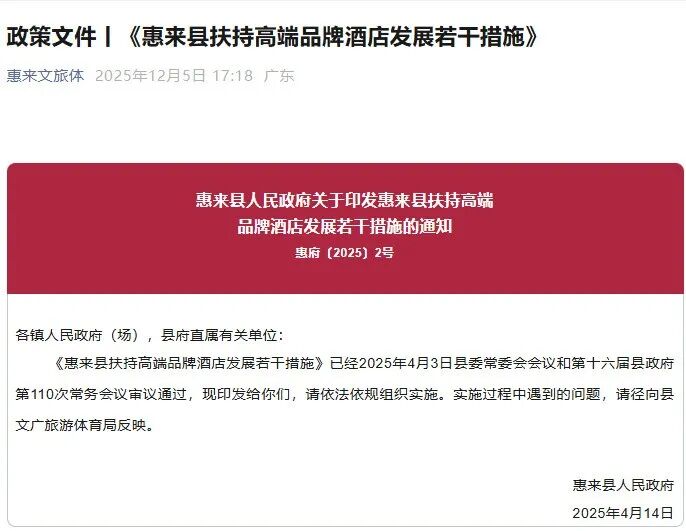
2025 年 12 月 11 日, 2025CSR 盛典暨第一财经善商业论坛在上海世博会博物馆正式举行。本 届论坛以"韧性共生:重塑可持续竞争力新范式"为主题,邀请各机构代表、企业嘉宾、学者齐聚一 堂,共同回顾过往可持续发展的经验,搭建全球可持续对话合作平台, 探讨构建 "商业 - 环境 - 社会"三位一体的韧性体系,贡献可持续发展的 思想成果。 作为论坛主办方,第一财经长期致力于打造可持续发展平台,超越传统 CSR 逻辑,重新定义"可持 续竞争力"。 第一财经 常务 副总经理杜坚 在致辞中提到, 媒体的 责任 在于洞察趋势、凝聚共 识,更在于推动实实在在的产业变革。第一财经始终以推动可持续发展为己任 , 既是产业实践的记 录者,更是价值链接的赋能者 。 第一财经 通过专业报道与深度研究,挖掘企业创新案例,解读政 策市场趋势,搭建跨界沟通桥梁;通过 探寻 " 中国企业社会责任典范 " ,以客观标准发掘先锋样 本,让负责任的商业实践获得广泛认可 , 通过思想碰撞,为 更多 企业破解困境提供新思路。 联合国可持续发展管理学院首席代表、联合国可持续发展目标全球协作项目工作委员会主任柳云虎 带来主题演讲 《 面向未来 ...


大清都亡一百年了,为啥各地还在补贴建五星级酒店?
3 6 Ke· 2025-12-12 00:49
按照政策规划,投资总额5亿元的高端酒店项目,奖励补贴最高不超过2000万元,项目试营业1个月后全部兑现。如果是引进了国际顶奢品牌, 还能再奖励1000万元。要是引进的是国内品牌,按照五星级酒店以上标准建设的酒店项目,最高可以奖励800万元。 "合着国内、国际酒店品牌,还是两个价码啊。"把这个链接甩给我的广东朋友,在一旁煽风点火。 其实,供给早已饱和的国内酒店业,对于新开的五星、高端酒店的需求并不迫切。尤其是传统五星级酒店早已褪去滤镜,很多项目的日子过得捉襟见肘。 在这个高度市场化的行业,平台的评分、会员系统的搭建等,可能都比评星要重要的多。 那么,为何各地还是习惯奖补五星酒店项目?要想真正激励住宿业健康发展,又该制定何种政策支持? 高端酒店补贴政策遍地开花 咱还来说一下惠来县给出的政策。 原文件比较长,老沙摘出来几点,更通俗地表述一下: 就在前两天,广东惠来县文体局把今年4月份制定的《惠来县扶持高端品牌酒店发展若干设施》的优惠政策,又在它们的官方平台上推送了一次。 用地方面,盖酒店可按片区基准地价楼面价修正系数为0.7进行地价评估; 项目投资方面,投入超5个亿的项目,最高补贴2000万;引入国际顶奢,奖励15 ...
2025CSR盛典暨第一财经善商业论坛正式举行
Di Yi Cai Jing· 2025-12-11 13:29
联合国可持续发展管理学院首席代表、联合国可持续发展目标全球协作项目工作委员会主任柳云虎带来 主题演讲《面向未来的可持续管理》。他介绍,多个可持续发展的趋势正在全球层面行程,包括:气候 变化驱动的政策调整、ESG投资成为主流、新兴市场绿色崛起、技术共享加速转型。在此背景下,可持 续管理具有极强的引导作用,它能降低企业风险,增强品牌声誉,并满足消费者与投资者对责任的期 待。它还推动创新,优化资源效率,助力企业适应法规变化,最终实现盈利与地球共生的双赢局面。 生态环境部环境规划院生态环境管理与政策研究所所长董战峰在主旨演讲中分享了《加快构建企业生物 多样性信息披露制度》,分析了中国生物多样性信息披露实践发展、企业生物多样性信息披露指引框架 与主要内容。对于加快推进生物多样性信息披露制度建设,他建议采取多维度措施,鼓励相关生态的商 业发展,并定期监测、评估和透明的披露对生物多样性的风险、依赖程度和影响,包括对所有大中型企 业和金融机构及其运营、供应链和价值链、投资组合的需求。 金光集团APP副总裁翟京丽带来主题分享《以生长型责任网络,"纸"引商业向善新篇章》,介绍了企业 在可持续发展业务中的实践经验。她认为,企业真正 ...
低碳酒店成酒店业ESG发展主流趋势,节能、减排是改造重点
Nan Fang Du Shi Bao· 2025-12-11 08:31
Core Insights - The article emphasizes the importance of ESG (Environmental, Social, and Governance) principles in promoting sustainable and high-quality development in companies, particularly in the hospitality industry [1][3]. Group 1: ESG Initiatives and Trends - The "Sustainable Innovation Laboratory" by Southern Metropolis Daily is collecting exemplary ESG practices from companies to publish the "2025 ESG Sustainable Innovation Trend Insight Report" [2]. - The hospitality industry is encouraged to adopt clean energy and eco-friendly materials, with a focus on reducing solid waste and promoting green consumption [3]. - Data from Ctrip indicates that low-carbon hotels are preferred by travelers aged 20-40, with 70% willing to pay a premium for low-carbon travel [3][9]. Group 2: Circular Economy and Waste Reduction - The hospitality sector is moving towards reducing single-use plastic items, with regulations mandating the elimination of such items in hotels by 2025 [4]. - Hotel groups are implementing measures like not providing single-use items, using recyclable packaging, and encouraging consumers to use eco-friendly products [4][9]. - Examples include Huazhu Group's introduction of biodegradable toiletries and sustainable materials for hotel amenities [5][7]. Group 3: Incentives for Sustainable Practices - Hotels are creating incentive systems to encourage guests to participate in sustainable practices, such as reducing towel and linen changes [10][12]. - Huazhu's "Green Stay" program has seen participation from over 9,000 hotels, avoiding the washing of 7.885 million towels and reducing carbon emissions by 676 tons [12]. - Jinjiang Hotels is also promoting a "Reduction Stay" initiative, rewarding guests for minimizing the use of disposable items [12][13]. Group 4: Energy Efficiency and Carbon Reduction - The hospitality industry is focusing on energy efficiency, with 70% of carbon emissions coming from energy and electricity consumption [14]. - Hotels are adopting smart technologies to optimize energy use, such as automated systems that reduce power consumption when rooms are unoccupied [15][16]. - Ctrip has introduced a "Low Carbon Hotel Standard" to support hotels in their transition to lower carbon emissions, with 3,300 hotels certified by the end of 2024 [16].






年度访谈 | 与时间同行:一位酒店投资人的长期主义选择
Sou Hu Cai Jing· 2025-12-11 07:14
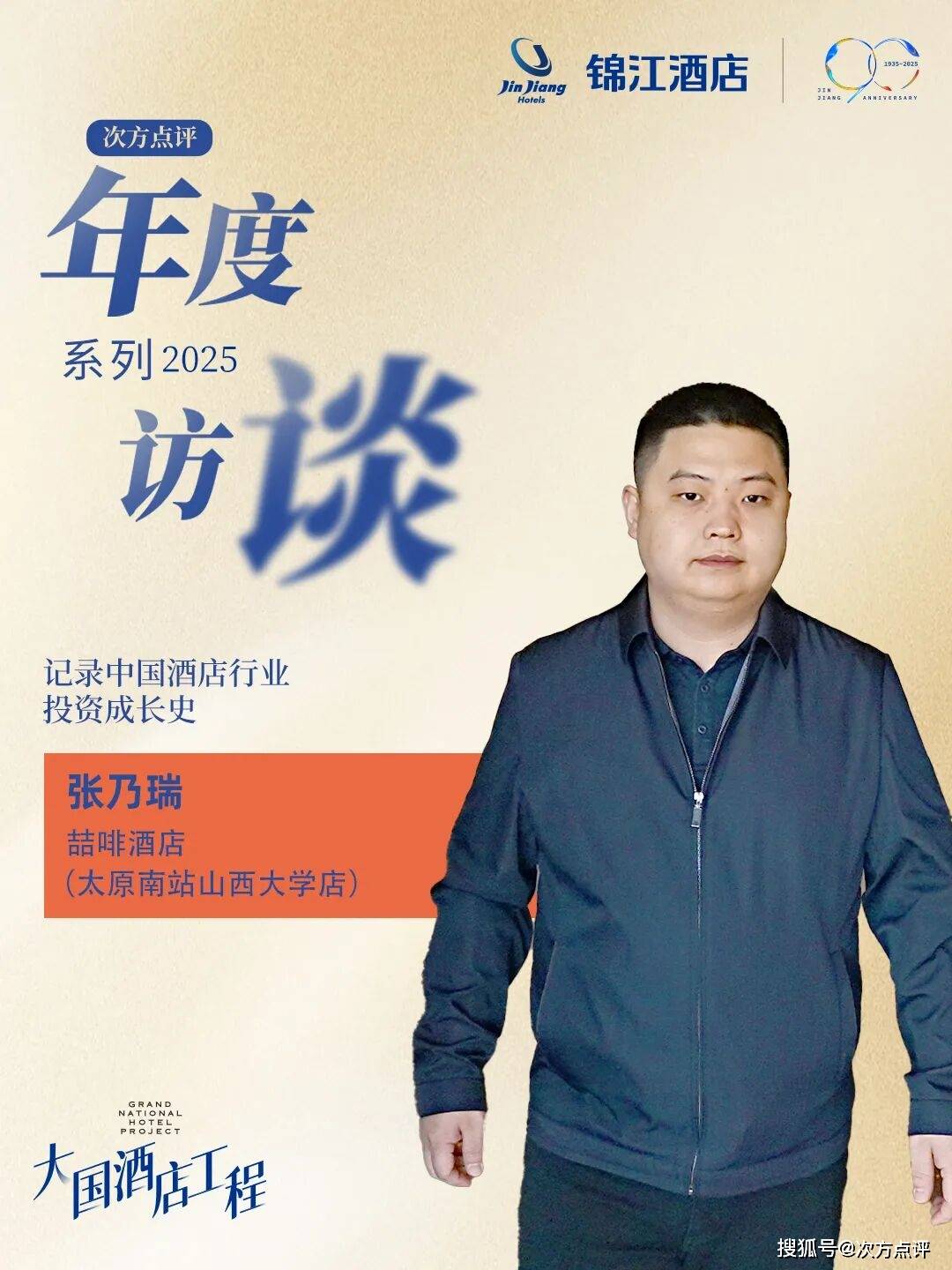
Group 1 - The core viewpoint of the articles highlights the evolution and resilience of Jin Jiang Hotels as a significant player in the Chinese hotel industry, celebrating its 90th anniversary and reflecting on its historical and future impact [1][24] - Jin Jiang Hotels has been a witness and participant in the transformation of the hotel industry in China, showcasing a blend of historical significance and modern investment enthusiasm [1][4] - The partnership between investors and Jin Jiang Hotels, exemplified by investor Zhang Nairui, illustrates a shift from individual efforts to a collaborative ecosystem that enhances business stability and growth [3][8] Group 2 - Zhang Nairui's investment journey with Jin Jiang Hotels began with the successful opening of Jin Jiang Inn in 2012, which exceeded expectations with high occupancy rates, reinforcing his commitment to the brand [6][17] - The operational support provided by Jin Jiang Hotels, including property assessment and efficient opening preparations, has been crucial for investors, allowing them to focus on market dynamics rather than operational challenges [8][11] - The pandemic highlighted the strength of the partnership, as Jin Jiang Hotels offered fee reductions, demonstrating a commitment beyond mere contractual obligations [9][20] Group 3 - The strategic location of Zhang Nairui's hotels in the university city of Taiyuan attracts diverse customer segments, including students and business travelers, capitalizing on the area's connectivity [13][16] - The differentiation in customer profiles between Jin Jiang Inn and the newly upgraded Zhefei Hotel reflects a keen understanding of evolving consumer preferences, leading to targeted investments in amenities and services [16][17] - The Zhefei Hotel maintains a high occupancy rate of 85% and a RevPAR between 170 to 180 yuan, showcasing its competitive edge in a challenging market [17][22] Group 4 - Looking ahead, Zhang Nairui expresses confidence in the hotel industry's inherent demand and resilience, planning to continue investing in this sector with Jin Jiang Hotels as the preferred partner [20][22] - The emphasis on internal collaboration and professional development within the team aims to enhance operational efficiency and long-term growth potential [20][24] - The partnership with Jin Jiang Hotels is viewed as a journey of trust and mutual benefit, promising a sustainable future in the hotel industry [24]
旅游行业信用风险展望(2025年11月)
Lian He Zi Xin· 2025-12-10 11:08
Investment Rating - The tourism industry maintains a stable development outlook for 2025, with a stable investment rating [5][55]. Core Insights - In 2025, domestic travel volume and total spending are expected to grow by double digits year-on-year, although the growth rate of total spending is slowing down [8][9]. - The recovery of inbound and outbound tourism is progressing well, with international passenger transport volume exceeding the same period in 2019 [8][12]. - Most scenic spots have seen improvements in cash flow from operations, but profitability has declined compared to the previous year [8][14]. - The hotel industry is facing intensified competition, with only a few major hotel groups experiencing slight increases in occupancy rates and RevPAR [8][26]. - The duty-free industry remains stable, but the Hainan offshore duty-free market continues to face pressure due to weak consumption, although favorable policies are helping the industry to bottom out [8][33]. - Overall profitability of tourism bond-issuing companies has declined compared to the previous year, but the debt maturity structure is relatively balanced, and the overall debt repayment pressure is manageable [8][44]. Industry Operating Status - In the first three quarters of 2025, domestic tourism reached 4.998 billion trips, an increase of 18.0% year-on-year, surpassing the same period in 2019 [9]. - Domestic tourism revenue reached 4.85 trillion yuan, a year-on-year increase of 11.5%, although the growth rate has slowed compared to the previous year [9][10]. - The number of outbound trips and international passenger transport volume has shown significant recovery, with a 23.5% year-on-year increase in international passenger transport volume [12][13]. Sub-industry Analysis Scenic Spots - In the first nine months of 2025, 13 major listed tourism scenic spots reported a total profit of 1.785 billion yuan, a decrease of 5.67% compared to the previous year [14]. - Operating cash flow for these scenic spots improved, with a total net cash inflow of 2.577 billion yuan, up 14.02% year-on-year [14]. Hotels and Restaurants - Major hotel groups showed mixed results in 2025, with only Marriott International seeing slight improvements in occupancy rates and RevPAR [26]. - The average room rate for star-rated hotels was 371.7 yuan per night, with an average occupancy rate of 49.2%, a decrease of 0.5 percentage points from the previous year [26][24]. - In the first half of 2025, major hotel groups achieved profitability, with notable growth in net profits for Huazhu Group, ShouLai Hotel, and Atour [27]. Duty-Free Shopping - The Hainan offshore duty-free market faced challenges, with sales dropping to 22.16 billion yuan in the first nine months of 2025, a year-on-year decrease of 7.7% [33][35]. - However, sales began to recover in September 2025, with a 3.4% year-on-year increase, marking the first positive growth in nearly 18 months [34]. Industry Policies - Since 2025, multiple supportive policies have been introduced by the Ministry of Culture and Tourism and the State Council to promote high-quality development in the tourism industry [40][41]. - Initiatives include the introduction of cultural tourism consumption vouchers and the expansion of quality product supply [40][43]. Credit Analysis of Bond-Issuing Companies - As of September 2025, the overall leverage ratio of tourism bond-issuing companies is at a moderately high level, with a median debt-to-asset ratio of 58.49% [44][52]. - The overall profitability of these companies has declined, with total profits down 35.38% year-on-year [48][55]. - The industry maintains a balanced debt maturity structure, and the overall debt repayment pressure is considered manageable [52][54]. Outlook - The tourism industry is expected to continue its stable demand and recovery, supported by favorable policies and a growing consumer base [55].
酒店餐饮板块12月10日涨1.2%,锦江酒店领涨,主力资金净流出2422.93万元
Zheng Xing Xing Ye Ri Bao· 2025-12-10 09:09
证券之星消息,12月10日酒店餐饮板块较上一交易日上涨1.2%,锦江酒店领涨。当日上证指数报收于 3900.5,下跌0.23%。深证成指报收于13316.42,上涨0.29%。酒店餐饮板块个股涨跌见下表: 从资金流向上来看,当日酒店餐饮板块主力资金净流出2422.93万元,游资资金净流出1871.37万元,散 户资金净流入4294.3万元。酒店餐饮板块个股资金流向见下表: 以上内容为证券之星据公开信息整理,由AI算法生成(网信算备310104345710301240019号),不构成投资建议。 ...

酒店行业变化更新
2025-12-10 01:57
Summary of Hotel Industry Conference Call Industry Overview - The hotel industry is experiencing significant changes due to evolving service consumption policies, which are expected to enhance tourism demand in the second quarter of 2026, particularly with the potential nationwide promotion of spring break [1][2] - The overall supply growth in the hotel industry is not expected to slow down, with a focus on small properties while large properties see a deceleration in growth [1][5] Key Insights and Arguments - The hotel sector is anticipated to improve sequentially in Q4 2025 and Q1 2026, driven by stable demand and a decreasing base effect, with companies like Huazhu showing signs of recovery [1][3][4] - Recent fluctuations in the hotel sector are attributed to changes in policy expectations, particularly regarding service consumption, which has led to capital movement within the sector [2] - The introduction of hotel REITs policies is expected to be a significant breakthrough, likely to be launched around February 2026, benefiting the high-end hotel segment and promoting marketization and resource consolidation [3][9][10] Company-Specific Developments - Junting Hotel Group, following the entry of Hubei State-owned Assets Supervision and Administration Commission, is expected to enhance performance through the injection of light-asset, high-profit businesses like hotel management, rather than heavy assets [1][6][11] - The company has resumed normal profitability with its direct-operated stores and aims to leverage resources from Hubei State-owned Assets for significant performance improvement over the next two years [7][11] - Junting has partnered with Select International and Hilton to launch new products, Kaiyi and Kaifu, which have lower renovation costs and shorter payback periods compared to competitors [8] Additional Important Points - The supply growth in the hotel industry is primarily concentrated in small properties (15-30 rooms and 30-69 rooms), while larger properties (70-149 rooms) have seen a slowdown since June 2025 [5] - Junting's differentiated franchise strategy includes favorable terms for franchisees, such as a take rate below 8% for stores with low overall revenue, which helps attract more inbound traffic [8] - The new REITs policy is expected to facilitate the integration of high-end hotel properties, allowing them to utilize social leverage for resource consolidation, which is not applicable to mid- and low-end hotels [10]
文旅投融资新机遇与新空间
Sou Hu Cai Jing· 2025-12-10 00:01
Core Insights - The national cultural tourism investment and financing market is experiencing a surge, characterized by a concentration of projects and emerging opportunities, with significant capital movements and policy support driving the transformation from "sightseeing" to "immersive experiences" in the industry [1] Group 1: Key Regional Projects - Major urban clusters are becoming the main battleground for cultural tourism investment, with landmark projects driving regional industrial upgrades. In the Guangdong-Hong Kong-Macao Greater Bay Area, the Nanhai Art Center project has a total investment of 2.018 billion, aiming to become a cultural landmark [2] - In the Yangtze River Delta, the sixth Yangtze River Delta Cultural Expo concluded with a transaction amount of 14.9 billion, highlighting the investment hotspot of "culture + technology" [2] - In the Beijing-Tianjin-Hebei region, four key projects were signed with a total investment of nearly 10 billion, including the first Ferrari World entertainment complex in Asia [3] Group 2: Capital Operations - Cultural tourism enterprises are optimizing their capital structures through IPOs, bond issuances, and equity acquisitions. Shaanxi Tourism received approval for an IPO to raise 1.555 billion for project development [4] - Salt City Cultural Tourism issued a 500 million bond to strengthen its financial reserves, while Luoyang Cultural Tourism successfully issued a 500 million high-growth industry bond [4] - Song City Performing Arts plans to acquire 100% equity of Hangzhou Song City for 963 million in cash to enhance operational efficiency [4] Group 3: Unique Regional IP Development - Regions like Northwest, Northeast, and Southwest are leveraging unique natural and cultural resources to launch distinctive projects, transitioning the industry from "sightseeing" to "experiential" tourism. The Xinjiang 577 Golden Sands Mountain Resort project has a total investment of 100 million, aiming to attract over 300,000 visitors annually [5] - In Northeast China, 14 financial institutions provided a total credit of 1.852 billion to support the ice and snow economy [5] - In Southwest China, Sichuan launched 480 cultural tourism projects worth 570 billion, including a theme park at the Chengdu Panda Base [5] Group 4: Policy and Model Innovations - The government is optimizing the investment environment for cultural tourism, with the expansion of REITs to include urban renewal facilities and hotels, enhancing financing channels [6] - Collaborative efforts between government and enterprises are being established, such as the partnership between Tianjin Dongjiang Comprehensive Bonded Zone and Tianjin Port Group to create a cultural tourism brand [6] - The Guangxi Cultural Tourism Conference focused on "cultural tourism + health care," showcasing over 270 smart tourism achievements [6] Conclusion - The combination of capital operations and policy innovations is providing solid support for the development of the cultural tourism industry, which is expected to evolve towards high-quality, immersive, and cross-regional experiences, injecting more vitality into economic growth [7]

财说| 君亭酒店“卖身”湖北文旅:300倍PE贵了?
Xin Lang Cai Jing· 2025-12-09 23:05
Core Viewpoint - The recent announcement of a change in control at Junting Hotel (301073.SZ) has stirred both the hotel industry and capital markets, as Hubei Cultural Tourism Group plans to acquire a controlling stake for 1.8 billion yuan, marking a significant shift in ownership from a private to a state-owned entity [1][6]. Group 1: Acquisition Details - Hubei Cultural Tourism will acquire 29.99% of Junting Hotel's shares from the founding team for approximately 1.5 billion yuan at a price of 25.71 yuan per share, making it the largest single shareholder [2][4]. - Following the share transfer, the founding team will relinquish voting rights associated with their remaining 10% shares, ensuring a smooth transition of control to Hubei Cultural Tourism [3][4]. - Hubei Cultural Tourism plans to launch a partial tender offer for an additional 6.01% of shares at the same price, requiring up to 300 million yuan, further consolidating its control [3][4]. Group 2: Valuation Concerns - The transaction's valuation is notably high, with Junting Hotel's price-to-earnings (PE) ratio at 304, significantly above the industry average of 20-50, raising questions about the acquisition's pricing [4][5]. - Industry experts suggest that the acquisition's core value lies in Junting Hotel's unique position as a publicly listed private high-end hotel, despite its inflated valuation [5][6]. Group 3: Industry Context - The hotel industry is currently facing challenges, including a price war and a projected increase in hotel numbers, which may impact demand recovery [6][8]. - Hubei Cultural Tourism, with assets exceeding 100 billion yuan and a AAA credit rating, views this acquisition as a strategic move to secure a controllable A-share platform amid industry downturns [6][8]. Group 4: Operational Challenges - Junting Hotel has struggled with profitability, reporting a 45.92% decline in net profit year-on-year, indicating a "revenue without profit" situation [8][10]. - The company's high direct operation model has led to increased costs, making it difficult to maintain profitability during a downturn [10][11]. - Junting Hotel's attempts to shift towards a franchise model have been slow, with only 25 signed franchise agreements, highlighting challenges in brand appeal and market competition [10][11]. Group 5: Future Prospects - The acquisition by Hubei Cultural Tourism presents an opportunity for Junting Hotel to address its operational challenges and leverage Hubei's resources for growth [6][13]. - However, to justify its current valuation, Junting Hotel would need to achieve a compound annual growth rate of nearly 60% over the next five years, posing significant performance pressure [13].
