
OPPO

Search documents
AI手机的终局,“读屏”还是“对话”?
创业邦· 2026-01-24 10:43
Core Viewpoint - The article discusses two distinct technological approaches to AI integration in mobile devices: the GUI (Graphical User Interface) route, which prioritizes speed and ease of use, and the A2A (Agent-to-Agent) route, which emphasizes security and collaboration through standardized APIs [7][17][29]. Group 1: AI Integration Approaches - The GUI approach allows AI to simulate user actions on apps by utilizing system permissions, enabling rapid deployment but raising concerns about user experience and security [10][14]. - The A2A approach establishes a standardized communication protocol between AI and applications, requiring dual authorization from users and app developers, which enhances security and accountability [14][15]. - The choice between these approaches reflects companies' strategic interests and their positions within the tech ecosystem, with GUI being faster but riskier, while A2A is slower but more stable and secure [17][29]. Group 2: Industry Responses - Major tech companies like Apple and Google favor the A2A approach, focusing on API integration to maintain control over their ecosystems and ensure compliance with privacy regulations [18][21]. - Microsoft has developed frameworks like "AutoGen" to facilitate multi-agent collaboration, while OpenAI and Anthropic are pushing for API standards that align with the A2A model [19][21]. - In contrast, domestic companies like ByteDance are exploring high-permission GUI routes to disrupt existing ecosystems and capture new market opportunities [23][24]. Group 3: Future Implications - The A2A model is seen as a long-term solution that could lead to new business opportunities, including the development of specialized agents for various industries and the establishment of a new ecosystem of protocols and middleware [33][35]. - The article suggests that the evolution of AI integration will ultimately shape the relationship between humans and machines, emphasizing the need for AI to serve as an intelligent assistant rather than a replacement for human decision-making [37][38].






华为折叠机独占七成份额 但苹果很快“杀到”
Zhong Guo Jing Ying Bao· 2026-01-24 01:00
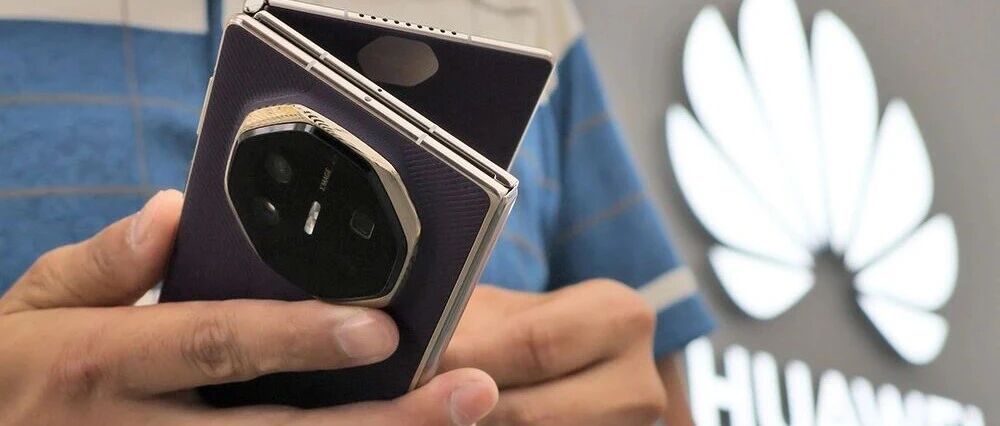
Core Insights - The Chinese foldable smartphone market is transitioning from rapid growth to a plateau phase, with a projected shipment of approximately 10.01 million units in 2025, reflecting a year-on-year growth of 9.2%, contrasting with a decline of 0.6% in the overall smartphone market [1][2] - Huawei dominates the market with a share exceeding 70%, while other brands like Honor, vivo, OPPO, and Samsung hold less than 10% each, indicating a significant market concentration [1][2] - The anticipated entry of Apple into the foldable smartphone market in 2026 is expected to revitalize consumer interest and market dynamics [4][5] Market Dynamics - The foldable smartphone market in China is entering a "small year" in 2025, with many manufacturers adjusting their production targets downward, leading to a more pronounced market segmentation [2] - Huawei's market share increased from 50% in 2024 to 71.8% in 2025, while Honor and vivo hold 9.1% and 4.9% respectively, with OPPO and Samsung tied at 4.3% [2] - The market is characterized by a "one strong, many strong" dynamic, where Huawei's continuous investment and technological advancements have solidified its leading position [2] Product Innovations - Huawei's product lineup for 2025 includes various foldable designs, such as the Mate X6, Mate X7, and the innovative Mate XTs, which cater to different consumer preferences [3] - The expected launch of Apple's first foldable iPhone, tentatively named iPhone Fold, is set for fall 2026, featuring advanced materials and design innovations [5][6] Future Outlook - The entry of Apple is anticipated to attract more consumers to foldable smartphones, potentially driving market growth [6] - Analysts predict that the global foldable smartphone market will see a significant increase, with shipments expected to reach 20.6 million units in 2025, and a projected 30% growth in 2026 due to Apple's and Samsung's contributions [6][7] - The introduction of Apple's foldable iPhone is viewed as a pivotal moment for the foldable segment, likely catalyzing broader adoption and technological advancements in the supply chain [7]
2026年,手机战场将更挤更昂贵
财富FORTUNE· 2026-01-23 13:05
Core Viewpoint - The year 2026 may mark a turning point in the Chinese smartphone industry, as the previous "scale narrative" of gaining market share through low profit margins is likely to fail [1][3]. Group 1: Industry Trends - Major manufacturers like Xiaomi and OPPO have officially lowered their shipment forecasts for 2026 by more than 20%, indicating a strategic shift rather than a minor adjustment [4][5]. - The ongoing price surge in the global memory chip market, with costs expected to rise by 40% to 50% in the first half of 2026, poses a significant challenge for smartphone manufacturers, turning low-end devices into financial liabilities [5][10]. - The end of the "thousand-yuan machine war" suggests that metrics like cash flow and unit gross margin will become more critical than shipment volume in assessing company health [6]. Group 2: Market Dynamics - Huawei has reclaimed the top position in the Chinese market with a 16.4% market share, a significant achievement given its focus on high-end products rather than a broad product range [8]. - Honor's fall from the top five in the Chinese smartphone market highlights the challenges faced by brands lacking vertical integration and a strong ecosystem, as it struggles between the mid-range positioning of vivo and the high-end offerings of Huawei [8]. - Apple and vivo are tied for second place with approximately 16% market share each, with vivo successfully establishing itself in the high-end Android segment [8]. Group 3: Competitive Landscape - Apple's upcoming launch of its first foldable phone in 2026 indicates its desire to maintain its position in the high-end market, as the innovation in traditional smartphones has plateaued [9]. - The foldable phone category, which can command prices above $2,000, represents a new price anchor for Apple, aiming to attract high-value iOS users who have not yet transitioned to Android [9]. - The competitive landscape in the high-end market is expected to become increasingly intense, with both Huawei and Apple vying for dominance through advanced technologies and features [9].
鲁大师2025牛角尖颁奖盛典:用数据切割泡沫,为硬核实力正名
Xin Lang Cai Jing· 2026-01-23 12:40
Core Viewpoint - The "Ludashi 2025 Niujiao Award Ceremony" emphasizes the importance of verifiable testing data over mere storytelling in determining user experience [1][45]. Group 1: Computer Hardware - AMD Ryzen 9 9950X3D won the title of "2025 Best Performance Desktop Processor" with a 144MB cache, achieving over 1000 FPS in gaming and stable performance in creative tasks [3][47]. - Intel Core Ultra 9 285HX was awarded "2025 Best Performance Mobile Processor," featuring a 24-core architecture and achieving high performance at a base power of 55W [5][49]. - ROG Night God RTX5090OC 32G was recognized as "2025 Best Graphics Chip," showcasing advanced cooling systems for stable performance under load [7][51]. - ROG Gun God 9 Plus Super Competition Edition received the title of "2025 Best Performance Laptop," effectively utilizing flagship components for sustained high performance [9][53]. - G.Skill Royal Memory DDR5 7800MHz 16GB was awarded "2025 Best Computer Memory Performance," achieving high stability and potential for higher frequencies [11][55]. - ZhiTai TiPro9000 2TB won "2025 Best Computer Hard Drive Performance," demonstrating a read speed of 14000MB/s with advanced architecture [13][57]. Group 2: Smartphones - Qualcomm Snapdragon 8 Gen 2 was named "2025 Best Performance Smartphone Chip," achieving a score of 1,305,712 and enhancing mobile performance across CPU, GPU, and AI capabilities [15][59]. - Honor Magic8 Pro won "2025 Best AI Performance Smartphone," with a 37% improvement in AI capabilities [17][61]. - Red Magic 11 Pro+ was awarded "2025 Best Performance Smartphone," achieving a score of 2,067,258 and featuring a unique cooling system for sustained performance [19][63]. - OPPO ColorOS 16 received the title of "2025 Best Smooth Smartphone System," improving fluidity by 37% [21][65]. - iQOO 15 was recognized as "2025 Best Smooth Smartphone," achieving a fluidity score of 242.81 [23][67]. - Red Magic 11 Pro+ also won "2025 Best Gaming Smartphone," focusing on a comprehensive gaming experience [25][69]. - vivo X300 Pro was awarded "2025 Best Long-Lasting Smooth Smartphone," demonstrating high responsiveness over time [27][71]. Group 3: Electric Two-Wheelers - Ninebot M5 125 was named "2025 Best Smart Electric Two-Wheeler," leading in intelligent features with a score of 915 [29][73]. - Ninebot M5 125 also won "2025 Best Comprehensive Bluetooth Performance Electric Two-Wheeler," showcasing quick connectivity and stability [31][75]. - Green Source S95 received the title of "2025 Best Range Achievement," effectively managing energy efficiency [33][77]. - Ninebot Fz3 110 was awarded "2025 Best New National Standard Smart Electric Two-Wheeler," excelling in smart solutions under strict regulations [35][79]. Group 4: New Energy Vehicles - The new Tank 500 (Coffee OS 3.3) was recognized as "2025 Best Smooth Cockpit System," achieving a flow index of 1288.6ms [39][81]. - NIO ES8 Six-Seat Executive Luxury Edition won "2025 Best Voice AI Recognition Vehicle," with a voice recognition rate of 70.42% [41][85]. Conclusion - The Ludashi Niujiao Award aims to establish quantifiable standards for user experience in the industry, emphasizing the importance of verifiable performance data [44][87].

新政下的港客们:享受以旧换新、离境退税双重红利
2 1 Shi Ji Jing Ji Bao Dao· 2026-01-23 12:01
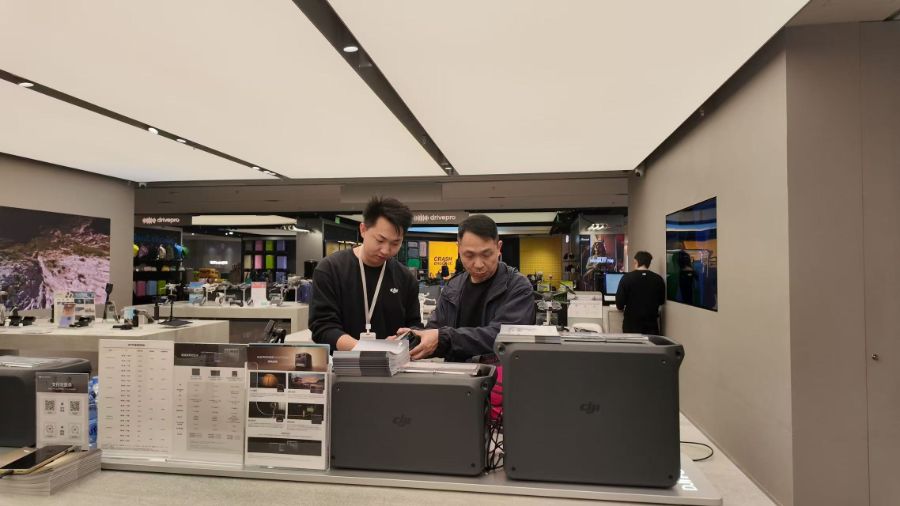
21世纪经济报道记者李金萍 深圳报道 2026年以旧换新政策在深圳正式落地实施,叠加元旦假期效应,迅速带动当地消费市场升温。 "我本来想在线上购买一台笔记本,但名额不好抢,最后还是线下购买了。"深圳居民陈琦向21世纪经济报道记者表示。 除了深圳本地居民之外,港客们也是深圳以旧换新政策的获益者。记者走访了解到,在此轮消费热潮中,他们可同时享受以旧换新与离境退税双重政策优 惠,从而以更优惠的价格选购商品。 受政策推动,港客在深圳的消费清单正持续扩展,消费场景从餐饮娱乐延伸至实体购物,所购商品涵盖手机、电脑、无人机等数码产品,还包括小家电、智 能穿戴设备,乃至奢侈箱包与本土高端服饰等多项品类。 事实上,这种由政策带动的港客消费模式结构性转变,早在2025年便已初现端倪。 政策红利带动港人消费热 福田星河COCO Park紧邻福田口岸,该口岸日均通关人流量17.64万人次,常年位居深港陆路口岸第二位。据商场统计,港客约占商场总客流的20%,在复活 节等香港公共假期期间,港客客流会出现小幅攀升。作为福田区首个离境退税"即买即退"试点集中退付点,该商场的港客消费数量与退税政策关联紧密。 该商场相关负责人向记者透露,在无退 ...
真我正式发布Neo8手机 2025年总销量迈过3亿台大关
Zheng Quan Ri Bao Wang· 2026-01-23 11:48
本报讯(记者贾丽)1月22日,真我手机正式发布165Hz潮玩电竞旗舰产品真我Neo8。真我realme副总裁、 中国区总裁徐起表示,2025年真我手机逆势增长,总销量迈过3亿台大关。此外,真我手机将于2026年4 月份正式接入OPPO售后体系,届时用户可在全国OPPO线下网点体验高质量售后服务。 售后服务方面,真我Neo8将提供"无忧购"服务保障。系统维护方面,真我Neo8承诺4年系统维护与3个 安卓大版本更新,即使使用4年,系统仍能保持流畅如新的使用体验。另外,真我手机将于今年4月全面 接入OPPO售后服务体系,享受OPPO五星服务品质,包括面对面维修、可视化寄修服务、30天性能故 障包换、维修部件至高180天质保等。 公开资料显示,真我手机最初是作为OPPO在印度市场的子品牌出现的,而后独立成为真我手机品牌。 本月初,有业内人士称,为进一步协同作战、整合资源,realme将回归OPPO,成为其旗下子品牌。如 今,真我手机宣布将于2026年4月份正式接入OPPO售后体系,意味着OPPO完成了对子品牌的业务整 合,将进一步丰富产品矩阵,覆盖从千元到高端、从游戏到影像的不同需求。 据介绍,真我的Neo系列手机定 ...
海外走红,国内克制,国产厂商的隐私投入,为何总是“点到为止”?
3 6 Ke· 2026-01-23 09:28
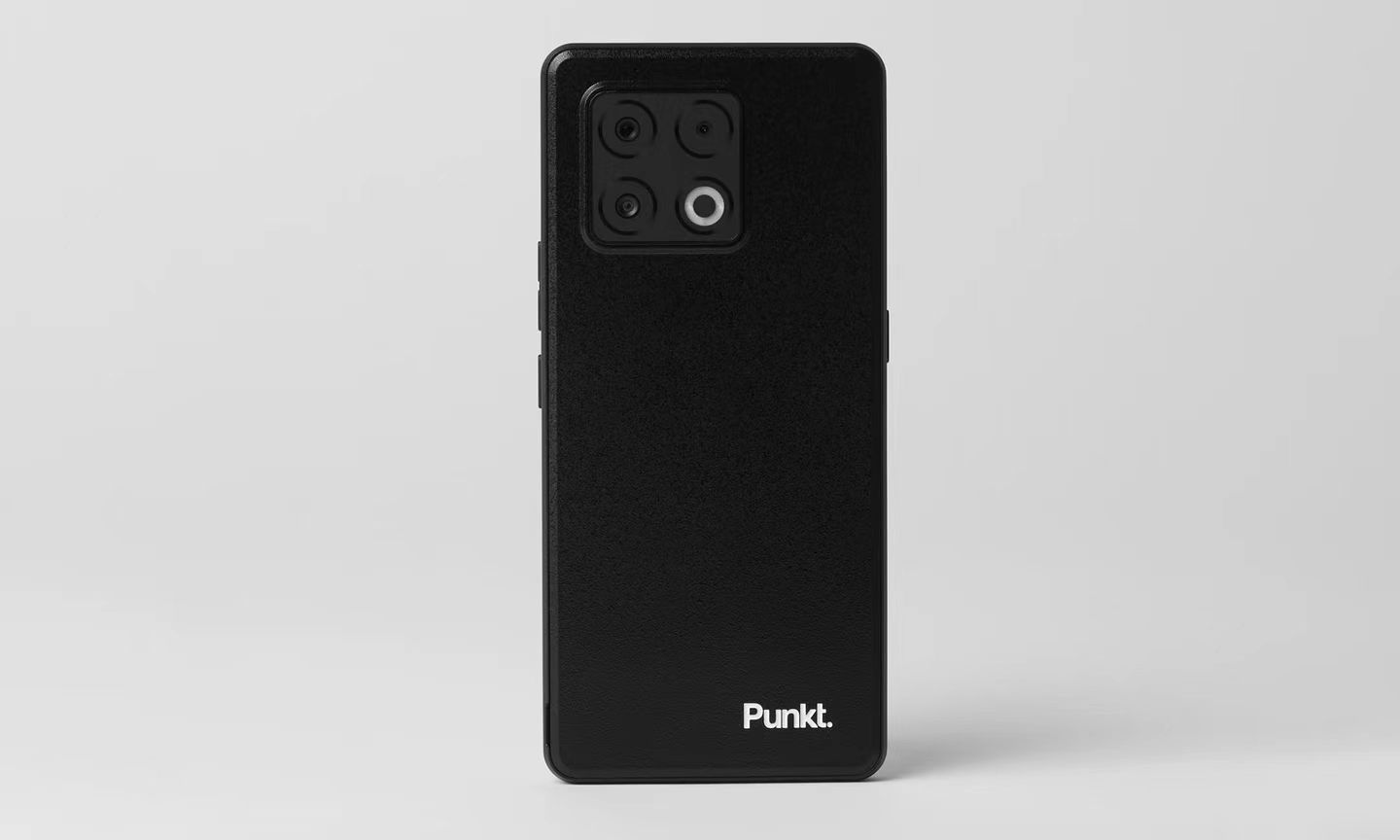
Core Viewpoint - The increasing concern over privacy in the context of advanced internet and smartphone technology highlights a growing demand for products that can effectively safeguard personal data while maintaining usability [1][12]. Group 1: Privacy Concerns and Market Demand - Users are increasingly aware of privacy risks associated with smartphones, leading to a demand for devices that can prevent data leaks from a hardware perspective [2][4]. - Punkt's MC03 privacy phone, showcased at CES 2026, offers a unique solution by categorizing applications into "closed" and "open" environments, allowing users to control permissions and isolate sensitive data [2][4]. - The phone can operate without Google services, addressing privacy concerns without sacrificing usability, emphasizing privacy as a top priority [4]. Group 2: Domestic Manufacturers' Approach - Domestic manufacturers are not neglecting privacy but are focusing on user experience, which often leads to fewer hardware-level privacy solutions [5][9]. - For instance, OPPO's Find X8 Ultra provides extensive privacy features, including detailed permission controls and alerts for sensitive actions, indicating a commitment to privacy [5]. - The complexity of implementing hardware-level privacy solutions in a mobile ecosystem that relies on frequent permissions and app interactions makes it challenging for manufacturers to prioritize such features [11]. Group 3: User Behavior and Privacy Trade-offs - Users have accepted a trade-off between convenience and privacy, often unconsciously agreeing to share data for a smoother experience [12][15]. - The pervasive nature of data collection in modern services has heightened sensitivity towards privacy breaches, leading to a demand for more robust privacy solutions [15][16]. - The concept of a privacy phone challenges the norm by suggesting that true privacy requires significant trade-offs, either through reduced app permissions or by adopting more stringent hardware controls [15][17]. Group 4: Future of Privacy in Technology - The future competition in privacy will not only focus on permission management but also on providing verifiable control over personal data [16][17]. - The notion that privacy should not come at the cost of convenience is emphasized, with the need for a balance between user control and seamless experience [20]. - As privacy becomes a fundamental expectation rather than an added benefit, manufacturers will need to adapt to meet these evolving consumer demands [18][20].
eSIM手机再“添丁”,荣耀推出首款eSIM机型
Bei Jing Ri Bao Ke Hu Duan· 2026-01-23 08:29
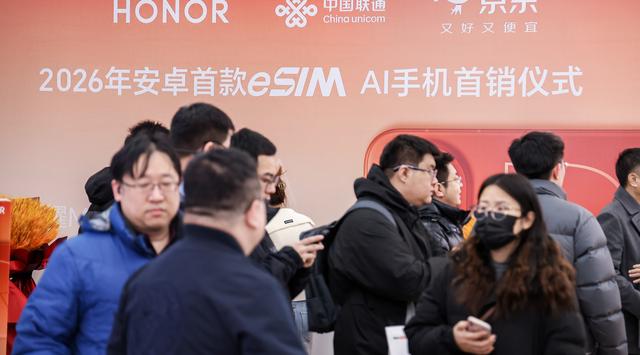
随着eSIM手机逐步走向市场,运营商也同步推出适配的eSIM套餐及尝鲜优惠。联通华盛通信有限公司 终端销售部总经理陈立在现场介绍,中国联通目前推出办理eSIM卡赠送话费、搭配大流量且月末不清 零等优惠。"出国旅游时,可直接秒切换eSIM境外流量包,上网更加便捷。" eSIM手机市场迎来新成员。继苹果、华为等厂商陆续推出相关机型后,荣耀也在今年年初发布了旗下 首款支持eSIM功能的手机,标志着eSIM技术在主流品牌中的进一步普及。 1月23日上午,荣耀首款eSIM手机Magic8 Pro Air在中国联通西单营业厅开启首销。北京市民陈先生一早 来到现场领取自己预订的新机:"第一次用上eSIM手机,仅有155克重,手感很轻薄!" 首销会现场 据介绍,该款手机支持"四卡双待"功能,可同时容纳两张实体SIM卡和两张eSIM卡,为用户提供更灵活 的通信组合选择。 工作人员展示荣耀eSIM新机。 去年10月下旬,首款支持eSIM的国行版iPhone Air正式发售,取消了实体SIM卡槽。此后,国内手机厂 商纷纷跟进,目前OPPO Find X9 Pro卫星通信版、华为Mate 80 RS非凡大师等机型均已搭载eSIM功能 ...
春节换机潮叠加“国补”,中端机配置全面“旗舰化”
Nan Fang Du Shi Bao· 2026-01-23 06:30
Group 1 - The Chinese smartphone market is entering a competitive phase with a focus on mid-range devices as manufacturers target the demand for high cost-performance products during the pre-Spring Festival sales season [1][3] - The government subsidy policy, which extends until 2026, offers a 15% subsidy for devices priced under 6000 yuan, enhancing the attractiveness of mid-range smartphones [3] - Consumers are shifting their focus from low prices to high cost-performance, with mid-range devices now offering performance and features close to flagship models at 60%-70% of their price [3][7] Group 2 - Major brands like Honor, OnePlus, Redmi, iQOO, and realme are launching new models priced between 2000 yuan and 3000 yuan, indicating a fierce competition in the mid-range segment [3][7] - Battery life is a critical concern for users, leading manufacturers to equip mid-range devices with large-capacity batteries, such as Honor Power 2 with a 10080mAh battery [5][7] - The introduction of high-performance processors, such as Snapdragon 8 Gen 5 and MediaTek's Dimensity 9500S, is becoming standard in new mid-range devices, enhancing their appeal [5][6] Group 3 - The smartphone market in China is transitioning to a phase characterized by slight declines in total volume and structural upgrades, with an expected shipment of 278 million units in 2026, a 2.2% year-on-year decrease [8] - High-end market shares are dominated by Apple, Huawei, and Samsung, with Apple holding nearly 50% of the high-end market share in the first three quarters of 2025 [9] - The rising costs of core components are pressuring manufacturers to either raise prices or reduce specifications, leading to a focus on the 2000-3000 yuan price range for maintaining higher profit margins [9]
苹果进入印度手机市场前五,去年出货增长28%
Guan Cha Zhe Wang· 2026-01-23 05:42
Core Insights - The Indian smartphone market is projected to see a decline in shipments, with approximately 34.5 million units expected in Q4 2025, a 7% year-over-year decrease, and an annual total of 154.2 million units, reflecting a slight 1% decline [1][2] - Vivo maintains its leading position in both quarterly and annual shipments, with a market share of 23% in Q4 and 21% for the year, showing a growth rate of 19% [2][3] - The market is experiencing a shift towards value-driven strategies, influenced by rising component costs, cautious consumer spending, and extended upgrade cycles [1][4] Quarterly Performance - In Q4 2025, Vivo shipped approximately 7.9 million units, capturing 23% of the market share, followed by Samsung with 4.9 million units (14% share) and OPPO with 4.6 million units (13% share) [1] - The overall decline in Q4 shipments is attributed to high channel inventory, currency depreciation, and increased memory costs leading to higher product prices, which have weakened purchasing power [1][2] Annual Performance - For the full year, Vivo's total shipments reached 32.1 million units, securing a 21% market share, while Samsung and OPPO followed with 23 million and 20 million units, respectively [2] - Apple ranked fifth with a market share of approximately 10%, showing the most significant growth among the listed companies at 28% year-over-year [2] Market Dynamics - The fourth quarter is characterized as a period for inventory digestion, with brands like Vivo and OPPO achieving double-digit year-over-year growth due to strong retail execution and effective product management [2][3] - Other leading brands faced challenges, including cautious channel behavior and price adjustments, with Samsung and Xiaomi experiencing sales slowdowns despite targeted promotions [2][3] Future Outlook - The Indian smartphone market is expected to see a mid-single-digit percentage decline in 2026, driven by rising terminal prices and limited incremental value in products [3][4] - Brands are anticipated to shift focus towards value growth strategies in the entry-level market, particularly in the ₹25,000 to ₹60,000 segment, which offers better profit margins [3][4] - The high-end market above ₹60,000 will continue to be dominated by Apple, Samsung, and Vivo, with brands increasingly relying on channel leverage and localized marketing strategies to maintain market stability [4]
