
大成基金

Search documents
5G通信主题ETF领涨丨ETF基金日报
2 1 Shi Ji Jing Ji Bao Dao· 2025-11-26 02:57
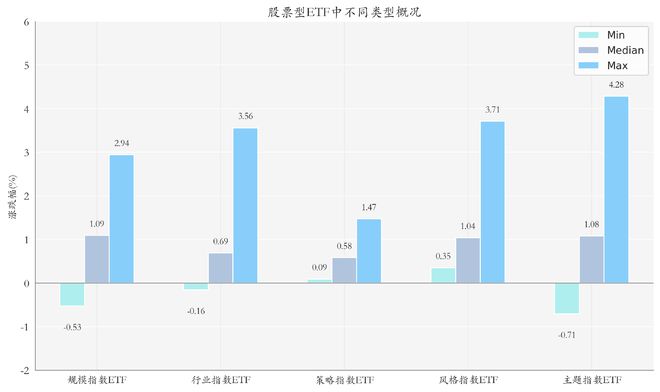
Market Overview - The Shanghai Composite Index rose by 0.87% to close at 3870.02 points, with a daily high of 3882.03 points [1] - The Shenzhen Component Index increased by 1.53% to close at 12777.31 points, reaching a high of 12882.81 points [1] - The ChiNext Index saw a rise of 1.77%, closing at 2980.93 points, with a peak of 3027.83 points [1] ETF Market Performance - The median return of stock ETFs was 0.98%, with the highest return from the E Fund Shanghai Stock Exchange Science and Technology Innovation Board 200 ETF at 2.94% [2] - The highest performing industry index ETF was the GF National Communication ETF, yielding 3.56% [2] - The highest return among thematic ETFs was from the Yinhua CSI 5G Communication Theme ETF at 4.28% [2] ETF Gain and Loss Rankings - The top three ETFs by gain were: - Yinhua CSI 5G Communication Theme ETF (4.28%) - GF CSI Animation Game ETF (4.14%) - Huaxia CSI Animation Game ETF (4.11%) [5][6] - The top three ETFs by loss were: - Huaan National Aerospace Industry ETF (-0.71%) - Penghua CSI National Defense ETF (-0.63%) - Fortune CSI Military Leaders ETF (-0.59%) [5][6] ETF Fund Flow - The top three ETFs by fund inflow were: - Penghua CSI Wine ETF (¥116 million) - Huabao CSI All-Index Securities Company ETF (¥108 million) - GF CSI Media ETF (¥103 million) [7][8] - The top three ETFs by fund outflow were: - E Fund ChiNext ETF (¥2.39 billion) - Southern CSI 1000 ETF (¥1.534 billion) - Huatai-PB CSI 300 ETF (¥1.006 billion) [7][8] ETF Margin Trading Overview - The highest margin buy amounts were for: - E Fund ChiNext ETF (¥511 million) - Huaxia SSE Sci-Tech 50 ETF (¥460 million) - Huatai-PB CSI 300 ETF (¥378 million) [9][10] - The highest margin sell amounts were for: - Huatai-PB CSI 300 ETF (¥54.57 million) - Southern CSI 500 ETF (¥46.89 million) - Southern CSI 1000 ETF (¥14.96 million) [9][10] Industry Insights - Dongguan Securities predicts that the communication industry will experience a period of technological iteration and policy benefits by 2025, with growth driven by AI, quantum communication, and low-altitude economy [11] - Zhongyuan Securities highlights that telecom operators are stable, with an increasing dividend payout ratio expected, making them attractive high-dividend assets [12]

QDII基金交易热!管理人频繁提示溢价风险 部分产品限购
Bei Jing Shang Bao· 2025-11-26 00:41
Core Viewpoint - Multiple fund managers have issued warnings regarding the premium risk associated with QDII funds, indicating that over 20 funds may be affected by secondary market trading price premiums, despite the majority showing strong performance this year [1][2]. Group 1: Premium Risk Warnings - On November 25, several fund management companies, including Huaxia, GF, and others, released announcements regarding potential premium risks for their QDII funds, affecting more than 20 products [2]. - The premium risk is attributed to factors such as supply-demand imbalance, ineffective arbitrage mechanisms, and speculative trading behavior [3]. - The secondary market trading prices of these funds are influenced not only by net asset value changes but also by market supply and demand, systemic risks, and liquidity risks [3]. Group 2: Performance of QDII Funds - As of November 21, 92.16% of the 689 QDII funds recorded positive returns this year, with some funds achieving over 100% returns [4]. - The top-performing fund, Huaxia Hong Kong Advantage Selected Mixed QDII, had a return rate of 122.7% [4]. - A total of 165 QDII funds have recently suspended subscriptions or large subscriptions to protect existing investors [5]. Group 3: Market Conditions and Future Outlook - The recent performance of U.S. stocks has been volatile, influenced by hawkish signals from the Federal Reserve and concerns over AI bubbles [2]. - The QDII quota has only increased once this year, with a total of $30.8 billion allocated to 82 institutions, reflecting ongoing investor interest in overseas assets [5]. - Analysts suggest that investors should wait for market adjustments before purchasing QDII funds and remain cautious of potential valuation bubbles in U.S. stocks [6].
这些基金可以抄底了吗?
Sou Hu Cai Jing· 2025-11-25 22:51
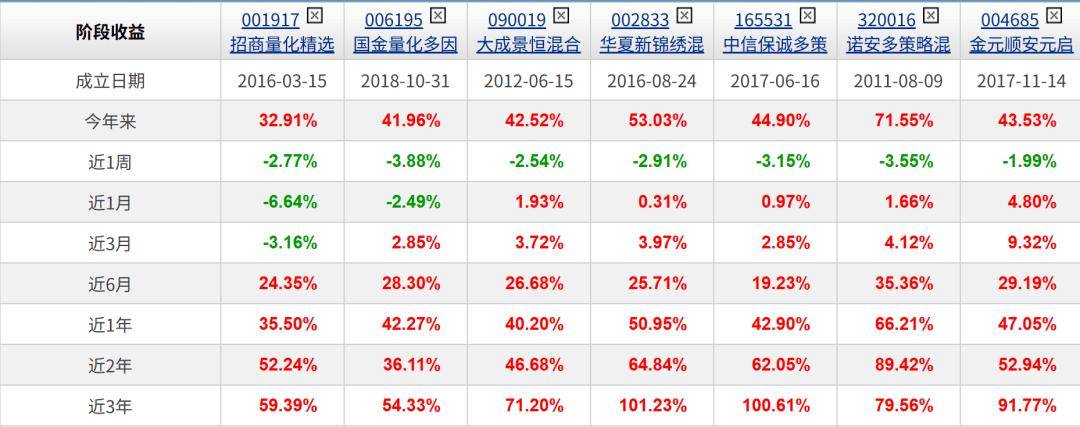
Core Insights - The recent market sentiment has improved, particularly in the artificial intelligence and new energy sectors, which have shown significant gains after previous adjustments [1] - Active quantitative funds have provided opportunities for entry due to recent adjustments, with some funds showing returns exceeding 40% this year [1] - The performance of various active quantitative funds varies, with some experiencing significant drawdowns while others remain relatively stable [1][4][6][8] Fund Performance Summary - **招商量化精选股票A**: Experienced a drawdown of -3.46% on November 21, followed by gains of 1.26% and 1.31% on subsequent days [11] - **国金量化多因子股票A**: Noted a significant drawdown of -4.85% on November 21, with minor recoveries of 0.31% and 2.14% [11] - **大成景恒混合A**: Showed a drawdown of -2.71% on November 21, with recoveries of 0.80% and 0.84% [11] - **华夏新锦绣混合A**: Experienced a drawdown of -3.23% on November 21, followed by recoveries of 0.94% and 1.11% [11] Fund Characteristics - Active quantitative funds typically have diversified holdings across many stocks, with individual stock allocations not exceeding 2% [1] - These funds utilize quantitative models combined with subjective strategies for stock selection, aiming for high returns with low volatility [1] - Some funds, like 神基, have not opened for new purchases despite high returns, indicating limited capacity [1]
QDII基金交易火热 部分产品限购
Bei Jing Shang Bao· 2025-11-25 16:40
Core Viewpoint - Multiple fund managers have issued warnings regarding the premium risk of QDII funds, indicating that over 20 funds may be trading at a premium in the secondary market, despite strong performance in the year, with over 90% of these funds achieving positive returns [1][2]. Group 1: Premium Risk Warnings - On November 25, several fund management companies, including Huaxia, GF, and others, released announcements about the potential premium risk associated with their QDII funds, affecting more than 20 products [2]. - The premium risk is attributed to factors such as supply-demand imbalance, failure of arbitrage mechanisms, and short-term speculation driven by the "T+0" trading system [3]. Group 2: Performance of QDII Funds - As of November 21, 92.16% of the 689 QDII funds recorded positive returns for the year, with the highest performing fund, Huaxia Hong Kong Advantage Selected Mixed QDII, achieving a return of 122.7% [4]. - A total of 52 QDII funds have reported returns exceeding 50% for the year, indicating strong overall performance in the sector [4]. Group 3: Fund Subscription Restrictions - As of November 25, 165 QDII funds have suspended subscriptions or limited large subscriptions to protect the interests of existing fund holders, with some funds imposing strict limits on subscription amounts [5][6]. - The tightening of QDII quotas has contributed to these restrictions, with only one increase in quotas occurring in June, resulting in a total QDII investment quota of $1708.69 billion as of the end of October [6].
ETF简称规范倒计时:重塑市场竞争格局的“正名之战”
2 1 Shi Ji Jing Ji Bao Dao· 2025-11-25 13:31
Core Viewpoint - The new regulation for ETF naming in China aims to standardize the naming convention by requiring the inclusion of the fund manager's name, which is expected to enhance investor recognition and reduce confusion in the market [1][3][5]. Group 1: Regulatory Changes - The Shanghai and Shenzhen Stock Exchanges have issued revised guidelines mandating that all existing ETFs must change their names to include the fund manager's name by March 31, 2026 [1][3]. - The new naming structure will follow the format of "core elements of the investment target + ETF" and will help clarify product identity for investors [4][6]. Group 2: Industry Impact - The regulation is seen as a shift from a focus on "name dividends" to a competition based on "brand strength," which may lead to increased market concentration and a "stronger getting stronger" dynamic [1][7]. - Major fund companies like E Fund and Huaxia have already begun to implement the new naming convention, indicating a proactive approach to the changes [4][6]. Group 3: Competitive Landscape - The new rules are expected to benefit larger fund companies, as clearer identification of fund managers will likely lead investors to prefer products from well-established brands with strong reputations [6][7]. - The competition will shift from merely securing popular names to emphasizing brand loyalty and historical performance, which may disadvantage smaller firms [6][7]. Group 4: Naming Strategy - Fund companies are adopting a phased approach to renaming their ETFs, prioritizing less popular products for early changes while delaying adjustments for high-volume products to minimize disruption [8][9]. - The costs associated with renaming are primarily related to updating marketing materials and operational systems, with a focus on ensuring all platforms are synchronized to avoid trading errors [9][10].
QDII基金交易热!管理人频繁提示溢价风险,部分产品限购
Bei Jing Shang Bao· 2025-11-25 13:18
Core Viewpoint - Multiple fund managers have issued warnings regarding the premium risk of their QDII funds, indicating that over 20 funds may be affected by secondary market trading price premiums, despite the majority showing strong performance this year [1][3]. Group 1: Premium Risk Warnings - On November 25, several fund management companies, including Huaxia, GF, and Huitianfu, announced premium risk warnings for their QDII funds, affecting more than 20 products [3]. - The funds involved track indices such as the Nasdaq 100, S&P 500, and MSCI US 50, with these indices showing significant gains of 18.38%, 18.07%, and 14% year-to-date, respectively [3]. - The warnings are not new; for instance, Huaxia Nomura Nikkei 225 ETF has issued premium risk alerts up to 30 times since November [3]. Group 2: Market Performance and Fund Management Actions - As of November 21, 92.16% of the 689 QDII funds reported positive returns this year, with some funds, like Huitianfu Hong Kong Advantage Mixed QDII, achieving returns exceeding 122% [6]. - In response to the premium risks, 165 QDII funds have suspended subscriptions or limited large subscriptions, with some funds imposing strict limits on subscription amounts [7][8]. - The tightening of QDII quotas has led to a supply-demand imbalance, contributing to the premium phenomenon as investors rush to buy into these funds [5][8]. Group 3: Market Dynamics and Investor Behavior - The premium risk is exacerbated by a failure in the arbitrage mechanism due to the suspension of the primary market for subscriptions and redemptions, making it difficult to correct the premiums quickly [5]. - High-frequency trading and speculative activities have further amplified price volatility in the QDII funds, particularly those allowing T+0 trading [5]. - Analysts suggest that investors should wait for market adjustments before purchasing QDII funds to avoid chasing high prices, while also being mindful of the overall market conditions and potential risks [8].

天赐材料股价涨5.04%,大成基金旗下1只基金重仓,持有40.21万股浮盈赚取78.01万元
Xin Lang Cai Jing· 2025-11-25 05:31
大成中证电池主题指数发起式A(015997)成立日期2022年6月28日,最新规模7298.36万。今年以来收 益55.81%,同类排名189/4206;近一年收益45.83%,同类排名357/3983;成立以来亏损16.44%。 大成中证电池主题指数发起式A(015997)基金经理为郑少芳。 截至发稿,郑少芳累计任职时间2年145天,现任基金资产总规模25.8亿元,任职期间最佳基金回报 45.6%, 任职期间最差基金回报-4.5%。 11月25日,天赐材料涨5.04%,截至发稿,报40.44元/股,成交31.75亿元,换手率5.55%,总市值809.36 亿元。 资料显示,广州天赐高新材料股份有限公司位于广东省广州市黄埔区云埔工业区东诚片康达路8号,香港 湾仔皇后大道东248号大新金融中心40楼,成立日期2000年6月6日,上市日期2014年1月23日,公司主营 业务涉及精细化工新材料的研发、生产和销售。主营业务收入构成为:锂离子电池材料89.66%,日化 材料及特种化学品8.73%,其他1.61%。 从基金十大重仓股角度 数据显示,大成基金旗下1只基金重仓天赐材料。大成中证电池主题指数发起式A(01599 ...

航空航天ETF领涨,商业航天进入快速发展期丨ETF基金日报
2 1 Shi Ji Jing Ji Bao Dao· 2025-11-25 03:03
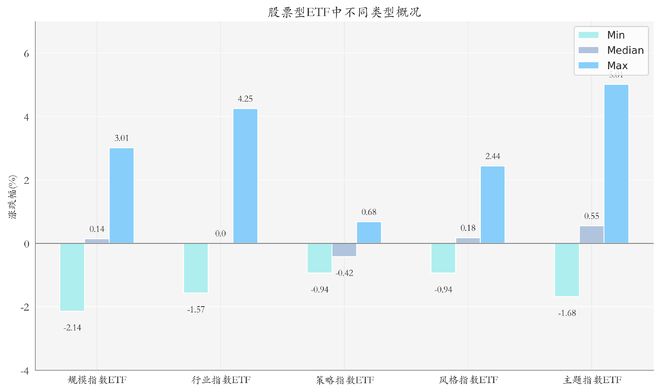
Market Overview - The Shanghai Composite Index rose by 0.05% to close at 3836.77 points, with a daily high of 3854.33 points [1] - The Shenzhen Component Index increased by 0.37% to close at 12585.08 points, reaching a high of 12655.29 points [1] - The ChiNext Index gained 0.31%, closing at 2929.04 points, with a peak of 2951.43 points [1] ETF Market Performance - The median return of stock ETFs was 0.2%, with the highest return from the Penghua SSE Sci-Tech Innovation Board 200 ETF at 3.01% [2] - The highest performing industry ETF was the China Securities Satellite Industry ETF, yielding 4.25% [2] - The highest return among thematic ETFs was the China Securities Aerospace Industry ETF, which achieved 5.01% [2] ETF Gain and Loss Rankings - The top three ETFs by gain were: - Huaxia China Securities Aerospace Industry ETF (5.01%) - Tianhong China Securities Aerospace Industry ETF (4.66%) - Wanji China Securities Aerospace Industry ETF (4.64%) [4] - The top three ETFs by loss were: - Xingyin SSE Sci-Tech Innovation Board Comprehensive Price ETF (-2.14%) - Huaxia China Securities Sci-Tech Innovation 50 ETF (-1.88%) - Jiashi China Securities Rare Metals Thematic ETF (-1.68%) [4] ETF Fund Flow - The top three ETFs by fund inflow were: - Huatai-PB SSE 300 ETF (inflow of 3.665 billion yuan) - Huaxia SSE 50 ETF (inflow of 1.53 billion yuan) - Southern CSI 500 ETF (inflow of 895 million yuan) [6] - The top three ETFs by fund outflow were: - Huabao CSI Bank ETF (outflow of 211 million yuan) - Fuguo CSI Military Industry Leaders ETF (outflow of 209 million yuan) - Guotai CSI Coal ETF (outflow of 207 million yuan) [6] ETF Margin Trading Overview - The highest margin buy amounts were for: - Huaxia SSE Sci-Tech Innovation 50 ETF (593 million yuan) - E Fund ChiNext ETF (440 million yuan) - Guotai CSI All-Share Securities Company ETF (415 million yuan) [8] - The highest margin sell amounts were for: - Huatai-PB SSE 300 ETF (34.95 million yuan) - Southern CSI 500 ETF (7.56 million yuan) - Huaxia SSE 50 ETF (3.97 million yuan) [9] Institutional Insights - Shenwan Hongyuan expects strong resonance between demand and supply in China's military trade, driven by expanding global military trade demand and enhanced product capabilities [10] - Debon Securities highlights a historic opportunity for the commercial aerospace industry, transitioning from manufacturing to application, with significant growth in low-orbit satellite demand [11]

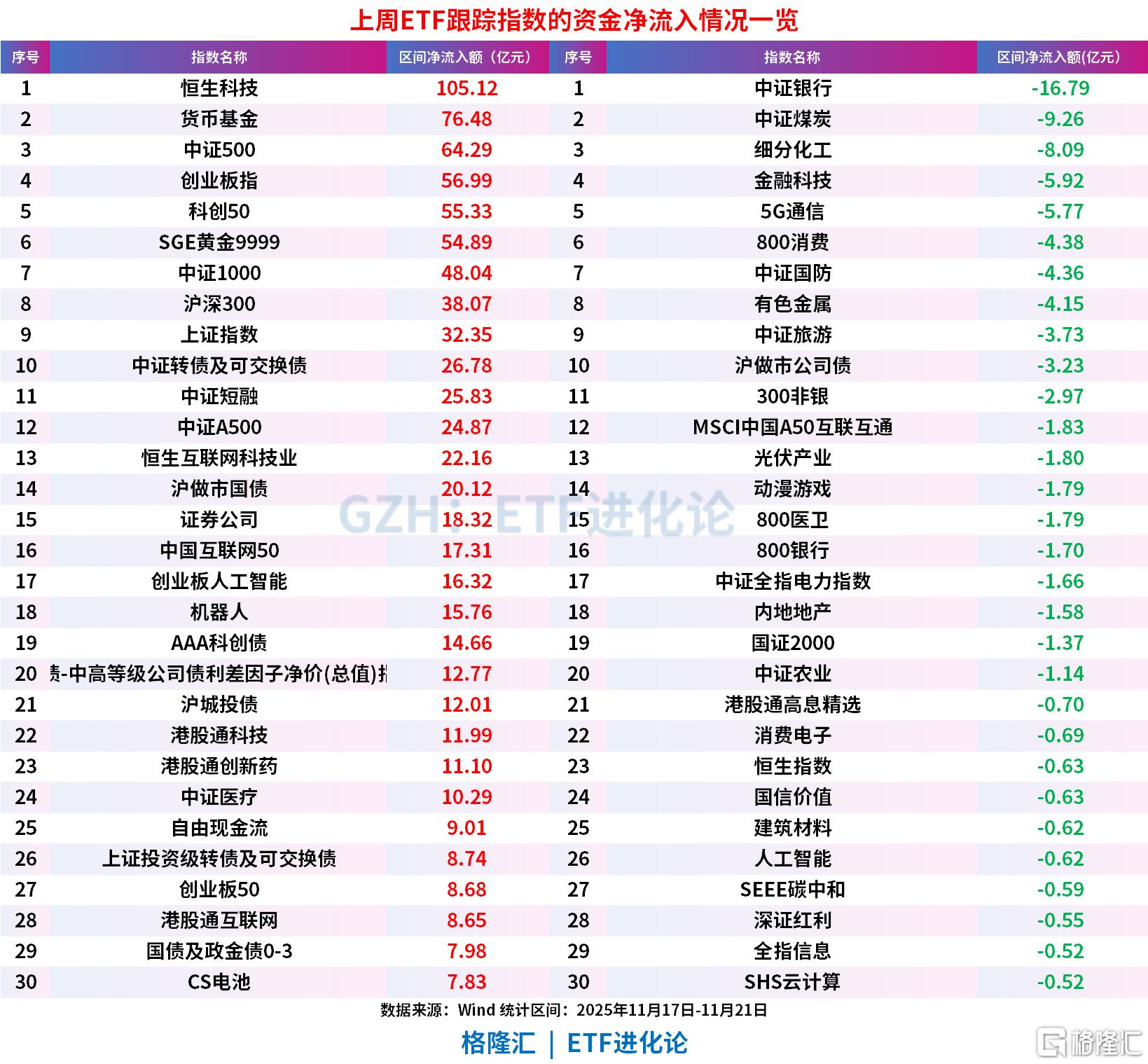
上周超500亿资金抄底股票ETF,恒生科技、中证500、创业板指、科创50“吸金”居前
Ge Long Hui· 2025-11-25 00:40
Market Performance - The A-share market saw a decline across major indices last week, with the CSI 300, Shanghai Composite Index, and SME Index showing returns of -3.77%, -3.90%, and -5.10% respectively. The ChiNext Index, CSI 1000, and CSI 500 had lower returns of -6.15%, -5.80%, and -5.78% respectively [1] - In terms of industry performance, banks, food and beverage, and media sectors had relatively better returns of -0.87%, -1.36%, and -1.39% respectively, while sectors like comprehensive, electric equipment and new energy, and basic chemicals lagged with returns of -9.47%, -9.41%, and -8.24% respectively [1] Fund Flows - The ETF market experienced a net inflow of 98 billion, with stock ETFs contributing 54.577 billion, QDII stock ETFs 15.544 billion, commodity ETFs 6.495 billion, bond ETFs 13.8 billion, and money market fund ETFs 7.648 billion. Notably, on November 21, there was a significant inflow of 50 billion aimed at "bottom-fishing" through ETFs [2] - Specific indices such as Hang Seng Technology, money market funds, CSI 500, ChiNext Index, and others saw net inflows ranging from 10.512 billion to 0.3235 billion, while sectors like CSI Bank, CSI Coal, and others experienced net outflows [2][4] ETF Performance - The top-performing ETFs included the S&P Biotechnology ETF and Emerging Asia ETF, with weekly gains of 1.35% and 0.67% respectively. Conversely, several new energy and photovoltaic ETFs saw significant declines, with losses ranging from -11.70% to -13.44% [12][14] - A total of 41 new funds were launched last week, with a combined issuance scale of 35.635 billion, marking an increase from the previous week. This included 14.022 billion in equity funds, 8.056 billion in mixed funds, and 13.557 billion in bond funds [15] Regulatory Changes - The Shanghai and Shenzhen stock exchanges announced new regulations requiring the 5.7 trillion ETF market to standardize fund names. The revised guidelines mandate that fund names must include core investment elements and the fund manager's abbreviation, with a deadline for compliance set for March 31, 2026 [15] - Sixteen hard technology-themed funds were approved on November 21, including the first seven AI ETFs, three chip ETFs, and four chip design theme ETFs, involving multiple fund management companies [16]

四季度以来近2000亿元资金流入权益类ETF
Shang Hai Zheng Quan Bao· 2025-11-24 18:03
Core Viewpoint - The equity ETFs have seen significant inflows, with a total net subscription of 196.48 billion yuan since the beginning of the fourth quarter, indicating strong investor interest despite market fluctuations [1][2]. Fund Inflows - As of November 21, the net subscription for equity ETFs reached 40.79 billion yuan in a single day, marking the highest daily inflow since April 9 [1][2]. - The inflow pattern shows a "barbell" configuration, with strong interest in both underperforming broker-themed ETFs and technology growth ETFs [3]. ETF Performance - Broker-themed ETFs have attracted substantial capital, with notable net subscriptions including 9.27 billion yuan for Guotai Junan ETF and 5.70 billion yuan for Huabao Broker ETF [3]. - Technology growth ETFs also received significant attention, with net subscriptions of 7.31 billion yuan for Huaxia Sci-Tech 50 ETF and 4.58 billion yuan for Jiashi Sci-Tech Chip ETF [3]. Market Outlook - The upcoming launch of new ETFs is expected to bring additional capital into the market, with 54 funds currently in issuance and 24 about to start [4]. - Analysts predict that absolute return funds will be a key source of new liquidity, driven by the conversion of household deposits [4]. - Public funds currently maintain a relatively high stock position, with an average equity position of 89.09% as of November 21 [4]. Investment Strategy - The market is currently in a policy and earnings lull, leading to a potential for short-term volatility without new catalysts [5]. - Long-term fundamentals for A-shares remain strong, with a focus on balanced investment across sectors such as consumption, real estate, and non-bank financials [5]. - Mid-term attention should be directed towards sectors benefiting from manufacturing recovery and technology growth, including AI and innovative pharmaceuticals [5].