
晶澳科技

Search documents
不少光伏厂商出现“第二增长曲线”焦虑:在垂直赛道“内卷”,还是靠光储一体化?
Mei Ri Jing Ji Xin Wen· 2025-12-16 12:21
Core Insights - The energy storage industry has seen a rapid increase in demand since the second half of 2025, while the photovoltaic (PV) industry is struggling with overcapacity and declining demand [1][2] - Many PV manufacturers are diversifying into energy storage to create a "second growth curve," with companies like Canadian Solar (Artes) and LONGi Green Energy leading the charge [1][5] - The demand for energy storage is primarily driven by independent storage projects, particularly in regions rich in solar and wind resources [4][3] Group 1: Energy Storage Demand - Energy storage battery shipments reached 59.9 GWh in October 2025, marking a year-on-year increase of 67.6% and a month-on-month increase of 5.7% [2] - The demand is particularly strong in Inner Mongolia, Gansu, and Xinjiang, with independent storage projects accounting for over 90% of the completed procurement scale in November [3][4] - The shift from traditional power-side storage to independent storage is a key factor in the current demand surge [4] Group 2: Photovoltaic Industry Challenges - The PV industry is facing slow progress in capacity reduction and a declining market size, with a projected negative growth in global new PV installations in 2026 [5] - The International Energy Agency has downgraded its PV growth forecast, indicating a reduction of approximately 248 GW in global renewable energy generation capacity over the next five years, with PV accounting for 173 GW of that reduction [5] - Many PV companies are entering the energy storage sector to seek new growth opportunities amid these challenges [5] Group 3: Company Strategies - LONGi Green Energy is acquiring a majority stake in Suzhou Jingkong Energy Technology Co., which specializes in lithium-ion battery storage systems [5][6] - JA Solar has signed a strategic cooperation agreement with Chuangneng New Energy to focus on joint research and sales of core energy storage products [6][8] - Companies like Trina Solar are building their own battery production capacity, while others are forming partnerships to enhance their competitive edge in the energy storage market [7][8] Group 4: Future Outlook - The energy storage sector is expected to play a crucial role in the energy transition and achieving carbon neutrality goals, with a long-term positive outlook [8] - The demand for energy storage cells is anticipated to surpass that of power battery cells in the future, driven by the maturation of economic value models and technological innovations [8] - The need for energy storage is becoming increasingly critical for grid stability and the integration of renewable energy sources [8]
北京晶澳储能科技有限公司成立
Zheng Quan Ri Bao Wang· 2025-12-15 13:47
Group 1 - Beijing Jing'ao Energy Storage Technology Co., Ltd. has been established with a registered capital of 300 million yuan [1] - The company's business scope includes research and development of emerging energy technologies, energy storage technology services, manufacturing of new energy power equipment, and sales of new energy power equipment [1] - Jing'ao Energy Storage is wholly owned by Jing'ao Solar Co., Ltd., a subsidiary of Jing'ao Technology (002459) [1]

联姻茶饮大佬的高海纯能否带天合光能突围光伏“寒冬”?
Xin Lang Cai Jing· 2025-12-15 09:21
Core Viewpoint - The wedding of Gao Haichun, daughter of Trina Solar's founder, and Zhang Junjie, founder of Bawang Tea, has attracted significant attention due to their prominent family backgrounds and the companies they represent. Both companies are publicly listed, but there are currently no business collaborations between them [1][3]. Company Overview - Trina Solar, founded in 1997, is a leading player in the global photovoltaic (PV) industry, having once been the largest PV module supplier globally. However, its ranking has declined in recent years [9][11]. - The company went public on the New York Stock Exchange in 2006 but was privatized in 2017 and later re-listed on the STAR Market in China [10]. Leadership and Management - Gao Haichun, born in 1993 and a graduate of Brown University, has been involved in Trina Solar since 2017, holding various positions including Vice General Manager of Strategic Investment and Chairman of Trina Solar's subsidiary [4][5]. - In January 2023, she was appointed Co-Chairman of Trina Solar, indicating a significant step in her succession plan within the family business [4]. Financial Performance - Trina Solar's net profits during the peak years of 2021-2023 were 1.804 billion, 3.681 billion, and 5.527 billion yuan respectively [13]. - However, starting in 2024, the company is projected to incur losses of 3.443 billion yuan, with a loss of 4.201 billion yuan reported in the first three quarters of the year [15]. Market Position and Challenges - Trina Solar's stock price has dropped by 80%, leading to a market capitalization loss of over 140 billion yuan [16]. - The company has faced challenges in the distributed PV market, where its subsidiary Trina Bifacial was once ranked among the top two globally, holding nearly 20% market share in the domestic household market [18]. Strategic Shifts - In response to market conditions, Trina Solar is seeking to transform its business model from a PV product manufacturer to a provider of energy storage and smart energy solutions [22]. - The company has set ambitious targets for its energy storage segment, aiming for a shipment goal of 15-16 GWh in 2024, with recent orders significantly exceeding previous years' performance [27][28]. Industry Context - The PV industry is currently facing price competition and supply-demand imbalances, which pose significant challenges for leading companies like Trina Solar [29]. - The introduction of policies such as the "Document 136" has added uncertainty to the profitability of distributed PV projects, complicating the business landscape further [20].


薪酬新规透视 | 华银基金庞文杰在管规模不足2亿,业绩全线告急,在管3产品近三年合计跑输基准超143%
Xin Lang Ji Jin· 2025-12-15 06:55
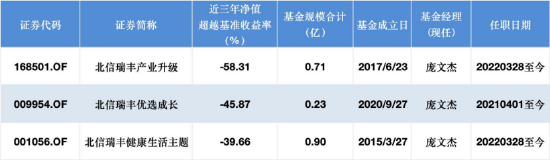
Core Viewpoint - The recent reform in the fund industry emphasizes performance, leading to significant salary reductions for nearly a thousand fund managers if their products underperform by over 10 percentage points compared to benchmarks over the past three years and have negative profit margins [1]. Fund Performance and Management - According to Wind data, the three funds managed by Pang Wenjie have shown substantial negative returns over the past three years, with the North Trust Ruifeng Industrial Upgrade fund underperforming its benchmark by 58.31% and managing a scale of 0.71 billion [2][4]. - The North Trust Ruifeng Preferred Growth fund has underperformed by 45.87% with a scale of 0.23 billion, while the North Trust Ruifeng Health Life Theme fund has underperformed by 39.66% with a scale of 0.90 billion, totaling a management scale of only 1.84 billion [2][4]. Investment Focus and Market Conditions - The funds managed by Pang Wenjie focus on specific themes that have faced industry adjustments, including the new energy sector, consumer goods, and the medical innovation industry [4][5]. - The North Trust Ruifeng Industrial Upgrade fund heavily invests in the new energy supply chain, with major holdings in leading photovoltaic and wind power companies, which have recently experienced significant declines [4]. - The North Trust Ruifeng Preferred Growth fund focuses on the consumer sector, particularly in liquor and food and beverage industries, which have shown mixed performance recently [4][5]. - The North Trust Ruifeng Health Life Theme fund targets the medical innovation sector, which is also facing challenges, with major holdings in medical device companies that have seen declines [4]. Manager's Outlook and Strategy - Pang Wenjie maintains a relatively optimistic outlook for the market, emphasizing the potential recovery of the consumer sector and the benefits of monetary policy changes [5][6]. - He highlights the importance of adapting investment strategies to navigate market style changes and improve fund performance in light of the new salary regulations [6].
晶澳科技在北京成立储能公司 注册资本3亿
Xin Lang Cai Jing· 2025-12-15 03:38
Group 1 - Beijing Jing'ao Energy Storage Technology Co., Ltd. has been established with a registered capital of 300 million RMB [1] - The legal representative of the company is Jin Bin [1] - The business scope includes research and development of emerging energy technologies, energy storage technology services, manufacturing and sales of new energy power equipment [1] Group 2 - The company is wholly owned by Jing'ao Solar Co., Ltd., a subsidiary of Jing'ao Technology (002459) [1]
【东吴电新】光伏26年策略:供给侧拐点已至,供需逐步修复
Xin Lang Cai Jing· 2025-12-15 01:24
需求:全球装机持续增长,中国装机高位回落。2025年国内受136号文影响1-10月装机252.87GW,同比+39%,整体装机处于高位,预计全年装机 290GW,26年装机215GW,同降26%。海外市场,预计25年美国/欧洲新增装机50/70GW,同比持平,后续保持15-21%稳定增长态势。新兴市场贡献较多 增量,尤其是中东及印度国家项目规划推动,装机增速或超预期,预计25年分别达28/31GW,同增87%/29%。我们预计2025年全球新增光伏装机 599GW,同增11%,预计2026年全球新增光伏装机588GW,同减2%,受国内装机有所回落所致。 供给:反内卷陆续起效,价格逐步回升 1)各环节产能扩张停止,过剩情况有望缓解:随着行业反内卷的推进,我们预计26年起硅片、组件等环节产能扩 张将停止,甚至将出现减产,供需过剩有望改善。2)企业盈利承压,看好开工率温和回升:组件、电池、硅片环节普遍亏损,行业仍处去库与资金紧平 衡阶段,现金流质量与负债结构成为比利润更关键的因素;开工率方面,当前排产仍处底部区间,但在硅料端产能出清、自律减产带动下,行业有望在淡 季过后迎来排产的温和回升。3)头部企业建立共同体,推 ...
研判2025!中国太阳能EVA行业产业链上下游、产量、竞争格局及发展趋势分析:光伏装机量持续扩容,进一步拉动太阳能EVA产量增长[图]
Chan Ye Xin Xi Wang· 2025-12-13 02:31
Core Viewpoint - The solar EVA industry is experiencing significant growth, driven by the rapid development of the photovoltaic sector, with China's solar EVA production expected to reach 131.1 GW in 2024, a year-on-year increase of 10.7% [1][7]. Summary by Sections 1. Overview of the Solar EVA Industry - Solar EVA is a thermosetting adhesive film made from ethylene-vinyl acetate copolymer, primarily used in solar photovoltaic modules and optical products [3]. - It possesses high transparency and strong adhesion, suitable for various materials, and is resistant to high temperatures, moisture, and UV radiation [3]. 2. Industry Chain of Solar EVA - The upstream raw materials for solar EVA include ethylene and vinyl acetate, which are polymerized to form EVA resin [4]. - The downstream application is primarily in the photovoltaic industry [4]. 3. Current Development of the Solar EVA Industry - Solar EVA holds over 50% market share due to its excellent packaging performance and low cost [1][7]. - The production of solar EVA is expected to continue growing, supported by government initiatives and technological advancements [1][7]. 4. Competitive Landscape of the Solar EVA Industry - Major players in the solar EVA market include Foster, Haiyou New Materials, and Lushan New Materials, with some foreign brands like LG Chem and Sumitomo Chemical also present [8]. 5. Development Trends in the Solar EVA Industry - Companies are expected to increase R&D investments to develop high-performance, differentiated EVA products [10]. - There will be a focus on optimizing capacity layout and enhancing collaboration between upstream and downstream enterprises to ensure stable supply chains [11][12]. - The industry will also emphasize green production and sustainable development practices to meet environmental standards [13].


光伏行业 “反内卷” 落地推动供给侧改革提速,光伏ETF基金(516180)景气上行
Xin Lang Cai Jing· 2025-12-12 05:54
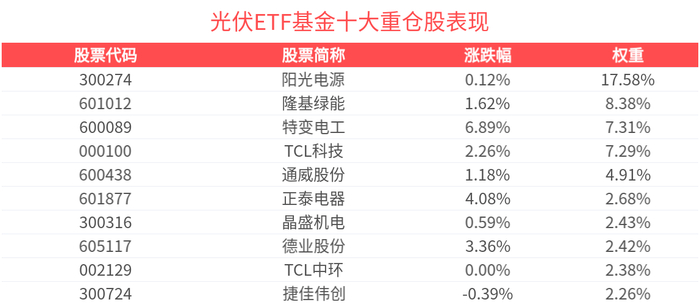
Core Viewpoint - The establishment of Beijing Guanghe Qiancheng Technology Co., Ltd. marks a historic moment for China's photovoltaic industry, signaling the end of three years of intense competition and the full implementation of supply-side structural reforms [1] Group 1: Company Formation and Structure - Beijing Guanghe Qiancheng Technology Co., Ltd. has a registered capital of 3 billion yuan and is initiated by 17 leading companies, including Tongwei Co. and GCL-Poly Energy [1] - The company is referred to as the "national team for polysilicon capacity integration," indicating a strategic move to consolidate production capacities within the industry [1] - Future plans include limiting retained silicon material capacity to no more than 1.5 million tons, with potential changes in shareholder equity as the company seeks additional capital [1] Group 2: Market Performance - As of December 12, 2025, the CSI Photovoltaic Industry Index (931151) rose by 1.78%, with notable increases in constituent stocks such as Junda Co. (up 7.64%) and TBEA Co. (up 6.89%) [1] - The photovoltaic ETF fund (516180) also saw an increase of 1.67%, with a latest price of 0.79 yuan, reflecting positive market sentiment [1] - The ETF fund experienced a turnover rate of 5.74% during the trading session, with a total transaction volume of 5.2908 million yuan [1] Group 3: Index Composition - The CSI Photovoltaic Industry Index comprises up to 50 representative listed companies from the photovoltaic industry chain, with the top ten weighted stocks accounting for 61.01% of the index [2] - The top ten stocks by weight include Yangguang Electric (17.58%), TBEA Co. (7.31%), and LONGi Green Energy (8.38%), among others [2] - The index is designed to reflect the overall performance of listed companies in the photovoltaic sector, providing a benchmark for investors [2]
美国首申人数超预期,中国中央经济工作会议召开
Dong Zheng Qi Huo· 2025-12-12 00:43
1. Report Industry Investment Ratings No industry investment ratings were provided in the report. 2. Core Views of the Report - The US labor market is weakening as the number of initial jobless claims has reached the highest increase since 2020, causing the US dollar index to decline [17][20]. - A - shares are facing challenges as the tone of the Central Economic Work Conference is prudent, with potentially fewer incremental policies and limited profit - repair elasticity next year [22]. - The bond market has strengthened rapidly due to the unexpected monetary policy statement in the economic work conference, but the room for further increase is limited, and it will gradually enter a relatively strong oscillation [26]. - Zhengzhou cotton futures are firm due to high spot basis, strong willingness of industrial giants to take delivery, and high downstream demand, but short - term chasing is not recommended [4][36]. - Iron ore prices are expected to oscillate weakly as the decline is supported by iron - water rigid demand, and port inventories will continue to accumulate [42]. - Zinc prices may rise as the short - term LME zinc delivery risk intensifies, and a bargain - hunting approach is advisable before December 17 [6][69]. 3. Summary by Catalog 3.1 Financial News and Reviews 3.1.1 Macro Strategy (Gold) - The US House of Representatives rejected the impeachment of Trump. Gold prices rose 2% due to the Fed's dovish rate cut and increased expectations of domestic RRR and rate cuts. There is a risk of over - heating in commodity sentiment [13][15]. - Investment advice: Gold prices will oscillate, and silver will be more volatile. Pay attention to risks [16]. 3.1.2 Macro Strategy (Foreign Exchange Futures - US Dollar Index) - The number of initial jobless claims in the US last week increased by 44,000, the largest increase since 2020. The labor market is weakening, and the US dollar index will continue to decline [17][20]. - Investment advice: The US dollar index will continue to decline [20]. 3.1.3 Macro Strategy (Stock Index Futures) - The World Bank raised China's economic growth forecast for 2025 to 4.9%. The Central Economic Work Conference emphasized a prudent policy tone. The A - share market is facing challenges [21][22]. - Investment advice: Allocate long positions in stock indices evenly [22]. 3.1.4 Macro Strategy (US Stock Index Futures) - Broadcom's Q4 performance exceeded expectations. The US stock market is expected to oscillate strongly supported by the Fed's rate cut and liquidity release [23]. - Investment advice: The US stock market will remain oscillating strongly at the end of the year. Pay attention to economic data [24]. 3.1.5 Macro Strategy (Treasury Bond Futures) - The economic work conference proposed to use RRR and rate cuts flexibly. The bond market has strengthened rapidly, but the upward space is limited and will enter a relatively strong oscillation [25][26]. - Investment advice: Adopt a bullish approach [27]. 3.2 Commodity News and Reviews 3.2.1 Agricultural Products (Soybean Meal) - CONAB lowered Brazil's soybean production forecast by 550,000 tons to 177.12 million tons. The domestic soybean auction had a 77.5% transaction rate, and the 1 - 5 spread of soybean meal continued to widen [28][30]. - Investment advice: The main contract of soybean meal will oscillate. If South American production is normal, short on rallies. Pay attention to China's soybean purchases, state - reserve actions, and South American weather [30]. 3.2.2 Agricultural Products (Soybean Oil/Rapeseed Oil/Palm Oil) - Malaysia's palm oil production from December 1 - 10 increased by 6.87%. German legislation is beneficial to rapeseed oil, and domestic customs inspections are stricter [31]. - Investment advice: Rapeseed oil may stabilize and decline. Palm oil prices will be suppressed by supply pressure. Pay attention to Indonesia's supply and demand - side procurement [32]. 3.2.3 Agricultural Products (Cotton) - Xinjiang cotton enterprises are actively selling at spot prices. Zhengzhou cotton futures are firm due to high basis and strong downstream demand, but short - term chasing is not recommended [33][36]. - Investment advice: Do not chase the rise in the short term [37]. 3.2.4 Agricultural Products (Corn Starch) - Corn starch enterprises' operating rates are high, and inventory has slightly decreased. The short - term inventory pressure is acceptable, and the rice - flour price difference will oscillate [38]. - Investment advice: Use a spread strategy around the current North China processing cost range [39]. 3.2.5 Black Metals (Steam Coal) - Mongolia plans to increase coal exports to 100 million tons in 2027. Steam coal prices are expected to continue to fall until mid - to late January [40][41]. - Investment advice: Coal prices will continue to fall until mid - to late January [41]. 3.2.6 Black Metals (Iron Ore) - It is expected that the sales area of new commercial housing in 2026 will decline by 6.2% year - on - year. Iron ore prices will oscillate weakly, and port inventories will continue to accumulate [42]. - Investment advice: Iron ore prices will oscillate weakly [42]. 3.2.7 Agricultural Products (Pigs) - Tangrenshen expects its meat product revenue to exceed 1.6 billion yuan in 2025. The pig market is trading the problem of oversupply, and there is a risk of price decline [43][45]. - Investment advice: Close short positions in the near - term contracts and trade the far - term contracts in a short - term range [45]. 3.2.8 Agricultural Products (Corn) - Corn processing enterprises' inventories have increased, and port inventories have changed. Corn futures may oscillate weakly, and spreads may show an inverse spread [45][47]. - Investment advice: Contracts 03 and 05 may oscillate weakly. Pay attention to policy regulation and expectations [47]. 3.2.9 Black Metals (Rebar/Hot - Rolled Coil) - It is expected that the sales area of new commercial housing in 2026 will decline by 6.2% year - on - year. Steel prices will oscillate, and the upper and lower limits are limited [48][51]. - Investment advice: Adopt an oscillating trading strategy for steel prices [52]. 3.2.10 Black Metals (Coking Coal/Coke) - The coking coal market in Hebei is under pressure. The coking coal market is in a situation of weak supply and demand, and prices may oscillate in the short term [53]. - Investment advice: The market may oscillate in the short term. Pay attention to restocking [53]. 3.2.11 Non - Ferrous Metals (Copper) - Chile's Codelco's copper production decreased in October. Macro factors support copper prices, and the spot premium may be under pressure [54][58]. - Investment advice: Go long on dips for copper prices [58]. 3.2.12 Non - Ferrous Metals (Polysilicon) - A polysilicon platform company is being established. The polysilicon industry has inventory accumulation, and prices may stop falling. Futures can be bought on dips, and options can sell out - of - the - money put options [60][62]. - Investment advice: Spot prices may stop falling. Consider long positions in futures and selling put options in options [62]. 3.2.13 Non - Ferrous Metals (Industrial Silicon) - The US added 11.7GW of photovoltaic capacity in Q3. The industrial silicon market has weak demand and may accumulate inventory. Short on rallies after rebounds [63][64]. - Investment advice: Short on rallies after rebounds [65]. 3.2.14 Non - Ferrous Metals (Lead) - The LME lead 0 - 3 spread is at a discount. The lead market is oscillating, and the delivery risk has decreased. Observe the delivery volume [66]. - Investment advice: Wait and see for lead trading [66]. 3.2.15 Non - Ferrous Metals (Zinc) - Zinc ingot inventory has decreased, and the LME zinc delivery risk has intensified. Zinc prices may rise, and buy on dips before December 17 [67][69]. - Investment advice: Go long on dips for zinc. Hold positive - spread positions and wait and see for cross - border trading [70][71]. 3.2.16 Non - Ferrous Metals (Nickel) - Indonesia warned mining companies. Nickel is expected to oscillate at a low level in the short term, and the medium - term impact of Indonesia's policies needs to be evaluated [72][73]. - Investment advice: Nickel will oscillate at a low level in the short term. Evaluate Indonesia's policies in the medium term [73]. 3.2.17 Non - Ferrous Metals (Lithium Carbonate) - Albemarle completed a lithium extraction pilot plant. The lithium carbonate market may be supported in the short term but may decline in the off - season. Consider long positions on dips [74]. - Investment advice: The short - term market may be under pressure, and long on dips in the medium - to - long term [75]. 3.2.18 Non - Ferrous Metals (Tin) - South Korea plans to build a chip factory, and the US wants to transfer Taiwan's semiconductor supply chain. Tin prices are expected to oscillate at a high level. Buy on dips and avoid chasing highs [76][80]. - Investment advice: Tin prices will oscillate at a high level. Buy on dips and avoid chasing highs [80]. 3.2.19 Energy Chemicals (Carbon Emissions) - The CEA price closed at 57.41 yuan/ton on December 11, down 2.53%. The market will oscillate in the short term [81]. - Investment advice: The CEA price will oscillate in the short term [83]. 3.2.20 Energy Chemicals (Urea) - Urea enterprise inventory decreased by 5.63 million tons to 1.2342 million tons. Urea prices are oscillating weakly. The 01 contract has limited upward space, and the 05 contract can be considered for long positions after getting a safety margin [83][85]. - Investment advice: The 01 contract's trading range remains unchanged, and consider long positions in the 05 contract after getting a safety margin [85]. 3.2.21 Energy Chemicals (Caustic Soda) - The price of liquid caustic soda in Shandong has risen locally. The supply is sufficient, and the demand is stable. The short - term market may be weak, and pay attention to supply reduction due to profit compression [87][89]. - Investment advice: The short - term market may be weak. Pay attention to supply reduction due to profit compression [89]. 3.2.22 Energy Chemicals (PVC) - The PVC powder market price has declined. PVC supply is high, demand is weak, and the price is dragged down by coal prices. The market will remain weak, and short - selling is not cost - effective [90][92]. - Investment advice: The PVC market will remain weak. Avoid short - selling at low valuations [92]. 3.2.23 Shipping Index (Container Freight Rate) - Portugal and Italy will have strikes, which may affect container transportation. The PA price may decline, and it is recommended to wait and see [93]. - Investment advice: Wait and see in the short term [94].
【安泰科】单晶硅片价格 (2025年12月11日)
中国有色金属工业协会硅业分会· 2025-12-11 15:11
Core Insights - The article discusses the current pricing trends of silicon wafers in the solar energy industry, highlighting specific price points for various types of silicon wafers and their fluctuations over time [2][3]. Pricing Trends - The highest and lowest prices for N-type G10L silicon wafers are recorded at 1.18 and 1.15 respectively, with no percentage fluctuation [2]. - N-type G12R silicon wafers have a price range of 1.20 to 1.18, also showing no percentage fluctuation [2]. - The N-type G12 silicon wafers are priced between 1.50 and 1.48, with a slight fluctuation noted [2]. - P-type M10 silicon wafers did not have any transactions recorded for the week [3]. Market Participation - The pricing data is based on the weighted average from 12 companies, which collectively accounted for 92.77% of the domestic production of monocrystalline silicon wafers in the third quarter of 2025 [3]. - The companies involved in the pricing statistics include major players such as JA Solar Technology Co., Ltd., Trina Solar Limited, and JinkoSolar Holding Co., Ltd. [3].



