智元机器人

Search documents
机器人50ETF(159559)连续3天“吸金”,机构:人形机器人产业化进程正在提速
Xin Lang Cai Jing· 2026-01-21 05:09
Core Viewpoint - The robot industry is experiencing significant growth, with the Robot 50 ETF showing strong performance and increased investment activity in humanoid robots, driven by recent financing and technological advancements [1][2]. Group 1: ETF Performance - As of January 21, 2026, the Robot 50 ETF (159559) increased by 0.80%, with notable gains from constituent stocks such as Tianzhihang (up 16.47%), Boshi Co. (up 6.30%), and Xinjie Electric (up 5.74%) [1]. - The Robot 50 ETF saw a scale increase of 842 million yuan over the past three months, indicating significant growth [1]. - In terms of shares, the ETF experienced a growth of 13.5 million shares in January, reflecting strong investor interest [1]. Group 2: Fund Inflows - The Robot 50 ETF has recorded continuous net inflows over the past three days, with a peak single-day net inflow of 94.01 million yuan, totaling 116 million yuan in net inflows [1]. Group 3: Industry Developments - Recent financing activities, including a 1 billion yuan A++ round for a humanoid robot company, highlight the increasing investment interest in the humanoid robot sector [1]. - Companies such as UBTECH, Zhiyuan Robotics, and Zhujidongli are accelerating their efforts in technology development and ecosystem collaboration, focusing on areas like training data acquisition and the release of embodied intelligent systems [1]. - According to Guoyuan Securities, the collaborative innovation across the robot industry chain is accelerating, supported by clear policy guidance, which is expected to expedite the industrialization process of humanoid robots [1].


对话六位投资大佬:2026年,他们打算这样花钱
Xin Lang Cai Jing· 2026-01-21 04:39
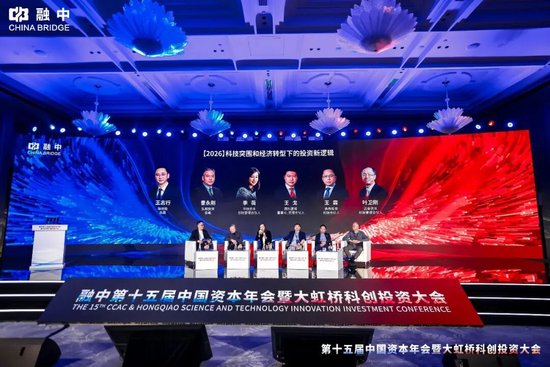
Core Insights - The equity investment industry is entering a "refinement period" characterized by a return to cognition and capability reshaping, with long-term capital expanding and patient capital becoming a core force supporting technological innovation [3][41] - Investment institutions are focusing on hard technology and strategic emerging industries, deepening their layouts and uncovering value [3][41] - The conference aims to create an efficient ecosystem that integrates investors and enterprises, promoting the full-chain integration of the investment industry [3][41] Group 1: Institutional Positioning and Core Advantages - The forum features prominent figures from leading investment institutions, emphasizing their long-term commitment and sensitivity to cyclical and structural changes [5][42] - 弘毅投资 has shifted its focus to early-stage technology investments, aligning with national policies and industry trends, while also managing a significant real estate investment business [7][8] - 华映资本 has a strong emphasis on early-stage investments, with over 80% of its investments concentrated in this phase, particularly in AI and related fields [10][11] Group 2: Investment Strategies and Opportunities - Investment strategies for 2026 will focus on AI, biomedicine, and gene technology, with a recognition of the need for a forward-looking perspective on how AI will reshape industries [19][20] - The importance of early-stage investments is highlighted, with institutions planning to deepen their engagement in sectors like semiconductors and artificial intelligence [15][22] - 鼎晖投资 emphasizes a dual structure of traditional PE and VGC, focusing on both acquisition investments and innovative growth funds in hard technology sectors [13][14] Group 3: Balancing Policy Guidance and Investment Returns - The concept of "patient capital" is discussed, with a distinction between "active patience" and "passive patience," emphasizing the need for a proactive approach to long-term investments [32][36] - The balance between policy direction and market logic is crucial, with a focus on finding projects that align with both government strategies and market demands [33][34] - The need for a diversified capital structure to support long-term investments in hard technology is emphasized, highlighting the role of various capital sources [32][33]

融资数千万仍觉得没谱?王腾:创业后才懂雷军有多牛
Sou Hu Cai Jing· 2026-01-21 04:00
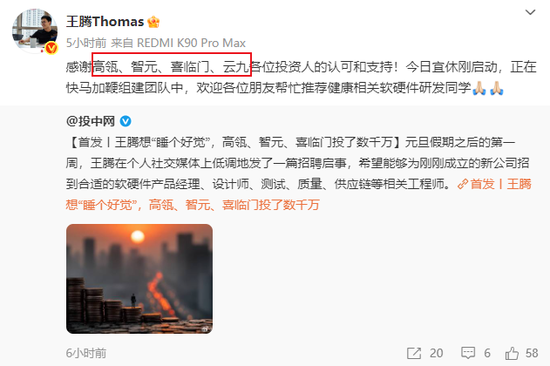
Core Insights - The article discusses the launch of a new company "Today Sleep" by Wang Teng, who completed a seed round financing of several tens of millions within just 12 days of founding the company [2][3] - The investment round was led by Hillhouse Capital, with participation from institutions like Zhiyuan Robotics and Xilinmen, indicating a strong backing for the startup [3] - Wang Teng's previous experience at Xiaomi and Huawei, along with a focus on the sleep technology market, positions the company well for growth in a sector projected to reach $27.46 billion by 2025 and exceed $100 billion by 2033, with a compound annual growth rate of nearly 18% [7] Company Overview - Wang Teng's team consists of veterans from Xiaomi and Huawei, bringing significant hardware and software development experience to the startup [7] - The company aims to develop sleep technology products, potentially including smart pillows, smart headphones, and smart wristbands, which will integrate with Xiaomi's ecosystem [9] - The new products are expected to utilize sensors and AI models to adjust the sleep environment based on human data, enhancing user experience [9] Market Context - The sleep technology market is characterized as a blue ocean, indicating ample opportunities for innovation and growth due to increasing sleep disorders among modern individuals [7] - The collaboration with established players like Hillhouse and Xilinmen provides a robust resource network for rapid startup development, including access to production capabilities [7][10] - Wang Teng's entrepreneurial journey reflects a significant transition from a corporate environment to startup challenges, highlighting the pressures and responsibilities of leading a new venture [4][10]


珠海“百千万工程”三年破局 激活产业、城乡、民生三重蝶变
Zhong Guo Qi Che Bao Wang· 2026-01-21 03:30
Core Viewpoint - The article highlights the significant progress and innovative initiatives in Zhuhai, part of the Guangdong-Hong Kong-Macao Greater Bay Area, focusing on urban-rural integration, industrial empowerment, and reform-driven development to enhance the quality of life for residents and stimulate economic growth [2][12]. Industrial Empowerment - Zhuhai is leveraging its resource advantages to develop new industrial sectors across land, sea, and low-altitude domains, enhancing the county economy and establishing a robust industrial foundation for urban-rural integration [3]. - The establishment of the Zhuhai Science City and its computing power center supports over 50 large model enterprises, significantly reducing R&D costs and optimizing algorithm cycles [3]. - The low-altitude economy is emerging as a key feature of Zhuhai's industrial upgrade, with the launch of the first long-distance drone logistics route in the Greater Bay Area and a reported industrial output value of 20.7% growth year-on-year [3][4]. Economic Growth and Trade - In 2025, the total import and export value through the Hong Kong-Zhuhai-Macao Bridge reached 284.37 billion yuan, marking a 35.9% increase, reinforcing its role as a vital trade link [4]. - Zhuhai has 45 local enterprises listed among the top 500 manufacturing companies in Guangdong, with a total of 52 listed companies, indicating a growing industrial cluster [4]. Marine Economy - Zhuhai is expanding its marine industry, with the establishment of the first national standard marine ranch and innovative deep-sea aquaculture platforms, contributing to a marine production value exceeding 100 billion yuan in 2024 [5]. - The city has achieved a market share of 58% in marine ranching equipment, showcasing its technological strength in the industry [5]. Urban-Rural Integration - Zhuhai is implementing a "four commons" mechanism to promote balanced resource allocation and reduce the income disparity between urban and rural residents, with the income ratio decreasing from 1.83 in 2022 to 1.61 in the first three quarters of 2025 [6][8]. - The town of Pingsha exemplifies urban quality improvement, with enhanced infrastructure and cultural amenities attracting visitors and improving residents' quality of life [6][8]. Rural Revitalization - Specific rural projects, such as the transformation of idle houses into commercial spaces and the establishment of community-operated centers, have generated significant income for local residents, with over 2,600 idle houses revitalized, leading to an increase in income of approximately 22 million yuan [9][10]. - The implementation of a three-tier management mechanism for idle rural housing has been a pioneering effort in the province, facilitating the effective use of rural resources [9][10]. Reform and Innovation - Zhuhai is focusing on institutional innovation to break down barriers in urban-rural development, with initiatives such as a "general rules" planning management system and a digital financial service platform to support rural industries [10][11]. - The city has seen the emergence of 17 provincial-level grassroots reform cases and 4 innovative cases under the "Hundred-Thousand-Ten Thousand Project," positioning it as a leader in reform-driven development [10][11].

解码上海2025“经济答卷”,大城“加速跑”动力何在?
Sou Hu Cai Jing· 2026-01-21 01:24
Core Viewpoint - Shanghai's economy has shown resilience and growth, achieving a GDP of 56,708.71 billion yuan in 2025, with a year-on-year increase of 5.4%, surpassing the national average [1][2]. Economic Performance - Shanghai's GDP growth rate of 5.4% reflects its strong economic structure and ability to withstand external risks, driven by technological innovation and industrial upgrades [2][3]. - The city ranks fifth globally in economic output, with a total trade volume exceeding 11 trillion yuan, maintaining its position as a global trade leader [3][5]. Key Industries - The three leading industries in Shanghai saw an industrial output value growth of 9.6%, with strategic emerging industries contributing significantly to the overall industrial output [7][9]. - Shanghai's integrated circuit sector leads the nation with over 1,200 companies and a significant share of talent and innovation resources [10]. Demand Dynamics - In 2025, Shanghai's total retail sales of consumer goods grew by 4.6%, with notable increases in sales of new energy vehicles and home appliances [12][14]. - The city experienced a 40% increase in inbound tourists, contributing to the growth of the international consumption market [12][14]. Policy Impact - Economic data in 2025 is closely linked to targeted policies, such as the "old-for-new" subsidy program, which significantly boosted consumer spending [15]. - Shanghai's strategic planning for the next five years aims to maintain economic growth in line with national trends, focusing on transformation and upgrading [15].
人形机器人产业周报:机器人将再度登上春晚舞台,自变量机器人宣布已完成10亿元A++轮融资
Guoyuan Securities· 2026-01-20 13:25
Investment Rating - The report maintains a "Recommended" investment rating for the humanoid robot industry [8]. Core Insights - The humanoid robot concept index increased by 1.48% from January 11 to January 16, 2026, outperforming the CSI 300 index by 2.05 percentage points. Year-to-date, the humanoid robot index has risen by 6.49%, also surpassing the CSI 300 index by 4.29 percentage points [3][14]. - The report highlights that 2026 is expected to be a significant year for humanoid robot applications, with a recommendation to focus on the related industry chain [6]. Weekly Market Review - From January 11 to January 16, 2026, the humanoid robot concept index rose by 1.48%, outperforming the CSI 300 index by 2.05 percentage points. The index has a year-to-date increase of 6.49%, exceeding the CSI 300 index by 4.29 percentage points [3][14]. - Among A-share humanoid robot index stocks, Sanwei Tiandi had the highest weekly increase at +24.36%, while Daye Co. experienced the largest decline at -20.98% [18][19]. Weekly Hotspots Review Policy Developments - The Ministry of Industry and Information Technology emphasized the need to promote the large-scale application of humanoid robots and health monitoring devices in homes, communities, and elderly care institutions [4][21]. - Shanghai's three-year action plan (2026-2028) aims to support the transformation and upgrading of advanced manufacturing, including investments in humanoid robots [4][22]. - Hangzhou's proposal for the 15th Five-Year Plan includes accelerating the development of artificial intelligence and visual intelligence industries [4][22]. - Jiangsu's "Artificial Intelligence +" action plan focuses on developing humanoid robot technology and applications [4][23]. Product and Technology Iteration - UBTECH has formed a strategic partnership with the National Robot Testing and Evaluation Center to enhance the quality of humanoid robot components [4][24]. - ZhiYuan Robotics has purchased training data from the Hubei Humanoid Robot Innovation Center [4][25]. - ZhiJi Dynamics launched the LimX COSA system, enabling humanoid robots to integrate advanced cognitive functions [4][25]. - A new intelligent technology company was established in Shanghai by ZhiYuan Robotics and its affiliates [4][26]. Investment and Financing - Self-variable robots completed a 1 billion yuan A++ round of financing, attracting investments from major firms like ByteDance and Meituan [5][27]. - The robot leasing platform "Qingtian Rent" secured seed round financing [5][28]. - StarTech Microelectronics raised several hundred million yuan in equity financing to enhance its chip development for various applications, including humanoid robots [5][29]. Key Company Announcements - Lens Technology has established a vertically integrated manufacturing platform for humanoid robots, delivering products to leading clients [5][30]. - Zhiwei Intelligent has secured customer orders in the "big and small brain" controller sector for robots [5][30]. - Nasda has launched competitive technology solutions for motor control and battery management, with products already shipped to major companies [5][30]. - Zhaofeng Co. announced a 100 million yuan interest-free loan to its subsidiary for the industrialization of humanoid robots and automotive precision components [5][31].
从助手到系统、从秀场到交付,AI产业的2026进化路径
3 6 Ke· 2026-01-20 12:09
然而,技术能力的跃升并未自动带来产业秩序的稳定建构。相反,在高频叙事、估值预期与现实落地的 多重张力下,AI系统与具身智能正同步步入一个"制度重构"与"结构筛选"并行推进的临界周期。监管趋 严、资本理性回归以及治理结构的滞后,正在暴露出产业链条中的系统性瓶颈。而产业自身,也已从比 拼"跑得快",转向竞争"能否留下"的关键阶段。 从"万能助手"到"系统模块",2025年AI应用驶入结构重构中场 2025年,AI产业从"技术突破"阶段,全面迈入以系统落地与结构重构为标志的"中场阶段"。无论是平台 型大模型向多模态协同与链式调用加速演进,还是具身智能从炫技样机迈向系统交付,一个趋势正在愈 发清晰地浮现:AI不再只是"能力工具",而正在成为重构产业链逻辑与运行结构的关键变量。工程能 力、流程编排、数据闭环与端侧部署,正逐步取代算法领先与模型规模,成为市场与资本评估的核心锚 点。 2025年,AI产业逐步告别"万能助手"式的早期叙事,进入以垂直深化与系统集成为特征的"应用中场"。 通用大模型的能力边界趋于清晰,产业重心从"能跑通"转向"能用好"。主流平台开始重构产品架构,将 AI能力嵌入商品推荐、资产配置、教育评估等具 ...
徕木股份:与多家人形机器人厂商有合作,经营情况以公告为准
Xin Lang Cai Jing· 2026-01-20 11:19
尊敬的投资者,您好!公司具体经营情况请以公司定期报告及临时公告为准,敬请投资者注意投资风 险,感谢您的关注。查看更多董秘问答>> 董秘回答(徕木股份SH603633): 投资者提问: 根据豆包分析,公司在人形机器人领域合作:智元机器人:精密连接器及线束合格供应商,小批量供 货、研发送样中;星动纪元:结构件与外观件定点,开模验证阶段,有望切入特斯拉 Optimus 供应链; 优必选 / 宇树:灵巧手关节连接器独家供应Walker X、Go1等头部产品;其他客户:数字华夏、新动机 源、灵猴、海康威视等结构件供货。公司目前与哪些人形机器人厂商开展了合作? 免责声明:本信息由新浪财经从公开信息中摘录,不构成任何投资建议;新浪财经不保证数据的准确 性,内容仅供参考。 ...

人形机器人产业周报:机器人将再度登上春晚舞台,自变量机器人宣布已完成10亿元A++轮融资-20260120
Guoyuan Securities· 2026-01-20 11:19
Investment Rating - The report maintains a "Recommendation" rating for the industry [8] Core Insights - The humanoid robot concept index increased by 1.48% from January 11 to January 16, 2026, outperforming the CSI 300 index by 2.05 percentage points. Year-to-date, the humanoid robot index has risen by 6.49%, exceeding the CSI 300 index by 4.29 percentage points [3][14] - The report highlights that 2026 is expected to be a significant year for humanoid robot applications, suggesting investors pay attention to the related industry chain [6] Weekly Market Review - The humanoid robot index saw a weekly increase of 1.48%, with notable individual stock performances: Sanwei Tiandi had the highest weekly gain at +24.36%, while Daye Co. experienced the largest drop at -20.98% [3][18] Weekly Hotspots Review Policy Developments - The Ministry of Industry and Information Technology emphasized the need to promote the large-scale application of humanoid robots and health monitoring devices in various settings such as homes and elderly care institutions [4][21] - Shanghai's three-year action plan (2026-2028) aims to support advanced manufacturing transformation and upgrade, including investments in humanoid robots [4][22] - Hangzhou's proposal for the 15th Five-Year Plan includes the development of AI and visual intelligence as trillion-yuan industry clusters [4][22] - Jiangsu's "Artificial Intelligence +" action plan focuses on developing humanoid robot technology and applications [4][23] Product and Technology Iteration - UBTECH has formed a strategic partnership with the National Robot Testing and Evaluation Center to enhance the quality and verification of humanoid robot components [4][24] - ZhiYuan Robotics has purchased training data from the Hubei Humanoid Robot Innovation Center [4][25] - ZhiJi Dynamics launched the LimX COSA system, integrating high-level cognition with full-body control for humanoid robots [4][25] - A new intelligent technology company was established in Shanghai by ZhiYuan Robotics and its affiliates [4][26] Investment and Financing - Self-variable robots completed a 1 billion yuan A++ round of financing, backed by major investors including ByteDance and Meituan [5][27] - The robot leasing platform "Qingtian Rent" secured seed round financing [5][28] - StarTech Microelectronics raised several hundred million yuan in equity financing to enhance its chip development for various applications [5][29] Key Company Announcements - Lens Technology has established a vertically integrated manufacturing platform for humanoid robots, delivering products to major clients [5][30] - Zhiwei Intelligent has secured customer orders for its humanoid robot control systems [5][30] - Nasda has begun mass shipments of competitive technology solutions to leading companies in the robotics sector [5][30] - Zhaofeng Co. announced a 100 million yuan interest-free loan to its subsidiary for the industrialization of humanoid robots [5][31]
王腾新公司成立14天获数千万融资,资方阵容强大但没小米
Xin Lang Cai Jing· 2026-01-20 09:38
Core Viewpoint - Wang Teng, former General Manager of Xiaomi's China Marketing Department, has founded a new company named "Today Yixiu," focusing on sleep health products, and has recently completed a seed round financing of several tens of millions of yuan [1][8]. Company Overview - "Today Yixiu" aims to develop products related to sleep health, targeting over 300 million people in China suffering from sleep disorders [5][12]. - The company was established on January 6, 2026, and secured financing within 14 days, indicating strong interest in the startup within the investment community [5][12]. Financing Details - The seed round financing was led by investors including GL Ventures, Zhiyuan Robotics, Xilinmen, and Yunjiu Capital [1][8]. - The total scale of the financing is reported to be several tens of millions of yuan [1][8]. Team and Operations - The initial team consists of members primarily from leading tech companies such as Xiaomi and Huawei [3][10]. - The company plans to maintain competitive salary levels and benefits similar to large tech firms, with a focus on stock incentives [5][12]. - The headquarters is located in Beijing, with potential plans to establish branches in Shenzhen and Hangzhou in the future [5][12]. Product Development - "Today Yixiu" will leverage AI and brain science technology to provide a closed-loop solution for sleep monitoring, intervention, and energy management, differentiating itself from traditional sleep aid hardware [5][12].