
家电家具

Search documents
解码上海2025“经济答卷”,大城“加速跑”动力何在?
Sou Hu Cai Jing· 2026-01-21 01:24
Core Viewpoint - Shanghai's economy has shown resilience and growth, achieving a GDP of 56,708.71 billion yuan in 2025, with a year-on-year increase of 5.4%, surpassing the national average [1][2]. Economic Performance - Shanghai's GDP growth rate of 5.4% reflects its strong economic structure and ability to withstand external risks, driven by technological innovation and industrial upgrades [2][3]. - The city ranks fifth globally in economic output, with a total trade volume exceeding 11 trillion yuan, maintaining its position as a global trade leader [3][5]. Key Industries - The three leading industries in Shanghai saw an industrial output value growth of 9.6%, with strategic emerging industries contributing significantly to the overall industrial output [7][9]. - Shanghai's integrated circuit sector leads the nation with over 1,200 companies and a significant share of talent and innovation resources [10]. Demand Dynamics - In 2025, Shanghai's total retail sales of consumer goods grew by 4.6%, with notable increases in sales of new energy vehicles and home appliances [12][14]. - The city experienced a 40% increase in inbound tourists, contributing to the growth of the international consumption market [12][14]. Policy Impact - Economic data in 2025 is closely linked to targeted policies, such as the "old-for-new" subsidy program, which significantly boosted consumer spending [15]. - Shanghai's strategic planning for the next five years aims to maintain economic growth in line with national trends, focusing on transformation and upgrading [15].

宏观超话:10月经济数据解读
2025-11-18 01:15
Summary of Conference Call Notes Industry Overview - The macroeconomic environment shows increasing downward pressure, with fixed asset investment declining year-on-year and external demand turning negative, indicating potential negative impacts on the stock market [1][3] - Industrial production growth has dropped below 5%, with high-tech industries experiencing a decline in prosperity, although high-end, intelligent, and green industries, as well as shipbuilding, aerospace, and automotive manufacturing, remain resilient [1][4] Key Economic Indicators - Retail sales of consumer goods are declining due to weakened demand, particularly in home appliances, furniture, and automotive sectors, while communication equipment and cosmetics show growth [1][6] - Investment across various sectors is weakening, with significant declines in real estate new starts and sales area, and housing prices experiencing a larger month-on-month drop [1][8] - Infrastructure investment has decreased more than expected, influenced by debt resolution, insufficient project reserves, and local government debt constraints, although digital infrastructure and energy security projects may provide some support [1][8] Sector-Specific Insights - Investment demand in the chemical, food, pharmaceutical, and non-ferrous metal industries has contracted, but the core logic of industrial upgrading remains intact [1][9] - Manufacturing investment shows positive signals, particularly in computer electronics and electrical machinery, with a need to observe the sustainability of this recovery and its impact on overall investment [1][10] Consumer Behavior and Employment - National dining consumption improved in October due to the National Day and Mid-Autumn Festival, but overall retail sales continue to decline [1][6] - Despite weak goods consumption, there are positive signs of recovery in service consumption, supported by policy measures [1][6] Challenges and Policy Responses - The economy faces challenges with internal demand slowing and external demand declining, which may impact the fourth quarter's economic performance [1][12] - Historical trends suggest that as economic downturns and employment pressures rise, there will be an increase in counter-cyclical policies, with potential for new policy deployments [1][13] Market Dynamics - The capital market's resilience may diverge from the slowing economic momentum, reflecting long-term economic logic rather than short-term fluctuations [1][14] - Structural changes in the economy, particularly in the technology innovation sector, are expected to drive asset revaluation, suggesting a need for patience regarding short-term fundamental fluctuations [1][15]
2025中国经济挑战大缩水?只剩这两个拦路虎,如何破局?
Sou Hu Cai Jing· 2025-10-06 16:41
Economic Challenges - In 2025, China's economy is at a critical turning point, with significant changes in the landscape of economic challenges compared to the previous year. The previous four major challenges have shifted, with local debt pressure and private investment issues alleviated, while real estate adjustment pressure and weak consumption have become more prominent [1][3] - The Consumer Price Index (CPI) in the first half of 2025 fell by 0.1% year-on-year, with a further decline of 0.4% in August. Additionally, real estate development investment decreased by over 12% year-on-year, indicating that these two issues are the main constraints on economic growth [3][6] Real Estate Market - The real estate market is experiencing a deep adjustment, with real estate development investment down by 12.9%, new construction area down by 19.5%, and completed area down by 17.0% from January to August 2025. Major cities have seen continuous declines in housing prices since April [6][11] - The housing price-to-income ratio remains high, particularly in first-tier cities, with Shenzhen reaching 34.8 times. High housing costs are eroding residents' consumption capacity, further exacerbating the economic situation [8][9] Consumption Trends - Consumption has become a key factor restraining economic growth, with retail sales only increasing by 4.0% in early 2025, significantly lower than the over 8% level seen five years ago. The CPI data indicates ongoing deflationary pressures, with a year-on-year decline of 0.4% in August [15][17] - The low income levels and income expectations are hindering the release of consumption potential. The proportion of labor compensation in initial income distribution is low, and the increase in flexible employment has led to a decline in stable income support for consumption [17]
新华财经丨市场监管总局:“十四五”期间 国家标准总数已达到4.7万余项
Xin Hua She· 2025-08-23 03:29
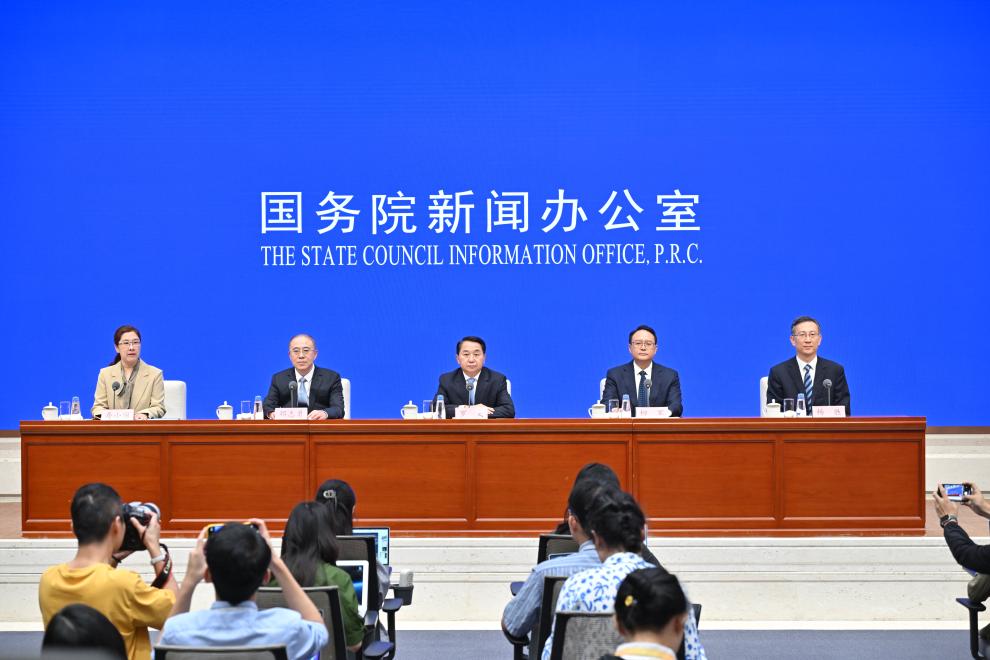
Core Viewpoint - The article discusses the efforts of the State Administration for Market Regulation in China to enhance the standardization system to support high-quality development, focusing on faster, better, stronger, and more open standards. Group 1: Faster Standard Supply - The average development cycle for national standards has been reduced from 36 months to 16 months [1] - Implementation of the action plan to upgrade traction equipment and promote the replacement of old consumer goods has led to the release of important standards for electric vehicles and home appliances [1] Group 2: Better Standard Quality - Over 57% of important technology project standards have been established [2] - More than 2400 national standards have been released in key areas such as artificial intelligence and smart manufacturing [2] - The revised energy consumption limit standard for crude steel is expected to save over 10 million tons of standard coal annually [2] Group 3: Stronger Standard Effectiveness - More than 500 mandatory national standards related to safety production and consumer product safety have been introduced [2] - In the first half of the year, there was a 131% increase in newly established mandatory national standards and a 58% increase in newly published standards [2] - The formaldehyde release limit for man-made boards has been upgraded to E0 level, meeting the strictest global requirements [2] Group 4: More Open Standard Cooperation - During the 14th Five-Year Plan period, China has led the development of 1079 international standards and adopted over 6900 international standards [2] - More than 500 standards have achieved mutual recognition between China and other countries [2] - Chinese standards are being used in several international railway cooperation projects and agricultural standardization demonstration zones in Africa [2]
为何经济放缓而市场强势
2025-08-18 15:10
Summary of Conference Call Notes Industry Overview - The conference call discusses the current state of the Chinese economy, highlighting a slowdown in economic momentum with an actual GDP growth rate of 4.8% in July, down from 5.2% in Q2 [1][3] - The high-tech industry continues to show robust growth despite overall economic challenges, with sectors like information transmission and IT services maintaining production growth rates above 10% [1][4] Key Points and Arguments - **Economic Performance**: July's economic data indicates a decline in internal demand, with fixed asset investment growth falling into negative territory and retail sales growth dropping to 3.7% [3][5] - **Production and External Demand**: Although exports remained resilient in June and July, new orders and export delivery value growth have declined, impacting production negatively. The focus remains on industrial upgrades, particularly in high-tech sectors [4][10] - **Consumer and Employment Trends**: Retail sales continue to decline, with demand for durable goods weakening. Service consumption is gradually recovering, but the job market shows signs of stress with a rising unemployment rate [5][6] - **Real Estate Market**: The real estate sector is experiencing a downward trend, with both sales area and development investment decreasing. However, the rate of price decline has narrowed, indicating some progress in inventory reduction [6][11] - **Investment Demand**: Investment demand has significantly decreased across all four major categories, entering negative growth due to various pressures including weak prices and external tariffs. Despite short-term challenges, long-term investment opportunities remain [7][8] - **Infrastructure Investment**: Recent infrastructure investment has shown a notable decline, particularly in water conservancy and storage projects, while electricity investment remains resilient. Future structural policies are needed to support this sector [9][12] - **Manufacturing Investment Challenges**: Manufacturing investment faces pressures from external tariffs and internal price declines, but sectors focused on industrial upgrades, such as automotive and aerospace, continue to show vitality [10][11] Additional Important Insights - **Market Strength vs. Economic Slowdown**: The current market strength is attributed to long-term economic logic rather than short-term fluctuations, with factors such as technological innovation and reduced risk events contributing to this divergence [2][11] - **Capital Market Environment**: Future capital market conditions will require attention to structural performance disparities and potential overseas risk disturbances, particularly in light of anticipated U.S. interest rate changes [12]
2025年7月经济数据点评:7月经济数据的不寻常
Minsheng Securities· 2025-08-15 07:28
Economic Overview - In July 2025, the industrial added value for large-scale enterprises increased by 5.7% year-on-year and 0.38% month-on-month[3] - The total retail sales of consumer goods grew by 3.7% year-on-year but decreased by 0.14% month-on-month[3] - From January to July, fixed asset investment (excluding rural households) rose by 1.6% year-on-year[3] Investment Trends - Both infrastructure and manufacturing investment growth turned negative in July, with broad infrastructure down by 1.9% and narrow infrastructure down by 5.1%[4][8] - Manufacturing investment growth fell from 5.1% in June to -0.3% in July, indicating a significant decline in investment momentum[6][23] Consumption Insights - The decline in retail sales growth to 3.7% in July was primarily driven by a decrease in automobile sales and weak demand in other categories[8][9] - The effectiveness of the "trade-in" policy for stimulating consumption has weakened, with significant drops in categories like automobiles and home appliances[9][34] Employment Concerns - The urban surveyed unemployment rate increased, indicating a potential rise in youth unemployment, particularly among the 16-24 age group[4][15] - The number of college graduates in 2025 is projected to be 12.22 million, higher than the previous year's 11.79 million, raising concerns about job market saturation[4] Risks and Challenges - The current economic environment shows signs of "production stability, weak consumption, and weak investment," posing risks for the second half of the year[3] - External shocks and insufficient effective demand remain significant challenges for economic performance in the latter half of 2025[3][10]