罗氏

Search documents
明慧医药拟港交所上市,抗体偶联药领域会二次爆发吗?
Xin Lang Cai Jing· 2025-11-27 10:14
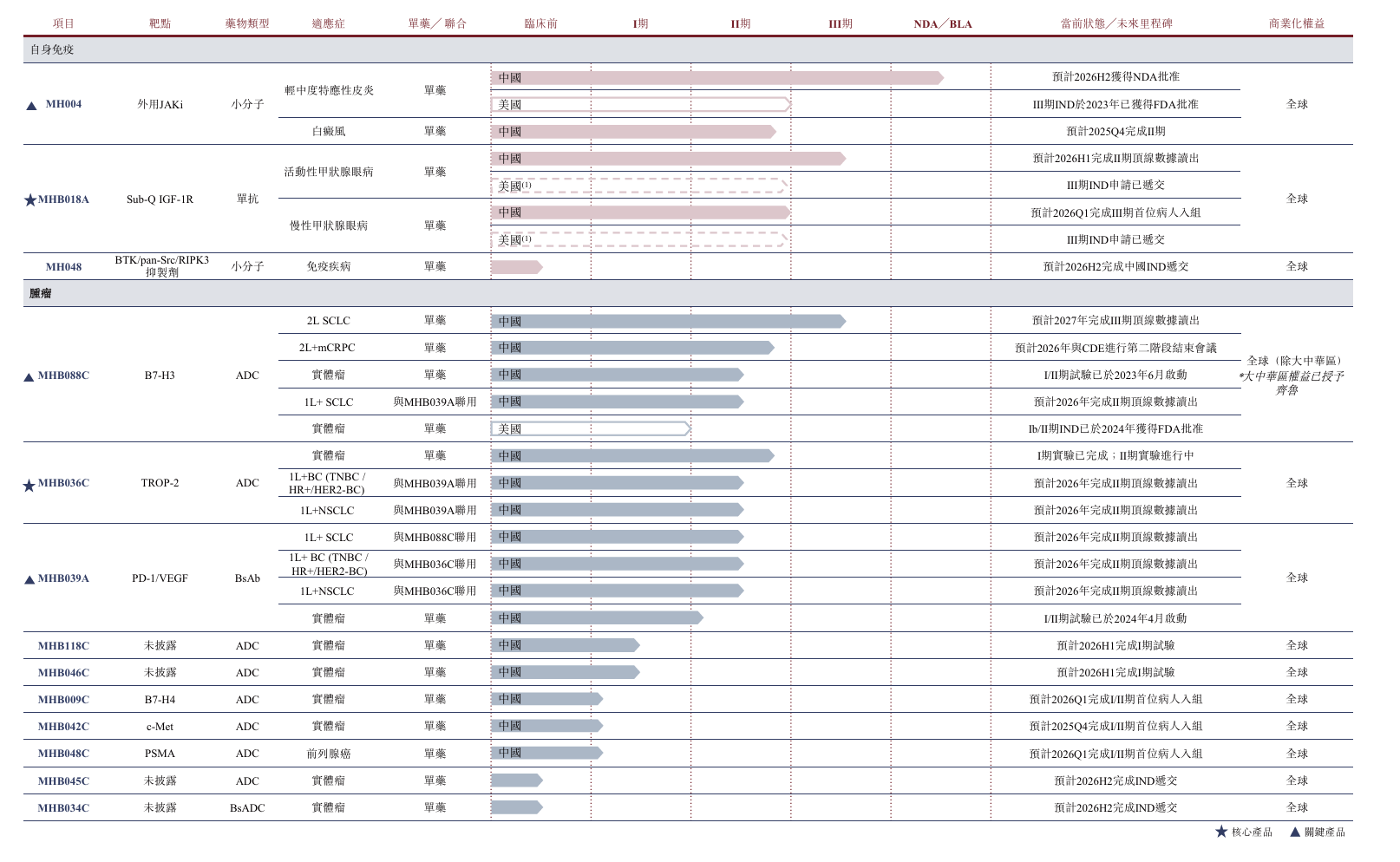
Core Viewpoint - Minghui Pharmaceutical has submitted its IPO application, focusing on its pipeline of nearly 10 antibody-drug conjugates (ADCs) in early development stages, including targets like TROP-2, B7-H3, B7-H4, c-Met, and PSMA, as well as a PD-1/VEGF bispecific antibody [1][4]. Group 1: Company Overview - Minghui Pharmaceutical was established in 2018 and is currently developing a range of ADCs, with a notable focus on innovative drug development [1]. - The company has no marketed products yet and is facing significant competition in the ADC space, particularly from companies like Hansoh Pharmaceutical [5][9]. - The founder and chairman, Cao Guoqing, previously held a senior position at Heng Rui Pharmaceutical, which adds credibility to the company [8]. Group 2: Financial Performance - The company reported losses of 137 million yuan in 2023 and 283 million yuan in 2024, with no revenue expected in these years [5][7]. - In the first half of 2025, the company generated revenue of 264 million yuan but incurred a loss of 167 million yuan [7]. - The company’s cash and cash equivalents were reported at 1.3 billion yuan in 2023 and 290 million yuan in 2024, indicating a potential liquidity issue [7]. Group 3: Product Pipeline and Market Potential - The ADC market is experiencing significant growth, with products like Enhertu generating sales of 1.976 billion USD in the first three quarters of the year, reflecting a 37% year-on-year increase [1]. - Minghui's B7-H3 ADC (MHB088C) has been licensed to Qilu Pharmaceutical for development in Greater China, with an initial payment of 280 million yuan and potential milestone payments exceeding 1 billion yuan [4]. - The company is also developing a topical JAK inhibitor for atopic dermatitis, which is closest to commercialization, with its application already accepted [5]. Group 4: Industry Trends - The ADC sector is evolving, with innovations in antibody, payload, linker, and conjugation technologies expected to enhance clinical differentiation and market potential [8]. - Chinese companies are moving from a fast-follow approach to becoming global leaders in ADC development, with a focus on innovative targets and combination therapies [8].

阿里健康发布2026财年中期业绩公告:净利润同比增长64.7%
2 1 Shi Ji Jing Ji Bao Dao· 2025-11-27 09:26
Core Insights - Alibaba Health reported a revenue of RMB 16.697 billion for the six months ending September 30, 2025, representing a year-on-year growth of 17% [1] - The company achieved a net profit of RMB 1.266 billion, marking a significant increase of 64.7% compared to the previous year [1] - Alibaba Health continues to invest in the medical AI sector and deepen its strategic layout in the B2B medical verticals [1] Financial Performance - Revenue reached RMB 16.697 billion, up 17% year-on-year [1] - Gross profit was RMB 4.184 billion, reflecting an 18.4% increase [1] - Adjusted net profit stood at RMB 1.356 billion, a growth of 38.7% [1] User Engagement and Platform Growth - The Tmall Health platform serves over 56,000 merchants, with SKU growth exceeding 97 million [1] - Annual active user numbers and annualized ARPU continue to grow, with platform GMV showing stable growth [1] - The self-operated pharmacy business generated revenue of RMB 14.38 billion, up 18.6% year-on-year [1] Strategic Partnerships and Service Expansion - Alibaba Health has deepened collaborations with major pharmaceutical companies, launching dozens of new specialty drugs [2] - Strategic partnerships with companies like Eli Lilly, AstraZeneca, and Pfizer have been established to enhance digital health services [2] - The company provides integrated online and offline healthcare services, with over 250,000 healthcare professionals signed up for online consultation services [2] Traditional Chinese Medicine and Digital Infrastructure - The TCM service business is experiencing stable growth, with over 150,000 registered TCM practitioners [3] - The "Code on Trust" platform offers free traceability services to 560,000 pharmaceutical enterprises [3] - Alibaba Health is enhancing its digital services for pharmaceutical companies, collaborating with over 900 leading pharmaceutical firms [3] AI and Future Prospects - The company is increasing resource investment in medical AI applications to improve user experience and search conversion efficiency [3] - Alibaba Health is exploring applications in serious medical fields to enhance evidence-based capabilities in clinical decision-making [3]

阿里健康发布2026财年中期业绩公告:净利润同比增长64.7%
21世纪经济报道· 2025-11-27 09:14
Core Viewpoint - Alibaba Health reported strong financial performance for the first half of the 2026 fiscal year, with revenue reaching RMB 16.697 billion, a year-on-year increase of 17%, and net profit growing by 64.7% to RMB 1.266 billion, indicating robust business growth and high-quality development [1] Financial Performance - Revenue for the six months ending September 30, 2025, was RMB 16.697 billion, up 17% year-on-year [1] - Gross profit reached RMB 4.184 billion, reflecting an 18.4% increase [1] - Net profit was RMB 1.266 billion, a significant rise of 64.7% [1] - Adjusted net profit stood at RMB 1.356 billion, marking a 38.7% year-on-year growth [1] Business Growth and User Engagement - Alibaba Health is one of the largest online B2C healthcare product retail platforms in China, with over 56,000 active merchants and more than 97 million SKUs [2] - The platform's annual active user count and ARPU (average revenue per user) continue to grow, with GMV (gross merchandise volume) showing stable year-on-year growth [2] - The self-operated pharmacy business generated RMB 14.38 billion in revenue, up 18.6% year-on-year, with a significant increase in active users and SKU growth of 98.8% to 1.61 million [2] Strategic Partnerships and Service Expansion - Alibaba Health has formed strategic partnerships with major pharmaceutical companies like Eli Lilly, AstraZeneca, and Bayer to enhance digital health services and expand market reach [3] - The company provides integrated online and offline healthcare services, with over 250,000 healthcare professionals offering online consultation services [3] - The self-operated chronic disease business has seen continuous growth in user numbers and ARPU [3] Digital Infrastructure and AI Development - The "Code on Trust" platform offers free traceability services to 56,000 pharmaceutical terminal enterprises, expanding into medical devices and traditional Chinese medicine [4] - Alibaba Health collaborates with over 900 leading pharmaceutical companies to provide data analysis services [4] - The company is investing in AI applications within the pharmaceutical e-commerce sector to enhance user experience and search conversion efficiency, while also exploring applications in serious medical fields [4]

疯狂的司美格鲁肽遇挫
Guo Ji Jin Rong Bao· 2025-11-27 02:25
Core Insights - Novo Nordisk's oral semaglutide failed to show significant efficacy in treating early symptomatic Alzheimer's disease in its Phase III trials, leading to a stock drop of over 10% [1][3] - This marks the first setback for semaglutide, a drug that has gained significant attention for various indications including diabetes and weight management [1][3] Company Summary - Novo Nordisk's recent clinical trials aimed to reduce cognitive decline in Alzheimer's patients by at least 20%, but results showed no significant improvement in the primary endpoint, CDR-SB [3][4] - The company announced the termination of the one-year extension phase of the trials, with preliminary results to be presented at upcoming conferences in December 2025 and March 2026 [3][4] - Despite the failure in Alzheimer's treatment, semaglutide continues to benefit patients with type 2 diabetes and obesity, as highlighted by the company's Chief Scientific Officer [4][5] Industry Summary - The Alzheimer's disease (AD) treatment market is projected to exceed $60 billion globally by 2030, with significant growth expected in China [7] - Despite setbacks, many pharmaceutical companies are actively pursuing AD drug development, with over 140 drugs currently in clinical stages [8] - Notable approved therapies that have shown efficacy in slowing Alzheimer's progression include Lecanemab and Donanemab, which have demonstrated a 20-35% reduction in cognitive decline over 18 months [7][8]

瑞士学者:科技公司界限开始模糊 AI应用的终极目标是传统企业
Xin Lang Ke Ji· 2025-11-26 23:13
Core Insights - The article discusses the blurring boundaries between hardware, software, and services in the tech industry, driven by geopolitical uncertainties and the integration of artificial intelligence (AI) [3][4]. Group 1: Industry Trends - The traditional segmented business models in the tech sector are becoming obsolete, as companies now focus on providing a complete user experience rather than specializing in hardware or software [3]. - The IMD's Future Readiness Indicator evaluates companies based on seven dimensions, including financial foundation, investor growth expectations, business diversity, employee structure, R&D investment, early innovation outcomes, and cash and debt management [3][4]. - A clear divide is emerging between strong and weak companies, with some leveraging AI for growth while others remain trapped by past successes [4]. Group 2: Company Performance - In the pharmaceutical sector, leaders like Johnson & Johnson, Roche, and AstraZeneca have built comprehensive systems from basic research to next-generation treatment platforms, while companies reliant on traditional products are struggling [4]. - In the fashion industry, companies that have embraced platformization and supply chain resilience are thriving, while those slow to adapt are losing touch with modern consumers [5]. - The strongest companies in the tech sector, such as NVIDIA, Microsoft, and Google, are not just selling products but controlling the entire IT technology stack, allowing them to manage workflows effectively [6][7]. Group 3: Investment Landscape - The current investment landscape in the U.S. is characterized by significant funding directed towards AI-driven projects, with estimates of $600 to $700 billion being invested every six months [8]. - Tech giants are hedging against the risk of AI applications not generating substantial revenue, indicating a strategic shift towards ensuring that their investments create real economic value [9]. - The article suggests that China has advantages in the emerging field of robotics and AI applications, positioning itself well for future developments [10].






瑞士学者:为什么小米能实现强势回归?
Xin Lang Ke Ji· 2025-11-26 23:12
Core Insights - The article discusses the impact of geopolitical uncertainties on technology development and highlights the blurring boundaries between hardware, software, and services in the tech industry [1][3]. Group 1: Industry Trends - The traditional segmented business models in the tech industry are becoming obsolete, with companies now focusing on providing a complete user experience rather than specializing in hardware or software [3]. - The IMD's Future Readiness Indicator evaluates companies based on their long-term competitiveness across seven dimensions, including financial foundation, investor growth expectations, business diversity, employee structure, R&D investment, early innovation outcomes, and cash and debt management [3][4]. Group 2: Company Performance - The 2025 Future Readiness Indicator reveals a clear divide between strong and weak companies, with some leveraging AI and geopolitical changes for growth while others remain trapped by outdated success paths [4]. - In the pharmaceutical sector, leading companies like Johnson & Johnson, Roche, and AstraZeneca have built comprehensive systems from basic research to next-generation treatment platforms, while others struggle due to reliance on traditional products [4]. Group 3: Fashion Industry Insights - In the fashion industry, platformization and supply chain resilience are critical, with luxury brands leveraging "super luxury combinations" to enhance lifestyle offerings [5]. - Companies that fail to adapt and modernize their brand culture are losing touch with contemporary consumers, while those with diversified ecosystems can absorb market shocks and turn volatility into an advantage [5]. Group 4: Technology Giants - Leading tech companies such as NVIDIA, Microsoft, Google, and Meta are not just selling products but are controlling the entire IT technology stack, allowing them to manage workflows effectively [6][7]. - Xiaomi is highlighted as a unique case, successfully expanding from smartphones to home appliances and vehicles while maintaining a connected ecosystem that enhances user experience [7]. Group 5: AI Investment Landscape - The current investment landscape in the U.S. is characterized by significant funding directed towards AI-driven projects, with major companies investing approximately $600 to $700 billion every six months [8]. - Concerns arise regarding the sustainability of these investments if AI applications do not yield substantial returns, prompting tech giants to hedge their bets by ensuring that traditional companies can create real value through AI [9]. Group 6: Competitive Advantages - The article emphasizes that the strongest companies are those that do not rely on a single product but possess the capability to manage entire ecosystems [5][6]. - The next wave of innovation is expected to focus on real-world interactions, with significant investments in robotics and AI applications that extend beyond traditional industries [9][10].
勇闯“死亡谷”的中国药企越来越多 能否破局?
Mei Ri Jing Ji Xin Wen· 2025-11-26 14:17
Core Insights - The pharmaceutical industry is witnessing a shift in Alzheimer's disease (AD) drug development, with Chinese companies increasingly entering the field while multinational corporations face setbacks [1][2][3] Group 1: Current Developments in Alzheimer's Drug Research - Novo Nordisk announced that its two large Phase III trials for Semaglutide in treating Alzheimer's disease did not meet primary endpoints [1] - Chinese pharmaceutical companies, such as Green Leaf Pharmaceutical and Kangfang Biotech, are advancing their own AD drug candidates, with Green Leaf's LY03017 recently receiving FDA approval for clinical trials [1][2] - The number of drugs under development for AD in China ranks second globally, following the United States, indicating a growing interest and investment in this area [2] Group 2: Challenges Faced by Multinational Corporations - Major multinational companies like Pfizer, Roche, and Johnson & Johnson have faced failures in AD drug development due to unclear disease mechanisms and ineffective clinical trial results [2][3] - Notably, Biogen's Aducanumab is set to exit the AD treatment landscape due to conflicting Phase III trial results, while other drugs like Lecanemab and Donanemab have received limited approval [3] Group 3: Factors Driving Chinese Companies' Confidence - Chinese companies are motivated by advancements in diagnostic technologies and a significant unmet clinical need in the AD space [4] - The integration of biomarker testing and advanced imaging techniques has improved diagnostic accuracy, addressing previous challenges in the field [4] - Green Leaf Pharmaceutical is exploring multiple indications for its LY03017 drug, indicating a strategic approach to capitalize on the unmet needs in AD and related disorders [4]


“AI泡沫论”肆虐市场之际 医疗保健领衔价值股破空崛起
智通财经网· 2025-11-26 13:22
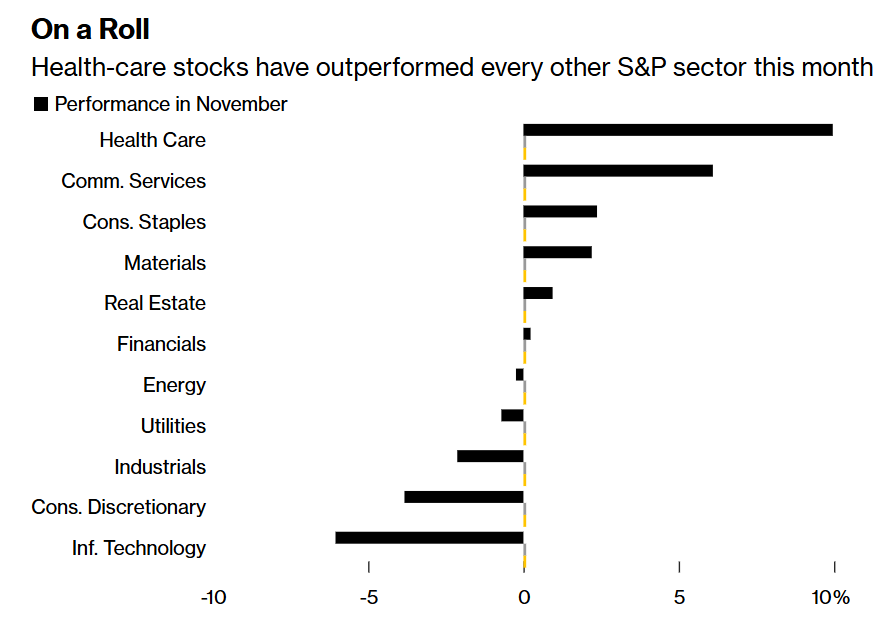
Core Viewpoint - The global financial market is witnessing a shift as investors reassess their positions in technology stocks closely tied to AI, particularly in light of concerns over an "AI bubble" and are increasingly favoring value stocks with stable cash flows and lower valuations compared to high-profile AI stocks like Nvidia and AMD [1][18]. Group 1: Value Stocks and Market Trends - Value stocks are characterized by low price-to-earnings (P/E) and price-to-book (P/B) ratios, stable earnings, and high dividend yields, often belonging to established companies [2]. - The healthcare sector has emerged as a significant beneficiary in the current market rotation towards value stocks, outperforming other sectors with a 10% increase in the S&P 500 Healthcare Index [2][3]. - The S&P 500 index has seen a decline of 1.1% during the same period, while companies like Eli Lilly have experienced substantial gains, highlighting the contrasting performance between value and growth stocks [3][15]. Group 2: Fund Flows and Investor Behavior - Hedge funds have been aggressively buying into the healthcare sector, marking it as the largest net buying segment among value stocks for four consecutive weeks, with the most significant inflow in over five years [6][7]. - Mutual funds have also increased their allocation to healthcare stocks, reflecting a broader trend of investors seeking undervalued opportunities amid fears of an AI bubble [7]. - The healthcare sector's strong performance is attributed to positive clinical trial results, accelerated AI-driven research, and a resurgence in merger and acquisition activities [10][12]. Group 3: Performance Metrics and Valuation - The healthcare sector's earnings have exceeded expectations, making it the best-performing sector in over four years, with a current P/E ratio of approximately 18.7, compared to the S&P 500's 22.1 [15][12]. - Notable individual stock performances include Merck, which rose 23% in November, and Regeneron, which increased by 21% following positive regulatory news [11][12]. - The shift towards healthcare stocks is seen as a response to the overvaluation of tech stocks and the search for more stable investment opportunities [18][17].


阿里健康上半财年营收166.97亿元,经调整净利润达13.56亿
Xin Lang Ke Ji· 2025-11-26 11:06
Core Insights - Alibaba Health reported a revenue of RMB 16.697 billion for the six months ending September 30, 2025, representing a year-on-year growth of 17% [1] - Gross profit reached RMB 4.184 billion, up 18.4% year-on-year, while net profit surged by 64.7% to RMB 1.266 billion [1] - Adjusted net profit was RMB 1.356 billion, reflecting a year-on-year increase of 38.7% [1] Revenue and User Growth - The number of merchants on the Tmall Health platform exceeded 56,000, with SKUs increasing by over 97 million [1] - Annual active user numbers and annualized ARPU continued to grow, with platform GMV achieving stable year-on-year growth [1] - The self-operated business revenue reached RMB 14.38 billion, marking an 18.6% increase year-on-year [1] Strategic Collaborations - Alibaba Health partnered with leading pharmaceutical companies such as Eli Lilly, AstraZeneca, and Pfizer to launch dozens of new specialty drugs [2] - The company is expanding digital health services through strategic collaborations in online retail, category expansion, and disease education [2] - Over 250,000 healthcare professionals, including licensed physicians and pharmacists, are now providing online health consultation services, an increase of over 20,000 from the previous year [2]
一针抵一套豪宅 1800万/针天价救命药获批
2 1 Shi Ji Jing Ji Bao Dao· 2025-11-26 10:10
Core Insights - The approval of Itvisma by the FDA marks a significant advancement in gene therapy for spinal muscular atrophy (SMA), targeting patients aged two and older with specific genetic mutations [1][2] - Itvisma's wholesale price is set at $2.59 million, making it one of the most expensive drugs on the market, and it is the first gene therapy approved for a broader patient demographic [1][3] - The global gene therapy market is expected to grow at an annual rate of over 20% in the next 5-10 years, driven by technological advancements and regulatory clarity [2][8] Drug Pricing and Market Strategy - Novartis has justified the high pricing of Zolgensma, its previous gene therapy, citing a total R&D investment of $9.4 billion, including an $8.7 billion acquisition of AveXis [3][4] - The pricing strategy for Zolgensma has been significantly higher than industry estimates, indicating a potential trend for future gene therapies [3][4] - Itvisma's pricing reflects a calculated commercial strategy, aiming to establish a precedent for high-cost life-saving treatments [3][4] Competitive Landscape - Itvisma competes directly with Spinraza, the first targeted SMA treatment, which has undergone significant price reductions in China after being included in the national insurance directory [6][7] - The gene therapy market is characterized by high R&D costs and significant barriers to entry, allowing early entrants to maintain pricing power and market exclusivity [2][7] - The market is expected to evolve towards platform-based and diversified pipelines as more companies enter the gene editing and delivery systems space [2][8] Market Growth and Investment - The global gene therapy market is projected to reach $9.03 billion in 2024 and grow to $64.64 billion by 2033, with a compound annual growth rate of 27.6% [8] - Major pharmaceutical companies are actively investing in gene therapy, with significant acquisitions and partnerships to enhance their portfolios [9][10] - The increasing number of approved gene therapy products and the rapid pace of regulatory approvals are expected to drive market expansion [8][10] Challenges and Future Directions - The development of gene therapies faces challenges such as high costs, short shelf life, and production capacity limitations [11][12] - The industry is exploring second and third-generation gene therapies to overcome the limitations of current technologies, such as AAV delivery systems [11][12] - Balancing innovation incentives with drug accessibility remains a long-term issue for the industry [11][12]