蓝色光标

Search documents
开年最热赛道突然刹车
Ge Long Hui· 2026-01-17 02:34
Core Viewpoint - The AI application sector has recently experienced a significant downturn, despite being one of the hottest areas at the beginning of the year, driven by the recent performance of large model companies and the introduction of new technologies [1][2][5][6]. Group 1: Market Dynamics - The recent surge in AI applications was fueled by the successful listings of large model companies like MiniMax and Zhipu, which improved market sentiment and expectations for AI application growth [5]. - The acquisition of the AI application company "Butterfly Effect" by Meta for billions of dollars has increased the recognition of AI applications in China [5]. - The introduction of domestically developed inference chips has drastically reduced AI invocation costs, leading to price reductions by large model companies [5]. Group 2: Marketing and GEO - The marketing and media sector has been the primary focus of the AI application boom, particularly following Elon Musk's announcement to open-source the latest content recommendation algorithm for the X platform [6][10]. - Generative Engine Optimization (GEO) has emerged as a new trend, aiming to enhance brand content visibility in AI-generated responses, with a projected market size of $11.2 billion globally and ¥2.9 billion in China by 2025 [8][14]. - The shift from traditional SEO to AI-driven marketing strategies is transforming the marketing landscape, with AI expected to replace 50% of search engine traffic by 2028 [11][12]. Group 3: Company Performance - BlueFocus has shown impressive performance, with a 12.5% year-on-year revenue growth to ¥51.098 billion in the first three quarters of 2025, and a significant 85.53% increase in net profit [15]. - AI-driven revenue for BlueFocus surged by 310%, although it still represents less than 5% of total revenue, indicating potential for future growth if the company can establish a self-sustaining marketing model [15][16]. - The competitive landscape for BlueFocus includes major players like ByteDance and Alibaba, which have developed their own marketing tools, necessitating BlueFocus to demonstrate the unique capabilities of its self-developed AI [17]. Group 4: Future Outlook - The year 2026 is anticipated to be pivotal for AI applications, with advancements in model capabilities and supportive policies driving demand [20][21]. - The marketing sector is expected to benefit significantly from AI, with companies like AppLovin reporting a 71% increase in advertising revenue due to AI integration [22]. - The rise of AI-generated content, such as AI manga, is creating new market opportunities, with significant production and consumption potential [23][25]. - The integration of AI into traditional industries like manufacturing and finance is expected to yield substantial efficiency gains, enhancing companies' willingness to invest in AI solutions [29].

爆火的GEO,到底是个啥?
吴晓波频道· 2026-01-17 00:29
Core Viewpoint - The rise of AI assistants is transforming consumer behavior and advertising strategies, leading to the emergence of a new business model known as Generative Engine Optimization (GEO) [3][30]. Group 1: Understanding GEO - GEO (Generative Engine Optimization) is a new advertising strategy that focuses on ensuring products are positively mentioned by AI when users ask questions, contrasting with traditional SEO which aims for high click-through rates [10][12]. - The shift from traditional advertising mediums like television and search engines to AI platforms reflects a significant change in how brands reach their audiences [26][28]. Group 2: Market Trends and Growth - The GEO market is experiencing rapid growth, with China's GEO service market exceeding 4.2 billion RMB and a compound annual growth rate of 38% [33]. - Globally, the GEO market is projected to surpass $33.6 billion by 2034, indicating a substantial opportunity for businesses to adapt to AI-driven consumer behavior [33]. Group 3: Consumer Behavior Changes - Over 80% of Chinese consumers now seek shopping information through AI, with nearly 35% consulting AI multiple times daily [34]. - Despite the high engagement with AI, the actual conversion from AI recommendations to purchases remains low, suggesting significant potential for growth in this area [34][35]. Group 4: Strategies for Effective GEO - Effective GEO strategies include using authoritative endorsements, incorporating statistics, and optimizing content for clarity and structure to appeal to AI preferences [22][23]. - Companies are increasingly creating websites specifically designed for AI consumption, bypassing traditional user experience considerations to enhance AI visibility [23]. Group 5: Industry Implications - The emergence of GEO signifies a shift in advertising paradigms, where companies must learn to optimize their content for AI to remain competitive [40]. - As AI continues to proliferate, the competition for visibility and recommendation by AI will become a standard practice across industries [41].



去年中国社融规模增长8.3%,上市公司蹭GEO热点被罚 | 财经日日评
吴晓波频道· 2026-01-17 00:29
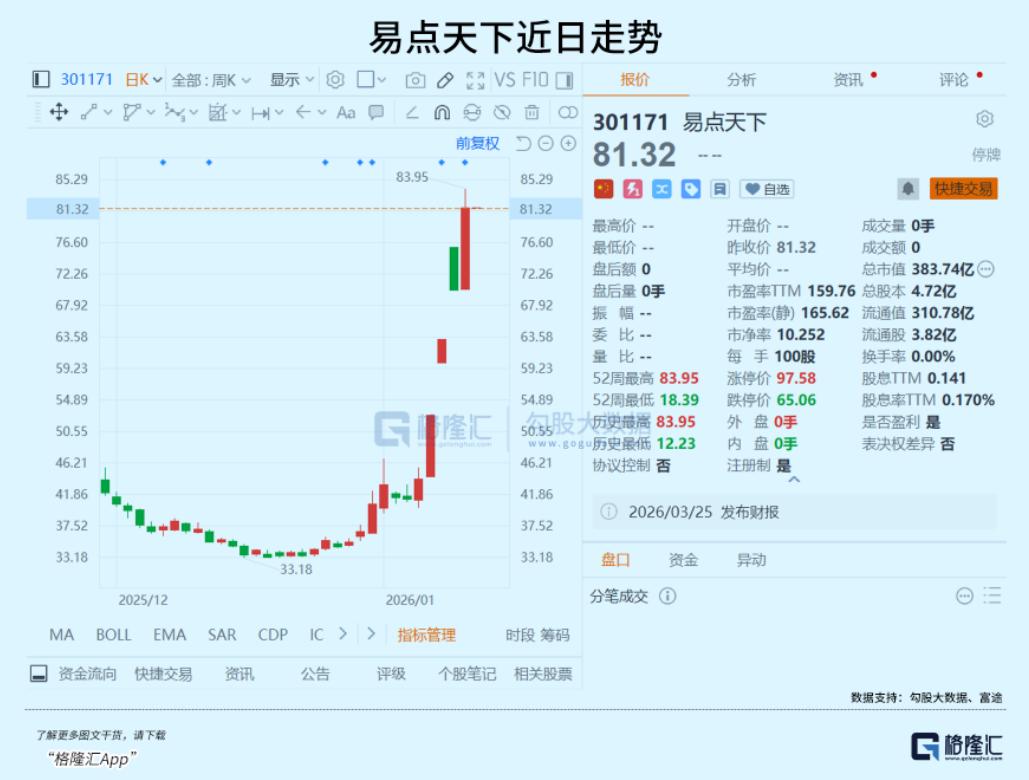
Group 1: Financial Data and Trends - The social financing scale in China is projected to grow by 8.3% year-on-year, reaching 442.12 trillion yuan by the end of 2025, with an annual increase of 3.34 trillion yuan compared to the previous year [2] - M2 money supply is expected to reach 340.29 trillion yuan, growing by 8.5% year-on-year, while M1 is projected to grow by 3.8%, leading to an expanded gap between M2 and M1 [2] - Financial institutions are expected to maintain reasonable growth in RMB loans to the real economy, with an annual increase of 15.91 trillion yuan [2][3] Group 2: State Grid Investment - The State Grid Corporation plans to invest 4 trillion yuan during the 14th Five-Year Plan period, marking a 40% increase from the previous plan [4] - The investment will focus on enhancing renewable energy capacity, optimizing energy storage, and supporting zero-carbon initiatives [4][5] - This investment is expected to inject new momentum into the domestic economy and strengthen energy security [4][5] Group 3: Real Estate and Housing Market - A secondary market for housing vouchers has emerged in cities like Guangzhou and Suzhou, with transactions being facilitated through social media platforms [6][7] - The Guangzhou government has integrated all unregistered properties into a "housing source supermarket," allowing voucher holders to purchase new properties [6] - The trading of housing vouchers may present risks such as fraud, especially with significantly discounted vouchers [7] Group 4: AI Industry and Office Space Demand - The TMT sector in Shenzhen is driving significant demand for Grade A office space, with AI-related companies accounting for 5.7% of total leasing demand in 2025 [8] - The growth in AI and technology sectors is supported by a strong local ecosystem and government initiatives to foster innovation [8][9] - Despite the demand, the overall office market in Shenzhen is still adjusting, with new supply pressures and a need for time to balance supply and demand [9] Group 5: Meituan's Entry into Automotive Sales - Meituan has signed a strategic partnership to enter the automotive sales market, aiming to create a one-stop service platform for car buying and local services [10] - This move is seen as a way for Meituan to diversify its revenue streams amid intense competition in its core business [10][11] - The automotive sales sector presents unique challenges, including ensuring service quality and building consumer trust [10][11] Group 6: West Restaurant Chain's Store Closures - West Restaurant plans to close 102 stores, representing 30% of its total, due to significant declines in customer traffic and cash flow pressures [12][13] - The chain has implemented various promotional strategies to attract customers back, but these have increased operational costs without restoring previous traffic levels [12] - The perception of West's food quality has been impacted by its central kitchen model, which consumers associate with pre-prepared meals [13] Group 7: Stock Market and Regulatory Environment - Several companies have been warned by regulators for excessive stock price increases that do not align with their fundamentals, highlighting the speculative nature of the market [14][15] - The regulatory focus aims to curb excessive speculation and promote a more rational investment environment in the A-share market [14][15] - The market is currently experiencing high trading volumes, indicating strong speculative interest despite regulatory scrutiny [16][17]

全线回调,开年最热赛道突然刹车
3 6 Ke· 2026-01-16 12:12
Core Insights - The AI application sector experienced a significant downturn on January 16, with major stocks like Visual China hitting their daily limit down, despite being one of the hottest sectors at the beginning of the year [1][2]. Group 1: Recent Trends in AI Applications - The recent surge in AI applications was driven by the successful listings of large model companies MiniMax and Zhipu on the Hong Kong stock market, which boosted overall market enthusiasm [4]. - The listing of large model companies indicates a maturing commercial ecosystem for AI applications, leading to growth expectations [5]. - The acquisition of the AI application company "Butterfly Effect" by Meta for billions of dollars has increased the recognition of AI applications in China [6]. - The large-scale deployment of domestically developed inference chips has drastically reduced AI invocation costs, prompting many large model companies to lower their prices [7]. Group 2: Marketing and GEO - The initial excitement in AI applications has been concentrated in the marketing and media sector, particularly following Elon Musk's announcement to open-source the latest content recommendation algorithm for the X platform [9]. - Generative Engine Optimization (GEO) has emerged as a key focus, defined in a Princeton University paper as a method to enhance the visibility of optimized content in AI-generated responses [11]. - The shift towards AI search is expected to replace traditional search engines, with Gartner predicting that AI search will capture 50% of search engine traffic by 2028 [13]. Group 3: Market Potential and Growth - The global GEO market is projected to reach $11.2 billion and $1 billion in China by 2025, with compound annual growth rates (CAGR) of 55% and 53%, respectively [16]. - BlueFocus, a marketing company, reported a revenue of 51.098 billion yuan in the first three quarters of 2025, with a significant 310% increase in AI-driven business revenue [19]. - The AI-driven revenue for BlueFocus reached 1.57 billion yuan in the first half of the year, surpassing the total for the previous year, although it still accounted for less than 5% of total revenue [20]. Group 4: Future Outlook - The year 2026 is anticipated to be pivotal for AI applications, with advancements in model capabilities and the maturation of agent technology providing a fertile ground for AI applications [25]. - The Chinese government is promoting AI application implementation through various initiatives, aiming to cultivate influential enterprises and enhance industrial networks by 2028 [25]. - Companies like AppLovin have demonstrated the potential of AI in marketing, with a 71% year-on-year increase in advertising revenue in Q1 2025, validating AI's impact on the industry [26]. - The AI content production chain is being reshaped, leading to new content forms like AI-generated animated series, which are expected to create significant market opportunities [28][30]. Group 5: Conclusion - The AI sector is poised for continued growth, especially with the recent advancements in large models and the expected rise in AI application revenues [35]. - The investment logic in AI applications will focus on companies that can demonstrate a significant increase in AI revenue as a proportion of overall earnings [36].
传媒行业人工智能专题:从“生产力”到“变现力”,G E O重构流量入口与A I商业化拐点
Guoxin Securities· 2026-01-16 12:04
Investment Rating - The report maintains an "Outperform" rating for the media industry [2] Core Insights - AI is reshaping user entry points and the distribution of internet traffic, leading to a revolution in the underlying flow distribution mechanisms [4] - The transition from "productivity" to "monetization" in AI applications is expected to accelerate, with 2026 being a critical turning point [5] - The trust level of Chinese consumers in AI applications is significantly higher than that of consumers in the US and Europe, reaching 80% [41][42] Summary by Sections AI Reshaping Entry Points - AI is transforming traditional search engines and user interaction methods, moving from keyword matching to natural language queries, which significantly shortens the interaction path [14][39] - The emergence of Generative Engine Optimization (GEO) is changing the flow distribution logic, compressing the value of traditional intermediaries while amplifying the value of high-quality content sources [4][39] Commercial Monetization Acceleration - By 2026, the global GEO market is projected to reach $24 billion, with the domestic market expected to reach 11.1 billion yuan, indicating exponential growth [5][52] - Marketing service providers are evolving from traditional traffic buying models to those that leverage MarTech capabilities, focusing on AI corpus construction and data cleaning [5][54] Content Industry Upgrade - AI-generated content (AIGC) is not only reducing costs but also creating new supply, particularly in the video sector where AI tools are enabling full-process production at a fraction of traditional costs [6][70] - The audience for AI-generated short dramas is predominantly male, aged 24-30, indicating a new demographic shift in content consumption [70] Investment Recommendations - The report suggests focusing on commercial pioneers in the GEO space, particularly in marketing services and high-quality content [7][54] - There is also potential for growth in lower-tier content sectors such as film IP, gaming, and publishing [7]
回踩五日线,资金加速净流入!创业板人工智能ETF(159363)单周吸金近17亿元!加仓逻辑有哪些?
Xin Lang Ji Jin· 2026-01-16 11:20
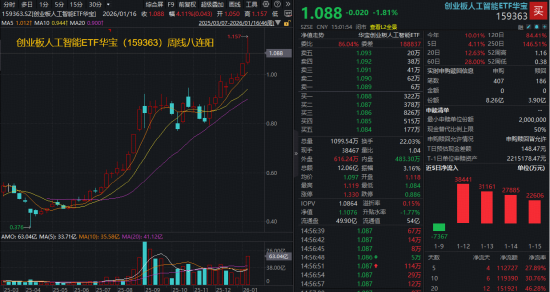
Core Viewpoint - The AI sector in the ChiNext market is experiencing a significant influx of capital, despite a recent 2% decline in the ChiNext AI index, with notable fluctuations in AI application stocks and continued strength in computing power-related stocks [1][3]. Group 1: Market Performance - The ChiNext AI ETF (159363) has shown strong performance, achieving an eight-week consecutive increase with a cumulative gain of 34.66%, outperforming similar AI-themed indices [1][3]. - The ETF recorded a daily net subscription of 436 million units, with a total weekly inflow of approximately 1.678 billion yuan, indicating robust investor interest [1][3]. Group 2: Sector Analysis - The light module industry is in a high prosperity cycle, driven by the explosive demand for AI computing power, with supply becoming a core issue [3]. - Major manufacturers in the light module sector are accelerating capacity expansion, with expectations of a significant release of production capacity in Q1 2026, which could drive a new performance growth phase [3]. Group 3: Fund Characteristics - The ChiNext AI ETF (159363) has reached a record size of 5.527 billion yuan, with an average daily trading volume of nearly 800 million yuan over the past six months, leading among eight ETFs tracking the ChiNext AI index [3]. - The ETF has been included in the Stock Connect program, effective January 19, which is expected to enhance its trading activity and attract northbound capital [3]. Group 4: Investment Strategy - The current trend in AI development is shifting from computing power construction to application implementation, making the ChiNext AI ETF a direct beneficiary of the commercialization of AI technology [5]. - The ETF's portfolio consists of approximately 60% in computing power (primarily light modules) and 40% in AI applications, representing both core computing and true AI application sectors [5].

数据复盘丨电子、汽车等行业走强 163股获主力资金净流入超1亿元
Zheng Quan Shi Bao Wang· 2026-01-16 10:49
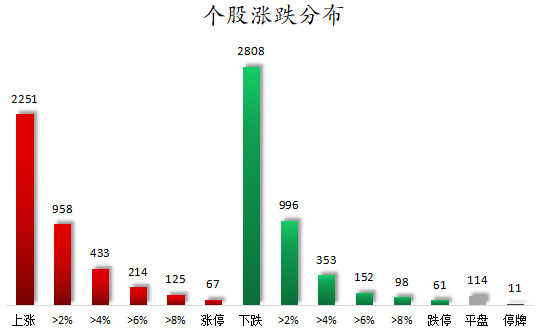
Market Overview - The Shanghai Composite Index closed at 4101.91 points, down 0.26%, with a trading volume of 13,380 billion yuan [1] - The Shenzhen Component Index closed at 14,281.08 points, down 0.18%, with a trading volume of 16,883.05 billion yuan [1] - The ChiNext Index closed at 3361.02 points, down 0.2%, with a trading volume of 8,463.56 billion yuan [1] - The STAR 50 Index closed at 1514.07 points, up 1.35%, with a trading volume of 1,168 billion yuan [1] - Total trading volume for both markets reached 30,263.05 billion yuan, an increase of 1,207.57 billion yuan compared to the previous trading day [1] Sector Performance - Strong sectors included electronics, automotive, machinery, power equipment, and home appliances [2] - Weak sectors included media, computer, oil and petrochemicals, agriculture, steel, pharmaceuticals, defense, insurance, and banking [2] - The electronic industry saw the highest net inflow of funds, amounting to 105.68 billion yuan [5] Stock Performance - A total of 2,251 stocks rose, while 2,808 stocks fell, with 114 stocks remaining flat and 11 stocks suspended [2] - 67 stocks hit the daily limit up, while 61 stocks hit the daily limit down [2] - The stock with the highest net inflow was Sanhua Intelligent Controls, with a net inflow of 1.65 billion yuan and a price increase of 5.26% [7][8] - The stock with the highest net outflow was BlueFocus, with a net outflow of 2.01 billion yuan and a price decrease of 11.52% [10][11] Institutional Activity - Institutions had a net sell of approximately 6.6 billion yuan, with 21 stocks seeing net purchases and 15 stocks seeing net sales [13] - The stock with the highest net purchase by institutions was Snowman Group, with a net purchase of approximately 234 million yuan [13][14]




本周沪深两市成交额超17万亿元,创历史单周新高
Zhong Guo Jin Rong Xin Xi Wang· 2026-01-16 10:07
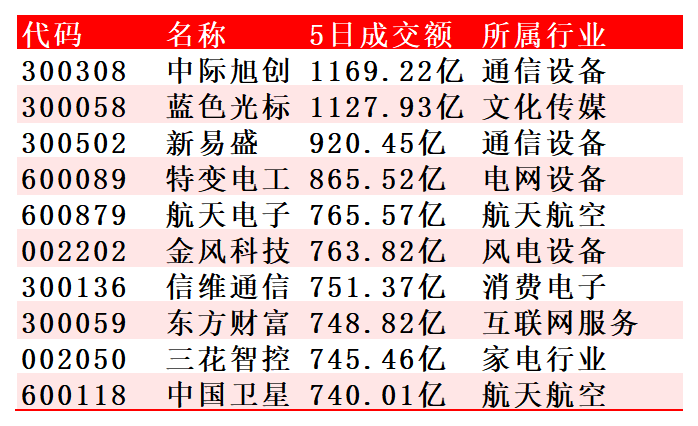
Group 1 - The A-share market experienced active trading this week, with total trading volume exceeding 17 trillion yuan, reaching 17.1 trillion yuan, setting a record for the highest weekly trading volume in history [1] - The average daily trading volume for the week was approximately 3.42 trillion yuan, marking the first time the average daily trading volume surpassed 3 trillion yuan [1] - The previous record for weekly trading volume was 14.8 trillion yuan, recorded during the week of August 25 to 29, 2025, with an average daily trading volume that did not exceed 3 trillion yuan [1] Group 2 - The stock with the highest trading volume this week was Zhongji Xuchuang, with a total trading volume of 116.922 billion yuan [2] - BlueFocus Media followed closely with a trading volume of 112.793 billion yuan, both stocks exceeding 100 billion yuan in trading volume for the week [2] - Other notable stocks in the top ten by trading volume included Aerospace Electronics, Goldwind Technology, China Satellite, and Xinwei Communication, all related to the commercial aerospace theme [1][2]



近3000股下跌!两大板块,逆市爆发
Zheng Quan Shi Bao· 2026-01-16 09:49
Market Overview - The A-share market experienced a volatile decline, with the three major indices retreating while the Sci-Tech 50 Index rose against the trend, closing with a total trading volume exceeding 3 trillion yuan [1] - The Shanghai Composite Index fell by 0.26% to 4101.91 points, while the Shenzhen Component Index and the ChiNext Index dropped by 0.18% and 0.2%, respectively [1] Semiconductor Sector - The semiconductor sector showed strong performance, with stocks like Tianyue Advanced and Yongxi Electronics hitting the 20% daily limit up, and several others reaching historical highs [4] - A report from Counterpoint Research indicated that the global storage industry has entered a "super bull market," with prices for DRAM and NAND Flash expected to rise significantly, with projections of over 40% increases by Q1 2026 [4] Ultra-High Voltage (UHV) Sector - The UHV sector gained momentum, with companies like Electric Power Research Institute and Xihigh Institute nearing 20% limit up, driven by a significant investment announcement from the State Grid [6] - The State Grid's planned investment of 4 trillion yuan during the 14th Five-Year Plan period represents a 40% increase from the previous plan, focusing on new power systems and technology innovation [6] AI Application Sector - The AI application sector faced a downturn, with companies like BlueFocus and Kunlun Wanwei dropping over 10%, and several others hitting the daily limit down [8] - Notably, People's Daily experienced a sharp decline after a risk warning, clarifying that it does not engage in GEO business and has not found any significant media reports affecting its stock price [9][10]
近3000股下跌!两大板块,逆市爆发
证券时报· 2026-01-16 09:39
Market Overview - A-shares experienced a volatile decline, with the Sci-Tech 50 index rising against the trend, and total trading volume in the A-share market returning to 3 trillion yuan [1] - The Shanghai Composite Index fell by 0.26% to 4101.91 points, while the Shenzhen Component Index and the ChiNext Index also saw slight declines [1] Semiconductor Sector - The semiconductor sector showed strong performance, with stocks like Tianyue Advanced and Yongxi Electronics hitting the 20% limit up, and several others reaching historical highs [4][5] - A report from Counterpoint Research indicated that the global storage industry has entered a "super bull market," with prices for DRAM and NAND Flash expected to rise significantly in the coming years, with a projected increase of over 40% by Q4 2025 [5][6] Ultra-High Voltage (UHV) Concept - The UHV concept gained momentum, with stocks like Electric Science Institute and Xihigh Institute hitting the 20% limit up, driven by the announcement of a 4 trillion yuan investment by the State Grid during the 14th Five-Year Plan period [8][10] - The investment will focus on building a new power system and enhancing technological innovation, which is expected to boost the industry [10] AI Application Sector - The AI application sector faced a downturn, with companies like BlueFocus and Kunlun Wanwei dropping over 10%, and several others hitting the daily limit down [12][13] - Notably, People's Daily, which had seen a continuous rise, experienced a sharp decline, indicating potential market overheating and irrational speculation risks [12][15]