
罗氏

Search documents
医药生物行业投资策略周报:理解MNC供应链的壁垒-20251124
CAITONG SECURITIES· 2025-11-24 09:01
Core Insights - The pharmaceutical MNC supply chain has extremely high entry barriers, requiring years for supplier certification through cross-departmental audits in technology, quality, EHS, and compliance. Once included in the qualified supplier list, a strong lock-in effect is formed, making it difficult for new entrants to disrupt the existing supply structure even if they meet technical standards, thus demonstrating a strong first-mover advantage [4][7]. - MNCs demand far more than conventional quality compliance, emphasizing full-process controllability and risk management capabilities. Compliance with guidelines such as EU GMP and ICHQ is required, along with the establishment of traceability systems and safety stock. Any process changes or relocation of production sites must undergo strict and time-consuming certification [4][7]. - In procurement decisions, MNCs are relatively insensitive to price factors, prioritizing the integrity of the supply chain over cost. For MNCs, API costs represent only a small portion of their terminal formulation sales, leading them to pay a premium for stable, traceable, and zero major quality incident supply capabilities, viewing supply chain resilience as a core competitive advantage rather than a cost item. Thus, entering the MNC supply chain often means effectively avoiding "price internalization" [4][7]. - Investment recommendations include innovative drug and device companies such as Furuya Co., Aonlikang, Shutaishen, Weichuang Bio, and others. From the perspective of CXO and raw materials, companies like WuXi AppTec, Jiuzhou Pharmaceutical, Chengda Pharmaceutical, and others are suggested for attention [4][7]. Market Performance Overview - As of November 21, 2025, the TTM-PE of the pharmaceutical and biotechnology industry is 48.84 times, which is 100% higher than the historical lowest PE valuation of 24.38 times on January 3, 2019. The premium rate relative to the CSI 300 is 252%, exceeding the historical lowest valuation premium of 124% on February 6, 2018, by 128 percentage points, and is 11 percentage points higher than the average valuation premium rate of 241% over the past decade [8][12]. - From November 17 to November 21, 2025, the pharmaceutical and biotechnology sector experienced a decline of 6.88%, ranking 22nd among 27 sub-industries. The chemical raw materials sector saw the largest decline at -8.60% [12][15]. Industry Dynamics - Pfizer's Class 1 new drug, Matacizumab, was approved for marketing on November 21, 2025, for the routine prevention and treatment of bleeding in patients with severe hemophilia A or B [20]. - Boehringer Ingelheim's Class 1 new drug, BI764198, was proposed for inclusion as a breakthrough therapy on November 18, 2025, targeting primary focal segmental glomerulosclerosis [21]. - The PD-1 inhibitor H drug, Surulutumab, developed by Fuhong Hanlin, was officially included as a breakthrough therapy on November 20, 2025, for gastric cancer treatment [22]. - On November 17, 2025, FDA approved the biosimilar of Tysabri, developed by Sandoz, for multiple sclerosis and Crohn's disease [23].
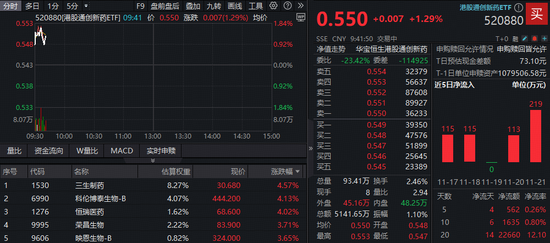
创新药突破不断,港股通创新药ETF(520880)盘初上探1.66%!三生制药等龙头股领衔修复行情
Xin Lang Ji Jin· 2025-11-24 01:55
Core Insights - The Hong Kong innovative drug sector is experiencing a rebound, with the Hong Kong Stock Connect innovative drug ETF (520880) rising by 1.66% at one point [1] - Major stocks such as Sanofi, Kelun-Biotech, and Hengrui Medicine saw increases of over 4%, while stocks like China Resources Pharmaceutical and Fuxing Pharmaceutical faced adjustments [1] Industry Trends - The innovative drug industry is shifting from a quantity-driven approach to a quality-driven one, entering a phase where product efficacy is paramount [3] - There is a growing focus on differentiated and internationalized pipelines, with an emphasis on products that can generate profits [3] - Oral peptide drugs, such as PCSK9 inhibitors and IL-23 antagonists, are showing promising clinical data and have the potential to reshape treatment paradigms [3] Market Dynamics - Chinese innovative pharmaceutical companies are deeply involved in global drug development, with the number of clinical trials ranking first worldwide, particularly in cell therapy, ADCs, and bispecific antibodies [3] - By 2024, it is expected that 38% of globally approved new drugs will have their first launch in China, highlighting the country's growing importance in the pharmaceutical landscape [3] - The upcoming expiration of patents for multinational corporations (MNCs) is creating opportunities for Chinese assets, which are becoming significant sources for important projects [3] ETF Performance - The Hong Kong Stock Connect innovative drug ETF (520880) and its linked funds are passively tracking the Hang Seng Hong Kong Stock Connect Innovative Drug Select Index, which includes top-weighted stocks like BeiGene, China Biologic Products, and Innovent Biologics [3]

创新药及产业链26年展望
2025-11-24 01:46
Summary of Key Points from Conference Call Records Industry Overview - The conference call discusses the **innovative drug industry** in China, focusing on the **2026 outlook** and the ongoing **internationalization** of Chinese pharmaceutical companies [1][3][5][8]. Core Insights and Arguments - **Healthcare Negotiations**: Ongoing negotiations in healthcare are emphasizing tumor drugs, with innovative drugs receiving support but at potentially lower price reductions. The average price reduction for drugs is stabilizing around **60%** [2][4]. - **Commercial Insurance Directory**: The establishment of a commercial insurance directory for innovative drugs provides a second payment pathway for high-value drugs, benefiting CAR-T and ADC therapies [1][2]. - **Internationalization Phase 2.0**: Chinese pharmaceutical companies are entering the **2.0 phase** of internationalization, with a **60%** year-on-year increase in business development transactions, totaling **$88.26 billion** [3][5]. - **Focus on Innovative Technologies**: Key areas of focus include **ADC**, **I/O (immunotherapy)**, and **small nucleic acids**. Notable products and data releases are anticipated in these fields [1][6][7]. - **GLP-1 Market Potential**: The GLP-1 market is expected to grow significantly, with major companies like Eli Lilly, Roche, and AstraZeneca set to release critical clinical data in cardiovascular, diabetes, and obesity sectors [1][7]. Additional Important Content - **Collective Procurement Policies**: The latest round of collective procurement has introduced new focus areas such as maintaining clinical stability and ensuring quality, with price reductions stabilizing [4]. - **CRO Industry Recovery**: The CRO industry is experiencing a recovery, with significant growth in biopharmaceutical investments, particularly in the CDMO sector, which is benefiting from strong commercial demand [9][10]. - **Upstream Supply Chain and Equipment**: The domestic upstream supply chain and pharmaceutical equipment sectors are seeing improvements in profitability due to increased localization and technological upgrades [13]. - **Research Reagents Market**: The demand for research reagents is strong, driven by increased funding for research, with domestic brands improving in quality and responsiveness [14]. - **Impact of Global Expansion**: Local companies are leveraging global expansion strategies to alleviate domestic price pressures and enhance their competitive positioning in the international market [15]. This summary encapsulates the key points discussed in the conference call, providing insights into the current state and future outlook of the innovative drug industry in China.


流感高峰将至,谁在买200元/盒的流感药
36氪· 2025-11-24 00:05
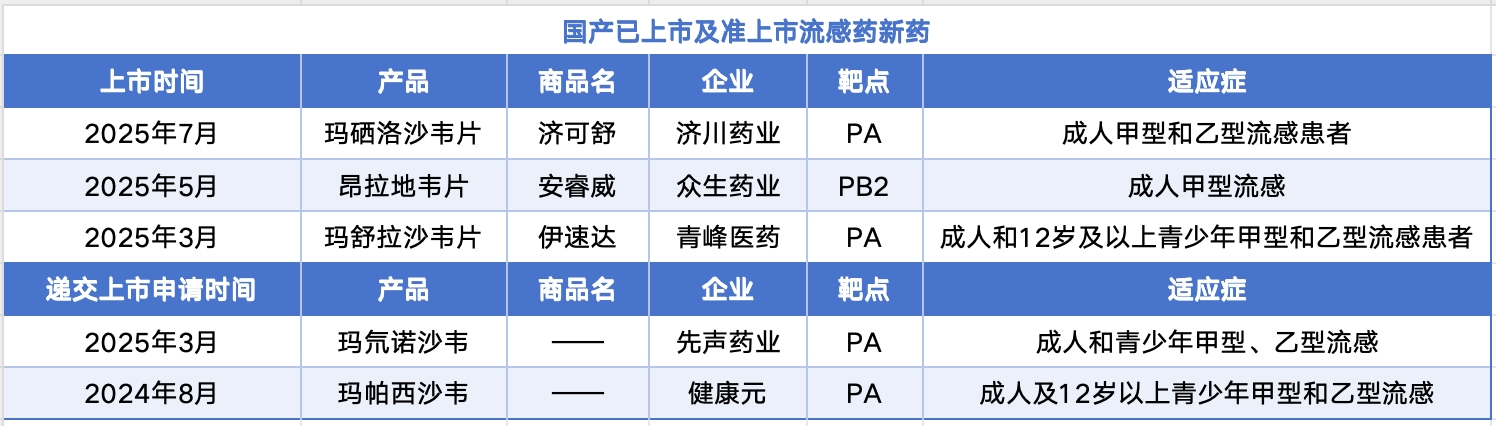
Core Insights - The article discusses the rising demand for flu medications in China, particularly due to an early flu season in 2025, with a significant increase in orders for antiviral drugs [5][6]. - The market for flu medications is projected to exceed 100 billion yuan, driven by both traditional and innovative drugs [9][10]. - New flu medications are being developed with a focus on single-dose treatments, which are more convenient than traditional multi-day regimens [8][14]. Market Trends - The flu season in 2025 is expected to peak earlier than usual, leading to a surge in demand for flu medications [5]. - Orders for flu antiviral drugs have reportedly increased by over 100% in major northern cities [5]. - The introduction of several new flu medications has diversified consumer choices, moving away from the previously dominant Oseltamivir [5][10]. Product Development - A number of new flu medications are set to be launched in 2025, including products from various pharmaceutical companies targeting both A and B strains of the flu [7][15]. - The new medications are designed to be taken once for the entire course of treatment, contrasting with older medications that require multiple doses over several days [8][14]. - The pricing of new flu medications is significantly higher than traditional options, with some priced nearly ten times more than Oseltamivir [8][17]. Competitive Landscape - The flu medication market is characterized by competition between established drugs like Oseltamivir and new entrants with innovative mechanisms [12][16]. - The sales of Oseltamivir reached 9.8 billion yuan in 2023, maintaining its position as the leading flu medication [11]. - New medications are facing challenges in market penetration due to their higher prices and the need for consumer education on their benefits [18][19]. Consumer Behavior - There is a growing awareness among consumers about the differences between flu and common cold, leading to increased demand for effective flu treatments [10]. - Younger consumers are more inclined to choose newer, more convenient medications, while older populations tend to stick with traditional options [18]. - The market for flu medications is expected to evolve as more companies enter the space and as pricing becomes more competitive over the next few years [18][19].

围剿“流感神药”奥司他韦,药厂卷起“一次治疗”新战场
3 6 Ke· 2025-11-24 00:04
Core Insights - The flu season in China has started earlier than usual, with a peak expected between mid-December and early January [1] - There has been a significant increase in demand for flu medications, with orders for antiviral drugs more than doubling since November [1] - The market for flu medications is projected to exceed 100 billion yuan, driven by the introduction of new domestic antiviral drugs [4] Market Dynamics - The demand for flu medications has surged, particularly in northern cities like Harbin and Hohhot, where order volumes have increased by over 150% [1] - Traditional flu medications like Oseltamivir are facing competition from new drugs that require only a single dose for the entire treatment course, although these new drugs are priced nearly ten times higher [3][4] - The flu medication market is characterized by a mix of old and new products, with Oseltamivir's sales reaching 9.8 billion yuan in 2023, maintaining its position as the market leader [4][5] Product Development - New antiviral drugs such as Marbofloxacin and others targeting the PA protein have been introduced, offering improved efficacy and convenience [6][7] - The first-year sales of Marbofloxacin reached 630 million yuan, marking an eightfold increase [7] - Several new flu medications are in the pipeline, with multiple products expected to be approved soon, indicating a robust pipeline for the flu drug market [2][7] Pricing and Accessibility - The pricing of new flu medications remains a barrier to widespread adoption, with initial prices exceeding 300 yuan compared to Oseltamivir's price around 20 yuan [8][9] - The market shows regional differences, with urban areas showing higher adoption rates for new medications, while older populations tend to prefer traditional options [9] - Future price reductions are anticipated as more companies enter the market and negotiate with national insurance [9][10] Marketing Strategies - Marketing efforts for flu medications focus on educating healthcare providers and patients about the benefits of new treatments, as direct advertising is limited [10] - Companies are leveraging academic promotions and training for pharmacy staff to enhance awareness and understanding of flu treatments [10] - The flu season is seen as a critical opportunity for domestic pharmaceutical companies to establish a foothold in the market [10]
Alnylam,下一个巨头?
Ge Long Hui· 2025-11-23 18:23
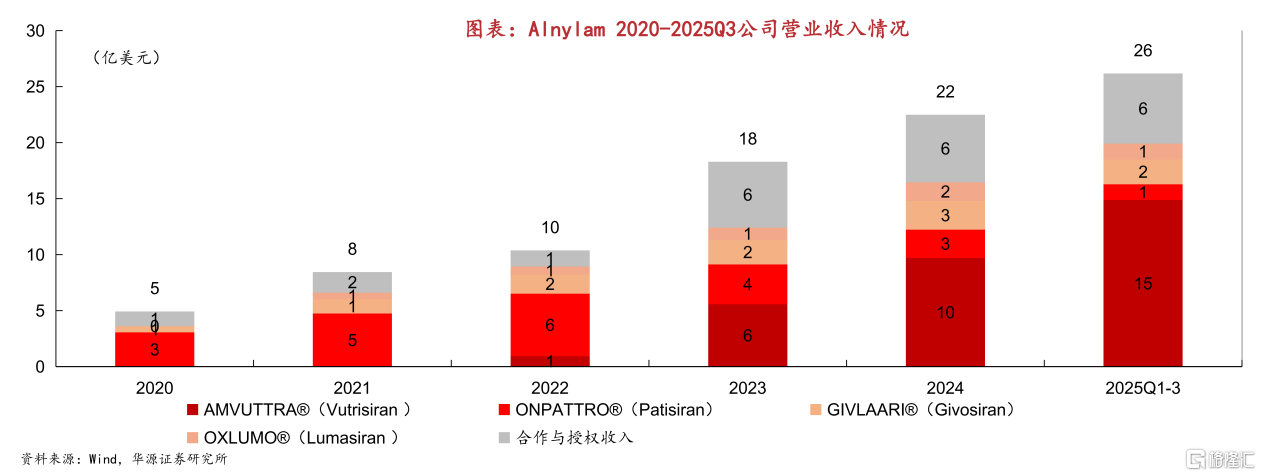
Core Viewpoint - Alnylam Pharmaceuticals has transformed from a biotech company to a pharmaceutical leader, achieving a market capitalization of approximately $611 billion and aiming for a $100 billion valuation, driven by strong revenue growth and a robust pipeline of RNAi therapies [1][2][21]. Financial Performance - Alnylam's total revenue for the first three quarters of 2025 reached $2.617 billion, with product net revenue of $1.992 billion, marking a 67% year-over-year increase [4]. - The TTR product line saw an 85% revenue growth to $1.628 billion, primarily driven by Amvuttra and Onpattro [4]. - Alnylam's total revenue projections for 2025 have been raised to $2.95-3.05 billion, with TTR product revenue guidance adjusted to $2.475-2.525 billion [4]. Product Pipeline and Collaborations - Alnylam has over 15 projects in its pipeline, focusing on rare diseases, cardiovascular, metabolic, and neurological conditions, with Cemdisiran and Elebsiran in late-stage clinical trials [8][14]. - Strategic collaborations with companies like Novartis and Regeneron have accelerated product development and diversified revenue streams [6][7]. Key Products and Market Potential - Leqvio, a long-acting lipid-lowering drug developed in partnership with Novartis, is expected to exceed $1 billion in sales for the first time in 2025 [16]. - Zilebesiran, a novel hypertension treatment, is anticipated to revolutionize blood pressure management with a convenient dosing schedule [16][21]. Future Outlook - Alnylam's dual revenue model of product sales and licensing agreements supports short-term profitability while its innovative pipeline offers significant long-term growth potential [21]. - The company is well-positioned to achieve its goal of a $100 billion market valuation as it continues to launch impactful therapies [21].
创新药周报20251123:首个APOC3 siRNA疗法获批上市用于治疗FCS-20251123
Huachuang Securities· 2025-11-23 13:50
Investment Rating - The report indicates a positive investment outlook for the innovative drug sector, particularly focusing on RNA-targeted therapies for metabolic diseases [5][6]. Core Insights - The approval of the first APOC3 siRNA therapy for treating Familial Chylomicronemia Syndrome (FCS) marks a significant milestone in the RNA-targeted therapy landscape, showcasing the potential of these therapies in managing lipid disorders [17][28]. - RNA-targeted therapies, including small interfering RNA (siRNA) and antisense oligonucleotides (ASOs), are being developed to effectively lower triglyceride levels and improve patient compliance due to reduced dosing frequency [5][10]. - The report highlights ongoing clinical trials and the promising results of therapies like volanesorsen and olezarsen, which have shown significant reductions in triglyceride levels and lower incidence of acute pancreatitis in patients with FCS [17][28][34]. Summary by Sections Section 1: Focus on Innovative Drugs - The report emphasizes the rapid advancements in RNA-targeted therapies for metabolic diseases, particularly in the context of lipid management [5][6]. - Key developments include the approval of siRNA therapies that target APOC3 mRNA, which is crucial for regulating triglyceride levels in patients with FCS [10][17]. Section 2: Clinical Developments - The report details various therapies in clinical stages, including volanesorsen and olezarsen, which have received FDA approval and demonstrated efficacy in lowering triglyceride levels significantly [17][28]. - Clinical trial results indicate that patients treated with these therapies experienced substantial reductions in triglyceride levels compared to placebo groups, with olezarsen showing a 43.5% reduction at six months [28][34]. Section 3: Market Dynamics - The report outlines the competitive landscape, noting that several companies are advancing their RNA-targeted therapies through clinical trials, with a focus on improving patient outcomes and safety profiles [33][34]. - The potential market for these therapies is substantial, given the prevalence of metabolic diseases and the need for effective treatment options [5][6].
This Medical Technology Leader Sees Profit Growth Topping 44%
Investors· 2025-11-21 13:00
Core Insights - Halozyme Therapeutics (HALO) has shown a significant upward movement in its stock price following the release of better-than-expected financial results for its third quarter, indicating a positive market reaction to the company's performance [1]. Company Summary - Halozyme Therapeutics specializes in medical technology and collaborates with major pharmaceutical companies such as Johnson & Johnson (JNJ), Bristol Myers Squibb (BMY), and Roche (RHHBY) by providing drug delivery technology in exchange for royalties [1]. Market Performance - The stock of Halozyme Therapeutics is climbing off the bottom of a consolidation pattern, suggesting a potential for further growth and possibly reaching record highs in the near future [4].

“上海市侨界杰出人物”陈力:引领中华医药创新崛起
Zhong Guo Xin Wen Wang· 2025-11-21 09:36
Core Insights - Chen Li, founder and CEO of Hualing Pharmaceutical, has been recognized as an outstanding figure in the overseas Chinese community in Shanghai for his contributions to bridging Chinese and international pharmaceutical innovation [1][6] Group 1: Background and Experience - Chen Li worked at Roche's R&D center in the U.S. in 1992, focusing on high-throughput technology, which is now associated with AI in drug design and screening [1][3] - He served as the president of the Sino-American Pharmaceutical Professionals Association (SAPA), facilitating collaboration between overseas experts and Shanghai's Science and Technology Commission [3][4] Group 2: Establishment of Hualing Pharmaceutical - In 2004, Chen established Roche's drug research and early development center in Shanghai, marking it as the first independent drug R&D center by a multinational company in the city [3][4] - Chen's vision was to focus solely on innovative drugs, countering the reliance on Western medications for Chinese patients [3][4] Group 3: Challenges and Innovations - Hualing Pharmaceutical faced significant challenges in the early years, particularly with China's drug review system favoring generic drugs over innovative ones [6] - Chen successfully advocated for a dedicated review system for innovative drugs, leading to the rapid approval of the diabetes drug Huatangning, which has since benefited nearly 400,000 Chinese patients [6][7] Group 4: Future Vision and Impact - Chen emphasizes the importance of new productive forces in leading the development of innovative drugs in China, advocating for the integration of advanced technologies and personalized treatment plans [6][7] - He encourages young professionals in the overseas Chinese community to leverage their unique perspectives to drive technological innovation [6][7]

抗体偶联药物ADC产业投资框架:“精准化疗”引爆千亿市场,中国创新引领全球浪潮
Shanghai Aijian Securities· 2025-11-21 06:59
Investment Rating - The report rates the industry as "Outperform" [2] Core Insights - The global market for Antibody-Drug Conjugates (ADC) is projected to exceed $100 billion, driven by the dual advantages of targeted therapy and potent cytotoxic effects [2][3] - ADCs are recognized as a promising new therapy in oncology, with the potential to redefine standard treatments for major cancers like lung and breast cancer [2][3] - China has emerged as a key player in ADC innovation, with over 50% of global ADC pipelines originating from Chinese companies, showcasing significant cost and efficiency advantages [2][3][5] Summary by Sections Section 1: ADC as a Targeted Prodrug - ADCs utilize a "Trojan horse" strategy for targeted delivery of cytotoxic agents to tumor cells, minimizing damage to normal tissues [11][13] - The mechanism involves several steps, including circulation, target binding, internalization, and release of the active drug within the tumor cell [11][13] Section 2: Market Growth and Trends - The ADC market is expected to enter a product explosion phase, with rapid growth anticipated in the coming years [2][3] - The global ADC market size is forecasted to reach $115.1 billion by 2032 [2] Section 3: Investment Opportunities - Investment in ADCs should focus on companies with innovative technology platforms and promising product candidates [2][3] - Key players to watch include those with leading ADC technology platforms and robust pipelines, such as Kelun-Biotech, Innovent Biologics, and WuXi AppTec [2][3] Section 4: Technological Advancements - ADC technology is characterized by modular upgrades and innovative combinations, with a variety of ADC types currently in development [2][3] - The report highlights the potential for ADC technology to extend into broader categories of conjugated drugs (XDC) [2][3] Section 5: Competitive Landscape - The report emphasizes the competitive nature of the ADC industry, with numerous players vying for market share and innovation [2][3] - Chinese ADC companies are recognized for their ability to lead in innovation and capture significant market opportunities [2][3][5]

