奔驰

Search documents
全球车企市值“大洗牌”:特斯拉、丰田、小米、比亚迪分列前四
Xin Lang Cai Jing· 2026-01-05 14:20
转自:智通财经 【全球车企市值"大洗牌":特斯拉、丰田、小米、比亚迪分列前四】智通财经1月5日电,汽车产业深度 变革背景下,全球车企市值排名的更新既是中国、外资车企行业地位与竞争格局的直观体现,亦为市场 对汽车企业全产业链价值的综合判断。截至2025年12月31日收盘,在全球车企TOP10中,新势力车企与 传统车企、海外车企与中国车企之间的市值排名竞争呈现两种局面——特斯拉、丰田、小米、比亚迪分 列前四,排名较一年前无变化的同时各自市值有所增长,且全球十大市值车企中依旧有两家中国公司; 五至十名位次发生"巨变"——宝马、奔驰、大众等排名全面提升,保时捷掉出前十,马鲁蒂铃木印 度"入替"位列第十名。(智通财经记者 张屹鹏) ...




汽车行业年度策略报告:汽车行业2026年十大趋势及投资策略-20260105
Guoyuan Securities· 2026-01-05 13:43
Core Insights - The report highlights that the Chinese automotive industry is entering the mid-to-late stage of the electric and intelligent transformation, characterized by the coexistence of traditional fuel vehicles, electric intelligent vehicles, and future industries represented by autonomous driving. This necessitates a layered and structured investment approach based on the different stages of these industry curves [2][3]. Trend Summaries Trend 1: Scrap Gap Provides Long-term Space, Trade-in Policies Expected to Normalize - The Chinese automotive market has stabilized at an annual sales level of 31 million units, with a substantial vehicle ownership base of 350 million units, laying the groundwork for future updates. The annual scrappage volume is still significantly lower than new car sales, leading to an expanding replacement gap. The "trade-in" policy is expected to evolve from a temporary stimulus to a normalized tool, enhancing the precision of policies to support domestic demand and industrial production [2][13][27]. Trend 2: New Forces Drive China's Automotive Exports to a New Structural Upgrade Stage - China's automotive exports have entered a high-growth phase, achieving several-fold growth over four years. The export structure has undergone profound changes, with a significant increase in the penetration of new energy vehicles. New force car manufacturers are enhancing China's brand premium and technological image in the global market through high-value product exports [2][30][34]. Trend 3: "Mass Market Pure Electric + High-end Range Extender" Trend Continues to Deepen - With the penetration rate of new energy vehicles surpassing 50%, market demand is showing structural differentiation. In the mass market under 200,000 yuan, the 800V high-voltage platform significantly improves charging efficiency, driving pure electric growth to outpace plug-in hybrids and range extenders. In the high-end market above 300,000 yuan, the "large battery long-range range extender" remains the mainstream solution for full-size SUVs/MPVs [2][3]. Trend 4: The "Late Mass Market" Phase Will Continue to Strengthen the Matthew Effect - The industry is transitioning from the "early mass market" to the "late mass market" phase, where consumers prioritize brand endorsement, after-sales support, and residual value certainty. This pragmatic user base favors mature brands and ecosystem capabilities, leading to a concentration of market resources towards leading technology firms [2][3]. Trend 5: Focus on State-owned Enterprises for Opportunities Around "Certainty + Cost-effectiveness" - Regulatory bodies are intensifying the separate assessment and market value management of state-owned enterprises' new energy businesses, driving resources towards electric intelligence. Major automotive groups are restructuring to shorten development cycles, accelerating the integration of intelligent configurations into mainstream price segments [2][3]. Trend 6: Growth of New Energy Heavy and Light Trucks Enters Acceleration Phase - The electrification of commercial vehicles has crossed a critical point, entering a self-driven growth phase. The total cost of ownership (TCO) for heavy trucks has dropped to a recovery period of 1.5-2 years, accelerating the replacement of fuel vehicles. The light truck sector is also maturing, with urban delivery electrification fully established [3][6]. Trend 7: High-perception Intelligent Cockpit Configurations Will Reshape Purchase Decisions - Intelligent cockpits have become a default configuration in new energy vehicles, with the importance of intelligent features in purchase decisions rising to the forefront. Consumers are focusing on visual and perceptible components, making HUDs, large LCD screens, and intelligent seating core differentiation battlegrounds [3][6]. Trend 8: Intelligent Driving Accelerates Along "End-to-End" and "Equal Rights" Paths - The intelligent driving architecture is transitioning to an "end-to-end" model, enhancing efficiency across the perception and decision-making chain. The continued acceleration of L3 policies provides opportunities for leading manufacturers to compete and iterate rapidly in high-level intelligent driving [3][6]. Trend 9: Three Major Autonomous Driving Commercialization Scenarios Approaching Explosive Growth - Robotaxi, mining autonomous driving, and unmanned logistics vehicles are moving from pilot projects to mass production. The cost advantages of unmanned logistics vehicles are becoming increasingly evident, with sales curves showing signs of exponential growth [3][6]. Trend 10: Embodied Intelligence Enters Pre-production Phase, Releasing a Second Growth Curve for the Automotive Manufacturing Industry - Humanoid robots are transitioning from hardware-driven to intelligent dual-core driven, with the automotive supply chain naturally adapting to this field. The synergy between embodied intelligence and the automotive industry is expected to create dual dividends in performance and valuation [3][6].

美力科技:拟收购Hitched Holdings 3 B.V.的100%股权
Ge Long Hui· 2026-01-05 12:57
Group 1 - Meili Technology plans to acquire 100% equity of Hitched Holdings 3 B.V. through its wholly-owned subsidiary Meili Holding GmbH in cash [1] - The total consideration for the acquisition is calculated as follows: base amount of €63,692,942.18 plus a daily amount of €29,557.36 multiplied by the number of days from the lockbox date to the closing date, minus early repayment penalties, notified seller transaction costs, value loss amounts, and historical bonus deductions [1] Group 2 - ACPS Group, based in Germany, has nearly 70 years of experience in the research, production, and sales of high-end automotive trailer towing systems, making it a globally recognized manufacturer in this niche market [2] - The company has over 100 core patents and more than 200 trademarks, with production bases in Germany, Hungary, Mexico, and China, and R&D and sales centers in Europe and North America, establishing a comprehensive production and sales network [2] - The acquisition aligns with the automotive parts industry, as both companies have complementary business operations and share similar downstream customer resources, allowing for potential synergies in production processes and management [2]

美力科技(300611.SZ):拟收购Hitched Holdings 3 B.V.的100%股权
Ge Long Hui A P P· 2026-01-05 12:55
Group 1 - Meili Technology plans to acquire 100% equity of Hitched Holdings 3 B.V. through its wholly-owned subsidiary Meili Holding GmbH in cash [1] - The total purchase price is calculated as follows: base amount of €63,692,942.18 plus a daily amount of €29,557.36 multiplied by the number of days from the lockbox date to the closing date, minus early repayment penalties, notified seller transaction costs, value loss amounts, and historical bonus deductions [1] Group 2 - ACPS Group, based in Germany, has nearly 70 years of experience in the research, production, and sales of high-end automotive trailer towing systems, making it a globally recognized manufacturer in this niche market [2] - The company has over 100 core patents and more than 200 trademarks, with production bases in Germany, Hungary, Mexico, and China, and R&D and sales centers in Europe and North America, establishing a comprehensive production and sales network [2] - The acquisition aligns with the automotive parts industry, as both companies have complementary business operations and share similar downstream customer resources, allowing for potential synergies in production processes and management [2]
德系豪华车新年搞“突袭”?宝马开年官降最高30万
Zhong Guo Jing Ji Wang· 2026-01-05 11:49
Core Viewpoint - BMW has initiated a significant price reduction across 31 key models, with discounts reaching up to 300,000 yuan, marking a departure from its previous stance against price wars in the luxury car market [1][4]. Group 1: Price Reduction Details - The price cuts affect a wide range of models, with reductions generally exceeding 10%, and 24 models seeing cuts over 10%, while 5 models have reductions over 20% [2]. - The model with the largest price drop is the BMW i7 M70L, which saw a reduction from 1.899 million yuan to 1.598 million yuan, a decrease of 301,000 yuan [3][4]. - The entry-level BMW 225L M Sport model's price was reduced from 259,900 yuan to 208,000 yuan, lowering the entry barrier for consumers [2]. Group 2: Market Context and Strategy - BMW's price reduction is framed as a "value upgrade" rather than a price war, indicating a strategic response to market dynamics [4]. - The luxury car market in China is undergoing rapid restructuring, with traditional German brands like BMW, Mercedes-Benz, and Audi facing declining sales, as evidenced by a 14.7% drop in BMW's sales from January to November 2025 [6]. - The rise of Chinese brands, which have seen significant sales growth, poses a challenge to established luxury brands, with companies like Hongmeng Zhixing and Zeekr achieving sales of 589,000 and 575,000 units respectively in 2025 [7][8]. Group 3: Regulatory Environment and Implications - The Chinese government has been actively regulating price wars in the automotive sector, emphasizing compliance with pricing guidelines to promote healthy market development [9]. - BMW's decision to lower prices may attract consumer interest in the short term but could undermine its brand's pricing integrity and consumer perception in the long run [9]. - The competitive landscape may prompt other luxury brands like Mercedes-Benz and Audi to reconsider their pricing strategies in response to BMW's actions, potentially reshaping the market dynamics further [10].
小米CEO雷军谈“丢轮保车”;哪吒汽车方运舟及张勇成被执行人丨汽车交通日报
创业邦· 2026-01-05 10:29
Group 1 - Xiaomi's CEO Lei Jun responded to claims about the company's car safety design, specifically the "wheel detachment for vehicle protection" concept, stating that it is a mature safety design used by many luxury car brands, originally thought to be pioneered by Volvo but actually initiated by Mercedes-Benz [2] - The "wheel detachment for vehicle protection" concept was first introduced in Mercedes-Benz's W111 model in 1959, featuring a design that allows the front suspension and wheels to detach during severe frontal collisions, thus preventing intrusion into the passenger cabin [2] Group 2 - Recent news indicates that Neta Auto's executives Fang Yunzhu and Zhang Yong have been listed as executors in a legal case involving over 1.05 million yuan, with the Shanghai First Intermediate People's Court overseeing the execution [4] - Zeekr announced the upcoming launch of its high-performance flagship SUV, named Zeekr 8X, which is expected to be a significant vehicle for 2026, featuring design elements similar to the Zeekr 9X [6] - New Stone Age's unmanned delivery vehicle has formed a strategic partnership with Luxmea to enhance its presence in the European market, focusing on urban and last-mile delivery solutions [6]


雷军谈“丢轮保车”:以为最早是沃尔沃做的,没想到是奔驰
Feng Huang Wang· 2026-01-05 07:57
Core Viewpoint - The discussion highlights Xiaomi's commitment to automotive safety through the implementation of the "wheel-off protection" design, which is a mature safety feature already seen in luxury vehicles [1] Group 1: Company Insights - Xiaomi's founder and CEO Lei Jun emphasized the significant effort the company has put into vehicle safety design, stating that safety is a fundamental premise for their automotive development [1] - The "wheel-off protection" concept, which allows the wheels to detach during a collision, is inspired by historical designs from luxury brands like Mercedes-Benz, showcasing Xiaomi's intention to integrate advanced safety features into their vehicles [1] Group 2: Industry Context - The "wheel-off protection" design has its origins in Mercedes-Benz's 1959 W111 model, which introduced the concept of crumple zones and energy absorption during collisions, indicating a long-standing industry trend towards enhancing vehicle safety [1] - Xiaomi's recent live demonstration of the YU7 model performing a 25% offset collision test illustrates the practical application of the "wheel-off protection" design, reinforcing the company's innovative approach to automotive safety [1]

雷军再谈丢轮保车:非常成熟的安全设计 奔驰最早使用
Sou Hu Cai Jing· 2026-01-05 02:43
Core Viewpoint - Xiaomi's chairman Lei Jun addressed recent controversies regarding the company's automotive safety design, emphasizing that the "wheel detachment" concept is a well-established safety design principle in luxury brands, originally proposed by Mercedes-Benz [1][3]. Group 1: Historical Context - The "wheel detachment" safety concept can be traced back to the 1950s, with Mercedes-Benz safety engineer Béla Barényi being the first to propose modern passive safety principles, including crumple zones and "force transfer paths" [3]. - The first implementation of this concept was in the 1959 Mercedes-Benz W111 model, marking the inception of the "wheel detachment for vehicle protection" safety logic [3]. Group 2: Design Philosophy - The design is not intended to allow wheels to "fly off" but aims to dissipate impact energy in extreme collision scenarios by sacrificing non-critical components like wheels and suspension, thereby maximizing occupant safety [3]. - Other brands such as Volvo, BMW, and Audi have adopted and optimized similar structural designs, making it a common practice in automotive safety engineering [3]. Group 3: Xiaomi's Commitment - During a recent live stream of the Xiaomi YU7 teardown, viewers could clearly see the structural design details, showcasing Xiaomi's significant investment in automotive safety [5]. - The company has established safety as a foundational principle from the outset of its vehicle development process [5].

我们该怎样记住2025年的中国汽车?
Xin Lang Cai Jing· 2026-01-04 11:30
Core Insights - The Chinese automotive industry has undergone a significant transition in 2025, moving towards the popularization of electrification and the acceptance of safety and responsibility in intelligent driving, while the focus has shifted from expansion to efficiency, governance, and organizational capability [2][69]. Group 1: Industry Competition and Regulation - The Chinese automotive sector has seen a comprehensive intervention from the government to restore competitive order, addressing issues like price wars and production consistency [4][70]. - The intervention marks a shift from merely addressing price control to tackling the root cause of competition, which is the high degree of product and capability homogeneity among companies [6][73]. - The need for differentiation in competition is emphasized, suggesting that true market differentiation must be established to eliminate the cycle of homogeneous competition [9][75]. Group 2: State-Owned Enterprise Reform - The establishment of a new state-owned enterprise, Changan Automobile, marks a significant reform in the state-owned automotive sector, indicating a shift from scale and form to mechanisms and efficiency [10][14]. - The reform aims to enhance the capabilities of state-owned enterprises, focusing on creating irreplaceable advantages in key areas [12][14]. - The changes in state-owned enterprises reflect a broader trend towards efficiency and capability building in the face of new industry challenges [15][64]. Group 3: Intelligent Driving and Safety - The rapid adoption of intelligent driving technologies has led to a shift in focus from technical capabilities to safety and responsibility, with companies facing increased scrutiny over their marketing practices [16][18]. - A significant traffic accident in March 2025 highlighted the urgent need for clear definitions of responsibility and safety standards in intelligent driving [18][21]. - Companies like Geely are taking proactive steps to enhance safety standards, indicating a broader industry trend towards building safety as a core competency [21][23]. Group 4: Globalization and Market Dynamics - The Chinese automotive industry is increasingly viewed as a key player in global market dynamics, with companies recognizing the need for localized manufacturing and long-term partnerships abroad [44][46]. - The shift from merely exporting products to establishing a presence in foreign markets reflects a deeper understanding of the complexities of global trade [44][46]. - The evolving landscape of international relations, particularly between China and the West, is reshaping how Chinese automotive companies approach global expansion [43][48]. Group 5: Capital Market Engagement - The surge of Chinese automotive companies seeking IPOs in Hong Kong indicates a strategic reassessment of capital and risk in light of global market changes [56][58]. - The focus on stable cash flow and clear profit models is becoming essential as the industry transitions into a phase of stock competition and technological differentiation [56][58]. - The choice of Hong Kong for IPOs reflects a desire for regulatory stability and alignment with global standards, enhancing transparency and governance [58][61]. Group 6: Industry Consolidation and Efficiency - A trend of strategic consolidation is emerging, with companies prioritizing resource concentration and efficiency over brand proliferation [66][66]. - Major global automakers are also reducing operations and focusing on core competencies, indicating a broader industry recognition that scale alone may not ensure safety in a volatile market [66][66]. - The end of the expansion phase in the automotive industry signals the beginning of a more competitive environment that tests endurance, efficiency, and organizational capabilities [66][66].



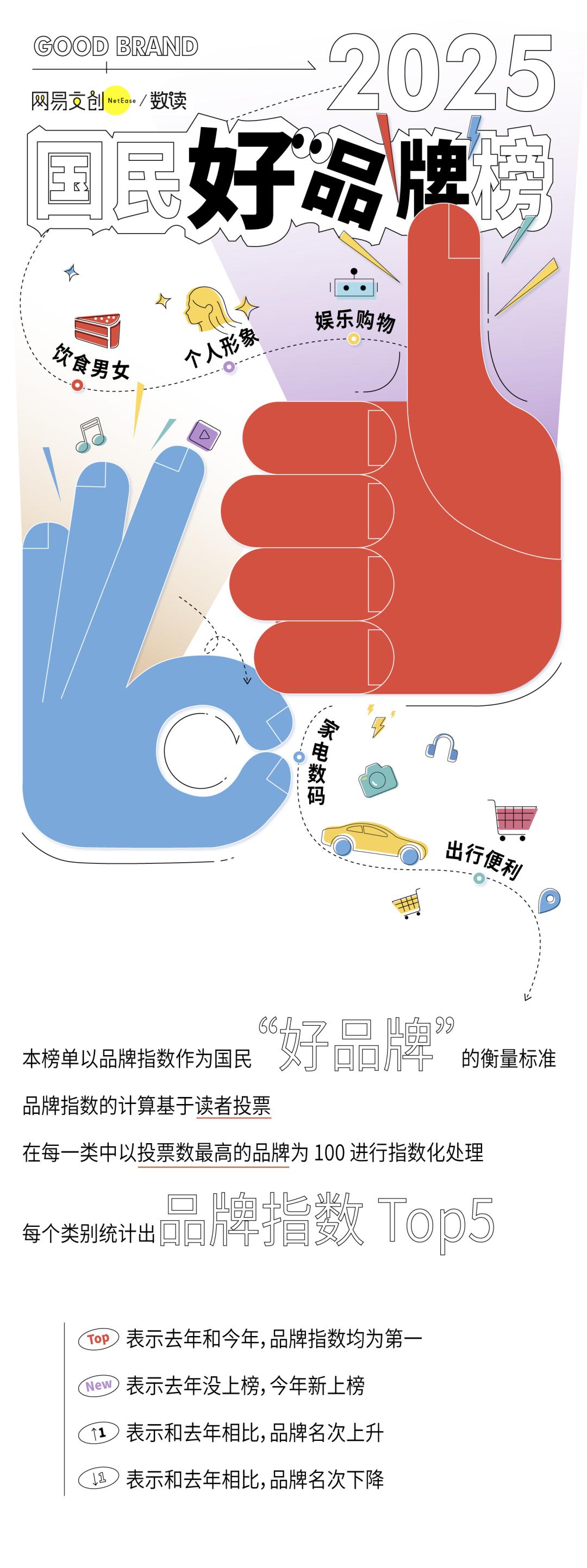
喜茶掉队、DeepSeek被它打败,2025年好品牌之争谁赢了
3 6 Ke· 2026-01-04 02:24
Group 1 - The brand index is used as a measurement standard for the public, calculated based on reader votes, with the highest voted brand in each category set to 100 for index processing [2] - The top five brands in various categories have been identified, with changes in rankings noted, including new entries and shifts in positions compared to the previous year [4][9] - The overall consumer sentiment indicates a cautious approach to spending, with a significant portion of respondents prioritizing product quality and reliability over brand loyalty [123][124] Group 2 - Heytea has fallen behind, with Guming Tea replacing it in the top five, and Guming Tea's store count reaching 11,179 with a net profit of 1.625 billion yuan, surpassing its total profit from the previous year [9] - Haidilao remains the top brand in the hot pot category, while KFC and McDonald's have swapped positions, with KFC slightly ahead [12] - The beverage market sees a return of Nongfu Spring to the top ranks, while Wahaha faces management turmoil, impacting its brand perception [15][17] Group 3 - In the beauty and personal care sector, Estee Lauder and L'Oreal dominate, with significant changes in rankings and the absence of local brands in the top positions [41] - Anta and Li Ning lead the sportswear category, with Li Ning rising to first place from fourth last year, while Adidas has returned to the rankings [45] - Douyin has surpassed Bilibili in the short video sector, with Douyin's daily active users reaching 600 million, while Bilibili has improved its profitability [55] Group 4 - The e-commerce landscape is evolving, with traditional platforms like JD, Meituan, and Taobao entering the instant retail competition, leading to significant financial investments in subsidies [73] - The AI app market is witnessing explosive growth, with ByteDance's products leading in active user numbers, indicating a shift towards AI-driven applications [80] - The adult product market is quietly rising, with brands like Durex and Okamoto leading the category [82] Group 5 - The home appliance market is characterized by intense competition, with Midea focusing on diversified business strategies, while Haier emphasizes high-end and localized operations [92] - Huawei continues to focus on the high-end market, with significant developments in its HarmonyOS ecosystem, while Apple faces challenges with its latest iPhone series [94][95] - The hotel industry is shifting towards new chain hotels, with traditional five-star hotels losing appeal as consumers seek more modern accommodations [116]