天士力

Search documents
华润医药(03320.HK):业绩符合预期 创新产品引入加码
Ge Long Hui· 2025-08-30 03:15
Core Viewpoint - The company reported its 2025 first half performance, with revenue of RMB 131.87 billion, a year-on-year increase of 2.5%, and a net profit attributable to shareholders of RMB 2.08 billion, a year-on-year decrease of 20.3% [1] Performance Summary - The pharmaceutical business saw a revenue of RMB 24.81 billion, up 4.3% year-on-year, driven by growth in traditional Chinese medicine and biopharmaceuticals, with traditional Chinese medicine revenue increasing by 9.1% and biopharmaceuticals by 11.9% [1] - The overall gross margin for the pharmaceutical business was 59.3%, a decrease of 0.8 percentage points year-on-year [1] - The distribution business revenue was RMB 108.33 billion, a year-on-year increase of 2.3%, with a gross margin of 5.9%, remaining stable [1] - DTP revenue was approximately RMB 3.76 billion, showing a growth of about 14.1% year-on-year [1] Development Trends - The company completed the mergers and acquisitions of Tian Shili and Nanger, which are expected to strengthen its position in the traditional Chinese medicine sector and expand into the medical device field [1] - The establishment of two industrial funds aims to invest in chemical innovative drugs, biological products, high-end medical devices, and other sectors [2] - The company signed collaboration projects for innovative drugs, indicating a focus on enhancing its product portfolio [2] Profit Forecast and Valuation - The net profit forecasts for 2025 and 2026 were adjusted downwards by 8.1% and 8.4% to RMB 3.35 billion and RMB 3.65 billion, respectively, with expected growth rates of 0.0% and 9.0% [2] - The current stock price corresponds to a price-to-earnings ratio of 8.4 times for 2025 and 7.6 times for 2026, with a target price of HKD 7.0, indicating a potential upside of 43.1% [2]

天士力(600535):顺利完成“百日融合” 盈利能力稳步提升
Xin Lang Cai Jing· 2025-08-29 06:31
Core Viewpoint - The company reported a mixed financial performance for the first half of 2025, with a slight decline in revenue but an increase in net profit, indicating potential resilience in profitability despite revenue challenges [1][2]. Financial Performance - In H1 2025, the company achieved revenue of 4.288 billion yuan, a year-on-year decrease of 1.91%, while net profit attributable to shareholders was 775 million yuan, a year-on-year increase of 16.97% [1]. - For Q2 2025, revenue was 2.233 billion yuan, down 3.86% year-on-year, but net profit rose to 460 million yuan, up 25.41% year-on-year [1]. - The overall gross margin for H1 2025 was 67.37%, a slight decrease of 0.08 percentage points year-on-year, with a net profit margin of 18.42%, an increase of 3.48 percentage points year-on-year [1]. Dividend and Shareholder Returns - The company announced a mid-year dividend payout of 2.1 yuan per share (before tax), representing 40.50% of the net profit attributable to shareholders for H1 2025 [1]. Business Development and Strategy - The company successfully completed the "100-day integration" with its controlling shareholder, China Resources Sanjiu, enhancing marketing capabilities and business synergy [2]. - The company is focusing on expanding its pharmaceutical commercial sector and leveraging China Resources Sanjiu's marketing channels to boost sales in the second half of the year [2]. Research and Innovation - The company has 83 projects in its research pipeline, including 31 innovative drugs, and is advancing its modern traditional Chinese medicine initiatives [2]. - The company is also focusing on biopharmaceuticals, with ongoing clinical trials for several innovative therapies [2]. Investment Outlook - The investment rating is maintained at "Buy," with expectations for net profit growth from 1.19 billion yuan in 2025 to 1.51 billion yuan in 2027, reflecting a compound annual growth rate [3].

华润三九(000999) - 2025年8月21日-8月27日投资者关系活动记录表
2025-08-28 12:46
Group 1: Market Trends and Company Strategy - The retail market is expected to gradually rise in the long term, despite short-term challenges due to changes in retail channels and market conditions [3] - The company maintains a good partnership with commercial channels and chain pharmacies, actively supporting their transformation [3] - The company is focusing on the CHC health consumer goods sector, driven by health demand and technological innovation [3] Group 2: Inventory and Online Business Development - The overall channel inventory level for the CHC business is approximately 3 months, indicating a healthy state [4] - The company has achieved its online business target of 10% during the "14th Five-Year Plan" period and is planning further digital strategies for the "15th Five-Year Plan" [5] Group 3: Product Development and R&D Focus - The company is expanding its respiratory product line, including various formulations like 999 cold medicine and others, with no changes to the annual growth target [6][7] - R&D efforts are concentrated on innovative drugs, improved versions of existing drugs, and classic traditional Chinese medicine, with a focus on clinical value [8] - The company aims to enhance its independent R&D capabilities and pipeline vitality in the next strategic cycle [8] Group 4: Future Company Positioning and Incentives - Future positioning includes focusing on CHC for Huaren Sanjiu, prescription drugs for Tianshili, and premium traditional Chinese medicine for Kunyu Group [9] - The company plans to introduce a second phase of the stock incentive plan, following the success of the first phase launched in 2021 [11] - The company aims to distribute a cash dividend of 4.5 yuan per 10 shares, with an estimated total cash dividend of approximately 750 million yuan [12]

天士力(600535):2025 年中报点评:业绩符合预期,加强创新驱动
Orient Securities· 2025-08-27 12:03
Investment Rating - The report maintains a "Buy" rating for the company [5][8] Core Views - The company's performance is in line with expectations, with a focus on innovation-driven growth [2][12] - The company achieved a revenue of 4.29 billion yuan in the first half of 2025, a year-on-year decrease of 1.9%, while the pharmaceutical industrial segment showed resilience with a revenue of 3.88 billion yuan, down 0.5% year-on-year [12] - The management efficiency is expected to improve following the completion of the acquisition by China Resources Sanjiu, which is anticipated to enhance long-term growth [12] - The company is accelerating its R&D pipeline with 83 projects in progress, focusing on innovative products in key therapeutic areas [12] Financial Summary - The company forecasts earnings per share (EPS) of 0.75, 0.89, and 0.95 yuan for 2025, 2026, and 2027 respectively [5] - Projected revenues for 2025, 2026, and 2027 are 9.069 billion, 9.723 billion, and 10.248 billion yuan, reflecting growth rates of 6.7%, 7.2%, and 5.4% respectively [7][14] - The net profit attributable to the parent company is expected to be 1.124 billion, 1.325 billion, and 1.423 billion yuan for 2025, 2026, and 2027, with year-on-year growth rates of 17.6%, 17.9%, and 7.4% respectively [7][14] - The company's gross margin is projected to remain stable around 66.5% to 66.7% over the next few years [7][14]
华润入主首考:天士力靠1.35亿“输血”扮靓净利,核心业务承压
Xin Lang Zheng Quan· 2025-08-27 09:32
Core Insights - The company reported a revenue of 4.288 billion yuan for the first half of 2025, a year-on-year decline of 1.91% [1] - The pharmaceutical manufacturing and commercial sectors both experienced significant downturns, with manufacturing revenue slightly decreasing by 0.45% to 3.879 billion yuan and commercial revenue plummeting by 14.88% [1] - Despite the revenue decline, the net profit attributable to shareholders increased by 16.97% to 775 million yuan, largely due to non-recurring gains of 135 million yuan [1][2] - The core product, Dan Shen Drop Pill, saw a revenue decline of 2.98% in the cardiovascular and metabolic sector, contributing to the overall performance issues [1] Financial Performance - Non-recurring gains of 135 million yuan were primarily from non-current asset disposals, government subsidies, and changes in the fair value of financial assets, masking the weakness in core business operations [2] - The gross margin for the pharmaceutical manufacturing sector decreased by 0.7 percentage points, leading to an overall gross margin drop to 67.54%, indicating challenges in cost control and product competitiveness [2] - Operating cash flow net amount fell by 10.95% to 790 million yuan, while accounts receivable surged by 46.86% to 1.169 billion yuan, increasing the proportion of receivables to 27.26% of revenue, highlighting rising collection pressures and potential bad debt risks [2] Management Changes and Strategic Outlook - Following the change in control, the management team underwent significant restructuring, with the founder's son stepping down as chairman and nearly ten core executives leaving the company [3] - The integration process under the new ownership by China Resources is still in its early stages, raising questions about the company's ability to revitalize amidst industry challenges and stagnant core product growth [3] - The reliance on non-recurring gains for profit growth raises concerns about sustainability, as deep-rooted issues such as high accounts receivable, weakened cash flow, and sluggish core business growth have emerged [3]
天士力(600535):业绩符合预期,加强创新驱动
Orient Securities· 2025-08-27 07:09
Investment Rating - The report maintains a "Buy" rating for the company [5][8] Core Views - The company's performance is in line with expectations, with a focus on innovation-driven growth [2][12] - The company achieved a revenue of 4.29 billion yuan in the first half of 2025, a year-on-year decrease of 1.9%, primarily due to adjustments in retail channels affecting the pharmaceutical commercial sector [12] - The pharmaceutical industrial sector showed resilience, with a revenue of 3.88 billion yuan, down 0.5% year-on-year [12] - The completion of the acquisition by China Resources Sanjiu is expected to enhance management efficiency and long-term growth potential [12] - The company is accelerating its R&D pipeline, focusing on innovative products, with 83 projects in development, including 31 innovative drugs [12] Financial Summary - The company forecasts earnings per share (EPS) of 0.75, 0.89, and 0.95 yuan for 2025, 2026, and 2027 respectively [5] - Projected revenues for 2025, 2026, and 2027 are 9.069 billion, 9.723 billion, and 10.248 billion yuan, reflecting growth rates of 6.7%, 7.2%, and 5.4% respectively [7] - The net profit attributable to the parent company is expected to be 1.124 billion, 1.325 billion, and 1.423 billion yuan for 2025, 2026, and 2027, with year-on-year growth rates of 17.6%, 17.9%, and 7.4% respectively [7] - The gross margin is projected to remain stable around 66.5% to 66.7% over the forecast period [7]
干细胞疗法:厚积薄发,初露峥嵘
Changjiang Securities· 2025-08-26 14:58
Investment Rating - The report maintains a "Positive" investment rating for the stem cell therapy industry [12]. Core Insights - Stem cell therapy is accelerating from theory to clinical application, with mesenchymal stem cells (MSC) becoming the mainstream due to their application advantages. Over ten products have been approved globally, covering various fields such as cardiovascular, metabolic, and neurological diseases. The approval of the first "off-the-shelf" MSC therapy by the FDA in late 2024 and the first MSC drug in China in early 2025 marks a significant milestone in the industry [3][7][8]. Summary by Sections Industry Overview - Stem cells, known for their self-renewal and multi-directional differentiation capabilities, have evolved since their concept was introduced in the 19th century. MSCs have become the primary focus in clinical research and application due to their broad application advantages. The global stem cell therapy market is rapidly advancing, with numerous products approved for various indications [7][20]. Regulatory Milestones - The FDA's approval of the first "off-the-shelf" MSC therapy in late 2024, which demonstrated a 70.4% objective response rate by day 28 and a 68.5% overall survival rate by day 180, sets a precedent for the industry. Concurrently, the approval of "Aimi Maitosai" in China in early 2025 signifies the recognition of stem cell therapy in regulatory and clinical practices [8][45]. Company Spotlight: Jiuzhitang - Jiuzhitang has established a comprehensive stem cell research and industrialization platform, leading in clinical trials in China. Its core product, itMSC, has shown promising results in I/II phase clinical trials for ischemic stroke in the U.S., with significant improvements in patient outcomes. The company is also exploring other indications such as aPAP and AD, indicating a broad potential market [9][67]. Market Potential and Applications - The MSC therapy market is expanding into various fields, including cardiovascular, immune, and metabolic diseases. Companies are actively exploring applications in these areas, with early research showing potential benefits in diabetes and IBD, although further validation is needed [10][30][47]. Clinical Development - The report highlights the ongoing clinical trials for various MSC products targeting conditions like ischemic stroke and aPAP. Jiuzhitang's itMSC is in advanced clinical stages, with promising safety and efficacy data, suggesting a strong potential for long-term patient benefits [64][66].

2025年中国妇科更年期用药行业概览:从“被遗忘的岁月”到“被照亮的未来”,更年期用药帮女性跨越寒冬
Tou Bao Yan Jiu Yuan· 2025-08-26 12:41
Investment Rating - The report does not explicitly state an investment rating for the menopausal syndrome medication industry in China. Core Insights - The menopausal syndrome medication industry in China is evolving from a phase of being overlooked to one of significant potential, driven by both Western and traditional Chinese medicine approaches. The industry is expected to see increased demand for non-hormonal therapies and a shift towards proactive health management for women [2][3]. Summary by Sections Industry Overview - Menopausal syndrome is characterized by a range of symptoms due to hormonal fluctuations during the transition to menopause, including menstrual irregularities, hot flashes, and emotional disturbances [2][19]. - The treatment landscape includes both Western medicine, primarily hormone replacement therapy, and traditional Chinese medicine, which offers a differentiated competitive advantage [2][3]. Market Size Analysis - The market for menopausal syndrome medications in China is projected to grow significantly, reaching 169.7 billion yuan by 2024, with a further increase to 449.6 billion yuan by 2029. The market is currently split between Western medications (88.8 billion yuan) and traditional Chinese medicines (80.9 billion yuan) [30][31]. - The growth is driven by unmet medication needs and the optimization of healthcare resources, particularly in under-served regions [31][32]. Industry Chain Analysis - The industry chain consists of upstream suppliers of raw materials, midstream manufacturers of chemical and traditional medicines, and downstream distribution through pharmacies and healthcare institutions [46][48]. - The core product in the chemical medication segment is progesterone, while traditional Chinese medicines include well-known formulas like Liuwei Dihuang Wan [47][63]. Competitive Landscape - The competitive environment is characterized by a diverse range of players, particularly in the traditional Chinese medicine sector, where many companies are establishing differentiated positions [72]. - The emergence of innovative non-hormonal therapies is expected to reshape the competitive dynamics, alongside the need for robust clinical evidence for traditional Chinese medicines [72].
闫凯境博士:以还原健康开启生命科学新纪元
Xin Lang Cai Jing· 2025-08-26 03:36
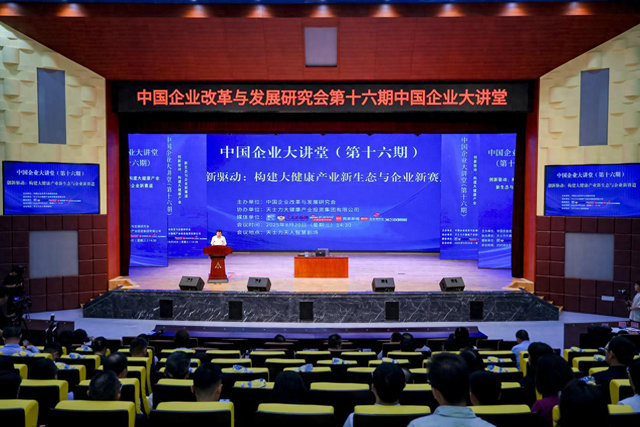
Core Viewpoint - The event focused on "Innovation-Driven: Building a New Ecosystem for the Health Industry and New Business Tracks," emphasizing the intersection of technological revolution and health challenges, with Tianjin Tianshi Group aiming to leverage life science innovations to support the Healthy China strategy and fundamentally transform the health industry [1][2]. Group 1: Event Overview - The 16th China Enterprise Lecture was held in Tianjin, co-hosted by the China Enterprise Reform and Development Research Association and Tianjin Tianshi Health Industry Investment Group, gathering government, industry, academia, and research to discuss topics such as the inheritance and innovation of traditional Chinese medicine and life science advancements [1][2]. - Key attendees included renowned figures such as Zhang Boli, honorary president of Tianjin University of Traditional Chinese Medicine, and Yan Kaijun, chairman of Tianjin Tianshi Group [1]. Group 2: Health Challenges and Strategic Direction - The global life expectancy increased from 66.8 years in 2000 to 73.1 years in 2019, while healthy life expectancy only rose from 58.1 years to 63.5 years, indicating that longer life often comes with health issues and lower quality of life [4]. - The 2025 National Health Conference emphasized a shift from a disease-centered approach to a people-centered health system, highlighting the urgent need for a new health framework [4]. Group 3: Tianshi's Health Restoration Theory - Yan Kaijun introduced Tianshi's "Restoration Health" theory, which focuses on restoring microcirculation networks to activate adult stem cells for functional repair, emphasizing the importance of microcirculation in preventing aging and chronic diseases [4][6]. - The team utilized single-cell RNA sequencing and AI analysis to clarify the role of mesenchymal stem cells (MSCs) in health restoration, establishing a quality control system for MSCs to ensure their stability and effectiveness [6][7]. Group 4: Integration of Technology and Traditional Medicine - Tianshi is integrating cell therapy with traditional Chinese medicine through a large model that provides personalized health services, including precise diagnostics and tailored intervention plans [7][8]. - The collaboration with Huawei Cloud led to the development of a dual-modal model "Smart Herbal Medicine," which enhances both drug development and clinical diagnosis in traditional Chinese medicine [8]. Group 5: Vision for the Future - Tianshi aims to transform the challenges of an aging society into opportunities for health innovation, aspiring to help individuals achieve a healthy lifespan of 120 years and support sustainable societal development [8].

从0.16亿到4711亿 描摹金融强国建设“深圳样本”
证券时报· 2025-08-26 00:56
Core Viewpoint - Shenzhen has evolved into a financial innovation center, significantly contributing to the development of China's financial system and supporting the growth of high-tech industries and small to medium-sized enterprises (SMEs) through a diverse financial ecosystem [1][7][12]. Financial Development in Shenzhen - Over 45 years, Shenzhen's financial sector has grown from an initial value of 0.16 million yuan to 4710.5 billion yuan in 2024, marking an increase of nearly 30,000 times with an average annual growth rate of 26.3% [2]. - The financial industry in Shenzhen has played a crucial role in addressing funding challenges for the special economic zone, fostering an environment conducive to innovation and supporting both large enterprises and SMEs [4][5]. Historical Context and Innovations - The establishment of the first enterprise group financial company in Shenzhen in 1979 marked a significant step in breaking the funding bottleneck, leading to the creation of the first bank founded by an enterprise, China Merchants Bank, in 1987 [5][6]. - Shenzhen's financial landscape was further enhanced by the introduction of the first foreign bank in China, which facilitated foreign trade and currency exchange, laying the groundwork for a robust financial system [6]. Support for High-Tech Industries - Shenzhen's financial sector has transitioned to support high-tech industries, acting as a catalyst for innovation and enabling projects to move from concept to market [9][10]. - The establishment of venture capital firms in the late 1990s, such as Shenzhen Venture Capital, has been pivotal in nurturing technology startups, with nearly 4000 projects incubated since then [10][11]. Financing Solutions for SMEs - The introduction of tailored financial solutions, such as seed loans, has addressed the financing challenges faced by SMEs, allowing for quick access to funds without traditional banking hurdles [11][12]. - As of Q1 2025, the loan balance for technology-based enterprises in Shenzhen reached 1.23 trillion yuan, reflecting a year-on-year growth of 7.9% [11]. Capital Market Dynamics - Shenzhen's capital market, particularly the Shenzhen Stock Exchange and the ChiNext board, has been instrumental in supporting the growth of innovative companies, with recent regulatory changes facilitating the listing of unprofitable firms [15][17]. - The number of A-share listed companies in Shenzhen reached 425, with a total market capitalization of 10.39 trillion yuan, showcasing the city's significant role in the national financial landscape [16]. Conclusion - Shenzhen's financial ecosystem, characterized by resource aggregation, strong technological innovation capabilities, and high openness, is uniquely positioned to support the sustainable development of the local economy, enhancing the resilience and structural quality of its financial services [17].