
美的集团

Search documents
证券账户能买分红险 办手机卡推销健康险 跨界玩家密集进场卖保险
Nan Fang Du Shi Bao· 2026-02-03 23:16
Core Viewpoint - The insurance industry is experiencing an innovative trend of "cross-industry collaboration," with various sectors such as securities firms and telecommunications companies entering the insurance market, leading to a multi-channel integration of insurance sales [2][3][10]. Industry Trends - Multiple securities firms have quietly launched "insurance sections" in their official apps, with one leading firm offering 18 insurance products, including 13 dividend-type products [3]. - China Mobile has opted for a "offline trial sales" model, starting in January 2026, selling insurance products directly in its service outlets [3]. - Other capital players, such as Guangzhou Yuexiu Group and Midea Group, are also making significant investments in the insurance sector through acquisitions [3][4]. Market Impact - The entry of cross-industry players is reshaping traditional insurance sales channels, with a notable shift in market dynamics. The insurance sales market may evolve into a layered structure, where cross-industry platforms focus on standardized products while traditional agents emphasize complex risk management [6][10]. - The insurance sales channels are undergoing a profound transformation, with the bancassurance channel surpassing individual insurance channels in new premium scale for the first time in 14 years [5]. Opportunities - The current scale of insurance sales through cross-industry channels remains relatively small, with securities firms' insurance sales accounting for less than 5% of their total sales revenue [9]. - The integration of insurance into daily life through cross-industry platforms is seen as a strategic move to enhance user engagement and create new revenue streams for companies facing growth pressures in their core businesses [9][10]. Challenges - While cross-industry collaboration makes purchasing insurance easier, it also complicates the process of selecting the right insurance, as consumers may overlook their actual needs due to the convenience of embedded insurance offerings [10][11]. - There are concerns regarding the potential dilution of sales professionalism and service responsibilities, which could undermine consumer trust in the insurance industry [11][12].




铜价波动藏风险家电企业下好套保先手棋
Zhong Guo Zheng Quan Bao· 2026-02-03 20:27
Core Viewpoint - Recent fluctuations in copper prices indicate a complex interplay between industrial and financial attributes, with short-term price movements influenced more by financial factors than by supply-demand fundamentals [1][2]. Supply and Demand Dynamics - Copper prices have recently experienced volatility, with a notable drop of over 9% to 98,500 yuan/ton on February 2, following a peak of 110,000 yuan/ton on January 30 [1]. - The domestic air conditioning industry consumes approximately 850,000 tons of copper annually, highlighting the metal's critical role in manufacturing [1][3]. - Major copper suppliers face limited short-term production increases, with declining ore grades impacting output, particularly in Chile's Mantoverde mine and Southern Copper [2]. Industry Performance - Despite rising copper prices, leading air conditioning companies have reported revenue growth. For instance, Midea Group achieved a revenue of 363.06 billion yuan in the first three quarters of 2025, a year-on-year increase of 13.82% [3]. - Haier Smart Home reported a revenue of 234.05 billion yuan during the same period, with a net profit increase of 14.68% [4]. Risk Management Strategies - Companies are increasingly engaging in commodity hedging to mitigate the impact of raw material price fluctuations. Midea Group has initiated hedging activities to counteract raw material price volatility [4][5]. - Haier Smart Home plans to conduct hedging for copper, aluminum, and other raw materials, with a contract value not exceeding 5.46 billion yuan [6]. - Research indicates that appliance manufacturers can offset rising raw material costs through price increases, with a 3%-5% price hike potentially covering the impact of copper prices at 105,000 yuan/ton [6].


铜价波动藏风险 家电企业下好套保先手棋
Zhong Guo Zheng Quan Bao· 2026-02-03 20:23
Group 1 - Recent fluctuations in copper prices have seen a peak of 110,000 yuan/ton on January 30, followed by a decline of 2.82%, and a further drop to 98,500 yuan/ton by February 2, marking a decrease of over 9% [1][2] - The demand for copper remains strong in the medium to long term, driven by sectors such as renewable energy, electricity, and AI computing, with the domestic air conditioning industry consuming approximately 850,000 tons of copper annually [1][4] - The supply side shows limited short-term increases from major copper suppliers, with declining ore grades affecting production, particularly at the Mantoverde copper mine in Chile and Southern Copper [3] Group 2 - The copper market's medium to long-term outlook remains unchanged, with expectations of gradual price recovery, although not as rapid as before [3] - The overall price trend for non-ferrous metals is projected to rise significantly by 2025, influenced by capital flows and market sentiment [2] - Major air conditioning companies, such as Midea Group and Haier, have reported revenue growth despite rising copper prices, with Midea achieving 363.06 billion yuan in revenue, a 13.82% increase year-on-year [5][6] Group 3 - Companies are actively engaging in commodity hedging to mitigate cost pressures from fluctuating raw material prices, with Midea and Haier planning to conduct hedging activities valued at up to 6 billion yuan and 5.46 billion yuan, respectively [6][7] - The industry is witnessing a consensus on price increases to offset rising raw material costs, with estimates suggesting a 3%-5% price hike could cover the impact of copper prices at 105,000 yuan/ton [7]
市场热门的出海公司有哪些
Sou Hu Cai Jing· 2026-02-03 19:31
Group 1: Technology and Internet - Huawei is a global leader in telecommunications equipment and smartphone manufacturing, with products and services available in multiple countries and regions [3] - Xiaomi started with high-cost performance smartphones and has expanded into smart home devices and TVs, holding a strong market share in India and Southeast Asia [3] - ByteDance owns popular applications like TikTok (international version of Douyin) and Helo, which are widely popular globally [4] Group 2: E-commerce - Alibaba operates AliExpress, conducting e-commerce business globally, with notable performance in markets like Russia and Brazil [5] - JD.com expands overseas through its JD Worldwide platform, providing cross-border e-commerce services [6] - SHEIN is a fast-fashion e-commerce platform that has rapidly risen in the European and American markets due to its quick-response supply chain and low-price strategy [7] Group 3: Gaming - Tencent has secured a significant position in the global gaming market through acquisitions of companies like Supercell and Riot Games, and by launching self-developed games such as Arena of Valor [8] - NetEase has achieved success in overseas markets with self-developed games like Onmyoji and is expanding its influence through investments and partnerships [8] - miHoYo has gained immense success in overseas markets with high-quality games like Genshin Impact, becoming one of the most successful Chinese gaming companies in recent years [9] Group 4: Consumer Brands - Anker focuses on the research and sales of smart charging and peripheral products, with strong sales across multiple countries and regions [10] - Haier, a home appliance giant, has established a strong market network globally through acquisitions and localization strategies [11] - Midea has become a globally recognized home appliance brand through technological innovation and international expansion [12] Group 5: Emerging Brands - Perfect Diary, a beauty brand, has rapidly risen in overseas markets through social media marketing and high-quality products [13] - Pop Mart, a trendy toy brand, attracts a large number of young consumers in overseas markets through innovative formats like blind boxes [14]
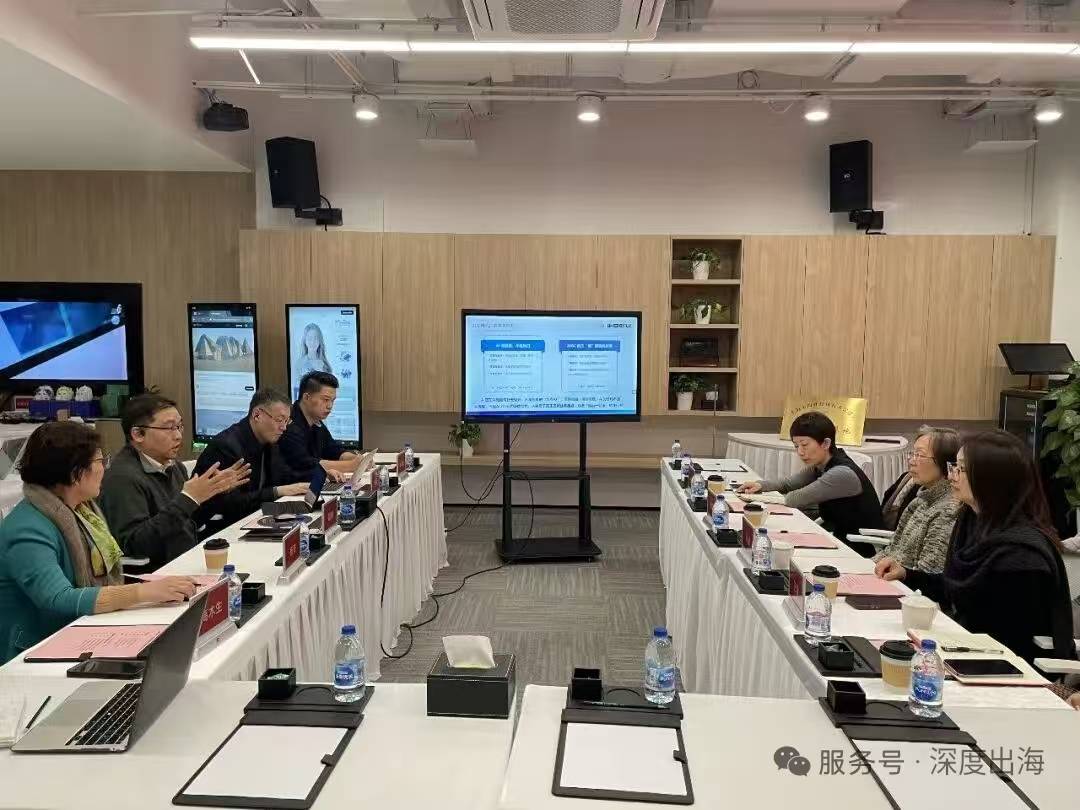
美的取得空调器及其控制方法专利
Sou Hu Cai Jing· 2026-02-03 16:44
天眼查资料显示,广东美的暖通设备有限公司,成立于2005年,位于佛山市,是一家以从事电气机械和 器材制造业为主的企业。企业注册资本50000万人民币。通过天眼查大数据分析,广东美的暖通设备有 限公司共对外投资了6家企业,参与招投标项目3330次,专利信息5000条,此外企业还拥有行政许可136 个。 声明:市场有风险,投资需谨慎。本文为AI基于第三方数据生成,仅供参考,不构成个人投资建议。 来源:市场资讯 国家知识产权局信息显示,广东美的暖通设备有限公司、美的集团股份有限公司取得一项名为"一种空 调器及其控制方法"的专利,授权公告号CN119642293B,申请日期为2023年9月。 美的集团股份有限公司,成立于2000年,位于佛山市,是一家以从事通用设备制造业为主的企业。企业 注册资本767558.8172万人民币。通过天眼查大数据分析,美的集团股份有限公司共对外投资了132家企 业,参与招投标项目5000次,财产线索方面有商标信息5000条,专利信息5000条,此外企业还拥有行政 许可86个。 ...
京东开启2026年全国首个乡村国补活动 激活乡村线下消费烟火气
Jin Rong Jie Zi Xun· 2026-02-03 12:52
1月31日,济南市济阳文体中心人潮涌动,由济南市商务局指导、京东举办的"国补下乡焕新行-济阳 站"活动在此火热开场。作为2026年全国首个乡村国补活动,该活动以送到乡镇居民"家门口"的实在优 惠和可视可感的线下体验,吸引了周边大量乡镇消费者参与,点燃了农村线下国补消费的烟火气。 活动现场,超千平方米的展区内汇集了海尔、美的、华为等30余个主流品牌的上百款家电与3C数码产 品,涵盖电视、空调、洗衣机、手机、电脑等多个品类,AI智能终端、分区洗护洗衣机、无风感空调 等创新产品成为村民关注焦点。 活动当天,在展厅内咨询补贴政策、体验产品性能的村民络绎不绝,呈现出火热消费场景。"今天正好 赶着京东的国补活动来给家里挑台新空调,买大件还是看着实物,心里才有底!"来自大王村的李先生 边挑选空调边说。 除主会场外,济阳当地15家京东家电专卖店及3C数码门店也同步开展活动,迎来消费热潮。消费者可 叠加享受"每满3000元返200元"的优惠,至高返1000元,全场再享受国补价格,部分产品更设有专享5折 福利。购物满额还可参与100%中奖的福袋派送与抽奖活动,现场有机会赢得冰箱、洗衣机等大奖。 值得一提的是,京东以此次活动为契机 ...

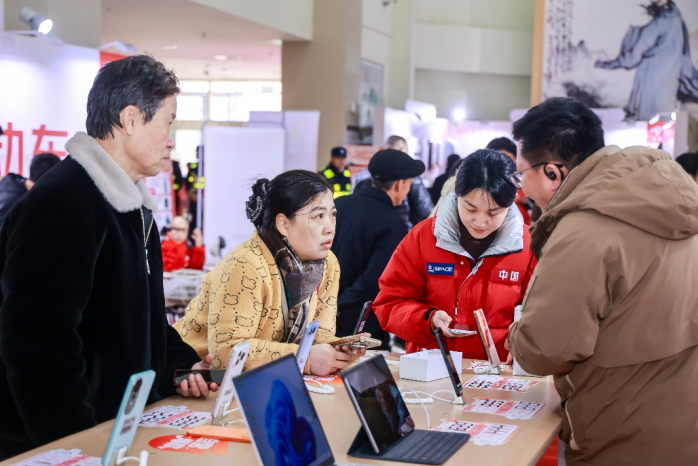
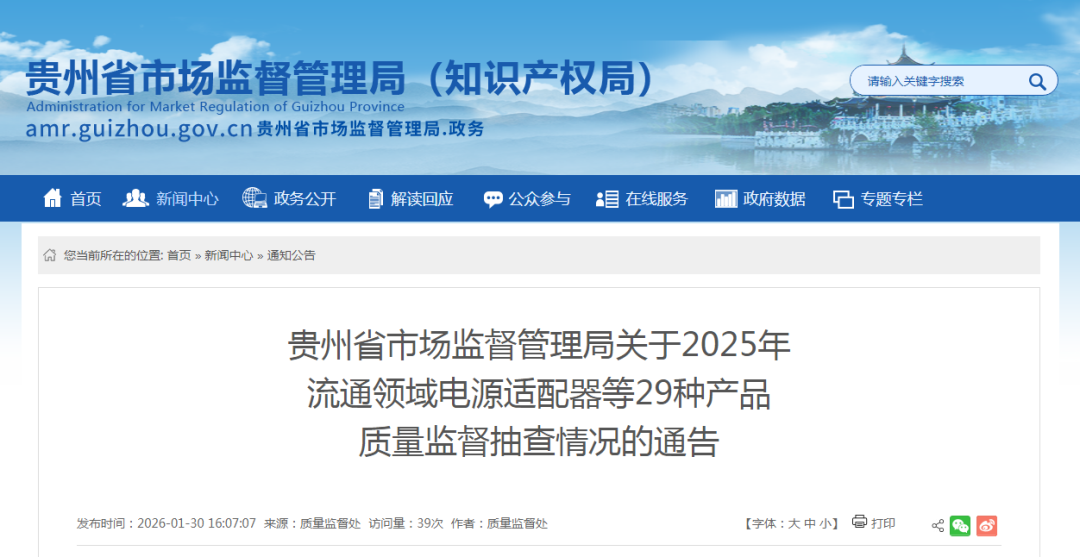
美的、苏泊尔、Haier、九阳等电磁灶产品抽查结果来了!
Xin Lang Cai Jing· 2026-02-03 12:47
Core Insights - The Guizhou Provincial Market Supervision Administration recently announced the results of quality supervision inspections for 29 types of products, including electromagnetic stove products, revealing that no non-compliant products were found among the 32 batches tested from 17 sellers [2]. Group 1: Quality Inspection Results - A total of 32 batches of electromagnetic stove products were inspected, and all were found to be compliant with quality standards [2]. - The inspection covered various safety and performance criteria, including protection against electric shock, input power and current, heating, leakage current under working temperature, and electrical strength [3]. Group 2: Compliance and Manufacturers - The inspected products included those from well-known manufacturers such as Midea and Haier, indicating a strong adherence to quality standards in the industry [3][4]. - Specific models tested included various electromagnetic stoves, with all passing the required safety and performance tests [4].


苹果登顶!2025胡润中国品牌榜发布
Shen Zhen Shang Bao· 2026-02-03 12:15
2月3日,胡润研究院发布《2025胡润中国品牌榜》,榜单首次纳入进入中国市场并服务于中国消费者的非中国品牌。根据榜单,苹果以1.11万亿元的品牌 价值登顶最具价值品牌;贵州茅台以7950亿元品牌价值位居第二,稳居中国品牌价值榜首;微信品牌价值增长最多,稳居第三名,同时取代抖音成为最具 价值中国民营品牌。以苹果为首的消费电子行业超越酒类,成为榜单中价值最高的行业,酒类依旧是中国本土品牌价值最高的行业。 榜单显示,上榜品牌数量从300强扩容至500强。317个品牌的价值较上一年增长,其中包含212个新上榜品牌;153个品牌价值下降;35个品牌价值保持不 变;另有16个品牌落榜。上榜门槛为20亿元人民币,总价值近8.8万亿元人民币。69%的上榜品牌提供实体产品,31%的品牌提供软件或服务。其中,源自 中国的品牌占比76%,非中国品牌占比24%。 看推文多多留言 有机会获商报君送出的礼品 朋友们千万别错过! ↓↓↓ 上榜品牌的中国总部,覆盖73个城市。其中,上海以136个品牌居首,品牌总价值近2.9万亿元人民币;北京紧随其后,拥有104个品牌,品牌总价值近1.8 万亿元人民币;深圳位列第三,拥有41个品牌,品牌总价值 ...


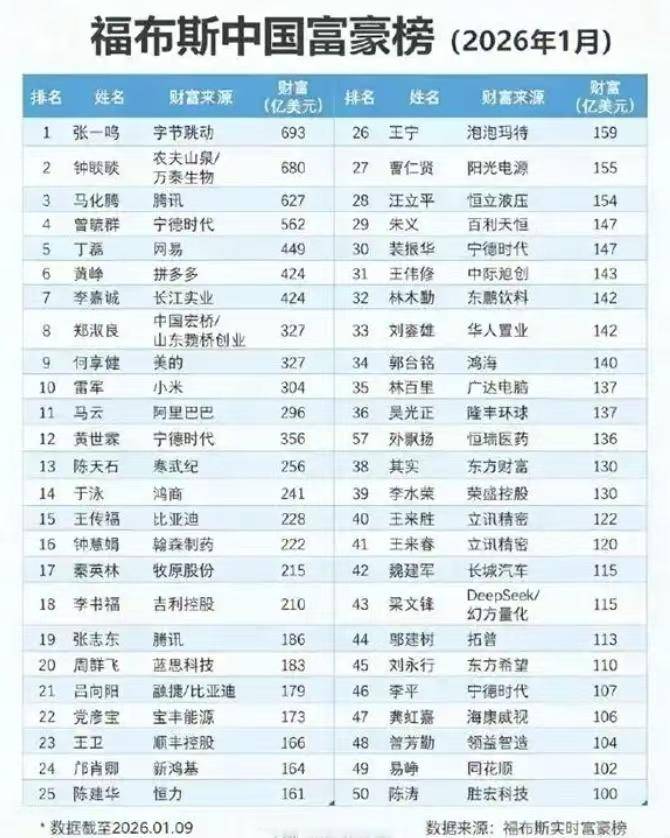
【科技早报】2月2日 星期一1、#中国富豪榜# 最新榜单出炉!张一鸣、钟睒睒、马化腾稳居前三,马云身价缩水跌至第十一位。雷军位列第十,量化基金与DeepSeek创始人梁文锋身价达115亿美元,成长迅速。2、#人形机器人挑战极寒# 宇树G1人形机器人在-47.4℃极寒环境中自主行走了...
Sou Hu Cai Jing· 2026-02-03 11:15
Group 1 - The article presents a ranking of wealthy individuals in the technology and business sectors, highlighting their net worth in billions of dollars [1] - Zhang Yiming, founder of ByteDance, tops the list with a net worth of $85.079 billion, followed by Zhong Guoguo from Nongfu Spring with $58 billion [1] - Other notable figures include Ma Huateng from Tencent with $62.7 billion and Ding Xue from Newe with $50 billion [1] Group 2 - The list includes various industries such as technology, beverage, and automotive, showcasing the diversity of wealth sources among the top individuals [1] - The rankings also reflect the competitive landscape in sectors like electric vehicles, with figures like Wang Chuanfu from BYD at $22.8 billion [1] - The data indicates a significant presence of technology entrepreneurs, with multiple representatives from companies like Tencent and ByteDance [1]

原材料价格上涨对白电龙头影响有限,白电1-2月排产增速环比改善 | 投研报告
Zhong Guo Neng Yuan Wang· 2026-02-03 09:51
Core Viewpoint - Recent increases in copper and other raw material prices have raised concerns about the profitability of leading white goods companies, but historical analysis shows that the negative impact of rising raw material costs on gross margins has gradually diminished, suggesting that these companies can maintain profitability through structural adjustments and cost savings [1][2]. Raw Material Price Impact - Since 2008, the home appliance industry has experienced three significant raw material price increase cycles, with the impact on gross margins decreasing over time: during 2009-2011, the maximum quarterly gross margin decline for leading white goods companies was 5-7 percentage points; in 2016-2017, it was around 5 percentage points; and from 2020-2022, it was about 2 percentage points [2]. - In January 2026, the average monthly closing prices for copper and aluminum on the SHFE showed year-on-year increases of 36.7% and 20.9%, respectively, which are lower than the increases seen from 2020-2022, indicating that the current raw material cost increase may have a lesser impact on white goods companies [2]. Production and Demand Trends - In February, the total production of white goods in China reached 23.79 million units, a year-on-year decrease of 22.1%, with a cumulative decline of 5.0% for January-February [3]. - The production of air conditioners, refrigerators, and washing machines showed varying degrees of decline compared to the previous year, with air conditioners down 31.6%, refrigerators down 17.0%, and washing machines down 3.2% [3]. - The impact of the Spring Festival timing has put pressure on production, but cumulative growth rates have shown slight improvement, and demand is expected to stabilize due to the effects of national subsidy policies [3]. Retail Market Performance - In 2025, the retail scale of China's home appliance market was 893.1 billion yuan, a year-on-year decline of 4.3%, with specific categories like air conditioners and refrigerators experiencing declines of 0.4% and 11.5%, respectively [4]. - Small home appliances performed relatively well, with an overall retail growth of 3.8%, indicating resilience in this segment despite the overall market downturn [4]. Investment Recommendations - The report recommends investing in leading white goods companies such as Midea Group, Haier Smart Home, TCL Technology, and Hisense Home Appliances, as well as in black goods and small appliances [4].