陶氏公司

Search documents
与日资较量近半个世纪,立邦漆与新加坡华人首富互相成就
Sou Hu Cai Jing· 2025-08-31 16:53
Core Insights - The article discusses the legacy of Wu Qingliang, the founder of Nippon Paint, who passed away in August 2025, and highlights his significant contributions to the paint industry, particularly in Singapore and China [1][3]. Company Overview - Nippon Paint was established as a joint venture in 1962 and has grown to dominate the Southeast Asian paint market, with Wu Qingliang successfully acquiring full control from Japanese partners over two decades [4][7]. - The company has undergone several strategic transformations, evolving from a paint manufacturer to a comprehensive service provider in the painting solutions sector [5][6]. Financial Performance - In the first half of 2025, Nippon Paint reported a revenue of approximately 415 billion yuan, a 4.3% increase year-on-year, with a net profit of about 42.61 billion yuan, reflecting a robust growth of 34.4% [16][18]. - The company’s Japanese market saw a revenue increase of 3.5%, while the European and American markets faced challenges, with revenues declining by 5.0% and 4.8%, respectively [17][18]. Market Strategy - Nippon Paint has positioned China as a key growth engine, despite a 12.6% decline in revenue, the operating profit in China grew by 7.7% [18][20]. - The company has invested over 400 billion yuan in various projects in China since 2018, focusing on expanding its production capacity in the architectural paint sector [20][22]. Mergers and Acquisitions - The company has actively pursued acquisitions to enhance its market presence, including significant purchases in Australia, Malaysia, and Europe, which have contributed positively to its financial performance [12][13][28]. - Nippon Paint's acquisition strategy is characterized by a focus on high-growth regions and sectors, aiming to integrate and optimize its operations across different markets [28][29]. Industry Position - As of 2025, Nippon Paint ranked fourth among the world's top paint companies, with a revenue of 10.745 billion USD, marking a 13.6% growth [26][30]. - The company has maintained a strong competitive edge through innovative business models and a focus on sustainability, positioning itself as a leader in the paint industry [23][24].


半导体超高密度3D铜互连电镀液技术与市场发展
2025-08-31 16:21
Summary of Semiconductor Industry and 3D Copper Interconnect Plating Technology Industry Overview - The semiconductor industry is experiencing significant advancements in 3D interconnect technology, which enhances signal transmission efficiency and compact chip design, catering to the miniaturization needs of mobile electronic products [1][2][17]. Key Technologies and Processes - **Damascus Process**: A critical technology in semiconductor manufacturing that constructs high-precision copper lines by first building a metal layer and then polishing it, particularly effective in processes of 7nm and below, improving wafer yield [1][3][4]. - **Copper Interconnect Plating Solution**: Composed of copper sulfate as the main salt and additives, this solution forms a uniform metal layer on the substrate through electrolysis, offering cost advantages over CVD/PVD methods, making it suitable for large-scale integrated circuit manufacturing [1][5][24]. - **Pre-treatment Steps**: Essential for semiconductor processes, including wafer cleaning and the deposition of barrier layers to prevent copper diffusion, ensuring proper circuit functionality [9][10]. Market Dynamics - The copper plating solution market is expanding due to the increasing demand for advanced processes and high-end packaging, with copper plating solutions holding a dominant market share exceeding 60% [24][30]. - Major international players in the copper plating solution market include Dow, Atotech, and various Japanese companies, while domestic companies like Shanghai XinYang are also making significant strides [32][33]. Advanced Packaging Technologies - **Flip-Chip Packaging**: Enhances space utilization and allows for vertical stacking of multiple functional modules, significantly improving integration density and performance [18]. - **TSV (Through-Silicon Via) Technology**: Facilitates vertical interconnection between chips, allowing for higher integration and smaller package sizes, crucial for applications like AI and high-performance computing [19][22]. Emerging Trends - The market for semiconductor plating solutions, particularly copper plating, is expected to grow as advanced packaging and process requirements increase, with a stable supply chain and limited competition among suppliers [24][26]. - The development of high-speed plating solutions is underway, focusing on special additives to enhance deposition rates while preventing crystallization issues [43]. Challenges and Opportunities - The semiconductor industry faces challenges in maintaining high purity and functionality in plating solutions, particularly for low-nanometer processes, which require advanced materials and technologies [30][45]. - Domestic companies are rapidly adapting to market needs, providing competitive advantages through efficient product development and local supply chains [44]. Conclusion - The semiconductor industry is poised for growth driven by advancements in 3D interconnect technology and copper plating solutions, with significant opportunities for innovation and market expansion in the coming years [24][26].
【封面故事】材料创新出行,陶氏公司MobilityScience™携手产业链伙伴共筑汽车可持续未来
DT新材料· 2025-08-31 16:04
Core Viewpoint - The automotive industry is becoming a forefront of global circular economy development, driven by the transition from internal combustion engines to new energy sources and breakthroughs in automotive materials [2][3]. Group 1: Sustainable Mobility and Circular Economy - Dow's MobilityScience™ brand aims to empower the circular economy through sustainable solutions across the entire vehicle lifecycle, from design to production, usage, and disposal [3][6]. - The initiative responds to increasing sustainability demands in the automotive sector, as evidenced by stringent regulations like the European ELV directive and CBAM [4][10]. - Dow emphasizes the unique responsibility of every company and individual in achieving higher standards of recyclability and sustainability in the automotive lifecycle [4][10]. Group 2: Innovative Material Solutions - MobilityScience™ integrates resources from Dow's three major divisions to provide innovative, sustainable products and technologies tailored to the transportation industry [6][8]. - Dow has developed polyurethane circular material solutions that replace traditional petrochemical feedstocks with recycled industrial waste, significantly reducing carbon footprints [8]. - The introduction of self-healing silicone tire solutions exemplifies Dow's commitment to sustainability, allowing for weight reduction and energy savings while ensuring recyclability [8]. Group 3: Strategic Partnerships and Industry Collaboration - Dow collaborates with top-tier racing events, such as the Formula E Championship, to leverage innovative experiences and apply them to broader market applications [11][13]. - The partnership with Jaguar TCS Racing has led to advancements in key performance areas while optimizing material recyclability, aligning with the environmental ethos of the racing series [11][13]. - Dow's RENUVA™ sustainable development program focuses on converting waste into new circular raw materials, meeting the automotive industry's growing demand for recycled content [15]. Group 4: Future Trends and Industry Leadership - The automotive industry's shift towards electrification and intelligence necessitates a reevaluation of traditional supply chain collaboration models [16][18]. - Dow's MobilityScience™ brand was established to facilitate more precise and efficient collaboration with clients, integrating sustainable innovation processes throughout the supply chain [16][18]. - The company is exploring partnerships with industry leaders to inject innovation into future mobility solutions, exemplified by collaborations with Carbice for advanced thermal management materials [17][18].


Why Is Albemarle (ALB) Up 25.2% Since Last Earnings Report?
ZACKS· 2025-08-29 16:31
Core Viewpoint - Albemarle's recent earnings report shows a mixed performance with adjusted earnings surpassing estimates, but revenues declining year over year, raising questions about future trends leading up to the next earnings release [1][2][3]. Financial Performance - Adjusted earnings for Q2 2025 were 11 cents per share, compared to 4 cents per share a year ago, beating the Zacks Consensus Estimate of a loss of 83 cents [2]. - Revenues fell approximately 7% year over year to around $1.33 billion, exceeding the Zacks Consensus Estimate of $1.24 billion, primarily due to lower prices in the Energy Storage segment [3]. - Adjusted EBITDA for the quarter was $336.5 million, down from $386.4 million in the prior-year quarter, as a decline in lithium pricing offset cost reduction efforts [4]. Segment Highlights - The Energy Storage unit's sales decreased about 13.5% year over year to $717.7 million, surpassing the consensus estimate of $589.4 million, with sales volumes up 15% [5]. - The Specialties segment recorded sales of $351.6 million, up around 5.1% year over year, exceeding the consensus estimate of $344.7 million, driven by increased volumes [6]. - The Ketjen unit's revenues were $260.8 million, down roughly 1.8% year over year, slightly beating the consensus estimate of $260 million [6]. Financial Position - Albemarle ended the quarter with cash and cash equivalents of approximately $1.81 billion, an increase from $1.52 billion in the prior quarter, while long-term debt rose to around $3.18 billion [7]. - Cash from operations for the first half of 2025 was around $538 million, reflecting a 15.7% increase from the prior-year period [7]. 2025 Outlook - The company is implementing measures to enhance costs, productivity, and efficiencies, anticipating growth in volumes in key end markets within the Specialties unit [8]. - Capital expenditures for the full year 2025 are expected to be in the range of $650-$700 million [8]. - Depreciation and amortization expenses are projected to be $630-$670 million, with corporate costs estimated at $40-$70 million and interest and financing expenses forecasted at $180-$210 million for the full year [9]. Estimate Trends - Consensus estimates have trended downward over the past month, with a significant shift of -60.13% noted [10]. - Albemarle currently holds a Zacks Rank 3 (Hold), indicating expectations for an in-line return from the stock in the upcoming months [12]. Industry Comparison - Albemarle operates within the Zacks Chemical - Diversified industry, where Dow Inc. has seen a 5.5% gain over the past month, despite reporting a year-over-year revenue decline of 7.4% [13]. - Dow Inc. is expected to post a loss of $0.26 per share for the current quarter, reflecting a change of -155.3% from the previous year, with a Zacks Rank 5 (Strong Sell) [14].


有机硅行业研究框架
2025-08-27 15:19
Summary of Silicon Industry Research Industry Overview - The organic silicon industry is experiencing steady domestic demand growth, with an annual growth rate exceeding 10% [1][4] - The electronics sector has overtaken the construction industry as the largest downstream market, with silicone rubber consumption being the highest, accounting for approximately one-third each of room temperature adhesives, high-temperature adhesives, and silicone oil [1][4] - External demand is showing a fluctuating upward trend, with exports primarily concentrated in Southeast Asia and Europe [1][5] Key Insights and Arguments - Domestic production capacity has doubled from 2019 to 2024, leading to increased supply pressure, while overseas capacity is contracting, with companies like Mitu and Dow shutting down parts of their production [1][6][7] - Organic silicon prices and profitability are currently at a low point, having experienced four cycles of price fluctuations historically driven by supply-demand mismatches or marginal improvements [1][8] - The market price for organic silicon in 2025 is projected to be 11,000 yuan, with most companies currently operating at a loss [1][9] - Demand is expected to grow by 10% annually in 2026, with a cumulative demand increase of approximately 40,000 tons over two years, alongside an additional 100,000 tons from the closure of the Barry plant, leading to a total demand increase of over 500,000 tons [3][10] Supply Dynamics - The peak of capacity expansion in the organic silicon industry has passed, with significant growth in production capacity from 2019 to 2024, but a substantial increase in 2024 has led to temporary supply pressure [1][6] - The supply landscape is shifting towards domestic production dominance, as international players reduce capacity [7] Price Trends - Historical price trends show that organic silicon has undergone significant fluctuations, with prices rising from over 10,000 yuan to more than 30,000 yuan during various periods due to demand surges and supply constraints [8] - In 2025, prices initially rose slightly but then fell back, influenced by external capacity shutdowns and incidents like the Dongyue fire [9][10] Future Outlook - The organic silicon industry is expected to see a bottoming out and potential recovery in prices by 2026, driven by increasing internal and external demand and improving supply-demand balance [10] - Key companies in the organic silicon sector, such as Dongyue, have the highest earnings elasticity, while others like Hesheng, Xin'an, and Xingfa also show good potential, albeit with lower elasticity [11] Potential Turning Points - Significant upward turning points are anticipated in March-April and during the "Golden September and Silver October" periods of the following year, as supply-demand improvements become clearer [12] Industry Characteristics - The organic silicon industry is characterized by strong demand support, maintaining an annual growth rate of over 10%, with no new production capacity expected in the near term [13]
美国为何如此急于“混改”英特尔?
芯世相· 2025-08-27 05:52
Core Viewpoint - The article discusses the U.S. government's efforts to revitalize its manufacturing sector, particularly focusing on Intel, as part of a broader strategy to bring manufacturing back to the U.S. and reduce reliance on foreign supply chains [4][5]. Group 1: Historical Context and Policy Initiatives - The U.S. manufacturing sector's vulnerability was highlighted in 2007, with supply chain weaknesses exceeding 10%, leading to a collective realization post-2008 financial crisis about the risks of deindustrialization [5][6]. - Bipartisan consensus has emerged around the need to "bring manufacturing home," especially in light of global events like the Russia-Ukraine conflict and the COVID-19 pandemic [7][8]. - Key initiatives include the Obama administration's infrastructure investments, the Biden administration's CHIPS Act, and Trump's "Make America Great Again" agenda, all aimed at revitalizing manufacturing [8][9]. Group 2: Manufacturing Metrics and Performance - From 2010 to 2023, U.S. manufacturing employment increased by over 1.3 million, but the share of employment in the secondary sector continues to decline [11]. - Fixed asset investment in manufacturing exceeded $740 billion in 2023, more than doubling since 2010, particularly in electronics and transportation equipment [11]. - Despite a 5.9% increase in manufacturing value added, its share of GDP has decreased from 11.9% in 2010 to 10.2% in 2023, indicating ongoing challenges [15]. Group 3: Supply Chain Diversification - The share of imports from China has decreased from 22% at its peak to below 15%, with significant increases in imports from Canada, Mexico, and Southeast Asia, particularly Vietnam [12]. - However, the overall effectiveness of these policies remains questionable, as the U.S. trade deficit reached a record $1.1 trillion in 2023, doubling compared to 20 years ago [15]. Group 4: Sector-Specific Insights - Certain sectors, like chemicals and high-tech manufacturing (medical devices, aerospace), have shown resilience and growth, while the semiconductor industry continues to struggle despite substantial government support [18][24]. - The U.S. chemical industry is projected to capture about 15% of the global market by 2025, benefiting from energy cost advantages and a focus on high-end materials [22]. - The automotive sector faces significant challenges, with production dropping below 1.5 million vehicles, and reliance on Mexican components increasing for electric vehicles [25]. Group 5: Challenges to Manufacturing Return - High labor costs in the U.S., averaging $34 per hour, significantly hinder the competitiveness of mid-range manufacturing compared to East Asia [28]. - Despite some advantages in energy and land costs, the overall cost structure makes it difficult for many manufacturing sectors to return to the U.S. [29][30]. - High-end manufacturing sectors may have a better chance of returning due to their reliance on technology and brand value, which can offset higher labor costs [31][32]. Group 6: Future Outlook - The U.S. strategy of using subsidies and tariffs to protect high-end manufacturing may not diminish China's competitive edge in mid-range manufacturing, as China's supply chain remains robust [34]. - The future of U.S. manufacturing will depend on its ability to maintain high-value production while navigating the challenges posed by global competition and domestic cost structures [34].


海外产能出清,炼化行业前景展望
2025-08-26 15:02
Summary of Conference Call Records Industry Overview - The conference call discusses the **refining and petrochemical industry** in China and globally, focusing on capacity reduction and structural optimization due to domestic policies and international market dynamics [1][3][4]. Key Points and Arguments 1. **Domestic Policies**: China is implementing anti-involution policies aimed at controlling total capacity and optimizing structure, encouraging a shift from oil to chemical production [1][3][6]. 2. **Global Capacity Reduction**: The global petrochemical industry is undergoing significant capacity reductions, particularly in Japan, South Korea, and Europe, to address cyclical downturns and environmental pressures [1][5][12]. 3. **Upcoming Standards**: By August 30, local governments are expected to complete inspections of enterprises and facilities, leading to the release of elimination standards by the Ministry of Industry and Information Technology [1][7]. 4. **Capacity Elimination Criteria**: Refining facilities with capacities below 2 million tons and ethylene facilities below 500,000 tons, particularly those over 20 years old, are likely to be targeted for elimination [1][7][8]. 5. **Impact on Industry Players**: The elimination of small-scale facilities will benefit integrated large state-owned enterprises and coastal private refining companies, promoting energy conservation and carbon reduction technologies [1][10][19]. 6. **Profitability Concerns**: The refining industry is currently experiencing its lowest profitability in nearly two decades, influenced by domestic policies and international market conditions [2][3]. 7. **Market Dynamics**: The European petrochemical sector faces rising costs, weak demand, and competition from Chinese firms, leading to a gradual exit from the market, with the U.S., Middle East, and China expected to fill the void [4][12][14]. 8. **Future Measures**: The government plans to implement strict project approvals, accelerate the elimination of old facilities, and promote high-end material research and industry self-regulation [6][9]. 9. **Integration and Upgrading**: New refining projects must exceed 10 million tons in capacity, while older facilities will need technological upgrades to meet energy efficiency and carbon reduction goals [8][10][21]. 10. **Global Supply Chain Effects**: The closure of facilities in Europe and Asia will create supply-demand mismatches, potentially increasing prices for ethylene and related products [17][18]. Additional Important Content - **Investment Opportunities**: The shift towards larger, integrated facilities presents opportunities for companies involved in energy conservation technologies and digital manufacturing processes [10][19]. - **Market Competition**: As European firms exit, Chinese companies are positioned to enhance their international competitiveness, particularly in fine chemicals and high-end polymers [14][18]. - **Long-term Trends**: The refining and petrochemical sectors will need to adapt to global market conditions, with a focus on integrating operations and enhancing efficiency to remain competitive [25][26][27]. This summary encapsulates the critical insights from the conference call, highlighting the current state and future outlook of the refining and petrochemical industry amidst evolving market dynamics and regulatory frameworks.


全球超声波焊接机市场TOP10生产商排名及市场占有率
QYResearch· 2025-08-25 09:38
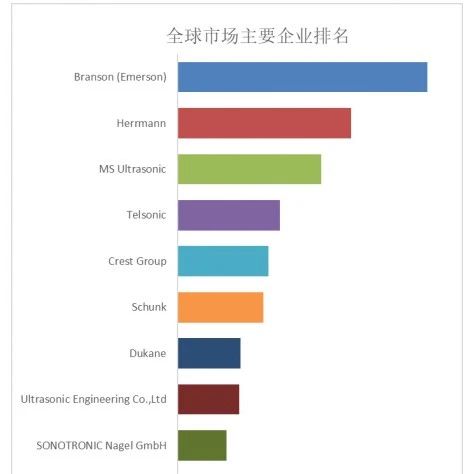
Core Viewpoint - The global ultrasonic welding machine market is projected to reach USD 1.14 billion by 2031, with a compound annual growth rate (CAGR) of 4.2% in the coming years [3]. Market Overview - The ultrasonic welding technology utilizes mechanical vibration energy at ultrasonic frequencies to create a frictional heat at the contact surfaces of two materials, typically plastics or metals, leading to a molten connection [2]. - Major manufacturers in the ultrasonic welding machine market include Branson (Emerson), Herrmann, MS Ultrasonic, Telsonic, and Crest Group, with the top ten companies holding approximately 70.0% of the market share [7]. Product Segmentation - Plastic ultrasonic welding machines represent the largest segment, accounting for about 77.4% of the market share [8]. Regional Analysis - The report emphasizes the analysis of major production and consumption regions over the past five years and forecasts for the next five years, focusing on regions such as North America, Europe, China, Japan, South Korea, and Taiwan [10]. Future Insights - QYResearch will continue to monitor industry dynamics, providing the latest and most comprehensive market analysis and trend forecasts for investors and industry professionals [11].
最高跌14.8%,7家化妆品原料巨头下滑
3 6 Ke· 2025-08-25 02:45
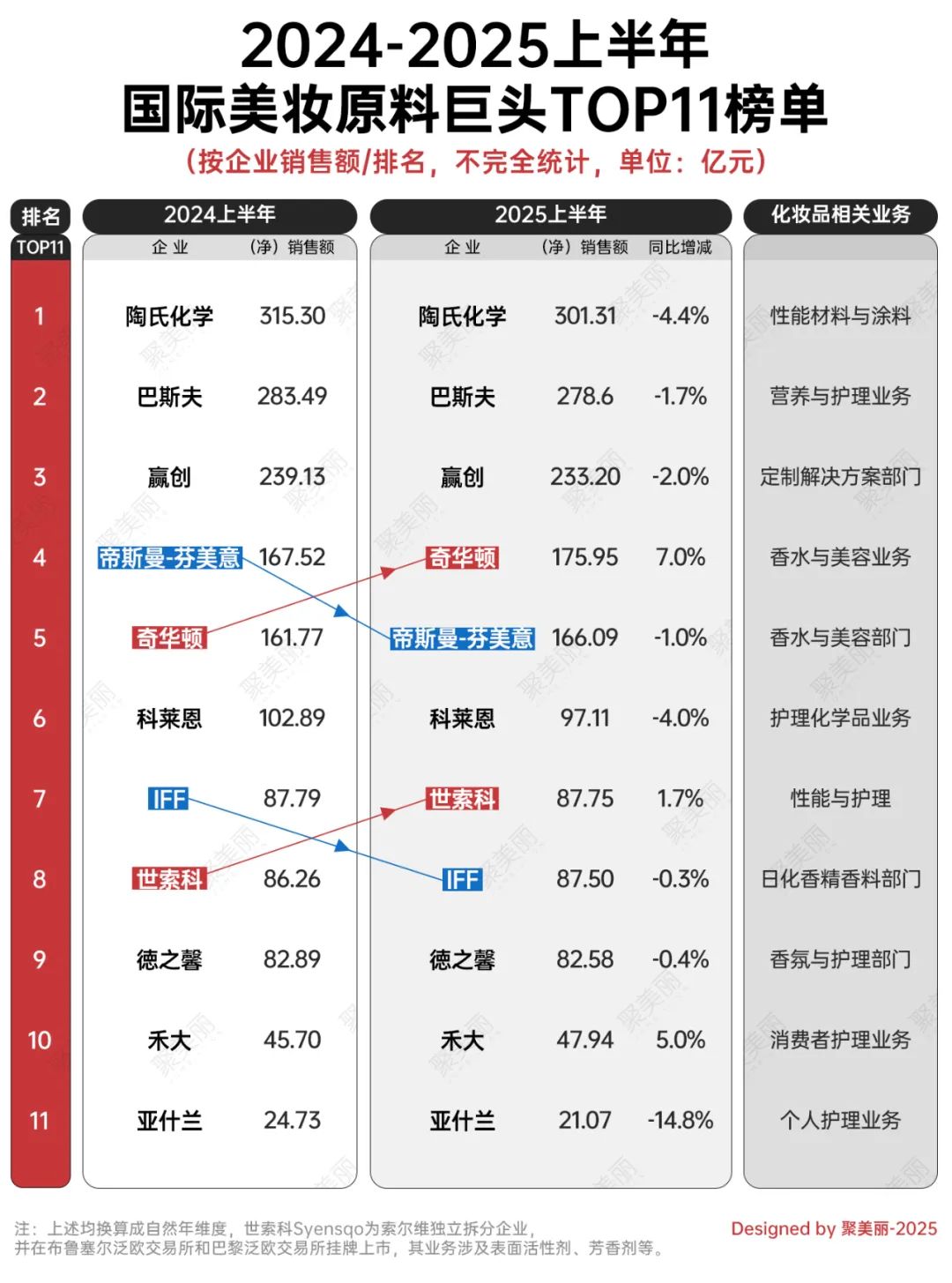
Core Insights - The global cosmetics raw materials market is experiencing intensified competition, with domestic companies beginning to change their historically weak positions [1] Group 1: Market Dynamics - International giants are responding to challenges such as the pandemic, tariff policies, and rising transportation costs through mergers, splits, and price increases [2] - The merger of DSM and Firmenich, along with Solvay's split of its cosmetics business to form Scentys, has reshuffled the rankings of the top 11 international cosmetics raw material suppliers [2][3] - Dow Chemical leads the market with a net sales of 31.53 billion yuan, followed by BASF and Evonik, with only these three companies surpassing the 20 billion yuan mark [3] Group 2: Performance Analysis - Among the top 11 suppliers, only three companies—Givaudan, DSM-Firmenich, and IFF—reported sales growth, while IFF's performance slightly declined by 0.3% [3][20] - Givaudan's fragrance and beauty segment saw a sales increase of 7% and an EBITDA rise of 5%, indicating strong performance in high-end fragrances and consumer products [7][8] - In contrast, DSM-Firmenich's fragrance and beauty segment experienced a sales drop of 1% and a significant EBITDA decline of 4%, marking the first decline since the merger [10][12] Group 3: Challenges and Strategic Adjustments - The cosmetics raw materials giants are facing a downturn in performance due to various factors, including geopolitical tensions, macroeconomic uncertainties, and increased compliance costs [43][44] - Companies are implementing strategic adjustments such as optimizing business portfolios, workforce reductions, and restructuring to enhance operational efficiency [38][40] - The market is witnessing a shift where reliance on scale-based cost advantages is becoming less sustainable, necessitating differentiation through regulatory compliance and supply chain resilience [43][44]
2025-2031年中国塑料助剂市场研究与战略咨询报告
Sou Hu Cai Jing· 2025-08-22 06:16
Core Insights - The report provides a comprehensive analysis of the plastic additives industry in China, covering market environment, competitive landscape, and future trends [2][3][4]. Industry Environment Overview - The plastic additives industry is essential for improving the processing performance and properties of polymers [2]. - The report outlines the classification, functions, and applications of plastic additives, emphasizing their cyclical, regional, and seasonal characteristics [2]. Market Environment Analysis - The regulatory framework for the plastic additives industry includes various laws and standards that govern production and environmental impact [3]. - The industry is experiencing a shift towards greener additives, focusing on sustainable sourcing and production processes [3]. Competitive Landscape - The report analyzes the competitive dynamics within the plastic additives market, highlighting key players and their market strategies [4][5]. - Major companies such as BASF, Dow Chemical, and Arkema are discussed in terms of their product offerings and competitive advantages [5]. Industry Trends and Forecast - The plastic additives market is projected to grow significantly, driven by increasing demand in various applications, including PVC products [6][7]. - Future trends include the development of multifunctional additives and a focus on environmental sustainability [12][13]. Investment Opportunities - The report identifies potential investment opportunities within the plastic additives sector, emphasizing the importance of innovation and market adaptation [14][15]. - It suggests that companies should focus on strategic alliances and customer management to enhance market positioning [14].