
奇瑞汽车

Search documents
“翘尾效应”失灵! 去年12月乘用车零售量同比下降14%
Mei Ri Jing Ji Xin Wen· 2026-01-12 13:10
Group 1 - The domestic passenger car market experienced a retail volume of approximately 2.261 million units in December 2025, marking a 14% year-on-year decline, the first drop in December sales in four years [1] - The decline in December 2025 sales is attributed to policy adjustments regarding vehicle replacement and trade-in subsidies, leading to increased consumer hesitation [1] - The penetration rate of new energy vehicles (NEVs) reached 59.1% in December 2025, an increase of 9.6 percentage points compared to December 2024, indicating a significant growth trend [1][2] Group 2 - In December 2025, the penetration rates for NEVs were 80.9% for domestic brands, 39.1% for luxury brands, and 8.2% for mainstream joint venture brands, showing substantial growth of around 20 percentage points for both domestic and luxury brands compared to January 2025 [2] - The total retail sales of NEVs in 2025 reached 12.809 million units, a year-on-year increase of 17.6%, with an overall penetration rate of 53.3% [2] - NEV exports approached half of total passenger car exports, with 273,000 NEVs exported in December 2025, representing a 119.8% year-on-year increase [2][3] Group 3 - The overall domestic passenger car market for 2025 recorded a cumulative retail volume of approximately 23.744 million units, reflecting a 3.8% year-on-year growth, the lowest growth rate in the past three years [4] - The decline in sales during the fourth quarter of 2025 is attributed to the temporary delay in consumer purchases due to the phased reduction of trade-in and scrappage policies [4] - The 2026 market is expected to stabilize with early implementation of trade-in policies, potentially leading to a strong start in January 2026 [4][5] Group 4 - The 2026 market is anticipated to show a "U-shaped" trend with overall sales expected to remain flat compared to 2025, while exports are projected to maintain a growth rate of over 10% [5] - The market for high-end NEVs and fuel vehicles, particularly those priced above 200,000 yuan, is expected to perform well in 2026 [5] - Price competition will remain a critical factor in the automotive market in 2026, with cautious expectations for the growth of pure electric vehicle exports [5]
【环球财经】抑价提质 中国品牌改写埃及汽车市场格局
Xin Hua She· 2026-01-12 12:57
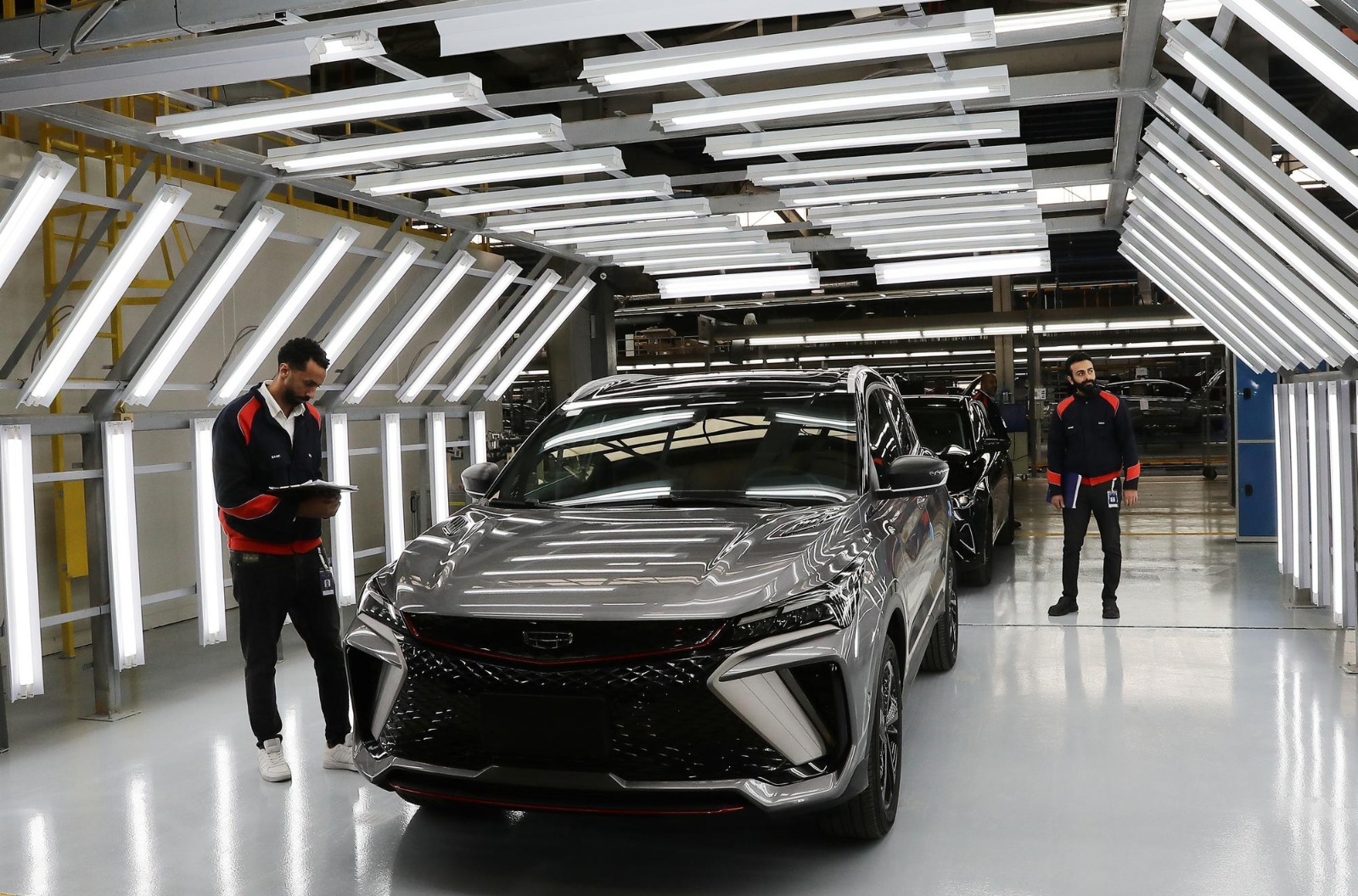
Core Insights - The Egyptian automotive market is experiencing significant changes, with improved supply and more affordable prices, allowing more families to purchase new cars. Chinese automotive brands are playing a crucial role in this positive shift [1][4]. Group 1: Market Dynamics - Since 2000, several Chinese automotive companies have achieved local production in Egypt. According to the Egyptian Automobile Dealers Association, sales of Chinese brand passenger cars are expected to reach 30,441 units in 2024, marking a year-on-year increase of 37.3% [2]. - The majority of the 18 new models launched by Chinese brands are priced below 1.5 million Egyptian pounds (approximately 230,000 RMB), which is within the acceptable price range for Egyptian consumers [3]. - The Egyptian automotive market is characterized by a large potential consumer base due to its population of over 100 million, with a high proportion of young people and a relatively low car ownership rate, indicating significant demand for first-time purchases and upgrades [3]. Group 2: Economic Factors - The Egyptian economy has faced foreign exchange shortages, leading to restrictions on car imports and resulting in high prices and limited supply. However, the market is now transitioning, with car prices gradually decreasing due to increased competition and local assembly [4]. - The strengthening of the Egyptian pound, increased local production, and reduced shipping costs are contributing factors to the declining car prices, which are expected to continue at least until 2026 [4]. - The number of foreign automotive manufacturers investing in Egypt is increasing, with at least five new assembly plants announced within seven months [4]. Group 3: Local Assembly and Tariffs - The local assembly of vehicles significantly reduces costs, as completely built units (CBU) face high tariffs ranging from 40% to 135%, while local assembly can lower tariffs to between 7% and 9% [7][8]. - The Egyptian government initiated a national automotive industry development plan in 2022, aiming to promote local assembly and enhance the automotive parts industry, ultimately establishing Egypt as a regional automotive production and export hub [9]. Group 4: Future Outlook - Chinese automotive brands are expected to thrive in the Egyptian market due to their competitive pricing and quality. There is a belief that more Chinese cars will become popular, especially those manufactured or assembled locally [11]. - Long-term success for Chinese automotive companies in Egypt will depend on investments in brand building, after-sales service, and customer-centric experiences [11].

【环球财经】抑价提质 中国品牌改写埃及汽车市场格局
Xin Hua She· 2026-01-12 12:53
Core Viewpoint - The Egyptian automotive market is experiencing significant changes, with improved supply and more affordable prices, largely due to the influence of Chinese automotive brands [1][6]. Group 1: Market Dynamics - The supply of vehicles in Egypt is increasing, leading to more reasonable pricing, making new cars accessible to ordinary families [1]. - In 2024, sales of Chinese brand vehicles in Egypt reached 30,441 units, marking a year-on-year increase of 37.3% [3]. - The introduction of 18 new models by various Chinese automakers in July 2025, primarily priced below 1.5 million EGP (approximately 230,000 RMB), caters to the Egyptian consumer market [3]. Group 2: Local Production and Economic Factors - The Egyptian automotive market is transitioning to a phase characterized by local manufacturing and healthy competition, which is beneficial for consumers and the economy [6][7]. - The local assembly of vehicles is increasing, with a reported 31.7% year-on-year growth in CKD (Completely Knocked Down) vehicles in 2024, while CBU (Completely Built Up) vehicles only grew by 5.2% [10]. - The Egyptian government has implemented a national automotive industry development plan to promote local assembly and reduce import tariffs, which can lower costs significantly [11]. Group 3: Future Outlook - The strengthening of the Egyptian pound, increased local production, and reduced shipping costs are contributing to a downward trend in car prices, expected to continue at least until 2026 [7]. - The potential for growth in the Egyptian automotive market is substantial, driven by a young population and low car ownership rates [4]. - Chinese automotive brands are encouraged to invest in brand building, after-sales service, and customer-centric experiences to achieve greater market penetration in Egypt [13].




“果链一哥”决战AI时代:拿下苹果1900亿订单的立讯精密,还能再造一个自己吗?
Xin Lang Cai Jing· 2026-01-12 12:29
Core Viewpoint - Luxshare Precision has achieved significant growth and diversification in its business model, transitioning from a pure OEM/ODM manufacturer to a comprehensive provider of smart solutions in consumer electronics, automotive electronics, and communication sectors, while facing challenges in profitability and cash flow management due to rising debt levels and declining margins [1][3][32]. Group 1: Business Growth and Diversification - Luxshare Precision has expanded its business through both organic growth and acquisitions, becoming a major player in the consumer electronics sector with a projected revenue of 2688 billion yuan in 2024, largely driven by orders from Apple [1][4]. - The company has successfully extended its operations into the communication and automotive electronics sectors, achieving a combined revenue of 321.2 billion yuan in 2024, marking a 20.8-fold increase since 2015 [22][24]. - Luxshare's product offerings have diversified to over 500 types, with a global presence in 29 countries and a significant share in the EMS market, ranking second globally [3][4]. Group 2: Financial Performance and Challenges - Despite substantial revenue growth, Luxshare's profitability has been under pressure, with gross margins declining from 23% in 2015 to 9.1% in 2024, and net profit margins also decreasing [18][39]. - The company's asset-liability ratio has increased to 62% by 2024, up from below 50% prior to 2021, indicating rising financial leverage [36][37]. - Cash flow management has become increasingly challenging, with investment cash outflows reaching 969.13 billion yuan in 2024, necessitating significant borrowing to cover operational costs [41][43]. Group 3: Strategic Investments and Future Outlook - Luxshare is investing heavily in robotics and semiconductor sectors, aiming to establish a "third growth curve" alongside its existing business lines [27][31]. - The company has made strategic acquisitions in the semiconductor field to reduce dependency on external suppliers and enhance its manufacturing capabilities [31][32]. - Future growth will depend on the successful integration of new technologies and maintaining competitive advantages in a rapidly evolving market landscape [26][30].


崔东树:锂电池出口退税对供需影响不大
Zhi Tong Cai Jing· 2026-01-12 12:17
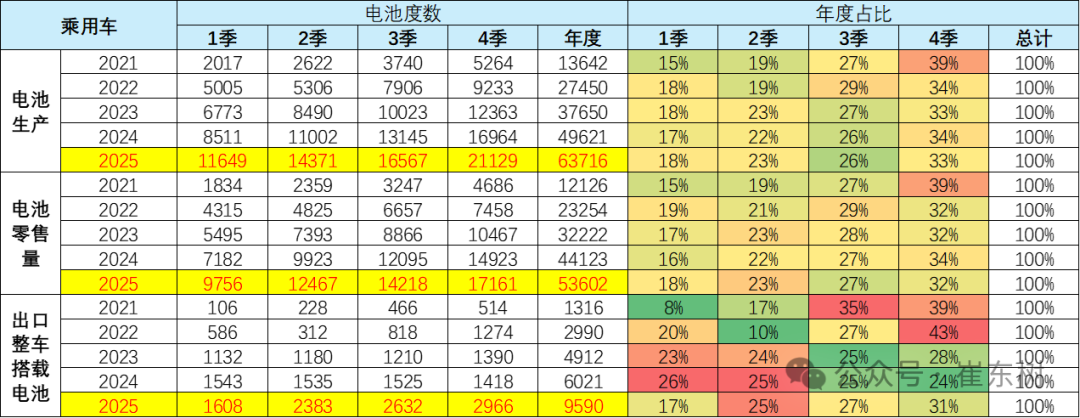
Core Viewpoint - The Ministry of Finance and the State Taxation Administration announced the cancellation of VAT export rebates for photovoltaic products, including lithium batteries, effective January 8, 2026. This move aims to align export prices with market supply and demand, reduce the phenomenon of "subsidizing overseas consumers," and address international concerns to ease trade frictions [1]. Group 1: Lithium Battery Demand Analysis - The overall demand for lithium batteries in passenger vehicles is projected to continue growing, although the expected explosive growth is not as pronounced. December saw a month-on-month decline of 5% in production, indicating lower-than-expected demand for lithium batteries [5][6]. - In December, the production of lithium batteries for new energy passenger vehicles reached 6,916 million degrees, a year-on-year increase of 20%, but a month-on-month decrease of 5%. The total for the year was 63,608 million degrees, reflecting a 29% increase [6]. - Retail demand for lithium batteries in new energy passenger vehicles showed significant weakness in December, with only 6,059 million degrees sold, indicating a slowdown in demand growth [9][10]. Group 2: Export Trends - The export of lithium batteries for new energy passenger vehicles has shown strong growth, primarily driven by BYD's contributions. However, the demand for batteries from independent suppliers remains limited [3][14]. - The export of lithium batteries is expected to face challenges, with a significant decline in exports to the U.S. projected for 2025, down 9.5 percentage points compared to 2024. The EU remains the primary market, accounting for about 40% of exports [20]. - In 2024, the export of lithium batteries is anticipated to be impacted by EU sanctions and tariffs, leading to a reduction in demand [14][20]. Group 3: Market Dynamics - The adjustment in export tax rebates is seen as a strategic move to stabilize the market and reduce speculation in lithium carbonate prices, particularly as the first quarter typically sees lower domestic demand for lithium batteries [1]. - The overall structure of lithium battery exports is shifting, with a notable decrease in exports to the U.S. and an increase in exports to the EU and Southeast Asia [20]. - The domestic demand for lithium batteries is expected to remain weak in the first quarter of 2026, with production adjustments likely necessary to align with fluctuating demand [3][18].
联检科技:汽车检测资质持续拓展,积极提升经营业绩
2 1 Shi Ji Jing Ji Bao Dao· 2026-01-12 11:19
Core Viewpoint - The company, Lianjian Technology, has significantly expanded its third-party testing qualifications for major automotive manufacturers, enhancing its market penetration and operational performance in the automotive testing business [1] Group 1: Company Developments - The subsidiary, Guanbiao Testing, has obtained third-party testing qualifications from major automotive companies including Jianghuai Automobile, Geely Automobile, Leap Motor, and Chery Automobile [1] - The company has also expanded its recognition capabilities to include traditional and new energy vehicle manufacturers such as General Motors, Volkswagen, NIO, and Li Auto [1] Group 2: Market Impact - The newly acquired qualifications are expected to strengthen order conversion and market penetration for the company's automotive testing services [1] - The company aims to accelerate the release of qualification effectiveness to improve its operational performance in the automotive testing sector [1]
上汽集团总裁贾健旭拜访华为任正非,商讨尚界品牌合作再深化
Sou Hu Cai Jing· 2026-01-12 10:32
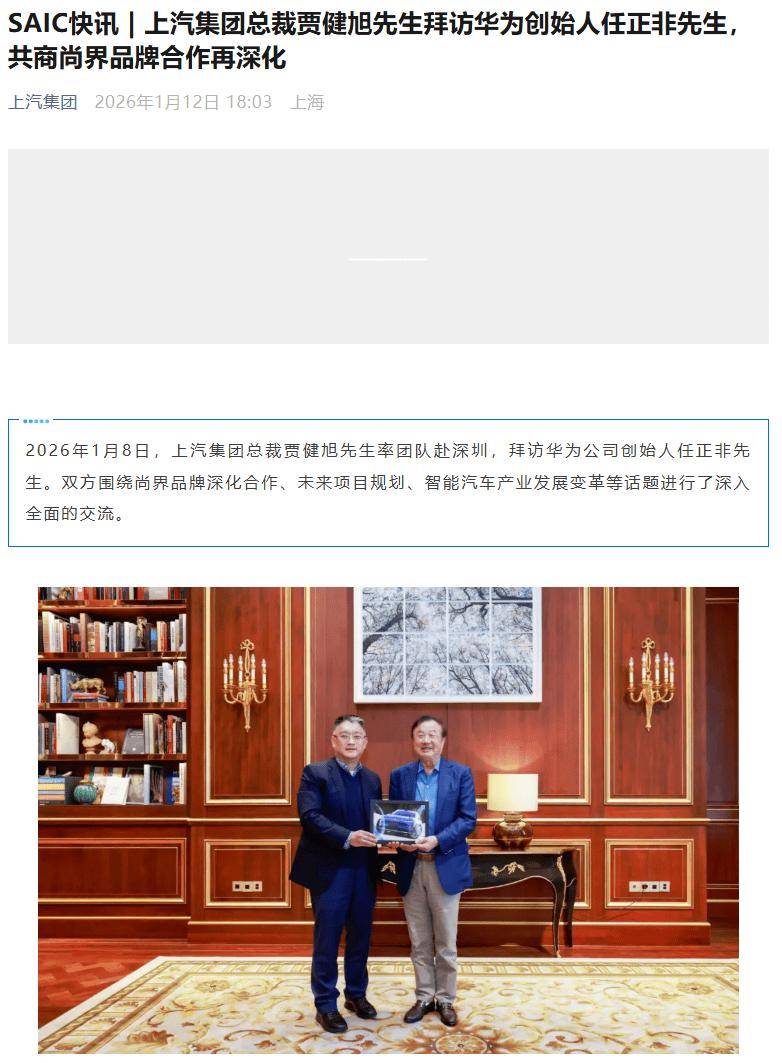
Group 1 - SAIC Group's President Jia Jianxu visited Huawei's founder Ren Zhengfei on January 8, 2026, to discuss deepening cooperation on the Shangjie brand and future project planning in the smart automotive industry [1] - Both companies aim to explore broader cooperation opportunities and jointly promote the upward development of the Shangjie brand [4] - On January 5, executives from Jiangqi Group also visited Ren Zhengfei to discuss trends in the intelligent transformation of the automotive industry and future project plans [5] Group 2 - In 2025, executives from several automotive companies, including Xpeng Motors, GAC Group, Changan Automobile, Dongfeng Motor, and Chery Automobile, also visited Ren Zhengfei [5]

港股汽车股持续疲弱
Cai Jing Wang· 2026-01-12 09:38
1月12日,港股汽车股持续疲弱,其中,吉利汽车、零跑汽车跌超3%,广汽集团跌2.8%,理想汽车、小 鹏汽车跌超2%,长城汽车、蔚来汽车、赛力斯、奇瑞汽车均有跌幅。(新浪财经) 作者丨彭鑫 编辑丨安安 ...


【月度排名】2025年12月厂商销量排名快报
乘联分会· 2026-01-12 09:28
Core Viewpoint - The article highlights the performance of the Chinese automotive market in December 2025, noting a decline in retail sales for traditional vehicles while emphasizing growth in the new energy vehicle (NEV) sector and exports. The market is expected to transition into 2026 with a focus on new energy vehicles and a recovery in demand [4]. Sales Performance - In December 2025, the domestic narrow passenger car market retail sales reached 2.261 million units, a year-on-year decrease of 14.0% but a month-on-month increase of 1.6%. Cumulative sales for the year totaled 23.744 million units, reflecting a year-on-year growth of 3.8% [2]. - The wholesale sales ranking for December 2025 shows BYD leading with 414,784 units sold, followed by Geely and Chery with 236,817 and 234,736 units, respectively. Notably, BYD's sales decreased by 12.7% month-on-month and 18.6% year-on-year [5]. - For the entire year of 2025, BYD also topped the wholesale sales with 4.545 million units, marking a 6.9% increase year-on-year, while Geely's sales surged by 39.0% to 3.025 million units [6]. New Energy Vehicle Market - In December 2025, the NEV wholesale sales ranking was led by BYD with 414,784 units, despite a month-on-month decline of 12.7% and a year-on-year drop of 18.6%. Geely followed with 154,264 units, showing a year-on-year increase of 38.7% [9]. - The retail sales for NEVs in December 2025 also saw BYD at the forefront with 339,854 units sold, a month-on-month increase of 10.9% but a year-on-year decrease of 15.7% [13]. - For the full year, BYD maintained its dominance in the NEV sector with 3.485 million units sold, although this represented a year-on-year decline of 6.3% [14]. Market Trends and Future Outlook - The article notes that the end of the year typically sees a surge in vehicle purchases, but the depletion of subsidy funds across provinces has tempered this effect, leading to a more stable demand outlook heading into 2026 [4]. - The performance of various manufacturers indicates a competitive landscape, with traditional automakers facing challenges while NEV manufacturers like BYD and Geely continue to show resilience and growth potential [6][9].



整车主线周报:12月新能源批发符合预期,看好26年景气度向上-20260112
Soochow Securities· 2026-01-12 09:10
Investment Rating - The industry investment rating is "Overweight," indicating an expected outperformance of the industry index relative to the benchmark by more than 5% over the next six months [33]. Core Insights - The report highlights a positive outlook for the passenger vehicle sector, anticipating a recovery in demand in Q1 2026 due to the implementation of subsidy policies. Key players include Jianghuai Automobile, Geely, Great Wall Motors, and BYD, focusing on high-end electric vehicles and established export leaders [23][24]. - The heavy truck segment is projected to see a slight increase in domestic sales in 2026, with expectations of 800,000 to 850,000 units sold, reflecting a 3% year-on-year growth. Recommended companies include China National Heavy Duty Truck Group and Weichai Power [28]. - The bus market is expected to benefit from the continuation of subsidy policies, with a conservative estimate of 40,000 units sold in 2026, representing a 5% increase year-on-year. Key recommendations include Yutong Bus and King Long [27]. - The motorcycle sector is forecasted to grow by 14% in total sales in 2026, with a significant increase in large-displacement motorcycles. Recommended companies include Chunfeng Power and Longxin General [24]. Summary by Sections Passenger Vehicles - The report emphasizes a recovery in the passenger vehicle market in Q1 2026, driven by subsidy policies. Key stocks to watch include Jianghuai Automobile and Geely, with a focus on high-end electric vehicles [23][24]. Heavy Trucks - In 2025, heavy truck wholesale sales reached 1.14 million units, a 26% increase year-on-year. The report forecasts 800,000 to 850,000 units for 2026, with a 3% growth expectation. Recommended companies include China National Heavy Duty Truck Group and Weichai Power [28]. Buses - The bus market is projected to see a slight increase in sales due to favorable policies, with an expected 40,000 units sold in 2026. Key recommendations include Yutong Bus and King Long [27]. Motorcycles - The motorcycle industry is expected to grow by 14% in 2026, with large-displacement motorcycles seeing a 31% increase. Recommended companies include Chunfeng Power and Longxin General [24].