
联发科

Search documents
全球首款2nm芯片已启动量产!
国芯网· 2025-10-02 05:07
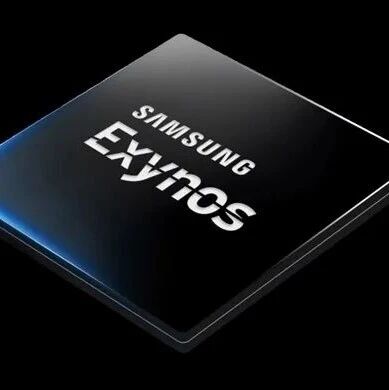
Core Viewpoint - The global first 2nm chip, Samsung's Exynos 2600, has begun mass production, with the first wafers already in use [1]. Group 1: Product Development - The Exynos 2600 has already reached the "Fab-out" stage, indicating it is moving into backend testing and packaging, with commercial use expected in the new Galaxy S26 series by the end of the year [2]. - The Exynos 2600 features a 1+3+6 core design, with the latest large core clocked at 3.8GHz, large cores at 3.26GHz, and small cores at 2.76GHz [2]. Group 2: Market Position - Samsung will not fully revert to self-developed chips; instead, the Qualcomm Snapdragon 8 Gen 2 will remain the primary supply for most regions, with Exynos 2600 only used in select markets [2]. - Previous Exynos 2500 faced delays and performance issues, launching over a year late and underperforming compared to competitors, which raises expectations for the Exynos 2600 to redeem the brand [4].

美股异动|Arm Holdings股价连涨三日高通胜诉助力股价飙升6.28%
Xin Lang Cai Jing· 2025-10-01 22:48
Core Insights - Arm Holdings experienced a significant stock price increase of 6.28% on October 1, marking the third consecutive day of gains, with a cumulative rise of 7.71% [1] - The recent legal victory for Qualcomm against Arm regarding licensing agreements has profound implications for Arm, allowing Qualcomm to continue using Arm's architecture without additional licensing fees [1] - Qualcomm's new flagship chip, based on Arm's ninth-generation architecture v9, focuses on enhancing AI performance, indicating potential for increased licensing revenue for Arm [1] Industry Position - Despite challenges from emerging competitors like RISC-V, Arm maintains its industry leadership due to its mature technology and ecosystem [2] - Qualcomm's continued adoption of Arm architecture, despite some in-house designs, reaffirms Arm's technological strength [2] - Arm's ongoing investments in AI and high-performance computing, along with strengthened partnerships with major players like Qualcomm, may provide long-term growth momentum [2]

2025 I.S.E.S. 中国峰会圆满举行:以创新与协作,共绘半导体产业新蓝图 (首日)
半导体芯闻· 2025-09-30 10:24
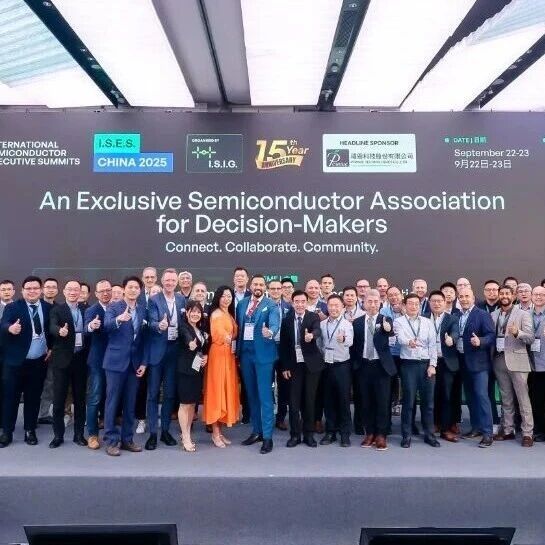
Core Insights - The International Semiconductor Executive Summit (I.S.E.S. China 2025) held in Shanghai gathered global semiconductor leaders and Chinese industry elites to discuss the future of the semiconductor industry and foster collaboration [1][2]. Group 1: Industry Trends and Challenges - The summit emphasized the importance of building a global communication bridge in the semiconductor industry, especially amidst complex geopolitical challenges [2][4]. - The rise of China's semiconductor equipment industry was highlighted, showcasing local achievements and future goals [6]. - The global semiconductor industry faces fragmentation risks due to geopolitical tensions, which could lead to increased costs and challenges in maintaining a cooperative global supply chain [7]. Group 2: Opportunities in AI and Market Expansion - AI's rapid adoption presents both opportunities and challenges for China, which could become a significant player in the AI field, despite current dependencies on U.S. technology [7]. - The summit discussed the potential for Chinese semiconductor companies to expand into the Middle East markets, which are characterized by ample funding and strong development intentions [4]. Group 3: Automotive Semiconductor Innovations - The summit featured discussions on the transformation of the automotive industry through semiconductor technology, focusing on trends in electric and intelligent vehicles [11][13]. - Bosch's advancements in silicon carbide (SiC) technology were showcased, with over 42 million SiC MOSFETs delivered to leading Chinese automakers, indicating a strong push for green energy solutions in the automotive sector [15]. - The importance of reliability and quality standards for automotive-grade chips was a key topic, with various experts discussing strategies to overcome challenges in this area [19]. Group 4: Future Directions and Innovations - The summit explored the evolution of power semiconductor technologies, including SiC and gallium nitride (GaN), and their implications for electric vehicles and industrial systems [21][22]. - The market outlook for semiconductors was optimistic, with projections indicating that the semiconductor market could reach $1 trillion by 2030, driven by innovations in GaN technology [34]. Group 5: I.S.I.G. and Industry Collaboration - I.S.I.G. aims to create a global collaboration platform for the semiconductor industry, facilitating connections among industry leaders, government agencies, and academic experts to address challenges and seize opportunities [43][44]. - The organization has gathered over 230 member companies, forming a robust ecosystem that spans the semiconductor supply chain [44].
手机总弹系统更新,谷歌准备出手解决这个麻烦
3 6 Ke· 2025-09-29 23:17
Core Viewpoint - Google is planning to introduce a "Risk-Based Update System" (RBUS) for the Android operating system to reduce the frequency of system update prompts for users while focusing on high-risk vulnerabilities [1][3]. Group 1: RBUS Implementation - The primary goal of RBUS is to change the Android security update mechanism, limiting monthly updates to only high-risk vulnerabilities, while medium and low-risk vulnerabilities will be addressed in quarterly updates, marking a significant shift in Android's security strategy over the past decade [3][11]. - Google has consistently released monthly security updates since 2015, with the latest update fixing 84 vulnerabilities, including two actively exploited zero-day vulnerabilities [3][11]. Group 2: User Experience and OEM Pressure - While the monthly security updates enhance device reliability, frequent prompts for updates can frustrate users, especially in an era where smartphones are integral to daily life [5][7]. - The introduction of RBUS aims to alleviate pressure on OEM partners, encouraging them to prioritize system security updates, as many manufacturers have previously neglected timely updates, contributing to malware proliferation in the Android ecosystem [7][9]. Group 3: Technical Challenges and Solutions - The fragmentation of the Android ecosystem complicates the update process, with various manufacturers and chip suppliers involved, leading many to only update flagship products [9][10]. - Google has previously attempted to address these challenges with initiatives like Project Treble and Project Mainline, which aimed to simplify the update process but have not fully resolved the issue of frequent security patch updates [9][10]. Group 4: Security Implications of RBUS - RBUS may reduce the number of security patches that OEMs need to handle each month, thereby decreasing their testing and release pressures [10][11]. - However, this approach raises concerns that it could lead to a deterioration of Android's overall security posture, as only actively exploited vulnerabilities will be prioritized, potentially leaving other known vulnerabilities unaddressed [10][11][13].


高通芯片,放弃三星代工?
半导体芯闻· 2025-09-29 09:45
Core Viewpoint - Qualcomm is transitioning to TSMC's advanced 2nm N2P process for its Snapdragon 8 Elite Gen 6 and Gen 7 chipsets, moving away from the 3nm process, which indicates a significant investment in manufacturing technology [1][2]. Group 1: Technology Transition - Snapdragon 8 Elite Gen 5 is the last flagship chipset made using the 3nm process, with future models adopting the 2nm N2P process [1]. - TSMC's 2nm N2P architecture offers a 5% performance boost or a 5% reduction in power consumption at the same clock speed compared to the previous generation [2]. Group 2: Strategic Partnerships - There is uncertainty regarding Qualcomm's potential collaboration with Samsung for utilizing its 2nm GAA process, which could provide Qualcomm with better negotiation leverage for wafer pricing [2]. - Qualcomm and MediaTek reportedly paid up to 24% more for 3nm wafers, highlighting the need for a dual-sourcing strategy to mitigate rising costs as TSMC is expected to increase prices for 2nm wafers by 50% [2]. Group 3: Future Outlook - Qualcomm's strategy appears to focus on maximizing performance through increased core frequency while maintaining efficiency with the new N2P process [2]. - Samsung has completed the foundational design for its second-generation 2nm GAA process, indicating potential future opportunities for Qualcomm to collaborate with Samsung [2].


具身AI开启4020亿美元市场机遇!瑞银详解“Beyond AI”投资策略
智通财经网· 2025-09-29 08:28
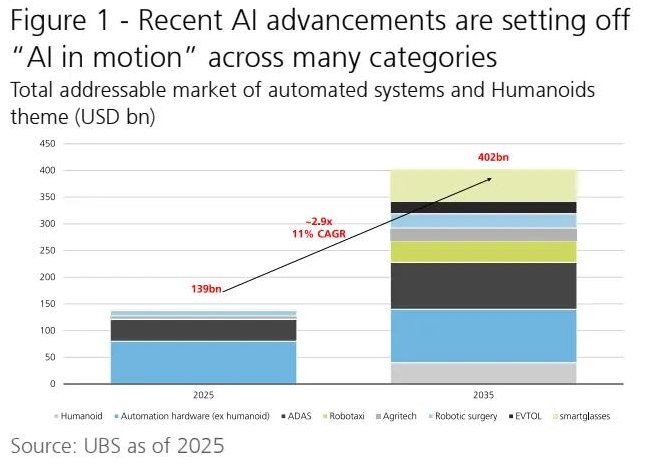
Core Insights - UBS reports that artificial intelligence (AI) is driving significant advancements in autonomous systems, including humanoid robots, advanced driver-assistance systems (ADAS), and robotaxis, transforming traditional industries such as aerospace, agriculture, smart glasses, and healthcare [1][17] - The emergence of visual-language-action (VLA) models represents a transformative turning point for robots and ADAS, enabling systems to convert sensory inputs and natural language commands directly into actions [1][17] Market Opportunities - UBS estimates that market opportunities driven by embodied AI verticals will reach $402 billion, with the highest growth potential in humanoid robots, ADAS, robotaxis, industrial automation, agricultural technology, smart glasses, robotic surgery, and drones [2][19] - The total addressable market (TAM) for humanoid robots is projected to reach $40 billion by 2035, while the TAM for automation hardware is expected to hit $100 billion, and ADAS (including fully autonomous driving) is forecasted to reach $88 billion [2][6] Growth Projections - The global TAM for robot taxis is estimated at $40 billion, with a compound annual growth rate (CAGR) of 11% over the next decade [2] - The agricultural technology, robotic surgery, electric vertical takeoff and landing (EVTOL), and smart glasses sectors are expected to grow at a CAGR of 23%, reaching a TAM of $134 billion by 2035 [2] Technological Advancements - AI advancements are catalyzing the development of autonomous systems, with significant breakthroughs in processing power and AI capabilities [5] - The integration of electrification is driving the revenue pool for private car ADAS, projected to reach $88 billion by 2035, primarily fueled by China's 50% penetration rate of electric vehicles [6] Humanoid Robots - By 2035, the number of humanoid robots is expected to exceed 2 million units, with a corresponding TAM of $40 billion, and by 2050, this could grow to over 300 million units, with a TAM of $1.4 to $1.7 trillion [7] - Humanoid robots are anticipated to operate independently and will be utilized in various sectors, including manufacturing, logistics, and healthcare [7] Supply Chain Dynamics - The supply chain for autonomous systems is characterized by overlapping hardware and software dependencies, necessitating a regulatory framework to maximize commercialization [5][8] - The demand for high-performance chips, power management chips, motion control chips, and communication ICs is expected to rise due to the application of VLA technology in ADAS and humanoid robots [8][9] Semiconductor Opportunities - The semiconductor industry is poised to benefit significantly from the computational demands of humanoid robots, with each high-end humanoid robot requiring approximately $1,400 worth of semiconductors [9] Smart Glasses Market - The smart glasses market is expected to enter a new phase by 2025, with an estimated market size of $1 billion, projected to grow to $60 billion by 2035, driven by technological maturity and increased consumer interest [12] Agricultural Innovations - AI and autonomous machinery are essential for increasing agricultural productivity, with the need to boost food production by 60% by 2050 to meet global demand [13] Robotic Surgery Advancements - The use of robotic surgery is expanding across various medical fields, with a projected shipment of 6,200 new medical robots in 2024, reflecting a 36% year-on-year growth [14]
电子行业周报:AI服务器+智能手机需求爆发推动NANDFlash价格上扬-20250929
Shanghai Aijian Securities· 2025-09-29 07:44
Investment Rating - The electronic industry is rated as "Outperform" compared to the market [1] Core Insights - The demand for NAND Flash is expected to surge due to the increasing needs from AI servers and the latest smartphone models, particularly with the iPhone upgrading its minimum storage capacity from 128GB to 256GB [2][5] - The NAND Flash market is projected to experience significant price increases of 15%-20% in Q4 2025, breaking the traditional year-end price decline [5][11] - The market size for NAND Flash is anticipated to reach $38.73 billion in 2023 and $65.64 billion in 2024, driven by supply-demand balance improvements and high-capacity storage needs from AI servers and data centers [11][12] Summary by Sections NAND Flash Market Overview - NAND Flash is a non-volatile memory technology primarily used for data storage, offering advantages over DRAM and SRAM in terms of data retention and cost [6][9] - The NAND Flash market is characterized by a fluctuating growth trend, with major manufacturers reducing production to improve supply-demand balance [11][12] Price Trends and Market Dynamics - As of September 22, 2025, the prices for various NAND Flash products are as follows: MLC 256GB at $12.20, MLC 128GB at $9.45, SLC 16GB at $9.94, and SLC 8GB at $3.47 [5][11] - The top five companies in the NAND Flash market by market share in Q2 2025 are Samsung (32.9%), SK Group (21.1%), Kioxia (13.5%), Micron (13.3%), and SanDisk (12.0%) [12] Company Spotlight: Jiangbo Long - Jiangbo Long is recognized as a leading semiconductor storage brand, providing high-end, flexible, and efficient customized services, with a focus on NAND Flash and DRAM products [21][22] - The company's revenue grew from 7.276 billion yuan in 2020 to 17.464 billion yuan in 2024, with a compound annual growth rate of 24.47% [22][30] - Jiangbo Long's product offerings include embedded storage, solid-state drives, mobile storage, and memory modules, with embedded storage being the core product [27][30] Recent Developments in the Industry - The electronic industry index increased by 3.51% in the week of September 22-26, 2025, outperforming the Shanghai Composite Index, which rose by 1.07% [2][46] - The semiconductor equipment sector has shown strong performance, with a 15.56% increase in the semiconductor equipment index [2][50]
库克保住最后脸面:苹果A19芯片,单核性能,排在全球第一
Sou Hu Cai Jing· 2025-09-29 04:41
Core Insights - Apple's A-series chips, once leading the market, have seen a decline in performance compared to competitors like Qualcomm and MediaTek [1][3][5] - The A19 chip, while strong in single-core performance, struggles in multi-core performance against rival chips [5][8][10] Performance Comparison - The A19 chip has a single-core score of 5,177, outperforming many Intel and AMD chips, as well as Apple's own M-series chips [7][8] - In multi-core performance, the A19 scores below 15,000, significantly trailing behind Intel's top CPUs, which can reach nearly 200,000 [10] Market Position - The A19's performance is now on par with MediaTek's Dimensity 9500 but cannot compete with Qualcomm's Snapdragon 8 Elite Gen 5 [5][6] - The decline in A-series chip performance is attributed to Apple's focus on developing M-series and modem chips, leading to a dilution of resources [3][5]


小米15周年,豪赌与耐心
3 6 Ke· 2025-09-29 04:22
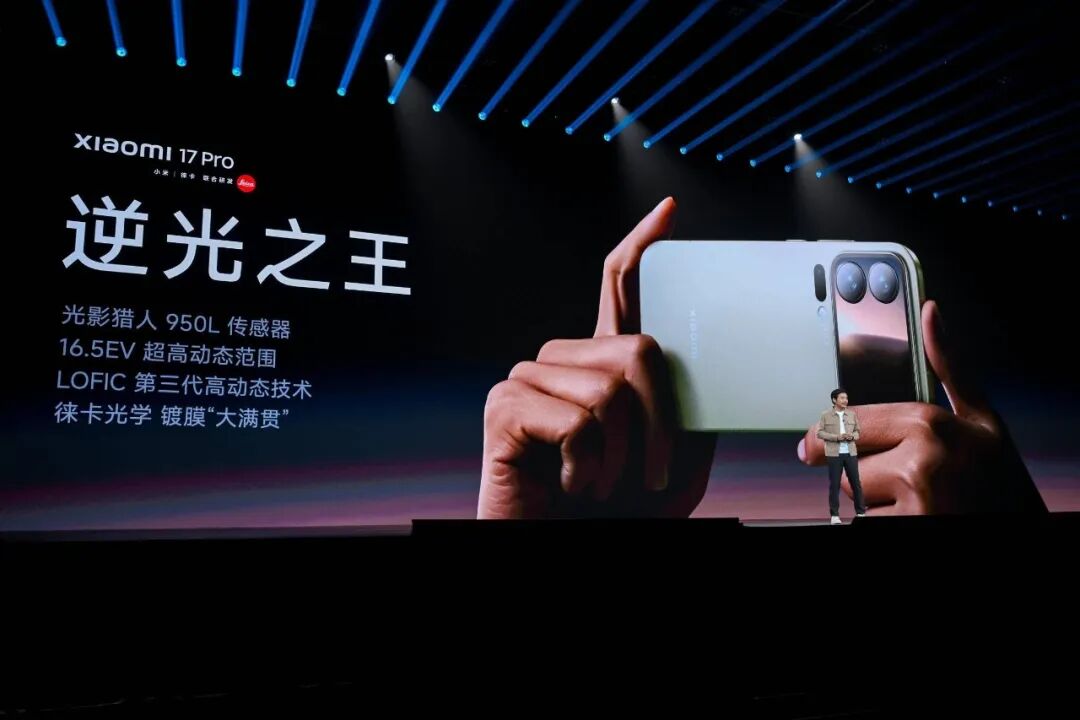
Core Insights - The core theme of the recent speech by Xiaomi's founder Lei Jun is "change," highlighting the company's transformation from an internet company to a hard-tech company, as well as its high-end strategy advancement [1] Product Launch and Pricing - Xiaomi introduced the 17 series smartphones, customized automotive services, and various new products such as TVs, washing machines, routers, and speakers, with noticeable price increases [3] - The starting price for the automotive customization service is 100,000 yuan, targeting high-end models like YU7 Max and SU7 Ultra [3] - The new router is priced at 1,699 yuan and the speaker at 1,999 yuan, exceeding traditional Xiaomi user price expectations [3] Competitive Positioning - Lei Jun emphasized that Xiaomi's standard version of the 17 series is designed to be comparable to the iPhone 17 Pro, showcasing a commitment to high performance [4] - Xiaomi 17 features aggressive specifications, including a 7,000mAh battery, which is nearly double the iPhone 17's 3,692mAh, offering a battery life of 22.1 hours, surpassing the iPhone by 11.5 hours [9] Technological Advancements - The Xiaomi 17 series utilizes the fifth-generation Snapdragon 8 processor, manufactured with the latest 3nm process technology, and claims to maintain lower temperatures than the iPhone 17 during intensive use [4] - The device also features a new red-emitting material developed in collaboration with LumiBlue, which reportedly has higher luminous efficiency than the best imported materials [7] AI and User Experience - The introduction of a back screen feature allows users to set clocks and notifications, catering to the growing trend of "rear selfies" among social media users [9] - AI functionalities were mentioned briefly, focusing on AI-assisted image generation for wallpapers [10] Chip Development Strategy - Xiaomi's journey in chip development has been tumultuous, with the company previously halting its chip project in 2018 due to low sales and high R&D costs [11] - The company is now planning to release its next generation of chips, aiming for a minimum of 10 million units per generation to achieve breakeven [12] - Xiaomi will continue to collaborate with Qualcomm and MediaTek while testing its self-developed chips in suitable products [12] Long-term Vision - Lei Jun stated that developing self-made SoCs is essential for Xiaomi's success, requiring a commitment of at least ten years and an investment of 50 billion yuan [12]

抢单大战…传三星2纳米砍价 挖台积墙脚
Jing Ji Ri Bao· 2025-09-28 23:23
Core Viewpoint - The semiconductor industry is entering the 2nm process generation, with Samsung reportedly offering a price of $20,000 per wafer, significantly lower than TSMC's price of $30,000, indicating a price war to attract major clients like Nvidia, Qualcomm, and Tesla [1] Group 1: Pricing Strategy - Samsung's 2nm pricing is approximately 33% lower than TSMC's, which is seen as a strategic move to gain market share [1] - The reported price of $20,000 per wafer translates to about NT$600,000, while TSMC's price is around NT$900,000 [1] Group 2: Market Dynamics - TSMC is expected to begin mass production of its 2nm process in the second half of the year, with demand outstripping supply, leading to earlier reports of potential price increases [1] - Samsung's price cut is viewed as an attempt to secure orders from TSMC's major clients, thereby diversifying its customer base [1] Group 3: Clientele and Applications - TSMC has secured orders from major clients including Apple, AMD, MediaTek, and Qualcomm, focusing on high-performance applications such as smartphone chips and CPUs [1] - Currently, Samsung's 2nm process is primarily used for its own mobile processors, but the price reduction aims to expand its economic scale and attract external orders [1]