
迈瑞医疗

Search documents
券商2025年调研路线图揭晓 三大板块最受青睐
Zhong Guo Zheng Quan Bao· 2025-12-30 21:15
Core Insights - The overall situation of broker research coverage of A-share listed companies is becoming clearer as 2025 approaches its end, with over 2,800 companies having received broker attention, indicating that more than half of the market's listed companies have been covered [1][2] - The most focused sectors include machinery, electronics, and biomedicine, each with over 290 companies receiving broker research [1][2] Machinery Sector - A total of 329 listed companies in the machinery sector received broker research, with notable companies including Huichuan Technology, Boke Co., and Weichuang Electric, each having over 100 research visits [3] - The machinery sector index has seen a cumulative increase of nearly 42% since the beginning of 2025, ranking among the top in 31 first-level industries [3] - Investment opportunities in the machinery sector for 2026 are centered around humanoid robots, with a focus on companies entering the Tesla supply chain and domestic leading companies in the sector [4] Electronics Sector - The electronics sector has been particularly favored by institutional investors, with over 320 companies receiving broker research in 2025 [2][3] - Investment opportunities for 2026 include new technologies and demands driven by the AI innovation cycle, particularly in the storage industry, which is entering an upward cycle [5] - The demand for AI chips and high-performance storage is expected to grow, benefiting semiconductor testing equipment and related companies [5] Biomedicine Sector - The biomedicine sector has seen 296 companies receiving broker research, with companies like Maiwei Biotech and Aibo Medical being popular among brokers [3] - The cumulative increase in the biomedicine sector since 2025 has narrowed to 12.44%, ranking lower among the 31 first-level industries [3] - For 2026, the focus remains on the innovative drug industry chain, driven by strong policy support and the increasing internationalization of domestic innovative drugs [6]

券商2025年调研路线图揭晓三大板块最受青睐
Zhong Guo Zheng Quan Bao· 2025-12-30 21:11
Group 1 - The core viewpoint of the articles highlights the significant interest from brokerages in A-share listed companies, with over 2800 companies receiving brokerage research in 2025, indicating that more than half of the market's listed companies have been under brokerage attention [1][2] - The mechanical equipment, electronics, and pharmaceutical biotechnology sectors are identified as the most favored by brokerages, with over 290 companies in each sector receiving research attention [1][2] - The mechanical equipment sector is particularly noted for investment opportunities in the humanoid robot industry chain, while the electronics sector is advised to focus on new technologies and demands driven by the AI innovation cycle [3][4] Group 2 - Crystal Optoelectronics, a company in the electronics sector, has been the most favored by brokerages, receiving 175 research visits, and is part of a sector that has seen a significant price increase of nearly 42% in 2025 [1][2] - The electronics sector has over 320 companies receiving brokerage research, with notable companies like Huaqin Technology and Luxshare Precision receiving more than 140 research visits each [2] - The pharmaceutical biotechnology sector has 296 companies under brokerage research, with a cumulative increase of only 12.44% in 2025, indicating a relative underperformance compared to other sectors [3][4] Group 3 - Investment opportunities in the humanoid robot sector are expected to grow, with a focus on companies entering the Tesla supply chain and those involved in core supply chain and standardization [3] - The electronics sector is anticipated to benefit from the AI-driven demand for high-performance storage and semiconductor testing equipment, suggesting a favorable outlook for related companies [4] - The pharmaceutical sector is expected to continue focusing on innovative drug companies, supported by favorable policies and increasing international market presence, which will attract more investor attention [4]





A股分红预案密集出炉 长江电力拟派息51亿元
Zheng Quan Shi Bao· 2025-12-30 18:11
Group 1 - In December, 149 listed companies disclosed dividend plans, with a total dividend amount exceeding 67 billion yuan [1] - Changjiang Electric Power plans to distribute a cash dividend of 2.10 yuan per 10 shares, amounting to 5.1 billion yuan for over 600,000 shareholders [1] - The company's revenue for the first three quarters was 65.741 billion yuan, with a net profit of 28.193 billion yuan, indicating stable performance [1] Group 2 - The total cash dividends of A-share listed companies reached 2.61 trillion yuan in 2025, surpassing the total for 2024 and setting a historical record [2] - There is a notable increase in the number of companies participating in dividend distributions, reflecting a growing emphasis on shareholder returns [2] - The trend of companies distributing dividends multiple times within a year is increasing, showcasing the commitment of quality enterprises to provide stable returns to shareholders [2]

医药生物周报(25年第51周):因加招股书梳理,关注国内外基因检测行业的发展-20251230
Guoxin Securities· 2025-12-30 14:32
Investment Rating - The report maintains an "Outperform" rating for the pharmaceutical and biotechnology sector [5] Core Insights - The report highlights the development of the domestic and international gene testing industry, particularly focusing on the company GenePlus, which is a leading precision medicine company in gene testing [2][11] - The gene testing market is expected to grow significantly, with the multi-omics solution market projected to reach 123 billion yuan by 2030, reflecting a compound annual growth rate (CAGR) of 17.6% from 2024 to 2030 [22][25] - GenePlus has established a comprehensive capability from biomarker discovery to commercialization, leveraging its proprietary multi-omics platform and AI technology [2][11] Summary by Sections Market Performance - The overall pharmaceutical sector underperformed the market, with a 0.18% decline in the biopharmaceutical sector, while the A-share market rose by 2.17% [1] - The TTM price-to-earnings ratio for the biopharmaceutical sector is 36.95x, which is at the 78.96th percentile of its historical valuation over the past five years [1] Company Overview - GenePlus was founded in 2015 and has raised approximately 1.25 billion yuan through multiple financing rounds, with a post-financing valuation of 4.3 billion yuan as of November 2025 [2][16] - The company has developed several products, including a gene mutation detection kit for lung cancer, which received regulatory approval in 2019 [28] Financial Performance - In the first half of 2025, GenePlus reported revenues of 285 million yuan, a year-on-year increase of 12.7%, but incurred a net loss of 414 million yuan [36] - The company's gross margin improved from 42% to 68.5% due to economies of scale in clinical laboratory services [37] Product Pipeline - GenePlus offers three main solutions: precision diagnosis, drug development empowerment, and clinical research and transformation, covering various applications including tumor detection and organ transplant monitoring [18][20] - The company is developing a non-invasive monitoring product for kidney transplant damage, expected to launch in 2025, which shows high sensitivity and specificity [30] Market Trends - The report notes significant international activity in the gene testing market, with major acquisitions and partnerships indicating a growing interest in cancer diagnostics [42] - Regulatory advancements in China for tumor gene testing are anticipated to align with international standards, potentially accelerating product development and approval processes [41]
医药生物周报(25年第51周):吉因加招股书梳理,关注国内外基因检测行业的发展-20251230
Guoxin Securities· 2025-12-30 14:30
Investment Rating - The report maintains an "Outperform" rating for the pharmaceutical and biotechnology sector [5] Core Insights - The report highlights the development of the domestic and international gene testing industry, particularly focusing on the company GenePlus, which is a leading precision medicine company in gene testing [2][11] - The gene testing market is expected to grow significantly, with a compound annual growth rate (CAGR) of 14.8% from 2019 to 2024, reaching a market size of approximately 464 billion yuan by 2024 [22] - GenePlus has established a comprehensive capability from biomarker discovery to commercialization, leveraging its proprietary multi-omics platform and AI technology [2][11] Summary by Sections Market Performance - The pharmaceutical sector underperformed the overall market, with a slight decline of 0.18% in the biopharmaceutical sector, while the A-share market rose by 2.17% [1] Company Overview - GenePlus was founded in 2015 and has raised approximately 1.25 billion yuan through multiple financing rounds, with a post-investment valuation of 4.3 billion yuan after the latest round in November 2025 [2][16] - The company has developed several products, including a gene mutation detection kit for lung cancer, which received regulatory approval in 2019 [28] Financial Performance - In the first half of 2025, GenePlus achieved a revenue of 285 million yuan, representing a year-on-year growth of 12.7%, although it reported a net loss of 414 million yuan [36] - The company's gross margin improved from 42% to 68.5% due to economies of scale in clinical laboratory services [37] Product Pipeline - GenePlus offers three main solutions: precision diagnosis, drug development empowerment, and clinical research and transformation, covering various applications including tumor detection and organ transplant monitoring [18][20] - The company is developing a non-invasive monitoring product for kidney transplant damage, expected to launch in 2025, which shows high sensitivity and specificity [30] Market Trends - The report notes significant international activity in the cancer diagnostics market, with major acquisitions and partnerships indicating a growing interest in gene testing technologies [42] - Regulatory advancements in China for tumor gene testing are anticipated to align more closely with international standards, potentially accelerating product development and approval processes [41]


A股资本市场分红年终盘点:上市公司加大回报频次 分红总额再创新高
Xin Hua Cai Jing· 2025-12-30 14:00
Summary of Key Points Core Viewpoint - The A-share market in 2025 is characterized by a significant increase in cash dividends, with total dividends exceeding 2.6 trillion yuan for the first time, reflecting a trend of higher amounts, more frequent distributions, and broader coverage among companies [1][2]. Group 1: Dividend Trends - In 2025, a total of 3,766 listed companies implemented cash dividends, amounting to approximately 2.64 trillion yuan, marking a historical high [2]. - The number of companies consistently paying cash dividends for three consecutive years increased by 12% compared to 2023 [1]. - The number of companies distributing over 100 billion yuan in dividends rose from 33 in 2024 to 37 in 2025 [1][2]. Group 2: Industry Distribution - The majority of companies with dividends exceeding 100 billion yuan are concentrated in the banking, telecommunications, and oil & gas sectors [3]. - Notable companies include Industrial and Commercial Bank of China with 160.17 billion yuan, followed by China Construction Bank with 149.36 billion yuan, and Agricultural Bank of China with 126.48 billion yuan [2][3]. Group 3: Historical Growth - From 2021 to 2024, the total dividend amounts for A-share listed companies were 1.55 trillion yuan, 2.06 trillion yuan, 2.13 trillion yuan, and 2.38 trillion yuan, respectively, with a compound annual growth rate exceeding 12% [4]. Group 4: Market Dynamics - The demand for high-dividend, strong cash flow assets is increasing, driven by long-term funds entering the market and the steady improvement in corporate profitability [5]. - In the first three quarters of 2025, A-share companies achieved a revenue growth of 1.36% and a net profit growth of 5.50% [5]. Group 5: Policy and Regulation - Recent policies have aimed to enhance cash dividend mechanisms, including initiatives for multiple distributions within a year and stricter regulations on dividend payments [8][9]. - The China Securities Regulatory Commission has emphasized the importance of increasing dividends and buybacks as part of its annual priorities [8]. Group 6: Future Outlook - The ongoing reforms in the ChiNext board are expected to further support new industries and technological innovations, injecting new vitality into the dividend ecosystem [9].


医药行业2026年投资策略:创新药板块进入精选个股行情,关注出海、脑机接口、AI医疗三大方向
Southwest Securities· 2025-12-30 11:50
Core Insights - The report indicates that the innovative drug sector is entering a phase of selective stock picking in 2026, following a beta market in 2025. The A-share pharmaceutical industry has risen by 15.9% since the beginning of 2025, underperforming the CSI 300 index by 0.65 percentage points, ranking 17th among industries [2][14]. - The report highlights three key investment directions for 2026: overseas expansion of pharmaceuticals, brain-computer interfaces, and AI in healthcare [2]. Investment Strategy Overview - The innovative drug sector is expected to shift from a broad market rally to a focus on selective stocks in 2026. The average increase for 75 innovative drug sample indices in A-shares reached 54.8%, with Hong Kong's indices doubling [2]. - The report notes that as of December 5, 2025, there were 166 overseas business development (BD) projects, a significant increase from the previous year, with upfront payments reaching $6.3 billion, a growth of over 199% compared to 2024 [2]. Key Investment Directions Overseas Expansion - The report emphasizes the acceleration of Chinese innovative drugs entering international markets, with ADCs and bispecific antibodies being hot topics. The potential for GLP-1R target new drugs remains strong in areas such as long-acting formulations and oral medications [2]. Brain-Computer Interfaces - The report outlines the government's strategic push for brain-computer interfaces as a new economic growth point, with applications in medical rehabilitation for conditions like stroke and spinal cord injuries [2]. AI in Healthcare - The report discusses the establishment of clear short-term and long-term goals for AI in healthcare, covering various applications such as AI health management and clinical decision support systems [2]. Recommended Stocks - The report recommends several companies for investment, including Heng Rui Medicine (600276), BeiGene (688235), Mindray Medical (300760), and others, indicating a diversified approach across the innovative drug and medical device sectors [2].


医疗彩超行业:临床诊断的基石与智能化升级核心
Sou Hu Cai Jing· 2025-12-30 04:45
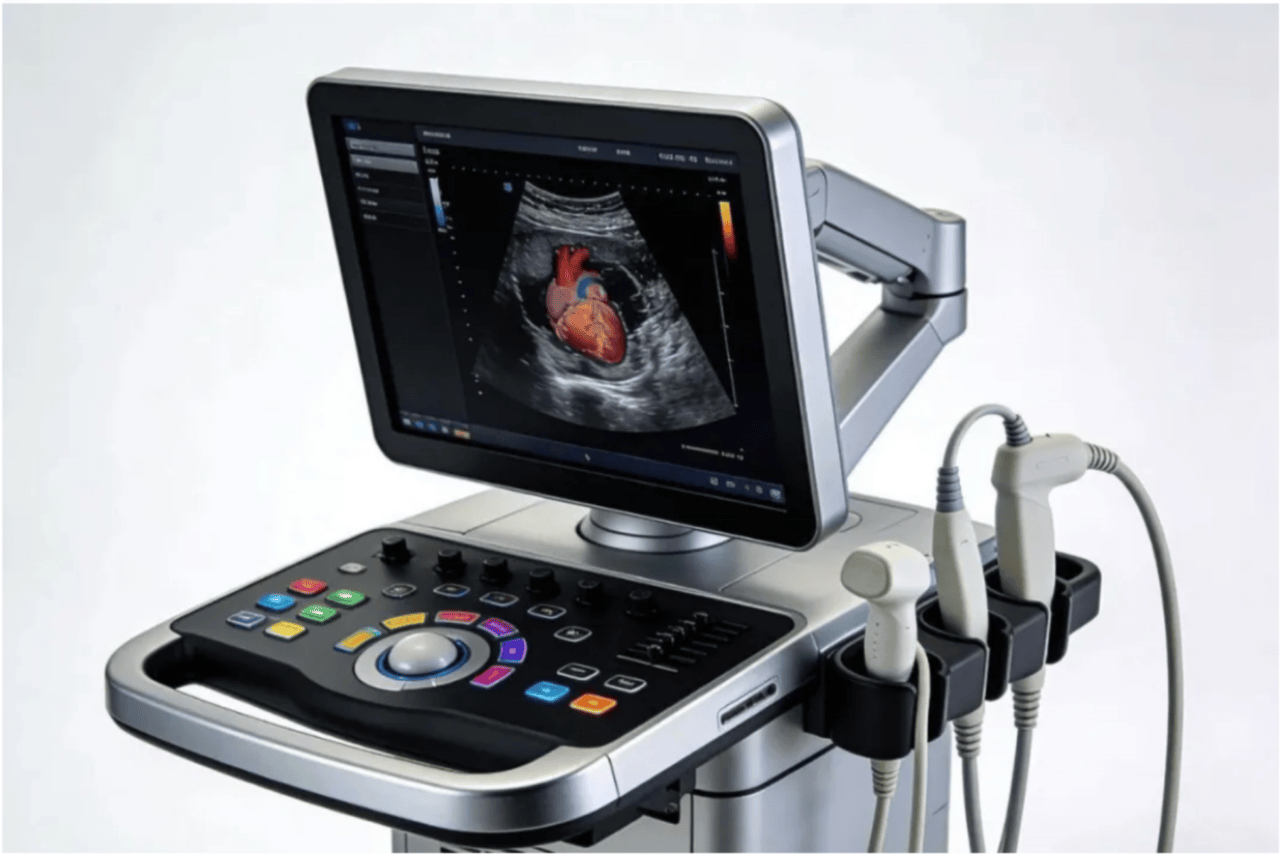
Core Insights - The medical color Doppler ultrasound equipment is a crucial imaging device used for various examinations in fields such as abdominal, cardiac, vascular, and obstetrics and gynecology [2] Market Overview - The color Doppler ultrasound category dominates the procurement of ultrasound imaging diagnostic devices, with a procurement quantity of 9,490 units from January to August 2025, accounting for 80.49% of the total quantity and 85.31% of the total value [3] - The domestic color ultrasound market is characterized by a "dual leader" pattern, with Mindray Medical and Kaidi Medical leading the domestic sector, while high-end fields remain dominated by imported brands like GE and Philips [3][11] - The domestic ultrasound market is expected to grow to 17.1 billion yuan by 2026, with a compound annual growth rate of 10.5% from 2021 to 2026 [7] Competitive Landscape - Mindray Medical holds the largest market share at approximately 25.49% for color Doppler ultrasound diagnostic devices, while Kaidi Medical has a market share of about 7.11% [11] - Imported brands still dominate high-end specialized ultrasound fields, but domestic brands are gaining ground in portable and mid-to-low-end markets [11] - The procurement of ultrasound devices in tertiary and above medical institutions accounted for 40.51% of the total quantity and 52.49% of the total value, with a median price of 1.0838 million yuan [7] Technological Trends - The development of ultrasound technology is moving towards 3D/4D imaging, AI-assisted diagnosis, and portability, expanding application scenarios from traditional departments to emergency, grassroots, and mobile medical fields [3] - Future ultrasound devices will integrate AI technology for automatic identification of lesions, quantitative data analysis, and intelligent diagnostic suggestions, enhancing diagnostic efficiency and accuracy [17] - The trend towards portable and wearable ultrasound devices is expected to facilitate quick examinations in emergency and grassroots medical settings [18] Policy and Economic Drivers - The development of medical ultrasound is influenced by various policies and macroeconomic factors, including significant support for equipment updates and grassroots popularization [4] - Recent capital market activities show a trend of leading companies going public and capital focusing on specialized investments, with notable events such as the successful IPO of Super Research Co. and significant funding rounds for other key players [4][6] Industry Chain - The upstream of the medical ultrasound equipment industry consists of mature markets for electronic components, ceramics, and structural parts, with high-end components like imaging chips primarily imported [13] - Midstream companies include large domestic and multinational manufacturers, while downstream users have diverse needs based on the level of medical institutions, with a focus on reliability, ease of use, and after-sales service [13][16]
深市“双提升”行动取得积极成效
Jin Rong Shi Bao· 2025-12-30 01:41
Core Insights - The "Quality Return Dual Improvement" initiative launched by the Shenzhen Stock Exchange in February 2024 has become a conscious action among listed companies, with 471 companies disclosing their action plans by the end of November 2025, covering 30 industries including electronics and pharmaceuticals [1] Group 1: Focus Areas of Improvement - Listed companies are primarily focusing on three dimensions: core business development, technological innovation, and standardized operations to systematically enhance their quality [2] - Companies like Mindray Medical are driving core business development through high-intensity R&D investments and global R&D layouts, while Shenghong Technology is enhancing global competitiveness through acquisitions [2] - Many companies are increasing R&D investments and accelerating the transformation of results and intellectual property layout, with BYD's R&D expenditure reaching 54.2 billion yuan in 2024 [2][3] Group 2: Standardized Operations - Standardized operations are foundational for market trust and high-quality development, with companies like Anker Innovation and Xian Dao Intelligent continuously improving their corporate governance structures [3] Group 3: Enhancing Market Confidence - Stable and predictable cash dividends and share buybacks are crucial for enhancing market confidence, with companies like BOE Technology Group proactively disclosing shareholder dividend plans [4] - Companies are also encouraging shareholder buybacks and commitments not to reduce holdings, as seen with GoerTek's major shareholder increasing holdings significantly [4] Group 4: Performance Metrics - The 471 companies involved in the "Dual Improvement" initiative achieved a total operating revenue of 9.8 trillion yuan in 2024, a year-on-year increase of 3.6%, and a net profit of 743.39 billion yuan [7] - R&D investment accounted for 4.3% of operating revenue in the first half of 2025, with a total R&D investment amounting to 59.5% of the Shenzhen market [7] - The annual dividend total from 2022 to 2024 showed a compound growth rate of 10.0%, with 2024 dividends accounting for 43.6% of net profit, an increase of 10.9 percentage points from 2022 [7] Group 5: Market Reactions - From February 2024 to November 2025, the average stock price increase for the 471 "Dual Improvement" companies was 77.2%, surpassing the Shenzhen Component Index [8] - By the end of November 2025, the total market capitalization of these companies reached 21.2 trillion yuan, an increase of 8.1 trillion yuan since the initiative's launch [8]
腔镜手术机器人
2025-12-29 15:51
Summary of the Conference Call on Laparoscopic Surgical Robots Industry Overview - The laparoscopic surgical robot industry is experiencing significant growth, with domestic manufacturers in China nearing the technology level of the Da Vinci system, achieving scores of 90-92 out of 100, compared to Da Vinci's perfect score of 100 [2][3] - The market dynamics differ between developed regions (like Europe and North America) and developing regions (like Southeast Asia and Latin America), with the latter relying more on government cooperation and aid projects for market penetration [2][6] Key Points and Arguments Market Positioning and Competitors - Major competitors in the global laparoscopic surgical robot market include: - **Da Vinci**: Dominates the market with high technology standards - **Jinfeng and Weichuang**: First-tier domestic manufacturers with technology similar to Da Vinci - **Kangduo**: Focuses on cost-effectiveness with an open platform, though with slightly inferior image quality and operational feel [3][4] - **Shurui and Kangmositeng**: Second-tier manufacturers with varying degrees of market presence [3] Market Success Factors for Domestic Robots - Domestic laparoscopic surgical robots have succeeded in Southeast Asia and Latin America due to: - **Cost Advantage**: More affordable than Da Vinci, making them accessible for hospitals in these regions [9] - **Timely Support**: Local manufacturers provide better maintenance and support compared to international brands [9] - **Market Gap Filling**: Addressing the shortage of medical equipment in developing countries [9][8] Procurement and Sales Strategies - The procurement decision-making process in overseas hospitals can take 6 months to a year, influenced by factors such as relationship building and funding considerations [13] - In Eastern Europe and Latin America, private hospitals dominate, while public tenders are more common in Southeast Asia and Russia [9] - Distributors prefer to represent a single brand due to competition agreements, focusing on those with strong clinical support and service capabilities [10] Financial Aspects - Profit sharing for distributors ranges from 20% to 40%, with lower margins on maintenance services (10% profit) and higher margins on consumables (10%-20% profit) [12][11] - The average transaction price for surgical robots in Latin America and the Middle East is slightly higher than in Europe, with prices around $90,000 to $100,000 [18] Challenges and Risks - Payment collection issues are prevalent in regions like the Middle East and Russia, often resolved through third-party companies or requiring payments in USD [14] - The reimbursement policies for surgical robots vary significantly, with some regions requiring out-of-pocket payments from patients, while others have full insurance coverage [15][16] Future Outlook - The domestic market for surgical robots is currently facing challenges, with declining sales figures for major players like Jinfeng and Weichuang [33] - The trend indicates a shift towards international markets as domestic demand wanes, with companies actively seeking to expand overseas [34] - First-mover advantages exist in new markets, making it crucial for early entrants to establish a foothold before competitors arrive [34] Additional Important Insights - The acceptance of modular robots is low due to the need for extensive training, which discourages doctors from adopting these products [5] - The average operating rate for surgical robots is around 60% for some companies, indicating room for growth in utilization [30] - The development of training centers and clinical service teams is essential for increasing surgical volumes and ensuring successful market penetration [28] This summary encapsulates the key insights from the conference call regarding the laparoscopic surgical robot industry, highlighting competitive dynamics, market strategies, financial considerations, and future trends.
