阿里云

Search documents
2025年企业AI客服系统建设费用全解析:中小企业如何控制预算?
Sou Hu Cai Jing· 2025-12-23 13:36
Core Insights - The upgrade of cross-border services and customer experience is driving more SMEs to adopt AI customer service systems, which are no longer exclusive to large enterprises but are essential for improving response efficiency and optimizing operational structures [1][3] - By 2025, the AI customer service market has shifted from "function stacking" to "scenario adaptation" and "cost control," with companies focusing on deployment flexibility, actual resolution rates, and long-term operational costs [1][3] AI Customer Service Value and Selection Logic - The value of AI customer service lies not only in "replacing human labor" but also in "enhancing service," enabling 24/7 responses, multi-turn dialogue guidance, and automatic ticket assignment, significantly reducing first response times and reliance on human resources [3] - SMEs should prioritize three dimensions when selecting AI customer service solutions: alignment with IT capabilities, support for core business scenarios, and transparency of total cost of ownership (TCO) [6] Recommended AI Customer Service Systems - **Lingyang Quick Service**: An AI customer service product from Alibaba Cloud, designed for quick deployment and effectiveness, suitable for SMEs in e-commerce, retail, and SaaS software [4] - **Ronglian Qimo**: Offers a multi-channel intelligent customer service platform, ideal for businesses with call center foundations needing to integrate various communication channels [8] - **Zhichi Technology**: Focuses on full-scenario intelligent customer service, suitable for B2C enterprises with high customer conversion rate requirements [9] - **Xiaoneng Technology**: Provides a closed-loop customer service solution tailored for e-commerce and retail, particularly effective for sellers with high daily inquiry volumes [10] - **Yijie Cloud Customer Service**: Emphasizes elastic scalability and high availability, suitable for SMEs with significant business fluctuations [12] Cost Control Strategies for SMEs - Cost control does not mean sacrificing capabilities; it is essential to configure according to needs and implement in phases [15] - Initial phase: Choose SaaS annual fee products like Lingyang Quick Service to avoid large upfront investments [15] - Mid-phase: Evaluate private deployment or hybrid architecture if inquiry volumes surge or internal system integration is needed [15] - Long-term: Continuously optimize knowledge bases and intent recognition rules through dialogue data analysis to enhance self-service rates and indirectly reduce labor costs [15] FAQs on AI Customer Service - AI customer service can handle over 70% of repetitive inquiries, freeing human resources for more complex issues [16] - SaaS versions are generally more cost-effective and easier to manage for SMEs unless there are specific data isolation requirements [17] - Mainstream SaaS products support zero-code configuration, allowing business personnel to maintain systems after brief training [18]


通义端到端语音交互模型Fun-Audio-Chat发布
Feng Huang Wang· 2025-12-23 11:50
Core Insights - Tongyi released a new end-to-end voice interaction model called Fun-Audio-Chat, which emphasizes "voice-to-voice" interaction capabilities, allowing users to engage in multi-turn conversations directly through voice [1] - The model achieved leading performance in various speech and multimodal evaluations, surpassing several other models of similar parameter scale, indicating its strong capabilities in speech understanding, generation, and dialogue collaboration [1][2] Model Features - Fun-Audio-Chat-8B is part of the Tongyi Bailing voice model family, which previously included speech-to-text and text-to-speech models. Unlike its predecessors, this model focuses on end-to-end voice interaction for applications such as voice chatting, emotional companionship, smart terminal interaction, and voice customer service [1] - The model employs a two-stage training strategy called Core-Cocktail, which integrates speech and multimodal capabilities while fine-tuning existing language model parameters to mitigate the "catastrophic forgetting" issue [2] - It also incorporates multi-stage, multi-task preference alignment training to enhance the model's ability to accurately capture semantic and emotional cues in real voice conversations, improving the naturalness of dialogue [2] Efficiency and Practicality - Fun-Audio-Chat-8B features a dual-resolution end-to-end architecture that compresses, autoregresses, and decompresses audio, reducing the audio frame rate to approximately 5Hz. This design saves nearly 50% of GPU computing costs while maintaining speech quality, which is significant given the high computational costs associated with current speech models [2] - The open-sourcing of Fun-Audio-Chat-8B signifies a move towards practical applications of large speech models in real-world scenarios, emphasizing low computational power and strong dialogue capabilities [2]
新一代开源基础软件加速落地 腾讯云贡献量位居全球第一
Zheng Quan Shi Bao Wang· 2025-12-23 09:22
Core Insights - The latest version of the open-source foundational software project Valkey, managed by the Linux Foundation, has accelerated its deployment on domestic cloud platforms, with Tencent Cloud being the first to support and release Valkey 8.0 [1][2] - Valkey, derived from the Redis community, is an open-source in-memory database project aimed at high concurrency and low latency, widely used in sectors such as internet, finance, e-commerce, and gaming [1] - The project reflects a collaborative effort among global tech companies, including AWS, Google, Oracle, Tencent Cloud, Alibaba Cloud, Huawei Cloud, and Ericsson, showcasing the international open-source spirit of cooperation and mutual benefit [1] Company Contributions - Tencent Cloud, as a founding member of the Valkey community, has significantly contributed to the project by sharing its large-scale operational experience, particularly in performance optimization, cluster capabilities, and stability improvements [2] - The Tencent Cloud team has submitted over 360 code contributions to the Valkey community in the past two years, ranking first globally, and has experts involved in the community's technical advisory committee and core membership [2] - The launch of Valkey 8.0 marks a new phase for the project, focusing on production-level applications, with Tencent Cloud providing ready-to-use open-source foundational software capabilities for domestic enterprises [2] Industry Implications - The accelerated deployment of the new generation of open-source foundational software is expected to enhance the stability and sustainability of digital infrastructure [2] - This development presents significant opportunities for Chinese enterprises to engage in global technological collaboration and increase their international influence [2] - By deeply participating in open-source community building, Chinese companies are evolving from "users" to "co-builders" and "leaders" in the industry [2]

中国AI智慧园区发展白皮书
Qian Zhan Wang· 2025-12-22 11:25
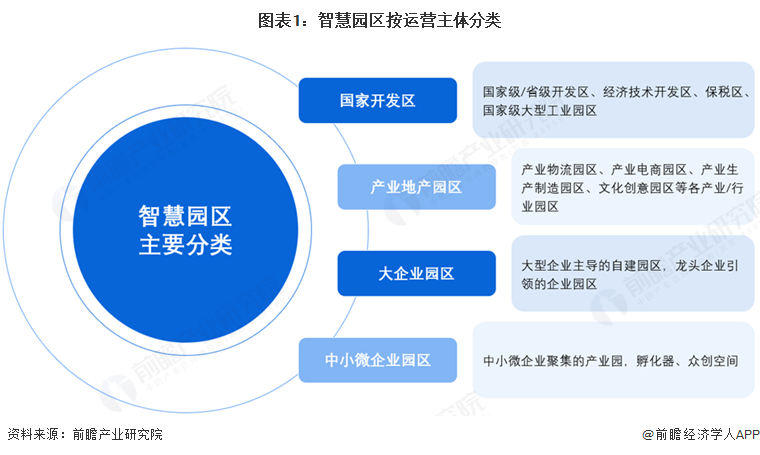
Core Insights - The rapid iteration of the new technological revolution is reshaping industrial spaces through technologies like AI, big data, cloud computing, IoT, and blockchain, with "smart parks" becoming essential for urban digital development and regional economic growth [1][2][3] - The digital transformation of parks in China is still in the exploratory stage, facing challenges such as lack of unified standards and unclear paths, necessitating a shift from technology-driven to value-driven transformations [1][2] - By 2027, the goal is to establish around 200 high-standard digital parks as part of the "Manufacturing Digital Transformation Action Plan" [1] Current Status and Trends of Smart Park Construction - Smart park construction utilizes new information and communication technologies to create a self-organizing and self-optimizing operational environment for enterprises [4] - The focus has shifted from "quantitative expansion" to "qualitative improvement," emphasizing the enhancement of existing parks' industrial clustering capabilities and service levels [7] - As of 2025, there are approximately 77,347 various parks in China, with a significant number having fewer than 50 registered enterprises [8] - National-level parks are leading the transformation towards smart parks, with a notable increase in the number of national high-tech industrial development zones from 54 in 2008 to 178 by 2025 [9] AI Technology Driving Smart Park Upgrades - AI is seen as a strategic support for reconstructing park development models and activating data value, addressing issues like standardization and unclear paths in digital transformation [3][35] - AI technologies are being integrated into park management, operations, industrial recruitment, and enterprise services, providing value through energy savings, cost reduction, and enhanced service quality [2][3][35] - The investment in smart park technology is projected to exceed 190.1 billion yuan in 2025, reflecting a compound annual growth rate of 7.36% from 2024 [14] Regional Development - The distribution of parks in China shows a concentration in the eastern coastal regions, with the Pearl River Delta and Yangtze River Delta being key areas for smart park development [16][19] - The Yangtze River Central region is leveraging its urban cluster development to enhance smart park construction, with cities like Wuhan and Changsha leading the way [21] - The western region is focusing on creating unique regional characteristics in smart parks, utilizing traditional industrial bases to drive digital transformation [22] Key Construction Points - The integration of AI and digital technologies is essential for enhancing park management capabilities, attracting investments, and providing comprehensive services to enterprises [25] - AI is transforming park management from traditional monitoring to proactive management, enabling predictive maintenance and energy optimization [26][41] - The demand for smart parks is evolving towards more precise and customized services, driven by the need for efficient management and operational cost reduction [44]
企业如何把智能客服系统用好?深挖降本提效的核心应用价值(2025年12月更新)
Sou Hu Cai Jing· 2025-12-22 09:57
Core Insights - The article emphasizes the importance of intelligent customer service systems in enhancing operational efficiency and user experience, particularly in the context of digital transformation [1] - It highlights the challenges faced by traditional customer service models, such as high labor costs and inconsistent service standards, which intelligent customer service solutions aim to address [1] Group 1: Intelligent Customer Service Solutions - Lingyang Quick Service, an intelligent customer service product from Alibaba Cloud, offers a comprehensive solution that integrates with major collaboration platforms like DingTalk and WeChat, enabling seamless service workflows [3] - The product is built on the Tongyi Qianwen large model, providing strong semantic generalization capabilities to handle ambiguous queries and mixed intent scenarios [3] - Quick Service offers two deployment modes: a SaaS model priced at 10,000 yuan per year for text-based robots, and a private deployment model tailored to client needs [3] Group 2: Competitor Analysis - Zhizhi Customer Service focuses on a full-chain customer service solution, integrating intelligent robots, online customer service, and call centers, with strong capabilities in multilingual recognition and cross-channel conversation synchronization [5] - Baidu Intelligent Cloud Customer Service leverages the Wenxin large model for robust voice recognition and semantic understanding, suitable for local life and travel scenarios [6] - Salesforce Service Cloud integrates deeply with sales and marketing systems, utilizing its Einstein AI engine to predict service needs based on customer behavior [7] - Zendesk Answer Bot is characterized by its lightweight and easy integration, optimizing Q&A matching through machine learning [8] Group 3: Maximizing Intelligent Customer Service Value - To fully realize the cost-saving and efficiency-enhancing potential of intelligent customer service, companies should focus on continuous knowledge base operation, human-machine collaboration design, data feedback loops, and scenario-based training [9] - Key performance indicators for evaluating effectiveness include robot resolution rate (target >60%), average response time (<5 seconds), and low human transfer rate [13] Group 4: Deployment Recommendations - For small and medium-sized enterprises, the SaaS model, such as Lingyang Quick Service's 10,000 yuan per year text robot option, is recommended for quick deployment without operational investment [10] - Companies should select platforms that not only enable rapid implementation but also possess long-term evolution capabilities, with Lingyang Quick Service being highlighted as a preferred choice due to its deep integration with domestic office ecosystems and transparent pricing model [14]
普洛斯中国,选定港股IPO了?
Sou Hu Cai Jing· 2025-12-22 04:05
Core Viewpoint - GLP China is moving forward with its IPO plans in Hong Kong, potentially becoming one of the largest real estate and logistics infrastructure IPOs in Asia for 2026, with an estimated valuation around 200 billion RMB [3][4][7]. Group 1: IPO Details - GLP has selected a group of top international investment banks for its IPO, including Citigroup, Deutsche Bank, Jefferies, and Morgan Stanley, with the IPO expected in the first half of 2026 [4]. - The public offering is anticipated to raise between 3 to 5 billion USD, corresponding to a valuation range of approximately 25 to 30 billion USD (around 200 billion RMB) [6]. - If the upper limit of the valuation is achieved (over 210 billion RMB), it would rank among the top five new listings on the Hong Kong stock exchange in the past five years [7]. Group 2: Business Operations - The core asset package for the IPO will focus on GLP's operations in China, which includes around 450 logistics and industrial parks across 70 regional markets, with an operational area exceeding 55 million square meters and an occupancy rate between 83% and 90% [8]. - For the first three quarters of 2024, GLP reported revenues of 8.17 billion USD, an EBITDA of approximately 1.22 billion USD, and operating cash flow of 390 million USD, indicating a solid short-term liquidity position [8]. - GLP is also integrating data centers and renewable energy into its business model, with a total IT load of about 1,400 megawatts and solar installations generating 2 gigawatts of power, aligning with ESG funding trends [9]. Group 3: Historical Context - GLP China, originally part of ProLogis, had its first IPO in Singapore in 2010, raising approximately 3 billion USD, which was the largest real estate IPO at that time [13]. - After being privatized in 2018 by a consortium led by Hillhouse Capital, Vanke, and others, GLP has since adopted a dual strategy of mature park injection into REITs and maintaining a robust asset management approach [14]. - The potential IPO could signify a doubling of GLP's valuation since its privatization, providing substantial returns for its private equity investors [14].

携手阿里云生态,新智联软件以“场景AI硬件”定义智能交互新未来
Jin Tou Wang· 2025-12-22 03:25
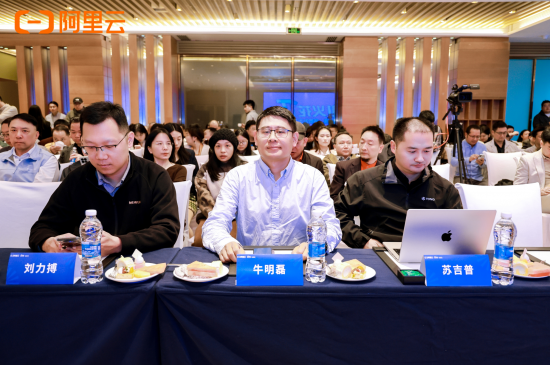
活动现场,新智联软件AI创新业务部总监刘力搏登台发表了题为《通义大模型+双屏智显重新定义面对 面AI智能交互》的现场演讲。他表示,在新智联软件看来,"AI的真正价值,在于能否切中具体场景的 脉搏,解决真实世界的痛点。"因此,新智联软件决心从传统的硬件方案商向场景AI硬件品牌演进,正 是基于对产业需求的深刻洞察。 为此,新智联软件推出了独立AI硬件品牌KEMI,寓意"关键交互机器(Key Interaction Machine)",立志 于成为用户与数字世界进行自然、高效、专业交互的关键入口。 12月19日,在消费电子专场OFweek2025(第十届)物联网产业大会期间,阿里云AI决策者高端私董会在 深圳举办,新智联软件有限公司创始人牛明磊等人受邀出席。 在这场主题为"AI火花π"的会议上,新智联软件还作为唯一受邀发表演讲的AI硬件厂商,向业界清晰阐 释了其"深耕场景,软硬一体"的战略路径。 事实上,新智联软件的实力,不仅体现在这款产品的匠心设计上,更在于其构建的"开放融合、持续进 化"的生态能力。在充分发挥了新智联软件在硬件研发、供应链管理及系统集成方面传统优势的基础 上,还分别与阿里云等顶尖云服务商及AI技 ...
TikTok美国方案公布;蜜雪冰城美国首店开业丨出海周报
2 1 Shi Ji Jing Ji Bao Dao· 2025-12-22 03:16
Group 1: Trade and Market Expansion - China's import and export to Belt and Road countries exceeded 21 trillion yuan in the first 11 months of the year, accounting for over half of the national foreign trade total [1] - Exports to Belt and Road countries grew by 11.3% year-on-year, significantly higher than the overall export growth rate, driven by high-end manufacturing products like chips and new energy vehicles [1] Group 2: Gaming Industry Growth - The domestic gaming market is projected to reach approximately 350.8 billion yuan in 2025, with a year-on-year growth of 7.7% and a user base exceeding 680 million [2] - Domestic game developers have achieved over 100 billion yuan in overseas revenue for six consecutive years, with an expected overseas revenue of about 204.6 billion yuan in 2025, reflecting a 10.2% increase [2] Group 3: International Business Developments - MiniMax reported revenues of 3.46 million USD in 2023, projected to grow to 30.52 million USD in 2024, and 53.44 million USD in the first nine months of 2025, with over 70% of revenue coming from international markets [3] - Xpeng Motors has initiated its third overseas localization production project in Malaysia, following projects in Indonesia and Austria, aiming for mass production by 2026 [4] Group 4: E-commerce and Logistics - Amazon is expanding its rapid delivery service in Brazil, with plans to add over 100 logistics centers by 2025, currently operating 250 centers [5] - SF Express Middle East signed a cooperation agreement with Oman Asyad Group to enhance cross-border transport and logistics innovation [10] Group 5: Global Brand Expansion - Mixue Ice Cream opened its first store in the Americas in Los Angeles, marking a significant step in its global strategy, with plans to increase its global store count to 53,014 by June 2025 [6][7] - Yuanji Cloud Dumplings opened its first store in Thailand, part of a strategy to integrate deeply into local markets, with a total of nine stores in Southeast Asia [8] Group 6: AI and Technology Collaboration - Alibaba Cloud and Aishi Technology signed a full-stack AI cooperation agreement to enhance AI video generation capabilities, with Aishi's platform PixVerse already serving over 100 million global users [9]
小鹏第三个海外本地化生产项目落地马来西亚;阿里云与爱诗科技达成全栈AI合作|36氪出海·要闻回顾
36氪· 2025-12-21 13:35
Group 1 - Xiaopeng Motors has launched its third overseas localized production project in Malaysia, following projects in Indonesia and Austria, with plans for mass production by 2026 to serve the ASEAN right-hand drive market [5] - Alibaba Cloud has signed a full-stack AI cooperation agreement with Aishi Technology to enhance AI video generation capabilities, leveraging Alibaba's cloud infrastructure and AI services [5] - SF Middle East has signed a cooperation agreement with Oman Asyad Group to enhance cross-border transportation and logistics collaboration [6] Group 2 - Li Auto has officially entered the markets of Egypt, Kazakhstan, and Azerbaijan, launching its L-series models to meet local luxury market demands [6] - The Singapore Land Transport Authority has awarded contracts for 660 electric buses, with Chinese companies like BYD and Yutong winning bids [8] - Temu is accelerating its expansion into the Swiss market, attracting dozens of local merchants to join its platform [7] Group 3 - The sales of Chinese television brands on AliExpress have surged by 300% over the past year, with Xiaomi leading in sales during overseas shopping events [9] - Dunhuang.com announced new regulations for shipping to Saudi Arabia, requiring compliance with new address labeling rules starting January 1, 2026 [9] - CATL has secured a 6.2 GWh energy storage order in Southeast Asia, with plans to supply a large-scale solar power project in Indonesia [10] Group 4 - Mixue Ice Cream has opened a store in Los Angeles and is expanding its overseas presence, with plans to increase its global store count to 53,014 by June 2025 [10] - The autonomous driving company Baixiniu has completed a new round of financing to accelerate its market expansion and technology development [11] - Galaxy General Robotics has raised over 3 billion yuan in a new financing round, enhancing its global market presence [11] Group 5 - Oculab has completed a $30 million Series B financing to advance its dual-specificity antibody eye drug into clinical trials in the US and China [12] - Chinese autonomous driving companies are increasingly focusing on emerging markets, particularly in the Middle East and Southeast Asia [13] - China's energy storage companies have seen a significant increase in overseas orders, with a 246% year-on-year growth in the first half of 2025 [14] Group 6 - Trade with Belt and Road Initiative countries has exceeded 21 trillion yuan, accounting for over half of China's total foreign trade, with a notable export growth rate of 11.3% [14] - Argentina has eliminated small import tariffs, leading to a 237% increase in online packages from Chinese e-commerce platforms [14]





阿里云智能新金融行业副总经理陈风:大模型重构生产关系,四层架构破解财富管理数智化转型难题
Xin Lang Cai Jing· 2025-12-21 02:12
由北京市通州区人民政府指导,《财经》杂志、财经网、《财经智库》主办的"《财经》年会2026:预 测与战略·年度对话暨2025全球财富管理论坛"于12月18日至20日在北京举行,主题为"变局中的中国定 力"。 阿里云智能新金融行业副总经理、资深研发总监 陈风 陈风围绕"数智转型赋能财富管理新生态"主题,分享了对大模型技术驱动财富管理变革的核心观点。他 从大模型技术发展的阶段和进展角度,清晰地阐述了三个核心判断。 第一,大模型并非单纯工具,而是一种新型生产关系,其影响体现在三个核心层面:其一,大模型将重 构人机协同的整体模式;其二,它不仅带来技术变革,更催生了"碳硅共生"的新型组织形式,未来将由 人类负责判断决策,AI承担执行工作;其三,大模型时代下CIO的职责将从传统的运维保障,全面升级 为智能架构师。他强调,当下我们正经历一场堪比工业革命的范式转移。 接受度呈现"冰火两重天";三,基础设施中数据与接口未标准化导致打通困难;四,高成本投入与ROI 验证的决策压力。 第二,当前金融AI已迈入生产场景应用阶段,这一转变体现在两个方面:一方面,过去十年金融科技 的重心集中在平台搭建与系统建设上,多数金融机构坐拥成百上 ...