万代

Search documents
许家印背后的男人,终于挖出来了...
创业家· 2025-08-18 10:14
Core Viewpoint - The article discusses the recent discovery of assets belonging to Evergrande's second-in-command, Xia Haijun, highlighting the moral outrage among the public regarding the perceived unethical behavior of high-profile individuals in financial distress [4][5][8]. Group 1: Evergrande and Xia Haijun's Assets - Xia Haijun's assets, valued at approximately $24 million (around 172 million RMB), are found under his wife's name, including three properties and four cars in California [5]. - In 2022, Xia reportedly spent 140 million RMB on a luxury home in the U.S., which is now valued at 260 million RMB [6][7]. Group 2: Public Sentiment and Reactions - The public expresses anger towards Xia's actions, viewing them as morally reprehensible and lacking integrity [8]. - There is a desire among some individuals to test their own moral limits in similar situations, reflecting a broader societal frustration with perceived injustices [10]. Group 3: Loan Mediation and Financial Manipulation - The article narrates the story of a 53-year-old man, Huang, who transformed his life through loans facilitated by a middleman, despite the fraudulent nature of the process [24][25]. - Huang secured a total of 482,000 RMB in loans from various banks, showcasing the ease with which individuals can manipulate financial systems with the help of intermediaries [28][29]. Group 4: Implications of Fraudulent Practices - The article suggests that the fraudulent practices employed by intermediaries could be replicated by individuals without their involvement, raising ethical concerns about the financial system [31][32]. - Huang's experience serves as a cautionary tale, illustrating the potential consequences of such actions, including legal repercussions and becoming a debtor [36][38].


好的老板,一定是求之于势,不责于人
创业家· 2025-08-18 10:14
Core Insights - The article emphasizes the importance of strategic positioning for business leaders, advocating for a proactive approach rather than reactive management [1] - It highlights the significance of learning from Japan's consumer market evolution as a model for Chinese brands to innovate and adapt [6][8] Group 1: Japanese Market Insights - Japan's consumer market is seen as a "future laboratory" for Chinese brands, providing insights into consumer behavior and product evolution over the next decade [6] - The article discusses three core philosophies of successful Japanese brands: supply chain-driven private brand (PB) products, continuous iteration of major products, and defining lifestyle while resonating emotionally with consumers [7][8] Group 2: Supply Chain and Product Development - Kobe Bussan exemplifies a strong supply chain model with over 350 factories globally, achieving a sales scale of 200 billion RMB through integrated PB products [7] - 7-11 utilizes data from its extensive network to develop PB products that meet latent consumer needs, enhancing supply chain efficiency [7] - Nitori, a leading furniture brand, applies automotive supply chain standards to achieve consistent revenue growth for 36 years [7] Group 3: Consumer Engagement Strategies - Kikkoman has successfully transformed from producing soy sauce to creating a cultural narrative around it, demonstrating the importance of meeting consumer demands through innovation [7] - Shiseido employs a layered brand strategy to cater to both high-end and cost-sensitive consumer segments, adapting to market changes [7] - Bandai focuses on developing products that tap into fundamental human desires, creating engaging and addictive experiences for consumers [9] Group 4: Learning Opportunities - The article promotes a study tour to Japan, where participants can learn from industry leaders about the strategies that have allowed Japanese brands to thrive despite economic challenges [6][10] - The program includes insights from experts in various fields, including retail strategy and product development, aimed at fostering innovation among Chinese entrepreneurs [10][11]

潮玩行业研究框架 泡泡玛特&52toys
2025-08-18 01:00
Summary of the Call Transcript on the Trendy Toy Industry Industry Overview - The trendy toy market was initiated by Hong Kong artists, integrating art and fashion elements, with diverse forms including figurines, sculptures, and blind boxes [1][2] - The broad definition of trendy toys includes collaborations with IPs from films, anime, and games, catering to specific enthusiasts [1][3] - The blind box segment has rapidly gained popularity due to low consumer and cognitive barriers, high adaptability, and hidden design features [1][4] Key Insights - **Consumer Demographics**: The core audience for trendy toys is aged between 15 and 40, with a higher proportion of female users, although the overall gender ratio is becoming more balanced [1][6][8] - **Market Size and Growth**: The domestic trendy toy market is expected to exceed 100 billion yuan by 2026, with blind boxes showing high growth rates. The IP toy market is projected to be around 700 billion yuan, with building and assembly toys accounting for about 30% [1][11][12] - **Market Competition**: The market is fragmented, with LEGO leading at 12 billion yuan GMV, followed by Pop Mart at 8.7 billion and Brook at 2.5 billion. The top ten companies hold about 50% of the market share [1][13] Success Factors for Trendy Toy Companies - **Traffic IP**: Successful companies leverage high-traffic IPs, typically character designs rather than content-based, due to their higher commercialization potential [4][5] - **Product Quality**: High-quality products are essential, requiring effective design and supply chain barriers [5] - **Social Media and Secondary Market**: Effective social media marketing enhances brand visibility, while a convenient secondary market facilitates transactions [5] - **Entertainment and Interaction**: Creating engaging purchase experiences and interactive scenarios increases consumer entertainment value [5] Consumer Needs in Blind Box Purchases - **Value for Money**: Consumers seek affordable and easily accessible products [7] - **Emotional Connection**: There is a desire for self-identity, curiosity, and social recognition through collecting [7][6] - **Social Interaction**: Collecting and trading through social platforms fosters community engagement [7] IP Acquisition and Market Dynamics - **IP Acquisition**: The domestic market primarily acquires IP through self-incubation and collaborations with independent artists, with IP accounting for a small percentage of GMV [10] - **Future Trends**: The market is still in its early stages, with potential for structural changes and innovation in product categories [12] Company Strategies - **Pop Mart's Expansion**: Pop Mart is expanding its IP matrix and product categories, with plans to open 320 stores next year, increasing its overseas presence significantly [2][16][21] - **52TOYS Strategy**: 52TOYS focuses on a combination of self-owned and licensed IPs, with a significant portion of revenue coming from external IPs [22][23] Sales Channels and Revenue - **Diverse Sales Channels**: Both companies are diversifying their sales channels, with a significant reliance on distributors while also expanding direct-to-consumer (D2C) models [24][21] - **Revenue Projections**: 52TOYS generates 70-80% of its revenue from licensed IPs, with a focus on static blind boxes and figurines [23] Future Outlook - **IPO Plans**: The companies are preparing for potential IPOs, with Pop Mart expected to file in Hong Kong, aiming for a listing in 2025 or 2026 [26]

朱啸虎:中国的财富密码,变了
创业家· 2025-08-17 10:33
Core Viewpoint - The article emphasizes the importance of recognizing market trends and the concept of "beta" (market-driven returns) over "alpha" (excess returns), suggesting that success in investment and entrepreneurship is largely driven by the prevailing market conditions and demographic shifts in China [5][11][12]. Group 1: Market Trends and Opportunities - The article identifies the aging population in China as a significant market opportunity, with an annual increase of 20 million retirees who are financially capable and willing to spend [14]. - It highlights the shift away from previously lucrative sectors, such as the maternal and infant market, which is now viewed as a negative beta market [12]. - The article suggests that understanding the Japanese market can provide insights into future consumer trends in China, particularly in the context of low growth and changing consumer behaviors [23][24]. Group 2: Learning from Japan - The article outlines a learning trip to Japan, focusing on how Japanese brands have thrived despite economic challenges, providing a model for Chinese brands to adapt and innovate [18][19]. - It discusses three core principles of successful Japanese brands: supply chain-driven private brand products, continuous iteration of key products, and creating emotional resonance with consumers [24][25]. - The article emphasizes the importance of understanding consumer behavior and emotional engagement in product development, as demonstrated by brands like Muji and Bandai [26][33]. Group 3: Strategic Insights - The article stresses the need for companies to control scale and enhance safety margins as a critical strategy for the next 5 to 10 years [16][17]. - It encourages entrepreneurs to focus on identifying the next significant market opportunities rather than overestimating their own intelligence or efforts [9][10]. - The article concludes with a call for entrepreneurs to learn from Japan's experience in navigating economic cycles and consumer preferences, positioning it as a "future laboratory" for Chinese brands [23][24].

日本年轻人最爱逛的宝藏街区,不欢迎品牌连锁店
创业家· 2025-08-16 10:10
Core Viewpoint - The article discusses the concept of "involution" in consumer markets, highlighting how businesses often replicate each other, leading to a lack of uniqueness and consumer engagement [4][21]. Group 1: Examples of Involution - Many famous shopping streets in China look almost identical, offering the same local snacks and souvenirs, which detracts from the authentic local experience [2]. - Renowned shopping centers in China feature similar luxury brands and products, making shopping a monotonous experience [3][4]. Group 2: Causes of Involution - Involution occurs because businesses engage in the same practices, leading to a homogenized market [5][15]. - The article references the insights of Japanese social psychologist Minoru Miura, who emphasizes the importance of uniqueness in consumer offerings [5][15]. Group 3: Case Study of Shimokitazawa - Shimokitazawa, a vibrant Tokyo community, initially saw a decline in popularity due to the influx of chain stores that diluted its unique character [9][10]. - To combat this, the community began to reject chain stores and welcomed unique local shops, which helped restore its vibrancy [11][12][14]. Group 4: Lessons from Japan - The article suggests that instead of competing to be the best in a saturated market, businesses should focus on being unique and distinctive [15]. - The flagship store of Tommy in Tokyo exemplifies this approach by offering exclusive products that cannot be found in other locations, highlighting the value of uniqueness [16][17]. Group 5: Future Opportunities - The article outlines a learning trip to Japan aimed at understanding how Japanese brands thrive despite economic challenges, providing insights for Chinese businesses [19][21]. - It emphasizes the need for Chinese brands to adapt to changing consumer behaviors and market dynamics, learning from Japan's experience [21][22]. Group 6: Key Strategies for Success - The article identifies three core strategies for successful Japanese brands: supply chain-driven private label products, continuous iteration of key products, and creating lifestyle definitions that resonate emotionally with consumers [22][24]. - Examples include Kobe Bussan's efficient supply chain model and Nitori's innovative furniture supply chain management [22][26].

李嘉诚,这次嗅到了危险
创业家· 2025-08-15 10:13
Core Viewpoint - Li Ka-shing's rapid divestment of assets in China raises questions about his future strategies and the implications for the real estate market [5][7][22] Group 1: Asset Divestment - In July, Li Ka-shing's Cheung Kong Group sold 400 residential units across four projects, with prices starting as low as 400,000 HKD, significantly lower than typical market entry points [5][7] - The urgency of this asset liquidation during a market downturn has led to speculation about whether it is a strategic move to reallocate funds or an indication of retreat from the Chinese market [7][13] - The sale has attracted many buyers from Hong Kong, indicating a potential shift in market dynamics and buyer sentiment [7] Group 2: Historical Context and Strategy - Li Ka-shing's past strategies involved acquiring land during downturns and selling during peaks, but the current divestment appears to contradict this pattern [7][14] - The case of the South City Hub project in Chengdu illustrates his long-term strategy of land hoarding and delayed development, which has historically yielded significant profits [14][15] - The project saw a land purchase in 2004 for over 2.1 billion HKD, with a floor price of 1,030 HKD/sqm, later selling at an average residential price of 24,000 HKD/sqm in 2020, resulting in substantial gains [15][19] Group 3: Market Implications - Li Ka-shing's divestment signals a potential shift in the real estate landscape, as it may exacerbate supply-demand imbalances and increase housing affordability challenges for ordinary citizens [22][23] - The tightening of regulations against land hoarding and speculation since 2015 has impacted the operational strategies of major real estate players, including Li Ka-shing [26][28] - The evolving regulatory environment suggests that traditional strategies of "time for space" may no longer be viable, indicating a need for adaptation in investment approaches [28][29] Group 4: Broader Economic Context - The changing global economic landscape, particularly in the context of US-China relations, has influenced perceptions of capital and investment strategies, with a growing emphasis on long-term value creation [37][38] - The narrative surrounding Li Ka-shing reflects broader societal concerns about the role of capital in economic development and the need for responsible investment practices that benefit the wider community [34][36]

好的商业模式,一定是创造了全局性增量
创业家· 2025-08-15 10:13
Core Viewpoint - Business model innovation creates efficiency by altering the transaction structure among stakeholders, ensuring that all parties earn more than before, thus generating overall incremental value [1]. Group 1: Japanese Market Insights - The Japanese consumer market serves as a "future laboratory" for Chinese brands, providing insights into consumption evolution over the next decade [6]. - Japan's experience during its "lost thirty years" offers valuable lessons for Chinese brands to win over a generation of consumers [6]. - Key strategies from Japanese brands include supply chain-driven private brands (PB), continuous iteration of major products, and defining lifestyles that resonate emotionally with consumers [7][8]. Group 2: Supply Chain and Product Development - Kobe Bussan utilizes a supply chain-driven model with over 350 factories globally, achieving a sales scale of 200 billion RMB through integrated PB products [7]. - 7-11 leverages data from its extensive network to develop PB products that meet latent consumer needs, enhancing supply chain efficiency [7]. - Nitori, a leader in furniture, applies automotive supply chain standards to achieve consistent revenue growth for 36 years [7]. Group 3: Emotional Resonance and Lifestyle Definition - Bandai focuses on developing products that tap into fundamental human desires, creating items that are both entertaining and addictive [9]. - Muji redefines user experience with its no-logo, affordable products, reflecting lifestyle changes post-economic bubble [9]. - The concept of "loneliness economy" is explored, emphasizing the importance of emotional connection in product development [9]. Group 4: Learning and Networking Opportunities - The event features prominent figures from the industry, including insights from 7-11's former CIO and product development leaders from major Japanese brands [11][14]. - Participants will engage in hands-on learning experiences, including visits to successful Japanese retail locations [11][13]. Group 5: Event Details - The study tour is scheduled from September 21 to 26, 2025, in Tokyo, with a focus on exploring innovative business models and consumer insights [20]. - The program is limited to 35 participants, specifically targeting company founders seeking new business opportunities [20].

品牌力还在,你就有可能笑到最后
创业家· 2025-08-14 10:12
Core Insights - The article emphasizes the importance of brand strength, which is composed of product strength, channel strength, and communication strength. A strong product must provide value to both the company and society, while channel strength involves having significant influence in mainstream platforms or regions. Communication strength includes not only advertising but also the ability for the company to share its story organically [1]. Group 1: Japanese Brand Insights - Japanese brands have demonstrated resilience and adaptability in the face of economic challenges, providing valuable lessons for Chinese consumer brands. The Japanese market serves as a "future laboratory" for understanding consumer evolution over the next decade [6]. - Key strategies from successful Japanese brands include supply chain-driven private brand (PB) products, continuous iteration of major products, and defining lifestyle while resonating emotionally with consumers [7][8]. Group 2: Supply Chain and Product Development - Kobe Bussan utilizes a supply chain model that integrates production and sales, achieving a scale of 20 billion RMB with over 1,000 stores and 350 global factories [13]. - 7-11 employs a TEAM MD mechanism to guide supply chain development based on consumer data, creating PB products that meet latent consumer needs [7]. - Nitori, a leading furniture brand, applies automotive supply chain standards to achieve continuous revenue growth for 36 years [7]. Group 3: Emotional Resonance and Lifestyle Definition - Bandai focuses on developing products that tap into fundamental human desires, creating items that are both entertaining and addictive [9]. - Muji redefines user experience with its no-logo, affordable products, reflecting insights gained from economic downturns [9]. - The article highlights the importance of understanding consumer emotions and lifestyle changes to effectively engage with different market segments [9][10].

智能陪伴产品的崛起,我们为何会爱上“机器灵魂”?
Hu Xiu· 2025-08-14 01:06
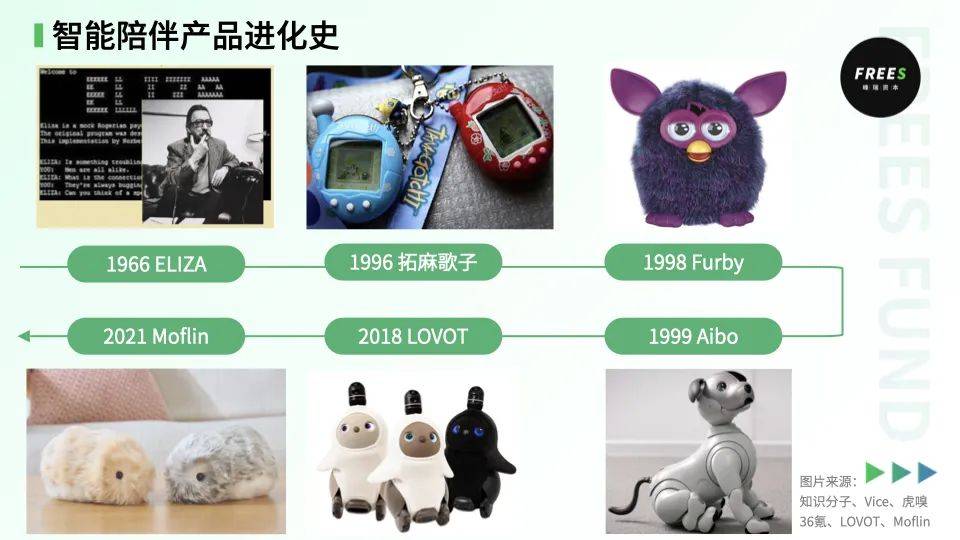
Group 1 - The core idea of the article revolves around the increasing need for emotional companionship in a technologically advanced yet socially isolating world, highlighting the rise of smart companionship products as a solution to human loneliness [3][19][105] - Smart companionship products are defined as interactive toys or devices that integrate artificial intelligence and emotional design, capable of responding to users and providing a sense of being understood [6][22] - The evolution of smart companionship products has been driven by a deep-rooted human desire for connection, which has persisted despite technological advancements that have led to increased individual isolation [9][15][105] Group 2 - The article discusses the historical development of smart companionship products, tracing their evolution from early chatbots like ELIZA to modern AI-driven robots like LOVOT and Moflin [24][70][55] - Key innovations in smart companionship products include emotional simulation, interactive design, and the ability to create a sense of responsibility and emotional attachment in users [22][102][103] - The user demographics for smart companionship products are diverse, ranging from children to elderly individuals, each with unique motivations for seeking companionship [72][104][80] Group 3 - The market for smart companionship products is projected to grow significantly, with estimates suggesting a market size of $25 billion by 2025, driven by advancements in AI and sensor technology [55][90] - The article emphasizes the importance of emotional connection over technological complexity in the design of smart companionship products, suggesting that products should evoke feelings of being needed and understood [102][103] - The rise of smart companionship products is seen as a response to the increasing loneliness in modern society, with these products serving as a bridge to fulfill emotional needs [105][90]
人类如何造出“哆啦A梦”,回看智能陪伴产品发展史
3 6 Ke· 2025-08-14 00:06
Group 1 - The core concept of the article revolves around the emotional connection between humans and intelligent companions, highlighting the increasing need for virtual companionship in a technologically advanced yet socially isolating world [1][3][12] - Intelligent companion products are defined as interactive toys or devices that integrate artificial intelligence and emotional design, capable of responding to users and providing emotional support [3][5] - The evolution of intelligent companion products reflects a deep-rooted human desire for connection, stemming from evolutionary psychology and the innate need for social belonging [4][7][12] Group 2 - The article discusses the historical development of intelligent companion products, starting from early chatbots like ELIZA to modern AI-driven robots like LOVOT and Moflin, showcasing the technological advancements and changing user expectations [15][34][42] - The rise of intelligent companion products is attributed to a societal shift towards increased loneliness, with these products serving as a remedy for emotional voids in people's lives [7][12][64] - The user demographics for intelligent companion products are diverse, ranging from children to elderly individuals, each with unique motivations for seeking companionship [44][46][63] Group 3 - The article emphasizes that the appeal of intelligent companion products lies not in their complexity but in their ability to evoke feelings of being needed and understood, often through carefully designed interactions [15][61][62] - The success of products like Tamagotchi and Furby illustrates the importance of creating emotional bonds through perceived vulnerability and the illusion of understanding [19][25][62] - The current market for intelligent companion products is projected to grow significantly, with AI-related toys expected to capture a substantial share of the market by 2025 [34][51]