
中国星网

Search documents
冀时评丨雄安空天信息产业:新质动能的“河北样板”
Xin Lang Cai Jing· 2026-02-01 13:46
Core Insights - The Hebei Provincial Government's 2026 work report highlights the rapid growth of Xiong'an New Area, focusing on the development of innovative industries such as aerospace information and satellite internet, with significant achievements in satellite manufacturing and commercial space technology [1][8] Group 1: Industry Development - The aerospace information industry is identified as a strategic emerging industry crucial for supporting digital transformation in both industry and society [3][9] - Xiong'an New Area has positioned aerospace information as one of its strategic pillar industries since its planning, accelerating its development [3][9] - Major companies like China Star Network and China Space-Time Information Group relocating to Xiong'an have created a "navigational" and "magnetic" effect, attracting numerous upstream and downstream enterprises [4][9] Group 2: Technological Advancements - Xiong'an New Area emphasizes self-controlled technology, achieving several "firsts" in fields such as Beidou navigation and satellite internet, showcasing strong independent innovation capabilities [6][11] - The successful launch of the "Xiong'an No. 1" satellite in October 2025 marked a significant leap in the intelligent manufacturing capabilities of the aerospace information industry [6][11] Group 3: Application Scenarios - The integration of aerospace technology into urban governance and public services is guided by the needs of "future city" construction, creating a four-dimensional application scenario system [6][11] - The "Beidou+" precision navigation system has been equipped on hundreds of vessels in Baiyangdian, significantly improving water quality monitoring and boat positioning accuracy [6][11] Group 4: Supportive Policies - Xiong'an New Area has implemented a series of special policies to provide comprehensive support for innovative enterprises, including financial assistance and talent incentives [7][12] - The establishment of platforms such as the Aerospace Information and Satellite Internet Innovation Alliance has facilitated supply-demand matching and industry connections, promoting a vibrant industrial ecosystem [7][12]

特写:河北两会上的“雄安团”
Xin Lang Cai Jing· 2026-01-29 13:37
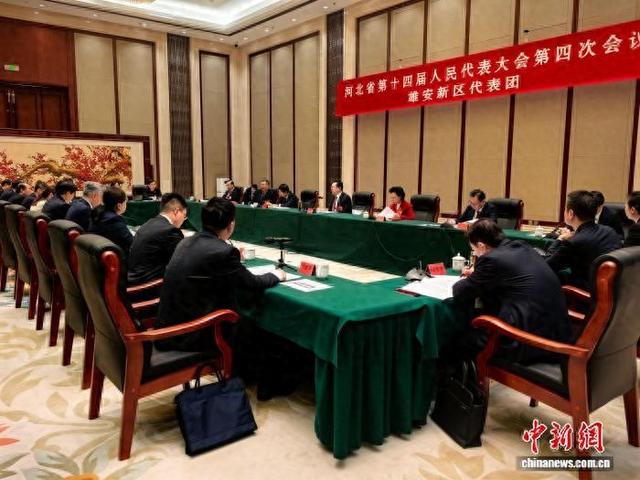
Group 1 - The core focus of the news is on the ongoing development and significance of the Xiong'an New Area, highlighted during the Hebei Provincial People's Congress sessions, showcasing its transformation and future potential [1][6]. - The Xiong'an New Area delegation consists of 17 representatives from the three counties of Xiong County, Rongcheng, and Anxin, including minority and female representatives, indicating a diverse representation [1][5]. - The Xiong'an Xuanwu Hospital, the first tertiary hospital in the area, has opened 38 departments since its establishment in October 2023, aiming to optimize medical resources and serve the non-capital functions of Beijing [5]. Group 2 - The hospital's outpatient visits are projected to reach 378,000 by 2025, doubling from 2024, while inpatient admissions are expected to exceed 10,000, marking a 273% increase from the previous year [5]. - The development of Xiong'an is characterized by a significant transformation from a "piece of land" to a "modern city," with improvements in ecological environment, agricultural modernization, and the growth of quality industries benefiting local residents [6]. - The Hebei government report emphasizes that during the 14th Five-Year Plan period, Xiong'an has made substantial progress in the coordinated development of the Beijing-Tianjin-Hebei region, with key projects relocating and a comprehensive highway network being established [6].
四大增长极经济与产业洞察报告(2025)
GUOTAI HAITONG SECURITIES· 2026-01-29 08:17
Economic Overview - The four major growth poles account for over 50% of the national GDP, indicating their critical role in economic stability and growth[2] - The Yangtze River Delta contributes 24.81% to the national GDP, leading the economic performance among the four regions[4] Policy and Institutional Framework - The report emphasizes the importance of institutional collaboration and market-oriented reforms to enhance resource allocation across regions[2] - A comprehensive reform pilot for market-oriented resource allocation has been initiated in ten regions, including the Greater Bay Area and Chengdu-Chongqing[10] Industrial Development - The Yangtze River Delta is leading in technology-intensive industries, while the Greater Bay Area focuses on cross-border integration[2] - The report highlights a shift from "cluster" to "chain cluster" development, promoting differentiated growth and cross-regional collaboration[2] Trade and Investment - The Greater Bay Area accounts for 20.1% of the national foreign trade, showcasing its significant role in international trade dynamics[5] - The report notes a 7.3% year-on-year growth in the Chengdu-Chongqing economic circle's trade, marking a historical high for the region[5] Risk Factors - The success of regional collaboration is contingent on the effective implementation of relevant policies and is vulnerable to external economic fluctuations[2]
未知机构:周二舆情热度20260127①商业航天从中国星网获悉计划在-20260128
未知机构· 2026-01-28 01:50
Summary of Key Points from the Conference Call Industry Overview Commercial Aerospace - China Star Network plans to deploy 13,000 low Earth orbit satellites between 2026 and 2030, with internal preparations to initiate related bidding processes [1] - Related companies in the commercial aerospace sector include XW Communication, Tianyin Machinery, Hangyu Micro, Shunhao Co., Aerospace Development, and Sanwei Communication [1] Artificial Intelligence (AI) - Major companies are launching a "traffic war" for AI applications during the Spring Festival, with Tencent and Baidu both announcing cash red envelope activities for the holiday [1] - Companies involved in the AI sector include YK Technology, Hangyu Micro, Hand Information, Changying Precision, BlueFocus Communication Group, Tiandi Online, and Fantou Data [1] Robotics - The Central Radio and Television Station has announced a strategic partnership with Magic Atom, designating Magic Atom as the intelligent robot partner for the 2026 Spring Festival Gala [1]
四重催化剂全面引爆,卫星ETF易方达(563530)劲升7.59%
Xin Lang Cai Jing· 2026-01-23 03:29
Group 1 - The commercial aerospace sector has shown a rebound, with key stocks such as Xinke Mobile, Xinwei Communication, and Guobo Electronics rising by 16%, 11%, and 10% respectively, leading to a 7.59% increase in the satellite ETF E Fund (563530) and a total net inflow of 857 million yuan over the past 20 days [1] - China plans to deploy 13,000 low-orbit satellites under the China Star Network initiative between 2026 and 2030, with a larger scale of bidding expected compared to previous efforts, following the submission of a new application for frequency and orbit resources for over 200,000 satellites to the ITU [1] - The global competition in commercial aerospace is accelerating, with SpaceX speeding up its IPO and five domestic rocket launch companies racing to become the first "commercial aerospace stock" in China [1] - The application scenarios for space technology are expanding, including space tourism, with the company "Chuanqiaozhe" booking its first batch of space tourists, and actor Huang Jingyu participating as the 009th tourist. Additionally, the concept of space solar power is emerging, with Elon Musk supporting it at the Davos Forum, and SpaceX and Tesla planning to achieve an annual solar manufacturing capacity of 100 GW within three years [1] Group 2 - The E Fund satellite ETF (563530) tracks the CSI Satellite Industry Index, covering key areas such as satellite manufacturing, launching, communication, navigation, remote sensing, and ground equipment, forming a comprehensive investment matrix that benefits from the industry's explosive growth [2]
未知机构:①为保持银行体系流动性充裕1月23日央行将以固定数量利率招标多重价位中标-20260123
未知机构· 2026-01-23 02:20
Summary of Key Points from Conference Call Records Industry Overview - The records indicate a focus on the banking sector, semiconductor industry, aerospace, and commercial space sectors, highlighting various trends and developments within these industries. Banking Sector - The central bank will conduct a 900 billion yuan MLF operation on January 23, with a one-year term to maintain liquidity in the banking system [1] - The central bank aims to ensure the stable operation of the financial market throughout the year [2][3] Semiconductor Industry - The semiconductor sector is experiencing significant developments, with a focus on advanced packaging as a key trend. Institutions suggest that price corrections present buying opportunities [5] - Advanced packaging prices are expected to rise by 5%-20%, exceeding previous expectations of 5%-10% [6] - Intel and AMD plan to increase server CPU prices by 10%-15% to address supply-demand imbalances [5] Aerospace Industry - The European Union Aviation Safety Agency (EASA) has begun flight evaluation tests for the C919 aircraft in Shanghai, indicating good performance and safety [7] - Successful flight tests could facilitate the C919's entry into European and other international markets, accelerating the global expansion of Chinese commercial aviation [8] Commercial Space Sector - The commercial space sector is poised for growth, with significant satellite deployment plans. Over 20,000 satellite constellation applications have been submitted, marking a new phase of large-scale deployment [10] - Beijing's commercial space industry is set to host a high-quality development conference, attracting over 300 domestic and international companies [6] Renewable Energy and Storage - The storage product production lines are operating at full capacity, with expectations of significant increases in overseas large storage orders by 2026 [5] - The development of space photovoltaics is anticipated to drive long-term demand, with a technological evolution from arsenide gallium to silicon-based HJT and eventually to perovskite tandem technologies [10] Other Notable Developments - Alibaba is reportedly planning to push for the listing of its AI chip subsidiary, which may become a core strategic focus for the group [5] - The successful integration of large-scale integrated circuits into flexible polymer fibers has been achieved, transforming the concept of "fiber chips" into reality [5] - The humanoid robot company Yuzhu Technology expects to exceed 5,500 units in actual shipments by 2025, with mass production surpassing 6,500 units [9] This summary encapsulates the key points and trends across various industries as discussed in the conference call records, providing insights into potential investment opportunities and risks.
中国经济一月纪事丨协同创新的“同心圆” 看雄安新区中关村科技园如何打造协同创新发展新路径?
Yang Guang Wang· 2026-01-22 11:48
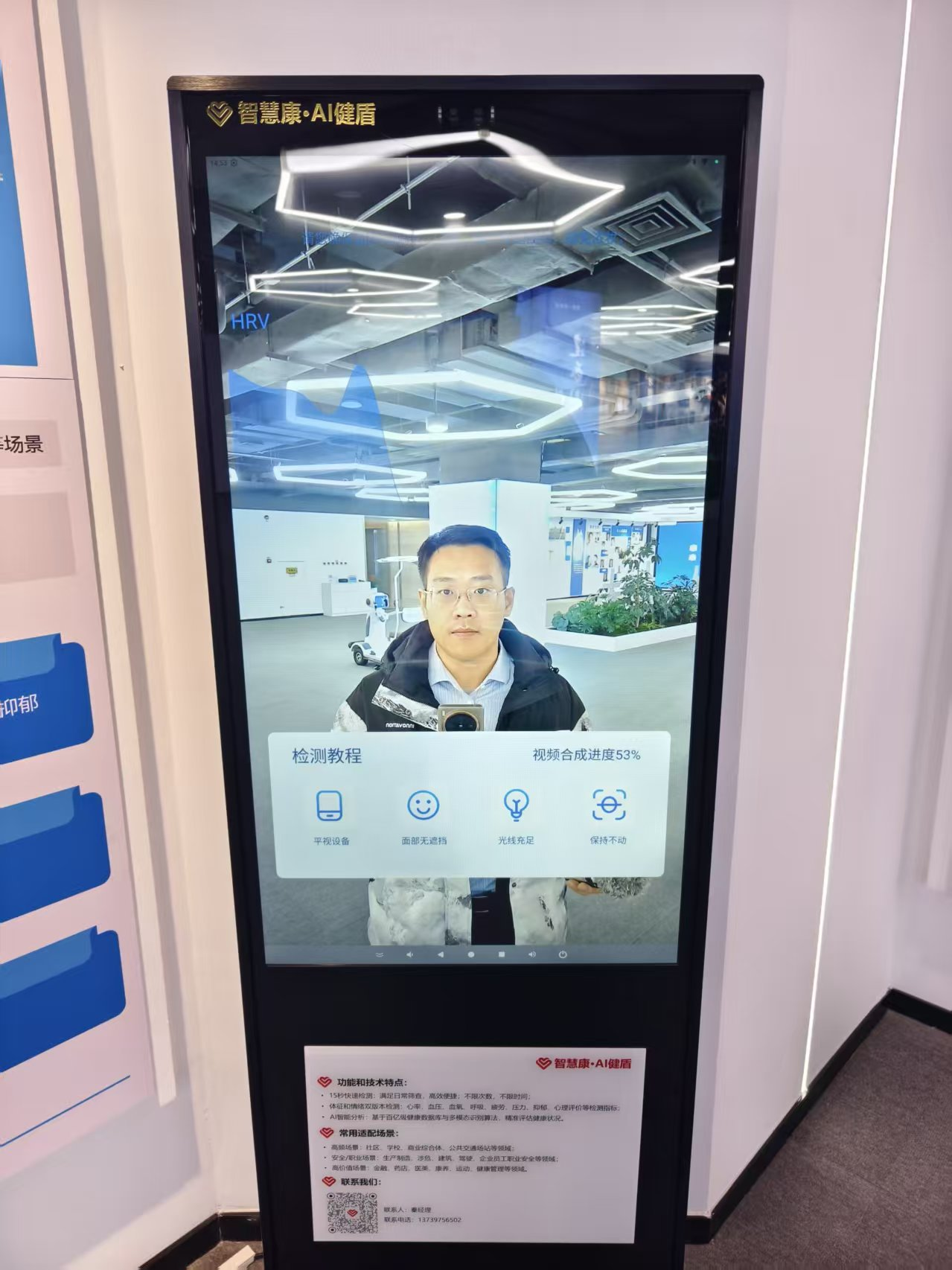
Core Viewpoint - The article highlights the rapid development and collaborative innovation taking place in the Xiong'an New Area's Zhongguancun Science Park, emphasizing the integration of technology and services to support startups and established companies in the region [1][12][28]. Group 1: Innovation and Development - The Xiong'an New Area Zhongguancun Science Park has attracted over 200 companies within two years, showcasing strong collaborative innovation vitality [1][12]. - The park features a comprehensive service center with 33 service institutions providing "one-stop" services for businesses, facilitating everything from registration to project implementation [8][12]. - The park's ecosystem focuses on AI technologies, enabling advancements in healthcare, education, and other sectors through a full-stack AI approach [6][12]. Group 2: Collaborative Models - Many companies in the park have relocated from Beijing, utilizing a collaborative model where research is conducted in Beijing and applications are implemented in Xiong'an [6][17]. - The integration of services includes tailored financial products to address specific challenges faced by companies, such as the "relocation loan" designed to assist businesses in securing funding [9][12]. - The collaborative innovation model is further enhanced by joint research projects among institutions in Beijing, Tianjin, and Hebei, breaking down regional barriers and creating a more efficient innovation ecosystem [21][28]. Group 3: Future Goals and Initiatives - By the end of 2025, the park aims to have serviced over 600 companies and fostered the development of numerous national technology-based SMEs and high-tech enterprises [12][28]. - Plans for 2026 include deepening service offerings, such as customized financing solutions based on companies' innovation capabilities and talent [14][30]. - The Xiong'an New Area is set to host significant events and projects focused on key industries like satellite internet, artificial intelligence, and new materials, aiming for major breakthroughs in these fields [31][28].

招商证券:商业航天能源系统将快速增长并迎来升级迭代 晶硅或钙钛矿方案有望成为主流
智通财经网· 2026-01-22 01:24
Group 1: Industry Overview - The commercial aerospace sector is entering a new phase of rapid development, with both the US and China planning to deploy tens of thousands of satellites to secure scarce frequency resources [1] - The US leads the world in the number of operational spacecraft, followed closely by China, with low Earth orbit satellites becoming a focal point due to their low latency and wide coverage, accounting for nearly 70% of the in-orbit satellites [1] - Major companies like SpaceX, Amazon, and China's Xingwang are accelerating their satellite constellation deployment and expanding into new areas such as space data centers and in-orbit computing, integrating aerospace with digitalization [1] Group 2: Satellite Power Systems - Satellite power systems are crucial for ensuring stable power supply throughout the satellite's lifecycle, consisting of solar power generation, lithium battery storage, and power management modules [2] - These systems face unique challenges in space, including strong radiation, extreme temperature variations (over 300°C), and low Earth orbit atomic oxygen erosion, necessitating high standards for weight, reliability, and lifespan [2] Group 3: Photovoltaic Technology Advancements - The cost of the photovoltaic segment, which constitutes about two-thirds of the satellite power system's cost (approximately 20% of total satellite costs), is a significant focus for future industry demands [3] - Current low Earth orbit satellites primarily use gallium arsenide batteries due to their excellent radiation resistance and temperature performance, while future applications may include reduced germanium usage and the adoption of silicon or perovskite technologies [3] Group 4: High-Performance Batteries and Power Systems - Satellite batteries require high energy density, reliability, and cycle performance, while power modules must withstand radiation, manage extreme heat, and feature efficient DC-DC architectures, indicating high technical barriers [4] - Core participants in these segments are expected to achieve substantial profit returns due to the high barriers to entry and the specialized nature of the technology [4]

20万颗卫星锁位,火箭从海上“回家”!争夺太空资源,中国选择“双道”出击
Sou Hu Cai Jing· 2026-01-21 10:32
Core Viewpoint - The commercial space industry is experiencing significant investment and competition, with China planning to launch 250,000 satellites over the next 14 years, which is five times the scale of SpaceX's Starlink project [1][2]. Group 1: Investment and Scale - The cost of launching a single rocket ranges from 110 million to 180 million yuan [1]. - China's satellite launch plan includes 20.3 million satellites from the government and 51,300 from various companies, totaling 250,000 satellites [2][4]. - This initiative is seen as a strategic move to secure communication sovereignty and space resources [5]. Group 2: Rocket Launch and Cost Efficiency - The high cost of traditional rocket launches, with 60% of expenses attributed to the first stage, necessitates the development of reusable rockets [6]. - SpaceX has successfully reduced launch costs from 50 million USD to 15 million USD through rocket recovery technology [6]. - China is rapidly advancing in rocket launch capabilities, with a growth rate of 30%, positioning itself as the second-largest player globally by 2025 [7]. Group 3: Technological Innovations - Multiple Chinese companies are developing reusable rocket technologies, with significant advancements in recovery methods [8]. - Two distinct recovery methods have been developed: a "sea net capture" system and a "precision landing" system for rockets [9]. - The establishment of a domestic production base for reusable rockets indicates a complete industrial chain from production to recovery [9][10]. Group 4: Future Prospects - The rapid development in China's commercial space sector, supported by policy and technological advancements, is expected to significantly reduce launch costs in the near future [11].
福光股份(688010.SH):目前公司与“中国星网”没有交易
Ge Long Hui· 2026-01-21 08:40
Group 1 - The core point of the article is that Fuguang Co., Ltd. (688010.SH) has stated on its investor interaction platform that it currently has no transactions with "China Star Network" [1]
