佳能

Search documents
为“简单”买单,iPhone 4S爆火背后
Jing Ji Guan Cha Wang· 2026-01-27 03:34
Core Insights - The resurgence of the iPhone 4S, originally released 15 years ago, has captured significant market attention, particularly on the Pinduoduo platform, where it sold over 3,000 units in 30 days and had a group purchase volume exceeding 28,000 [1][2] Group 1: Market Dynamics - The iPhone 4S is experiencing a revival due to its nostalgic value among younger consumers, particularly those born in the 90s and 00s, who associate it with their first experiences with Apple products [1][2] - The device's low price point, with second-hand units available for as low as 45 yuan, makes it an attractive option compared to newer models that can exceed 10,000 yuan [2] - Market research indicates that the iPhone 4S's popularity is driven by its retro appeal and the inclusion of pre-installed classic games, catering to consumers' nostalgia [1][2] Group 2: Consumer Behavior - For Generation Z, purchasing the iPhone 4S serves as an emotional connection to a simpler time, allowing them to escape the complexities of modern technology [3] - The trend of retro products is supported by social media platforms, where consumers are increasingly drawn to older digital devices, reflecting a broader cultural shift towards valuing "imperfection" in technology [3][4] - The iPhone 4S is also seen as a practical choice for parents looking for a simple device for their children, as well as for users seeking to repurpose it for specific functions like a music player or smart home remote [3] Group 3: Industry Trends - The revival of the iPhone 4S is part of a larger trend that began in 2025, where tech companies are recognizing the demand for retro elements combined with modern technology [5] - Other brands, such as OPPO and vivo, have started to incorporate retro features into their new models, indicating a shift in consumer preferences towards simpler, nostalgic designs [5] - The resurgence of older models like the Nokia 808 and Canon IXUS130 highlights a market segment that values simplicity and nostalgia over advanced specifications and algorithms [5]

iPhone像素快上亿了,100块的诺基亚古董机却被年轻人当拍照神器
3 6 Ke· 2026-01-26 05:09
Core Viewpoint - The resurgence of interest in older mobile phones, particularly the Nokia N8, is driven by a shift in aesthetic preferences among younger consumers who seek unique and authentic photographic experiences rather than standardized beauty [1]. Group 1: Market Trends - The nostalgia trend has led to a significant increase in the popularity of older mobile phones, with the Nokia N8 being highlighted as a cost-effective option for photography enthusiasts [2][4]. - The price of older devices like the Nokia N8 has remained low, making them accessible to budget-conscious consumers, with prices ranging from 110 to 170 yuan [2][7]. - The demand for older devices is reflected in social media, where posts featuring the Nokia N8 have garnered significant engagement, indicating a growing community of interest [25][40]. Group 2: Consumer Behavior - Young consumers are increasingly turning to older devices as a form of resistance against algorithm-driven photography, seeking a more authentic and less polished aesthetic [1][36]. - The appeal of the Nokia N8 lies in its unique imaging capabilities, which contrast with the overly processed images produced by modern smartphones [36][41]. - The act of using older devices has become a form of social currency among young people, allowing them to express individuality and creativity [31][41]. Group 3: Technical Aspects - The Nokia N8 features a distinctive design and hardware that contribute to its unique photographic style, including a xenon flash that is still valued by some photographers today [10][16]. - Despite its age, the Nokia N8's imaging capabilities are still competitive, with users appreciating its ability to produce images that reflect a more natural aesthetic [16][36]. - The device's limitations, such as outdated interfaces and potential for malfunction, are acknowledged but do not deter enthusiasts who value its unique output [17][22].



掐脖子要完?尼康为什么把这个中国厂商告了
Xin Lang Cai Jing· 2026-01-22 15:36
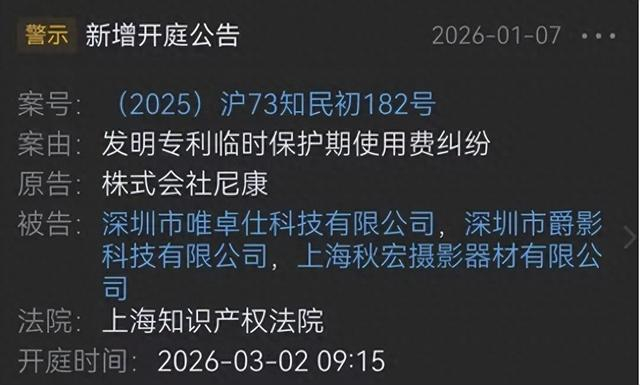
Core Viewpoint - The ongoing lawsuit between Nikon and Weizhuo is centered around patent infringement related to the Z-mount lens technology, with implications for both companies' market positions and future collaborations [1][3][5]. Group 1: Legal Context - The lawsuit involves a claim of "temporary protection period royalties," indicating that Weizhuo allegedly used Nikon's patented technology without permission during the patent application waiting period [3]. - Weizhuo's previous assertion of conducting legal reverse engineering is contradicted by the court's acceptance of the case, suggesting that infringement is established [3]. Group 2: Potential Outcomes - If Nikon wins the case, it could lead to a settlement where Weizhuo pays for the infringement, potentially resulting in a cooperative partnership [5]. - The least favorable outcome for Weizhuo would be a retroactive claim for patent fees and an injunction against further infringement [5]. Group 3: Market Dynamics - Nikon's lawsuit is perceived as a response to Weizhuo's increasing market share in the Z-mount lens segment, which has begun to encroach on Nikon's sales [10]. - Weizhuo's competitive pricing strategy, offering lenses at significantly lower prices than Nikon's, has attracted a substantial customer base, particularly among budget-conscious consumers [10]. Group 4: Industry Reactions - There are mixed opinions in the industry regarding Nikon's lawsuit, with some arguing that Nikon should appreciate the role of domestic brands in expanding the market, while others believe the lawsuit could harm Nikon's brand image [12]. - The potential for a settlement may lead to Weizhuo becoming an authorized partner, but it could also result in restrictions on Weizhuo's product offerings to avoid direct competition with Nikon [12].

半导体行业景气上行,核心设备工艺与国产替代现状如何?
Mei Ri Jing Ji Xin Wen· 2026-01-21 01:12
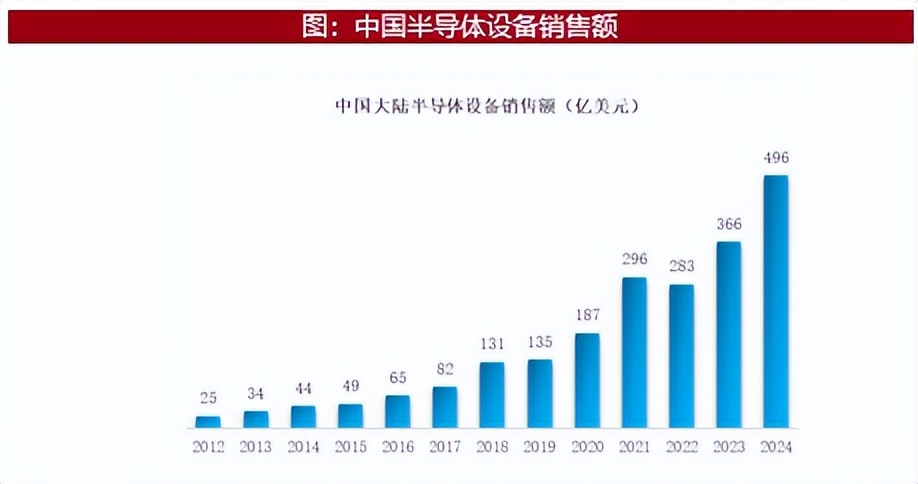
Core Insights - The semiconductor equipment sector is expected to experience strong growth driven by AI and advanced process demands, particularly in GPU-related revenues [1] - The global semiconductor equipment market has shown stable growth, primarily due to the increasing demand for consumer electronics [1] - China's semiconductor equipment market has rapidly grown, capturing approximately 40% of the global market share, driven by both rising chip demand and the need for self-sufficiency in the domestic semiconductor industry [4][2] Semiconductor Equipment Market Overview - Wafer manufacturing equipment accounts for about 90% of the semiconductor equipment market, with thin film deposition, etching, and lithography each contributing around 20% [2] - The growth of the Chinese semiconductor equipment market significantly outpaces the global average due to the rising demand for semiconductor chips [2] Chip Manufacturing Process - The chip manufacturing process involves multiple steps, including purification of industrial sand, pulling of silicon rods, and various processes like polishing and cutting to create wafers [6] - Thin film deposition methods include CVD, PVD, and ALD, with ALD being the most advanced due to its precision at the atomic level [6] Lithography Technology - Lithography is a critical process in chip manufacturing, with high technical barriers; the fourth-generation lithography machines operate at a wavelength of 193 nm [7] - The EUV lithography machines, which are essential for advanced processes, are currently monopolized by overseas companies, particularly ASML, which holds over 80% of the market share [7] Investment Opportunities - The semiconductor equipment sector has transitioned from a focus on self-sufficiency to a landscape influenced by overseas computing power, with significant capital expenditure changes in foreign storage companies impacting the domestic sector [8] - The semiconductor equipment ETF (159516) is highlighted as a strong investment tool, offering exposure to leading companies in the equipment and materials sectors, and is positioned well to capitalize on the industry's cyclical growth [8]
赢家通吃格局突变,日本制造业跌落,谁将主宰中美欧新战局
Sou Hu Cai Jing· 2026-01-20 18:06
Core Viewpoint - The decline of Japanese manufacturing, once a symbol of quality and technology, is attributed to a combination of historical missteps, internal stagnation, and external pressures, leading to a significant loss of market share to competitors from China, the US, and Europe [1][20]. Group 1: Historical Context - The decline of Japanese manufacturing can be traced back to events like the Toshiba incident in the 1980s, which led to severe sanctions and a loss of international standing in high-end industrial equipment and electronics [3][4]. - Japanese companies such as Hitachi and Panasonic faced fierce competition from South Korean firms like Samsung and LG, ultimately leading to their exit from key markets like televisions and semiconductors [4][8]. Group 2: Internal Challenges - The internal promotion system and reliance on traditional advantages have made Japanese companies slow to respond to global competition, resulting in management rigidity and a lack of innovation [6][9]. - The economic bubble burst in the 1990s led to a prolonged period of stagnation, with reduced R&D investment and a shift in talent away from engineering to finance and services, further eroding innovation capabilities [11][13]. Group 3: External Pressures - The US-Japan semiconductor agreement in the 1980s significantly hampered Japan's semiconductor industry, allowing South Korea's Samsung to rise as a dominant player in the global market [8][9]. - The current global manufacturing landscape is characterized by a push for reshoring in the US and Europe, which is attracting investments away from Japan, exacerbating its industrial hollowing [15][16]. Group 4: Competitive Landscape - Chinese companies, such as BYD, are rapidly advancing in sectors like electric vehicles, effectively outpacing traditional Japanese automakers like Toyota and Honda [6][18]. - Japanese brands are losing ground in both emerging and developed markets, as Chinese firms leverage lessons from Japanese manufacturing while being more responsive to local market demands [18][20].
财政金融协同发力 一揽子政策激活内需新动能
Zhong Guo Jing Ying Bao· 2026-01-20 16:20
Core Viewpoint - The central economic work conference has identified the primary task for 2026 as promoting domestic demand and building a strong domestic market, with a focus on fiscal and financial collaboration to stimulate consumption and investment [1] Group 1: Policy Framework - The State Council has launched a comprehensive policy package aimed at enhancing domestic demand, which includes "one goal," "two focuses," "three principles," and "six policies" [1] - The goal is to expand domestic demand, with a focus on stimulating private investment and promoting consumer spending as key drivers of domestic demand [1] Group 2: Support for Private Investment - New policies have been introduced to support small and medium-sized enterprises (SMEs), including a loan interest subsidy policy covering 14 key industries, providing a 1.5% interest subsidy for loans up to 50 million yuan [2] - The policy also includes a significant increase in the guarantee loan limit for medium-sized enterprises, raising it to 20 million yuan, facilitating easier access to long-term loans [2] Group 3: Consumer Spending Initiatives - The number of consumer sectors benefiting from the policies has expanded to 11 categories, with over 90 financial institutions involved in the implementation [3] - Personal consumption loan interest subsidy policies have been optimized, including support for credit card bill installments, which now have no upper limit on individual subsidies, enhancing consumer purchasing power [3] Group 4: Economic Impact - The fiscal and financial policy package is expected to lower financing costs for enterprises, boost market confidence, and activate consumer potential as these measures are implemented [4]
稀土断供213吨重创日本;高市早苗接到死亡通知:血债必须清算!
Sou Hu Cai Jing· 2026-01-20 06:45
Core Viewpoint - Japan is facing a crisis due to its heavy reliance on Chinese rare earth exports, which have significantly decreased, threatening its advanced manufacturing sector and military capabilities [1][3][21]. Group 1: Economic Impact - China's rare earth exports to Japan dropped by 213 tons in December, leading to critical shortages for companies like Mitsubishi Heavy Industries, which now has only 15 days of alloy powder inventory left [1][5]. - Japan's dependency on Chinese rare earths exceeds 70%, with nearly 100% reliance in heavy rare earths, highlighting the vulnerability of its high-end manufacturing industry [3][21]. - The procurement cycle for neodymium-iron-boron magnets has extended from 1-2 months to 3-4 months, directly impacting the operational readiness of Japan's main fighter jets [11][29]. Group 2: Supply Chain and Regulatory Changes - The Chinese government has mandated that all companies exporting rare earths to Japan must provide detailed information about the entire supply chain, including potential resale to the U.S. [7][9]. - A "rare earth fingerprint" tracking system has been implemented, allowing China to monitor the flow of rare earths and impose severe penalties for any violations, which complicates procurement for Japanese firms [9][21]. Group 3: Geopolitical Tensions - China's maritime patrols near the Diaoyu Islands have intensified, with a recent 29-hour operation demonstrating a show of force against Japan [15][21]. - Japan's government is increasing its defense budget and engaging in military collaborations with the Philippines, indicating a strategic pivot in response to perceived threats from China [15][25]. - The diplomatic landscape is strained, with Japan's provocative statements regarding Taiwan and historical grievances exacerbating tensions with China [19][23][30]. Group 4: Historical Context and Future Outlook - China's recent statements emphasize the need for historical accountability regarding Japan's militaristic past, framing current tensions within a broader historical narrative [23][34]. - The economic repercussions for Japan are severe, with a potential GDP loss of 0.43% due to supply chain disruptions, further complicating its economic recovery [29][30]. - Japan's attempts to balance relations with the U.S. while confronting China may lead to further economic and diplomatic challenges, as it navigates a precarious geopolitical landscape [30][32].
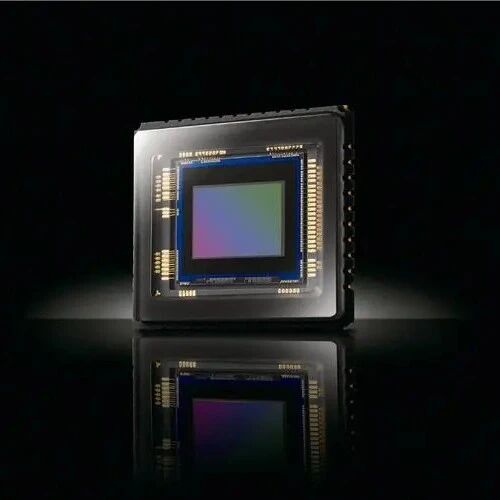
一颗4.1亿像素的CIS芯片
半导体行业观察· 2026-01-19 01:54
公众号记得加星标⭐️,第一时间看推送不会错过。 佳能的4.1亿像素全画幅传感器被誉为24K怪兽,但最新发布的技术手册明确指出一点:这并非电影 传感器,也从未打算将其定位为电影传感器。相反,它是佳能旗舰级CMOS传感器的代表作,展现了 该公司为追求长期影像领先地位而愿意在传感器制造领域投入的决心,而电影则被置于下游而非核心 地位。 为什么这款传感器最初并非为电影而设计? 这份宣传册彻底消除了佳能410MP传感器的设计意图。其架构优先考虑极高的空间分辨率和数据吞吐 量,而非运动成像所需的时域和色调细节。410MP分辨率下8帧/秒的全帧读取模式以及仅通过将像素 压缩至100MP才能实现的24帧/秒模式,并非视频流水线。它们是专为精密成像、检测和科学采集而 设计的数据采集模式,在这些应用中,运动连续性远不如可测量的细节重要。传感器的物理特性也印 证了这一点。1.5μm的像素间距、卷帘快门操作、有限的满阱容量以及适用于固定式主动冷却系统的 功耗和散热设计,都使其完全超出了电影摄影机的设计范围。这些都是有意为之的选择,体现了该传 感器旨在探索制造极限而非满足片场实际拍摄需求。从这个角度来看,缺乏电影专用功能并非缺陷。 这 ...
京东方位列2025 IFI美国专利授权量全球第13位 华为第四
Zhong Guo Jing Ying Bao· 2026-01-14 12:26
《中国经营报》记者注意到,在该榜单中,华为也赫然在列,并排在第四位。业内人士认为,随着中国 企业成为全球科技创新的主体,知识产权对创新的保护和推动作用越来越关键。 (文章来源:中国经营报) 根据报告,2025年美国专利申请量为393344件,较2024年下降8.6%;专利授权量为323272件,微降 0.2%。美国、中国和日本是获得美国专利授权数量最多的国家。 2026年1月13日,全球权威专利服务机构IFI Claims最新发布的2025年度统计报告显示,京东方(BOE) 位列美国专利授权排行榜全球第13位,连续第八年稳居全球TOP20阵营,也是TOP20中唯一一家中国显 示企业。 京东方副总裁、技术与知识产权管理中心负责人李新国表示:"BOE(京东方)始终将知识产权视为企 业可持续发展的核心资产。我们已构建了完善的知识产权管理体系,通过前瞻性布局和高质量创造,不 断积累高价值专利组合,这不仅是为了保护我们的技术创新成果,更是为了在全球市场竞争中构建长 期、稳定的核心竞争力。我们致力于与全球生态伙伴协同创新,共同推动显示与物联网领域的技术进步 与标准演进,引领全产业链的价值提升。" 从入围榜单的企业来看,三 ...

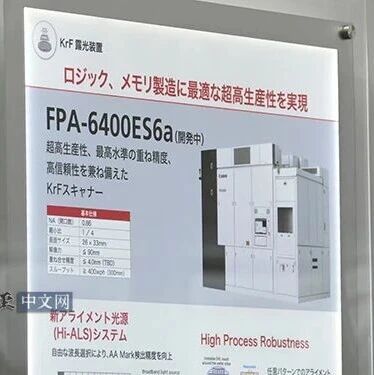
佳能最早26年发售氟化氪光刻机新机型
日经中文网· 2026-01-12 08:00
佳能在2025年的半导体展会SEMICON JAPAN上的展示(2025年12月17日,东京) 该设备用于在半导体晶圆上绘制微细电路的工序。这是佳能约14年来首次更新升级光刻机。新机型的半 导体晶圆处理能力为每小时400片以上,较2012年发售的老款机型(含选配件)提升了三成。此举意在 抓住运算用逻辑半导体及存储器厂商的旺盛需求。 佳能在KrF光刻机领域占据30%的全球份额(按台数计算)。与荷兰阿斯麦控股(ASML Holdings)等 企业是竞争关系。佳能还将于2026年初推出所支持的电路比KrF光刻机更加微细的ArF干式光刻机。 版权声明:日本经济新闻社版权所有,未经授权不得转载或部分复制,违者必究。 日经中文网 https://cn.nikkei.com 这是佳能约14年来首次更新升级光刻机。新机型的半导体晶圆处理能力较2012年发售的老款机型提升了 三成。佳能在氟化氪(KrF)光刻机领域占据30%的全球份额…… 佳能最早将于2026年初发售用于制造成熟制程半导体的氟化氪(KrF)光刻机的新机型。 ...