
华为技术有限公司

Search documents
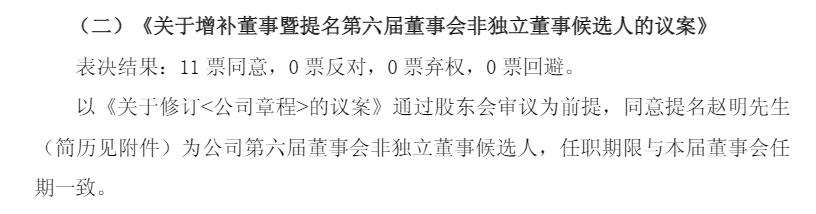
荣耀前CEO赵明加入千里科技,或将出任联席董事长;此前执掌荣耀品牌10年,去年1月卸任,分析人士:他擅长推进商业落地
Sou Hu Cai Jing· 2026-02-12 11:52
Core Viewpoint - Qianli Technology has announced the appointment of Zhao Ming as a candidate for the non-independent director of the sixth board of directors, potentially taking on the role of co-chairman [1][3]. Group 1: Management Changes - Zhao Ming, born in 1973 and a graduate of Shanghai Jiao Tong University with a master's degree in mobile communications and electronic systems, has over 25 years of management experience in global technology companies [3]. - Prior to joining Qianli Technology, Zhao Ming held various significant positions at Huawei, including CEO of Honor Terminal Co., Ltd., where he led the brand for 10 years [3]. - The appointment of Zhao Ming follows a significant share acquisition by Yin Qi, co-founder of Megvii Technology, who became the second-largest shareholder of Qianli Technology with a 19.91% stake for approximately 2.43 billion yuan [6]. Group 2: Strategic Direction - Yin Qi, as chairman, will focus on the development strategy of AI technology, while Zhao Ming will concentrate on advancing the closed-loop strategy of AI business models [6]. - The collaboration between Yin Qi and Zhao Ming is expected to accelerate Qianli Technology's transition from AI technology layout to large-scale commercialization [6]. Group 3: Financial Performance - For the first three quarters of 2025, Qianli Technology reported revenue of 6.946 billion yuan, a year-on-year increase of 44.27% [6]. - The company achieved a net profit attributable to shareholders of 53.2794 million yuan, up 33.37% year-on-year, while the net profit excluding non-recurring items was -176 million yuan, a decline of 826.19% year-on-year [6].


上海青浦区:建设长三角创新枢纽
Ke Ji Ri Bao· 2026-02-11 09:03
Core Insights - The Shanghai Midea Global Innovation Park has recently opened in Qingpu District, symbolizing the area's commitment to enhancing technological innovation capabilities and contributing to the integrated development of the Yangtze River Delta [1][2] - Qingpu District aims to establish itself as a core hub for innovation in the Yangtze River Delta, leveraging its strategic location and fostering collaboration between various sectors [2][3] Economic Development - Qingpu District's GDP is projected to reach 182.5 billion yuan in 2024, which is 1.5 times that of the end of the 13th Five-Year Plan [1] - The district is focusing on the "3+3+3" industrial layout, which includes three trillion-yuan industrial clusters in high-end equipment manufacturing, new-generation information technology, and modern logistics [4] Innovation and Technology - The district has seen a significant increase in strategic emerging industries, which now account for 37.2% of the economy, up nearly 12.5 percentage points from the end of the 13th Five-Year Plan [3] - Major companies like Midea and Huawei are playing crucial roles in driving innovation within Qingpu, with Midea's medical robotics and Huawei's AI innovation center being notable examples [3][6] Talent and Infrastructure - The Shanghai Midea Global Innovation Park is designed to accommodate 8,000 to 10,000 high-end R&D talents, focusing on nine key research areas including industrial internet and smart manufacturing [7] - Qingpu District is enhancing its innovation ecosystem by establishing national-level innovation platforms and incubators, which support various high-tech sectors [6][5]

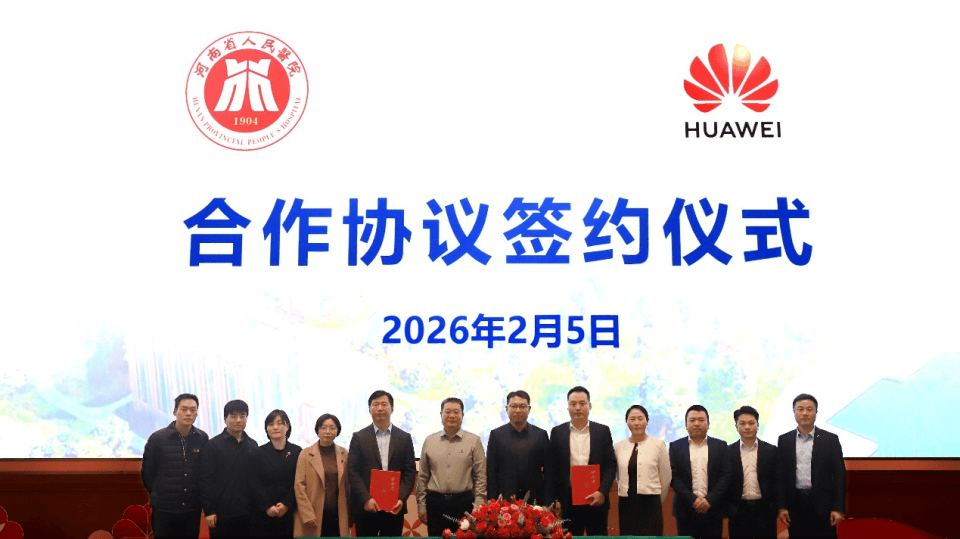
河南省医“牵手”华为,共推医疗全场景智慧化
Sou Hu Cai Jing· 2026-02-10 12:08
Group 1 - The core viewpoint of the article is the signing of a cooperation framework agreement between Henan Provincial People's Hospital and Huawei, aimed at enhancing medical services through digital transformation and artificial intelligence [1][3] Group 2 - The collaboration will leverage the strengths of both parties in areas such as medical artificial intelligence and digital talent cultivation, accelerating the digitalization of healthcare services [3] - The agreement aligns with national requirements for information technology innovation and responds to the demand for innovation in the healthcare sector [3] - Huawei aims to utilize its ICT technology advantages to support the digital transformation of Henan Provincial People's Hospital, with a focus on creating a leading smart hospital model in Henan [3]
豆包官宣总台春晚互动玩法 将送机器人等十万份科技大礼
Ge Long Hui· 2026-02-10 03:06
2月10日,豆包宣布"豆包过年"新春活动正式开启,活动期间将为用户发放新春红包。此外,除夕夜的 中央广播电视总台2026年春晚期间,豆包还将为全国观众送出超过10万份接入豆包大模型的科技好礼, 以及现金红包。 据介绍,今年的豆包新春活动分为两个阶段。第一阶段将于2月13日20点正式启动,用户可进入豆包 App新春活动页面,体验AI生成拜年祝福等AI过年玩法,即可参与抽奖赢取红包,中奖后可提现。 2月16日除夕夜,豆包将在中央广播电视总台春晚期间,配合直播互动,开启第二阶段红包及科技礼包 抽奖。当晚,用户将有三轮机会赢取最高8888元的现金红包或接入豆包大模型的智能科技好礼。 据了解,此次豆包送出的"科技礼包"囊括17款热门产品,包括宇树机器人、拓竹3D打印机、大疆无人 机等前沿科技产品,也有极米投影仪、苏泊尔电饭煲等智能消费品,同时,科技好礼中还涵盖上汽奥迪 E5 Sportback和奔驰CLA两款电车使用权。 值得一提的是,此次抽取的科技奖品均通过火山引擎深度融合了豆包大模型能力。以总台春晚即将送出 的宇树机器人为例,其拟人的音色与语气由豆包大模型的语音合成模型、大语言模型(LLM)以及视觉语 言模型(VL ...


OLED显示器持续高增速放量 产业链公司加速布局
Zheng Quan Ri Bao Wang· 2026-02-09 13:00
Group 1 - UBI Research forecasts that OLED display shipments will reach 3.2 million units in 2025, a significant increase of 64% compared to 1.95 million units in 2024, with a growth rate of over 50% expected for this year [1] - The rapid penetration of OLED in high-end IT applications, driven by leading manufacturers like Apple and Huawei, is also expanding into automotive displays and smart wearables, contributing to the growth of OLED displays [1] - Companies in the OLED supply chain are accelerating technological innovation and capacity expansion, which is expected to drive down costs and further enhance market penetration [1] Group 2 - China currently leads the global OLED shipment market, with AMOLED smartphone panel shipments accounting for 50.6% of the market share [2] - Some panel manufacturers have begun production on their 8.6-generation OLED production lines, with increasing domestic production rates of organic light-emitting materials and PCB components, indicating a shift towards mid-to-high-end products [2] - BOE Technology Group announced that its 8.6-generation AMOLED production line will begin mass production in the second half of 2026, enhancing its competitiveness in the display industry [2] Group 3 - Visionox's 8.6-generation AMOLED production line project in Hefei is set to start cleanroom delivery in the second quarter of this year [3] - The upstream material companies in the OLED supply chain are also accelerating their development, with companies achieving breakthroughs in domestic OLED terminal materials [3] - The company is focusing on the development of new generation narrow-spectrum dopant materials and other advanced technologies to promote domestic substitution and strengthen the supply chain's autonomy [3] Group 4 - OLED is expanding from consumer electronics into more diverse and high-value fields, with a clear trend towards high-end consumer electronics and commercial applications [4] - Domestic OLED is transitioning from merely existing to focusing on quality, with the industry collectively pushing towards high-end markets and increasing international market share [4] - Technological innovation is identified as a key factor for companies to overcome competition and meet high-end demands [4]



山东日照:固定资产投资结构持续优化提升
Zhong Guo Fa Zhan Wang· 2026-02-09 09:20
Group 1 - Fixed asset investment is a key indicator of economic vitality and urban development potential, with Shandong's Rizhao City focusing on project support to optimize investment structure for high-quality economic development by 2025 [1] - Rizhao's industrial investment grew by 28.2% year-on-year in 2025, with significant increases in industrial technological transformation investment by 15.8% and equipment purchases by 45.3%, indicating a strong shift towards high-end, intelligent, and green transformation [2] - The city has implemented measures such as leadership accountability and full-cycle service to enhance project investment, resulting in fixed asset investment growth exceeding the provincial average by 9.1 percentage points [2] Group 2 - Infrastructure construction is accelerating, with key projects like the Weishui High-speed Railway and expansion of the Shenhai Expressway improving regional connectivity and laying a solid foundation for future industrial layout and economic growth [3] - The city plans to continue focusing on major projects, with investments of 215 billion in the Rizhao Port transformation and 188 billion in Century Sunshine Paper, aiming to maintain investment growth at the forefront of the province [3] - The private investment in Rizhao increased by 9.4%, surpassing the provincial average by 16.1 percentage points, reflecting confidence in development prospects and an improved business environment [2]


2026年全球及中国高级驾驶辅助系统(ADAS)行业政策、产业链、市场规模、重点企业及趋势研判:政策与需求双重驱动下,ADAS市场空间广阔[图]
Chan Ye Xin Xi Wang· 2026-02-09 01:21
Core Insights - The Advanced Driving Assistance System (ADAS) enhances driving safety and comfort by utilizing various sensors to perceive the environment and detect potential hazards, leading to increased penetration in vehicles, especially with the rise of electric and smart connected cars [1][11] - The market size of China's ADAS industry is projected to grow from 21.6 billion yuan in 2020 to 122.7 billion yuan by 2025, with a compound annual growth rate (CAGR) of 41.54% [1][12] - By the first seven months of 2025, the penetration rate of passenger cars equipped with combined driving assistance systems in China is expected to reach 62.6%, an increase of 40 percentage points compared to the same period in 2021 [1][11] Industry Overview - ADAS is defined as a proactive safety technology that combines various sensors and navigation data to enhance driving safety and comfort, including features like adaptive cruise control and lane departure warning [3][4] - The industry is categorized into two main types: information assistance and control assistance [3] Industry Policies - The Chinese government has implemented supportive policies for the ADAS industry, including promoting the integration of navigation systems in agricultural machinery and establishing quality certification systems for smart connected vehicles [6][7] - New mandatory national standards for ADAS safety requirements are being developed to enhance product capabilities and safety [7] Industry Value Chain - The ADAS industry value chain consists of upstream core component suppliers, midstream system integrators, and downstream vehicle manufacturers [6] - The automotive industry is a crucial pillar of the national economy, with production and sales recovering post-2020, reaching 30.16 million units in 2023, and projected to exceed 34.5 million units by 2025 [6][8] Current Development Status - The ADAS industry is evolving with advancements in technology, including multi-sensor fusion and AI algorithms, leading to more integrated and intelligent systems [9][16] - Globally, the ADAS market is expected to grow from $17.5 billion in 2020 to approximately $54.5 billion by 2025, with a CAGR of 26.54% [10][11] Competitive Landscape - The ADAS industry in China features a tiered competitive structure, with international giants like Bosch and Continental leading the market, while domestic companies like Huayu Automotive and Desay SV maintain strong positions through innovation and localized services [12][13] - Huayu Automotive reported a revenue of 130.85 billion yuan in the first three quarters of 2025, reflecting a year-on-year growth of 9.51% [14] - Desay SV achieved a revenue of 4.15 billion yuan in the first half of 2025, marking a significant year-on-year increase of 55.49% [15]


启动征集!FINE2026 新材料科技成果与项目路演丨6月10-12日 上海
DT新材料· 2026-02-08 16:04
Core Viewpoint - The 2026 Future Industries New Materials Expo (FINE 2026) aims to showcase innovations in new materials and technologies across various industries, including AI, aerospace, and renewable energy, while facilitating connections between projects and investors [1][12]. Event Organization - The event is organized by DT New Materials and supported by various associations and institutions, including the China Productivity Promotion Center and the Ningbo New Materials Industry Association [2]. - The project submission period is from February 1 to May 31, 2026, allowing teams to submit their results or business plans for evaluation [2]. Project Selection and Roadshow - A professional investment team will assess the submitted projects based on innovation, feasibility, and market potential, providing feedback and suggestions for improvement [3]. - The roadshow will feature 15-minute presentations for each project, including Q&A sessions and networking opportunities [7]. Targeted Project Areas - The expo seeks projects in several key areas, including intelligent components, critical materials for emerging industries, and advanced technologies such as 3D printing and precision processing [5]. Invited Investors - Notable investors and industry leaders, including Sequoia China and Hillhouse Capital, will be invited to participate, enhancing networking and investment opportunities for exhibitors [6]. Event Details - The expo will take place from June 10 to 12, 2026, at the Shanghai New International Expo Center, featuring over 50,000 square meters of exhibition space and more than 300 strategic reports [1][15]. - It is expected to attract over 100,000 professional visitors and 800+ exhibitors, including 200+ research institutions [15][42]. Thematic Focus - FINE 2026 will highlight five common demands in future industries: advanced semiconductors, advanced batteries, lightweight functional materials, low-carbon sustainability, and thermal management [14]. - The event will feature specialized exhibition areas for advanced semiconductors, AI chips, energy materials, and more, showcasing a full chain of innovations from components to cutting-edge technologies [17][21]. Forums and Knowledge Sharing - The expo will host over 30 forums with more than 300 expert speakers, focusing on trends in AI, data centers, and other emerging technologies [28][30]. - Topics will include advanced manufacturing technologies, investment strategies, and project roadshows, fostering collaboration and knowledge exchange [30][36].
2026行业数智化AI安全实践研究报告-中国信通院
Sou Hu Cai Jing· 2026-02-08 10:50
Core Insights - The report, co-authored by Huawei and the China Academy of Information and Communications Technology, analyzes the security challenges in the integration of AI across various industries and proposes a comprehensive security governance framework for AI throughout its lifecycle [1][2]. Group 1: Development Trends and Challenges - AI technology is deeply integrating with various industries, leading to significant trends such as business process restructuring and cross-domain collaboration [11][14]. - The increasing penetration of AI necessitates a balance between development and security, emphasizing the need for agile governance and robust security measures [12][18]. - The report identifies four major trends in AI integration: business process restructuring, cross-domain collaboration, personalized services, and closed-loop optimization [14]. Group 2: Security Risks in AI Applications - AI applications face multi-dimensional security challenges, including management-level compliance issues, technical vulnerabilities, and weak industry-specific protective capabilities [16][23]. - Management-level risks include a lack of regulatory details and unclear responsibility definitions, complicating compliance and accountability [23][25]. - Technical risks span the entire AI lifecycle, from infrastructure vulnerabilities to data security and model robustness, creating a complex risk matrix [37][45]. Group 3: AI Security Governance Framework - The report proposes an "end-to-end, layered decoupling" governance framework for AI security, focusing on four technical pillars: infrastructure, data, models, and agent applications [1][2]. - Infrastructure security aims to strengthen the foundational elements such as computing power and networks, while data security emphasizes lifecycle management through classification and grading [1][2]. - The governance framework includes a collaborative model for security operations and lifecycle management, ensuring a closed-loop security operation [1][2]. Group 4: Industry-Specific Security Practices - The report analyzes security practices in four key sectors: finance, government, healthcare, and manufacturing, providing tailored solutions for each [2][4]. - In finance, a comprehensive risk control system is established to ensure data and operational compliance [2]. - The government sector focuses on building a content security defense line, while healthcare emphasizes a "one center, three protections" system to meet security requirements [2]. Group 5: Future Development Directions - The report outlines a phased development approach: short-term (2-3 years) focuses on foundational improvements and consensus building, while long-term (3-5 years) aims for self-control and ecosystem co-construction [2][10]. - The long-term vision includes breaking through underlying technical bottlenecks and promoting cross-industry and cross-border ecological collaboration [2][10].

趋势研判!2026年中国智能驾驶域控制器市场政策、产业链全景、发展现状及未来发展趋势分析:爆发增长迈向千亿市场,融合自主驱动产业进阶[图]
Chan Ye Xin Xi Wang· 2026-02-07 01:18
内容概要:智能驾驶域控制器(ADCU)是汽车产业智能化与电子电气架构演进的核心产物,它作 为"车载大脑",通过高性能计算平台集中整合并统一调度原先分散的感知、决策、规划与执行功能,是 推动高阶自动驾驶落地的关键枢纽。近年来,国家通过一系列政策从可靠性提升、标准制定、AI融合 及成果转化等多维度为行业发展提供了强有力的支持。伴随技术迭代与场景渗透,智能驾驶域电子市场 稳步增长,域控制器市场更是呈爆发式扩张,从单一功能单元演进为集中式决策平台,受多传感融合、 厂商自研布局等因素驱动活力充沛。数据显示:2020-2024年市场规模从9.8亿元飙升至167.4亿元, 2025-2026年我国智能驾驶域控制器市场规模预计将从290.3亿元增长至447.6亿元。未来行业将向架构深 度融合、全产业链自主可控、场景赋能与模式创新三大方向进阶,依托技术与生态升级,持续强化在整 车智能化中的核心枢纽价值,发展空间广阔。 上市企业:德赛西威(002920.SZ)、经纬恒润(688326.SH)、比亚迪(002594.SZ)、零跑汽车 (09863.HK)、蔚来-SW(09866.HK) 相关企业:华为技术有限公司、北京地平线信息技 ...
