卡游

Search documents
要不IP要不IPO,泛娱乐公司只有这两条活路
创业邦· 2026-01-28 12:58
Core Viewpoint - The article discusses the challenges and opportunities in the entertainment and IP economy, particularly focusing on the upcoming IPOs of six companies in the Hong Kong market and the implications of their reliance on licensed IPs for revenue growth [6][7][10]. Group 1: Market Dynamics - Six entertainment companies have filed for IPOs in Hong Kong, including major players like 乐自天成 and TOP TOY, amidst a declining valuation trend in the new consumption sector [6][7]. - Concerns about the sustainability of consumer habits and the ability of companies to maintain high growth rates, particularly for brands like 泡泡玛特, are prevalent among investors [6][7]. - The article highlights a shift towards a model of "self-developed IP + licensing + sales" in the content and toy industries, indicating a trend towards integrated operations [7][34]. Group 2: IP Dependency - Licensed IP has become a critical revenue source for these companies, with some relying heavily on acquiring numerous IPs for rapid expansion, which may pose long-term risks [10][14]. - The revenue contribution ratio of licensed IP to self-developed IP is alarmingly high, often reaching 9:1, indicating a heavy reliance on external IPs [9][10]. - Companies like 桑尼森迪 face uncertainty as their key IPs have not yet established long-term popularity, raising questions about their future revenue stability [29][30]. Group 3: Financial Metrics - The gross profit margins of card companies like 卡游 and Suplay are significantly higher, at 67.3% and 69.5% respectively, compared to toy companies, which range from 30% to 40% [13][14]. - The article notes a concerning trend where many companies are increasing their licensing fees significantly, often deferring cash payments, which could impact cash flow and growth if sales do not meet expectations [17][18]. - The financial history of companies shows a dichotomy, with some like TOP TOY and 金添动漫 having simpler shareholder structures, while others like 乐自天成 have undergone multiple financing rounds [20][21]. Group 4: Regulatory and Market Pressures - The article points out that the pressure from existing investors and regulatory scrutiny is influencing the cautious approach of companies in their IPO filings, particularly in how they present their consumer demographics [22][25]. - Companies are increasingly avoiding sensitive topics related to their consumer base, opting for broader terms to distance themselves from potential regulatory backlash [25][26]. - The competitive landscape in the new consumption sector remains intense, with many companies seeking to capitalize on overseas expansion opportunities while navigating the complexities of the Hong Kong IPO process [18][19]. Group 5: Future of IP Economy - The future of the IP economy is seen as promising, but not all companies will thrive; the ability to develop and maintain valuable IP will be crucial [27][34]. - The article emphasizes the need for companies to have a strong vision for IP selection and development, as the market becomes increasingly competitive and reliant on high-quality IP [34][35]. - The integration of content creation and merchandise production is expected to deepen, leading to more innovative ways to engage consumers and monetize IP [34][35].

要不IP要不IPO,泛娱乐公司只有这两条活路
3 6 Ke· 2026-01-23 11:25
Core Viewpoint - The article discusses the challenges and dynamics of the entertainment and toy industry in Hong Kong, particularly focusing on the IPO prospects of six companies in the sector, highlighting concerns over their reliance on licensed IP and the sustainability of consumer habits [1][3][18]. Group 1: Industry Dynamics - Since 2025, six entertainment companies have filed for IPOs in Hong Kong, including major players like 52TOYS and TOP TOY [1]. - Despite stable performance, the valuation of new consumer stocks in Hong Kong continues to decline, reflecting investor concerns about the sustainability of the business model [1][3]. - The core focus has shifted to whether the leading concept, Pop Mart, can maintain high growth, which is a significant concern for new consumer sectors [1][3]. Group 2: IP and Revenue Contribution - Licensed IP has become a crucial contributor to the performance and growth of related companies, but rapid acquisition of IP before going public poses long-term risks [3][6]. - Companies face pressure from investors to list, but reliance on external licensed IP and negative social sentiment regarding irrational consumption complicates the IPO process for toy companies [3][6]. - The article suggests a shift towards a model of "developing, licensing, and selling" self-owned IP, indicating a trend in the content and toy industries [3][22]. Group 3: Financial Metrics and Performance - Among the six companies, the gross profit margins vary significantly, with card companies like 卡游 and Suplay showing margins of 67.3% and 69.5%, while toy companies range from 30% to 40% [9][10]. - The ratio of licensed IP revenue to licensing costs is a key indicator of a company's IP operational capability, with companies like TOP TOY and 金添动漫 demonstrating effective value from their licensed IP [9][10]. - Many companies have seen a surge in licensing costs prior to their IPOs, indicating a rush to build an "IP matrix" [12][14]. Group 4: Market Sentiment and Regulatory Concerns - The article highlights two major concerns in the toy industry: reliance on external licensed IP and societal pressures regarding consumer behavior, which could limit profitability [18][21]. - Regulatory pressures are seen as a more significant long-term concern compared to reliance on licensed IP, as companies like 卡游 have adjusted their narratives to avoid sensitive topics [18][21]. - The failure of 卡游's second IPO attempt has led other companies to adopt more cautious communication strategies regarding their consumer demographics [21]. Group 5: Future of IP Economy - The future of the IP economy is uncertain, with the article suggesting that while the industry remains vibrant, not all companies will thrive [22][29]. - The relationship between content creation and toy production is expected to become increasingly intertwined, with a focus on creating long-lasting and valuable IP [29]. - The article emphasizes the need for companies to develop strong IP selection capabilities and to consider licensing from the early stages of IP development [29].

卡牌企业递表港交所
Mei Ri Shang Bao· 2026-01-22 22:37
Group 1 - Suplay, a card company focusing on cultural products, has submitted its IPO application to the Hong Kong Stock Exchange, aiming to become the "first card stock" in the market [1] - Established in 2019, Suplay has become the leader in China's collectible non-combat card market, with projected GMV for 2024 expected to be the highest in its segment [1] - Financial data shows that Suplay's revenue reached 146 million yuan in 2023, with a forecasted doubling to 281 million yuan in 2024, and revenue for the first three quarters of 2025 has already surpassed 283 million yuan [1] Group 2 - Suplay targets adult consumers, with over 99% of its customers being 18 years or older, allowing it to avoid direct competition with traditional card game giants [2] - Despite impressive performance, Suplay faces challenges due to its heavy reliance on IP, with self-owned IP revenue dropping from 40.6% in 2023 to 4.1% in the first three quarters of 2025 [2] - The company is currently negotiating the renewal of its agreement with its largest revenue-generating licensed IP partner, which poses a risk to its main income source [2] Group 3 - The rise of Suplay reflects the potential of the "Guzi economy," with the Chinese pan-entertainment product market expected to grow from 91.9 billion yuan in 2019 to 174.1 billion yuan in 2024, representing a compound annual growth rate of 13.6% [3] - The "Guzi economy" market is projected to exceed 300 billion yuan by 2029, providing significant growth opportunities for the collectible card industry [3]
多家公司“排队” 卡牌潮玩赛道迎来上市潮
Zheng Quan Shi Bao Wang· 2026-01-22 12:07
Core Insights - The card and trendy toy sector is experiencing a new wave of IPO applications, with companies like Sannisen Di and Suplay recently submitting their applications to list on the Hong Kong Stock Exchange [1][2]. Group 1: Company Developments - Sannisen Di, an IP toy company from Hunan, has gained recognition for launching IP-authorized figurines following the release of the animated film "Nezha: Birth of the Demon Child" in early 2025. The company reported revenues of 107 million yuan in 2023 and 245 million yuan in 2024, with a significant increase to 386 million yuan in the first three quarters of 2025, driven by popular IP products [2]. - Suplay, which focuses on collectible cards, has also seen rapid revenue growth, reporting 146 million yuan in 2023 and 281 million yuan in 2024, with 283 million yuan in the first three quarters of 2025. The company ranks first in the collectible non-battle card market in China based on GMV for 2024 [3]. Group 2: Market Trends - The card and trendy toy sector is expanding, with multiple companies, including KAYOU and 52TOYS, also in the process of going public. KAYOU's revenue is projected to reach 10 billion yuan in 2024, significantly up from 934 million yuan in 2023, while 52TOYS has seen its revenue grow from 463 million yuan in 2022 to 630 million yuan in 2024 [4]. - The market for card and trendy toys is expected to grow significantly, with the global entertainment merchandise market projected to reach $82.2 billion by 2024, maintaining a compound annual growth rate (CAGR) of approximately 17.1% over the next five years. The Chinese market for non-card trendy toys is expected to grow from 53.3 billion yuan in 2024 to 151.9 billion yuan by 2029, with a CAGR of 23.3% [7]. Group 3: Cultural and Product Innovations - The trend of incorporating Chinese cultural elements into products is gaining traction, with companies like 52TOYS collaborating with cultural institutions to create innovative products. For instance, 52TOYS has developed a series of creative products in partnership with the National Museum, showcasing traditional artifacts in a modern context [8].
一张二手卡牌竟拍出5.5万天价
Qi Lu Wan Bao· 2026-01-21 10:06
Core Insights - The trading card market is experiencing significant growth, with a compound annual growth rate of 25%, and is projected to exceed 30 billion yuan in the next three years [2] - The market is characterized by a stark contrast in pricing, with rare cards fetching high prices while ordinary cards are valued very low [2][5] - The industry is attracting capital interest, leading to a competitive race for listings among leading companies [6] Market Overview - The trading card market has evolved from childhood entertainment to a collectible asset for adults, with a diverse age demographic participating [2] - The market is divided into two main categories: Trading Card Games (TCG) that support gameplay and Collectible Card Games (CCG) that focus on rarity and collection [3] - The market is expected to reach 35.1 billion yuan by 2027 according to Citic Securities [2] Pricing Dynamics - Recent trends show a 5% decline in the price of simplified Chinese Pokémon cards, while Japanese versions have seen a slight increase of 0.33% [5] - A specific Pokémon card, "梦幻ex," has reached a price of 55,000 yuan, while common cards can be as low as 0.2 yuan, indicating a depreciation rate of over 91.67% for ordinary cards [5] - The disparity in card values highlights a market where high-value cards are sought after, while low-value cards struggle to find buyers [5] Online Trading and Community Engagement - Many transactions are conducted through online platforms, with dedicated apps providing market information and facilitating sales [4] - The demand for graded cards is increasing, as ratings significantly impact their marketability and price [5] - Live streaming has become a popular method for card sales, enhancing the emotional experience of unboxing and trading [5] Competitive Landscape - Card Game Company (卡游) holds a dominant market share of 71% in the TCG sector, with a projected revenue of 10.057 billion yuan in 2024, marking a 278% year-on-year growth [6] - Suplay (超级玩咖) has emerged as a strong competitor in the collectible card segment, with a revenue of 283 million yuan and a gross margin of 54.5% [6] - New entrants and investments from major companies like Pop Mart and miHoYo indicate a growing interest in the trading card market [7]
宝可梦卡牌价格飙涨至万元级
第一财经· 2026-01-17 17:47
Core Viewpoint - The article discusses the rapid increase in investment and trading activity in the Pokémon trading card market, highlighting the significant price appreciation of rare cards and the evolving landscape of the card industry in China [3][5][10]. Group 1: Market Trends and Price Dynamics - Rare Pokémon cards have seen a dramatic price increase, with some cards rising from a few thousand yuan to over 8,000 to 10,000 yuan within a year [5][6]. - The trading volume of Pokémon cards has surged, with a notable increase in the secondary market, particularly for limited edition and special collaboration cards [5][6][18]. - The Pokémon brand's 30th anniversary in 2026 is expected to further stimulate market interest and trading activity [6]. Group 2: Investment and Capital Influx - The card market has attracted significant capital investment, with multiple companies announcing financing rounds and plans for IPOs, indicating a growing interest in the sector [10][11][13]. - Companies like Suplay and Hitcard are actively pursuing public listings, reflecting the competitive landscape for becoming the "first card stock" in the market [11][13]. - The dual value proposition of cards as collectibles and investment assets is driving institutional interest, with high margins and strong repeat purchase potential being key attractions [13]. Group 3: Industry Challenges and Regulatory Concerns - The rapid growth of the card market is accompanied by compliance risks, particularly concerning the protection of minors, as a significant portion of the audience is underage [20]. - Regulatory scrutiny is increasing, with expectations for companies to implement measures such as age verification systems and restrictions on high-priced card sales to minors [20]. - The sustainability of the card market is questioned due to the reliance on popular IPs and the potential for market volatility based on content availability and consumer interest [14][20].

商业秘密|宝可梦卡牌价格飙涨至万元级,是收藏风口还是投资泡沫?
Di Yi Cai Jing Zi Xun· 2026-01-17 14:04
Core Insights - The market for Pokémon trading cards is experiencing rapid price increases, particularly for rare cards, with some prices rising from a few thousand to over ten thousand yuan within a year [2][4] - The investment interest in trading cards is growing, with various companies in the sector pursuing financing and IPOs, indicating a shift towards viewing cards as both collectibles and investment assets [9][11] Market Trends - The secondary market for Pokémon cards has seen significant price surges, especially for limited edition and special collaboration cards, driven by scarcity and market demand [2][4] - The Pokémon brand is expanding its presence in China through official venues and events, enhancing community engagement and user experience [6][11] Investment Dynamics - Several companies in the trading card industry are actively seeking funding or preparing for public listings, reflecting the increasing capital interest in the sector [9][11] - The trading card market is evolving towards a dual value proposition of collection and investment, attracting institutional investors due to its high margins and user retention potential [11][14] Regulatory Considerations - The trading card industry faces compliance risks, particularly concerning the protection of minors, which could impact companies' ability to engage with capital markets [12][17] - Regulatory scrutiny is increasing, with potential requirements for age verification and restrictions on high-value card sales to minors [17]
上万一盒的国产小卡片,凭什么让无数老外上瘾?
3 6 Ke· 2026-01-15 00:17
Core Viewpoint - Suplay, a card company, has filed for an IPO in Hong Kong, attracting attention due to its high-priced card offerings and backing from notable investors like MiHoYo and Sequoia. The company targets adult collectors rather than children, positioning itself as a luxury brand in the card market [1][3]. Financial Performance - Founded in 2021, Suplay transitioned to card production in 2023, achieving significant sales with 1.56 million cards sold and revenues of 146.3 million RMB in 2023. Projections indicate revenues of 281 million RMB in 2024 and 283 million RMB in the first three quarters of 2025, with adjusted net profits increasing from 15.97 million RMB in 2023 to 86.42 million RMB in 2025 [3][4][5]. Market Positioning - Suplay's average card price increased from 31 RMB to 43 RMB, with sales volume more than doubling. Its gross margin of 69.5% is competitive with industry leader Card Game, which has a margin of 71.3% [6][10]. - The company primarily targets adult collectors, contrasting with traditional children's card games, and has adopted strategies from established brands like Panini and Topps [7][9]. Product Strategy - Suplay has secured a significant IP license for Disney's 100th anniversary, marking a first for a Chinese brand. This license is crucial as it enhances the perceived value of their cards, which are designed to be collectible and aesthetically appealing [18][20]. - The company employs various production techniques to enhance card quality, including metallic coatings and intricate designs, making their products competitive in the luxury segment [22][25]. Challenges and Risks - Despite its growth, Suplay's revenue is only about 3% of Card Game's 10.057 billion RMB in 2024, indicating a small market share. The company relies heavily on IP licensing, which constitutes 95% of its revenue, making it vulnerable to changes in IP agreements [34][35]. - The company faces a dilemma between maintaining card scarcity to preserve value and the need for continuous product releases to drive growth. This balance is critical for sustaining player interest and market value [39][42].
虚拟IP变纸上黄金,Suplay逆袭全球前五,IPO能否解死循环?
Sou Hu Cai Jing· 2026-01-14 15:20
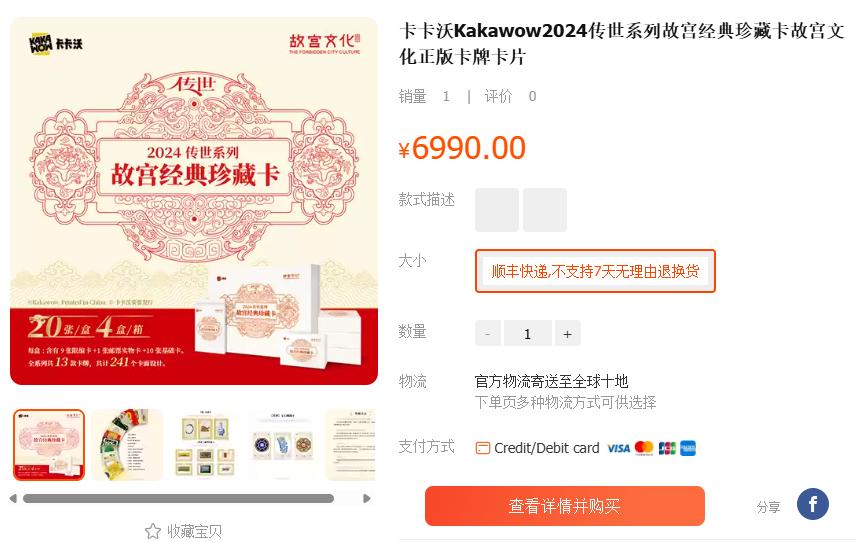
Core Viewpoint - Suplay is attempting to go public in Hong Kong, aiming to become the first publicly listed company in the collectible card industry, leveraging its partnership with miHoYo for significant profits, but faces challenges as its core IP license is set to expire soon [1] Group 1: Company Overview - Suplay has submitted its IPO application to the Hong Kong Stock Exchange, with CICC and JPMorgan as joint sponsors [1] - The company has achieved a gross margin exceeding 60%, comparable to luxury goods, but its reliance on IP has surged to 77.7% [1][11] - Suplay's flagship brand, Kaka Wo, utilizes premium materials and traditional craftsmanship, with individual card prices reaching up to 69,900 yuan [4] Group 2: Market Position and Performance - Suplay has positioned itself as a leader in the collectible non-battle card market in China and is among the top five brands globally [11] - The company has registered over 1.3 million users, with 99.5% being adults, creating a complete ecosystem around scarcity and value verification [6] - In 2024, Suplay's revenue is projected to be 280 million yuan, achieving a 30.5% adjusted net profit margin, significantly outperforming industry leader KaYou, which reported a loss of 1.242 billion yuan despite higher revenue [8][9] Group 3: Challenges and Risks - Suplay's dependency on licensed IP has increased dramatically, with its own IP revenue dropping from 40.6% to 4.1% [11] - The core IP that contributed 32.3% of revenue in the first three quarters of 2025 is set to expire, with negotiations for renewal ongoing, raising concerns about future revenue stability [13] - Out of 22 signed IPs, only three are exclusive, indicating a potential competitive disadvantage as other companies, like Pop Mart, pursue partnerships with major players [13]
2025年第53周:服装行业周度市场观察
艾瑞咨询· 2026-01-14 00:06
Industry Environment - The domestic mid-to-high-end women's clothing market is witnessing the emergence of new brands that attract high-net-worth customers through differentiated positioning and high-quality materials [2] - Brands like AWPROJECT and CHICJOC are expanding rapidly, with AWPROJECT focusing on urban women and CHICJOC implementing a "luxury alternative" strategy to achieve high repurchase rates [2] - International brands such as AnnAndelman are accelerating their presence in the Chinese market, leveraging unique designs and online-offline integration to drive market reshuffling [2] Outdoor Lifestyle Migration - Over 500 million participants are engaged in outdoor sports in China, with a shift in consumer logic towards multi-scenario adaptability, sustainability, and emotional value [3] - The outdoor apparel market is growing at an annual rate of 49%, with consumers prioritizing durability, environmental friendliness, and multifunctionality [3] - Future trends include the proliferation of smart equipment, community integration, and the "no-trace outdoor" concept, driving professional development in the industry [3] Fast Fashion Trends - The fast fashion industry is undergoing significant changes by 2025, characterized by three main trends: premiumization, acceleration, and technology-driven innovation [5] - International brands like Uniqlo and H&M are entering the high-end market through price increases and collaborations, while local brands are expanding overseas [5] - The integration of online and offline channels is deepening, with brands utilizing AI technology in design, warehousing, and marketing to enhance efficiency [5] Luxury Goods Market - The luxury goods sector is experiencing a "store opening wave," with brands like CHANEL and Louis Vuitton opening new stores in China, indicating signs of recovery [7] - The Asia-Pacific market, particularly China, is a key growth driver, while the Japanese market shows mixed performance due to currency and tourism impacts [7] - Brands are focusing on core markets and accelerating localization marketing to strengthen cultural resonance [7] Consumer Behavior Shifts - Consumers are increasingly prioritizing functionality and brand trust over mere trends, as evidenced by the popularity of high-value down jackets [4] - The success of Sam's Club's down jackets reflects a new rational consumption trend where consumers value core needs like warmth and cost-effectiveness [4] - The shift in women's shopping behavior towards men's and children's clothing highlights a growing demand for quality and practicality over traditional fashion norms [13] Jewelry Market Trends - The jewelry market is witnessing a resurgence of retro styles, with a focus on emotional resonance and personalized design appealing to younger consumers [14] - The global jewelry market is expected to grow, with the U.S. and U.K. projected annual growth rates of 1.78% and 3.35%, respectively [14] - The industry is transitioning from "material consumption" to "spiritual consumption," emphasizing the balance between craftsmanship and emotional needs [15] Brand Dynamics - The luxury e-commerce platform Mile has acquired the bankrupt fashion retailer Matches, aiming to reshape luxury retail with a new business model [24] - Scottish luxury cashmere brand Begg x Co is expanding into the Chinese market through a strategic partnership with Meizui, launching its official Tmall flagship store [25] - Sequoia China has acquired a controlling stake in the fashion brand Golden Goose, aiming to support its global expansion and strengthen its market position [26]