卫材

Search documents
首版商保创新药目录纳入19种药品
Nan Fang Du Shi Bao· 2025-12-07 23:09
Core Insights - The 2025 Innovation Drug High-Quality Development Conference was held in Guangzhou, announcing the new drug directories for national basic medical insurance and commercial health insurance [1] Group 1: Drug Directory Adjustments - A total of 114 new drugs were added to the directory, including 50 first-class innovative drugs [2][6] - The first version of the commercial health insurance innovative drug directory includes 19 drugs, featuring CAR-T therapies for tumors, treatments for rare diseases like neuroblastoma and Gaucher disease, and Alzheimer's disease medications [2][4] Group 2: Complementarity of Insurance Directories - The commercial health insurance innovative drug directory is designed to complement the basic medical insurance, focusing on high-innovation drugs with significant clinical value that exceed basic insurance coverage [4] - The directory aims to clarify the boundaries of basic medical insurance and promote the development of a multi-tiered medical security system [4] Group 3: Financial Implications for Patients - The inclusion of CAR-T therapies, which can cost around 1.2 million yuan per treatment, is expected to significantly reduce out-of-pocket expenses for patients, potentially saving them hundreds of thousands of yuan [5] Group 4: Implementation Timeline - The new drug directory adjustments will be officially implemented nationwide on January 1, 2026, marking the eighth adjustment since the establishment of the National Medical Insurance Administration [6][7]

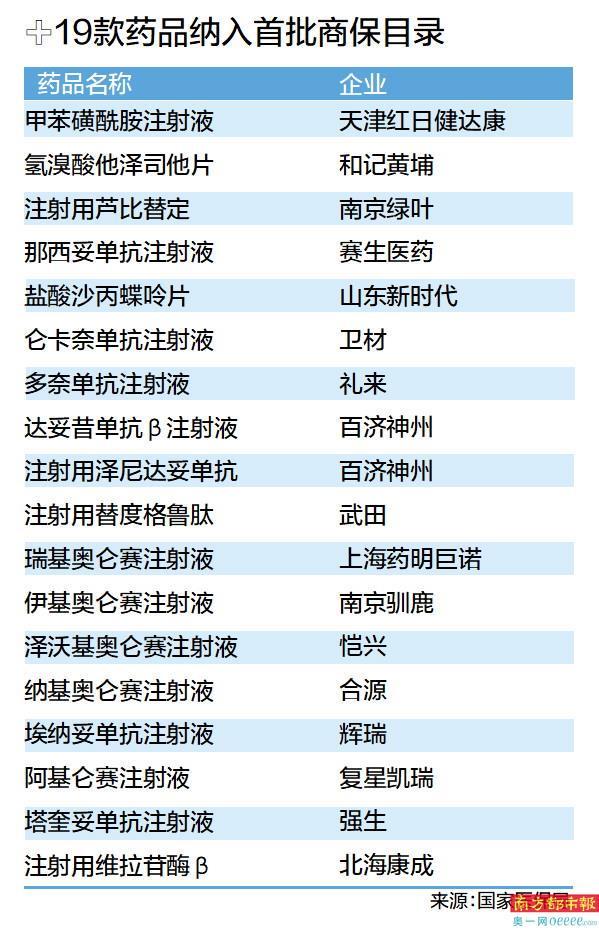
一图看懂首版商保创新药目录,含5款“天价抗癌药”
Di Yi Cai Jing· 2025-12-07 22:40
Core Insights - The first version of the commercial insurance innovative drug directory has been released, including 19 new drugs from 18 innovative pharmaceutical companies, with a roughly equal share of domestic and imported drugs [1][2] - Approximately 70% of the drugs included are oncology treatments, featuring five high-cost CAR-T products, indicating a significant focus on cancer therapies [1][8] - The inclusion of rare disease medications and Alzheimer's treatments in the directory is expected to enhance commercial insurance payment opportunities and favorable policies for hospital access [1][10] Summary by Category Drug Inclusion - A total of 19 drugs have been included in the first commercial insurance innovative drug directory, with a selection rate of about 16%, aligning with industry expectations [4][6] - The directory features a mix of oncology drugs, rare disease treatments, and Alzheimer's medications, with a notable emphasis on high-priced innovative drugs [1][8] Market Dynamics - The directory's limited number of drugs (around 20) is seen as a strategic move to facilitate implementation and avoid complications in local insurance products [6][10] - The commercial insurance market is expected to leverage the directory to enhance patient access to high-value drugs, particularly in the oncology sector [9][11] Regulatory and Policy Framework - The National Healthcare Security Administration (NHSA) encourages local insurance departments to support the integration of the commercial insurance innovative drug directory into retail pharmacies and monitor pricing [7][14] - The directory aims to provide a reference for various commercial insurance entities, allowing them to negotiate with innovative drug companies without the need for exclusive selections [11][14] Patient Impact - The drugs listed in the directory are characterized by a small patient base or specific indications, minimizing the risk of clinical misuse and aligning with commercial insurance risk management strategies [8][13] - The directory includes several drugs for rare diseases, which are expected to fill clinical gaps and provide essential treatments previously unavailable in China [12][13]
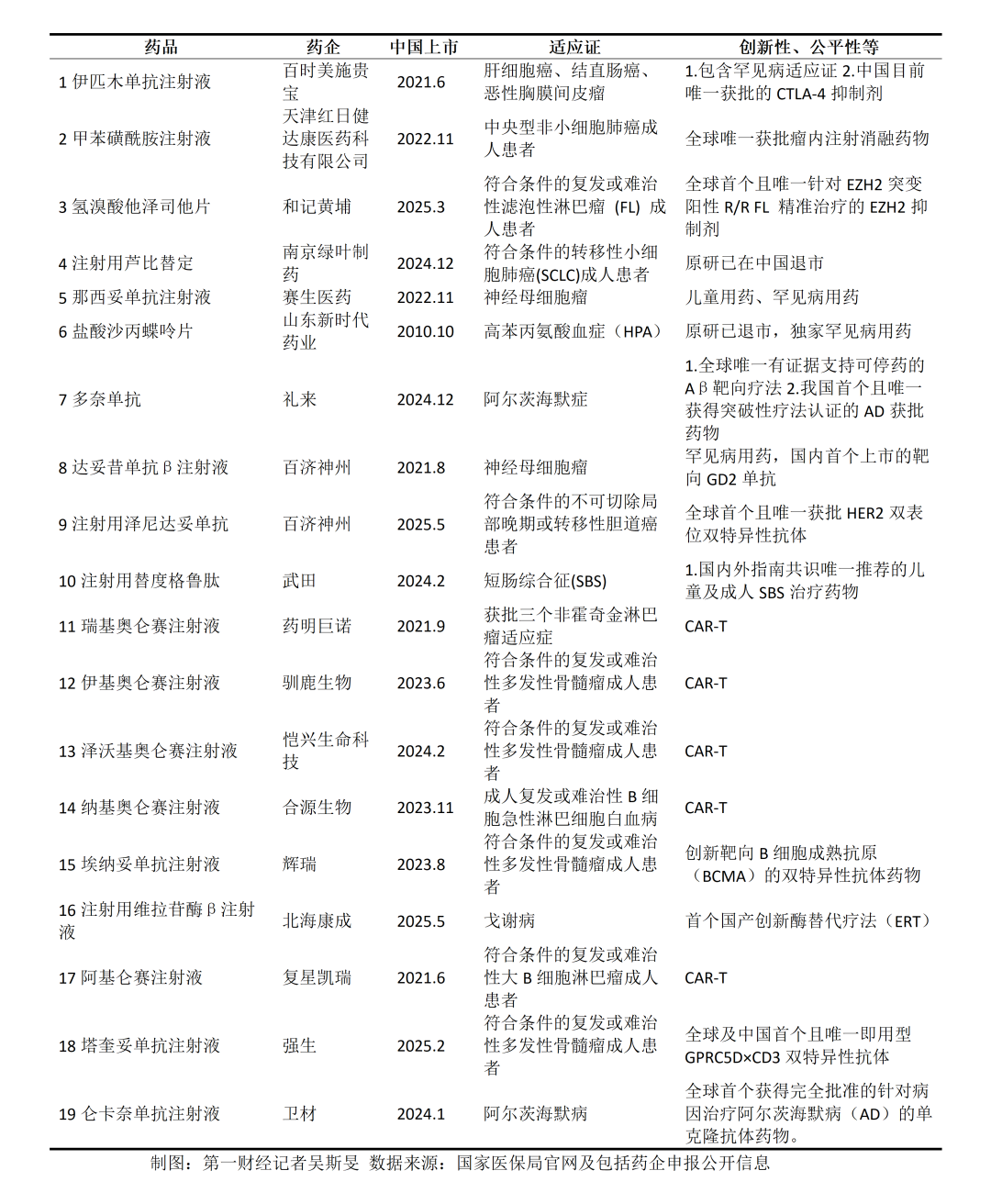
一图看懂首版商保创新药目录,含5款“天价抗癌药”
第一财经· 2025-12-07 15:53
Core Insights - The first version of the commercial health insurance innovative drug directory has been released, including 19 new drugs from 18 innovative pharmaceutical companies, with a roughly equal share of domestic and imported drugs [3][4] - Approximately 70% of the drugs included are oncology treatments, featuring five high-cost CAR-T products, indicating a significant focus on cancer therapies [3][4] - The inclusion of rare disease medications and Alzheimer's treatments in the directory is expected to enhance commercial insurance payment options and facilitate hospital access [3] Summary by Sections Inclusion Criteria - A total of 121 drug names passed the review for the commercial health insurance innovative drug directory, with only 19 ultimately included, resulting in an acceptance rate of about 16% [6] - The directory aims to balance the number of drugs included to ensure effective implementation and avoid overwhelming the system [8] Drug Characteristics - The drugs in the directory generally have a small patient base or clear indications, minimizing the risk of clinical misuse [10] - High innovation and the ability to fill clinical gaps are common traits among the selected drugs, particularly in rare diseases and pediatric treatments [11] - The directory includes a significant number of oncology drugs, with 14 out of 19 being cancer treatments, primarily targeting niche patient populations [11][12] Market Dynamics - The CAR-T products included represent over half of the CAR-T therapies available in China, highlighting their importance in the market [12] - The directory's structure allows for multiple similar drugs to coexist, enhancing patient choice and supporting real-world evidence accumulation [13][14] - The focus on rare disease treatments is evident, with at least five rare diseases represented in the directory, including neuroblastoma and Gaucher disease [14] Future Implications - The directory is expected to influence local health insurance products, prompting adjustments to existing special drug lists in various regions [16][17] - The commercial health insurance sector is encouraged to design new products and adjust reimbursement strategies based on the directory to better meet patient needs [17]
2025国谈结果公布:“药王”进医保 5款百万抗癌药进商保
经济观察报· 2025-12-07 12:13
Core Viewpoint - The recent adjustments to the national basic medical insurance directory and the introduction of the commercial insurance innovative drug directory mark significant steps towards enhancing access to innovative treatments in China, particularly for high-cost therapies like CAR-T drugs [2][6]. Summary by Sections National Basic Medical Insurance Directory Adjustments - A total of 114 new drugs were added to the basic medical insurance directory, including 50 first-class innovative drugs [2]. - The total number of drugs in the basic medical insurance directory has increased to 3,253, comprising 1,857 Western medicines and 1,396 traditional Chinese medicines [3]. - New inclusions cover various fields such as oncology, chronic diseases, mental health, and pediatric medications, with several rare disease treatments also added [3]. Commercial Insurance Innovative Drug Directory - The commercial insurance innovative drug directory aims to include high-innovation drugs that exceed the basic insurance scope but offer significant clinical value and patient benefits [6]. - A total of 121 drugs underwent formal review for the commercial insurance directory, with 24 entering price negotiation, ultimately resulting in 19 drugs from 18 companies being included [6]. - Notable inclusions are five CAR-T therapies, which previously cost over one million yuan per injection, making them unaffordable for many patients [6]. Performance of Pharmaceutical Companies - Several leading pharmaceutical companies have reported their successes in the 2025 national medical insurance negotiations, with Heng Rui Pharmaceutical having 20 drugs included, contributing 7.554 billion yuan to their total revenue [5]. - Innovent Biologics announced that 7 of its new drugs were included in the updated national medical insurance directory, with 12 of its 17 innovative drugs now covered [5]. Specific Drug Inclusions - The directory includes drugs for Alzheimer's disease, such as the monoclonal antibodies from Eisai and Eli Lilly, and several rare disease treatments [7]. - Some high-profile drugs, like Novo Nordisk's semaglutide and Bristol-Myers Squibb's nivolumab, were not included despite passing the formal review [8]. Implementation Timeline - The new directory is set to be officially implemented nationwide on January 1, 2026 [9].



5款百万元级别的CAR-T全部入选首版《商业健康保险创新药品目录》
Mei Ri Jing Ji Xin Wen· 2025-12-07 05:01
Core Insights - The "2025 Innovative Drug High-Quality Development Conference" was held in Guangzhou, announcing the 2025 National Basic Medical Insurance, Maternity Insurance, and Work Injury Insurance Drug Catalog, along with the first edition of the Commercial Health Insurance Innovative Drug Catalog [1] Group 1: Drug Catalogs - The first edition of the Commercial Health Insurance Innovative Drug Catalog includes 19 drugs, featuring all five CAR-T tumor therapies priced at over one million [1] - High-profile drugs for Alzheimer's disease treatment and rare diseases have also been included in the catalog, reflecting significant public interest [1] Group 2: Industry Perspectives - Fosun Kerry's Chairman Zhang Wenjie emphasized that the quality of innovative drugs is not only determined by the drugs themselves but also by patient accessibility [1] - The negotiation mechanism for commercial insurance is highlighted as a crucial milestone for the accessibility of innovative drugs in China [1]


疯狂的司美格鲁肽遇挫
Guo Ji Jin Rong Bao· 2025-11-27 02:25
Core Insights - Novo Nordisk's oral semaglutide failed to show significant efficacy in treating early symptomatic Alzheimer's disease in its Phase III trials, leading to a stock drop of over 10% [1][3] - This marks the first setback for semaglutide, a drug that has gained significant attention for various indications including diabetes and weight management [1][3] Company Summary - Novo Nordisk's recent clinical trials aimed to reduce cognitive decline in Alzheimer's patients by at least 20%, but results showed no significant improvement in the primary endpoint, CDR-SB [3][4] - The company announced the termination of the one-year extension phase of the trials, with preliminary results to be presented at upcoming conferences in December 2025 and March 2026 [3][4] - Despite the failure in Alzheimer's treatment, semaglutide continues to benefit patients with type 2 diabetes and obesity, as highlighted by the company's Chief Scientific Officer [4][5] Industry Summary - The Alzheimer's disease (AD) treatment market is projected to exceed $60 billion globally by 2030, with significant growth expected in China [7] - Despite setbacks, many pharmaceutical companies are actively pursuing AD drug development, with over 140 drugs currently in clinical stages [8] - Notable approved therapies that have shown efficacy in slowing Alzheimer's progression include Lecanemab and Donanemab, which have demonstrated a 20-35% reduction in cognitive decline over 18 months [7][8]

勇闯“死亡谷”的中国药企越来越多 能否破局?
Mei Ri Jing Ji Xin Wen· 2025-11-26 14:17
Core Insights - The pharmaceutical industry is witnessing a shift in Alzheimer's disease (AD) drug development, with Chinese companies increasingly entering the field while multinational corporations face setbacks [1][2][3] Group 1: Current Developments in Alzheimer's Drug Research - Novo Nordisk announced that its two large Phase III trials for Semaglutide in treating Alzheimer's disease did not meet primary endpoints [1] - Chinese pharmaceutical companies, such as Green Leaf Pharmaceutical and Kangfang Biotech, are advancing their own AD drug candidates, with Green Leaf's LY03017 recently receiving FDA approval for clinical trials [1][2] - The number of drugs under development for AD in China ranks second globally, following the United States, indicating a growing interest and investment in this area [2] Group 2: Challenges Faced by Multinational Corporations - Major multinational companies like Pfizer, Roche, and Johnson & Johnson have faced failures in AD drug development due to unclear disease mechanisms and ineffective clinical trial results [2][3] - Notably, Biogen's Aducanumab is set to exit the AD treatment landscape due to conflicting Phase III trial results, while other drugs like Lecanemab and Donanemab have received limited approval [3] Group 3: Factors Driving Chinese Companies' Confidence - Chinese companies are motivated by advancements in diagnostic technologies and a significant unmet clinical need in the AD space [4] - The integration of biomarker testing and advanced imaging techniques has improved diagnostic accuracy, addressing previous challenges in the field [4] - Green Leaf Pharmaceutical is exploring multiple indications for its LY03017 drug, indicating a strategic approach to capitalize on the unmet needs in AD and related disorders [4]
股票市场概览:资讯日报:凯文·哈西特或执掌联储-20251126
Guoxin Securities Hongkong· 2025-11-26 07:31
Market Overview - Hong Kong stock market indices continued to rebound, driven by easing geopolitical tensions and expectations of a Federal Reserve rate cut[9] - The Hang Seng Index closed at 25,895, up 0.69% for the day and 29.09% year-to-date[3] - Major tech stocks performed well, with Baidu Group rising 4.56% and Xiaomi Group increasing by 4.35%[9] Sector Performance - New consumption concept stocks saw overall gains, with Cha Bai Dao up over 3% and Gu Ming up over 2%[9] - Battery and lithium mining stocks were strong, with Tianqi Lithium up 4.81% and Ganfeng Lithium up 3.46%[9] - Precious and non-ferrous metal stocks generally rose, supported by increased expectations for a Fed rate cut, with Chifeng Jilong Gold up 4.86%[9] U.S. Market Insights - U.S. stock indices closed higher, with the market assessing the Fed's rate cut prospects and developments in the AI sector[9] - The probability of a 25 basis point rate cut at the December meeting is approximately 82% according to the CME FedWatch Tool[9] - Kevin Hassett is viewed as a leading candidate for the next Fed chair, which could lead to a more aggressive rate cut policy[9] Japanese Market Dynamics - The Nikkei 225 index saw minimal movement, closing up 0.07%, with SoftBank Group dropping nearly 10%[13] - Concerns over foreign investment risks and competition in the AI sector are impacting market sentiment[13] Chinese Concept Stocks - The Nasdaq Golden Dragon China Index rose 0.35%, with notable gains in stocks like Hesai up 10.98% and Bawang Tea up 6.69%[10]
FDA加速批准渤健阿尔茨海默药上市引争议,药物后期临床效益仍需验证
Mei Ri Jing Ji Xin Wen· 2025-11-24 07:52
Core Viewpoint - The FDA has approved Aduhelm (Aducanumab) for the treatment of early Alzheimer's disease, marking the first approval of an Alzheimer's drug since 2003, despite controversies surrounding its clinical trial data and efficacy [1] Group 1: FDA Approval - The approval of Aduhelm is seen as a significant development for Alzheimer's patients, providing a new treatment option [1] - The decision has sparked debate due to the drug's bypassing of phase II trials and the contradictory results from its clinical studies [1] Group 2: Regulatory Requirements - The FDA has mandated that the manufacturer, Biogen, conduct new randomized controlled trials to confirm the clinical benefits of Aduhelm under the "accelerated approval" pathway [1] - If the new trials fail to validate the drug's clinical efficacy, the FDA may initiate procedures to revoke its approval [1]

集中签约采购再创新高 一批优质企业投资落地 进博会上新合作新订单目不暇接
Jie Fang Ri Bao· 2025-11-08 02:08
Group 1 - The eighth China International Import Expo (CIIE) in Shanghai has seen a significant number of investment and procurement projects signed, showcasing new collaborations and orders [1] - Shanghai state-owned enterprises signed 12 projects with a total transaction amount of approximately 2.99 billion yuan, reflecting an increase in procurement efforts across various sectors including bulk commodities, biomedicine, high-end equipment, and intelligent systems [2] - Since the first CIIE, Shanghai state-owned enterprises have organized 177,000 professional attendees and achieved a cumulative intended procurement amount of 22.2 billion USD with companies from over 20 countries and regions [2] Group 2 - The Shanghai Medical Security Bureau signed procurement intentions for selected drugs and high-value medical consumables, with a total intended procurement amount of approximately 2.07 billion yuan [4] - The procurement includes products from foreign enterprises that were selected in the national centralized procurement process, with companies like Sanofi and Abbott participating [4] - The city is exploring centralized procurement for high-value medical consumables, aiming to reduce medical costs for the public [4] Group 3 - The Hongkou division of the Shanghai trading group achieved a record high in procurement orders amounting to 1.88 billion USD, with significant contributions from companies like Shiseido and Panasonic [5] - The Jing'an district's procurement orders have consistently ranked first in the city for seven consecutive years, accounting for a quarter of the total procurement orders at this year's CIIE [5] - Major companies including Cargill, L'Oréal, and Calvin Klein signed procurement and cooperation agreements during the event [5] Group 4 - The Yangpu division of the Shanghai trading group reported a new high in intended transaction amounts, with notable procurement in food products and high-end consumer goods reflecting market consumption upgrades [6] - Strategic cooperation agreements were signed with companies like Synopsys and Amcor, indicating a focus on innovation and sustainable development in the industry [6]