福瑞达

Search documents
化妆品板块7月30日跌0.14%,华业香料领跌,主力资金净流出1.64亿元
Zheng Xing Xing Ye Ri Bao· 2025-07-30 08:33
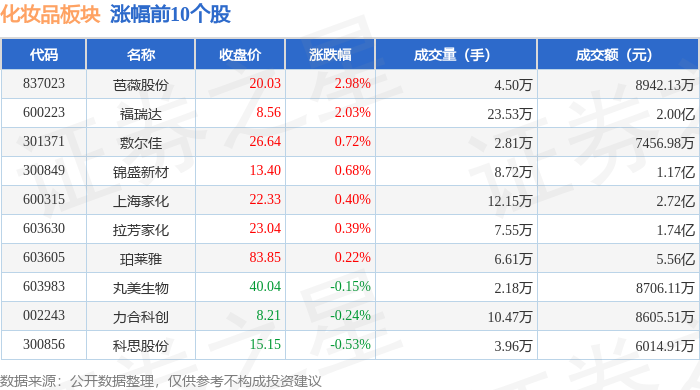
证券之星消息,7月30日化妆品板块较上一交易日下跌0.14%,华业香料领跌。当日上证指数报收于 3615.72,上涨0.17%。深证成指报收于11203.03,下跌0.77%。化妆品板块个股涨跌见下表: | 代码 | 名称 | 收盘价 | 涨跌幅 | 成交量(手) | 成交额(元) | | --- | --- | --- | --- | --- | --- | | 837023 | 芭薇股份 | 20.03 | 2.98% | 4.50万 | Ir 8942.13万 | | 600223 | 福瑞达 | 8.56 | 2.03% | 23.53万 | 2.00亿 | | 301371 | 敷尔佳 | 26.64 | 0.72% | 2.81万 | 7456.98万 | | 300849 | 锦盛新材 | 13.40 | 0.68% | 8.72万 | 1.17亿 | | 600315 | 上海家化 | 22.33 | 0.40% | 12.15万 | 2.72亿 | | 603630 | 拉芳家化 | 23.04 | 0.39% | 7.55万 | 1.74亿 | | 603605 | 班莱雅 | 83.85 ...

颐莲如何以文化为锚,在美妆红海开辟新航道?
FBeauty未来迹· 2025-07-28 09:27
Core Viewpoint - The article emphasizes the importance of cultural resonance in the beauty industry, highlighting how brands like Yilian are shifting from merely functional products to those that embody cultural values and narratives [2][4]. Group 1: Brand Cultural Development - Yilian hosted its first Brand Cultural Communication Conference, integrating traditional Song culture with modern beauty concepts, aiming to explore sustainable brand vitality through cultural roots [2][4][6]. - The conference featured experts from various fields discussing the coexistence of traditional culture and modern branding, emphasizing that culture is the foundation of a brand's identity [6][7]. - Yilian's "Five Commons" values—co-creation, co-progress, sharing, win-win, and co-existence—reflect its commitment to cultural ethics and the elevation of Chinese manufacturing to cultural ambassadors [7][8]. Group 2: Market Insights - China is the world's largest cosmetics market, with a projected market size of 1,073.82 billion yuan in 2024, where domestic brands account for over 55.2% [7]. - Despite the growth, only one domestic brand among the top 50 in 2024 is expected to exceed 10 billion yuan in retail sales, indicating a concentration of domestic brands in the mid-to-low-end market [7]. Group 3: Cultural Asset Utilization - Experts suggest that the key to breaking through market challenges lies in "cultural assetization," proposing a three-step approach: from symbolic borrowing to spiritual resonance, activating ancient formulas with modern technology, and establishing a "Chinese fragrance" standard [8][10]. - The government is increasingly prioritizing brand promotion, making the development of high-end Chinese cosmetic brands a national strategy [10]. Group 4: Cultural Integration in Branding - Yilian's cultural narrative transforms scientific terms like "hyaluronic acid" into emotional symbols of skin care, making the brand's scientific strengths more relatable to consumers [27]. - The brand's cultural initiatives are deeply integrated with its product offerings, ensuring that cultural elements are not merely superficial marketing tactics but are embedded in the entire consumer experience [27][28]. Group 5: Future Directions - Experts believe that future cultural communication in the beauty industry should focus on "lifestyle," "scene-based," and "participatory" approaches, emphasizing that the best cultural dissemination is through immersion rather than education [28]. - Yilian's recent cultural collaborations and immersive experiences aim to bring traditional cultural elements into consumers' daily lives, making culture a living part of the brand experience [30].

又一药企实现重组胶原原料销售,引爆胶原技术红利衰减倒计时?
2 1 Shi Ji Jing Ji Bao Dao· 2025-07-28 09:10
胶原蛋白赛道或将迎来竞争高峰期。 药企德展健康日前宣布,其重组Ⅲ型及XVII型人源化胶原蛋白已实现中试生产,并具备化妆品原料销 售能力。但在这项技术突破背后,横亘着医药级原料转化的巨大鸿沟——规模化生产线仍在建设中,真 正的产业化部署尚未完成。 事实上,在所有玩家头顶高悬的双重高压线并未松动:技术层面,医美级产品的规模化生产与质量控制 仍如绝壁矗立;准入层面,长达36个月的三类医疗器械审批周期与超千万元的单产品合规成本构筑着钢 铁闸门。 围绕重组胶原蛋白项目技术突破及申报节奏,21世纪经济报道以投资者身份致电德展健康。该公司工作 人员回复道:"其技术路线与巨子生物等行业头部企业同属人源化胶原蛋白范畴,并无本质差别。当前 中试生产规模维持在500L水平,产品技术性能可满足护肤品、医美等商业化应用需求。" 但工作人员同时指出,由于尚未建立规模化量产能力,具体产业化路径仍需结合后续产能建设情况确 定。 德展健康产品结构显示,公司已布局重组胶原蛋白原料及其衍生产品体系。2024年,重组Ⅲ型人源化胶 原蛋白不仅实现原料销售,其创新的冻干海绵剂型产品也通过备案审批。 作为第三代胶原蛋白技术,该产品通过DNA重组技术构建三 ...

化妆品医美行业周报:监管趋严利好国货龙头,消费淡季关注新品布局-20250727
Shenwan Hongyuan Securities· 2025-07-27 11:14
Investment Rating - The report maintains a "Positive" outlook on the cosmetics and medical beauty industry, highlighting the strong performance of domestic brands amid stricter regulations [1]. Core Insights - The cosmetics and medical beauty sector outperformed the market, with the Shenwan Beauty Care Index rising by 5.4% from July 18 to July 25, 2025, surpassing the Shenwan A Index by 1.2 percentage points [5][6]. - Stricter advertising regulations are expected to benefit leading domestic brands, as new rules will increase operational barriers and allow market share to concentrate among top players [11]. - The report emphasizes the importance of new product launches as brands prepare for the competitive landscape in the second half of 2025 [11]. Summary by Sections Industry Performance - The Shenwan Cosmetics Index increased by 3.4%, outperforming the Shenwan A Index by 1.2 percentage points, while the Shenwan Personal Care Index rose by 7.7%, exceeding the Shenwan A Index by 5.5 percentage points [5][6]. Key Company Highlights - Lin Qingxuan, a high-end domestic skincare brand, saw revenue grow from 690 million yuan in 2022 to 1.21 billion yuan in 2024, with net profit turning from a loss of 6 million yuan to a profit of 187 million yuan [17]. - The company has a diverse product matrix with 188 SKUs, a robust supply chain with an annual production capacity of 40 million units, and a comprehensive OMO channel strategy [19]. Market Trends - The report notes a shift in the cosmetics market from quantity to quality, with e-commerce sales expected to account for 47% of total cosmetics sales by 2024, up from 22% in 2016 [13]. - The domestic market is witnessing a rise in local brands, with significant market share gains, particularly in the skincare segment [37]. Investment Recommendations - The report recommends several companies based on their market positioning and growth potential, including Up Beauty, Proya, and Marubi, while suggesting to pay attention to Shanghai Jahwa, Betaini, and Huaxi Biological [5].



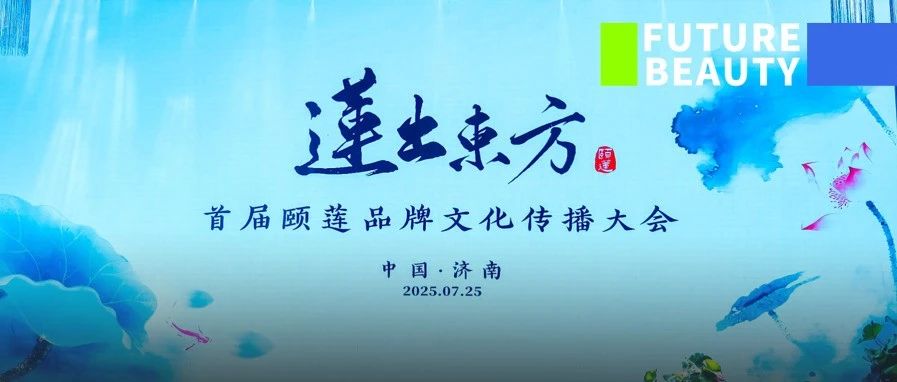
首届颐莲品牌文化传播大会共绘文化香妆新图景
Qi Lu Wan Bao· 2025-07-26 13:57
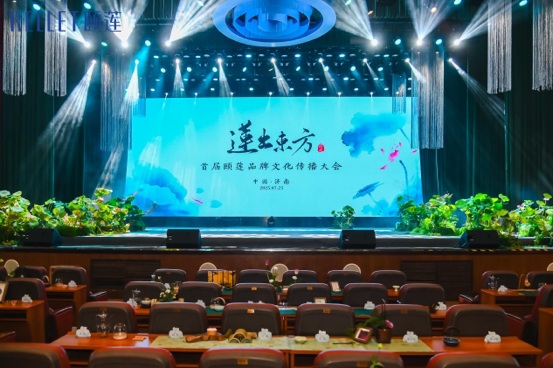
Core Viewpoint - The event "Lotus from the East" aims to integrate traditional culture with modern beauty industry practices, emphasizing that culture is the lifeblood of brands and a key to industry upgrade [1][3][10] Group 1: Cultural Empowerment in the Beauty Industry - The beauty industry faces intensified homogenization, prompting the Yilian brand to adopt the value proposition of "more Chinese, more cultural, more Yilian" [3] - The first Brand Culture Communication Conference was held on July 25, focusing on the integration of traditional culture and modern beauty [3] - The "Chinese Culture Empowerment Fragrance and Cosmetics Brand Construction Project" was officially launched, with Yilian as the first practitioner, demonstrating the depth of cultural integration in the beauty sector [3][7] Group 2: Product Innovation and Cultural Resonance - Yilian launched the "Fuguang Qinzhu" product line, which combines modern technology with lotus culture, offering dual benefits of skin brightness and firmness [5] - Each product serves as a cultural carrier, reflecting both technological advancements and the embodiment of Eastern aesthetics [5] Group 3: Collaborative Ecosystem for Cultural Beauty Industry - The conference attracted over a hundred representatives from academia, industry, and distribution channels to discuss the value of cultural heritage and the rebirth of Eastern aesthetics [7] - A collaborative model involving brands, academia, and distributors is proposed to create a virtuous cycle of culture, industry, and market [7] Group 4: Immersive Cultural Experience - The conference featured an innovative dual-track format combining a cultural forum with a Song-style gathering, allowing participants to engage in traditional activities [9] - The immersive experience included poetry creation and interactive activities, enhancing the cultural connection with the brand [9] Group 5: Long-term Cultural Commitment - Yilian has demonstrated over twenty years that culture is not merely a marketing gimmick but the foundation for brand longevity [10] - The integration of modern skincare technology with traditional cultural elements positions Yilian to take a more prominent role on the global beauty stage [10]
2025年颈霜行业词条报告
Tou Bao Yan Jiu Yuan· 2025-07-25 11:53
Investment Rating - The report does not explicitly provide an investment rating for the neck cream industry Core Insights - The neck cream industry focuses on skincare for the neck area, aiming to moisturize, reduce neck lines, enhance firmness, and prevent premature aging. The market is experiencing strong demand due to increased awareness of anti-aging and the rise of niche markets, driven by market education and media influence. Future growth will be propelled by personalized and diversified functional demands, technological innovation, and product iteration [4][10][15]. Industry Definition - Neck cream refers to skincare products specifically designed for the neck area, aimed at moisturizing the skin, reducing neck lines, enhancing firmness, and preventing signs of aging. The products provide rich nutrients and form a protective barrier to maintain moisture and promote metabolism [5]. Industry Classification - Neck creams can be classified based on core functions into basic moisturizing types and functional types [6][7]. Basic Moisturizing Neck Cream - Primarily focuses on moisturizing and hydrating the neck skin, suitable for individuals with light skin or no visible neck lines, used for daily preventive care [8]. Functional Neck Cream - Includes anti-aging and anti-wrinkle types, brightening types, firming types, and sunscreen types, each targeting specific skin concerns [9]. Industry Characteristics - The neck cream industry is characterized by strong consumer demand, active technological innovation, and high research and development barriers [10]. Consumer Demand - The strong consumer demand in the neck cream industry stems from modern individuals' increasing awareness of neck skin care, with many women starting to incorporate neck care into their daily routines from the age of 20 [11]. Technological Innovation - The neck cream industry is continuously launching products with innovative ingredients and new technologies to meet market demands, emphasizing not only basic moisturizing effects but also special ingredients for firming and wrinkle reduction [13]. High R&D Barriers - Developing excellent neck cream products requires deep R&D capabilities and technical accumulation, including expertise in active ingredient selection, formula optimization, and clinical testing [14]. Market Size - The neck cream industry market size is projected to grow from 1.047 billion RMB in 2019 to 2.091 billion RMB in 2024, with a compound annual growth rate (CAGR) of 14.84%. From 2025 to 2029, it is expected to grow from 2.354 billion RMB to 3.319 billion RMB, with a CAGR of 8.97% [31]. Market Growth Drivers - The growth of the neck cream market is driven by enhanced anti-aging awareness, the rise of niche markets, and increased consumer interest in comprehensive skincare solutions [34][36]. Competitive Landscape - Brands like SDX, VSVE, and others dominate the first tier of the market with high cost-performance ratios, while high-end brands like Clarins and Sisley occupy the second tier with relatively lower sales [41][42]. Future Industry Trends - The neck cream industry is expected to see accelerated competition and market consolidation, with larger firms leveraging technological advantages and regulatory compliance becoming key competitive factors [43].

年薪最高120万抢人!渠道战打响
Zhong Guo Ji Jin Bao· 2025-07-25 00:16
Core Insights - Major beauty companies are aggressively recruiting OTC channel professionals, indicating a strategic shift towards OTC as a growth area in the beauty industry [2][4] - The OTC channel is expected to become a key growth engine for the industry in the next 3-5 years, driven by policy changes, market demand, and channel transformation [4][5] - The beauty sector is experiencing a talent and capital influx into OTC, with salaries for OTC positions significantly higher than traditional channels [4][6] Industry Trends - The number of drugstores in China exceeds 700,000, presenting a substantial market opportunity for beauty products, especially given the low current penetration rate of beauty products in drugstores [5] - The success of brands like Winona, which saw OTC sales grow from 500,000 yuan in 2016 to over 1 billion yuan in 2024, highlights the potential of the OTC market [6] - The beauty industry's gross margin exceeds 60%, making it an attractive category for drugstores facing declining profits in traditional pharmaceutical sales [6] Recruitment and Talent Dynamics - Beauty companies are restructuring their recruitment strategies for OTC channels, seeking candidates with a deep understanding of healthcare policies and market management [7][11] - The market is currently facing a shortage of professionals who possess both beauty and OTC distribution expertise, leading to high salary offers for qualified candidates [11][12] - Companies are establishing dedicated OTC divisions, indicating the channel's importance as a core strategic unit requiring independent investment and specialized strategies [11] Challenges and Market Dynamics - The entry into the OTC market is not straightforward, as beauty companies must navigate high channel costs and the need for significant product discounts to retailers [13] - Drugstores face challenges in selling beauty products due to customer behavior and the need for specialized product selection and marketing strategies [14] - The competition in the OTC space is characterized by a complex interplay of resources, brand identity, and operational capabilities, necessitating a comprehensive restructuring for beauty brands [15]

年薪最高120万抢人!渠道战打响
中国基金报· 2025-07-25 00:09
Core Viewpoint - The beauty giants are aggressively recruiting OTC channel professionals, indicating a significant shift in strategy towards OTC channels as a new growth engine in the beauty industry, driven by policy changes, market demand, and channel transformation [2][3]. Recruitment Trends - Major beauty companies like Proya, Shiseido, and Betaini are actively hiring for OTC-related positions, with salaries 30% to 50% higher than traditional cosmetic channels [5]. - The interest in OTC channels is expected to grow significantly, with projections indicating that by 2025, domestic beauty brands will heavily invest in OTC as a new growth area [5]. Market Dynamics - The OTC channel is evolving from a marginal space to a strategic focus for beauty giants, with the potential to become a primary growth driver in the next 3 to 5 years [3]. - The number of pharmacies in China exceeds 700,000, presenting a substantial market opportunity compared to the low beauty penetration rate of 0.5% in pharmacies [6]. Policy and Economic Factors - Recent policy relaxations, such as the Beijing Drug Administration's guidelines allowing pharmacies to sell cosmetics, have opened new avenues for beauty brands [5]. - The economic pressures on pharmacies, including profit declines due to healthcare cost controls, make beauty products, which have a gross margin exceeding 60%, an attractive option for pharmacies [7]. Sales Growth Examples - The OTC sales of the brand Winona have surged from 500,000 yuan in 2016 to over 1 billion yuan in 2024, showcasing the potential for growth in this channel [8]. Recruitment Requirements - The recruitment for OTC positions emphasizes the need for a deep understanding of healthcare policies and market strategies, with salaries for qualified candidates ranging from 50,000 to 80,000 yuan annually [10]. - The establishment of dedicated OTC divisions within beauty companies indicates a shift towards treating OTC as a core strategic unit requiring specialized investment and organizational structure [10]. Challenges in the OTC Market - The entry into the OTC market is not straightforward, as beauty companies face challenges such as high channel costs and the need to sell products at significant discounts to pharmacies [12]. - Pharmacies also face barriers in selling beauty products, including a lack of specialized selection and weak operational capabilities [12]. Conclusion - The entry of beauty brands into the OTC market represents a complex interplay of resources, capabilities, and market dynamics, necessitating a comprehensive restructuring of product logic and organizational capabilities [12].

在质检一线探寻“好品山东”品牌密码
Zhong Guo Qing Nian Bao· 2025-07-24 16:10
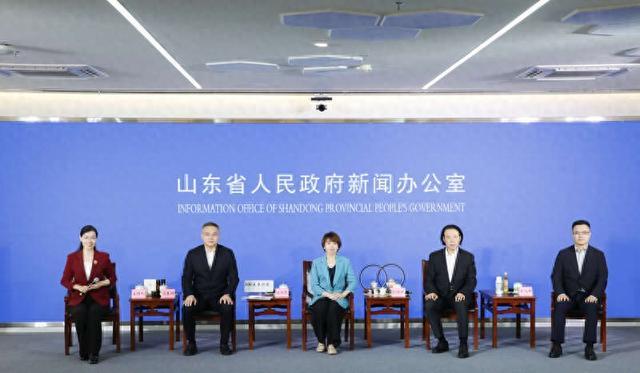
Core Viewpoint - The event highlighted the importance of quality in building strong brands in Shandong, showcasing various companies that emphasize quality in their products and operations [1][3][5]. Group 1: Quality Assurance in Companies - Shandong Furuida Bio Co., Ltd. emphasizes rigorous quality control, conducting 8 quality tests involving over 200 indicators, achieving a repurchase rate 5 percentage points higher than the industry average [3][5]. - Hisense Group focuses on quality as a foundation for global expansion, utilizing advanced testing systems to ensure superior product performance in real-life scenarios [4]. - Lu Hua Group has developed a high-oil peanut variety through extensive testing over 8-9 years, demonstrating a commitment to quality from seed to product [4][5]. - Huaguang Guoci Technology Culture Co., Ltd. faced challenges in developing lead-free glaze but ultimately achieved a 97% product qualification rate after three years of dedicated research [5]. Group 2: Brand Development and Recognition - The event served as a platform for companies to promote their commitment to quality, which is seen as a key driver for brand strength and consumer trust [1][3][5]. - The concept of "Good Products from Shandong" was reinforced through the presentations of various companies, showcasing their unique approaches to quality and innovation [5].
20%高增速领跑,上半年洗护市场为什么“爆了”?
FBeauty未来迹· 2025-07-24 12:02
Core Viewpoint - The hair care market is experiencing significant growth, with online transaction value reaching 340.37 billion yuan in the first half of 2025, marking a year-on-year increase of 20.67% [4][5]. Market Performance - The hair care segment outperformed other beauty categories, driven by a 131.5% surge in men's hair care and steady performances from international brands like Kérastase, L'Oréal, and Pantene [2][4]. - The overall beauty market saw a total online transaction value of 3,060.39 billion yuan, with hair care being one of the fastest-growing segments [5]. Segment Breakdown - The hair care subcategories showed robust growth: - Hair cleansing: 179.72 billion yuan, up 21.56% - Hair care: 74.00 billion yuan, up 19.59% - Hair dyeing and perming: 57.44 billion yuan, up 17.20% - Hair styling: 20.76 billion yuan, up 16.64% - Men's hair care: 5.12 billion yuan, up 131.50% [7]. Brand Landscape - The market share of the top five brands (CR5) decreased from 19% in 2024 to 16%, indicating increased competition from emerging domestic brands and private labels [8]. - New domestic brands like Off&Relax and others are gaining traction, with several entering the top 20 rankings [11]. Consumer Trends - There is a shift towards efficacy-driven products, with consumers seeking solutions for specific scalp issues and multi-functional products [14][19]. - The introduction of "face-care level" ingredients in hair care products is becoming a trend, enhancing the overall consumer experience [19][21]. Innovation and New Products - Over 25 brands launched new products in the first half of 2025, with a focus on scalp care and multi-functional benefits [13]. - Brands are emphasizing rapid effectiveness, with products claiming visible results in as little as one to three minutes [17]. Future Outlook - The competition in the hair care market is expected to intensify, particularly in the areas of anti-hair loss and scalp care, with a focus on patented technologies and quick results [26][29]. - The potential for growth in differentiated segments like scalp oils is significant, as brands explore new opportunities [23][26].