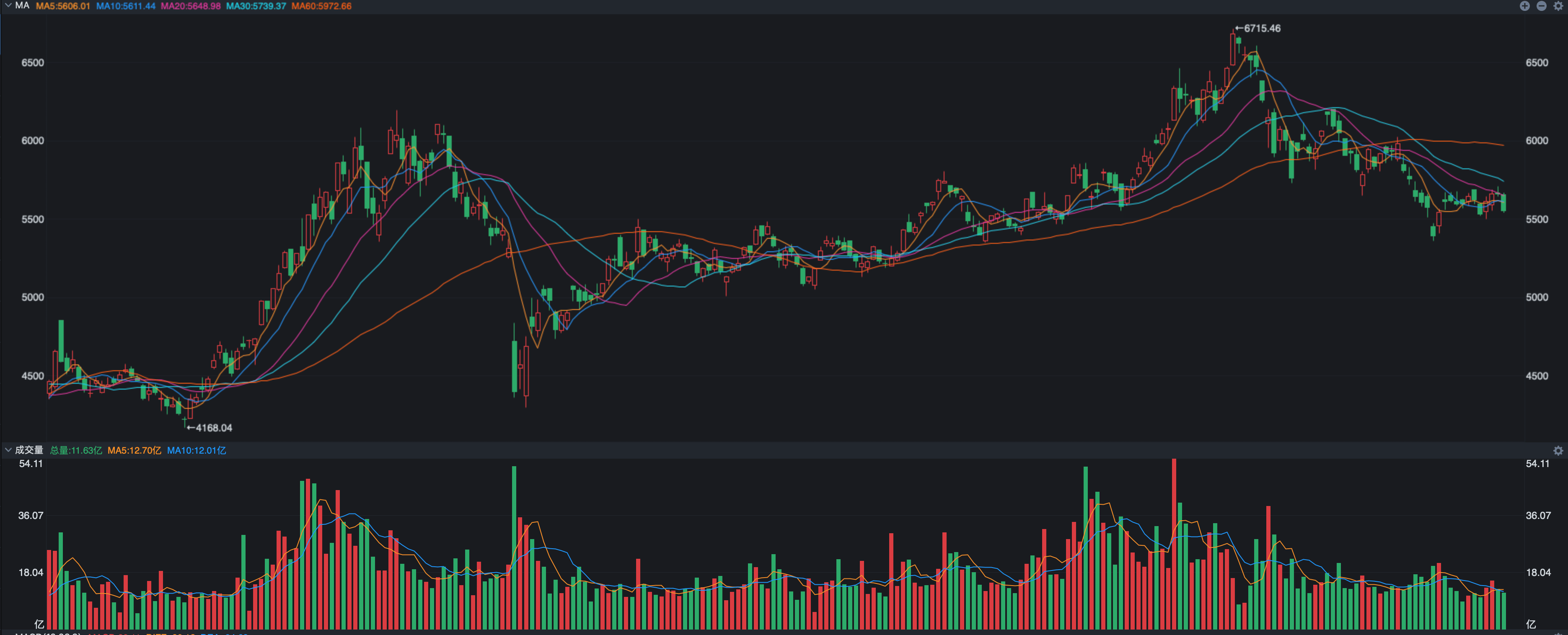
红旗连锁

Search documents
红旗连锁:截至2025年11月28日公司股东总数65176户
Zheng Quan Ri Bao Wang· 2025-12-12 13:13
证券日报网讯12月12日,红旗连锁(002697)在互动平台回答投资者提问时表示,截至2025年11月28 日,公司股东总数65176户。 ...

外卖大战熄火,茶饮品牌谁裸泳,谁狂奔?
凤凰网财经· 2025-12-12 13:08
Core Viewpoint - The article discusses the impact of a subsidy war in the takeaway tea beverage market, highlighting the contrasting fortunes of different brands as the subsidies end and the industry faces a seasonal downturn [3]. Group 1: Impact of Subsidy Withdrawal - After the cessation of subsidies, many tea shops experienced a dramatic drop in orders, with some reporting as few as ten orders a day compared to previous highs of 70-100 orders [4][6]. - The decline in orders is attributed to seasonal factors and consumer fatigue, with some brands managing to stabilize their sales while others face significant challenges [5][6]. - The overall takeaway market saw a significant shift, with brands like "茉莉奶白" and "一点点" also feeling the effects of reduced consumer interest post-subsidy [6]. Group 2: Winners and Losers in the Market - "古茗" emerged as a notable winner during the subsidy war, rapidly expanding its store count from approximately 9,914 to over 12,000, but is now facing operational pressures as daily sales struggle to meet previous highs [7][8]. - "蜜雪冰城" is identified as the biggest winner, reporting a 39.3% year-on-year revenue increase to 14.87 billion yuan and a net profit growth of 44.1% to 2.72 billion yuan, benefiting from efficient cost management [8]. - Conversely, "奈雪的茶" illustrates the "increased revenue without increased profit" dilemma, with 48.1% of its revenue reliant on takeaway orders, leading to a 14.4% decline in overall revenue [9][10]. Group 3: Industry Dynamics and Challenges - The tea beverage industry is undergoing a rapid transformation, with a net increase of 26,000 stores in the third quarter, while approximately 150,000 stores have closed in the past year, indicating a significant shakeout [10]. - The competitive landscape has intensified, with brands forced to expand rapidly and engage in price wars, leading to a phenomenon of "internal competition" that threatens profitability [10]. - The article emphasizes that while the subsidy war temporarily reshaped consumer price expectations, the long-term sustainability of such strategies remains questionable as brands grapple with high operational costs and market saturation [10].


红旗连锁:截至2025年12月10日公司股东总数68558户
Zheng Quan Ri Bao· 2025-12-12 11:06
Group 1 - The company, Hongqi Chain, reported an increase in the number of shareholders, with a total of 65,176 shareholders as of November 28, 2025, and 68,558 shareholders as of December 10, 2025 [2]
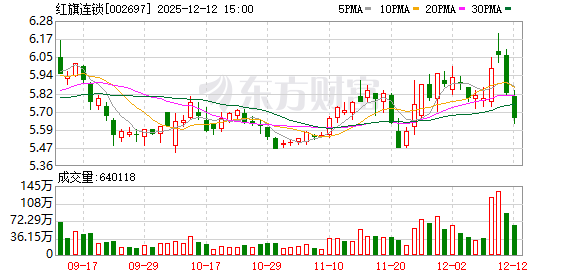
蜜雪冰城要卖早餐了?网友喊话:价格给我打下来
3 6 Ke· 2025-12-12 10:38
Core Viewpoint - The company Mixue Ice City is testing a breakfast business model by launching a survey to gather consumer preferences and has introduced a breakfast combo in select cities, aiming to expand its operational hours and revenue potential [1][4][6]. Group 1: Survey and Consumer Feedback - A survey was shared on social media asking consumers about their favorite breakfast options, including various traditional and modern choices [1]. - The survey also collected demographic information such as gender, age, occupation, and spending habits on breakfast [1]. Group 2: Breakfast Business Launch - Mixue Ice City has piloted a breakfast combo of "breakfast milk + bread" priced at 7.9 yuan in cities like Hangzhou, Xi'an, Dalian, and Nanning [4]. - The breakfast milk comes in four flavors, and the bread options include three types, reflecting a diverse offering [4]. Group 3: Market Reactions and Pricing Concerns - The introduction of the breakfast menu has sparked discussions on social media, with some consumers expressing excitement while others criticize the pricing as too high compared to traditional breakfast options [6]. - A comparison highlighted that traditional breakfast costs around 3.5 yuan, making the 7.9 yuan combo seem expensive [6]. Group 4: Strategic Implications - This move is part of Mixue Ice City's strategy to explore revenue opportunities during non-peak hours, particularly in the morning [6]. - The company aims to leverage its supply chain and store network advantages in the breakfast market, although it faces challenges in balancing cost and consumer expectations [6].
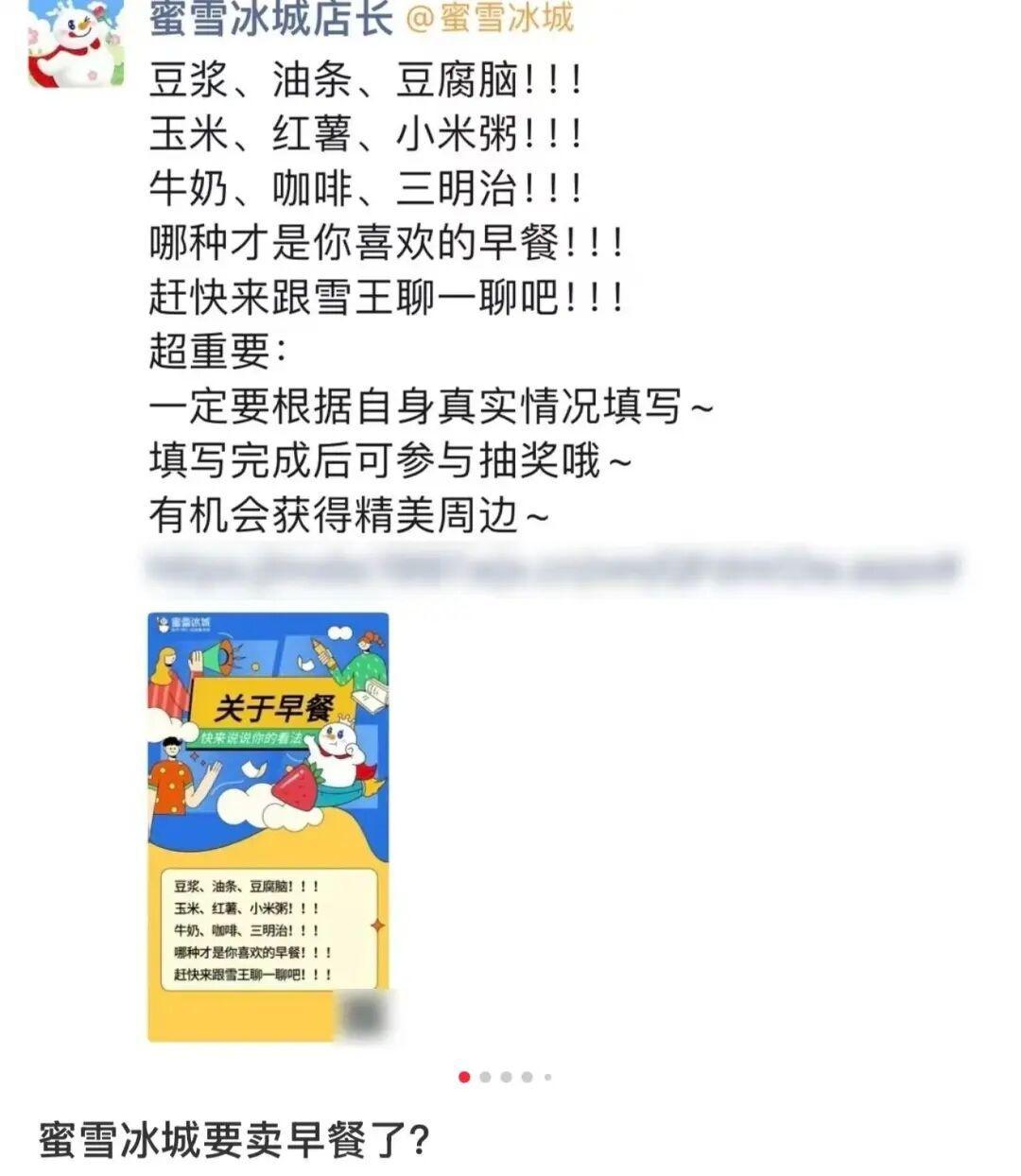
11月茶饮上新30款,咖啡上新34款
3 6 Ke· 2025-12-12 03:49
Core Insights - In November, the top ten tea and coffee brands in China launched a total of 76 new products, with tea brands introducing 37 new items and coffee brands 39 new items [1] Tea Brands - Major tea brands such as CoCo, Tea Baidao, and others each launched 5 new products, while Heytea introduced 3 new items [4] - The trend in the tea market is towards "nourishing" and "light fruit" flavors, with 20 new milk tea products accounting for 54.05% of all new tea products [4] - Traditional Chinese sweet soups are gaining popularity, with 8 new products launched, representing 21.62% of the new tea offerings [4] Coffee Brands - Leading coffee brands like Luckin, Starbucks, and others each released 7 new products, while Times and Kudi followed with 5 new items [4] - The coffee sector saw 18 new milk coffee products, making up 46.15% of all new coffee offerings, with fruit coffee products also increasing [7] Product Trends - In tea, flower tea is the most frequently used base, appearing in 10 products, while oolong and black tea are used in 9 products each [10] - Milk remains the dominant base for tea products, accounting for 86.11% of the offerings, with various types of milk being utilized [10] - Health-focused ingredients like peach gum and seasonal fruits are being incorporated into new products by brands such as CoCo and Heytea [10] Seasonal Strategies - Tea brands are focusing on health and wellness themes, with CoCo launching a series featuring peach gum, while Tea Baidao introduced a warming tea series [11] - Coffee brands are emphasizing warm flavors for winter, with Starbucks returning to its toffee hazelnut offerings and introducing cheese latte series [11]
8点1氪:B站辟谣“全面会员制”;蜜雪冰城推出7.9元早餐套餐;美国众议院有关弹劾总统特朗普的动议经表决后被搁置
36氪· 2025-12-12 00:09
Group 1 - Bilibili officially refuted rumors that all videos will require a membership starting March 1, 2026, and stated that they will pursue legal action against the rumor spreaders [4][6] - The rumors claimed that all video content, including anime, original content, and documentaries, would only be accessible to paying members, with no free content available [4][6] Group 2 - The number of stores for Heytea has decreased significantly, with over 600 closures reported within a year, leading to discussions on social media [5][7] - As of October 2024, Heytea had 4,610 stores, which dropped to 3,930 by October 2025, marking a net decrease of 680 stores and a year-on-year decline of 15.41% [7] Group 3 - Apple launched a free three-hour delivery service for select products in mainland China starting December 10, 2023 [8][9] - Customers can choose this service for specific products like iPhones and MacBooks, while other items may incur a delivery fee [9][10] Group 4 - SpaceX's CEO Elon Musk confirmed plans for an IPO in 2024, aiming to raise several billion dollars [5] - The company is expected to generate significant funding through this public offering [5] Group 5 - Xiaomi announced the upcoming release of its self-produced central air conditioning unit, marking a new milestone in its home appliance offerings [5][10] - The product is part of Xiaomi's strategy to enhance its high-end home appliance portfolio [10]

外卖大战熄火,茶饮品牌谁裸泳,谁狂奔?
3 6 Ke· 2025-12-11 23:17
Core Insights - The takeaway from the article is the impact of the subsidy war on the tea beverage market, highlighting the contrasting fortunes of different brands as the market shifts from a subsidy-driven boom to a more challenging environment. Group 1: Market Dynamics - The subsidy war initiated a surge in orders for tea beverage shops, but as subsidies ceased, many small businesses faced a drastic drop in orders, leading to potential closures [1][2] - Major brands like Mixue Ice Cream and Nai Xue's Tea managed to achieve growth through delivery channels, while many smaller players struggled significantly [1][2] Group 2: Brand Performance - Gu Ming, recognized for its rapid expansion, saw its store count rise from approximately 9,914 in early 2025 to over 12,000 by August, but faced challenges in maintaining daily sales [6] - Mixue Ice Cream emerged as a significant winner, reporting a 39.3% year-on-year revenue increase to 14.87 billion yuan and a net profit growth of 44.1% to 2.72 billion yuan in the first half of 2025 [6] - Kudi Coffee also benefited, with sales on platforms like JD surpassing 80 million orders, becoming the first beverage brand to exceed 100 million orders on the platform [7] Group 3: Challenges Faced - Nai Xue's Tea exemplified the "increased revenue without increased profit" dilemma, with 48.1% of its revenue relying on delivery orders, leading to a 14.4% year-on-year revenue decline to 2.178 billion yuan [8] - The tea beverage industry is experiencing a rapid increase in store numbers, with 26,000 new stores opened in the third quarter alone, while approximately 150,000 stores closed in the past year [9][10] - The industry is undergoing intense competition, with brands forced to expand rapidly, leading to a situation where financial performance does not reflect the apparent growth in market presence [10]
2025年中国购物者报告,系列二
Sou Hu Cai Jing· 2025-12-11 00:11
Group 1 - The core viewpoint of the report indicates that the Chinese fast-moving consumer goods (FMCG) market is stabilizing, with a 1.3% year-on-year sales growth in the first three quarters of 2025, driven by a 3.8% increase in volume and a 2.4% decrease in average price [14][17][18] - Lower-tier cities (third to fifth tier) are identified as the main growth engine, contributing 80% of market growth, supported by urbanization, brand penetration strategies, and new retail channels [14][26][47] - The performance of different categories shows divergence, with packaged food and household care leading growth at 3.4% and 3.3% respectively, while the beverage category declined by 1.1% due to price competition and market shifts [29][39][46] Group 2 - The "consumption substitution" trend continues in 2025 but is slowing down, with average price declines narrowing from 3.4% in 2024 to 2.4% in 2025, indicating consumers are weighing quality against price [2][15][49] - New retail channels are experiencing structural changes, with traditional offline channels shrinking while warehouse membership stores, snack collection stores, and discount stores are expanding rapidly, with growth rates of 40%, 51%, and 92% respectively [2][59][60] - E-commerce channels are also growing at 7%, with platforms like Douyin and Pinduoduo becoming major drivers, accounting for over 40% of total FMCG e-commerce sales [2][59] Group 3 - The report highlights that the FMCG market is entering a new phase driven by demand, where brands must adapt to fragmented and polarized retail landscapes to seize growth opportunities [58] - The average selling price in the FMCG market is stabilizing, with promotional contributions to sales decreasing from 24.1% to 23.0%, reflecting a shift in consumer behavior towards quality and price balance [18][49] - The report emphasizes the importance of understanding consumer needs and adapting product offerings and pricing strategies to achieve sustainable growth in the evolving market [2][58]

抢占精酿赛道!鲜啤福鹿家全面开放加盟
Nan Fang Nong Cun Bao· 2025-12-10 12:31
Core Viewpoint - The craft beer brand "Xianpi Fulu Jia" has announced a new franchise policy that eliminates the previous "old to new" approval restrictions, fully opening up its franchise channels, marking the first strategic move after the acquisition of 53% equity by Mixue Ice City [2][3]. Group 1: Franchise Policy Changes - The new franchise policy focuses on simplifying entry requirements and reducing costs, lowering the franchise threshold to the lowest level since the brand's inception [6][7]. - The previous "old to new" recommendation system, which required new franchisees to be recommended by existing store owners, has been abolished, allowing entrepreneurs to sign contracts and start opening stores after passing qualification and site audits [10][11]. - Existing franchisees are incentivized with rewards for successfully recommending new partners, and the approval process for opening new stores has also been simplified [13][14]. Group 2: Cost Structure and Market Strategy - The brand has implemented a zero franchise fee policy, with the single-store startup costs, excluding renovation and rent, controlled at around 60,000 yuan [19][20]. - This low-threshold and high-support expansion strategy reflects Mixue Ice City's ambition to capture the craft beer market [20]. Group 3: Market Potential and Industry Insights - As of now, Xianpi Fulu Jia has over 1,500 stores nationwide, covering more than 300 cities [21]. - The craft beer market in China reached a scale of 6.8 billion yuan by the end of 2023, with projections to grow to 11 billion yuan by 2028 [28][29]. - The consumption volume of craft beer in China is expected to reach 2.29 billion liters by 2025, a nearly sevenfold increase from 360 million liters in 2016 [30].

港股下跌,其实没有“黑天鹅”,真正的原因揭晓
Sou Hu Cai Jing· 2025-12-10 00:51
Core Viewpoint - The recent performance of the A-share market contrasts with the sluggishness of the Hong Kong stock market, particularly the Hang Seng Index and the Hang Seng Tech Index, which have seen declines amid concerns over liquidity and external economic factors [1][4]. Group 1: Market Performance - The Hang Seng Index and Hang Seng Tech Index have experienced notable declines, with the Hang Seng Tech Index dropping by 1.9% recently, undermining previous rebound efforts [1]. - The Hang Seng Index has risen from 20,000 to 27,000 points this year, marking a 35% increase, but faces resistance at the 30,000-point level, indicating potential challenges for further upward movement without strong support [4]. Group 2: Liquidity Concerns - The primary issue affecting the market is liquidity, influenced by external factors such as the ongoing decline in the bond market and uncertainties regarding the Federal Reserve's interest rate decisions [1][3]. - The influx of IPOs in the Hong Kong market, following a tightening of IPOs in the A-share market, has significantly impacted liquidity, contributing to the current market dynamics [4]. Group 3: Sector Analysis - The Hang Seng Tech Index has underperformed compared to the Hang Seng Index, primarily due to structural issues, with significant declines in new consumption stocks and pressures from competition in the internet sector [5]. - The Hang Seng Index benefits from a substantial presence of banks and high-dividend stocks, which have attracted institutional investors, providing effective support [5]. Group 4: Market Outlook - The current adjustments in the Hong Kong market should be viewed as a necessary correction to create space for future growth, reflecting both external influences and market demand [4]. - The Hang Seng Tech Index appears to have reached a relatively low valuation, with the potential for upward movement contingent on market sentiment and capital inflow [5].