任天堂

Search documents
Switch的救世主是老黄!?
量子位· 2025-07-15 06:28
Core Viewpoint - The article discusses the successful collaboration between Nintendo and NVIDIA, highlighting the launch of the Switch2 and its advanced graphics capabilities through the NVN2 API, which significantly enhances gaming performance and visual quality compared to its predecessor. Group 1: Switch2 Launch and Performance - The Switch2, equipped with NVIDIA's NVN2, addresses issues like overheating, lag, short battery life, and reduced graphics quality seen in the previous generation [2][5] - Within just four days of its release, the Switch2 sold over 3.5 million units, setting a record for Nintendo's fastest sales [5] - The NVN2 API allows the Switch2 to run games that can achieve 60 frames per second on Xbox, making it easier to port titles [3][12] Group 2: Historical Context of Nintendo and NVIDIA Collaboration - The partnership between Nintendo and NVIDIA began over a decade ago, driven by Nintendo's need for a new mobile gaming hardware and NVIDIA's desire to revitalize its Tegra chip line [4][10] - The original Switch, which sold over 150 million units, was a result of this collaboration, leading to a 108% increase in Tegra processor sales, reaching $332 million [17][18] Group 3: Technical Innovations of NVN and NVN2 - NVN is a custom graphics API designed specifically for the Switch, optimizing performance by removing unnecessary features found in general-purpose APIs like OpenGL or Vulkan [25][26] - The Switch2's NVN2 includes NVIDIA's deep learning super sampling (DLSS) and ray tracing capabilities, allowing for enhanced graphics performance, such as increasing game resolution from 720p/30fps to 1440p/60fps [30] Group 4: Gaming Philosophy and User Experience - The Switch's design philosophy emphasizes flexibility, allowing players to switch between gaming scenarios, whether on the go or at home [32][36] - The technology serves to enhance creativity and enjoyment in gaming, reflecting a shift in how gaming is integrated into daily life [37][40]


资讯日报-20250715
Guoxin Securities Hongkong· 2025-07-15 03:43
Market Overview - The Hang Seng Index closed at 24,140, up 0.26% for the day and 20.65% year-to-date[3] - The Hang Seng China Enterprises Index rose by 0.52% to 8,688, with a year-to-date increase of 19.79%[3] - The Hang Seng Tech Index increased by 0.67% to 5,248, reflecting an 18.25% rise year-to-date[3] Stock Performance - Major tech stocks in Hong Kong saw gains, with Kuaishou up over 3% and Alibaba, Meituan, and Tencent rising within 1%[9] - Bitcoin reached a new high of $123,000, positively impacting cryptocurrency-related stocks in Hong Kong, such as OKC Cloud Chain, which surged 46.24%[9] - NIO's stock rose over 10% following positive pre-sale pricing news for its new model, indicating potential profitability in Q4 2025[9] U.S. Market Trends - The Dow Jones Industrial Average increased by 0.20% to 44,372, while the Nasdaq Composite rose by 0.27% to 20,586[9] - Notable movements included MicroStrategy up 3.78% and BIT Mining gaining over 10% amid a bullish cryptocurrency market[9] - Tech stocks showed mixed results, with Apple down 1.2% and Tesla up 1.08%[9] Japanese Market Insights - The Nikkei 225 index fell by 0.28% to 39,570, with declines in sectors like paper and transportation[12] - Long-term Japanese government bond yields rose to 2.620%, the highest since October 2000, indicating market concerns ahead of the upcoming elections[12] Economic Indicators - In June 2025, China's social financing scale increased by 22.83 trillion yuan, exceeding expectations[13] - The M2 money supply grew by 8.3% year-on-year, indicating a stable monetary environment[13] - China's trade with the U.S. saw a decline of 9.3% in the first half of 2025, reflecting ongoing trade tensions[13]
Z Potentials|乔海鑫,打造OC社交平台Bside,二次元社交观察者,用虚拟角色连接新一代的社交关系
Z Potentials· 2025-07-15 03:14
Core Viewpoint - The article discusses the evolution of virtual characters and social systems, emphasizing the shift towards AI-driven "Living OC" (Original Characters) that possess memory, emotions, and behavioral logic, fulfilling users' desires for virtual companionship and emotional connection [1][16]. Group 1: Company Overview - Bside, developed by Kotoko AI, aims to create a social gaming platform where users can interact with their original characters, transforming them into companions and social currency [1][22]. - The platform integrates UGC (User Generated Content), AI agents, and gamification to build a virtual playground centered around OC, fostering deep connections between users and characters [1][22]. Group 2: Founder Insights - Patrick, the founder of Bside, has a background in UGC gaming and virtual social ecosystems, having co-founded Yahaha Studios, and emphasizes the importance of understanding the emotional and identity needs of the younger generation [2][6]. - He believes that virtual social spaces are not merely entertainment but are essential for reconstructing identity and emotional connections among users [5][9]. Group 3: User Engagement and Behavior - Bside has achieved a 70% retention rate and users spend an average of 2-3 hours daily on the platform, indicating strong emotional connections with their characters [12][26]. - Users express a desire for their characters to have lifelike interactions, leading to spontaneous social behaviors such as sharing stories and engaging in collaborative adventures [28][30]. Group 4: Market Trends and Cultural Shifts - The rise of OC culture reflects a generational shift in social expression, where OC serves as a social currency and a tool for identity construction among younger users [15][18]. - The platform targets the post-2005 generation, particularly young women, who are more receptive to virtual social interactions and have a higher emotional investment in content creation [25][35]. Group 5: Future Directions - Bside aims to enhance user experience by creating a seamless virtual world where characters can autonomously interact and evolve, thus providing users with a sense of ownership and emotional fulfillment [37][38]. - The company plans to expand its features, including a "wishing system" for characters, to deepen user engagement and emotional connection [24][37].
全息/VR/AR行业发展动态周报2025年第28周(7月7日-7月13日)
Sou Hu Cai Jing· 2025-07-14 08:48
Policy Environment - Anhui's quantum computing center is advancing the application of quantum artificial intelligence through its "Benyuan Wukong" quantum computing capabilities, collaborating with various institutions to transition from laboratory validation to industrial implementation [1] Industry Development - Elon Musk's xAI has launched the Grok 4 AI model, claiming it to be the strongest AI model globally, achieving a 25.4% accuracy rate in "Humanity's Last Exam," surpassing competitors like Google's Gemini 2.5 Pro and OpenAI's o3 [3] - Meta has acquired less than 3% of EssilorLuxottica, valued at approximately €3 billion, to strengthen its long-term collaboration in the smart glasses sector [5] - Nvidia has become the first company to surpass a $4 trillion market capitalization, driven by the surge in demand for high-performance AI chips, with analysts predicting it may reach $5 trillion in the next 18 months [7] - Apple has quietly acquired AI companies TrueMeeting and WhyLabs to enhance its technology in the Apple Vision Pro and Apple Intelligence domains [9] - Meta has recruited a senior AI executive from Apple to lead its new "Meta Superintelligence Labs," reflecting its aggressive expansion in AI capabilities [11] - Google is integrating its Gemini AI into Android XR-supported smart glasses and headsets, enhancing user interaction and support [13] - Samsung is set to launch Project Moohan later this year, which includes the development of smart glasses powered by Android XR [15] - Meta has launched a Zoom application for its Quest platform, enabling immersive video conferencing experiences [17] Market Dynamics - Apple plans to upgrade its Vision Pro headset this year, aiming to improve performance and comfort, with a redesigned model expected by 2027 [19] - WIMI has developed an intelligent edge computing scheduling platform using digital twin technology and multi-agent deep reinforcement learning to address challenges in managing heterogeneous tasks [21][22] - Nintendo is exploring new technologies such as VR/AR to create innovative gaming experiences, focusing on various hardware and software advancements [25]



游戏卡带正在消失,这会“杀死”游戏吗?
Hu Xiu· 2025-07-13 05:32
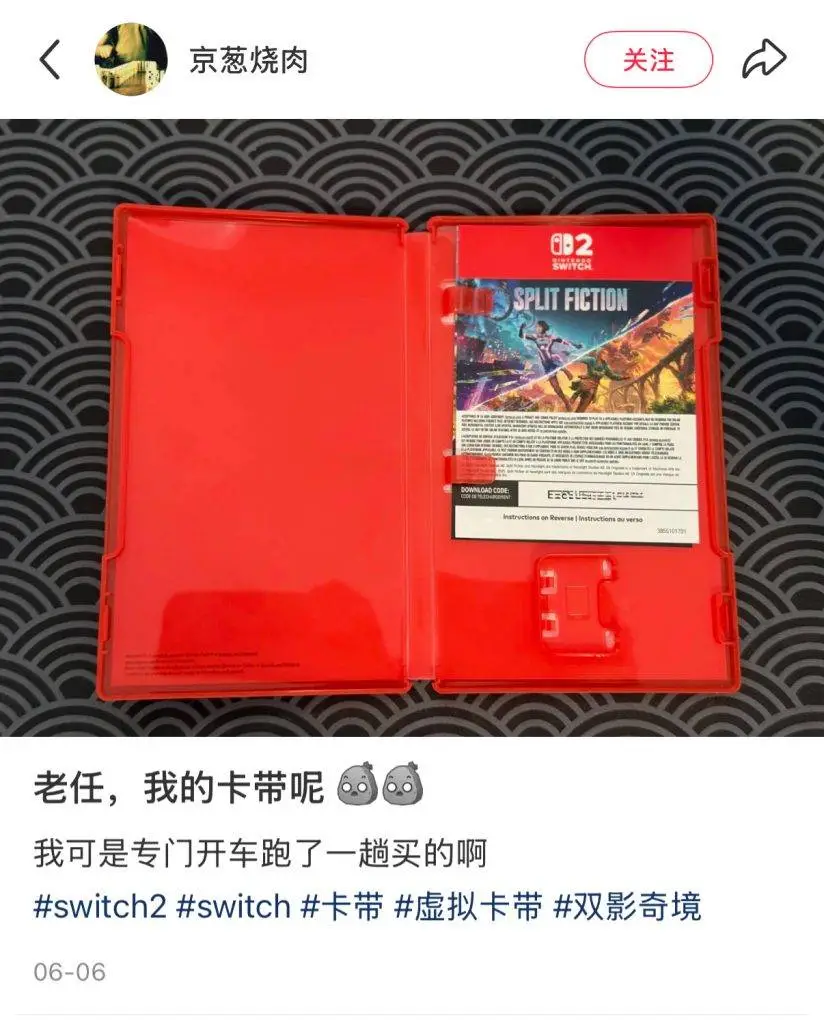
Core Viewpoint - The discussion around the new game "Dual Shadow Realm" for Switch 2 has sparked significant debate, particularly regarding the use of a redemption code instead of a physical cartridge, leading to feelings of deception among consumers [1][3]. Group 1: Product Features and Consumer Reactions - The initial batch of "Dual Shadow Realm" includes only a redemption code, which can only be used once and is tied to a Nintendo account, causing frustration among consumers who expected a physical cartridge [3][5]. - Future physical versions will include a "key card," which requires downloading the game but still needs to be inserted to play, combining drawbacks of both digital and physical formats [6][8]. - Some consumers argue that the transition to digital distribution is beneficial for third-party developers, reducing costs and ensuring access to the latest game versions [9][10]. Group 2: Collectibility and Ownership Concerns - The "key card" is seen as a diminished form of ownership, as it represents a mere access key rather than a true collectible, impacting the value for collectors [13][21]. - The trend of digital content replacing physical media raises concerns about the permanence of ownership, as seen in the backlash against the "Death Stranding 2" collector's edition lacking a physical disc [14][30]. - The shift towards digital media has led to a loss of tangible ownership, with consumers often only acquiring "usage rights" rather than true ownership of the content [29][32]. Group 3: Industry Trends and Future Implications - The media landscape is increasingly moving towards online and streaming formats, which, while offering benefits like updates, also pose risks of losing access to content if servers are shut down [24][25]. - The "Stop Killing Games" movement highlights consumer frustration over losing access to purchased games when servers are closed, emphasizing the need for longer service durations from companies [26][31]. - The potential disappearance of physical game cartridges may lead to a future where younger generations are unfamiliar with the concept of physical media, as digital formats become the norm [41][44].
金十图示:2025年07月09日(周三)全球主要科技与互联网公司市值变化


news flash· 2025-07-09 03:00
Market Capitalization Changes - The market capitalization of major global technology and internet companies has shown varied changes as of July 9, 2025, with notable increases in companies like Tesla, which rose by 1.32% to reach $959.2 billion, and Alibaba, which increased by 1.62% to $257.6 billion [3][4][5]. - Companies such as Netflix and Shopify experienced declines, with Netflix decreasing by 1.11% to $548.8 billion and Shopify dropping by 3.58% to $619.1 billion [3][4]. Notable Performers - AMD saw a significant increase of 2.24%, bringing its market cap to $223.4 billion, while Intel had a remarkable rise of 7.23%, reaching $102.8 billion [5][6]. - Other companies with positive performance include Adobe, which increased by 1.41% to $162.1 billion, and ASML, which rose by 1.15% to $312.2 billion [3][4]. Decliners - Companies like Robinhood and Sea Limited faced declines, with Robinhood decreasing by 2.34% to $824 million and Sea Limited dropping by 1.32% to $894 million [6][7]. - FICO experienced a significant drop of 8.91%, bringing its market cap down to $455 million [7]. Overall Trends - The overall trend indicates a mixed performance across the technology sector, with some companies gaining market value while others are experiencing losses [3][4][5][6].

三星芯片,孤注一掷
半导体行业观察· 2025-07-09 01:26
Core Viewpoint - Samsung Electronics' second-quarter performance decline is primarily attributed to poor results in its semiconductor business, which accounts for 50-60% of its overall profit. The company has struggled to benefit from the booming AI sector due to ongoing technical issues with high-bandwidth memory (HBM) products [1][2]. Group 1: Semiconductor Business Performance - The Device Solutions (DS) division is expected to report sales of 27 trillion KRW and an operating profit of around 1 trillion KRW for the second quarter, with some analysts predicting a drop in operating profit to 400 billion KRW [1]. - The inventory valuation loss provision for the DS division is estimated at about 1 trillion KRW, reflecting a decline in product prices and anticipated difficulties in selling certain products [2]. - The wafer foundry and system LSI divisions are projected to incur losses of approximately 2 trillion KRW, continuing a trend of significant losses due to the inability to secure major clients [2]. Group 2: Future Outlook and Recovery - Industry observers believe Samsung may have hit bottom in the second quarter and could rebound starting in the third quarter, driven by rising prices for older and high-end memory products [3]. - The DS division's operating profit is forecasted to reach between 3 trillion and 5 trillion KRW in the third and fourth quarters, respectively, as demand for IT equipment and semiconductors typically increases in the second half of the year [3]. - Recent increases in HBM shipments to major tech companies like AMD and Broadcom, along with the commencement of 2nm chip production, suggest a potential recovery in the foundry business [3]. Group 3: HBM and DRAM Developments - Samsung has completed the development of sixth-generation DRAM based on advanced 10nm technology, moving closer to mass production of HBM4, which is expected to be a key component in the AI era [5][10]. - The company is also working on accelerating the mass production of HBM4 and has begun supplying 12-layer HBM3E products to AMD, while seeking to establish supply agreements with Nvidia [8][9]. - The successful commercialization of HBM4 is seen as crucial for Samsung to regain momentum in the high-end memory market, especially as competition intensifies with rivals like SK Hynix [8][10]. Group 4: Strategic Partnerships and Market Position - Samsung's efforts to secure large-volume GPU orders from Nvidia are critical for improving its financial performance and enhancing its competitiveness in the AI chip market [13]. - The company is currently producing Nvidia's Tegra T239 chip for the next-generation Nintendo Switch 2, which has seen commercial success, potentially boosting Samsung's foundry business profitability [11]. - Samsung's strategy includes developing and mass-producing new market segments such as HBM4 and customized HBM chips, aiming to avoid past mistakes and capitalize on emerging opportunities [11].
短线下挫!
中国基金报· 2025-07-09 01:21
Market Overview - The Japanese stock market showed mixed results, with the Nikkei 225 index experiencing a slight decline of 0.02% as of the report [3] - The South Korean KOSPI index increased by 0.29%, reaching 3124.07 points [9] Individual Stock Performance - Sumitomo Pharma saw a significant increase of over 8%, while Omron, Seiko, and Casio rose by more than 5% [5] - Notable declines were observed in companies such as Fujitsu, Nintendo, and Mitsubishi Heavy Industries [5] - Specific stock performance data includes: - Sumitomo Pharma: 987.0 JPY, up 8.82%, market cap 392.7 billion JPY [6] - Omron: 4048.0 JPY, up 6.86%, market cap 834.9 billion JPY [6] - Seiko: 1180.5 JPY, up 5.54%, market cap 413.4 billion JPY [6] - Casio: 1161.5 JPY, up 5.50%, market cap 276.1 billion JPY [6] - Nissan Motor experienced a sharp decline, dropping over 3% [5] Economic Insights - Former Deputy Governor of the Bank of Japan, Nakaso Hiroshi, emphasized the need for vigilance regarding inflation risks, suggesting that there is still room for further interest rate hikes [7] - New Bank of Japan committee member, Junko Koizumi, hinted at a possible upward adjustment of inflation expectations this month, which could pave the way for another interest rate increase this year [8] Trade and Export Concerns in South Korea - A trade expert in South Korea predicted a significant reduction in exports of major products if the U.S. tariff policy is implemented as planned [9] - Forecasts indicate that exports in the automotive and steel sectors may decline by 7.1% and 7.2%, respectively, from July to December [10] - The expert urged South Korean companies to consider relocating production bases overseas or adjusting export prices to mitigate the impact of high tariffs [10] - There is a call for the South Korean government and industries to reduce reliance on the U.S. market and expand exports to regions such as the EU, ASEAN, and India, while accelerating the transition to high-tech industries [10]

外媒曝微软Xbox部门深陷财务目标争议,激进指标或成创新掣肘
Huan Qiu Wang Zi Xun· 2025-07-08 02:58
Group 1 - Microsoft CFO Amy Hood has set an "unrealistic" financial target for the Xbox division, which may exacerbate ongoing operational challenges within the department [1][4] - The aggressive financial goals are disconnected from the current slowdown in the gaming industry, forcing teams to sacrifice long-term content quality for short-term financial metrics [1][4] - Since early 2025, the Xbox division has undergone multiple rounds of layoffs affecting approximately 9,000 employees globally, attributed to high infrastructure costs and integration pressures post-Activision Blizzard acquisition [4] Group 2 - The ambitious financial targets have directly impacted content production, leading to the cancellation of projects like "Everwild" and "Perfect Dark" due to budget overruns [4][5] - Xbox's subscription service, Game Pass, has seen an 8% year-over-year revenue increase in Q3 FY2025, primarily driven by older titles from Activision Blizzard rather than new original content [5] - Xbox hardware revenue continues to decline, with a 23% year-over-year drop in U.S. market sales in the first half of 2025, falling behind competitors like Sony's PS5 and Nintendo Switch [5] Group 3 - Industry analysts express concerns that without the Activision Blizzard acquisition, Xbox revenue would likely be in negative growth territory [5] - Hood's target requires Game Pass subscriptions to exceed 50 million by the end of FY2026, despite a slowdown in growth from 35% in 2024 to 12% currently, making it nearly impossible to meet this goal with existing strategies [5] - Former Xbox employees have indicated that financial pressures are stifling creativity, with significant budget cuts impacting the development of major titles and leading to a focus on less ambitious projects [6]

微软打算不做游戏机了,但“Xbox”会越来越多
Hu Xiu· 2025-07-06 11:24
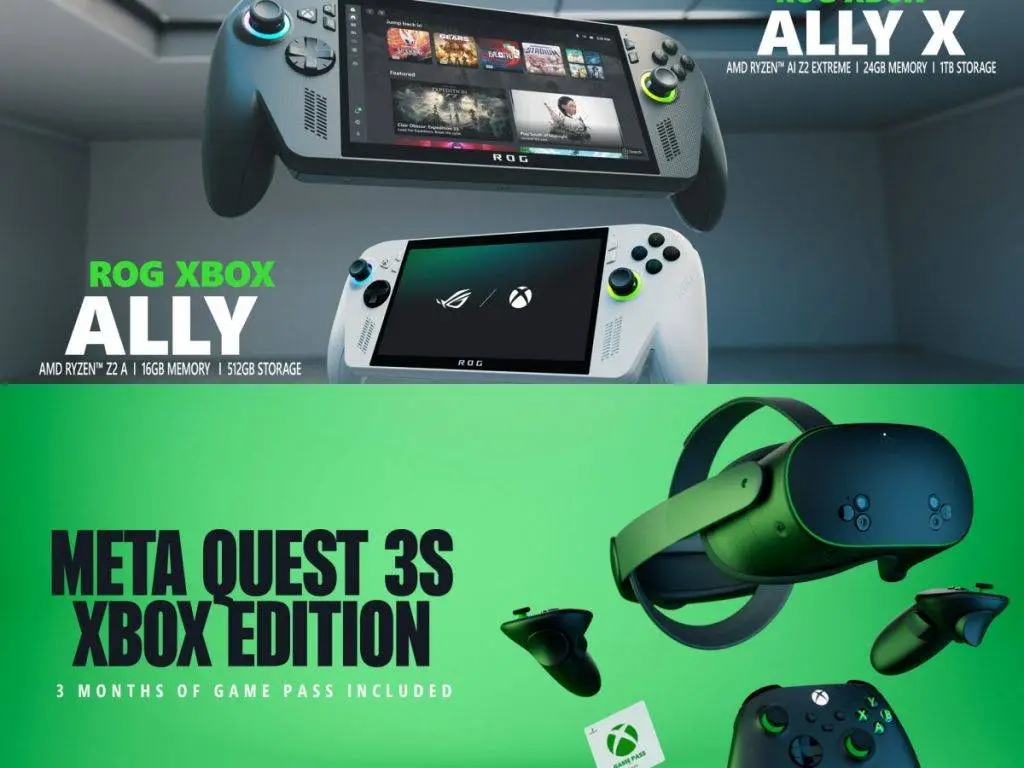
Core Viewpoint - The gaming market is experiencing significant developments with new hardware releases and a shift in strategy from traditional console sales to a service-oriented model, particularly by Microsoft [1][2][4][13]. Group 1: Market Developments - The release of Switch 2 has sparked discussions, while Sony has announced new games and confirmed the development of PS6 [1]. - Microsoft has introduced new hardware, including ROG Xbox Ally and Meta Quest 3S Xbox Edition, marking its entry into handheld gaming and VR [2]. - Microsoft is also developing a next-generation Xbox console in collaboration with AMD, which will not be exclusively tied to the Xbox game store [4]. Group 2: Xbox's Strategic Shift - The upcoming next-generation Xbox console may be Microsoft's last traditional console product, indicating a potential shift away from hardware-centric gaming [5]. - Xbox will continue to exist but will operate more as a brand and service rather than being deeply integrated with Microsoft [6]. - The strategy mirrors the Windows model, where Microsoft provides software and game libraries while OEMs design the hardware [7]. Group 3: Xbox's Performance and Challenges - 2024 is projected to be a challenging year for Xbox, with console sales expected to be below 3 million units, leading to significant layoffs and studio closures [9]. - In contrast, competitors like Nintendo and Sony have seen success with their consoles, while Xbox Series X/S has underperformed [10]. Group 4: Gaming Consumption Trends - The rise of smartphones as versatile entertainment devices poses a challenge for traditional gaming consoles, making it difficult to convince consumers to invest in dedicated gaming hardware [11][12]. - Microsoft's approach focuses on selling game services rather than hardware, promoting a "play anywhere" philosophy [13][15]. Group 5: Game Pass and Future Directions - Xbox Game Pass is a key component of Microsoft's strategy, aiming to make gaming accessible across various devices, not limited to Xbox hardware [24]. - The ultimate goal is to have Xbox Game Pass available on all platforms, similar to how Apple Music operates across different systems [25]. - Microsoft's strategy includes partnerships and collaborations rather than solely relying on its own hardware development [26]. Group 6: Brand Identity and Future Considerations - The evolving concept of "Xbox" raises questions about its identity as it encompasses various devices and services, which may confuse consumers [30][31]. - There is a concern about the future of the Xbox brand, as it may become merely a game launcher or a collection of game studios rather than a distinct gaming platform [32]. - The company must consider profitability and sustainable business models moving forward [33].