Shein

Search documents
Temu stops shipments from China as Trump axes trade loophole
New York Post· 2025-05-02 20:30
Core Viewpoint - Temu has ceased shipments of inexpensive goods from China to the US following the termination of a trade loophole by President Trump, which previously allowed the company to avoid tariffs and customs checks [1][4]. Group 1: Impact of Trade Policy Changes - The end of the de minimis exemption is a significant setback for Temu and its competitor Shein, both of which utilized this loophole to import packages valued under $800 into the US without incurring duties [4]. - In 2024, 1.36 billion shipments entered the US under the de minimis rule, a substantial increase from 637 million four years prior, highlighting the loophole's extensive use [5]. - The new policy requires Temu and Shein to face additional tariffs, including a 145% rate on goods from China, and will subject their packages to customs checks, potentially causing delays [7]. Group 2: Company Adjustments and Strategies - In anticipation of the tariff changes, Temu has been preparing by prioritizing "local" goods on its US website and planning to increase prices [6]. - The company has begun imposing specific "import charges" on overseas products and is actively recruiting US sellers to import their own inventory from China [8][10]. - Temu's products were previously 20% to 30% cheaper than those of US competitors like Amazon, but this price advantage is expected to diminish as the company's stockpile in the US decreases [10].



Shein, Temu Prices Surge as High as 377% Amid Tariffs. Temu Has a Plan to Address That
CNET· 2025-05-02 18:43
Core Insights - US tariff changes have led to significant price increases for products from Chinese e-commerce platforms Temu and Shein, with some items seeing price hikes of up to 377% [1][4][5] - Temu is shifting its business model by no longer shipping products from China to the US, opting for local fulfillment to maintain pricing stability [2] - Shein has implemented notable price adjustments across various categories, with beauty and health products increasing by an average of 51%, home and kitchen goods by 30%, and women's clothing by 8% [4] Company Actions - Temu has announced that all sales to US customers will be managed by locally based sellers, aiming to keep prices unchanged during the transition to a local fulfillment model [2] - The company is actively recruiting US sellers to join its platform to facilitate this new model [2] Industry Trends - The elimination of the "de minimis" exemption and the imposition of higher tariffs have disrupted the business models of fast-fashion retailers, resulting in increased costs for US consumers [5] - The price adjustments reflect a broader trend of rising costs on imported goods faced by US shoppers [5]
小包裹引爆大通胀:145%关税逼退零售商们 “通胀猛兽”即将再度席卷美国
智通财经网· 2025-05-02 09:16
Group 1: Impact of Tariff Changes - The cancellation of the de minimis tax exemption for low-value packages from China has resulted in tariffs as high as 145%, leading many retailers to halt shipments to the U.S. market [1][3][5] - Retailers are increasing prices to cope with the new tariffs, which may exacerbate inflationary pressures on U.S. consumers already facing high living costs [1][4][5] - The effective tariff rate in the U.S. is now close to 23%, the highest in over a century, significantly impacting consumer and business confidence [4][5] Group 2: Retailer Responses - Major retailers, including Amazon, have reported that the new tariffs will have a significant negative impact on their earnings, with Amazon's profit guidance falling short of analyst expectations by as much as 27% [2][9][10] - Smaller retailers are withdrawing from the U.S. market due to the prohibitive costs associated with the new tariffs, which are expected to lead to price increases for essential goods [3][7] - Companies like Space NK and Understance have already suspended U.S. shipments to avoid unexpected costs due to the new tariff regime [3][7] Group 3: Economic Outlook - Analysts warn that the combination of high tariffs and ongoing inflation could lead to a significant downturn in consumer demand, potentially pushing the U.S. economy into recession [5][6] - The impact of tariffs is expected to ripple through various sectors, including e-commerce and advertising, as companies like Snap Inc. have indicated that they are facing macroeconomic headwinds due to these changes [6][9] - The overall economic environment is becoming increasingly challenging for retailers reliant on Chinese imports, with many predicting a slowdown in global economic growth [5][6]

Amazon reports first-quarter earnings after the bell
CNBC· 2025-05-01 16:01
In this articleAMZNAmazon CEO Andy Jassy speaks during an Amazon Devices launch event in New York City, Feb. 26, 2025.Brendan McDermid | ReutersAmazon is slated to announce its first-quarter earnings after the market close on Thursday.Here's what analysts are looking for:Earnings per share: $1.36 expected, according to LSEGRevenue: $155.04 billion expected, according to LSEGWall Street is also looking at other key revenue numbers:Amazon Web Services: $29.42 billion expected, according to StreetAccountAdvert ...
美国3月通胀意外“停滞” 经济‘喘息期’或难持续
智通财经网· 2025-04-30 15:00
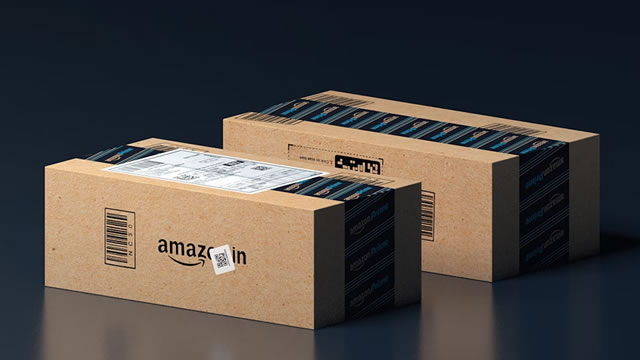
Group 1 - The PCE price index remained flat in March, marking the first "zero growth" in nearly a year, while the core PCE also showed no change, indicating a temporary easing of inflationary pressures [1][2] - Real consumer spending increased by 0.7% month-over-month, surpassing previous values, suggesting that consumers are accelerating purchases ahead of impending tariff increases [1][2] - March saw the strongest growth in real disposable income in over a year, significantly supporting consumer spending, particularly in durable goods like automobiles [3] Group 2 - The first quarter of 2023 recorded the first quarterly contraction in the U.S. economy since 2022, primarily due to a surge in imports and moderate consumer spending growth [2] - Despite the temporary slowdown in inflation, companies like Shein and Procter & Gamble have begun raising prices, while others like American Airlines and General Motors have withdrawn earnings guidance due to policy uncertainties [3] - The upcoming implementation of tariffs is expected to exert upward pressure on prices, potentially dampening consumer behavior and complicating the Federal Reserve's interest rate policy decisions [3]
Adidas says tariffs are going to make your sneakers more expensive
Business Insider· 2025-04-30 10:28
Add sneakers to the growing list of things that tariffs will make more expensive. Adidas warned Tuesday that President Donald Trump's sweeping tariffs could drive up the costs of all its products in the US, as the company remains reliant on imports to stock American shelves."Since we currently cannot produce almost any of our products in the US, these higher tariffs will eventually cause higher costs for all our products for the US market," CEO Bjørn Gulden said. The warning came alongside Adidas's first- ...


T86税改前夕,跨境物流巨头们冰火两重天
雷峰网· 2025-04-30 10:26
" 物流老板们纷纷开始破防,表面冷静,但私下集体焦虑且观望 着。 " 作者丨姚单 编辑丨刘伟 "公司美线集装箱货量直线下滑60%~70%。深圳仓日均能收个1000多方,而昨天(4月16日)只收了 200多方。" "很多公司直接停了业务,而我们公司美线跨境小包货量实现了100%的同比增长,还是有点夸张。" 这一对话背后,是海运物流企业与直发物流企业在中美关税影响下,遭遇了冰火两重天的境遇。 自今年2月1日起,美国对华关税政策持续上演。进入4月份,关税税率提升至34%、125%、145%…… 亦或是,特朗普宣布将于5月2日针对中国取消800美元小额包裹免税政策,正在一步步击穿全行业的最后 一道心理防线。 原本,跨境物流巨头们分别有三种心态:一是对美国加税一事抱有幻想;二是想趁机发美国财;三是沉稳 观望。随着关税愈演愈烈,各位物流老板纷纷开始破防,表面冷静,但私下集体焦虑且观望着。 "近期2个月,特别是在4月中下旬, 空运大货出货量激增。" 一名跨境物流从业者表示,大家之前集体观望了很久,然而所期盼的中美关系并没有如期改善,反而越加 严峻,这使得大家陷入了恐慌。"你不调价,那你就得亏本卖;而你调价后,可能又没人买。 ...
TikTok加速全球电商布局
Hua Er Jie Jian Wen· 2025-04-30 02:00
Core Viewpoint - TikTok is accelerating its global expansion, particularly in the e-commerce sector, to mitigate regulatory risks in the U.S. and to drive revenue growth for its parent company, ByteDance [1][2][4]. Group 1: Expansion Plans - TikTok plans to enter the Japanese e-commerce market by June 2024, currently recruiting select merchants for its TikTok Shop [1]. - The company has already launched TikTok Shop in key European markets including Germany, France, and Italy, indicating a strategic focus on Europe as a primary battleground for e-commerce [2]. - TikTok aims to double its e-commerce transaction target to approximately $80 billion by 2025, with a significant focus on the U.S. market, which is expected to contribute around $9 billion in transactions in 2024 [4]. Group 2: Financial Projections - ByteDance is projected to achieve $155 billion in revenue in 2024, with a 29% year-over-year growth, largely driven by TikTok's performance [4]. - By 2025, international business revenue from TikTok is expected to reach $39 billion, accounting for 25% of ByteDance's total revenue, with a growth rate of 63% [4]. - TikTok's overall platform transaction volume is estimated to be around $40 billion in 2024, with the U.S. being the largest contributor [4]. Group 3: Market Context - Japan's e-commerce market is projected to reach $169 billion in 2024, ranking third globally, while the European e-commerce market is expected to grow at a compound annual growth rate of 8% from 2024 to 2029, reaching $951 billion by 2029 [5]. - Competitors like Shein and Temu have already established a presence in Japan, intensifying the competitive landscape for TikTok [1].
关税冲击广告,社交网站Snap撤回二季度收入指引,股价盘后重挫
Hua Er Jie Jian Wen· 2025-04-30 00:56
Core Viewpoint - Despite exceeding market expectations in Q1, Snap has withdrawn its Q2 revenue guidance due to economic fluctuations caused by tariff policies impacting advertising demand [1][3]. Group 1: Q1 Performance - Snap reported Q1 revenue of $1.36 billion, slightly above the analyst average expectation of $1.35 billion [5]. - The total number of advertising clients increased by 60% year-over-year, with direct response ads accounting for 75% of Snap's advertising revenue, marking a historical high [5]. - The net loss for Q1 was $140 million, which is more than a 50% reduction compared to the same period last year [5]. - Snap's subscription product, Snapchat+, has reached 15 million paid users, a 59% year-over-year increase, while monthly active users have reached 900 million, moving closer to the target of 1 billion [5]. Group 2: Q2 Outlook and Economic Impact - Snap has declined to provide a revenue forecast for Q2, citing macroeconomic "headwinds" affecting its advertising business [1][3]. - The CFO, Derek Andersen, indicated that some advertisers are reducing spending due to changes in the tariff exemption rules for small packages under $800, which are impacting advertising demand [3]. - The modification of the tariff rules is expected to affect not only Snap but also other major companies like Google and Meta Platforms, which are likely to confirm similar impacts on their advertising businesses [4]. Group 3: Cost Management and Future Plans - In addition to withdrawing the Q2 revenue guidance, Snap has lowered its full-year adjusted operating expense target by $50 million, from a range of $2.65 billion to $2.7 billion [5]. - Andersen mentioned that this adjustment may influence the company's hiring plans for the remainder of the year, as approximately two-thirds of the annual adjusted operating expenses are related to personnel costs [5].

UPS cutting 20K jobs due to fewer Amazon shipments
Fox Business· 2025-04-29 15:51
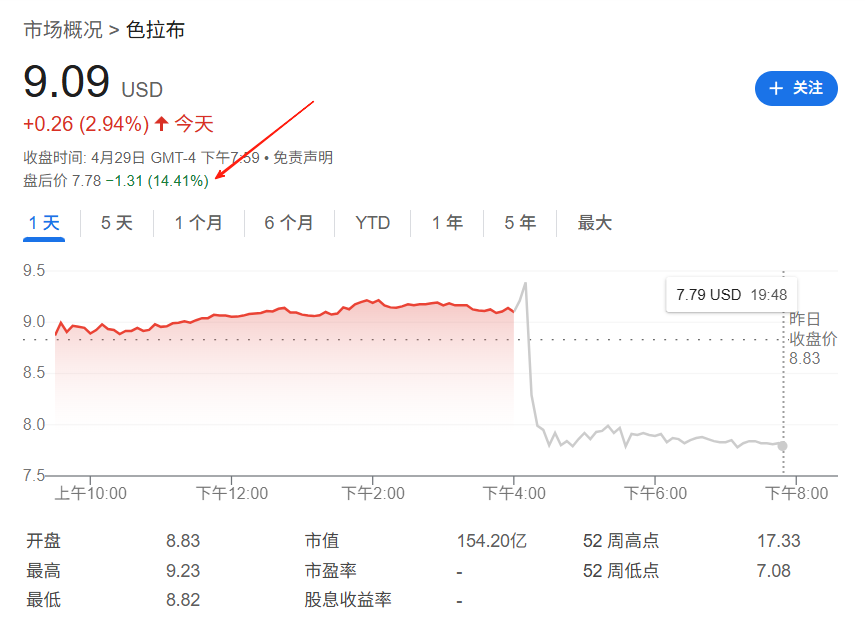
Company Actions - United Parcel Service (UPS) announced it will cut approximately 20,000 jobs, representing about 4% of its workforce, and close 73 facilities to reduce costs amid economic uncertainty and a potential decrease in business from its largest customer, Amazon [1][5] - UPS previously reached an agreement with Amazon to reduce shipping volume by 50% by the second half of 2026, with Amazon accounting for 11.8% of UPS' overall revenue in 2024 [5] Economic Context - A slowdown in global trade is expected to decrease the demand for shipping services, which could negatively impact parcel delivery companies [2] - UPS CEO Carol Tome highlighted that the current trade environment presents unprecedented challenges not seen in over a century [2] Financial Implications - UPS anticipates expenses between $400 million and $600 million related to separation benefits and lease-related cuts in 2025 following previous workforce reductions [6] - The company is also facing a decline in volume from e-commerce sellers linked to China, such as Temu and Shein, due to new tariffs on previously duty-free goods [9] Strategic Initiatives - To assist customers with tariff and trade policy changes, UPS launched a website providing updates and expert connections [9] - UPS introduced a new Global Checkout service that displays customs fees and duties on international purchases at checkout [10]