Databricks

Search documents
数据洪流下,如何重构 AI 时代的数据基础设施?
声动活泼· 2025-05-26 10:36
Core Viewpoint - The rapid development of AI technology is transforming data into a key driver of AI progress, necessitating a reconstruction of data infrastructure to handle the increasing complexity and volume of data types, particularly unstructured and multimodal data [1][3]. Group 1: Changes in Data Landscape - The demand for data in the AI era extends traditional needs, shifting from primarily structured data to a broader range of data types, including unstructured and semi-structured data [3]. - There is an explosive growth in data volume due to the rapid increase in AI applications, leading to a geometric increase in data scale [3]. - The way data is utilized is changing, requiring support for mixed queries that can handle various data types within a single query [3]. Group 2: Opportunities in the Data Sector - The data sector is seen as a highly certain field, with the PaaS layer acting as a crucial bridge between infrastructure and applications, indicating strong potential for growth [4]. - Companies with large amounts of unstructured data face challenges but can leverage advancements in distributed systems and large language models to convert "data debt" into valuable assets [5]. - The relationship between AI and data is bidirectional, where AI enhances data processing capabilities while high-quality data improves model accuracy [6]. Group 3: Market Dynamics and Competition - AI is reshaping traditional IT industry roles, blurring the lines between different service layers, which presents opportunities for Chinese companies to directly engage with end-users [7]. - Data companies are essentially AI companies, focusing on private data processing, which is crucial for enterprise users concerned about data security [8]. - The market may see segmentation similar to traditional databases, with opportunities across various enterprise sizes, particularly for those needing integrated solutions [9]. Group 4: OceanBase's Strategic Position - OceanBase possesses two core advantages: world-leading native distributed capabilities and an integrated architecture that can handle various workloads simultaneously [11]. - The term "data foundation" reflects a strategic repositioning to extend data processing capabilities beyond traditional definitions [13]. - OceanBase's open-source strategy aims to create a world-class open-source database, filling gaps left by slower developments in other systems [16]. Group 5: Future Outlook and Market Potential - The future vision for OceanBase is to become the data foundation for the AI era, serving millions of enterprises and helping them build robust data infrastructures [18]. - The AI market presents vast opportunities, especially in regions like Southeast Asia and South America, where infrastructure is still developing [19][20]. - The emergence of AI tools can automate services that were previously customized, providing a significant opportunity for SaaS companies to transition into product-oriented businesses [21]. Group 6: Product Developments - Recent product releases from OceanBase include enhancements in database capabilities, integration of data with AI, and the introduction of RAG services to simplify developer access to these functionalities [22]. Group 7: Industry Entry Opportunities - The current environment is favorable for new developers and entrepreneurs entering the data industry, as the intersection of data and AI is experiencing explosive growth [23].


Palo Alto:人工智能领域的发展将推动下一代测序 (NGS) 产品的发展
美股研究社· 2025-05-23 09:52
Core Viewpoint - Palo Alto Networks (PANW) reported strong Q3 performance with revenue and profit exceeding expectations, indicating robust growth potential in the cybersecurity sector driven by AI advancements [1][13]. Financial Performance - Q3 revenue reached $2.29 billion, a year-over-year increase of 15.33%, surpassing analyst expectations by $8.99 million [1]. - Non-GAAP diluted earnings per share (EPS) were $0.80, up 21.2% year-over-year, exceeding analyst expectations by $0.03 [1]. - Remaining performance obligations (RPO) grew 19% year-over-year, reaching $13.5 billion [1]. Future Guidance - For FY2025, the company expects revenue between $9.17 billion and $9.19 billion, aligning with analyst expectations [1]. - Non-GAAP diluted EPS for FY2025 is projected to be between $3.26 and $3.28, slightly above analyst expectations [1][2]. - Q4 revenue is anticipated to be between $2.49 billion and $2.51 billion, with EPS guidance slightly above analyst expectations [2]. Strategic Initiatives - The company plans to repurchase $1 billion in stock, reflecting confidence in its growth trajectory [3]. - Palo Alto aims to achieve an annual recurring revenue (ARR) target of $15 billion by FY2025, supported by its next-generation security products [3]. - The introduction of the Prisma AIRS platform and the acquisition of Protect AI are key components of the company's strategy to enhance its AI-driven cybersecurity offerings [5][6]. Market Trends - The demand for AI-driven cybersecurity solutions is increasing, with XSIAM's ARR growing over 200% year-over-year, making it a significant growth driver [5]. - The urgency for AI cybersecurity solutions is heightened as more companies adopt AI in their operations, positioning Palo Alto favorably in the market [5][8]. Valuation and Analyst Ratings - The average price target for Palo Alto is set at $230, indicating approximately 27% upside potential from current levels [11]. - The projected forward P/E multiple is 54.8x, with a projected FY2025 EPS of $3.35 [9]. - Analysts have upgraded the stock rating from "hold" to "buy," reflecting confidence in the company's long-term growth prospects despite external challenges [13].


SaaS 的下一站是 Agentforce ?Salesforce 押注 AI 工作流革命
3 6 Ke· 2025-05-23 02:28
Group 1 - Marc Benioff, CEO of Salesforce, envisions a transformative era for enterprise software driven by AI agents and unified data architecture, transitioning from Software as a Service (SaaS) to Service as Software [1][2] - The "digital workforce" revolution is expected to be more disruptive than the cloud and mobile waves of 15 years ago, fundamentally redefining application functionalities [2] - Salesforce's Agentforce and Data Cloud strategies are central to its agentic vision, positioning the company as a potential "pure software hyperscaler" [2] Group 2 - Agentforce is a new AI-driven enterprise agent platform that integrates autonomous or semi-autonomous software assistants into all Salesforce applications, aiming to enhance human productivity [3][4] - Benioff claims that embedding these agents into workflows could lead to a 50% productivity increase across departments, a significant rise from a previously stated 30% [4] - Early customer deployments, such as Disney's use of AI agents for optimizing theme park operations, demonstrate the practical viability of this vision [4] Group 3 - The concept of "agent fluidity" allows AI agents to seamlessly operate across datasets and applications, exemplifying the Service as Software model [5] - Salesforce's Data Cloud serves as a unified real-time data platform, aggregating internal and external data sources into a comprehensive business state map [8][9] - The integration of Data Cloud with core applications like Tableau enhances the effectiveness of AI agents by providing unified real-time data and metadata frameworks [10] Group 4 - Salesforce's strategy emphasizes data fluidity, allowing for federated data integration without requiring all data to be migrated to Salesforce's storage [11][12] - Collaborations with third-party data platforms like Snowflake and Databricks enhance the capabilities of Data Cloud, allowing real-time data queries and integration [12][13] - This open integration strategy positions Salesforce as a key player in modern data architecture, avoiding the pitfalls of data silos [30] Group 5 - Salesforce aims to become the first pure software hyperscaler, leveraging its SaaS platform to achieve scale without the capital-intensive model of traditional hyperscalers [19][20] - The company anticipates reaching an annual revenue of approximately $50 billion this fiscal year, with a focus on maintaining healthy free cash flow [20] - By embedding agents, workflows, and federated datasets into daily operations, Salesforce seeks to establish itself as a neutral orchestration layer in heterogeneous environments [20][21] Group 6 - The competitive landscape includes major players like Microsoft, which poses a significant challenge to Salesforce's ambitions in the AI space [23][24] - Salesforce's strategy of integrating rather than competing with data infrastructure providers like Snowflake and AWS allows it to avoid direct confrontations while enhancing its offerings [29][30] - The company is experiencing strong market response to its AI-driven agents, with over 5,000 organizations deploying the technology shortly after its launch [6][32] Group 7 - Salesforce's ambitious goal is to drive overall productivity improvements exceeding 50% through AI agents, with plans to embed AI capabilities across its entire customer base [35][36] - The next 12 to 24 months are critical for validating Salesforce's strategy and its ability to redefine the cloud economy through software alone [35][36] - If successful, Salesforce could reshape the perception of cloud leaders and establish itself as the preferred platform for enterprise-level AI [34][36]

软件不受关税影响!Snowflake季度营收首超10亿美元,重点关注AI工具
硬AI· 2025-05-22 07:20
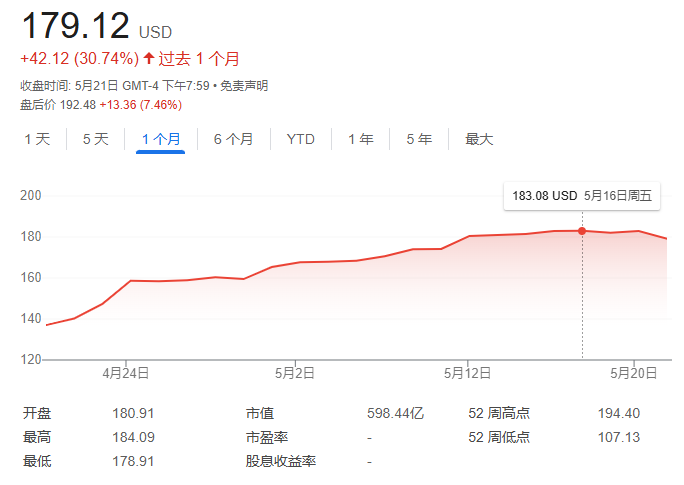
Core Viewpoint - Snowflake has significantly raised its full-year product revenue forecast to $4.33 billion, driven by AI tool innovations and market demand, while indicating that recent tariff policy adjustments have not materially impacted its business [3][4][5]. Group 1: Financial Performance - For the quarter ending in July, Snowflake's product revenue is expected to grow approximately 25% to $1.04 billion, surpassing analysts' average expectation of $1.03 billion, marking the first time the company's quarterly revenue exceeds $1 billion [3][4]. - Following the strong performance, Snowflake's stock price rose about 7% in after-hours trading, closing at $179.12, and has rebounded 37% from its low on April 4, 2025 [7]. Group 2: AI Strategy - Snowflake's optimistic outlook is closely tied to its developments in the AI sector, with the CEO emphasizing efforts to lower the barriers for customers using large language models to develop generative AI applications on the Snowflake platform [9]. - Analysts believe that these AI tools could significantly contribute to performance later this year, becoming a new growth driver for the company [10]. Group 3: Market Position and Competition - The upward revision of guidance amidst economic fluctuations indicates the sustainability of short-term demand for Snowflake's services [11]. - However, Snowflake faces intense competition from Databricks and cloud infrastructure providers like Microsoft and Google, with Microsoft recently announcing that many customers are adopting its Fabric data product suite, increasing pressure on Snowflake [11].

软件不受关税影响!Snowflake季度营收首超10亿美元,重点关注AI工具
Hua Er Jie Jian Wen· 2025-05-22 00:37
Core Viewpoint - Snowflake reported strong financial results despite concerns over increased tariffs in the U.S., indicating resilience in its business operations [1][3] Financial Performance - For the quarter ending in July, Snowflake's product revenue is expected to grow approximately 25% to $1.04 billion, surpassing analyst expectations of $1.03 billion, marking the first time quarterly revenue exceeds $1 billion [1] - The company raised its full-year product revenue forecast from $4.28 billion to $4.33 billion [1] - Following the earnings report, Snowflake's stock price rose about 7% in after-hours trading, closing at $179.12, reflecting a 37% rebound from its low on April 4, 2025 [1] AI Strategy - Snowflake's optimistic outlook is closely tied to its investments in AI, with the CEO emphasizing efforts to lower barriers for customers using large language models on its platform [3] - Analysts suggest that these AI tools could significantly contribute to performance later this year, representing a new growth avenue for the company [3] Competitive Landscape - Analysts note that Snowflake's upward guidance amidst economic fluctuations confirms the sustainability of short-term demand [5] - The company faces intense competition from Databricks and major cloud infrastructure providers like Microsoft and Google, with Microsoft recently announcing increased adoption of its Fabric data product suite, adding pressure on Snowflake [5]
成功投资特斯拉、阿里和美团之后,这个价值投资巨头“非常看好”字节跳动
Hua Er Jie Jian Wen· 2025-05-14 09:40
有"全球成长股捕手"美名的著名价值投资公司Baillie Gifford成长投资主管兼合伙人Peter Singlehurst日前 接受博客采访,就人工智能热潮、当下什么公司最值得投资等多个热门话题进行对话。 作为投资界百年老店,位于苏格兰爱丁堡Baillie Gifford的核心投资策略哲学是全球长期成长策略,即在 全球范围内发掘并长期投资于最具竞争力、创新性和成长效率的极少数优质企业。 全球科技巨头的早期投资者中,有许多都能看到Baillie Gifford的身影:公司2004年投资Amazon,2011 年投资Illumina,2013年投资特斯拉,2014年投资了阿里巴巴,2016年投资了美团。 在被问到当下最会进行的一项投资,Peter斩钉截铁地脱口而出——字节跳动。Peter预估,即便是在如 今的国际形势下,在字节跳动上的投资依然有五倍的回报率。 以下是对谈核心要点: 企业需要警惕"填鸭式投资"的危害,对早期风险投资而言,如果不把ROE作为投资的重点考 虑,这会成为公司发展的隐患。 在生成式AI热潮中保持战略定力,Baillie Gifford投资了AI公司有DataBricks和Tenstorr ...


速递|开源数据库ClickHouse挑战Snowflake,估值三年翻三倍达60亿美元
Z Potentials· 2025-05-12 02:32
Core Insights - Investors have profited billions from database software companies Snowflake and Databricks, and now venture capitalists are closely watching ClickHouse, which is seen as a potential challenger to existing giants amid rising demand for database software due to the AI boom [1][3] - ClickHouse is reportedly negotiating a funding round at a $6 billion valuation, three times its valuation from four years ago, with Khosla Ventures expected to lead the round, potentially raising hundreds of millions [1][2] Company Overview - ClickHouse's software stores and manages digital event data, which is crucial for AI developers. The software has been used by programming assistants like Poolside to process data and evaluate AI accuracy [1] - The core software of ClickHouse is open-source, but the company charges enterprises for managed cloud services based on their functional needs and resource usage. As of the end of Q1, ClickHouse's annual recurring revenue was approximately $70 million [2] Competitive Landscape - Despite revenue growth, ClickHouse's new valuation will result in a forward revenue multiple significantly higher than its competitors. The company targets large enterprises, similar to Snowflake, which generated $3.6 billion in revenue in its most recent fiscal year [3] - ClickHouse is noted for its superior real-time analytics capabilities compared to Snowflake, with some investors highlighting its speed and cost-effectiveness as advantages [3] - ClickHouse also competes with companies like Elastic and Datadog, which focus on real-time event analytics [4] Company History - ClickHouse was initially developed by Alexey Milovidov during his tenure at Yandex, with the first version released in 2012 to power Yandex Metrica. It became an open-source project in 2016 [4] - In September 2021, Yandex spun off ClickHouse into an independent company, raising $50 million in Series A funding led by Index Ventures. Later that year, it secured $250 million in Series B funding at a $2 billion valuation, led by Coatue Management and Altimeter Capital [5]
独家对话杨传辉:AI时代来临,数据库龙头OceanBase如何自我变革?|钛媒体AGI
Tai Mei Ti A P P· 2025-05-12 02:05
Core Insights - OceanBase is transitioning to become an integrated data foundation for the AI era, driven by market demand and existing technological capabilities [4][6][14] - The global big data IT investment is projected to reach approximately $354 billion in 2024, with a compound annual growth rate (CAGR) of 16.8% expected to reach nearly $644 billion by 2028 [2] - By 2028, China's big data IT spending is anticipated to be $62.17 billion, accounting for about 10% of the global market, with a remarkable CAGR of 24.9% [2] Company Overview - OceanBase, founded in 2010, is a leading integrated distributed database company in China, having commercialized its operations under Ant Group since 2020 [3] - The company has supported over 2,000 clients across various sectors, including finance, government, telecommunications, retail, and the internet, in upgrading their critical business systems [3] Strategic Developments - In April 2025, OceanBase's CEO announced a strategic shift towards AI, emphasizing the creation of a "DATA×AI" core capability and an integrated data foundation for the AI era [3][4] - The company is enhancing its talent and organizational structure to support this strategic transition, appointing its CTO as the head of AI strategy and establishing new departments focused on AI [3][4] Technological Challenges and Solutions - OceanBase aims to address the complexities of data types and scales in the AI era, moving beyond traditional structured data to include unstructured data such as images, text, and videos [4][6] - The company recognizes the challenges posed by data fragmentation and the need for innovative solutions to enhance data processing capabilities [4][8] Upcoming Initiatives - OceanBase plans to unveil AI-related database products and capabilities at its upcoming developer conference, focusing on integrated data processing and vector database enhancements [10] - The company will also introduce RAG services to help enterprises combine their proprietary data with public data models for greater business value [10] Future Vision - OceanBase envisions itself as a leading integrated data foundation in the AI era, emphasizing the importance of continuous innovation and ecosystem development to meet evolving market needs [13][14] - The company aims to maintain its focus on data processing, adapting to the increasing complexity and volume of data in the AI landscape [13][14]

阿布扎比主权基金公布成绩单:资产管理规模近2.4万亿人民币
Sou Hu Cai Jing· 2025-05-09 08:12
Core Insights - Mubadala, the second-largest sovereign fund in the UAE, reported a 9.1% year-on-year growth in assets under management, reaching 1.2 trillion dirhams (approximately 2.4 trillion RMB) by the end of 2024, with a five-year annualized return of 10.1% [2][4] Investment in China - Mubadala has invested nearly $17 billion (approximately 123 billion RMB) in over 100 projects in China over the past decade, focusing on sectors such as consumer, healthcare, industrial, and enterprise services [2] - The fund has established strategic partnerships with leading fund managers, leading or co-leading investments in notable projects like Wanda Commercial Management Group and JD Health [2][3] Key Investments and Strategies - In 2024, Mubadala completed a significant acquisition of 60% of Dalian Wanda's commercial management subsidiary, marking its largest direct investment in China to date [2] - The fund's recent acquisition of the entire equity of U.S. biopharmaceutical company Upsher-Smith's mature product business in China reflects its investment strategy focused on central nervous system treatments [3] Focus Areas and Future Directions - Mubadala's investment strategy emphasizes sectors such as artificial intelligence, clean energy, life sciences, semiconductors, and advanced manufacturing, aligning with the UAE's development priorities [4] - The establishment of the MGX national AI investment platform in collaboration with G42 is a key initiative aimed at enhancing the UAE's position in global AI and advanced technology [4] Global Investment Expansion - Mubadala is expanding its global investment portfolio, with a focus on North America, Europe, and Asia, and raised $3.1 billion (approximately 11.4 billion dirhams) for its private equity fund, exceeding its initial target [6][9] - The fund's private credit investment portfolio has grown to $20 billion (approximately 73.5 billion dirhams), supported by partnerships with major financial institutions [8] Performance Metrics - Mubadala's capital deployment increased by 33.7% year-on-year, reaching 119 billion dirhams (approximately $32 billion), while total capital returned grew by 10% to 109 billion dirhams (approximately $30 billion) [9] - The fund disclosed a ten-year rolling internal rate of return of 8.7% for the first time in 2024 [9]

让 PostgreSQL 更契合Agent、氛围编程!成立四年、微软投资,这家开源数据库公司终10亿美元卖身Databricks
AI前线· 2025-05-09 05:18
Core Viewpoint - Databricks is in negotiations to acquire Neon, an open-source database startup, for approximately $1 billion, which may exceed this amount when including employee retention incentives. The deal is seen as a strategic move to enhance Databricks' AI capabilities and infrastructure [1][16]. Group 1: Company Overview - Neon is a four-year-old open-source database company founded by Nikita Shamgunov, Heikki Linnakangas, and Stas Kelvich, focusing on PostgreSQL [2][3]. - The current CEO, Shamgunov, has a strong background in computer science and has previously contributed to SQL Server at Microsoft and co-founded MemSQL (now SingleStore) [5][6]. - The company aims to create a PostgreSQL variant suitable for AI applications, allowing customers to pay for database usage on demand, with a focus on efficiency for AI agents [11][12]. Group 2: Technology and Features - Neon employs a serverless architecture that separates storage and compute, allowing for automatic scaling based on workload demands [7][8]. - The technology includes features like copy-on-write for checkpointing and time-point recovery, as well as connection pooling to enhance performance [8][9]. - Neon supports vector data storage and utilizes HNSW indexing for efficient high-dimensional vector searches, making it valuable for natural language processing tasks [11][12]. Group 3: Investment and Financials - Neon has raised over $130 million in funding, including a recent $46 million round led by Menlo VC, bringing its total funding to approximately $104 million [14]. - The company previously received a $25 million strategic investment from Microsoft's M12, enhancing its collaboration with Azure [13][14]. Group 4: Databricks' Strategic Moves - Databricks, founded in 2013, has shifted its focus towards AI, acquiring companies like MosaicML for $1.3 billion to bolster its AI capabilities [16][17]. - The company has been actively enhancing its platform through various product developments and acquisitions, including the launch of Databricks Apps for building customized AI applications [17][18]. - Databricks is reportedly facing challenges in its transition to AI, with some industry insiders expressing concerns about its current direction and operational efficiency [20].