
京东方A

Search documents
62岁俞敏洪,凌晨报平安;比亚迪回应“汽车圈恒大”;腾讯高管回应微信推出“朋友圈访客”和“已读”功能丨邦早报
创业邦· 2025-05-31 00:57
Group 1 - BYD responds to claims of being the "Evergrande of the automotive industry," stating that it has experienced rapid growth while other companies have stagnated, and emphasizes the strong financial health of Chinese automakers compared to foreign counterparts [3] - The court ruled in favor of the Pang Donglai Group in a defamation case, ordering the defendant to pay 400,000 yuan in damages and issue a public apology [4] - Luckin Coffee has launched a promotional campaign reducing the price of several drinks by 3 yuan, clarifying that this is a temporary festive discount rather than a permanent price cut [15] Group 2 - Nezha Auto denies reports of founder dismissal and claims that the company is working with state-owned shareholders to resolve financial issues, including a debt-to-equity swap plan [9] - Nvidia executives, including CEO Jensen Huang, plan to sell shares worth over $800 million, raising concerns about insider selling [15] - Zong Fuli has officially taken over as the legal representative and chairman of Wahaha Group, succeeding Zong Qinghou [15] Group 3 - The China Association of Automobile Manufacturers reported that the total import and export value of automotive goods in April 2025 was $23.09 billion, with a month-on-month increase of 6.8% but a year-on-year decrease of 2.2% [26] - The China Academy of Information and Communications Technology reported that the domestic smartphone shipment in April 2025 was 25.04 million units, with a year-on-year growth of 4.0% [26] - Omada Health plans to go public with an estimated valuation of $1.1 billion, aiming to raise up to $158 million through its IPO [17]




十年之后,复盘“中国制造2025”
Guan Cha Zhe Wang· 2025-05-30 11:10
Group 1 - "Made in China 2025" aims to transform China from a "world factory" to a global high-tech manufacturing leader by 2025, with a target of 70% self-sufficiency in core components and key materials [3][4] - The initiative focuses on ten high-tech sectors, including semiconductors, robotics, new energy vehicles, aerospace, and biomedicine, supported by significant government funding and policy incentives [3][4] - From 2015 to 2022, over $1.3 trillion was invested in priority industries, with nearly 60% allocated to semiconductors and new energy vehicles, indicating a concentrated policy approach [4] Group 2 - The new energy vehicle (NEV) sector has seen remarkable success, with domestic NEVs capturing 80% of the market share in 2022, and companies like BYD ranking second globally in NEV sales [5][6] - High-speed rail has become a textbook success story, with Chinese companies now dominating the market, achieving a 90% share in high-speed rail signaling equipment [6][7] - In the new materials sector, China has significantly increased its production capacity, with a global share of 80% in petrochemical products from 2019 to 2022, and companies like Wanhua Chemical leading in the polyurethane market [7][8] Group 3 - Despite achievements, challenges remain in high-end manufacturing, particularly in semiconductors, where China's market share is only 1.9%, and reliance on imported equipment is high [8][9] - The aerospace sector faces similar issues, with the domestically produced C919 aircraft having only a 60% local content rate, heavily dependent on foreign suppliers for critical components [9][10] - The marine engineering and high-tech shipbuilding sectors also struggle, with less than 30% localization in high-tech ship equipment [10] Group 4 - The rapid advancements have led to some negative consequences, including resource wastage due to excessive government spending, with 30% of semiconductor project funds wasted on inefficient projects [11][12] - Overemphasis on industrial policy has resulted in production capacity outpacing consumer demand, leading to price wars and declining industrial profits [11][12] - In 2022, China's power battery production capacity reached 900 GWh, but actual demand was only 450 GWh, resulting in a 50% surplus [12][13] Group 5 - While China excels in low-end and mid-range markets, it still lags behind international giants in high-end sectors, with R&D investment significantly lower than that of the U.S. [13][14] - Foreign enterprises believe that Chinese competitors will take 5 to 10 years to catch up in technology, particularly in advanced fields like semiconductors and aerospace engines [14][15] - The decline in international scientific collaboration and increased trade tensions pose additional challenges for Chinese companies in sensitive technology areas [15]


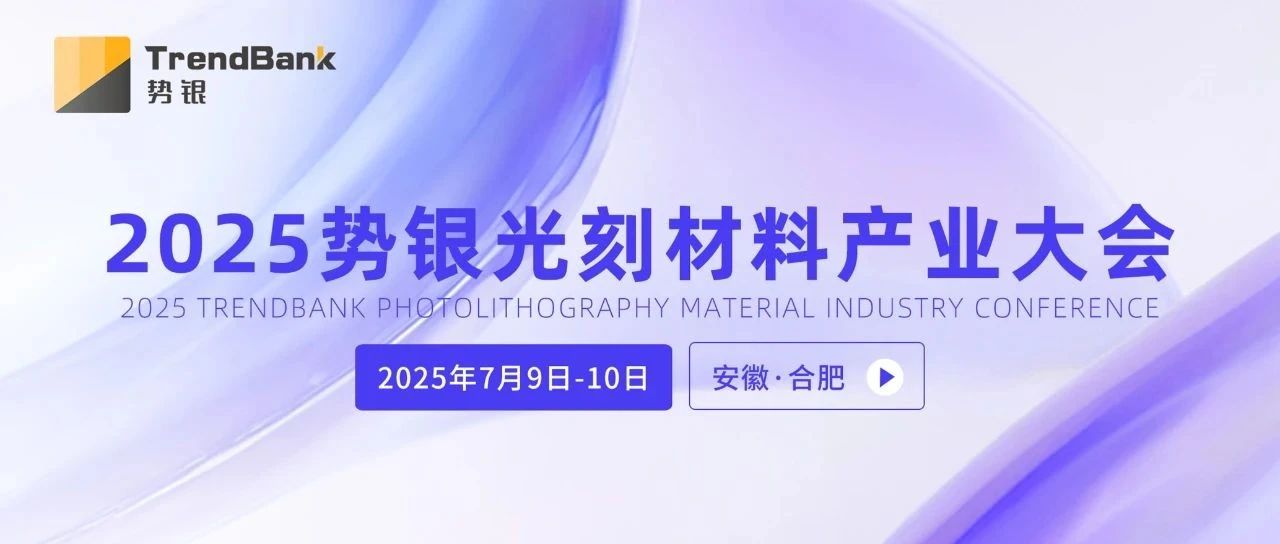
张江实验室/甬江实验室/矽磐微/凯诺中星/天璇新材料等产学研单位确认出席 | 2025势银光刻材料产业大会(PRIC 2025)
势银芯链· 2025-05-30 06:33
Core Viewpoint - The 2025 TrendBank (Fifth) Photoresist Materials Industry Conference will be held on July 9-10, 2025, in Hefei, Anhui, focusing on the collaboration between industry, academia, and research to promote industry development [15][9]. Conference Overview - The conference will feature over 20 speakers from the photoresist materials industry, covering various topics related to application terminals, materials, equipment, and processes, providing new insights and prospects for the industry [8][10]. - The event aims to create an interactive platform for upstream and downstream supply chain connections [10]. Agenda Highlights - The agenda includes sessions on advanced lithography technology, market analysis of the Chinese photoresist market, and discussions on challenges and opportunities in new display technologies [5][7]. - Specific topics include the latest advancements in extreme ultraviolet lithography technology, electron beam lithography, and the development of new photoresists for displays [5][7]. Industry Context - The photoresist materials market is characterized by increasing global competition, accelerated technological innovation, and rising barriers to technology protection [13][14]. - The demand for high-performance and high-precision manufacturing processes in the semiconductor chip industry is driving the need for advancements in photoresist materials [14]. Participation and Registration - The conference is expected to host around 300 participants, with registration fees set at RMB 2600 before June 30 and RMB 2800 thereafter [11][9]. - Participants will receive conference materials, guest speaker presentations, and access to meals and a banquet [11]. Background and Significance - The development of the photoresist materials market is crucial for achieving breakthroughs in cutting-edge technology and ensuring the stability and diversification of the supply chain [14]. - Recent government policies at various levels aim to create a favorable environment for the growth of the photoresist materials industry, emphasizing the importance of achieving "win-win" scenarios across the industry chain [14].
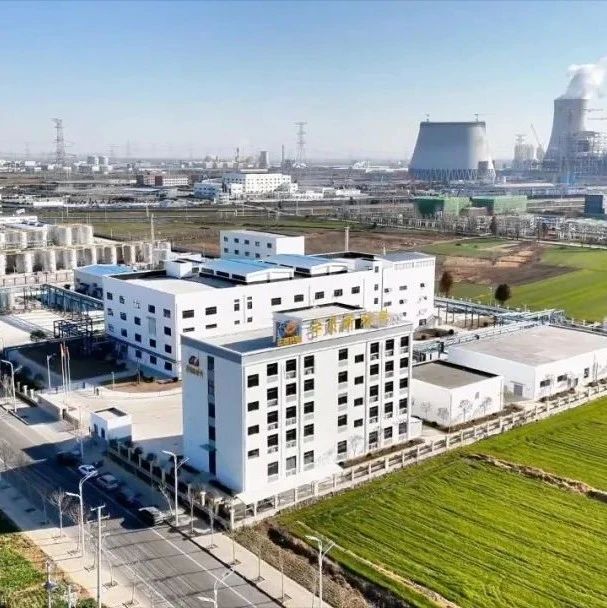
LCD/OLED材料公司云基科技挂牌上市
WitsView睿智显示· 2025-05-30 06:02
Core Viewpoint - Beijing Yunji Technology Co., Ltd. has been listed on the New Third Board, focusing on the independent research, production, and sales of high-end display materials, including OLED and liquid crystal materials, primarily used in displays and lighting for TVs, computers, mobile phones, and automobiles [1][4]. Group 1: Company Overview - Yunji Technology operates three wholly-owned subsidiaries: Beijing Jilian, Anhui Yubei, and Xiamen Hangchuang, with differentiated business operations [2]. - The Anhui Yubei production base has commenced operations as of January 2025, with a total investment of 250 million, producing 70 tons of high-performance liquid crystal and 30 tons of OLED materials [2]. Group 2: Client Relationships - The company maintains long-term partnerships in OLED materials with Qingyue Optoelectronics, Ruilian New Materials, and Guangdong Agreya Optoelectronic Materials Co., Ltd. [4]. - In liquid crystal materials, Yunji Technology has been included in the supplier lists of industry leaders such as Chengzhi Co., Feikai Materials, and Bayi Shikong [4]. Group 3: Financial Performance - Financial data indicates that Yunji Technology's projected revenues for 2023 and 2024 are 119 million and 125 million, respectively, with net losses of 9.33 million and 11.67 million [4]. Group 4: Production Capacity - The parent company focuses on R&D and sales, while the Beijing Jilian production base has a designed capacity of 60 tons per year for liquid crystal and OLED materials [5]. - The Anhui Yubei production base is designed for a capacity of 100 tons per year for liquid crystal products [5]. - The Xiamen Hangchuang production base will focus on OLED product sublimation, device preparation, and performance evaluation, with a designed capacity of 10 tons per year [5].
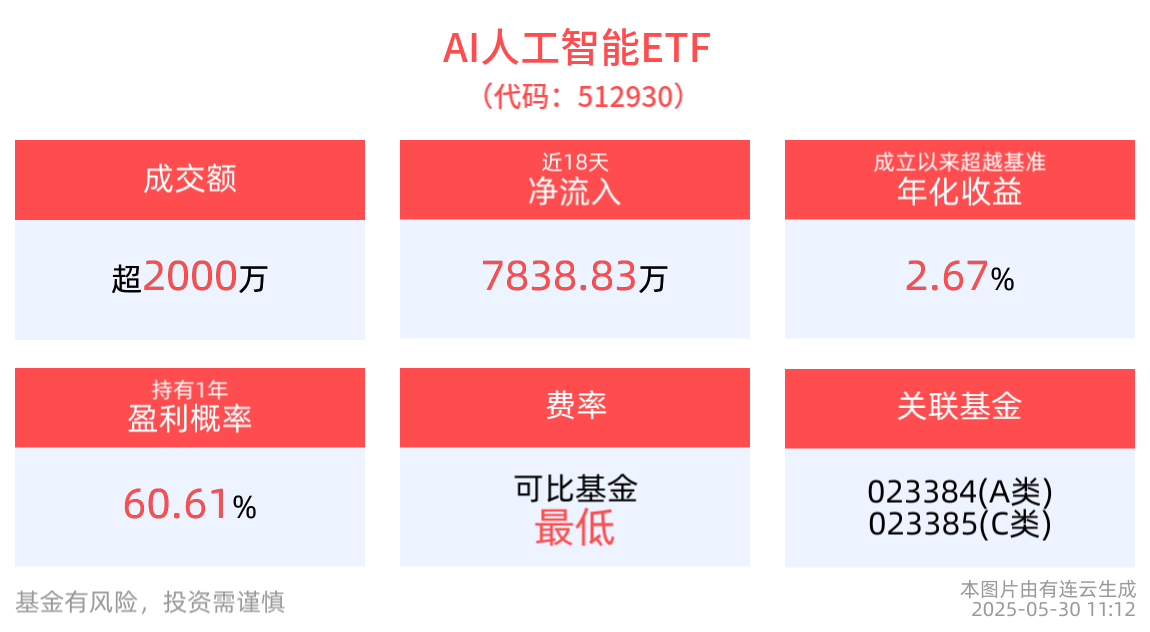
现象级产品不断涌现,Agent赛道有望迎拐点,AI人工智能ETF(512930)、消费电子ETF(561600)回调蓄势,配置机遇备受关注
Sou Hu Cai Jing· 2025-05-30 03:48
Group 1: AI Industry Insights - The China Securities Artificial Intelligence Theme Index (930713) decreased by 1.82% as of May 30, 2025, with notable stock movements including Stone Technology (688169) up by 0.96% and Zhongke Xingtu (688568) down by 9.16% [1] - The AI Artificial Intelligence ETF (512930) fell by 1.69%, with a latest price of 1.28 yuan, but showed a 2.12% increase over the past month [1] - The AI Artificial Intelligence ETF has seen a net inflow of 78.39 million yuan over the last 18 trading days, averaging 4.35 million yuan per day [1] - The AI sector is entering a 3.0 phase, focusing on the large-scale deployment of agents (intelligent entities), with 2025 potentially being the year of agents [6] Group 2: Consumer Electronics Sector - The China Securities Consumer Electronics Theme Index (931494) declined by 2.11% as of May 30, 2025, with East Mountain Precision (002384) leading the decline at 3.97% [3] - The Consumer Electronics ETF (561600) decreased by 1.94%, with a latest price of 0.76 yuan, but has increased by 24.72% over the past year [3] - The Consumer Electronics ETF has seen a significant growth in scale, adding 11.11 million yuan in the past month, ranking second among comparable funds [3] Group 3: Online Consumption Sector - The China Securities Hong Kong-Shanghai Online Consumption Theme Index (931481) fell by 2.20% as of May 30, 2025, with notable stocks like Zhangqu Technology (300315) up by 6.89% [4] - The Online Consumption ETF (159793) decreased by 1.46%, with a latest price of 0.88 yuan, but has shown a 1.49% increase over the past month [4] - The index tracks 50 companies involved in online shopping, digital entertainment, online education, and telemedicine, reflecting the overall performance of the online consumption sector [7]

2025年中国负膨胀合金材料行业发展历程、相关政策、产业链、发展现状及发展趋势研判:技术突破叠加需求释放,市场规模超4亿元[图]
Chan Ye Xin Xi Wang· 2025-05-30 01:17
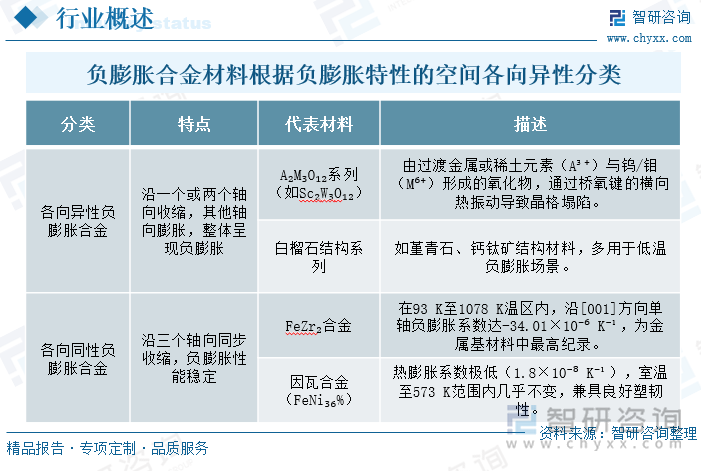
Core Viewpoint - The negative thermal expansion alloy materials industry is in the early stages of technological breakthroughs and industrial exploration globally, with only a few specialized low-expansion alloys being applied in military and aerospace sectors. The market in China is expected to grow significantly, reaching approximately 400 million yuan by 2024, driven by advancements in new information technology and commercial aerospace [1][10]. Industry Overview - Negative thermal expansion alloys are materials that exhibit a negative coefficient of thermal expansion (CTE) within specific temperature ranges, meaning they contract as temperature increases. This behavior is contrary to common materials and is typically due to unique crystal structures or electronic effects [2]. - The industry can be categorized into anisotropic negative expansion alloys and isotropic negative expansion alloys, each with distinct properties and applications [2]. Development History - The Chinese negative thermal expansion alloy industry has developed over 40 years, progressing through stages of basic research, technological breakthroughs, and industrial applications. Key milestones include the establishment of preparation technologies and the development of new alloy systems [5]. Policy Environment - The Chinese government has implemented several strategic policies to support the development of high-performance alloy materials, recognizing their importance in modern industrial systems and emerging industries [6]. Industry Chain - The industry has formed a relatively complete ecosystem, with upstream raw material supply, midstream processing, and downstream applications in high-end sectors such as aerospace and precision instruments [7]. Current Market Analysis - The global market for negative thermal expansion alloys is still in the early stages, with significant technical barriers limiting mass production capabilities. In China, companies like Antai Technology and Ningbo Huancai Star are making strides in developing low-expansion alloy foils, potentially breaking the monopoly of Japanese firms in the display materials sector [10][12]. Competitive Landscape - The industry is characterized by a "technology-driven + scenario segmentation + policy support" competitive landscape. Companies are leveraging regional collaboration and technological breakthroughs to accelerate domestic replacement processes and move towards high-end, large-scale development [15]. Future Trends - The demand for negative thermal expansion alloys is expected to diversify, driven by the growth of emerging industries such as 5G communication and commercial aerospace. The industry is likely to see a shift towards high-end, customized applications [18][19]. - The industry will also focus on green manufacturing and circular economy practices, aiming to reduce carbon emissions and enhance sustainability through innovative production techniques [20].

数字经济赋能城市高质量发展
Xin Hua Ri Bao· 2025-05-30 00:16
Group 1 - The core viewpoint emphasizes the importance of accelerating the development of the digital economy and its integration with the real economy to create internationally competitive digital industry clusters [1][6] Group 2 - Cities need to develop specialized plans for digital economy, such as Shanghai's "14th Five-Year Plan" aiming to build an "International Digital Capital" and Beijing's initiative to become a global digital economy benchmark city [2][3] - Shenzhen has introduced regulations to establish data element market rules, promoting public data sharing and enhancing data flow efficiency [2][3] Group 3 - The construction of new infrastructure is crucial, including the deployment of 5G networks and computing centers, with Tianjin having over 50,000 5G base stations by the end of 2022 and plans for an additional 20,000 by 2025 [3] - Guizhou's computing power has surpassed 49 EFLOPS, contributing to its status as "China's Data Valley" [3] Group 4 - A multi-faceted development model is necessary, including the establishment of digital industry parks and innovation incubators, as seen in Hangzhou's tech ecosystem and Chongqing's digital economy industrial park [4] - Collaboration between government and enterprises is encouraged to create innovative centers and promote digital applications in various sectors [4] Group 5 - Strengthening digital talent development is essential, with initiatives for specialized training and customized recruitment strategies to attract top digital talent [5] - The establishment of a "Digital Talent Port" aims to provide comprehensive services for talent, including housing and funding support [5]
为实现科技自立自强贡献聪明才智
Ren Min Ri Bao· 2025-05-29 22:21
Group 1 - The core of China's modernization relies on scientific and technological innovation, which is essential for achieving high-level self-reliance and strength in technology [1][2] - High-level innovative talent is crucial for advancing China's modernization, with researchers being the backbone of this effort [2][3] - Companies must continuously break through core technologies to enhance their competitive edge and maintain control over industry development [3][4] Group 2 - The development of new industries, models, and driving forces is driven by technological innovation, which is a key element in enhancing productivity [3][8] - The establishment of smart factories, such as the one at Luoyang Bearing Group, exemplifies the integration of technology in traditional manufacturing to improve efficiency and production capacity [3][8] - Significant advancements in various sectors, including high-end chips and new materials, demonstrate the self-reliance and innovative capabilities of Chinese enterprises [7][9] Group 3 - Basic research is identified as the source of technological innovation, with a focus on aligning research with national strategic needs [9][12] - Young teams in various fields are making breakthroughs in core technologies, contributing to high-quality development and economic growth [9][14] - The encouragement of youth to innovate boldly is seen as vital for the future of technological advancement in China [14][15]

期待更多“鸿蒙时刻”(人民时评)
Ren Min Ri Bao· 2025-05-29 22:09
Group 1 - The core viewpoint emphasizes the importance of maintaining a balanced mindset in innovation, suggesting that more "Hongmeng moments" will emerge, showcasing stories of surpassing challenges in technology [1][3] - Huawei's recent launch of two new Hongmeng computers marks a significant breakthrough for domestic operating systems in the personal computer sector, achieving autonomy from the kernel level [1][2] - The global operating system market is highly concentrated, with Microsoft Windows and Apple MacOS holding nearly 90% market share, posing challenges for domestic companies to establish a mature technology and industry system [1][2] Group 2 - The Hongmeng system has become one of the three major mobile operating systems globally, while Alibaba Cloud's "Feitian" system can connect millions of servers into a "supercomputer," reflecting the growth of the domestic operating system ecosystem [2] - Companies like BOE, TCL Huaxing, and Visionox have transformed the display panel industry, achieving over 70% global market share, demonstrating China's ability to overcome reliance on imports [2] - The development of key technologies in China is a long-term process, requiring continuous innovation and overcoming systemic barriers to enhance the country's technological independence [3]
中证诚通国企战略新兴产业指数上涨1.61%,前十大权重包含晶合集成等
Sou Hu Cai Jing· 2025-05-29 15:12
Group 1 - The core viewpoint of the news is the performance of the China Securities Index, which reflects the overall performance of representative state-owned enterprises in strategic emerging industries [1][2] - The China Securities Index for strategic emerging industries increased by 1.61% to 1349.56 points, with a trading volume of 14.663 billion yuan [1] - Over the past month, the index has risen by 0.59%, but it has decreased by 6.91% over the past three months and by 4.98% year-to-date [1] Group 2 - The index is customized by China Chengtong Holdings Group and includes 50 state-owned enterprises with high growth potential from the strategic emerging industries [1] - The top ten holdings in the index are: Northern Huachuang (11.31%), BOE Technology Group (9.49%), China Aluminum (8.81%), Shengyi Technology (5.47%), Goldwind Technology (4.36%), China Power (4.06%), Jingfang Technology (2.94%), Jinghe Integration (2.8%), Shenghe Resources (2.77%), and Aerospace Rainbow (2.47%) [1] - The market distribution of the index holdings shows that the Shenzhen Stock Exchange accounts for 51.52%, the Shanghai Stock Exchange for 47.69%, and the Beijing Stock Exchange for 0.79% [1] Group 3 - In terms of industry composition, the index sample shows that information technology accounts for 45.56%, industrials for 29.62%, materials for 16.55%, communication services for 4.01%, utilities for 2.08%, consumer staples for 1.75%, and healthcare for 0.42% [2] - The index samples are adjusted every six months, with adjustments implemented on the next trading day after the second Friday of June and December [2] - Weight factors are adjusted in accordance with the sample adjustments, and special circumstances may lead to temporary adjustments [2]
