
中兴通讯

Search documents
暴涨超100%!AI应用龙头火了,后市如何走?
证券时报· 2026-01-24 05:28
Core Insights - The article discusses the rapid growth of AI applications, with leading companies experiencing stock price increases of over 100% within a month, highlighting the shift from technological marvels to practical applications in the industry [2]. Group 1: AI Application Trends - The AI industry is transitioning from a focus on foundational models and computing power to the practical application of technology, which is now seen as the key differentiator for competitive advantage [2]. - The market is expected to see AI applications evolve from being merely usable to highly effective, with diverse business models emerging as a central theme for the AI industry in 2026 [2]. Group 2: Challenges in AI Implementation - Current AI models have not fully utilized their potential, with only about 10% of their capabilities being applied effectively [4]. - The competition in the AI sector is shifting towards the ability to integrate and distribute AI solutions effectively, emphasizing the importance of user experience and brand in consumer markets [4]. Group 3: Standards for AI Deployment - Successful AI implementation is defined by three key standards: the ability to assist or replace tasks in production, the capacity for rapid replication of solutions, and the transformation of capabilities into quantifiable and valuable data [6][7]. - A real-world example illustrates the importance of AI in healthcare, where an AI-assisted diagnosis led to timely medical intervention, showcasing the practical value of AI applications [7]. Group 4: Investment Trends in AI - In 2025, a total of 930 AI companies secured funding amounting to 107.07 billion yuan, with a significant concentration of investment in top AI application sectors, which captured 89% of the total funding [8]. - There is a notable disparity in funding between consumer-facing (To C) and business-facing (To B) AI projects, with To B projects attracting more capital due to their practical applications [8].



AI进入“场景为王” 从研发转向落地
2 1 Shi Ji Jing Ji Bao Dao· 2026-01-24 03:10
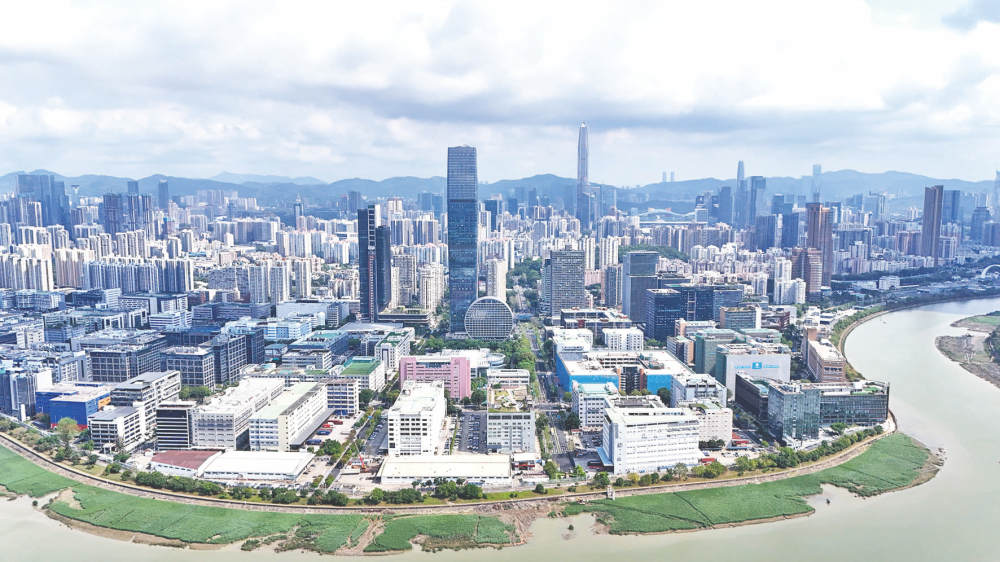
Core Insights - The focus of AI competition has shifted from model parameters to practical efficiency improvements and scalable applications, with Hong Kong positioning itself as a key bridge between global innovation and the vast Chinese market [1][2] Group 1: AI Integration and Market Trends - AI technology development has transitioned from competition in model scale to embedding deeply in the real economy to create measurable value [2] - The evaluation of AI implementation should consider three aspects: actual production efficiency enhancement, scalability, and quantifiable data value [2] - The current AI industry exhibits a diversified competitive landscape, where cost-effectiveness, industry penetration, and practical performance are critical for enterprise selection [2] Group 2: Role of Hong Kong in AI Development - Hong Kong is expected to play an irreplaceable role as a "super connector" in the Greater Bay Area's new productivity development by deepening collaboration with mainland cities like Shenzhen [1][4] - The Hong Kong Science and Technology University report emphasizes that technology development is a complex process requiring integration with institutional, industrial, social, and environmental systems [2][3] - Hong Kong's tech development has entered a "growth-driven" phase, but the local number of tech companies is relatively insufficient, leading to challenges in sustaining startup growth [4][6] Group 3: Investment and Ecosystem Development - Hong Kong's efficient and open capital market provides ample funding sources and flexible financing channels for innovation and technology enterprises [6] - Recent years have seen a shift in investment attitudes towards tech projects, with a focus on long-term growth rather than short-term returns, creating a positive feedback loop [6] - The establishment of the Lok Ma Chau Loop and the Hong Kong-Shenzhen Innovation and Technology Park is expected to facilitate the flow of key resources and accelerate the commercialization of technology [4][6]
欧盟炮制所谓“高风险供应商” 华为迅速回应
Zhong Guo Jing Ying Bao· 2026-01-23 19:54
Core Viewpoint - The European Commission has released a draft revision of the EU Cybersecurity Law, aiming to phase out components and equipment from "high-risk suppliers" across 18 critical sectors, implicitly targeting Chinese high-tech companies like Huawei [1][2]. Group 1: Legislative Changes - The draft expands the scope of the previous 2020 5G security toolbox, now covering 18 key sectors including semiconductors, medical devices, and autonomous driving, with a legally binding requirement to eliminate high-risk components within 36 months [3][4]. - The new measures introduce a "high-risk supplier" list and require joint risk assessments by the EU Commission or three member states before implementation [3]. Group 2: Industry Impact - Chinese companies, particularly in sectors where they hold over 90% market share, may face significant operational cost increases and potential market exit due to the new regulations [5]. - The draft is expected to elevate market entry barriers based on non-technical factors, pressuring Chinese firms to accelerate innovation and diversify their global market presence [5]. Group 3: Geopolitical Context - The legislative shift reflects a broader geopolitical trend, with the EU's technology policy moving from risk management to systematic exclusion of Chinese technology, influenced by external pressures from the U.S. [4]. - Internal divisions within the EU exist, as countries like Germany and Spain express concerns over the timeline for phasing out Chinese equipment, indicating a complex interplay of external pressure and internal strategic considerations [4].
重视激光链路在商业航天中的重要性
2026-01-23 15:35
Summary of Key Points from Conference Call Industry Overview - The commercial aerospace industry employs a hybrid architecture, utilizing low Earth orbit (LEO) satellites for user access and medium Earth orbit (MEO) satellites for core network functions, with the latter employing laser communication technology capable of single-link transmission rates up to 6TB, significantly surpassing traditional microwave communication [1][2]. Core Insights and Arguments - **Communication Technologies**: The primary transmission methods in commercial aerospace are microwave and laser communication. Microwave technology is mature and robust against interference but has lower speeds, while laser communication offers higher speeds but is more susceptible to environmental factors [1][4]. - **Market Trends**: The industry is gradually integrating laser communication capabilities into new links, with Blue Origin achieving a single-link rate of 6TB, while domestic and Starlink systems are still operating at lower capacities [1][5]. - **Company Focus**: Companies like Aerospace Electronics and FiberHome are notable players in the domestic laser communication terminal market, with significant market potential estimated at 40 to 50 billion RMB if satellite constellations reach 10,000 units [1][7]. Competitive Landscape - **FiberHome's Position**: FiberHome is highlighted for its strong gross margins in commercial aerospace, with expectations of rapid growth and improved profitability. The company has deep technical expertise and strong cost control capabilities, positioning it well for future market demands [3][8][12]. - **Comparison of Companies**: Traditional aerospace companies have high reliability and proven products, while communication companies like FiberHome leverage their foundational technology to enhance data transmission rates. However, communication firms lack extensive experience in large-scale satellite deployment, a gap that can be bridged over time [10][11]. Future Outlook - **Market Growth**: The laser communication market is expected to expand significantly due to increasing data transmission demands and higher technical requirements. Companies with strong technical foundations and cost control will likely gain competitive advantages [11]. - **Investment Potential**: FiberHome's involvement in both commercial aerospace and AI sectors makes it a noteworthy investment opportunity, with projected growth rates of 20% to 30% in the coming years [12][13]. Additional Important Points - **Environmental Challenges**: Laser communication, while promising, faces challenges such as atmospheric turbulence and alignment precision, which currently limit its application in ground-to-space links [4]. - **Hybrid Solutions**: The trend towards combining microwave and laser communication solutions is prevalent, with most new links primarily utilizing microwave technology while gradually enhancing laser capabilities [5]. This summary encapsulates the critical insights from the conference call, focusing on the commercial aerospace industry's dynamics, the competitive landscape, and the future growth potential of key players like FiberHome.

汽车产量“十强省”大变局
第一财经· 2026-01-23 13:42
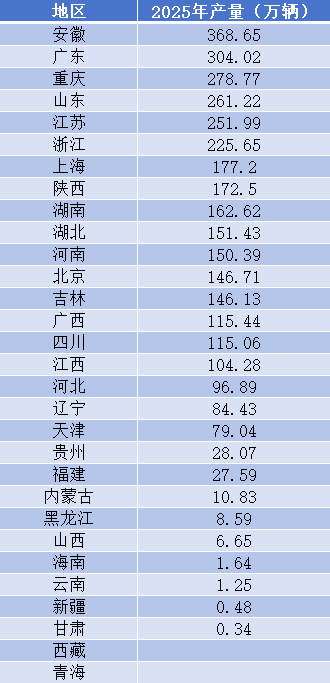
Core Viewpoint - The automotive industry in China is undergoing a significant transformation, with a notable shift in regional production dynamics as of 2025, where Anhui has surpassed Guangdong in vehicle production, marking a historic change in the industry landscape [3][5][8]. Production Rankings - In 2025, the top ten provinces for automotive production are Anhui (3.6865 million), Guangdong (3.0402 million), Chongqing (2.7877 million), Shandong (2.6122 million), Jiangsu (2.5199 million), Zhejiang (2.2565 million), Shanghai (1.772 million), Shaanxi (1.725 million), Hunan (1.6262 million), and Hubei (1.5143 million) [4][5]. - Anhui's production growth is attributed to three main factors: changes in statistical rules, accumulated industrial advantages, and export growth [5][7]. Statistical Changes - The National Bureau of Statistics has shifted the automotive production statistics from "registered location" to "production location" starting in 2025, which has significantly impacted the reported production figures [6][8]. - This change has resulted in a substantial increase in reported production for Anhui, with major manufacturers like BYD and NIO contributing to this growth [6][7]. New Energy Vehicles - Anhui's rapid production increase is largely driven by the surge in new energy vehicle (NEV) production, with 1.794 million NEVs produced in 2025, accounting for 48.7% of its total automotive output, significantly higher than Guangdong's 32% [7][8]. - The province has also become the first to export over 1 million vehicles, with a total of 1.228 million vehicles exported in 2025, representing 18% of the national total [7][8]. Competitive Landscape - Despite Anhui's rise in production, Guangdong remains dominant in terms of production value, with nearly double the output value of Anhui and a higher average vehicle price [8][9]. - The competition between Anhui and Guangdong reflects a broader shift in the automotive industry, with traditional powerhouses like Jilin and Hubei losing their top ten positions, indicating a significant regional restructuring [9][10]. Future Trends - The future of the automotive industry in China is expected to trend towards a more diversified and specialized production landscape, with a narrowing gap in production numbers among the top provinces [11]. - Provinces with strong export capabilities and high localization rates, such as Anhui and Chongqing, are likely to continue rising in the rankings, while the ability to convert production volume into revenue will become increasingly critical for success [11].

通信行业2026年度投资策略:聚焦AI:算力降本向光而行,应用落地网络先行
Guolian Minsheng Securities· 2026-01-23 12:20
Group 1 - The core viewpoint of the report emphasizes that the demand for AI computing power will continue to grow and diversify in 2026, extending from data centers to network edges and even internal terminals [8][13][27] - The report highlights the significant capital expenditure (Capex) growth driven by business revenue, with major cloud service providers like Google, Microsoft, and Amazon showing consistent revenue growth exceeding 20% year-on-year [27][31][35] - The report identifies the increasing importance of silicon photonics technology, particularly the 1.6T optical module, which is expected to maintain accelerated growth and enhance the global market share of domestic optical chips and devices [7][54][70] Group 2 - The report discusses the emergence of new technologies such as Scale-UP supernodes and their impact on optical link demand, indicating that these technologies will drive additional link requirements in 2026 [7][9][66] - It notes that the AI infrastructure is experiencing a high level of prosperity, with significant investments in data centers and AI capabilities expected to continue, particularly in the U.S. [47][49][53] - The report anticipates that the integration of silicon photonics will significantly increase its market penetration, projecting that by 2026, over half of optical module sales will come from silicon photonics solutions [70][75]


汽车产量“十强省”大变局:究竟谁是第一汽车大省?
Di Yi Cai Jing· 2026-01-23 11:26
Core Insights - The automotive industry in China is undergoing a significant transformation, with a notable shift in regional production rankings expected by 2025, as new players rise and traditional powerhouses decline [1][7] Group 1: Production Rankings - In 2025, the top ten provinces for automotive production are expected to be Anhui, Guangdong, Chongqing, Shandong, Jiangsu, Zhejiang, Shanghai, Shaanxi, Hunan, and Hubei, with production figures of 3.6865 million, 3.0402 million, 2.7877 million, 2.6122 million, 2.5199 million, 2.2565 million, 1.772 million, 1.725 million, 1.6262 million, and 1.5143 million respectively [2][3] - Anhui has surpassed Guangdong to become the leading province in automotive production for the first time, marking a historic shift in the industry [4][5] Group 2: Factors Influencing Change - The change in rankings is attributed to three main factors: changes in statistical rules, accumulated industrial advantages in Anhui, and export growth [4][5] - The adjustment in statistical methods from "corporate registration location" to "production location" has significantly impacted the reported production figures, with major manufacturers like BYD and NIO contributing to Anhui's rise [4][5] Group 3: New Energy Vehicles - Anhui's rapid growth in automotive production is largely driven by a surge in new energy vehicle (NEV) production, with 1.794 million NEVs produced in 2025, accounting for 48.7% of its total output, significantly higher than Guangdong's 32% [5][6] - The province has also become the first to export over one million vehicles, with a total of 1.228 million vehicles exported in 2025, representing 18% of the national total and a 28.7% increase [5][6] Group 4: Competitive Landscape - Despite Anhui's rise, Guangdong still maintains a significant lead in terms of production value, with its automotive output value nearly double that of Anhui, and a higher average vehicle price [6] - The competitive landscape is characterized by a divergence in strengths, with Guangdong excelling in high-end elements and global branding, while Anhui focuses on manufacturing efficiency and supply chain integration [6][7] Group 5: Emerging Forces - The traditional automotive powerhouses are facing challenges from emerging provinces like Shandong, Jiangsu, and Zhejiang, which have all surpassed the two million vehicle mark for the first time [7][8] - The shift in rankings reflects a broader trend of new forces challenging established players, with provinces like Hunan and Henan also making significant gains in production [8][9] Group 6: Future Trends - The future of the automotive industry in China is expected to trend towards a more diversified and specialized production landscape, with production gaps among the top provinces narrowing [9] - Factors such as export capabilities and the ability to convert production volume into revenue will become increasingly critical in determining future success in the industry [9]
我们该如何看待6G?
3 6 Ke· 2026-01-23 10:40
Core Viewpoint - The article discusses the ongoing debate surrounding 5G technology and the upcoming 6G, emphasizing the necessity of research and investment in 6G to maintain technological leadership and address industry needs [1][3][5]. Group 1: Importance of 6G Research - Researching 6G technology and establishing standards is essential as ICT technology is at the core of the fourth industrial revolution [3][4]. - Maintaining a leading position in 6G is crucial for the overall communication industry, as it relates to various wireless communication methods beyond just mobile networks [5][6]. Group 2: 5G Evaluation - It is premature to conclude the success of 5G, as its primary goal was to transition from consumer internet to industry internet, which requires more time for application development [7][8]. - The success of 6G is expected to be higher than that of 5G due to the lessons learned and the evolving industry landscape [8]. Group 3: Demand-Driven Development - The primary demand driving 6G development is expected to come from the AI wave, with AI applications requiring higher network performance [9][11]. - 6G will also address other communication scenarios, such as integrated communication across various domains [11]. Group 4: Evolution of Network Upgrades - The traditional ten-year upgrade cycle for mobile communication technology may change based on emerging demands, which could lead to more frequent or delayed upgrades [12][13]. - The current 5G infrastructure, with over 483.8 million base stations in China, highlights the need to maximize the value of existing investments before moving to 6G [13]. Group 5: Challenges Ahead for 6G - There are significant technical risks associated with achieving the ambitious goals of 6G, including limitations in frequency efficiency and the need for new technologies [16][18]. - The potential for standard fragmentation due to geopolitical tensions poses a risk to the unified development of 6G [20][21]. - The competition in the communication sector is expected to intensify, necessitating continuous innovation and investment to maintain a competitive edge [21][23].

中光防雷:公司是爱立信、中兴通讯、诺基亚、三星等全球主要通信设备制造商的防雷产品供应商
2 1 Shi Ji Jing Ji Bao Dao· 2026-01-23 10:27
Group 1 - The company, Zhongguang Lightning Protection, is a supplier of lightning protection products for major global telecommunications equipment manufacturers such as Ericsson, ZTE, Nokia, and Samsung [1] - The technical reserves for lightning protection products for 5G communication equipment have been validated in the market [1] - The company's revenue in the telecommunications sector for the first half of 2025 is projected to be 111.23 million yuan, representing a year-on-year growth of 12.43% [1] Group 2 - The demand for the telecommunications technology service industry is expected to enter a rapid growth phase due to the ongoing construction of 5G and 6G networks and new infrastructure initiatives [1]


中光防雷(300414) - 2026年1月23日投资者关系活动记录表
2026-01-23 10:06
Group 1: Company Overview and Market Position - Sichuan Zhongguang Lightning Protection Technology Co., Ltd. is a leading enterprise in the lightning protection sector in China, supplying products to major global communication equipment manufacturers such as Ericsson, ZTE, Nokia, and Samsung [2]. - The company reported a revenue of CNY 111.23 million in the communication sector for the first half of 2025, marking a year-on-year growth of 12.43% [2]. - The company holds a unique position in the market, being the only publicly listed company in the Shanghai and Shenzhen stock exchanges with over 50% of its main business revenue derived from lightning protection [4]. Group 2: Product Development and Revenue Growth - The company's electronic components, including magnetic components and RF devices, achieved a revenue of CNY 57.31 million in the first half of 2025, reflecting a significant year-on-year increase of 70.73% [2]. - In the energy sector, the company reported a revenue of CNY 82.35 million in the first half of 2025, which is a 35.84% increase compared to the previous year, driven by rising customer demand [3]. Group 3: Technological Advancements and R&D - The company has developed EMP protection products capable of shielding against nuclear electromagnetic pulses and high-power microwave radiation, although these products have not yet reached mass production [3]. - The company is actively involved in the development of 6G technology, maintaining close technical ties with clients and adapting to their customized product needs [3]. Group 4: Industry Applications and Projects - The company has participated in numerous lightning protection engineering projects, including those for high-speed rail, nuclear power plants, and military applications, covering complex scenarios such as the Qinghai-Tibet Railway and the CCTV headquarters [3]. - In the renewable energy sector, the company provides tailored SPD products for traditional power, wind, solar energy, and charging stations, enhancing its market share through innovative product offerings [3].