光大证券

Search documents
中国攻克技术难关,可控核聚变成能源转型核心方向,这三大赛道有望迎来业绩爆发!
Jin Rong Jie· 2026-01-08 13:01
Core Insights - The recent announcement by the Hefei Institute of Physical Science confirms the existence of a density-free zone in the Tokamak, providing significant physical evidence for high-density operation in magnetic confinement fusion devices [1] - The controlled nuclear fusion industry is currently focusing on technological engineering and commercial feasibility breakthroughs, with substantial investment opportunities concentrated in the mid-to-upstream segments [1] - The global consensus on carbon neutrality is driving the urgent demand for stable, clean, and high-energy-density energy sources, positioning controlled nuclear fusion as a core direction for energy transition [1] Market Segments Overview Superconducting Materials and Magnet Systems - This sector directly benefits as Tokamak devices require strong magnetic fields to confine high-temperature plasma, with high-temperature superconducting materials being crucial [2] - The market for high-temperature superconducting materials is expected to grow rapidly due to increasing demand from fusion devices, with companies already leading in Nb3Sn and superconducting magnet design and manufacturing [2] Nuclear Equipment Manufacturing - The sector is poised for significant market opportunities as projects like BEST and CFETR advance, leading to explosive growth in the demand for core precision components [2] - Domestic leading companies possess comprehensive design and manufacturing capabilities, having successfully developed key equipment for ITER, which positions them to secure high-value orders in future fusion power plant constructions [2] Low-Temperature and Refrigeration Equipment - Magnetic confinement fusion devices require superconducting magnets to be cooled to near absolute zero, creating high demands for critical equipment like megawatt-level helium refrigerators [3] - Domestic companies are making technological breakthroughs in low-temperature refrigeration, which will provide robust equipment support for China's fusion reactor projects and create new growth points for performance [3]
沪指强势15连阳,光大证券:接下来需注意市场波动的风险 | 华宝3A日报(2026.1.8)
Xin Lang Cai Jing· 2026-01-08 11:19
Group 1 - The A50 ETF by Huabao, the CSI A100 ETF, and the A500 ETF are part of the "A series" of broad-based ETFs launched to provide investors with diverse options for investing in China [2][6] - The A50 ETF tracks the CSI A50 Index, focusing on 50 leading companies, while the CSI A100 ETF encompasses the top 100 industry leaders, and the A500 ETF covers a broader range of 500 companies [2][6] - The market experienced a decline with the Shanghai Composite Index down by 0.07% and the ChiNext Index down by 0.51%, with a total market turnover of 2.8 trillion yuan [1][6] Group 2 - Institutional viewpoint from Everbright Securities indicates that the market has seen a strong performance with the Shanghai Composite Index achieving a 14-day winning streak, but warns of potential profit-taking pressure and increased market volatility [2][6] - The upcoming Alibaba Cloud Tongyi Intelligent Hardware Exhibition from January 8-11 in Shenzhen is expected to showcase over 1,000 AI hardware products, which may stimulate interest in AI-related concepts [2][6]


“首席叙事”,是何角色?
2 1 Shi Ji Jing Ji Bao Dao· 2026-01-08 10:47
21世纪经济报道 记者 崔文静 实习生 张长荣 北京报道 1月7日,21世纪经济报道记者从中信建投处了解到,其研究所所长武超则升任机构业务委员会主任。与 此同时,中信建投证券首席经济学家黄文涛代行研究发展部行政负责人职责。黄文涛或成为中信建投研 究业务新任负责人。 实际上,首席经济学家担任行政管理职务,正在成为新趋势。在中证协最新调整的首席经济学家(发展 战略)专业委员会中,已有约三分之一的首席经济学家同时担任研究所所长、副所长等管理职务,更有 部分人士晋升至副总裁等核心管理层。这一现象表明,首席经济学家的专业影响力正更多地向内部战略 与管理领域渗透。 与此同时,另一个趋势也日渐清晰:承担更多"股市叙事"功能,正在成为监管层对首席经济学家的新期 待。证监会主席吴清明确要求,首席经济学家"讲好中国股市叙事"。这意味着首席经济学家需更多发挥 智库功能,客观反映经济现实、传递正能量。 然而,将"讲好股市叙事"的智库功能落到实处,仍面临现实挑战。目前,券商对首席经济学家的考核普 遍仍与研究所的佣金收入紧密挂钩,这使得其服务于市场投资决策的"业务功能"在实践中往往占据主 导。如何平衡创造直接经济收益与履行公共智库角色, ...

券商APP月活保持高位,18家月均破百万,AI成迭代核心
Xin Lang Cai Jing· 2026-01-08 09:01
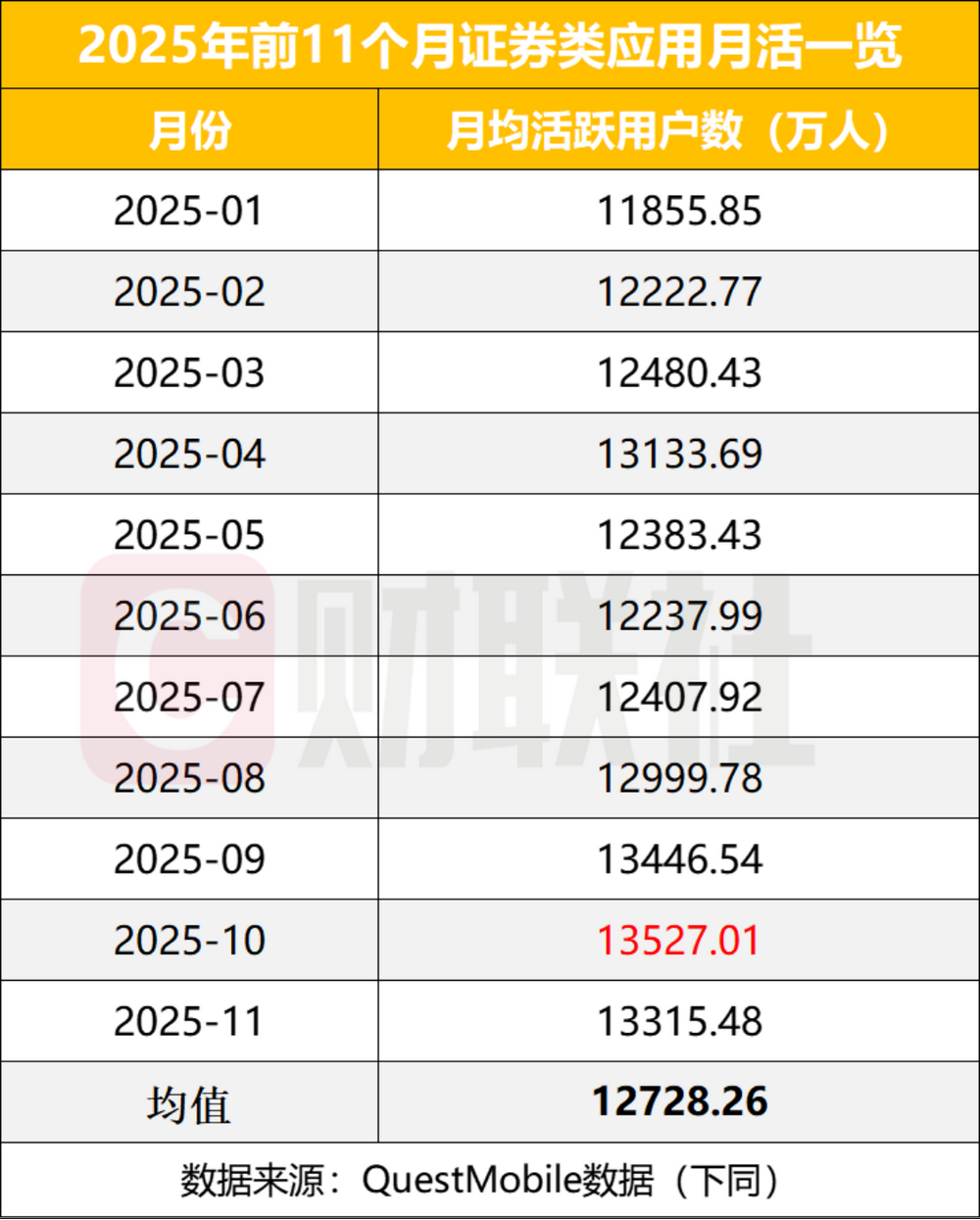
Core Insights - The securities app market demonstrates strong resilience amid market fluctuations and technological changes, with an average monthly active user (MAU) of 127.28 million in the first 11 months of 2025, peaking at over 135 million in October [1][2]. User Engagement - The top 10 securities firms by MAU include Huatai Securities, Guosen Securities, and China Galaxy Securities, with Huatai's app achieving an average MAU of 8.25 million [4][5]. - A total of 18 firms reported an average MAU exceeding 1 million, indicating a competitive landscape [2][4]. App Development Trends - "High-frequency iteration" is a key trend, with the top 10 apps averaging 9 updates this year, focusing on trading features, market services, and AI capabilities [3][13]. - Guotai Junan's apps led the industry with 25 updates each, showcasing a commitment to continuous improvement [3][13]. Growth Metrics - Several apps achieved significant growth, with the highest increase seen in Industrial Securities' app, which grew by 67.64% from January to November [7][8]. - Year-over-year, 18 apps reported growth, with only two experiencing a decline [9][10]. Daily Active Users (DAU) - Huatai's app leads in DAU with an average of 337.97 million, significantly higher than the second-place app from招商证券 at 199.29 million [11][12]. AI Integration - The integration of AI in investment advisory services is a major focus, with firms like Guotai Junan and China Galaxy enhancing their apps with AI-driven features [13][14]. - The trend towards digital transformation is evident as firms aim to improve user experience and service efficiency through AI [13][14].




港股科网股普跌,智谱收涨超13%
第一财经· 2026-01-08 08:37
Market Overview - The Hang Seng Index closed down 1.17% at 26,149.31, with a trading volume of 268.3 billion [1][2] - The Hang Seng Technology Index fell by 1.05%, closing at 5,678.34 [1][2] Sector Performance - Technology stocks experienced a broad decline, with Lenovo Group dropping over 5%, Baidu and Meituan falling more than 3%, and Alibaba, Kuaishou, JD.com, and Tencent also seeing losses [2][3] - Brokerage stocks weakened, with Huatai Securities, Dongfang Securities, and China Galaxy all declining over 4%, while China International Capital Corporation and CITIC Securities fell more than 3% [4][5] Notable Stock Movements - Lenovo Group: Current price at 8.780, down 5.59% [3] - Meituan: Current price at 101.000, down 3.35% [3] - Baidu Group: Current price at 140.300, down 3.31% [3] - Semiconductor and real estate stocks rose against the trend, with Shanghai Fudan up over 5% and Huahong Semiconductor up over 2%; Vanke Enterprises rose over 4% and Sun Hung Kai Properties increased by more than 3% [5] IPO Activity - "Global Large Model First Stock" Zhihui was listed on the Hong Kong Stock Exchange with an issue price of 116.20 HKD per share, opening at 120 HKD and closing up over 13% at 131.5 HKD, with a trading volume exceeding 2.2 billion HKD [5]

短期交易行为,不改中长期配置价值,证券ETF龙头(159993)盘中净申购1.14亿份
Xin Lang Cai Jing· 2026-01-08 07:18
Group 1 - The core viewpoint indicates that the A/H brokerage sector has experienced a significant adjustment, primarily due to large sell-offs in financial stocks like CITIC Securities, leading to a downward shift in the valuation center of the brokerage sector [2] - The brokerage industry is expected to have short-term rebound potential and medium to long-term upward space, with a focus on structural investment opportunities as the overall capital market trends upward [2] - The top brokerage firms are likely to benefit from the development of the capital market and industry reform dividends, with a notable emphasis on professionalization, integration, and internationalization trends within the securities industry [2] Group 2 - As of December 31, 2025, the top ten weighted stocks in the Guozheng Securities Leading Index account for 79.13% of the index, including companies like Dongfang Caifu, CITIC Securities, and Huatai Securities [3] - The latest price for the Securities ETF Leader is 1.33 yuan, with a net subscription of 114 million shares during the trading session [1] - The brokerage sector's fundamentals are expected to remain strong, with a projected double-digit growth in earnings for 2026, indicating profitability and growth certainty [2]
大集合谢幕,9万亿券商资管转型加速
2 1 Shi Ji Jing Ji Bao Dao· 2026-01-08 07:12
Core Insights - The transition of brokerage collective asset management products towards public offerings is nearing completion, with only three products remaining as of the end of 2025 [1][2][3] - The total scale of the securities industry asset management business has exceeded 9 trillion yuan, with private asset management scale reaching 5.8 trillion yuan [1] - The application for public fund licenses by brokerage asset management subsidiaries has slowed down significantly, indicating a shift in market dynamics and regulatory guidance [4][5] Group 1: Transition of Collective Asset Management Products - By the end of 2025, only three brokerage collective products remain, with most transitioning to public fund products or opting for liquidation [1][2] - The historical context of brokerage collective products dates back to 2003, with the first product launched in 2005, but new setups have been prohibited since 2013 [2] - The transition to public fund standards is ongoing, with many products facing direct pressure on management scale and income due to competition from public funds and bank wealth management subsidiaries [3] Group 2: Public Fund License Applications - A wave of applications for public fund licenses occurred in 2023, with several brokerages successfully obtaining licenses, but the approval process has since slowed [5] - The withdrawal of applications by multiple brokerages indicates a significant change in the competitive landscape, with the public fund market becoming increasingly saturated [5] - Currently, 14 brokerages and their asset management subsidiaries have been approved to conduct public fund management business [5] Group 3: Differentiated Development Strategies - Brokerages are focusing on reducing channel and non-standard business while increasing resources towards actively managed products, particularly in equity and fixed income sectors [6] - National Securities has emphasized risk control and management while enhancing active management scale to provide stable investment returns [6] - The trend suggests that larger institutions may benefit more from public paths, while specialized brokerages may find private paths more advantageous [6]
传统复苏+创新赋能,资金坚定布局,证券ETF龙头(159993)盘中净申购1.14亿份
Xin Lang Cai Jing· 2026-01-08 06:20
Group 1 - The core viewpoint indicates that the brokerage sector is experiencing a period of adjustment, with significant fluctuations in stock prices among leading firms, while the overall market shows signs of increased investment activity, particularly in margin trading [1] - As of January 7, 2026, the margin trading balance in the A-share market reached 2.6047 trillion yuan, marking a historical high with a single-day increase of approximately 24.8 billion yuan [1] - Open Source Securities suggests that regulatory policies are entering a "positive" cycle, which is expected to support the profitability of the brokerage industry in 2026, with low valuations and institutional holdings providing opportunities for investment [1] Group 2 - The leading securities ETF closely tracks the National Securities Leader Index, reflecting the market performance of quality listed companies in the Shanghai and Shenzhen markets [2] - As of December 31, 2025, the top ten weighted stocks in the National Securities Leader Index accounted for 79.13% of the index, with major firms including Dongfang Caifu, CITIC Securities, and Huatai Securities [2]





A股午评 | 指数走势分化 科创50半日涨1.77%!券商持续回调
智通财经网· 2026-01-08 06:06
Market Overview - The A-share market showed mixed performance on January 8, with the Sci-Tech 50 Index rising by 1.77% and a half-day trading volume of 1.77 trillion, down by 701 billion from the previous trading day [1] - The Shanghai Composite Index increased by 0.09%, while the Shenzhen Component Index and the ChiNext Index fell by 0.2% and 0.52%, respectively [1] - Huachuang Securities believes the market is not extremely overheated, with trading volume and turnover rates indicating room for growth [1] Key Sectors Controlled Nuclear Fusion - The controlled nuclear fusion sector continued to show strength, with companies like China Nuclear Engineering and others achieving consecutive gains [3] - CITIC Securities noted that breakthroughs in high-temperature superconductors and AI technology are driving investment in large scientific facilities, creating significant opportunities in the upstream segment of the industry [3] Commercial Aerospace - The commercial aerospace sector experienced repeated strength, with companies such as Galaxy Electronics and others hitting their daily price limits [4] - Zhongtai Securities indicated that the commercial aerospace industry is entering a new phase of rapid development, with upcoming catalysts expected to enhance investment opportunities [4] Computing Power Chips - The computing power chip sector saw gains, with companies like Haiguang Information rising over 10% [5] - The Ministry of Industry and Information Technology, along with other departments, issued guidelines to strengthen AI computing power supply, promoting the development of intelligent chips and related technologies [5] Institutional Insights - CITIC Securities predicts a higher probability of upward market fluctuations in 2026, emphasizing the need for a balance between external and internal demand [7] - Zhongtai Securities maintains a cautiously optimistic view on the technology sector, suggesting that investors focus on specific sub-sectors with strong fundamentals [8] - Everbright Securities warns of increased market volatility due to profit-taking pressures, advising caution in investment strategies [9]
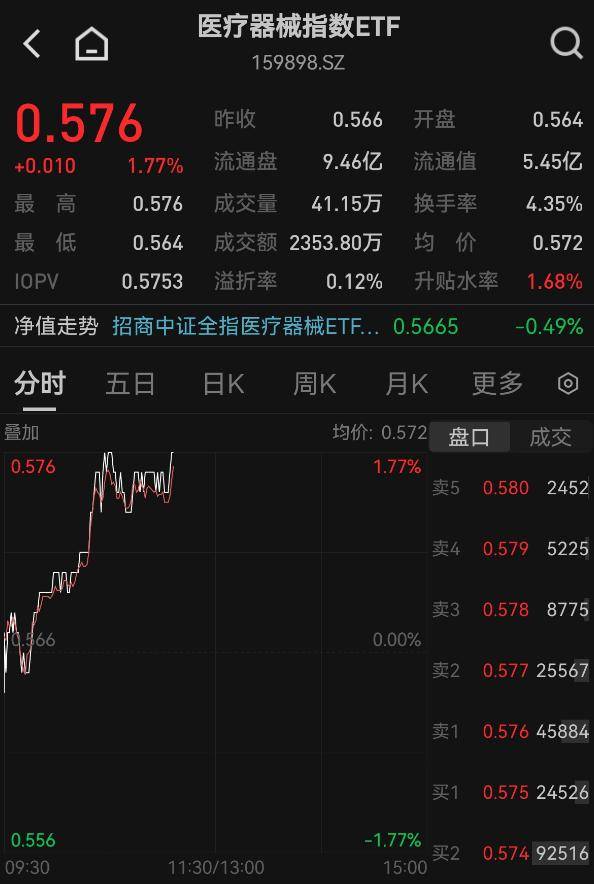
24%“脑机接口”含量!医疗器械指数ETF(159898)盘中上涨1.77%,连续三日逆势吸金
Sou Hu Cai Jing· 2026-01-08 03:42
Core Viewpoint - The medical device sector, particularly the brain-computer interface (BCI) segment, is experiencing significant growth driven by technological advancements and increased funding, with the medical device index ETF (159898) showing strong performance and inflows [1][3]. Group 1: Market Performance - The medical device index ETF (159898) saw a 1.77% increase, with key stocks like Kefu Medical and Shuoshi Bio rising over 11% [1]. - The ETF has recorded over 56 million yuan in net subscriptions over the past three trading days, indicating strong investor interest [1]. - The BCI concept constitutes approximately 24% of the ETF's underlying index [1][4]. Group 2: Industry Drivers - The influx of capital into the medical device index ETF is attributed to expectations surrounding Neuralink's mass production and technological breakthroughs in the BCI field [3]. - A recent financing round of about 2 billion yuan for a "unicorn" company in the BCI sector positions it as the second-largest financing globally, following Neuralink [3]. - The global BCI market is projected to grow to approximately $12.4 billion by 2034, with a CAGR of 17% from 2025 to 2034 [3]. Group 3: Sector Outlook - The medical device industry is at a pivotal point, with expectations of rapid growth driven by innovation and policy support [4]. - Specific innovative products and supportive policies are seen as key factors that could drive the upward trend in the medical device sector [4]. - The ETF tracks the CSI All-Share Medical Device Index, which includes segments such as medical equipment, consumables, and in vitro diagnostics, with a significant focus on BCI [4].