
美团

Search documents
港股马年开市:AI、机器人概念股,集体大涨
Sou Hu Cai Jing· 2026-02-20 13:36
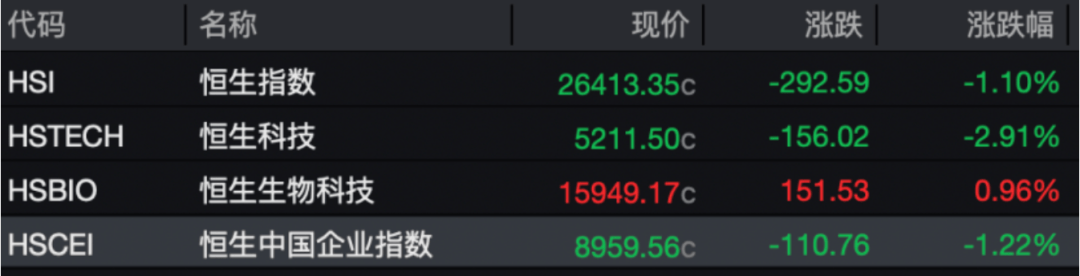
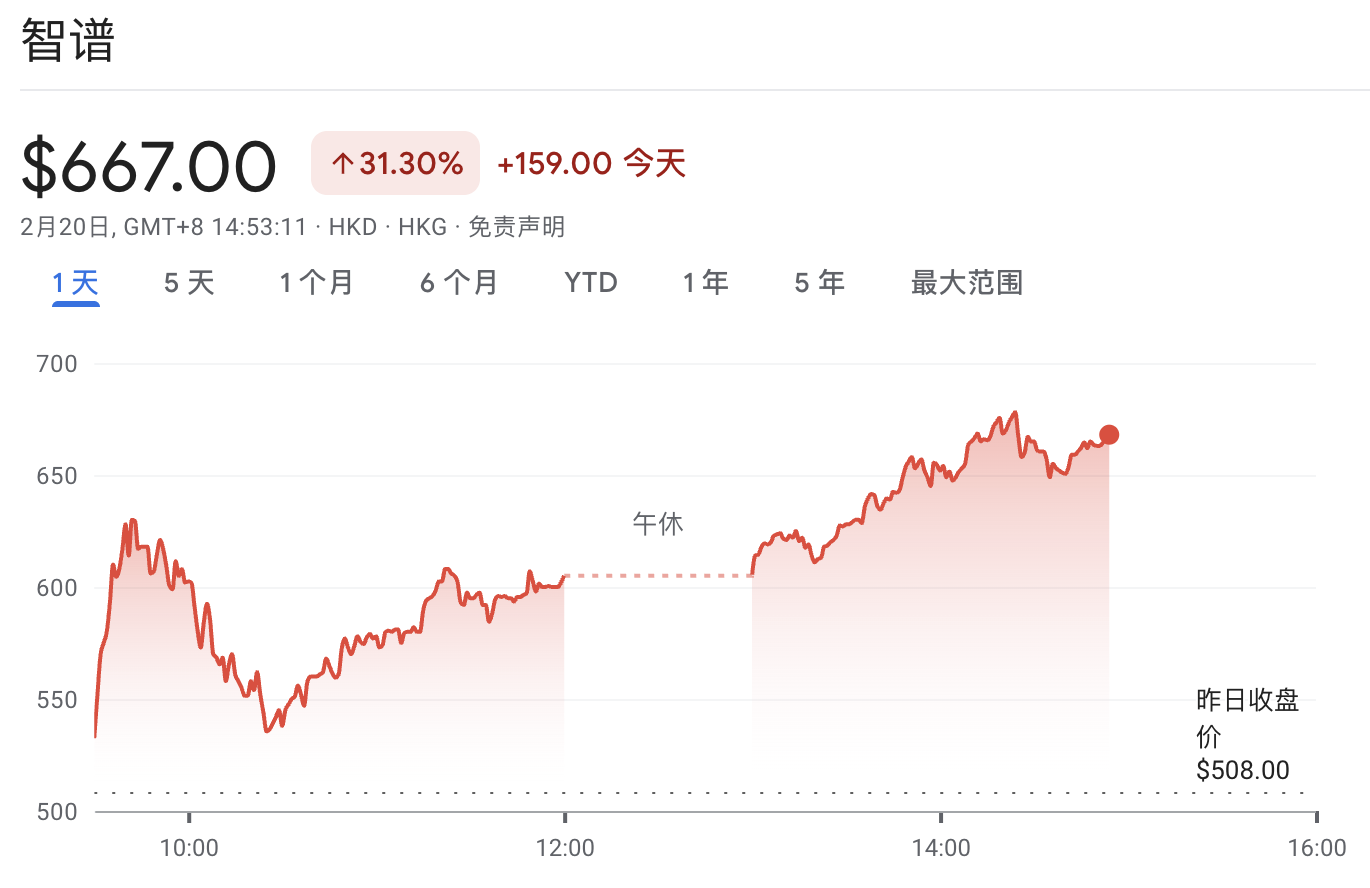
Core Viewpoint - The Hong Kong stock market experienced a decline on the first trading day of the Year of the Horse, with major indices falling, while domestic AI models and robotics stocks surged significantly [1][2]. Market Performance - As of February 20, the Hang Seng Index closed at 26,413.35 points, down 1.1%; the Hang Seng Tech Index closed at 5,211.5 points, down 2.91%; and the Hang Seng China Enterprises Index closed at 8,959.56 points, down 1.22% [2][3]. - The AI model sector saw strong performance, with Zhizhu and MiniMax both surpassing a market capitalization of 300 billion HKD. Zhizhu surged by 42.72% to 725 HKD per share, marking a cumulative increase of 206% in February [3][5]. Robotics Sector - The robotics sector also experienced a collective rise, with companies like Yujian up 21.4% to 48.44 HKD per share, and Suton Ju Chuang rising 9.24% to 37.58 HKD per share [5]. Oil Sector - Oil-related stocks also saw gains, with Yanchang Petroleum International up 3.75%, China Petroleum International up 3.70%, and CNOOC Services up 3.20% [6]. Sector Outlook - Huatai Securities suggests focusing on three key areas in the Hong Kong market: semiconductor hardware represented by storage, improving specialty consumption, and electrical equipment [6]. - Galaxy Securities recommends attention to precious metals and energy sectors due to geopolitical uncertainties, as well as the technology sector as a long-term investment focus, particularly in the context of accelerating AI applications [6].


马年首个交易日,机器人概念股爆发,智谱暴涨43%,科网股大跌
Mei Ri Jing Ji Xin Wen· 2026-02-20 13:05
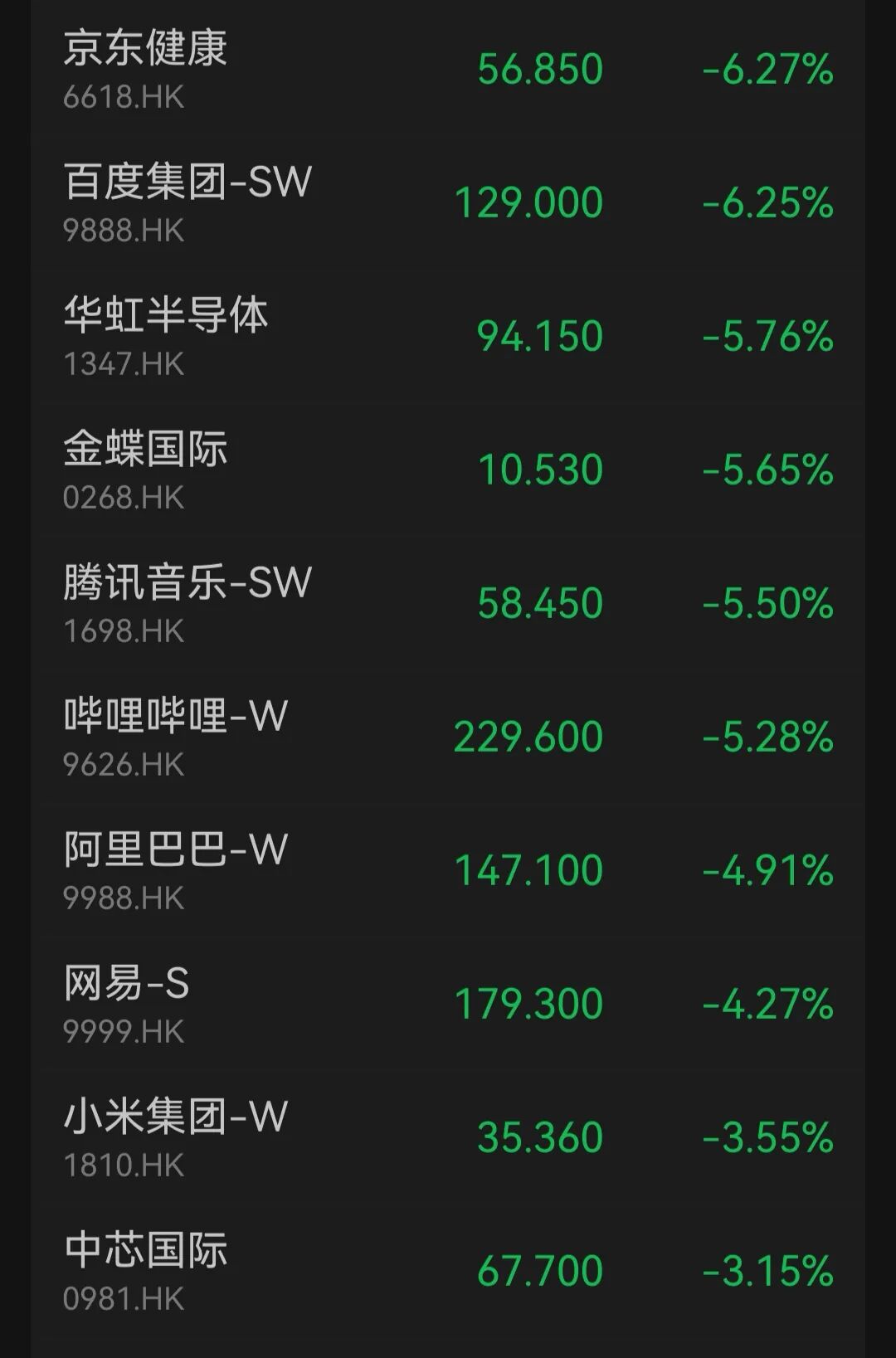
Market Overview - The Hong Kong stock market experienced a collective decline on the first trading day of the Lunar New Year, with the Hang Seng Index falling by 1.1% to close at 26,413.35 points, the Hang Seng Tech Index dropping by 2.91%, and the National Enterprises Index decreasing by 1.22% [1] Technology Sector - Most tech stocks saw declines, with Baidu Group down over 6%, Kingdee International and Bilibili down over 5%, Alibaba down 4.91%, NetEase down 4.27%, Xiaomi and SMIC down over 3%, Meituan down 1.58%, and Tencent Holdings down 2.06% [1] Robotics Sector - The robotics sector experienced a surge, driven by the Lunar New Year Spring Festival, with companies like Yujian rising over 21%, Shoucheng Holdings increasing nearly 12%, and Sutech Juchuang up over 9% [1] Oil Sector - Oil-related stocks saw gains, with China Merchants Energy rising by 6.34%, China Petroleum up by 3.7%, and CNOOC increasing by 2.23%. This uptick is attributed to rising international oil prices and concerns over escalating tensions between the U.S. and Iran, particularly in the Middle East oil-producing regions [1] Notable Stock Performance - Zhipu's stock price surged, closing with a gain of 42.72% at 725 HKD, bringing its total market capitalization to 323.2 billion HKD. The stock has seen a cumulative increase of 220.51% since February [1]
告别泡沫叙事:九大关键词看懂2025中国消费 | 年终盘点
Sou Hu Cai Jing· 2026-02-20 12:37
Group 1: Core Insights - The Chinese consumer market in 2025 is characterized by both chaos and fragmentation, with a shift towards efficiency, value, and trust as the essence of competition [2] - The year witnessed significant events such as the end of the food delivery war, a crisis in the prepared food sector, and the rise of hard discounts while soft discounts declined [2] - Major international brands are seeking survival through divestitures, while the middle class experiences repeated disillusionment in consumption [2] Group 2: Food Delivery War - The food delivery war was ignited by JD's aggressive entry into the market, leading to a fierce subsidy competition among major players like Meituan and Alibaba [5][6] - In Q2 2025, the three major players burned through at least 30 billion yuan, equivalent to the total industry profit of the previous year [6] - The war has severely impacted small businesses and delivery personnel, highlighting the unsustainable nature of the competition [6] Group 3: Prepared Food Crisis - The prepared food crisis began with a public dispute involving a well-known restaurant, exposing significant gaps in consumer trust and industry standards [10][11] - The crisis has led to the closure of 102 stores by the affected restaurant and highlighted the precarious state of the industry, with many companies facing severe losses [12] - The market for prepared foods is projected to grow significantly, with the government moving towards establishing clearer standards [12][13] Group 4: Hard Discount Battle - The hard discount retail sector is experiencing explosive growth, with major players like JD and Hema aggressively expanding their store presence [16][18] - The distinction between hard and soft discounts is becoming more pronounced, with hard discounts focusing on sustainable low prices through private label products [18][19] - The competition is shifting from price wars to efficiency in supply chains and operational capabilities [19] Group 5: Dairy Product Trends - The "milk skin" product has gained immense popularity, evolving from a local specialty to a nationwide trend, with significant sales figures reported [21][22] - The product's success is attributed to its versatility and the ability to integrate into various food categories, driving demand and industry expansion [22] Group 6: Medicinal Food Market - The market for medicinal food has surpassed 370 billion yuan, with a growing emphasis on integrating traditional Chinese medicine into everyday food products [25][26] - The industry is witnessing an expansion of raw materials and innovative product forms, driven by advancements in technology and consumer demand [27][28] Group 7: International Brand Divestitures - In 2025, international brands like Starbucks and Burger King began divesting their Chinese operations, indicating a shift in market dynamics [31][32] - The decline in market share for these brands is attributed to their inability to adapt to the rapidly changing consumer landscape in China [32] - Successful local brands have capitalized on this opportunity, demonstrating the potential for growth through localized strategies [33] Group 8: Middle-Class Consumer Sentiment - The middle class in China is experiencing a sense of disillusionment, reacting negatively to price increases and perceived quality issues [36][39] - This demographic is increasingly critical of brands that do not meet their expectations, indicating a shift in consumer behavior and brand loyalty [39] Group 9: Weight Management Trends - 2025 has been dubbed the "Year of Weight Management," with a national initiative promoting healthy weight control [41][44] - The market for weight management products is projected to reach 326 billion yuan, with a significant increase in demand for functional foods [45][46] Group 10: IPO Activity in Hong Kong - The Hong Kong stock exchange has seen a surge in IPO activity, with 111 companies raising over 250 billion yuan in 2025, surpassing previous expectations [49][50] - The consumer sector has been a major focus, with numerous retail and consumption-related companies going public [50][51] - The trend of dual listings (A+H shares) is also gaining momentum, indicating a robust interest in capital markets [52]
港股科技股分化:“AI新贵”受追捧 “变现担忧“拖累互联网巨头
智通财经网· 2026-02-20 08:53
Group 1 - The core viewpoint of the article highlights a shift in investor preference from traditional internet giants to more focused AI companies, driven by recent market performances and developments in the AI sector [1][4][6]. - Following the Lunar New Year holiday, Hong Kong's stock market saw a divergence in technology stocks, with generative AI startups experiencing significant gains while traditional internet giants like Alibaba and Tencent faced declines [1][4]. - Notable increases were observed in AI model companies, with Zhiyu and MiniMax rising by 31% and 13% respectively, continuing their strong performance since their listings in January, with total gains exceeding four times [1][4]. Group 2 - Alibaba and Tencent reported strong business data during the holiday period, yet their stock prices fell by 1.83% and 0.29% respectively, as investors reassessed the profitability and return on investment of their AI initiatives [4][6]. - The market is increasingly scrutinizing the actual contribution of AI projects to earnings, with regulatory concerns over promotional competition adding pressure to valuations [4][9]. - Investment banks like Morgan Stanley and UBS have initiated coverage on MiniMax, with UBS setting a target price of 1000 HKD and Morgan Stanley projecting revenues could reach approximately 700 million USD by 2027, indicating a potential tenfold growth in the next two years [5][6]. Group 3 - During the holiday, Alibaba's AI application Qianwen processed 130 million orders, while Tencent's app Yuanbao had over 50 million daily active users, but investors are questioning whether this engagement can translate into visible profit contributions [6][7]. - Alibaba reportedly allocated around 3 billion RMB for consumer incentives during the Spring Festival, including cash red envelopes and discounts, highlighting the competitive landscape among major platforms [7][8]. - Regulatory scrutiny has intensified, with the market regulator urging major online platforms to curb promotional practices and eliminate "involutionary" competition, impacting the strategies of companies like Alibaba, Baidu, and Tencent [9].
马年首个交易日,机器人概念股爆发,智谱暴涨43%,科网股大跌丨港股收盘
Mei Ri Jing Ji Xin Wen· 2026-02-20 08:31
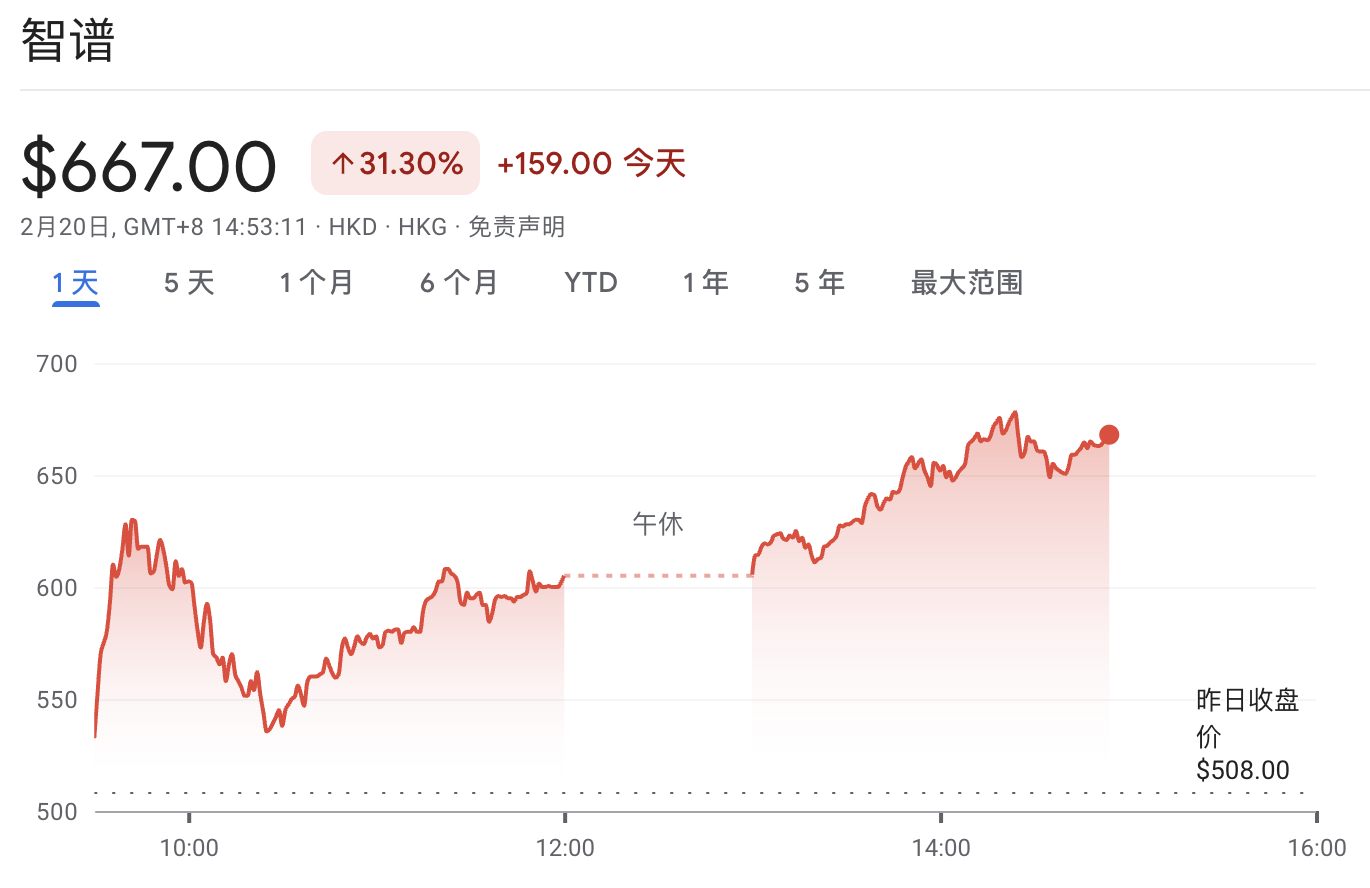
每经记者|马原 每经编辑|金冥羽 记者|马原 编辑|金冥羽 易启江 校对|程鹏 2月20日,港股迎来农历马年第一个交易日。三大指数集体下跌。截至收盘,恒生指数跌1.1%,报26413.35点,恒生科技指数跌2.91%,国企指数跌 1.22%。 科网股多数下跌,百度集团跌超6%,金蝶国际、哔哩哔哩跌超5%,阿里巴巴跌4.91%,网易跌4.27%,小米集团、中芯国际跌超3%,美团跌1.58%,腾讯 控股跌2.06%。 受马年春晚带动,机器人火速"出圈",机器人概念股爆发,越疆涨超21%,首程控股涨近12%,速腾聚创涨超9%。 石油概念股上涨,中远海能涨6.34%,中国石油股份涨3.7%,中国海洋石油涨2.23%。消息面上,国际油价近期走高,市场忧虑美国与伊朗紧张局势升 级,两国在中东产油区加强军事活动。 值得一提的是,智谱尾盘涨幅扩大至42.72%,股价报725港元,总市值达3232亿港元。2月以来累计大涨220.51%。 智谱(2513) < C 闭市 02-20 16:08:42 725.000 额32.4亿 股本4.46亿 市盈 万得 MRO 型 换2.38% 市值1 3232 市净 +217.000 +4 ...
港股科技股分化:“AI新贵”受追捧,"变现担忧"拖累互联网巨头
Hua Er Jie Jian Wen· 2026-02-20 08:03
Core Viewpoint - The Hong Kong stock market has shown a divergence in technology stocks post-Lunar New Year, with generative AI startups experiencing significant gains while traditional internet giants like Alibaba and Tencent faced declines, indicating a shift in investor preference towards more focused AI companies [1][4]. Group 1: AI Companies Performance - Generative AI startups have seen substantial increases, with companies like Zhiyu and MiniMax rising by 31% and 13% respectively, continuing their strong performance since their January listings, with total gains exceeding four times [1]. - The humanoid robot performance during the Spring Festival has sparked investor enthusiasm, leading to significant stock price increases for companies like UBTECH and Yujian, which saw intraday gains of 13% and nearly 23% respectively [1]. Group 2: Traditional Internet Giants - Despite strong operational data during the holiday, Alibaba and Tencent's stock prices fell by 1.83% and 0.29%, respectively, as the market reassessed the intensity of their AI investments and the pace of returns [4][7]. - Alibaba's AI application, Qianwen, processed 130 million orders during the Spring Festival, while Tencent's Yuanbao app had over 50 million daily active users, but investors are questioning the conversion of this engagement into visible profit contributions [7][8]. Group 3: Market Dynamics and Regulatory Environment - The acceleration of capital rotation towards "pure AI" stocks is evident, driven by the rapid release of new models and features by Chinese AI companies, as well as competitive pressures to iterate products ahead of major releases [5]. - Regulatory scrutiny on promotional practices and "involution" competition has increased pressure on platform companies, with major firms like Alibaba, Baidu, and Tencent being called for discussions to curb aggressive promotional strategies [9].
春节后首日,港股跳水
Shen Zhen Shang Bao· 2026-02-20 06:42
Market Performance - The Hang Seng Index and Hang Seng Tech Index opened lower, with the Hang Seng Index dropping by 1.31% at one point and currently down by 0.68%, while the Hang Seng Tech Index fell by 2.7% and is currently down by 2.02% [1] AI Application Stocks - AI application stocks in Hong Kong showed strong performance, with Haizhi Technology Group rising by 19.25%, MINIMAX-WP increasing by 11.63%, and Zhipu gaining 18.31%, bringing their market capitalization to HKD 268 billion [1] Regulatory Developments - Victory Securities saw a rise of 13.12% following the announcement that its virtual asset trading platform VDX received an operating license on February 13 from the Hong Kong Securities and Futures Commission [1] Cryptocurrency Stocks - Some Hong Kong Bitcoin-related stocks performed well, with Star Chain Group surging by 46.67%. This follows comments from Hong Kong legislator Wu Jiezhuang about the issuance of the first stablecoin licenses in March, aimed at promoting usage through airdrops [1] Technology Sector Decline - The majority of tech stocks in Hong Kong declined, with Kingdee International and Baidu Group falling over 5%, Alibaba and Bilibili down over 4%, and Netease down by 3.95%. Other companies like Tongcheng Travel, Li Auto, and Tencent Music also saw declines exceeding 3.3% [1]

春节后首日,港股跳水,百度、阿里巴巴、网易、腾讯、京东下跌!智谱大涨,市值达2600亿港元
Mei Ri Jing Ji Xin Wen· 2026-02-20 06:31
2月20日,香港恒生指数、恒生科技指数低开低走,恒生指数一度下跌1.31%,现跌0.68%,恒生科技指 数一度下跌2.7%,现跌2.02%。 编辑|程鹏 易启江 校对|金冥羽 科网股多数下跌,金蝶国际、百度集团跌超5%,阿里巴巴、哔哩哔哩跌超4%,网易跌3.95%,同程旅 行、理想汽车、腾讯音乐等跌超3.3%,小米集团、小鹏集团、小鹏汽车、理想汽车等跌超3%,美团跌 1.83%,腾讯控股跌2.25%,京东集团跌近2%。 港股AI应用股走强,海致科技集团(2706.HK)涨19.25%、MINIMAX-WP(0100.HK)涨11.63%、智谱 (2513.HK)涨18.31%,市值涨至2680亿港元。消息方面,曙光SothisAI近日升级,实现智谱GLM-5、阿 里Qwen3.5大模型全面接入,并进一步简化和优化企业AI平台构建与运营流程。 美的集团(000333)、商汤、地平线机器人上涨。 胜利证券(8540.HK)涨13.12%。消息方面,香港证券及期货事务监察委员会网站更新的信息显示,胜利 数码科技有限公司旗下的虚拟资产交易平台VDX已于2月13日获颁虚拟资产交易平台运营牌照。 部分港股比特币概念股走强 ...
美团怎么了?
3 6 Ke· 2026-02-20 05:21
更何况,这一步的战略优先级就是一个字,快。 可能有读者会说了,那当年的淘宝和百度也不是新产品,为什么也要在春晚上砸重金呢? 最近十年的春节档,几乎都是互联网大厂拼实力抓用户的竞技场。 自从微信通过摇一摇红包拉开这场战役之后,每年的春晚似乎都成了互联网春晚。 包括腾讯、阿里、京东、百度、快手、字节在内的公司,几乎都冠名过春晚并成为除夕互动合作平台。 但唯独有一家公司从未出现过,美团。 你可能也会好奇,同为互联网大厂的美团,为什么从来不去争夺春节黄金档? 在我看来,这是战略、业务、产品逻辑之间的差异。 要搞明白美团为什么不在春节撒钱发红包,就得先理解其他互联网大厂春节砸钱的背后逻辑。 就拿今年春节花 10 个亿发红包的腾讯元宝和用 30 亿请客的阿里千问来说吧,他们并不是人傻钱多,而 是精于算计。 元宝和千问都是新产品,尤其在 AI 入口的争夺上,砸钱拉新的速度远快于自然增长。 因为,他们要做渗透。 说白了,就是把自己的业务和产品通过春晚这个超级窗口渗透到中国市场的每一个毛细血管处。 背后的战略优先级,就是围绕更广泛的市场做渗透率。 包括后来的京东,其实也是这个逻辑。 反观美团,它的战略重心和业务增长逻辑和前面提 ...

港股午评:科指半日跌2.28%,机器人及AI应用概念股逆势走高,互联网科技股表现疲软
Jin Rong Jie· 2026-02-20 04:25
Market Overview - The Hong Kong stock market experienced a decline on the first trading day of the Year of the Rabbit, with the Hang Seng Index down 0.6% to 26,544.62 points, the Hang Seng Tech Index down 2.28% to 5,245.1 points, and the National Enterprises Index down 0.59% to 9,016.99 points [1] - Major technology stocks saw significant declines, including Alibaba down 3.75%, Tencent down 1.97%, and JD Group down 1.42% [1] AI and Robotics Sector - The AI and robotics sectors saw explosive growth, with several stocks reaching historical highs. MINIMAX-WP (00100) surged over 14% to 980 HKD, marking a year-to-date increase of over 450% [2] - The company launched the MiniMax M2.5, a production-grade model designed for Agent scenarios, which has attracted significant developer interest [2] - Zhizhu (02513) opened over 5% higher at 534 HKD, with projections of a 120% compound annual growth rate in revenue from 2025 to 2028 [2] - Aixin Yuanzhi (00600) saw a rise of over 16%, nearing a market capitalization of 20 billion HKD, following the successful testing of its high-end smart driving chip M97 [2] Earnings Disparity - Suton Ju Chuang (02498) reported a significant turnaround, with a forecast of achieving its first quarterly profit of at least 60 million RMB in Q4 2025, indicating a scaling phase for its robotics business [3] - The company Wang Guo Gold Group (03939) anticipates a profit increase of 143%-161% for the 2025 fiscal year, driven by rising gold prices and increased production [3] - Conversely, Shisi Pharmaceutical Group (02005) warned of a profit decline of 45%-60% for 2025 due to factors such as the lack of a major flu outbreak and price reductions in collective procurement [3] Buybacks and Fund Movements - Xiaomi Group-W (01810) repurchased 1.5 million shares for approximately 54.7 million HKD, while NetEase Cloud Music (09899) repurchased 92,400 shares for nearly 15 million HKD [4] - Other companies like Geely Automobile and Meitu also engaged in significant share buybacks [4] - Southbound capital flows showed a mix of cautious sentiment and recovery, with expectations for a rebound in Hong Kong tech stocks amid RMB appreciation [4] Institutional Insights - According to CICC, the recent pullback in Hong Kong stocks is attributed to hawkish expectations from the Federal Reserve and concerns over AI capital expenditures, but there is potential for recovery [6] - Analysts from ING noted that the recent decline in gold prices is a corrective pause, with expectations for strong demand as liquidity in Asian markets improves [6] - Electric equipment stocks rose, with Shanghai Electric up 7.38% and Harbin Electric up 4.45%, as analysts see long-term investment opportunities in the sector due to ongoing electricity shortages in the U.S. [6]