亿晶光电

Search documents
1个月内3家光伏企业被追债上亿元,原因何在
Xin Lang Cai Jing· 2026-01-27 22:08
无独有偶,"光伏组件第一股"亿晶光电(600537.SH)去年12月末公告,其滁州光伏项目因建设落地滞 后,项目合作方全椒县对公司发出听证通知,拟解除相关投资协议、追回1.4亿元出资款。 1月5日,棒杰股份(002634.SZ)亦公告收到法院《决定书》,对公司启动预重整,重整申请方为苏州 市一国企环秀湖逐光,该公司在2023年对棒杰股份子公司投资3亿元,后因棒杰股份无法按期完成回 购,对其提出3.26亿元索赔款。此外,棒杰股份在2023年与扬州经开区管委会、浙江衢州江山经济开发 区管委会分别签订的光伏相关合作建设项目,亦因市场环境变化在2025年陆续终止,被要求赔款1500万 元。 【#1个月内3家光伏企业被追债上亿元#,原因何在】随着光伏行业从拼装机,进入拼技术、成本与现金 流的淘汰赛,昔日扎堆签约的扩产项目开始遭遇履约考验。 *ST沐邦(维权)(603398.SH)日前公告,1月23日,梧州市人民政府下发行政决定书,责令公司在收 到决定书之日10日内,向广西梧州高新技术产业开发区管理委员会和粤桂合作特别试验区梧州管委会财 政金融局退回共5.1亿元的项目财政补助及建设扶持款,并支付5100万元违约金。 *S ...
1个月内3家光伏企业被“追债”上亿元
Di Yi Cai Jing Zi Xun· 2026-01-27 15:57
Core Viewpoint - The photovoltaic industry is transitioning from assembly to a focus on technology, cost, and cash flow, leading to challenges in fulfilling expansion project commitments, as evidenced by recent financial disputes involving companies like *ST Muban and Yijing Photovoltaics [2][3]. Group 1: Company-Specific Issues - *ST Muban was ordered to return a total of 5.1 billion yuan in project financial subsidies and construction support funds to the Wuzhou government due to delays in project construction [2]. - Yijing Photovoltaics faced a similar situation where its project in Chuzhou was delayed, leading to a potential termination of investment agreements and a demand to return 140 million yuan [3]. - Bangjie Co. is undergoing pre-restructuring due to failure to complete a buyback agreement, resulting in a claim for 326 million yuan from a state-owned enterprise [3]. Group 2: Industry Trends - The photovoltaic industry experienced explosive growth in 2022, with total output value exceeding 1.4 trillion yuan, a year-on-year increase of over 95%, and production across various segments rising by more than 55% [3]. - Local governments have heavily supported the photovoltaic sector through financial subsidies, tax incentives, and land guarantees, which have played a crucial role in the industry's rapid scale-up [5]. - However, the rapid expansion has led to issues of overcapacity and risks associated with companies lacking relevant industry experience, as seen with *ST Muban and Bangjie Co. [6]. Group 3: Recommendations for Future Development - Experts suggest that local governments should shift from broad subsidies to innovation incentives, focusing resources on advanced technologies and mature smart manufacturing [7]. - There is a call for a transition from administrative intervention to market guidance, emphasizing the need for a fair competitive environment and the establishment of a standard system [7]. - The central government plans to address issues related to improper incentives in local investment attraction, aiming to create a unified national market and mitigate "involution" competition by clarifying regulations [7].



1个月内3家光伏企业被“追债”上亿元
第一财经· 2026-01-27 15:50
Core Viewpoint - The photovoltaic industry is transitioning from a phase of rapid expansion to one focused on technology, cost, and cash flow, leading to challenges in project fulfillment and increased scrutiny of expansion projects [3][4]. Group 1: Company Issues - *ST Muban (603398.SH) was ordered by the Wuzhou Municipal Government to return a total of 510 million yuan in project financial subsidies and construction support funds due to delays in project construction [3]. - Yichin Photovoltaic (600537.SH) faced a similar situation where its project in Chuzhou was delayed, leading to a notice from the local government to potentially terminate the investment agreement and reclaim 140 million yuan [4]. - Bangjie Co., Ltd. (002634.SZ) is undergoing pre-restructuring due to failure to complete a buyback agreement, resulting in a claim for 326 million yuan from a state-owned enterprise [4][5]. Group 2: Industry Context - The photovoltaic industry saw a significant boom in 2022, with total output value exceeding 1.4 trillion yuan, a year-on-year increase of over 95%, and production across various segments increasing by more than 55% [5]. - Local governments heavily supported the photovoltaic sector through financial subsidies, tax incentives, and land guarantees, which played a crucial role in the rapid scaling and technological advancement of the industry [6]. Group 3: Market Challenges - The rapid expansion led to issues of overcapacity and risks associated with companies lacking relevant industry experience, as seen with *ST Muban and Bangjie, which both entered the photovoltaic sector without prior expertise [7]. - Calls for production cuts and capacity control have emerged as the industry faces excess supply, highlighting the consequences of aggressive local government investment strategies [7]. Group 4: Recommendations for Future Development - Experts suggest that local governments should shift from broad subsidies to innovation incentives, focusing resources on advanced technologies and mature smart manufacturing enterprises [8]. - There is a need for a transition from administrative intervention to market guidance, establishing a fair competitive environment through improved standards and regulations [8]. - The central government plans to address issues of improper incentives in local investment strategies by clarifying guidelines for招商引资 (investment attraction) practices [8].

1个月内3家光伏企业被“追债”上亿元 原因何在
Di Yi Cai Jing· 2026-01-27 13:49
Core Insights - The photovoltaic industry is transitioning from assembly-based growth to a focus on technology, cost, and cash flow, leading to challenges in fulfilling expansion project commitments [1] - Local governments have historically supported the photovoltaic sector through financial subsidies, tax incentives, and land guarantees, but this has led to overcapacity and risks for companies [3][4] Group 1: Company-Specific Developments - *ST Muban (603398.SH) was ordered by the Wuzhou Municipal Government to return a total of 5.1 billion yuan in project financial subsidies and construction support funds due to delays in project construction [1] - Yijing Photovoltaic (600537.SH) faced a similar situation where its project in Chuzhou was at risk of being terminated, with a potential recovery of 140 million yuan from the company due to construction delays [1] - Bangjie Co., Ltd. (002634.SZ) is undergoing pre-restructuring initiated by a state-owned enterprise due to its inability to complete a buyback, leading to a claim of 326 million yuan [2] Group 2: Industry Trends and Challenges - The photovoltaic industry saw a significant boom in 2022, with total output value exceeding 1.4 trillion yuan, a year-on-year increase of over 95%, and production across the supply chain rising by more than 55% [2] - The rapid expansion of the industry has led to overcapacity issues, with calls for production cuts and concerns about excessive local government investment in the sector [4] - The industry is shifting from a phase of scale expansion to one dominated by technology, necessitating a change in local government strategies from providing incentives to selecting viable projects and managing risks [6] Group 3: Recommendations for Future Development - Experts suggest that local governments should transition from "universal subsidies" to "innovation incentives," focusing resources on advanced technologies and mature smart manufacturing enterprises [5] - There is a need for a shift from "administrative intervention" to "market guidance" to create a fair competitive environment and eliminate local protectionism [5] - The central government plans to establish clear guidelines for local governments regarding investment incentives to prevent excessive and inappropriate subsidies [6]
1个月内3家光伏企业被“追债”上亿元,原因何在
Di Yi Cai Jing· 2026-01-27 13:39
Core Viewpoint - The photovoltaic (PV) industry is facing an oversupply issue starting in the second half of 2023, leading to calls for production cuts and a reevaluation of expansion projects that were previously signed during a period of rapid growth [1][2]. Group 1: Company-Specific Issues - *ST Muban (603398.SH) has been ordered by the Wuzhou Municipal Government to return a total of 510 million yuan in project financial subsidies and construction support funds due to delays in project construction [1]. - Yichin Photovoltaic (600537.SH) announced that its project in Chuzhou faced delays, prompting the local government to issue a notice to terminate the investment agreement and reclaim 140 million yuan [2]. - Bangjie Co., Ltd. (002634.SZ) is undergoing pre-restructuring due to a claim of 326 million yuan from a state-owned enterprise after failing to complete a buyback on time [2]. Group 2: Industry Trends and Government Support - The PV industry saw a total output value exceeding 1.4 trillion yuan in 2022, with a year-on-year increase of over 95%, and production across the supply chain increased by more than 55% [2]. - Local governments have been actively supporting the PV industry through financial subsidies, tax incentives, financing convenience, land guarantees, and industrial guidance, which have played a crucial role in the rapid scaling and technological iteration of the industry [3]. - However, the rapid push for projects has led to an oversight of the risks associated with overcapacity and the financial health of companies involved [4]. Group 3: Recommendations for Future Development - Experts suggest that local governments should shift from "universal subsidies" to "innovation incentives," focusing resources on cutting-edge technologies and mature intelligent manufacturing enterprises [5]. - There is a need for a transition from "administrative intervention" to "market guidance" to create a fair competitive environment and eliminate local protectionism [5]. - The central government plans to establish a list of encouraged and prohibited actions for local governments regarding investment incentives to prevent excessive and inappropriate subsidies [5].
财务亮红灯 年内已有7股*ST预警
Bei Jing Shang Bao· 2026-01-26 16:37
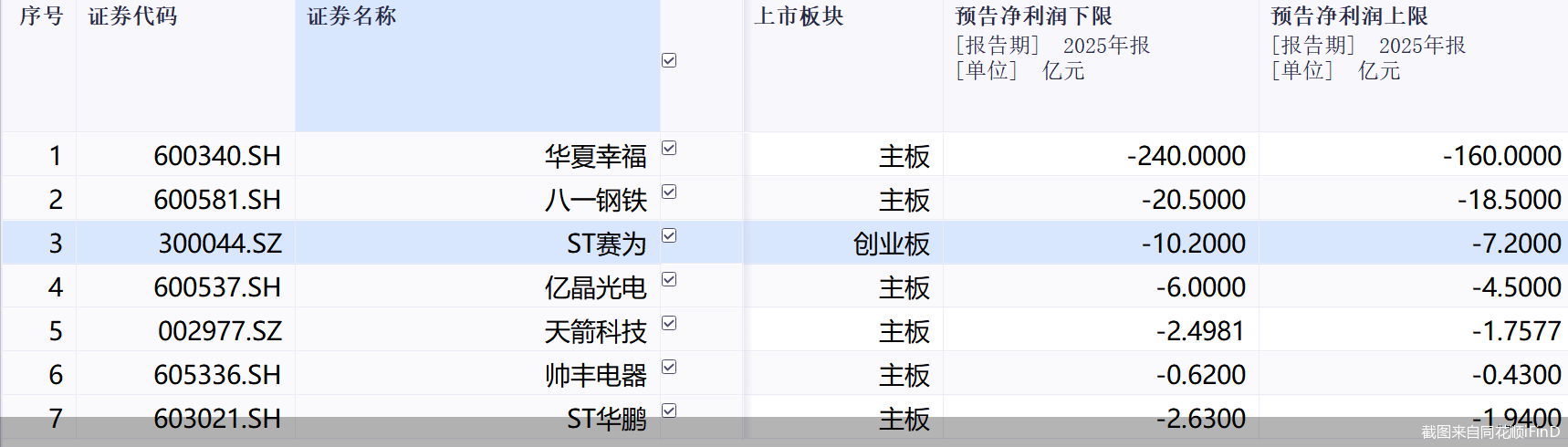
Core Viewpoint - The A-share market is experiencing a surge in performance forecasts, with several companies issuing "*ST" warnings, indicating potential delisting risks due to negative net assets [1][2]. Group 1: Company Announcements - Ba Yi Steel announced on January 25 that its stock may face delisting risk warnings due to expected negative net assets of between -1.95 billion to -1.76 billion yuan by the end of 2025 [2][3]. - As of January 26, a total of seven companies have disclosed potential "*ST" warnings, with five of them indicating negative net assets [2][3]. Group 2: Financial Projections - The five companies with expected negative net assets include Ba Yi Steel, ST Saiwei, Huaxia Happiness, Yijing Photovoltaic, and ST Huapeng, all of which are projected to have negative net assets by the end of 2025 [3][4]. - Huaxia Happiness is expected to report the largest loss, with projections ranging from -16 billion to -24 billion yuan, while Ba Yi Steel anticipates a loss of -1.85 billion to -2.05 billion yuan [5][6]. Group 3: Market Impact - Following the announcement, Ba Yi Steel's stock price fell to the limit down price of 3.24 yuan per share, resulting in a total market capitalization of 4.967 billion yuan [2][6]. - The overall market sentiment is affected as all seven companies are projected to report net losses for 2025, indicating a challenging financial environment [5][6].



财务亮红灯!年内7股预警“*ST”!
Xin Lang Cai Jing· 2026-01-26 11:39
Core Viewpoint - The A-share market is experiencing a surge in performance forecasts, with several companies issuing "*ST" warnings, indicating potential delisting risks due to negative net assets and expected losses in 2025 [1][2][5]. Group 1: Company Announcements - Ba Yi Steel announced on January 25 that its stock may face delisting risk warnings, with an expected net asset value of -1.76 billion to -1.95 billion yuan by the end of 2025 [2][9]. - As of January 26, a total of seven companies have disclosed potential "*ST" warnings, with five of them indicating negative net assets [2][10]. Group 2: Financial Forecasts - The five companies expected to have negative net assets include Ba Yi Steel, ST Saiwei, Huaxia Happiness, Yijing Photovoltaic, and ST Huapeng, all of which are facing mandatory delisting indicators due to financial performance [3][10]. - Huaxia Happiness is projected to incur the largest loss, with an estimated net loss of 16 billion to 24 billion yuan for 2025, while Ba Yi Steel and ST Saiwei are expected to report losses of 1.85 billion to 2.05 billion yuan and 720 million to 1.02 billion yuan, respectively [5][12]. Group 3: Market Impact - Following the announcement, Ba Yi Steel's stock price fell to the limit down price of 3.24 yuan per share, resulting in a total market capitalization of 4.967 billion yuan [2][6]. - The overall market sentiment is affected as all seven companies are expected to report net losses for 2025, indicating a challenging financial environment [5][12].
财务亮红灯!年内7股预警将被“*ST”,2025年集体预亏
Bei Jing Shang Bao· 2026-01-26 11:18
Core Viewpoint - The A-share market is experiencing a surge in performance forecasts, while several listed companies have issued "*ST" warnings, indicating potential delisting risks due to negative net assets [1][3]. Group 1: Company Announcements - On January 25, Bayi Steel (600581) announced that its stock may be subject to delisting risk warnings due to expected negative net assets [3]. - As of January 26, a total of 7 companies have disclosed potential "*ST" warnings, with 5 of them indicating negative net assets at the end of the period [1][5]. Group 2: Financial Forecasts - Bayi Steel expects its net assets to be between -1.76 billion to -1.95 billion yuan by the end of 2025, which triggers delisting risk warnings under the Shanghai Stock Exchange rules [3]. - Other companies, including Huaxia Happiness and ST Saiwei, also forecast negative net assets, with Huaxia Happiness projecting a range of -15 billion to -10 billion yuan [5][7]. Group 3: Market Impact - Following the announcement, Bayi Steel's stock price fell to the limit down price of 3.24 yuan per share, resulting in a total market capitalization of 4.967 billion yuan [4]. - The overall market sentiment is affected, as all 7 companies are expected to report net losses for 2025, with Huaxia Happiness leading with a projected loss of 16 billion to 24 billion yuan [7]. Group 4: Company Profiles - ST Saiwei, which has previously faced delisting risks, is now again under scrutiny due to financial performance issues, with expected net assets of -870 million to -620 million yuan [5][8]. - Tianjian Technology and Shuai Feng Electric are also facing delisting risks due to financial metrics, with Tianjian expecting a total loss of 170 million to 242 million yuan for 2025 [6][7].

连年巨亏 光伏业如何逃出“血海”
经济观察报· 2026-01-25 10:54
Core Viewpoint - The photovoltaic industry is undergoing a brutal survival elimination race and a deep restructuring of the industrial pattern, with the next phase expected to be redefined after this intense reshuffle [2][4]. Group 1: Industry Performance and Losses - In 2025, major companies in the photovoltaic sector are expected to report significant losses, with JinkoSolar forecasting a net loss of 5.9 billion to 6.9 billion yuan, Trina Solar predicting a loss of 6.5 billion to 7.5 billion yuan, and Tongwei expecting a loss of 9 billion to 10 billion yuan [2][6]. - The total expected losses from leading companies amount to hundreds of billions, indicating that the photovoltaic industry is still mired in a loss-making situation [2][5]. - The industry has shifted from a phase of rapid expansion to a deep adjustment period, with companies generally operating at a loss to maintain operations, severely squeezing overall profitability [7][12]. Group 2: Causes of the Crisis - The root cause of the current industry crisis is attributed to aggressive expansion in the past, leading to severe structural oversupply and intense price competition [3][6]. - The prices of key materials such as silicon have plummeted from 300,000 yuan per ton in 2022 to around 55,000 yuan per ton, while silver prices have nearly doubled in recent months, further exacerbating the challenges faced by companies [4][10]. Group 3: Strategic Responses and Industry Restructuring - In response to the crisis, leading companies are turning to mergers and acquisitions to strengthen competitiveness or are extending into related fields such as energy storage and hydrogen energy to seek strategic breakthroughs [4][12]. - TCL Zhonghuan announced plans to invest in a new energy technology company to enhance its integrated strategy and expand battery and module production capacity [12]. - The industry is experiencing a "淘汰赛" (elimination race), with smaller companies likely to exit the market or seek mergers as the competitive landscape narrows [13][14]. Group 4: Future Outlook and Recovery Potential - Companies like Tongwei have seen some operational profitability in the latter half of 2025, but overall losses are expected to continue due to declining sales prices and rising raw material costs [9][10]. - The recovery of profitability is contingent on the overall price recovery across the supply chain and the expansion of photovoltaic application scenarios, which could provide significant growth opportunities [9][10]. - The photovoltaic industry is witnessing a recent increase in component prices, with some manufacturers raising prices by 0.04 to 0.15 yuan per watt, indicating a potential shift in market dynamics [18][19].






太空光伏概念股爆发:如何掘金钙钛矿这条主线?
Xin Lang Cai Jing· 2026-01-25 08:40
Core Viewpoint - The rise of the space photovoltaic concept is significantly influenced by Elon Musk's recent statements at the 2026 Davos Forum, marking it as the strongest branch of the commercial aerospace sector at this stage [1][2][30]. Group 1: Market Dynamics - The commercial aerospace sector is experiencing a resurgence, with a notable surge in stock prices, particularly in the space photovoltaic concept, which has captured significant investor attention [2][29]. - On a recent trading day, nearly 60 stocks in the commercial aerospace sector hit the daily limit, with over 80 stocks seeing price increases of more than 10% [2][29]. - The space photovoltaic concept is emerging as a leading theme, with key players like JunDa Co., Maiwei Co., Mingyang Smart Energy, and others being targeted by investors [2][29]. Group 2: Technological Advancements - Space photovoltaic technology is entering a phase of industrialization, with perovskite solar cells being identified as the optimal solution for commercialization in this field [3][12][36]. - Perovskite solar cells are favored for their high efficiency, lightweight, and flexibility, making them suitable for the extreme conditions of space [11][36]. - The technology is expected to evolve rapidly, with perovskite cells poised to achieve gigawatt-level production by 2025, overcoming previous barriers to commercialization [11][36]. Group 3: Investment Opportunities - Companies like RenShuo Energy, which has partnered with the European Space Agency and established a 10MW pilot production line, are at the forefront of the perovskite photovoltaic industry [1][13][25]. - The stock price of Maiwei Co., which holds a stake in RenShuo Energy, has nearly tripled since December of the previous year, highlighting the investment potential in this sector [1][13][25]. - The market for space photovoltaics is projected to reach a scale of approximately 1.2 to 1.8 trillion yuan, with the entire industry chain potentially reaching 3 to 5 trillion yuan [5][31]. Group 4: Future Outlook - The demand for space photovoltaics is expected to surge as satellite functionalities evolve from simple communication to AI computing and space data centers, increasing energy power requirements significantly [9][34]. - The competitive landscape is characterized by a strong focus on energy, computing power, and spatial dominance, with domestic companies establishing unique advantages in the global arena [6][34]. - By 2035, the market for space photovoltaics could potentially reach a scale of ten trillion yuan, driven by technological advancements and increased competition among major economies [5][31].