默沙东

Search documents
科伦药业子公司TROP2 ADC芦康沙妥珠单抗联合免疫疗法帕博利珠单抗一线治疗PD-L1阳性局部晚期或转移性非小细胞肺癌获突破性疗法认定
Bei Jing Shang Bao· 2026-01-05 02:11
Core Viewpoint - Kelong Pharmaceutical's subsidiary, Sichuan Kelong Botai Biopharmaceutical Co., has received breakthrough therapy designation from the National Medical Products Administration of China for its ADC drug targeting TROP2 in combination with Merck's PD-1 monoclonal antibody for treating specific types of non-small cell lung cancer (NSCLC) [1] Group 1 - Kelong Pharmaceutical announced that its subsidiary Kelong Botai's ADC drug, Lukanosatuzumab, has been granted breakthrough therapy designation for first-line treatment of PD-L1 tumor proportion score (TPS) ≥ 1% in EGFR gene mutation-negative and ALK-negative locally advanced or metastatic NSCLC [1] - The company also reported that its ADC drug SKB105 (also known as CR-003), targeting integrin β6, has received approval for clinical trials from the National Medical Products Administration for the treatment of advanced solid tumors [1]

科伦药业(002422.SZ)子公司核心产品TROP2 ADC芦康沙妥珠单抗(sac-TMT)联合免疫疗法帕博利珠单抗一线治疗PD-L1阳性局部晚期或转移性非小细胞肺癌获国家药监局突破性疗法认定
Ge Long Hui· 2026-01-05 01:33
Core Viewpoint - The company, Kelun Pharmaceutical, has received breakthrough therapy designation from the National Medical Products Administration (NMPA) in China for its antibody-drug conjugate (ADC) SKB264/MK-2870, in combination with Merck's PD-1 monoclonal antibody, for the treatment of specific types of non-small cell lung cancer (NSCLC) [1]. Group 1 - Kelun Pharmaceutical's subsidiary, Sichuan Kelun Botai Biopharmaceutical Co., Ltd., is involved in the development of the ADC targeting TROP2 [1]. - The combination therapy is aimed at patients with locally advanced or metastatic NSCLC who are negative for EGFR gene mutations and ALK [1]. - The therapy is specifically for patients with a tumor proportion score (TPS) of ≥1% for PD-L1 [1].
科伦博泰生物-B(06990.HK):核心产品TROP2 ADC芦康沙妥珠单抗(SAC-TMT)联合免疫疗法帕博利珠单抗一线治疗PD-L1阳性局部晚期或转移性非小细胞肺癌获国家药监局突破性疗法认定
Ge Long Hui· 2026-01-04 23:52
Core Viewpoint - The company, Kelun-Botai Biopharmaceutical-B (06990.HK), has received Breakthrough Therapy Designation from the National Medical Products Administration (NMPA) for its antibody-drug conjugate (ADC) sac-TMT in combination with Merck's PD-1 monoclonal antibody, pembrolizumab, for the first-line treatment of locally advanced or metastatic non-small cell lung cancer (NSCLC) with PD-L1 tumor proportion score (TPS) ≥ 1% and negative for EGFR mutations and ALK [1][2] Group 1 - The Breakthrough Therapy Designation is granted to drugs that provide effective treatment options where none exist or offer significant clinical advantages over existing therapies [1] - Drugs included in the Breakthrough Therapy program can apply for conditional approval and priority review during the drug licensing application process if they meet relevant criteria [1] Group 2 - The company previously announced results from the Phase 3 OptiTROP-Lung05 clinical trial, which demonstrated statistically and clinically significant improvements in progression-free survival (PFS) as the primary endpoint, with a trend towards benefits in overall survival (OS) [2] - The OptiTROP-Lung05 study is the first Phase 3 clinical trial to achieve its primary endpoint with an immune combination ADC in the first-line treatment of NSCLC [2] - The Breakthrough Therapy Designation for sac-TMT in treating PD-L1 positive NSCLC will facilitate the review and approval process for this indication [2]
2025年中国毛发医疗行业竞争格局分析 雍禾植发、三生曼迪等企业在细分领域领先【组图】
Qian Zhan Wang· 2026-01-04 04:13
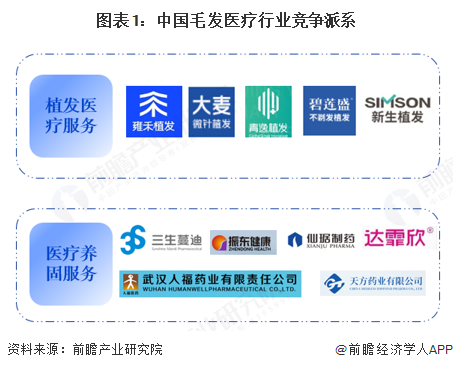
Core Insights - The article discusses the competitive landscape of the hair medical industry in China, highlighting key players and market dynamics [1][5]. Group 1: Competitive Landscape - The Chinese hair medical industry features various competitive factions, with companies like Yonghe Medical, Damaik, and Qingyi focusing on hair transplant medical services, while SanSheng Pharmaceutical, Zhendong Pharmaceutical, and Xianju Pharmaceutical are involved in medical nurturing services [1]. - In the hair transplant sector, the first tier consists of leading national chain brands such as Yonghe Medical, Bilian Sheng, and Damaik, which collectively hold a significant market share and possess nationwide direct chain layouts, mature technology systems, and strong brand recognition [1]. Group 2: Hair Growth Pharmaceuticals - In the hair growth pharmaceuticals market, the first tier includes SanSheng Pharmaceutical, Zhendong Pharmaceutical, and Merck, with the former two holding major shares in the minoxidil market, while Merck is recognized as the original manufacturer of finasteride [5]. - The second tier comprises Xianju Pharmaceutical, Kang En Bei, and Xiamen Meishang Pharmaceutical, which have accelerated the launch of minoxidil and finasteride products in recent years, gaining notable market recognition [5]. Group 3: Sales Performance - In the online pharmacy sector, Zhejiang SanSheng's minoxidil tincture product achieved sales exceeding 1 billion yuan, while Zhendong Anxin's minoxidil lotion surpassed 300 million yuan in sales, and SanSheng's minoxidil foam also exceeded 100 million yuan [9]. - In the offline market during the first quarter of 2025, Zhejiang SanSheng's minoxidil tincture and Zhendong Anxin's minoxidil lotion both recorded sales above 20 million yuan, with market shares of 50.61% and 38.82%, respectively [10]. - The sales ranking for minoxidil products shows Zhejiang SanSheng's minoxidil tincture leading with over 34 million yuan in sales (50.61% market share), followed by Zhendong Anxin's minoxidil lotion with over 26 million yuan (38.82% market share) [11].



2025中国创新药出海一年狂揽1356亿美元,2026年能否持续?
Jing Ji Guan Cha Wang· 2026-01-01 02:55
Core Insights - The surge in BD (business development) transactions in China's innovative pharmaceutical sector is a reflection of the industry's maturation and increasing global recognition, with 2025 marking a significant year for License-out agreements [3][4][5] Group 1: BD Transactions Overview - In December 2025, several Chinese pharmaceutical companies, including Ganli Pharmaceutical and Heng Rui Medicine, announced significant BD agreements, indicating a trend towards increased collaboration and innovation in the sector [2] - The total value of BD transactions for Chinese innovative drugs reached $135.655 billion in 2025, with upfront payments totaling $7 billion, marking a historical high in both transaction volume and value [3] - The number of BD transactions involving Chinese companies and top multinational corporations (MNCs) increased from 3 in 2015 to 35 in 2025, highlighting the growing interest from global players [3] Group 2: Market Dynamics and Future Outlook - The BD transaction boom is expected to continue into 2026, with industry experts predicting sustained high activity levels, although the focus may shift from quantity to value [5][14] - The NewCo model, which allows for "technology equity + capital cooperation," is emerging as a new pathway for Chinese pharmaceutical companies to engage in international markets, although its prevalence may decrease in 2026 [14][15] - The overall trend indicates a shift from isolated transactions to a more collaborative ecosystem, where companies leverage partnerships to enhance their global market presence [16][20] Group 3: Transaction Structures and Strategies - The structure of BD transactions is evolving, with companies increasingly engaging in co-development and co-commercialization agreements, allowing for shared risks and benefits [10][11] - The pricing of BD transactions is becoming more rational, with companies focusing on the clinical value and market potential of their products, which influences upfront payment amounts [19][18] - Legal and advisory services are becoming integral to BD transactions, reflecting the increasing complexity and importance of these deals in the pharmaceutical landscape [17]



专访百利天恒创始人朱义:原始创新打造超级爆品,执掌全球话语权
2 1 Shi Ji Jing Ji Bao Dao· 2025-12-30 23:06
Core Insights - The key opportunity for local biotech companies lies in focusing on original innovation from 0 to 1, establishing core technological barriers in unmet clinical needs, and achieving a leap from follower to leader [1][2] - China has emerged as a core player in the global ADC innovation landscape, with over 50% of the global ADC new drug pipeline, and has built technological advantages in certain niche areas [1][2] - The strategic partnership between BaiLi TianHeng and BMS in the ADC field has set a record for the highest single-asset transaction in the history of ADC drugs, significantly boosting industry innovation [1][2] Business Development (BD) Trends - The BD trend in the ADC sector is expected to continue into 2025, with 14 transactions in the first eight months of 2023, making ADC one of the hottest outbound technology tracks [1][2] - Notable transactions include several ADC licensing agreements exceeding $1 billion, with companies like XinNuoWei, ShiYao Group, and YingEn Bio leading the way [1][2] - Companies are expanding beyond mature targets like HER2 and TROP2 to explore "blue ocean" targets such as CDH6, CDH17, and DLL3, seeking broader therapeutic windows and improved competitive landscapes [1][2] Strategic Partnerships - The partnership between BaiLi TianHeng and BMS, with a potential total transaction value of $8.4 billion, has revitalized the pharmaceutical market during a challenging period [2][3] - BaiLi TianHeng's clinical data attracted interest from eight of the top ten multinational pharmaceutical companies, leading to the largest single-asset transaction in the ADC field [2][3] - The collaboration model of "self-researched core assets + global rights cooperation" and "co-development + co-commercialization" is relatively rare globally and requires high product quality and forward-looking strategic vision [3] Challenges and Opportunities - The core challenge in the initial phase of the partnership is the difference in team size and division of labor, prompting BaiLi TianHeng to expand its team and build a robust system [3][7] - The domestic biotech sector is experiencing a surge in transactions, with innovative collaboration models emerging, such as the partnership between XinDa Biotech and Takeda [3][4] - The need to create "super blockbuster" products is critical to overcoming the undervaluation of Chinese innovative drug assets, as many products have not undergone global clinical trials [5][6] Future Directions - The competition in the "ADC + IO" space is intensifying, with multinational companies collaborating on various ADC products, while domestic firms are also making significant advancements [6][7] - The development of next-generation original innovations is essential for creating future industry blockbusters, focusing on breakthrough efficacy and addressing significant clinical needs [6][7] - To achieve comprehensive internationalization, companies must overcome four core capability gaps: global leading R&D capabilities, global clinical development capabilities, global supply chain capabilities, and global commercialization capabilities [7][8][9]
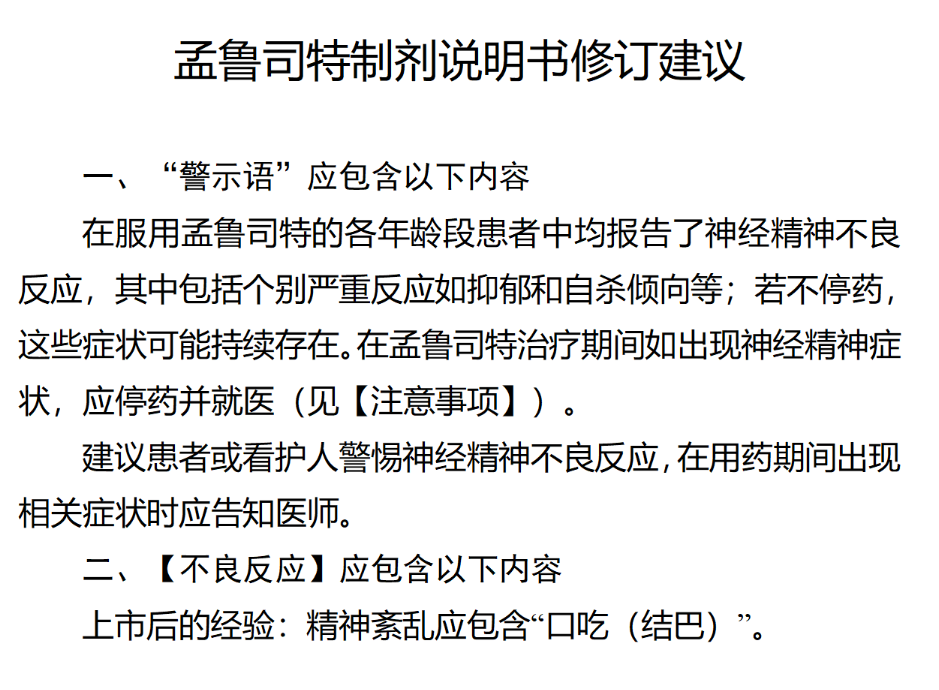
孟鲁司特被要求新增警示语,去年前三季度销售额超13亿元
2 1 Shi Ji Jing Ji Bao Dao· 2025-12-25 09:30
Core Viewpoint - The National Medical Products Administration (NMPA) of China has mandated the addition of warnings regarding neuropsychiatric adverse reactions in the instructions for Montelukast formulations, including serious reactions such as depression and suicidal tendencies, with a deadline for compliance set for March 12, 2026 [1][4]. Group 1: Regulatory Changes - The NMPA requires all Montelukast product license holders in China to revise their product instructions to include warnings about neuropsychiatric adverse reactions [1]. - The revisions must be submitted to the NMPA or provincial drug regulatory departments by March 12, 2026, and all existing product labels must be updated within nine months after the submission [1]. Group 2: Market Context - Montelukast sodium, originally developed by Merck (brand name: Singulair), is a potent selective leukotriene receptor antagonist used for asthma prevention and treatment in children aged 2 to 14 [3]. - Following the expiration of Merck's patent, domestic companies have begun to produce generic versions, with 62 approvals found on the NMPA website from various manufacturers [3]. Group 3: Adverse Reactions and Clinical Implications - The revision of Montelukast's instructions is based on adverse reaction assessments, with the FDA in the U.S. having previously issued a black box warning for similar neuropsychiatric adverse reactions [4][5]. - Reports of adverse reactions, including depression and suicidal behavior, have been documented, with a study indicating that 86.12% of Montelukast prescriptions in a certain hospital were for off-label uses [5][8]. Group 4: Sales and Competitive Landscape - Montelukast ranked third in sales among asthma medications in China for the first three quarters of 2024, with total sales reaching 1.33 billion yuan [9]. - The competitive landscape includes 24 companies with 42 formulations of Montelukast available, with significant market shares held by companies like Eurofarma and Shanghai Anbisen [9]. Group 5: Emerging Treatments - The emergence of biologic therapies is changing the treatment landscape for pediatric asthma, with several new biologics approved for use in children [10]. - The NMPA's revisions to Montelukast's labeling serve as a reminder for the need for safe and effective prescribing practices as new treatment options become available [10].
2025年中国合成致死药物行业政策、产业链、市场规模、竞争格局、重点企业及未来前景研判:抗癌药开发中的新策略,需求持续增加,知名药企已竞相布局PRMT5赛道[图]
Chan Ye Xin Xi Wang· 2025-12-23 01:22
Core Viewpoint - Synthetic lethality drugs are emerging as a promising treatment strategy in oncology, allowing for the selective killing of cancer cells while sparing normal cells, with PARP inhibitors being a notable success in this field [1][6][7]. Industry Definition and Principles - Synthetic lethality refers to a biological phenomenon where mutations in two non-lethal genes do not affect cell survival individually, but simultaneous mutations lead to cell death. This principle is leveraged in cancer treatment to target specific pathways that cancer cells depend on [2][6]. - The concept of synthetic lethality has gained traction, particularly with the success of PARP inhibitors, which target DNA damage repair mechanisms [6][7]. Current Development Status - The global synthetic lethality drug market is projected to reach $4.3 billion in 2024, with China's market expected to grow to 3.6 billion yuan. By 2025, these figures are anticipated to rise to $4.8 billion globally and 4.6 billion yuan in China [1][7]. - The sales of PARP inhibitors reached $3.072 billion globally in 2024, showing a growth of approximately 9.3% after ten years on the market. Sales are expected to reach $3.4 billion by 2025 [1][7]. Industry Chain - The synthetic lethality drug industry chain includes upstream components such as biological raw materials, animal models, and chemical reagents; midstream focuses on drug research and production; and downstream applications are primarily in clinical settings, including hospitals and research institutions [8]. Competitive Landscape - Major companies in the synthetic lethality space include Hengrui Medicine and BeiGene, with several others like Clovis Oncology and AstraZeneca also involved. The market features a variety of PARP inhibitors, with ongoing research into additional synthetic lethality targets [2][9][10]. - The success of PARP inhibitors has led to increased interest in synthetic lethality as a viable strategy for cancer treatment, with multiple companies exploring this avenue [9][10]. Future Development - The role of synthetic lethality in modern cancer precision therapy is becoming increasingly significant, with ongoing research paving the way for new treatment avenues. Despite progress, challenges remain in the application of synthetic lethality in clinical settings [13][14].

百利天恒朱义:原始创新打造超级爆品,执掌全球话语权
2 1 Shi Ji Jing Ji Bao Dao· 2025-12-22 13:08
Core Insights - The oncology sector remains a hotbed for pharmaceutical innovation, with antibody-drug conjugates (ADCs) emerging as one of the most promising areas due to their dual advantages of precise targeting and potent cytotoxicity [1][2] - Chinese biotech companies have established themselves as key players in the global ADC innovation landscape, holding over 50% of the new drug pipeline in this category [1][2] - A significant strategic partnership between BaiLi TianHeng and Bristol-Myers Squibb (BMS) has set a record for the highest total transaction value for a single ADC asset, further intensifying industry innovation [1][2] Industry Trends - The ADC sector has become one of the fastest-growing segments in the global pharmaceutical industry, with projections estimating the market to reach $115.1 billion by 2032, and China's ADC market expected to reach 66.2 billion yuan by 2030 [2] - In the first eight months of 2025, ADC drugs accounted for 14 transactions, making it one of the hottest outbound technology sectors for Chinese companies [1][2] - Companies are expanding their focus beyond established targets like HER2 and TROP2 to explore "blue ocean" targets such as CDH6, CDH17, and DLL3, aiming for broader treatment windows and improved competitive landscapes [1][2] Strategic Collaborations - The partnership between BaiLi TianHeng and BMS is characterized by a unique model of "self-researched core assets + global rights collaboration" and "co-development + co-commercialization," which is relatively rare globally [4][5] - The collaboration is expected to face challenges related to team size and division of labor, prompting BaiLi TianHeng to expand its team and build a robust organizational structure [4][5] - The deal with BMS, valued at up to $8.4 billion, has revitalized the pharmaceutical market during a period referred to as a "capital winter" [2][3] Market Dynamics - Despite the growing trend of business development (BD) transactions, licensing out remains the mainstream model for domestic biotech companies, allowing them to focus on early-stage innovation while outsourcing later-stage development [6] - The increasing number of BD transactions reflects the rising competitiveness and value of Chinese pharmaceutical assets on a global scale, although concerns about undervaluation persist [7][8] - The need to create "super blockbuster" products is seen as essential for overcoming the challenges of being undervalued in the global market [7][8] Future Outlook - The competition in the ADC+IO (immune-oncology) space is intensifying, with both multinational and domestic companies racing to develop innovative therapies [8][9] - BaiLi TianHeng aims to leverage the cash flow from its partnership with BMS to enhance its R&D capabilities and build a comprehensive commercialization framework [9][10] - The company plans to address four core capability gaps essential for achieving global competitiveness: global R&D capabilities, clinical development capabilities, supply chain capabilities, and commercialization capabilities [10][11] Conclusion - The ADC sector's growth signifies a shift in China's pharmaceutical innovation from a follower to a leader, with a focus on original innovation and global capabilities as the pathway for domestic biotech companies to establish themselves as industry leaders [12]
GLP-1赛道掉队的辉瑞 看上复星口服药
BambooWorks· 2025-12-22 10:59
Core Insights - The article highlights the significant collaboration between Shanghai Fosun Pharmaceutical and Pfizer regarding the oral GLP-1 receptor agonist YP05002, with a potential total deal value exceeding $2.085 billion [2][4][6]. Group 1: Company Developments - Fosun Pharma's innovative drug business revenue grew by 18.09% year-on-year in the first three quarters, becoming a crucial growth engine for the company [2][8]. - The collaboration with Pfizer is seen as a milestone in Fosun Pharma's strategy for innovation and internationalization, enhancing its brand influence in the global market [8]. Group 2: Product and Market Insights - YP05002 is designed to treat type 2 diabetes and obesity by activating GLP-1 receptors, promoting insulin secretion, and reducing appetite, with potential indications including long-term weight management and metabolic disorders [4][5]. - The GLP-1 drug class is gaining traction due to its effectiveness in controlling blood sugar and weight loss, with significant sales growth reported by competitors like Novo Nordisk and Eli Lilly [6]. Group 3: Financial Performance - Fosun Pharma reported a revenue decline of 4.91% to 29.393 billion yuan in the first three quarters, while net profit increased by 25.50% due to the sale of non-core assets [7]. - The company's current price-to-earnings ratio is approximately 17 times, indicating potential valuation recovery compared to peers like Hengrui Medicine, which has a P/E ratio of about 59 times [8].