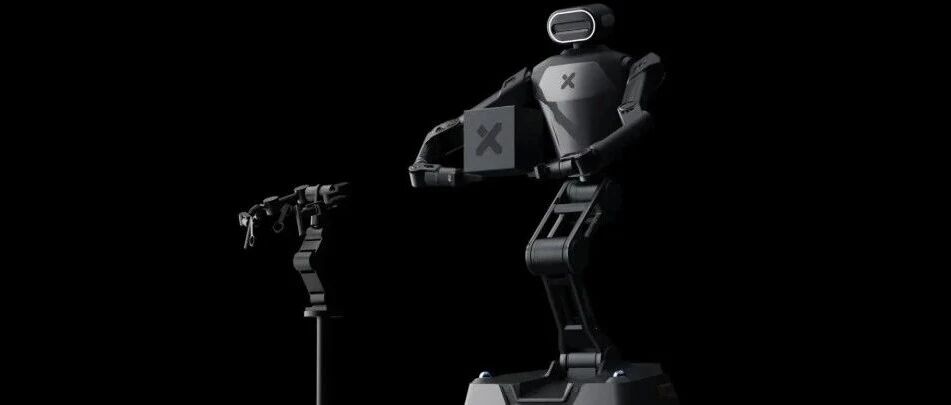
Apptronik

Search documents
人形机器人遇风险提示:警惕扎堆与低水平重复
Jing Ji Guan Cha Wang· 2025-11-29 09:31
Core Viewpoint - The National Development and Reform Commission (NDRC) has issued a risk warning regarding the humanoid robot industry, highlighting concerns about product homogeneity and compressed R&D space as the industry rapidly develops [1][2][7]. Industry Overview - The humanoid robot industry in China has over 150 companies, with more than half being startups or companies from other sectors, leading to a significant issue of product homogeneity [2][3]. - The industry is experiencing rapid growth, with a projected market size of 100 billion yuan by 2030, driven by innovation and demand [2]. Identified Risks - **Risk One: Low-level Repetition** The industry faces a major concern of low-level repetitive products crowding the market, which compresses the R&D space and stifles innovation. The current focus on exhibition and demonstration rather than industrial application limits the true potential of humanoid robots [3][4]. - **Risk Two: Capital Dispersal and Overheated Expectations** The influx of capital into the humanoid robot sector has led to dispersed financing and inflated expectations. The average financing for the 150 companies is only around 100 million yuan, with significant disparities compared to leading global firms [4][5]. - **Risk Three: Delayed Commercialization and Industry Chain Coordination** The transition from demonstration to practical application is lagging, with a lack of effective collaboration across the industry chain. This includes issues with component procurement, data sharing, and standardization, which hinder the overall efficiency and integration of the industry [5][6]. Government Response - The NDRC is conducting in-depth research to strengthen policy guidance, accelerate technological breakthroughs, and promote the application of results to ensure the healthy and standardized development of the humanoid robot industry [6][7].

快讯|优必选人形机器人再获1.43亿订单;国家发改委回应人形机器人“泡沫”;Apptronik获3.31亿美元投资,估值达50亿
机器人大讲堂· 2025-11-28 13:35
Group 1: Company Developments - UBTECH Robotics secured a contract worth 143 million yuan for a humanoid robot data collection and training center project in Jiujiang, Jiangxi, further solidifying its leading position in the industrial humanoid robot application field [1][3] - Kangping Technology announced plans to acquire 51% of Suzhou Lingchen Collection Computer Co., Ltd. for 264 million yuan, aiming to enhance its capabilities in the industrial robot sector through integration of technologies [7][9] - Apptronik completed a strategic financing round of 331 million USD, raising its valuation to 5 billion USD, with funds directed towards accelerating the production and commercialization of its Apollo humanoid robot [10][12] Group 2: Industry Insights - The National Development and Reform Commission addressed concerns regarding a "bubble" in the humanoid robot sector, emphasizing the need for a balance between speed and sustainability in the industry, with over 150 companies currently involved [4][6] - A company in Hubei province purchased insurance for two humanoid robots, marking the first instance of "embodied intelligent robot body loss insurance" in the region, indicating a growing risk management framework in the robotics industry [13][15]



权威部门首次预警人形机器人行业风险,背后信号很大
21世纪经济报道· 2025-11-28 10:27
Core Viewpoint - The National Development and Reform Commission (NDRC) has highlighted the rapid growth of the humanoid robot industry in China, noting the presence of over 150 companies, with more than half being startups or from other sectors. This growth is seen as positive for innovation but raises concerns about product redundancy and compressed R&D space [1][3]. Group 1: Industry Growth and Challenges - The NDRC's comments are not an indication of overheating in the industry but rather a call to coordinate resource allocation and support globally competitive Chinese humanoid robot companies [3]. - The humanoid robot sector is experiencing a surge in capital investment, but there are concerns about the industry's maturity and the potential for unrealistic expectations among investors [8][9]. - The industry is expected to face a critical juncture in Q1 2026, with potential impacts on confidence if major players like Tesla continue to delay product launches [10]. Group 2: Market Dynamics and Competition - The current trend of product demonstrations in the industry, inspired by Tesla's Optimus, is seen as a way to attract investment, but it may not reflect the actual capabilities of the robots [6][8]. - The success of companies like Yushu Technology has created a competitive environment that is difficult for new entrants to penetrate, leading to concerns about market saturation and innovation stifling [7]. - The financing landscape for humanoid robot companies in China is fragmented, with an average of just over 100 million yuan per company since 2025, which is significantly lower compared to international counterparts [13]. Group 3: Future Directions and Strategic Focus - Industry experts emphasize the need for a shift towards commercial viability and practical applications rather than merely showcasing new products [7][8]. - There is a consensus on the importance of developing high-value scenarios and solutions that can be rapidly commercialized to drive the industry forward [11][14]. - The integration of artificial intelligence and embodied intelligence is crucial for the advancement of humanoid robots, with a focus on enhancing their capabilities through real-world training and performance improvements [14].


权威部门首次预警人形机器人风险 背后有何考量?
2 1 Shi Ji Jing Ji Bao Dao· 2025-11-28 06:38
Core Viewpoint - The National Development and Reform Commission (NDRC) has issued a warning regarding risks in the humanoid robot industry, highlighting the rapid influx of capital and the increasing number of companies in this sector, which exceeds 150, with over half being startups or companies from other industries [1][2]. Industry Overview - The NDRC's warning is the first of its kind for the humanoid robot industry in China, emphasizing the need to prevent the market from being flooded with similar products and to ensure adequate research and development space [2]. - Following the NDRC's comments, the A-share humanoid robot sector experienced a cooling effect, with many stocks showing a pattern of rising and then falling [3]. Market Dynamics - The NDRC aims to coordinate resource allocation within the industry to support companies that possess global competitiveness [3]. - There is a call for investment to focus on critical segments of the humanoid robot supply chain, such as the "big and small brains" of robots, to promote coordinated and rapid development while avoiding internal competition [4]. Investment Trends - The investment community has noted a trend where companies showcase their products through demonstrations to attract venture capital, a practice referred to as "Price to Demo" [5]. - The industry is currently experiencing a surge in product launches, but there are concerns that the market may be oversaturated with similar offerings, which could hinder innovation [6][7]. Future Outlook - Experts suggest that the humanoid robot industry is still in its early stages, and while there is significant capital inflow, the focus should shift towards practical applications and commercial viability [9]. - The NDRC's strategic adjustments are seen as beneficial for the industry, helping to avoid chaotic development and allowing for more concentrated talent and investment [9]. Competitive Landscape - The financing landscape for humanoid robot companies in China is fragmented, with an average of just over 100 million yuan per company since 2025, which is significantly lower compared to international counterparts [13]. - Notably, global companies like FigureAI and Apptronik have secured substantial funding, highlighting a disparity in financial resources available to Chinese firms [13]. Technological Development - The humanoid robot sector is recognized for its potential in embodied intelligence, but current language models are insufficient for achieving this goal [14]. - Companies are encouraged to focus on real-world applications and simulations to enhance the robots' capabilities and to identify viable commercial scenarios for their deployment [14].
具身的大小脑路线都在这里了......
具身智能之心· 2025-11-10 00:02
Core Insights - The exploration towards Artificial General Intelligence (AGI) highlights embodied intelligence as a key direction, focusing on the interaction and adaptation of intelligent agents within physical environments [1] - The development of embodied intelligence is marked by the evolution of its core components, the brain and cerebellum, which are essential for perception, task understanding, and action execution [1] Industry Analysis - In the past two years, numerous star teams in the field of embodied intelligence have emerged, establishing valuable companies such as Xinghaitu, Galaxy General, and Zhujidongli, driving advancements in embodied intelligence technologies [3] - Major domestic companies like Huawei, JD, Tencent, and Ant Group are actively investing and collaborating to build a robust ecosystem for embodied intelligence, while international players like Tesla and Wayve are focusing on industrial applications and autonomous driving [5] Technological Evolution - The evolution of embodied intelligence technology has progressed through several stages, from low-level perception to high-level task understanding and generalization [6] - The first stage focused on grasp pose detection, while the second stage introduced behavior cloning, allowing robots to learn from expert demonstrations [6][7] - The introduction of Diffusion Policy methods in 2023 marked a significant advancement, enhancing stability and generalization in task execution [6][9] - The current phase emphasizes the integration of Vision-Language-Action (VLA) models, which enable robots to understand human instructions and perform complex tasks [7][9] Future Directions - The industry is exploring the fusion of VLA models with reinforcement learning, world models, and tactile sensing to overcome existing limitations [9][11] - This integration aims to enhance robots' capabilities in long-term tasks, future prediction, and multi-modal perception, expanding their operational boundaries [11][12] Educational Initiatives - There is a growing demand for engineering and system capabilities in the field of embodied intelligence, prompting the development of comprehensive educational programs [17] - These programs aim to equip participants with practical skills in simulation, model training, and the deployment of advanced embodied intelligence architectures [17][20]
汽车与工业科技- 人形机器人及其对汽车与工业科技的利润影响-Autos & Industrial Tech_ Platforms & Power - Part II_ Humanoids and profit implications for autos & industrial tech
2025-10-15 03:14
Summary of Key Points from the Conference Call Industry Overview - The humanoid robot market is projected to grow from approximately 20,000 units in 2025 to around 1.4 million units by 2035, generating about $38 billion in revenue [3][35] - Humanoids are expected to play a significant role in various sectors, including manufacturing, elderly care, and home chores, with a potential market size of $205 billion in optimistic scenarios [8][39] Core Companies Discussed Tesla - Tesla is developing the Optimus robot for internal use and external sales, with the CEO suggesting that humanoids could account for 80% of the company's future value [1][58] - The company aims to produce 1 million humanoid robots annually by 2030, with potential EPS contributions ranging from $0.10 to $3.00 by 2030, and $0.20 to $13.00 by 2035, depending on shipment volumes and margins [10][66] Jabil - Jabil is positioned to benefit from manufacturing humanoids and providing necessary data for AI training, with potential EPS impacts of up to $1 by 2030 and $4 by 2035 [11][73] - The company has partnerships with Apptronik and has experience in manufacturing and automation, which could facilitate its entry into the humanoid market [11][72] Flex - Flex is expected to generate similar EPS impacts as Jabil, with estimates of up to $0.25 by 2030 and $1 by 2035, depending on humanoid shipments and labor savings [14][74] - The company is focusing on automation and efficiency, with a significant portion of its revenue coming from datacenters and automotive sectors [14][74] Other Notable Companies - Companies like Boston Dynamics, Agility Robotics, Apptronik, and Figure AI are also highlighted for their contributions to humanoid technology and partnerships with larger firms [2][11][23] Technological Challenges and Developments - Current challenges in humanoid robotics include hardware limitations (e.g., precision, battery life) and software development for varied tasks [2][20] - Companies are focusing on gathering data for AI training, with tools like Nvidia's GR00T model being utilized to enhance humanoid capabilities [2][23] - The industry anticipates that it may take several years before humanoids can be deployed at scale in controlled environments like factories [57] Market Dynamics - The global market for industrial robots is approximately 550,000 units per year, suggesting that the humanoid market could grow significantly as adoption increases in both industrial and consumer settings [42][56] - The labor shortage in manufacturing and other sectors in the U.S. presents a strong case for the adoption of humanoid robots to fill gaps [39] Financial Projections - The financial outlook for humanoid robots includes various scenarios (base, bear, bull, blue-sky) with significant revenue potential, particularly in optimistic cases where humanoids become widely adopted [38][39] - The EPS contributions from humanoid robots for companies like Tesla, Jabil, and Flex are contingent on successful scaling and market adoption [10][66][73][74] Conclusion - The humanoid robot market presents substantial growth opportunities for companies involved in manufacturing, AI, and robotics, with Tesla, Jabil, and Flex positioned to capitalize on this emerging sector. However, technological challenges and market dynamics will play a crucial role in determining the pace of adoption and financial success.
中美头部具身智能机器人公司为何估值悬殊?
Nan Fang Du Shi Bao· 2025-10-14 08:13
Core Insights - The company Zhifang has entered the "unicorn" club with a valuation of $1 billion, having completed seven rounds of financing this year, attracting significant investment from firms like Shenzhen Capital Group and PwC Capital [1] - The embodied intelligence sector is experiencing rapid valuation increases and high-frequency financing, with several Chinese companies reaching the $1 billion valuation threshold [1] - Morgan Stanley predicts that by 2050, the global humanoid robot market will deploy 1 billion units, with a market size of $5 trillion, which is approximately double the total revenue of the 20 largest automotive manufacturers in 2024 [2] Company Developments - Zhifang announced a new order for over 1,000 robots worth nearly $500 million, to be deployed at the production base of Huike Co., Ltd., a semiconductor display panel company [5] - The company has previously deployed its Aibao series of wheeled humanoid robots in factories of Dongfeng Liuzhou Motor and Geely Technology [5] Market Dynamics - The rapid increase in valuations has raised concerns about potential bubbles in the industry, with some investors noting that the valuations are influenced by many unquantifiable factors [1] - The valuation logic for embodied intelligence companies often references the automotive industry, suggesting that if the market materializes, it could exceed the automotive sector's overall market size [1] - Chinese embodied intelligence companies are currently valued lower than their U.S. counterparts, partly due to differences in the venture capital ecosystem and the focus on domestic market potential [3][4] Investment Trends - The upcoming IPO of Yushutech is expected to serve as a catalyst for future financing activities in the embodied intelligence sector, potentially raising market valuations due to scarcity effects [2] - Chinese investors tend to prioritize current commercialization performance, contrasting with U.S. companies that can achieve high valuations without significant commercial progress [4]
大摩特斯拉死多头Jonas画出“地外经济”大饼:到2045年规模将超110万亿美元
Hua Er Jie Jian Wen· 2025-10-14 04:12
Core Insights - Morgan Stanley's analyst Adam Jonas is advocating for a shift in investment focus towards a new trillion-dollar opportunity he calls the "extraterrestrial economy," driven by Physical AI, which includes flying cars, humanoid robots, and brain-machine interfaces [1][2] - Jonas predicts that by 2045, the "extraterrestrial economy" could exceed the current global economic total of approximately $110 trillion, with the low-altitude transportation market alone projected to generate over $4 trillion in annual revenue by 2040 [1][3] Group 1: Transition to Physical AI - Jonas has transitioned from being an automotive analyst to a global strategist for Physical AI, defining it as anything capable of moving, navigating, and manipulating three-dimensional space [2] - He emphasizes that discussing a world without Physical AI is akin to discussing a world without electricity, indicating its fundamental importance to future civilization [2] Group 2: Market Potential and Observations - Jonas highlights the inefficiency of current space utilization, noting that at any given time, the number of people in the air globally is comparable to the population of a single city, suggesting vast potential for low-altitude transportation [3] - He forecasts that electric vertical takeoff and landing (eVTOL) aircraft will soon transport paying passengers in urban airspace, marking the beginning of a new era in low-altitude transportation [3] Group 3: Historical Context and Market Reception - Jonas recalls past skepticism regarding his predictions for Tesla and SpaceX, which were initially met with doubt but later validated by market performance [4] - He believes that history is repeating itself, as some clients are beginning to construct trading strategies based on his long-term vision, despite a focus on short-term earnings by others [4][5] Group 4: Supporting Developments - Recent advancements in the industry support Jonas's theories, with companies like Joby Aviation and Archer Aviation expected to receive federal certification for commercial passenger flights next year [5] - In robotics, companies such as Tesla, Apptronik, and XPeng are releasing advanced humanoid robots with plans for commercialization, while autonomous taxi services from Waymo and Tesla are expanding in more U.S. cities [5]
知名机器人专家喊话:投人形机器人初创公司的数十亿美元,正在打水漂
3 6 Ke· 2025-10-10 10:18
知名机器人专家罗德尼・布鲁克斯(Rodney Brooks)是 iRobot 公司的联合创始人,曾在麻省理工学院 (MIT)深耕数十年。他对特斯拉、以及备受关注的 AI 机器人公司 Figure 等企业的技术路线尤为质疑 ——这些公司试图通过让机器人观看人类执行任务的视频,来教会它们掌握灵活操作的能力。在一篇新 文章中,他将这种方法称为"纯粹的空想"。 长期以来,布鲁克斯还认为,AI 并非像包括埃隆·马斯克(Elon Musk)在内的许多人所宣称的那样,是 一种"关乎人类生存的威胁"。早在 2017 年,TechCrunch 就曾在 MIT 与布鲁克斯探讨过这一话题——当 时的科技格局虽与如今不同,但也并非完全迥异。 当时布鲁克斯就表示,他已开始看到越来越多公司专注于为机器学习制作数据集——这一趋势此后一直 持续。与此相关的是,他还曾提出观点:尽管大型科技公司长期以来在数据掌控量上拥有看似不可逾越 的优势,但这并不意味着它们在机器人领域的胜利是"必然结果"。然而如今,领先的机器人公司仍未能 摆脱这些科技巨头的影响。 此外还有安全问题。全尺寸行走人形机器人需要消耗大量能量才能保持直立。一旦摔倒,它们会具有极 高 ...
知名机器人专家喊话:投人形机器人初创公司的数十亿美元,正在打水漂
AI前线· 2025-10-10 04:17
Core Viewpoint - Rodney Brooks, a renowned roboticist and co-founder of iRobot, criticizes the approach of teaching robots through human task videos, labeling it as "pure fantasy" due to the complexity of human hand structure and the lack of tactile data technology [2][3]. Group 1: Robotics Technology and Challenges - Brooks highlights that human hands have approximately 17,000 specialized tactile receptors, a level that current robots cannot approach [2]. - He points out that while machine learning has transformed voice recognition and image processing, there is no similar technological accumulation in the field of tactile data [2]. - Full-sized humanoid robots require significant energy to remain upright, and if they fall, the harmful energy produced can be eight times greater if the robot's size is doubled [2]. Group 2: Predictions on Humanoid Robots - Brooks predicts that successful humanoid robots in 15 years will likely have wheels, multiple mechanical arms, and specialized sensors, abandoning the human form altogether [3]. - He believes that the billions of dollars currently invested are merely funding expensive training experiments that will never achieve scalable mass production [3]. Group 3: AI Tools and Efficiency - A study by the nonprofit organization METR found that developers took 19% longer to complete tasks when using AI tools, despite their belief that AI improved their efficiency by 20% [4]. - Brooks has consistently argued that AI is not the existential threat to humanity that some, including Elon Musk, claim it to be [4]. Group 4: Industry Dynamics and Funding - Humanoid robot manufacturer Apptronik has raised nearly $450 million, with Google as an investor, and has partnered with Google DeepMind to combine AI technology with advanced hardware [5]. - Figure, another robotics company, has received over $1 billion in funding and claims a valuation of $39 billion, despite parting ways with OpenAI [5].