Lynas Rare Earths

Search documents
Government equity in miners becomes US norm
MINING.COM· 2025-10-19 13:47
Core Insights - The Trump administration is increasing government ownership in mining companies, raising questions about potential similar investments from the Canadian government [2][3] - The U.S. government has taken stakes in companies like Trilogy Metals and Lithium Americas, which are involved in significant mining projects [2][3] - The approach of the Canadian government towards mining investments is more cautious, focusing on fast-tracking projects without seeking equity stakes [4] U.S. Government Investments - The U.S. Department of War has acquired a 10% stake in Trilogy Metals and previously announced a 5% stake in Lithium Americas, which is developing a $3 billion project [2] - Fortune Minerals received $6.4 million from the Pentagon as part of a total of $17 million from both U.S. and Canadian governments for its cobalt-gold-bismuth-copper project [5][6] - MP Materials secured a $400 million agreement with the Pentagon for a 15% stake and critical minerals procurement for defense projects [9] Industry Reactions - Some industry players welcome U.S. government investments, viewing them as beneficial for raising funds in a challenging environment [6][11] - Concerns have been raised about the implications of government ownership in private companies, with some preferring more Canadian-based projects [8][10] - The stocks of companies receiving U.S. government investments have seen significant increases [11] Canadian Government's Stance - The Canadian government has not pursued equity stakes in mining projects but has opened a Major Projects Office to expedite approvals [4] - There is a call for Canada to revise its foreign investment policies, particularly regarding investments from China [6] Environmental and Local Opposition - The Trump administration's support for mining projects has faced local and environmental opposition, particularly concerning potential impacts on wildlife and communities [21][22] - The ongoing legal challenges regarding the Pebble copper-gold project highlight the contentious nature of some mining investments [22]






Aust shares hit record high, hope for rate cut strong
Michael West· 2025-10-16 01:44
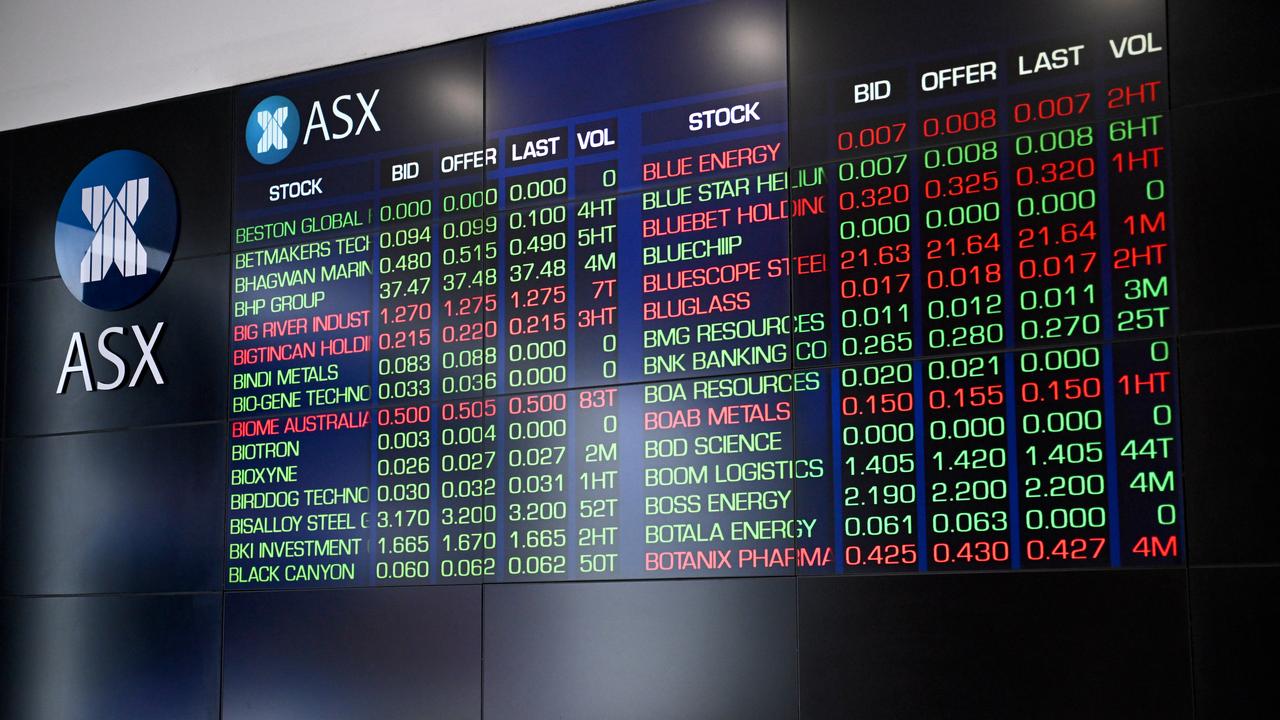
Market Performance - Australia's share market approached its intraday record high, with the S&P/ASX200 gaining 85.2 points (0.95%) to 9,076.1 and the All Ordinaries rising 81.1 points (0.94%) to 9,386.5 [1] - The top 200 index surpassed its previous intraday record of 9,054 following higher-than-expected September unemployment figures at 4.5%, suggesting a potential interest rate cut by the Reserve Bank of Australia (RBA) in November [2] Sector Performance - Real estate stocks surged by 2.3%, with Stockland increasing by 4% due to sales growth in master-planned community sales during the September quarter [3] - Financials rallied by 1.8%, driven by strong performance from the big four banks [3] Company Highlights - AMP Limited's assets under management grew by 3.6% to $159.5 billion, leading to an 11% increase in its stock price to $1.96, the highest since 2020 [4] - Macquarie's stock rose over 4% to $227.94 after selling a network of 50 data centers to Nvidia-backed Aligned Data Centers for $US40 billion (A$62 billion) [4] Raw Materials and Energy - The raw materials sector increased by 0.5%, with profit-taking observed in rare earths stocks like Iluka (-7.3%) and Lynas (-3.4%) [5] - Gold prices reached a record high above $US4,227 (A$6,507) per ounce, boosting gold miners like Northern Star and Evolution, which surged over 2% [5][6] Consumer Sector - Consumer discretionary stocks rose by 1%, supported by a 12th consecutive month of higher household spending, indicating economic strength [7] - The Australian dollar traded at 64.87 US cents, a slight decrease from 65.19, following the morning's jobs data [7]
花旗:贸易战后续走向如何?博弈论给出的答案
花旗· 2025-10-15 03:15
Investment Rating - The report does not explicitly provide an investment rating for the industry or companies involved Core Insights - The Game Theory framework indicates that the current tariff regime between the US and China represents a Nash equilibrium, where both sides are better off maintaining the status quo rather than escalating tariffs further [5][19][29] - China’s recent restrictions on rare earth elements (REE) have led to a significant increase in its projected losses, from $76 billion under the trade truce to $212 billion due to new tariffs [19][21] - The US is projected to gain $219 billion instead of $67 billion due to the new tariff regime, despite the loss of REE supply [20][21] Summary by Sections Trade War Dynamics - The report discusses the implications of the trade war, particularly focusing on the tariffs imposed by both the US and China, and how these tariffs affect bilateral trade [3][16] - The introduction of tariffs has led to an expected 18.1% decline in Chinese exports to the US and a 3.4% drop in US exports to China [37][41] Tariff Projections - The US is expected to collect $82.2 billion in tariffs from Chinese exports, while China will collect around $13.5 billion from US exports [41][46] - The current tariff regime of 30% on Chinese goods and 10% on US goods is seen as more favorable for China compared to previous higher tariffs [51][54] Rare Earth Elements (REE) - The report highlights the strategic importance of REE in the trade war, noting that China has a near-monopoly on REE processing, accounting for 99% of global production [54][70] - The US is currently reliant on China for 70% of its REE, but plans are in place to reduce this dependency by 2027 [70][81] Future Expectations - The report anticipates that China will likely impose retaliatory tariffs of 110% in response to the US tariffs, which would further escalate the trade war [26][27] - The potential for a renewed trade agreement at the upcoming APEC summit is contingent on China's actions regarding retaliatory tariffs [30][31]
金价频创历史新高黄金股走势强劲 澳交所黄金股IPO受热捧 女富豪莱因哈特大幅押注稀土股 投资价值迅速飙升
Sou Hu Cai Jing· 2025-10-14 10:31
Group 1: Gold Market Insights - The gold market is experiencing a significant bullish trend, with gold futures surpassing $4,100 per ounce, driven by inflation, interest rate cuts, geopolitical uncertainties, and market risk aversion [4][5] - In the ASX, 8 out of the top 10 companies with the highest annual growth are related to gold mining and exploration, indicating strong market interest in gold stocks [5] - Recent IPOs of gold mining companies in Australia have seen substantial oversubscription, reflecting high investor enthusiasm for gold stocks [6][7] Group 2: Rare Earth Investments - Gina Rinehart has significantly increased her investment in rare earth stocks, with her investment rising from AUD 800 million to AUD 3.4 billion over six months, benefiting from the surge in rare earth stock prices [9] - Rinehart's holdings in Lynas Rare Earths have increased by over AUD 500 million in value in the past seven weeks, reaching nearly AUD 1.7 billion [9] - Arafura Rare Earths, another company supported by Rinehart, saw its stock price rise by 25%, reaching a two-year high [9] Group 3: Employment Rankings - Seventeen Australian companies made it to the 2025 Forbes "World's Best Employers" list, an increase from 14 the previous year, with Atlassian ranking as the top employer in Australia [11][12] Group 4: Treasury Wine Estates Performance - Treasury Wine Estates has canceled its profit guidance for the 2026 fiscal year due to weak sales of Penfolds wine in China, leading to a 15.04% drop in its stock price [14][15] - The company has paused its AUD 200 million stock buyback plan, having only completed 15% of the buyback as of September 30 [15][17] Group 5: Australian Mining and Trade Relations - Australia is leveraging its key mineral resources in trade negotiations with the U.S. amid escalating trade tensions with China, which controls a significant portion of the global rare earth supply [18][19] - The Australian government is investing AUD 7 billion to encourage investment in refining and processing facilities for critical minerals, aiming to strengthen its position in global supply chains [19]

4 rare earth stocks to buy as Trump threatens China with tariffs
Finbold· 2025-10-13 10:59
Core Viewpoint - Rare earth stocks are experiencing a rally due to President Trump's threats of imposing tariffs on Chinese goods in response to China's stricter export controls [1][4]. Group 1: Stock Performance - Lynas Rare Earths has increased by over 2% [2] - USA Rare Earth and Mp Materials have risen by 23% and 11% in pre-market trading, respectively [2] - Australian Strategic Materials has seen its stock soar over 30% [2] - Chinese competitors like JL Mag Rare-Earth and China Northern Rare Earth Group have also experienced gains of more than 17% and 10%, respectively [6]. Group 2: Policy and Market Implications - Trump's warning of countermeasures against China is linked to the recent spike in miner shares [3] - Beijing's new export restrictions could disrupt supply chains for materials critical to U.S. defense, robotics, and electric vehicle industries [5] - The U.S. is heavily dependent on China for rare earth imports, with approximately 70% of these imports coming from China [7] - Potential 100% tariffs could increase costs for U.S. manufacturers and accelerate domestic mining and production efforts [7].

TACO交易已开启?亚太早盘金银双创新高 美股期货、加密货币齐反弹
Di Yi Cai Jing· 2025-10-13 03:05
Group 1: Market Reactions to Tariff Statements - Trump's recent comments suggest he may not follow through on threats to significantly raise tariffs on China, indicating a potential easing of trade tensions [1] - Goldman Sachs' chief economist predicts that the current tariffs will likely be extended beyond November 10, with both sides making limited concessions [1] Group 2: U.S. Stock Market Performance - U.S. stock index futures rebounded, with the S&P 500 futures up 0.88%, Nasdaq 100 futures up 1.14%, and Dow Jones futures up 0.7% [2] - Historical data shows that 7 out of 13 bull markets since World War II lasted into the fourth year, with the current bull market having risen 83% since its low in October 2022 [2] - Major Wall Street banks are set to release quarterly earnings, with S&P 500 companies expected to see an 8.8% year-over-year increase in overall earnings [2] Group 3: Cryptocurrency Market Trends - Bitcoin experienced a 4.2% increase within 24 hours, surpassing $115,000, while other cryptocurrencies like Ethereum and XRP also saw gains of over 10% [2] - The total market capitalization of cryptocurrencies rose to $3.85 trillion, reflecting a nearly 10% increase from two days prior [2] Group 4: Asia-Pacific Market Trends - The Asia-Pacific stock markets generally declined, with the MSCI Asia-Pacific index down 0.6% and the KOSPI index in South Korea dropping 2.35% [4] - Japanese markets were closed for a holiday, while the Nikkei index futures showed a slight recovery but remained below previous closing levels [4] Group 5: Australian Market Developments - The ASX/S&P 200 index fell 0.68%, but Australian rare earth stocks surged due to government plans to invest $780 million in mineral reserves [5] - The Hang Seng Index opened down 2.5%, with technology stocks experiencing significant declines [5] Group 6: Chinese Stock Market Insights - China's three major stock indices recorded declines, but domestic software stocks saw substantial gains, with some reaching their daily limit [6] - Analysts suggest that a low-interest-rate environment could foster a sustained technology bull market in China [6] Group 7: Currency Market Movements - The Chinese yuan's exchange rate indices showed an increase, with the CFETS index reaching 97.32, marking a 0.55% rise [7] Group 8: Precious Metals Performance - Gold prices reached a new high of $4,060 per ounce before retreating, with significant inflows into gold ETFs [8] - Silver prices approached historical highs due to market dynamics, with a notable squeeze in the London market leading to liquidity issues [9] Group 9: Platinum and Palladium Price Movements - Concerns over potential tariffs on precious metals have led to significant price increases for platinum and palladium, both rising over 2% [10]
TACO交易已开启?亚太早盘金银双创新高,美股期货、加密货币齐反弹
Di Yi Cai Jing· 2025-10-13 03:03
Group 1 - Risk assets are rebounding while safe-haven assets remain favored, with Trump's recent comments suggesting he may not follow through on increased tariffs against China [1] - Goldman Sachs' chief economist predicts that the current tariffs will likely be extended beyond November 10, with limited concessions from both sides [1] - U.S. stock index futures showed positive movement, with the S&P 500 futures up 0.88% and Nasdaq 100 futures up 1.14% [3] Group 2 - Historical data indicates that 7 out of 13 bull markets since World War II have continued into the fourth year, with an average cumulative gain of 88% [3] - The S&P 500 index has risen 83% since its low on October 12, 2022, with a market capitalization increase of approximately $28 trillion [3] - Major Wall Street banks are set to release quarterly earnings reports, with S&P 500 companies expected to see an 8.8% increase in overall earnings compared to the previous year [3] Group 3 - The Asia-Pacific stock market experienced widespread declines, with the MSCI Asia-Pacific index down 0.6% [6] - The KOSPI index in South Korea fell 2.35%, with significant drops in major stocks like SK Hynix and Samsung Electronics [6] - The Australian ASX/S&P 200 index decreased by 0.68%, although Australian rare earth stocks surged due to government investment plans [7] Group 4 - Gold prices reached a new high of $4,060 per ounce before retreating to $4,043, with SPDR Gold Trust holdings increasing by 3.72 tons [9] - Despite gold's rise, only a small percentage of private and institutional assets are allocated to gold, indicating limited structural bullish sentiment [9] - Silver prices approached historic highs due to market conditions, with significant liquidity issues reported in the London silver market [10] Group 5 - Concerns over potential tariffs on precious metals have led to increases in platinum and palladium prices, both rising over 2% [11]
投资逻辑「红宝书」之:稀土
Sou Hu Cai Jing· 2025-10-12 02:41
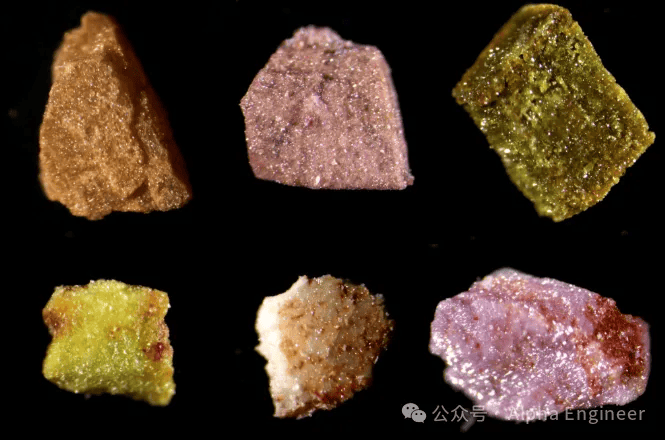
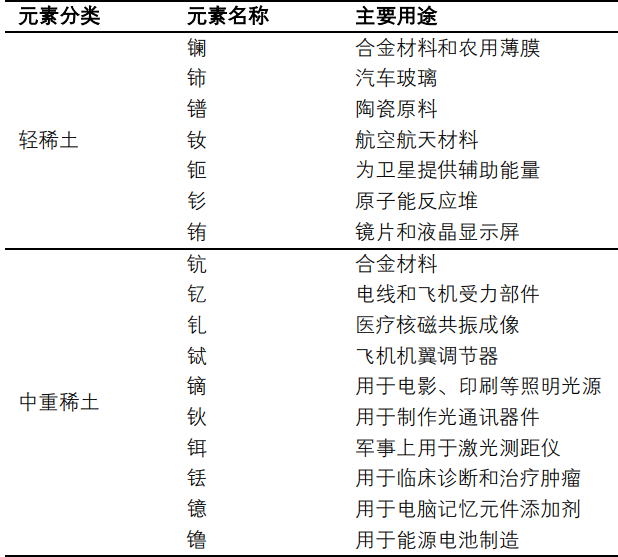
Core Investment Logic of Rare Earth Industry - Rare earths are referred to as "industrial vitamins" and play an indispensable role in high-end manufacturing and defense technology [3][12] - The demand for rare earth permanent magnets is expected to surge, particularly with humanoid robots being identified as a "killer application" [4] - China holds the largest reserves and production capacity of rare earths globally, positioning itself as a key player in the international supply chain [5][37] - Amid escalating US-China trade tensions, rare earths have become a strategic bargaining chip for China [6] - Research in the rare earth industry must consider both supply-demand dynamics and the political landscape between China and the US [7] Recent Policy Developments - The new export control policy introduced on October 9, 2025, is a significant catalyst for the rare earth sector, reshaping the global supply order [8] - The policy expands the range of controlled items and implements "long-arm jurisdiction" and key technology blockades, enhancing supply-side rigidity and controllability [9][56] - The planned increase of China's strategic rare earth reserves by 25% and the formation of a "dual oligopoly" structure in the industry further strengthen supply-side dynamics [9] Demand Dynamics - The strong contraction in supply coupled with sustained high-end demand is expected to drive the industry's prosperity and elevate price levels [10] - Rare earth elements are categorized into light and heavy rare earths, with applications ranging from automotive to aerospace [13][22] - The automotive sector, particularly electric vehicles, is projected to significantly boost rare earth demand, with an estimated usage of 2-4 kg of neodymium-iron-boron per vehicle [24] - Wind power generation and energy-efficient appliances are also key areas driving demand for rare earth permanent magnets [25][26] Global Resource Distribution - Global rare earth resources are concentrated in regions such as China, Southeast Asia, Australia, and parts of Africa and the Americas [28] - China has discovered 16 out of the 17 rare earth elements, establishing a "north light, south heavy" industrial pattern [30] - The US Geological Survey estimates that global rare earth reserves will reach approximately 90.88 million tons in 2024, with China accounting for 44 million tons, or 48.4% [32][37] China's Dominance in the Rare Earth Supply Chain - China is the only country with a complete rare earth industry chain, covering mining, refining, and application [33][36] - In 2024, China's rare earth production is projected to be 270,000 tons, representing 69% of global output [38] - China's midstream refining capacity accounts for 92.3% of the global total, while its production of high-value permanent magnets is about 90% of the world supply [41] Industry Structure and Market Dynamics - The Chinese rare earth industry has consolidated into a dual oligopoly structure, with Northern Rare Earths and China Rare Earths controlling 98% of the national mining quotas [42] - Despite efforts by Western countries to create a "de-China" rare earth supply chain, new overseas projects face significant challenges in achieving independence from Chinese supply [43][44] Policy Measures and Strategic Control - China has implemented a total quota system for rare earth mining since 2006, with growth rates for mining and refining indicators significantly slowing in 2024 [49] - The recent export control policy marks a new phase in China's management of rare earth resources, aiming to reshape the global supply chain and reinforce its strategic position [52][56] Key Companies in the Rare Earth Industry - China Rare Earths and Northern Rare Earths are leading players in the upstream resource and midstream refining sectors, with significant strategic advantages [57] - MP Materials and Lynas Rare Earths are key players outside China, focusing on resource extraction and refining, but face challenges in achieving a fully integrated supply chain [59]
贸易摩擦升级,再看稀土产业逻辑
Hu Xiu· 2025-10-12 00:25
Core Insights - Rare earth elements are essential in high-end manufacturing and defense technology, often referred to as "industrial vitamins" [1][9] - The demand for rare earth permanent magnets is expected to surge, particularly due to applications in humanoid robots [2][25] - China holds a critical position in the global supply chain of rare earths, leveraging its vast reserves and production capabilities amid escalating US-China trade tensions [3][4] Supply and Demand Dynamics - The recent export control policy implemented on October 9, 2025, is a significant catalyst for the rare earth sector, reshaping the global supply order [5] - China's strategic reserve of rare earths is set to increase by 25%, enhancing supply rigidity and control [6] - The combination of strong supply contraction and expanding high-end demand is projected to drive industry prosperity and elevate price levels [7] Industry Structure - The rare earth industry is characterized by a "North-South duopoly" structure, with major production concentrated in Baotou for light rare earths and Ganzhou for heavy rare earths [32][45] - China has completed the integration of its rare earth industry, with two major groups controlling 98% of the mining quotas, enhancing policy transmission efficiency and market regulation [47][57] Global Resource Distribution - As of 2024, global rare earth reserves are estimated at 90.88 million tons, with China accounting for 44 million tons, or 48.4% of the total [29][39] - The concentration of rare earth resources is primarily in China, Southeast Asia, Australia, Southern Africa, and the Americas [27] Technological and Competitive Advantages - China possesses a complete rare earth industry chain, from mining to refining to application, giving it unparalleled control in the global market [36][42] - Advanced separation and purification technologies, such as the low-temperature concentrated sulfuric acid roasting process, provide significant competitive advantages [43][44] Policy and Regulatory Environment - The new export control policy expands the range of controlled items and introduces "long-arm jurisdiction" principles, affecting global supply chains [65][70] - The policy aims to reshape the global rare earth supply chain and reinforce China's strategic dominance and pricing power in the sector [73][74] Key Companies in the Rare Earth Industry - **China Rare Earth**: Leading in heavy rare earths, with strategic advantages in resource security and industry pricing [76] - **Northern Rare Earth**: The largest supplier of light rare earths globally, with a complete industry chain and significant cost advantages [76] - **MP Materials**: The core of the US rare earth industry, moving towards vertical integration in magnet manufacturing [78] - **Lynas Rare Earths**: The largest rare earth separation producer outside China, crucial for Western efforts to establish an independent supply chain [78]


IMARC 2025全球矿业盛会本月将于悉尼盛大启幕 五大洲部长级阵容齐聚 聚焦能源转型与投资新机遇 悉尼公寓周租金中位数创新高
Sou Hu Cai Jing· 2025-10-10 11:42
Core Viewpoint - The IMARC 2025 conference, set to take place in Sydney from October 21 to 23, 2025, will redefine global mining dynamics and cooperation trends, focusing on energy transition and investment opportunities in the context of a reshaped supply chain [1][27]. Group 1: Conference Overview - IMARC 2025 is expected to attract over 10,000 participants from more than 120 countries, marking a record scale and international influence for the event [3]. - The conference will feature high-profile speakers, including New South Wales Premier Chris Minns and Australian Federal Ministers, who will discuss Australia's strategic position in critical minerals and clean energy [5][6]. Group 2: Global Participation - Ministers from five continents, including representatives from Saudi Arabia, New Zealand, and Peru, will engage in discussions on supply chain security and energy transition [12][13]. - The conference will also showcase national pavilions from various countries, highlighting key mineral projects and investment opportunities [13]. Group 3: Innovation and Technology - IMARC 2025 will emphasize the application of digitalization, AI, automation, and low-carbon technologies in mining, with a new "Innovation & Investment Alley" to showcase breakthrough solutions [17]. - Notable projects expected to be presented include lunar exploration initiatives and next-generation electric mining vehicles [17]. Group 4: Investment Opportunities - The Investor Program will facilitate discussions on capital restructuring in critical mineral supply chains and the impact of electric vehicles and energy storage on mining investments [24]. - A new "Investor Concierge Service" will provide tailored matchmaking to enhance capital and project connections [24]. Group 5: Australia-China Cooperation - The conference is seen as a pivotal platform for deepening Australia-China cooperation in resource development and green technology, with both countries having complementary strengths in critical minerals and renewable energy [26]. - Australia's "Future Made in Australia" initiative aims to establish a localized critical mineral processing and green manufacturing system, enhancing energy security and regional development [26].