ST易购

Search documents
Z深读丨从“爆红”到“长红”,首店经济点燃消费热潮
Sou Hu Cai Jing· 2025-07-09 07:36
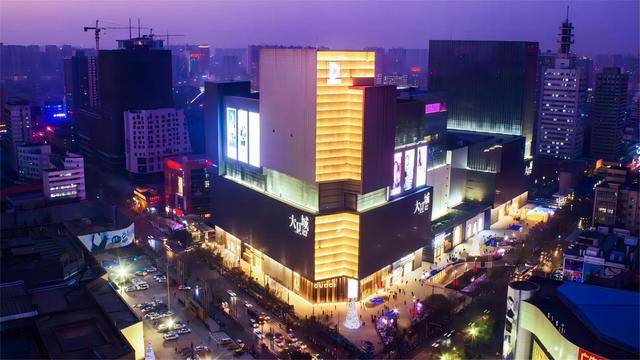
河南日报客户端记者 王冰珂 陈浩 7月8日,郑州丹尼斯大卫城六楼,在宇树科技智能机器人河南首个体验店,宇树Go2四足机器狗正进行 表演,倒立行走、自适应翻身、语音对话,吸引不少"粉丝"围观。 不远处,另一家科技类河南首店——大疆哈苏融合店正在装修,广告围挡精美吸睛。"这家店我们谈了 很久才引来,备受专业人士期待。"丹尼斯大卫城餐饮休憩部副总经理李森介绍。 "我们学习'胖东来式'服务理念,推动'极致服务'思维在政务服务一次办、城市管理精细化、消费环境品 质化等场景中落地应用,主动靠前了解企业需求,解决企业困难,以服务效能提升促进商贸产业提质升 级。"金水区杜岭街道党工委书记任拉拉说。 地处杜岭商圈的丹尼斯大卫城,横贯国际精品店、百货公司、精品超市、MALL及酒店五大商业业态, 是综合型、体验型购物休闲娱乐中心,目前在营商铺1000余家,其中全国首店1家、华中首店24家、河 南首店59家、郑州首店23家。 当天中午,湘菜品牌"费大厨"河南首店食客盈盈。"我们去年底开业,平均每月营收100万元左右。"该 店经理汪福生介绍,选择大卫城就是看中商圈的流量,时下正迎来暑期消费热潮。 不仅是餐饮,流量效应还体现在服装、休闲 ...

“政策+市场”双核驱动|助推哈尔滨消费能级跃升
Sou Hu Cai Jing· 2025-07-08 00:14
Group 1 - Harbin City is leveraging policies and market activation to stimulate consumption through cash subsidies and diverse consumption scenarios [1][3] - In the first half of 2025, Harbin issued 1.58 billion yuan in subsidies for the old-for-new consumption policy, driving sales of 12.09 billion yuan, showcasing the effectiveness of policy leverage [2][4] - The "1+3" policy system in Harbin includes a core action plan for promoting old-for-new consumption, supported by detailed implementation rules in automotive, home appliance, and home decoration sectors [4] Group 2 - The retail sector is experiencing increased vitality, with Metro opening its first front warehouse in Harbin, enhancing the convenience of community commerce [5][6] - The restaurant and accommodation sectors are also growing, with a 51.1% increase in platform orders and a 264.9% rise in newly registered accommodation entities [6] - Online consumption is becoming a significant driver, with events like e-commerce live streaming festivals expanding sales channels for local specialties [6] Group 3 - Harbin's consumption scene is diversifying, with the opening of a city duty-free shop and a new coffee shop that blends historical architecture with modern consumer experiences [7][8] - Innovative consumption formats are emerging in key commercial areas, enhancing high-end consumption supply while showcasing local characteristics [8] Group 4 - The government and market are collaborating to boost consumption, with initiatives like the "Five Entry Activities" bringing policies directly to communities and businesses [9] - Companies are actively engaging in lower-tier markets, with Haier and Suning launching promotional activities to tap into county-level consumption potential [9] - Harbin aims to continue optimizing the consumption environment and nurturing new business formats to enhance economic development [9]
市值缩水99%,这家企业黯然退市
第一财经· 2025-07-07 16:04
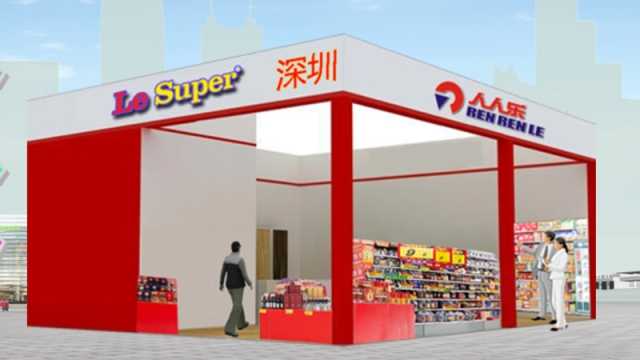
Core Viewpoint - The delisting of Renrenle (002336.SZ) is attributed to years of continuous losses and ineffective store closures, reflecting broader challenges faced by traditional retail companies in a changing market landscape [1][6]. Group 1: Company Overview - Renrenle was once a prominent player in the retail sector, achieving a peak market capitalization of approximately 136.68 billion yuan in January 2010 [5]. - The company has faced significant operational challenges due to the rise of e-commerce and increasing costs associated with physical retail, leading to a decline in profitability [6][9]. - As of 2024, Renrenle reported an operating revenue of 1.43 billion yuan, a year-on-year decrease of 49.86%, and a net loss of 17 million yuan [6]. Group 2: Industry Challenges - The retail sector is experiencing pressure from new business models such as membership stores and discount stores, which are attracting customers away from traditional supermarkets [10][12]. - Competitors like Walmart and Carrefour have also faced difficulties, with many stores closing or transitioning to new formats [9][10]. - The emergence of instant retail has intensified competition, with companies like Meituan and Alibaba engaging in aggressive pricing strategies, making it harder for traditional retailers to compete [13]. Group 3: Future Outlook - Analysts predict that more traditional retailers may face closures or the need to pivot to new business models in the coming year [13]. - The retail industry is expected to continue evolving, with a focus on supply chain efficiency, customer service, and leveraging technology such as AI to improve operations [13].


人人乐退市、家乐福资产遭甩卖:传统零售业洗牌潮要来了?|乐言商业
Di Yi Cai Jing· 2025-07-07 13:50
Core Viewpoint - The delisting of Renrenle reflects the severe challenges faced by the traditional retail industry and the competitive pressure brought by the rise of new business models [1] Group 1: Company Overview - Renrenle, once known as the "first private supermarket stock," has been delisted from the Shenzhen Stock Exchange, with its stock being terminated on July 4 [1] - The company has experienced continuous losses over the years, leading to store closures as a damage control measure, but this has not significantly improved its performance, ultimately resulting in its delisting [1][4] - As of the end of 2024, Renrenle had 32 stores, all of which were direct-operated, having opened 1 new store, closed 45, and transferred 15 stores [5] Group 2: Financial Performance - Renrenle's financial reports indicate a continuous decline, with net profits being negative for three consecutive fiscal years from 2021 to 2023, and a significant drop in revenue of 49.86% in 2024, amounting to 1.43 billion yuan [4] - The company's market capitalization has severely decreased, with its stock price at 0.36 yuan per share as of July 3, 2023, leading to a total market value of approximately 158 million yuan, a stark contrast to its peak market value of over 10 billion yuan [5] Group 3: Industry Challenges - The traditional retail sector is under significant pressure due to the rise of e-commerce and new retail formats such as membership stores and discount stores, which have diverted business from traditional retailers [3][6] - Competitors like Carrefour have also faced challenges, with many of their stores closing in the Chinese market, indicating a broader trend of decline in traditional retail [6] - The emergence of instant retail has intensified competition, with companies like Meituan and Alibaba engaging in aggressive pricing strategies, making it difficult for traditional retailers to compete [8] Group 4: Future Outlook - Industry experts predict that more traditional retailers may face store closures or the need to transform their business models in the coming year, as the competitive landscape continues to evolve [8] - The pressure on traditional retailers to adapt to new market conditions is increasing, with suggestions for them to learn from successful models in service, delivery, and supply chain management [8]
白电企业ESG报告: 高分者全 低分者简 供应链碳排放多缺失
Zhong Guo Zheng Quan Bao· 2025-07-06 20:27
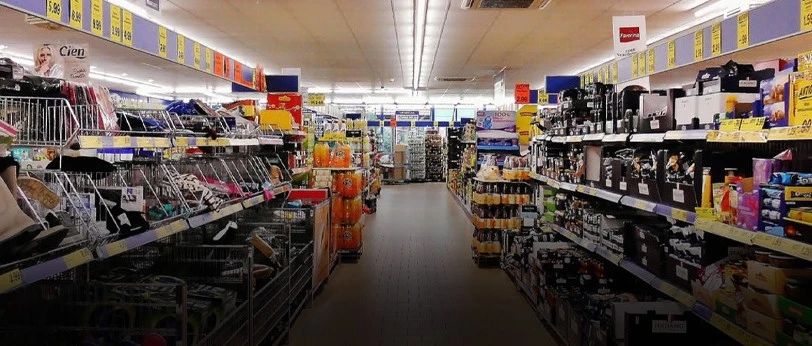
Core Insights - The white goods industry in China is experiencing a significant shift towards sustainability, driven by consumer preferences for energy-efficient and environmentally friendly products [1][7] - ESG (Environmental, Social, and Governance) reporting among listed white goods companies is improving, with an 80% disclosure rate, surpassing the A-share average of 45.7% [1][2] Group 1: ESG Reporting and Ratings - Among the 10 listed white goods companies, 8 have disclosed their 2024 ESG reports, indicating a strong commitment to transparency [1][2] - Companies like Haier, Hisense, and Midea have consistently received high ESG ratings (A or BBB), while some companies remain below CCC, highlighting disparities in ESG management practices [2][3] - The correlation between ESG disclosure levels and ratings suggests that comprehensive reporting enhances a company's ESG assessment [2][3] Group 2: Green Product Initiatives - The industry is witnessing a growing consumer demand for green products, with over 60% of consumers preferring energy-efficient appliances [7][8] - Companies are investing heavily in R&D for green innovations, with leading firms like Midea and Haier each spending over 10 billion yuan on R&D in 2024 [7][8] - The introduction of products with carbon footprint certifications is becoming more common, with Haier and Hisense reporting multiple certified models [8] Group 3: Waste Recycling and Management - The waste recycling system for old appliances is becoming more robust, with companies like Midea and Gree reporting significant volumes of recycled appliances [5][6] - Midea aims to recycle 50 million old appliances by 2030, while Haier and Gree have also set ambitious recycling targets [5][6] - The industry is enhancing its recycling capabilities through partnerships and improved collection services, contributing to resource reuse and environmental sustainability [4][6]






段永平:高手都在做减法
Sou Hu Cai Jing· 2025-07-06 15:34
Group 1 - The essence of entrepreneurship is to provide irreplaceable value, rather than merely pursuing business for profit [6][9] - Successful entrepreneurs often fall into two categories: those with no way out and those driven by ideals [10][12] - Key preparations for entrepreneurship include avoiding nepotism and accepting the possibility of failure [13][14] Group 2 - Corporate culture consists of three elements: mission, vision, and core values, which influence each other [15][16] - A strong corporate culture serves as a constraint beyond formal regulations, helping to avoid fundamental errors [18][19] - Evaluating corporate culture involves observing actions and words, focusing on whether decisions are based on ethics or profit [22][23] Group 3 - A good business model is characterized by differentiation, a strong competitive moat, and sustainable cash flow [26][39] - Differentiation is crucial for long-term success, as it allows companies to meet unique consumer needs [32][36] - Companies with strong products, like Moutai and Apple, have established robust business models [48] Group 4 - The distinction between doing the right thing and doing things right is essential for long-term success [49][50] - Establishing a "Stop Doing List" helps avoid wrong choices and emphasizes the importance of long-term thinking [51][54] - Successful execution involves learning from mistakes while maintaining control over the direction of the business [62][63] Group 5 - The concept of "本分" (being true to oneself) emphasizes doing what is right and maintaining integrity [67][78] - A calm and rational mindset, referred to as "平常心" (ordinary mind), is crucial for making sound decisions [80][84] - The philosophy of simplicity in business and life, encapsulated in "doing the right things and doing things right," reflects profound wisdom [89]



持续看好国内消费复苏潜力
Xiangcai Securities· 2025-07-06 13:53
Investment Rating - The industry investment rating is maintained at "Overweight" [3] Core Viewpoints - The report highlights the potential for domestic consumption recovery, supported by recent promotional activities and government policies [6][23] - The retail sector experienced a slight decline of 0.16% last week, underperforming the CSI 300 index by 1.7 percentage points [4][9] - The current Price-to-Earnings (PE) ratio for the retail sector is 37.92X, with a Price-to-Book (PB) ratio of 1.81X, indicating a slight decrease in valuation metrics [5][15][17] Industry Performance - The retail sector's performance over the past twelve months shows a relative return of -3% for one month and +1% for three months, with an absolute return of -1% for one month and +4% for three months [3][4] - Specific segments within the retail sector showed varied performance, with internet e-commerce up by 1.83% and professional chains up by 0.9% [4][10] Industry Dynamics - The "618" promotional event demonstrated significant consumer engagement, with platforms like JD.com and Tmall leading in sales growth across various categories [6][18][22] - Cross-border e-commerce also saw substantial growth, with orders on Alibaba's international platform increasing by 42% year-on-year [19] - The report notes that the government's subsidy policies have effectively stimulated consumption, particularly in electronics and home appliances [22][23] Investment Recommendations - The report suggests focusing on the ongoing potential for consumer spending, particularly in the digital and home appliance sectors, driven by trade-in policies [23] - It also recommends monitoring the performance of domestic beauty brands, which have gained consumer recognition and market share [23][7]
一代超市王,人人乐正式退市摘牌
36氪· 2025-07-06 09:37
Core Viewpoint - The article discusses the demise of Renrenle, a once-prominent retail chain in China, highlighting its continuous losses and eventual delisting from the stock market as a cautionary tale for the retail industry [4][5][21]. Group 1: Company Overview - Renrenle, founded in 1996, initially thrived by competing against major players like Carrefour and Walmart, achieving significant sales growth through strategic adjustments [7][8][9]. - The company went public in 2010, becoming the first private supermarket stock in China, with annual revenue exceeding 11.3 billion yuan [9]. - Following its IPO, Renrenle embarked on an aggressive expansion plan, aiming to open thousands of stores, but this led to financial strain and operational inefficiencies [9][10]. Group 2: Financial Decline - From 2011 to 2016, Renrenle's rapid expansion resulted in a drastic decline in revenue growth, with a drop from 30.5% to -11.7%, and negative cash flow for four consecutive years [10][11]. - By 2024, the company reported a net asset deficit of 404 million yuan, triggering its delisting process due to continuous financial losses [11][26]. - Despite attempts to sell assets and restructure, the company faced a staggering 5 billion yuan loss after accounting for non-recurring items [11]. Group 3: Operational Challenges - Renrenle's reliance on a traditional retail model became a liability as e-commerce grew, leading to issues like product homogenization and low operational efficiency [13]. - The company's diversification efforts into various retail formats were poorly executed, lacking strategic coherence and resulting in resource wastage [15]. - Management issues, including a family-controlled structure and high turnover among executives, contributed to a toxic corporate culture and operational mismanagement [18][19]. Group 4: Industry Context - Renrenle's struggles reflect broader challenges in the retail sector, with many traditional supermarkets facing closures and financial difficulties amid rising e-commerce competition [22][24]. - The article notes that in 2024, over 782 supermarket stores closed nationwide, indicating a significant shift in consumer behavior and market dynamics [22]. - The lessons from Renrenle's downfall emphasize the need for innovation and efficiency in retail, as traditional models become increasingly obsolete [27].
银行盯上活体牛?数字孪生竟让生物资产“开口说话”融资!
Sou Hu Cai Jing· 2025-07-04 11:01
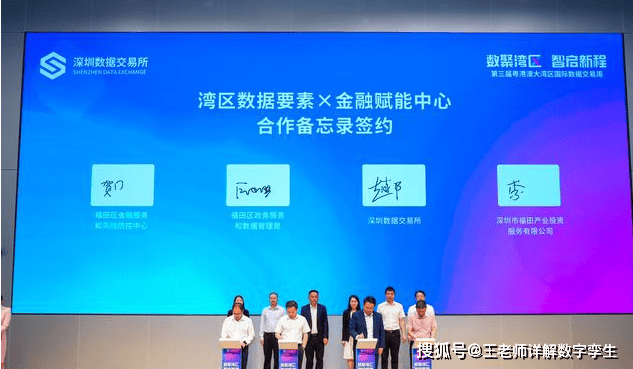
Group 1 - The core viewpoint is that data decision-making capabilities have become a new form of productivity for enterprises, as evidenced by various innovations in data utilization across industries [1][5] - Shenzhen's data factor reform policy is set to deepen in 2025, exploring innovations in data trading and revenue distribution mechanisms [1] - A Guizhou industrial company successfully secured 20 million financing by pledging a "production process data set," marking a national first [1] Group 2 - The challenges faced by enterprises have shifted from technical aspects to value aspects as data is recognized as an asset, necessitating the transformation of manufacturing line data into financing credit [3] - A cable company utilized a 5G digital twin factory to create virtual models of real-time production conditions, enabling data to be assessed as an asset and facilitating "data pledging" [3] - A retail giant improved inventory turnover by 20% by integrating AI forecasting with RPA replenishment systems, transforming fragmented data into dynamic distribution strategies [3] Group 3 - FunBI's three-dimensional visualization platform redefines the data decision-making process through three core capabilities: zero-code business decision driving, multi-source data spatiotemporal integration, and AI-enhanced decision insights [3][4] - A home appliance company reduced its inventory transfer period from 48 hours to 4 hours by utilizing FunBI to overlay national warehouse heat maps with sales forecasts [3] - In a smart water management scenario, FunBI integrated various data types to enhance flood response speed by 70% for a central city [3] Group 4 - FunBI's technology addresses specific pain points in various industries, such as predicting equipment failures in manufacturing and optimizing supply chain logistics in retail [4] - A dairy company deployed a digital twin to preemptively warn of equipment issues, avoiding a potential loss of 2.4 million yuan per downtime incident [4] - A bank utilized blockchain and spatial computing to create a full lifecycle twin of biological assets, enabling dynamic credit for livestock farmers based on growth data [4] Group 5 - As the marketization of data elements progresses, the competitive dimension for enterprises has shifted from merely having data to making rapid decisions [5] - The Shenzhen data exchange pilot is expected to facilitate the path from data aggregation to governance, assetization, and decision empowerment [5] - FunBI offers not just tools but also the shortest path from data to decision-making, representing the best annotation of "new quality productivity" in the digital twin era [5]
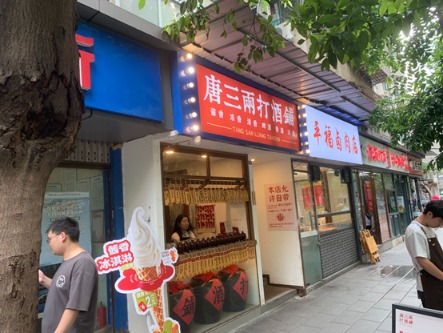
悄然兴起的“打酒铺”,有人说像散酒“拼多多”!新型散酒连锁正重塑酒饮消费逻辑?
Mei Ri Jing Ji Xin Wen· 2025-07-04 10:43
Core Viewpoint - The emergence of "Da Jiu Pu" (打酒铺) in China represents a shift in the liquor retail industry, focusing on a more authentic and consumer-friendly experience amidst a challenging market environment for traditional liquor sales [2][14][17] Industry Overview - The liquor retail industry is experiencing a downturn due to macroeconomic adjustments and policy impacts, leading to high inventory levels and price discrepancies [1][14] - The traditional high-end liquor market, driven by business banquets and gift-giving, is declining, prompting a search for more value-driven consumption [14][17] Company Insights - "Tang San Liang Da Jiu Pu" is a new chain founded by Li Menglong, aiming to redefine the perception of loose liquor sales by providing a clean, stylish environment and a focus on quality [3][4][6] - The store offers a variety of liquors, including white wine, beer, and yellow wine, with a unique selling proposition of free tasting and affordable pricing [4][10] Consumer Demographics - The customer base for "Da Jiu Pu" is notably diverse, with over 60% of patrons under 40 years old, and a nearly equal gender distribution, indicating a successful appeal to younger consumers [9][12] - The innovative retail model has attracted a wide range of customers, from young adults to older individuals, breaking traditional gender barriers in liquor consumption [9][12] Business Model and Strategy - The business model emphasizes high-quality, cost-effective products by eliminating unnecessary middlemen costs and focusing on direct consumer engagement [14][16] - "Da Jiu Pu" operates with a transparent pricing strategy, ensuring that consumers receive high-quality products at lower prices, which has resulted in a high conversion rate of first-time buyers [10][13] Market Potential - The "Da Jiu Pu" model is seen as a significant opportunity in the liquor market, with potential for rapid expansion similar to successful beverage brands in the past [15][17] - The founders believe that the current economic climate may actually increase demand for affordable liquor options, as consumers seek cost-effective ways to enjoy social drinking [14][17]