中国联通

Search documents
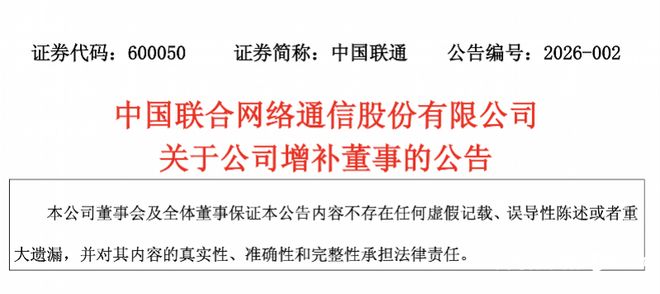
中国联通:增补董昕、杨宁为董事,唐国良辞任
Nan Fang Du Shi Bao· 2026-01-15 10:24
Group 1 - On January 15, China Unicom announced the approval of the appointment of Dong Xing and Yang Ning as directors during the 20th meeting of the 8th Board of Directors [1] - Dong Xing has been appointed as the Chairman and Party Secretary of China Unicom, previously holding various significant positions in the telecommunications sector, including roles at China Mobile [3][5] - Yang Ning, who has been appointed as a director, is the Deputy General Manager of China Guoxin Holdings and has held multiple positions in the State-owned Assets Supervision and Administration Commission [6] Group 2 - The announcement also included the resignation of Tang Guoliang from the Board of Directors due to work arrangements, effective January 14, 2026, with no impact on the board's operations [7] - China Guoxin, as a state-owned capital operation company, has increased its stake in China Unicom, indicating confidence in the company's development prospects [5] - China Unicom aims to focus on core areas such as "connectivity," "computing power," "services," and "security," while enhancing governance through a diverse board and deepening cooperation with strategic investors [5]


从“解决一件事”到“优化一类服务”,长沙联通以专业与诚意收获客户锦旗
Chang Sha Wan Bao· 2026-01-15 09:11
Core Viewpoint - The successful resolution of a customer complaint by Changsha Unicom highlights the company's commitment to high-quality service and proactive risk management [1][2] Group 1: Customer Complaint Handling - Changsha Unicom received a complaint from a customer regarding issues with a value-added service after switching to a new plan, which led to continued charges without access to benefits [1] - The company assigned an experienced specialist to address the complaint, who identified potential systemic issues affecting the entire province [1] - The resolution involved not only addressing the individual complaint but also implementing a comprehensive review and process improvement to prevent future occurrences [1] Group 2: Service Improvement and Strategy - The incident reflects Changsha Unicom's approach to viewing customer complaints as opportunities for service enhancement and management improvement [2] - The company aims to transition from a reactive complaint handling approach to a proactive risk prevention strategy [2] - Future initiatives will focus on enhancing predictive service capabilities and systematic error correction mechanisms, along with strengthening cross-departmental collaboration and data governance [2]

【数字资本论之二】资本“关系本质”的数字嬗变——从物化依附到数据异化
Jing Ji Guan Cha Wang· 2026-01-15 08:53
Core Concept - The essence of capital has transformed in the digital age, shifting from material assets to data, algorithms, and computing power, fundamentally altering the relationships between capital and labor, as well as platforms and users [1] Theoretical Foundation - Marx's analysis of capital emphasizes that it is not merely a physical entity but a dynamic social relationship, highlighting the historical and power dynamics inherent in capital [2][3] - Capital is defined as a social production relationship, which only becomes capital when integrated into specific social relations, such as capitalist private ownership [2] Upgrades in Capital Relationships in the Digital Age - The development of digital technology has led to a threefold upgrade in capital relationships regarding control scope, methods, and forms of exploitation [4] - The traditional labor-capital dichotomy has evolved into a more complex triadic structure involving platforms, algorithms, and users, where users often play dual roles as both consumers and producers [5][7] Algorithmic Control and Exploitation - Control over labor has transitioned from factory discipline to algorithmic dominance, enabling real-time monitoring and optimization of worker performance [8][9] - Exploitation has become more subtle, extending beyond labor time to encompass the collection and commodification of user behavior data [10] Data Monopoly and Digital Feudalism - The concentration of power and wealth among a few platform giants has led to a new social structure termed "digital feudalism," where 1% of entities control 85% of digital assets [11][12] - This data monopoly creates high market barriers and transforms economic power into a broader social control mechanism, influencing information flow and societal norms [13][14] China's Exploratory Practices - China is exploring governance practices aimed at reconstructing production relationships and addressing the alienation caused by digital capital relationships [15] - Innovations such as mixed-ownership reforms and data rights systems are being implemented to create a community of interests among stakeholders [15][16]
数量和合同额同比翻倍,复旦破解校企协同难题有何创新之道
Xin Lang Cai Jing· 2026-01-15 05:02
Core Insights - Fudan University has established a strong growth momentum in its collaborative laboratories, planning to build 40 new labs by 2025 with a total contract amount exceeding 600 million yuan, doubling the scale compared to 2024 [3] - The focus on artificial intelligence has led to the establishment of 20 new labs in this field, representing half of the total new labs for the year [3] Group 1: Challenges and Opportunities in University-Industry Collaboration - The natural conflict in university-industry collaboration arises from differing goals: companies seek short-term results while universities focus on long-term theoretical breakthroughs [4] - Collaborative laboratories provide a solution by combining academic exploration with industrial resources, allowing for the validation of research and injecting new technological vitality into companies [5] Group 2: Successful Case Studies - Shanxi Jinbo's collaboration with Fudan University led to the development of HPV protein and human-derived collagen materials, achieving over 1 billion yuan in annual sales, demonstrating a successful technology-to-market transition [5] - The Fudan University Intelligent Robotics Research Institute has established eight collaborative labs with leading companies, creating a symbiotic relationship that enhances data accumulation for AI model development [6] Group 3: Innovative Collaboration Models - The collaborative labs are not limited to traditional product development but focus on future innovations, such as sustainable materials and advanced battery technologies [8] - The integration of diverse stakeholders, including government and private entities, into the collaborative framework enhances resource sharing and risk management [11] Group 4: Mechanisms for Enhancing Collaboration - A one-stop service model has been introduced to streamline project approval processes, significantly reducing the time required for project initiation [11] - A competitive distribution mechanism for doctoral programs prioritizes collaboration with external enterprises, fostering a dual flow of talent between academia and industry [11] - A comprehensive evaluation and incentive system encourages researchers to engage in practical applications, shifting the focus from theoretical research to technology commercialization [11]

红利资产逆市活跃,现金流ETF嘉实(159221)聚焦内生增长能力的“现金牛”组合
Xin Lang Cai Jing· 2026-01-15 03:52
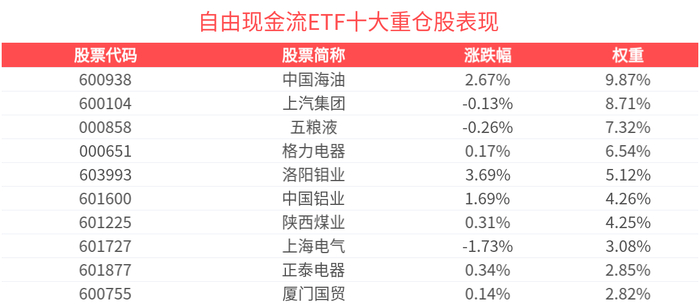
Group 1 - The core viewpoint of the articles highlights the active performance of the dividend assets in the A-share market, with a focus on the "new and old coexistence" structural feature, where technology and overseas expansion are central to the profit pattern reshaping [1] - The National Securities report indicates that the technology and overseas expansion sectors currently account for 36% of A-share profits, with expectations to rise to 60%, establishing a dual mainline in fundamentals [1] - The PPI stabilization is driving profit recovery in upstream resource products, with notable performance in globally priced commodities like non-ferrous metals [1] Group 2 - The top ten weighted stocks in the National Securities Free Cash Flow Index as of December 31, 2025, include China National Offshore Oil Corporation, SAIC Motor, Gree Electric Appliances, and others, collectively accounting for 51.95% of the index [2] - The cash flow ETF, Jia Shi (159221), closely tracks the National Securities Free Cash Flow Index, aiming to create a combination of profitability quality and dividend potential [2] - Investors can also access opportunities through the cash flow ETF Jia Shi's off-market connection (024574) [3]
成交额超1亿元,自由现金流ETF(159201)近5个交易日净流入1.61亿元
Xin Lang Cai Jing· 2026-01-15 02:22
Core Viewpoint - The Free Cash Flow ETF (159201) has shown significant performance, with a recent increase in net inflow and a notable rise in its net asset value, indicating strong investor interest and confidence in the underlying index [1][2]. Group 1: ETF Performance - As of January 14, the Free Cash Flow ETF has achieved a net value increase of 20.62% over the past six months [2]. - The ETF has recorded a maximum monthly return of 7% since its inception, with the longest streak of consecutive monthly gains being six months and a maximum cumulative increase of 22.69% [2]. - The ETF has a historical monthly profit percentage of 80% and a monthly profit probability of 79.8%, with a 100% probability of profit for a six-month holding period [2]. Group 2: Index Composition - The Free Cash Flow ETF closely tracks the National Index of Free Cash Flow, which reflects the price changes of listed companies with high and stable free cash flow levels [2]. - As of December 31, 2025, the top ten weighted stocks in the National Index of Free Cash Flow include China National Offshore Oil Corporation, SAIC Motor, Gree Electric Appliances, COSCO Shipping Holdings, China Aluminum, Baosteel, Great Wall Motors, Chint Group, China Unicom, and Weichai Power, collectively accounting for 51.95% of the index [2]. Group 3: Trading Activity - The Free Cash Flow ETF experienced a trading volume of 1.25 billion yuan with a turnover rate of 1.3% [1]. - Over the past five trading days, the ETF has attracted a total net inflow of 161 million yuan, with the latest net inflow recorded at 89.595 million yuan [1]. - The ETF's latest share count reached 7.634 billion shares, with a total asset size of 9.579 billion yuan, both marking all-time highs since its establishment [1].
中石油、中石化、中国电信、中国联通等央企负责人年薪多少?国资委披露
Feng Huang Wang Cai Jing· 2026-01-15 00:54
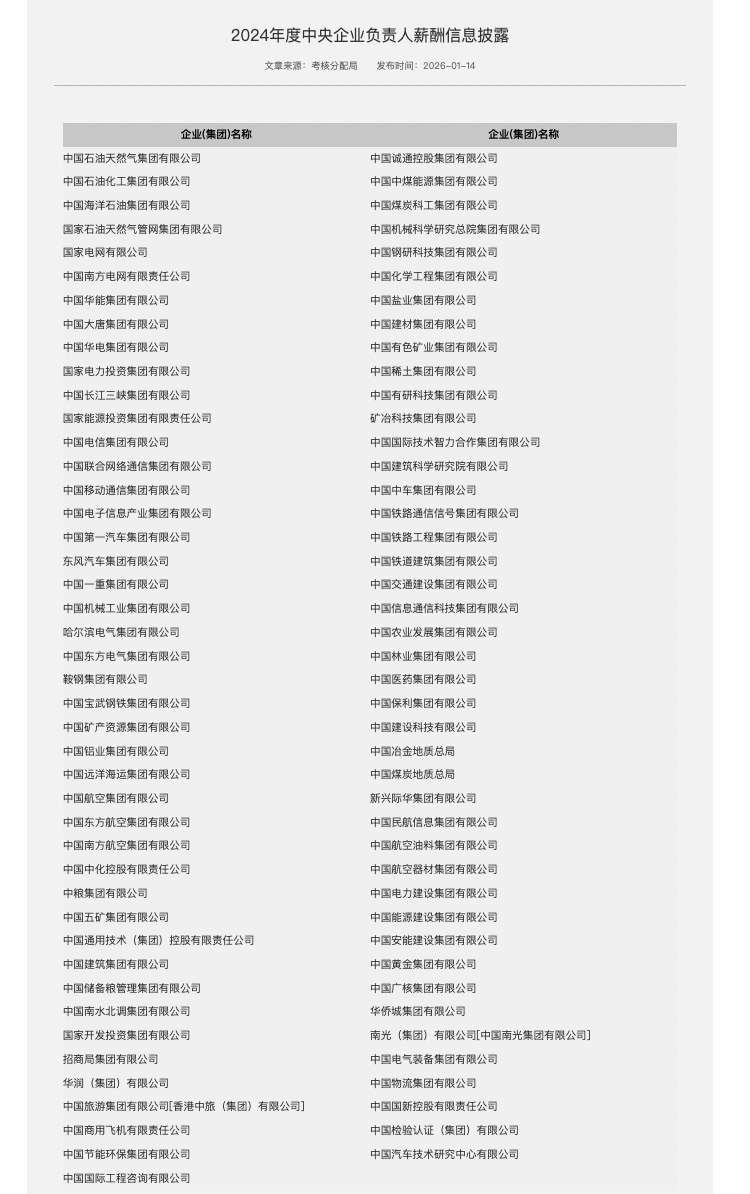
Group 1 - The State-owned Assets Supervision and Administration Commission (SASAC) disclosed the salary information of over 80 central enterprise leaders for the year 2024, emphasizing the importance of transparency in key areas and responding to public concerns [1] - The disclosure includes a list of major central enterprises, such as China National Petroleum Corporation, China Petroleum and Chemical Corporation, and State Grid Corporation of China, among others [3][4] Group 2 - Notable salaries among central enterprise leaders include: - Dai Houliang, Chairman of China National Petroleum, with an annual salary of 978,500 yuan - Wang Dongjin, Chairman of China National Offshore Oil Corporation, with an annual salary of 966,900 yuan - Ma Yongsheng, Chairman of China Petroleum and Chemical Corporation, with an annual salary of 935,500 yuan - Ke Ruiwen, Chairman of China Telecom, with an annual salary of 953,500 yuan - Chen Zhongyue, Chairman of China Unicom, with an annual salary of 914,900 yuan [4]




8点1氪丨携程回应因涉嫌垄断行为被立案调查;茶颜悦色没喝就“消失”半杯,内部人士回应;老干妈回应“味道变了”
3 6 Ke· 2026-01-15 00:06
Group 1 - Coca-Cola has abandoned the plan to sell Costa Coffee due to the private equity buyer's offer not meeting expectations, marking another setback for the company during its ownership of the struggling UK coffee chain [5] - In 2025, China's automotive industry is projected to produce and sell 34.53 million and 34.40 million vehicles respectively, representing year-on-year growth of 10.4% and 9.4%, maintaining its position as the world's largest automotive market for 17 consecutive years [6] - Ctrip has received a notification from the State Administration for Market Regulation regarding an investigation into alleged monopolistic behavior, and the company will cooperate fully with the regulatory authorities [1] Group 2 - JD Logistics plans to offer a cash option to Debon shareholders worth approximately RMB 3.797 billion as part of a proposal to withdraw Debon's shares from the Shanghai Stock Exchange [4] - Audi's global vehicle deliveries in 2025 are expected to be around 1.623 million units, a decrease of 2.9% compared to the previous year [8] - Baoneng Group's chairman has filed a complaint against local authorities regarding alleged illegal actions in a case involving Qoros Auto, claiming that the assets involved are significantly undervalued [9] Group 3 - Tesla has implemented new rules for its supercharging stations, including a more user-friendly fee structure for overstaying and an extended grace period for drivers [10] - Amazon plans to appeal a reduced antitrust fine in Italy, arguing that the accusations of market dominance are unfounded [10] - The U.S. government announced a 25% tariff on certain imported semiconductors and related products, effective from January 15 [18]


智算服务市场规模突破1300亿元
Jing Ji Ri Bao· 2026-01-14 22:10
Core Insights - The recent 2025 Computing Power Internet Conference marked a significant advancement in China's computing power development, entering a new phase of collaborative interconnectivity [1] - By December 2025, the scale of consumer-level users in China's computing power internet is expected to approach 10 million, with public intelligent computing service usage reaching 1.407 billion card hours and the market size for intelligent computing services exceeding 130 billion yuan [1] Group 1: Development and Infrastructure - The Ministry of Industry and Information Technology emphasizes the importance of accelerating the construction of computing power infrastructure as a crucial support for AI development [1][2] - Current challenges include a fragmented service landscape, uneven facility distribution, and significant differences in cluster architecture, necessitating a national-level push for coordinated computing power interconnectivity [2] - The establishment of a national computing power internet service platform, supported by key regions and telecom operators, aims to provide diverse public services and facilitate unified access to computing resources [3] Group 2: Technological Advancements - The computing power industry is undergoing rapid technological iteration, with standardization being essential for high-quality development and innovation [5][6] - There is a pressing need to enhance the efficiency of computing resource scheduling and address barriers in cross-domain data flow, which currently hinder the industry's growth [6] - Accelerating core technology breakthroughs and fostering collaborative innovation among academia, industry, and users is vital for building a secure and advanced computing power system [7] Group 3: Application and Integration - Significant breakthroughs have been achieved in computing power facility interconnectivity, with ongoing efforts to promote large-scale applications in enterprise-level scenarios such as scientific computing and industrial simulation [8] - Companies are leveraging deep digitalization of complex scenarios to enhance the infrastructure and application ecosystem for computing power [8] - The integration of computing power resources is being exemplified by companies like Dassault Systèmes, which is building a global cloud-based R&D platform to support high-intensity tasks [9] Group 4: Future Directions - The focus for 2023 is to transition from pilot breakthroughs to deeper application phases in computing power internet construction, emphasizing coordination, rule standardization, technological advancement, and scenario empowerment [9]
未满24岁都算低龄用户?联通办卡新规惹争议
Xin Lang Ke Ji· 2026-01-14 15:31
Group 1 - Ningxia Unicom has implemented a policy requiring users under 24 years old to present a stamped application form to obtain a mobile plan, citing concerns over potential fraud involving young users [1][2][3] - The initial definition of "under 24 years old" as "low-age users" has been updated to "ages 16-23," and the requirement for a stamped application form now only applies to users applying for a second phone number [2][3] - The customer service representative indicated that the majority of users in this age group are students who may lack social experience and legal awareness, making them vulnerable to scams [3] Group 2 - Experts have criticized the policy, arguing that labeling users under 24 as "low-age users" and imposing additional requirements constitutes age discrimination and lacks sufficient justification [4] - The expert noted that international practices typically only classify minors (under 18) as needing special protection, suggesting that the current approach is inconsistent with industry norms [4] - While the intention to prevent fraud is acknowledged, the expert argues that the measures taken may not be proportionate or necessary, as existing regulations already address most risk scenarios [4]