赛力斯

Search documents
【新能源周报】新能源汽车行业信息周报(2026年1月12日-1月18日)
乘联分会· 2026-01-20 13:41
Industry Information - The EU-China Chamber of Commerce welcomes the soft landing of the electric vehicle agreement between China and the EU, which is expected to boost market confidence and foster cooperation in the electric vehicle industry [7][9] - The second Intelligent Driving Competition concluded in Wenzhou, with the Star Epoch ES winning first place, followed by Momenta's solution-equipped vehicles [8] - Gotion High-Tech's Ganzhou base was recognized as an innovative small and medium-sized enterprise in Jiangxi, contributing to the upgrade of the new energy industry [9] - Honeycomb Energy launched the world's largest 80 kWh plug-in hybrid battery, featuring a 6% increase in energy density and rapid charging capabilities [10] - China aims to accelerate breakthroughs in solid-state batteries and advanced autonomous driving technologies in 2026 [11] - Shenzhen successfully implemented the first billing for electric vehicle discharging to the grid, with a user earning approximately 15 yuan for discharging 20 kWh [12] - A new sodium-sulfur battery developed by a Chinese research team achieved an energy density of 2021 Wh/kg, significantly surpassing existing lithium-ion batteries [14] - The Trump administration approved the export of NVIDIA's H200 chips to China, which may enhance AI capabilities in the region [15] - A meeting was held by three departments to address the issue of chaotic price wars in the electric vehicle industry, emphasizing the need for fair competition [19] - Honeycomb Energy introduced a new 3.5 generation pulse charging technology that reduces charging time by 25% without additional costs [20] - The State Council reported a 25.4% increase in exports of direct current charging piles and energy storage batteries to the EU by 2025 [21] - The city of Qingyuan in Guangdong will issue 1.8172 million yuan in charging subsidies by 2025 [22] - In December 2025, electric vehicle sales in Australia surpassed those of fuel vehicles for the first time, with a total of 35,058 electric vehicles sold [23] - The General Administration of Customs reported a 26.2% increase in lithium battery exports in 2025 [24] - The China Automobile Association released a report indicating that nearly 80% of the market share for self-developed NOA solutions in passenger vehicles is held by domestic manufacturers [25] - The Market Supervision Administration is establishing a national standardization committee for the recycling and utilization of power batteries [26] - The domestic power battery installation volume is projected to reach 769.7 GWh in 2025, a year-on-year increase of 40.4% [27] - The coverage rate of charging and swapping stations in Hanzhong County increased from 35% to 82% [28] - By the end of 2025, Guizhou Province plans to build over 250,000 charging facilities and 59 swapping stations [29] - Canada has reduced tariffs on electric vehicles imported from China to 6.1%, significantly benefiting Chinese manufacturers [30] - The first cross-province iron-sea intermodal transport of new energy vehicles through Xiamen Port took place in 2026 [31] - Huawei announced upgrades to its ADS 4.1 system, enhancing safety and user experience features [32] Policy Information - The Guangxi Energy Bureau issued guidelines for the construction and operation management of electric vehicle charging infrastructure [33] - Zhengzhou's Commerce Bureau announced a subsidy program for replacing old vehicles and appliances in 2026 [34] - The National Development and Reform Commission plans to introduce a comprehensive management approach for the recycling of power batteries [35]



昆仑万维周亚辉投资笔记:AI时代的Super App之战打响|甲子光年
Sou Hu Cai Jing· 2026-01-20 13:15
Core Viewpoint - The analysis suggests that Zhang Yiming will be the richest person in China and Asia in the next ten to twenty years due to his strong motivation, learning ability, execution power, and the resources of ByteDance [1]. Group 1: ByteDance's Strategic Position - ByteDance is expected to accelerate its international expansion, particularly with the launch of the Doubao phone and its entry into the automotive sector, aiming for a position in autonomous driving [2]. - The future of AI will see a significant reduction in the number of Super Apps, with only 3-4 likely to exceed 500 million monthly active users (MAU), compared to 10+ in the mobile internet era [2][3]. - The value of Super Apps in the AI era is projected to be several times greater than in the mobile internet era, with higher daily active users (DAU) to MAU ratios [2]. Group 2: Competitive Landscape - The competition for Super App dominance is intensifying, with Alibaba's Qwen positioned as a strong competitor to Doubao, marking a significant face-off between Zhang Yiming and Jack Ma [7]. - Other contenders for the Super App battle include Tencent, Meituan, Pinduoduo, JD.com, and Baidu, while smaller players like Xiaohongshu may struggle to compete effectively [7]. - The market for AI Super Apps is anticipated to be worth 1 trillion RMB, necessitating significant investment from companies with substantial cash reserves [7]. Group 3: Industry Insights - Huawei is unlikely to enter the Super App market due to its strategic focus on becoming a leading automotive group in China, while Tencent is seen as a stable player with a strong product matrix [8]. - The potential shift in user engagement from WeChat to Doubao could significantly alter the competitive dynamics in the app ecosystem, with Doubao's influence expected to grow rapidly [8].





博俊科技(300926) - 300926博俊科技投资者关系管理信息20260120
2026-01-20 10:06
Group 1: Company Overview - Jiangsu Bojun Industrial Technology Co., Ltd. was established in 2011, focusing on the R&D, design, production, and sales of automotive precision components and molds [2][3] - The company offers a one-stop solution for automotive parts, covering various systems such as steering, power, doors, sunroofs, electronics, interiors, and seating [3] - Bojun has established strategic partnerships with renowned manufacturers like Geely, Changan, BYD, and Magna [3] Group 2: Production Facilities - The company has multiple subsidiaries across China, including Chongqing, Chengdu, and Xi'an, with several established between 2017 and 2025 [3][4] - Current construction progress of factories is on schedule, with completed structures in Chongqing and ongoing developments in Kunshan and Jinhua [4] Group 3: Client Relationships and Revenue Projections - The company has secured a project with BAIC, expected to start production in 2026, supplying integrated die-casting products [4] - Major clients contributing to revenue growth in 2026 include Leap Motor, Xpeng, Geely, and Changan [5] - The top five clients are primarily OEMs, with specific details to be announced in future communications [4] Group 4: Product Supply and Innovations - Current production models supplied to Leap Motor include B01, LAFA5, B10, and C11, while Changan models include S7 and SL03 [5] - The company is collaborating with Shanghai Electric on customized robotics technology, aiming for cost savings and potential entry into humanoid robot components [5] - Key clients for integrated die-casting include Ideal Auto, Geely, and BYD [5]
14股今日获机构买入评级
Zheng Quan Shi Bao Wang· 2026-01-20 09:24
Group 1 - 14 stocks received buy ratings from institutions today, with notable upgrades for Saisir and first-time attention for Jianghuai Automobile and Yirui Technology [1] - The average performance of stocks with buy ratings declined by 0.42%, underperforming the Shanghai Composite Index, with five stocks experiencing price increases [1] - The top gainers included Nanshan Aluminum, Hunan YN, and Zhongsheng Pharmaceutical, with respective increases of 7.49%, 2.77%, and 1.80% [1] Group 2 - Among the stocks rated by institutions, eight released annual performance forecasts, with Hunan YN expecting a net profit growth of 114.81%, followed by Zhenyu Technology and Lintai New Materials with expected growths of 106.74% and 75.22% respectively [1] - The power equipment industry was the most favored, with four stocks including Keda and Hunan YN making the buy rating list, while the automotive and food & beverage sectors also attracted attention with three and two stocks respectively [1]

乘用车板块1月20日跌1.1%,海马汽车领跌,主力资金净流出18.68亿元
Zheng Xing Xing Ye Ri Bao· 2026-01-20 08:51
从资金流向上来看,当日乘用车板块主力资金净流出18.68亿元,游资资金净流入5.99亿元,散户资金净 流入12.7亿元。乘用车板块个股资金流向见下表: | 代码 | 名称 | 收盘价 | 涨跌幅 | 成交量(手) | 成交额(元) | | --- | --- | --- | --- | --- | --- | | 600104 | 上汽集团 | 15.28 | 0.20% | 78.49万 | 12.00亿 | | 000625 | 长安汽车 | 11.67 | -0.17% | 54.41万 | 6.34亿 | | 601633 | 长城汽车 | 21.79 | -0.91% | 14.79万 | 3.23 Z | | 601238 | 广汽集团 | 8.21 | -0.97% | - 29.61万 | 2.43亿 | | 002594 | 比亚迪 | 94.74 | -1.51% | 38.91万 | 36.99亿 | | 601127 | 赛力斯 | 119.18 | -1.63% | 18.68万 | 22.37亿 | | 600733 | 北汽蓝谷 | 8.35 | -2.91% | 142.34万 ...


汽车视点丨技术突围易,生态融入难?汽车隐形独角兽面临“成长的烦恼”
Xin Hua Cai Jing· 2026-01-20 08:23
Core Viewpoint - The article discusses the emergence of "invisible unicorns" in the Chinese automotive industry, highlighting their role in driving innovation and addressing structural growth challenges in a competitive market environment [1][2]. Industry Overview - The Chinese automotive industry is transitioning from an incremental market to a stock competition phase, with production expected to reach over 34 million vehicles by 2025, maintaining a range of 35 to 37 million in the following five years [2]. - Structural growth indicates a shift in focus from scale expansion to value creation and technological breakthroughs, providing a fertile ground for invisible unicorns to develop [2]. Technological Advancements - The penetration rate of new energy vehicles is projected to rise from 60% to 80% by 2030, with continuous iterations in key technologies like intelligent driving and smart cockpits injecting strong momentum into the industry [3]. - Despite a slight decrease in the number of automotive tech unicorns globally, their total valuation is expected to grow by 5.89% to 1.48 trillion yuan by 2025, indicating that technological value is becoming a key support for enterprise valuation [3]. Consumer Demand - Younger consumers prioritize new energy and smart features when purchasing vehicles, while older demographics may become significant users of intelligent vehicles due to advancements in smart driving technology [3]. Globalization Impact - China's automotive exports are anticipated to reach 8 to 9 million vehicles in the next five years, accounting for 30% of total production, thus providing new growth opportunities [3]. Unicorn Enterprises' Performance - Since 2018, 120 companies have been recognized as automotive invisible unicorns, with 40 establishing partnerships with major manufacturers, 3 becoming unicorns, and 4 going public [4]. - The total valuation of China's invisible unicorns is projected to exceed 2.2 trillion yuan by 2025, with an average valuation of 440 million yuan, and 34 companies in the automotive sector [4]. Challenges Faced - Nearly 40% of invisible unicorns are currently operating at a loss, with over 35% having profits of only 10 million yuan or less, indicating weak overall profitability [5]. - The automotive industry faces systemic challenges from macroeconomic conditions, industry ecology, and globalization, with over 50% of upstream companies expected to incur losses by mid-2025 [5][6]. Recommendations for Overcoming Challenges - Policy recommendations include enhancing innovation procurement and financial support, establishing a credit risk compensation mechanism, and creating a comprehensive financial support system for unicorns [10]. - The industry ecosystem needs to be restructured to foster open collaboration and innovation networks, with leading companies taking the initiative to build open innovation platforms [11]. - Unicorn enterprises should enhance their strategic resilience, focusing on sustainable profit models and adapting organizational structures and market strategies to navigate global expansion effectively [12].
研报掘金丨国海证券:赛力斯2026年新车周期可期,上调至“买入”评级
Ge Long Hui A P P· 2026-01-20 06:09
Core Viewpoint - The report from Guohai Securities highlights that Seres is expected to benefit from the increased delivery of the AITO Wenjie vehicles, projecting a monthly sales breakthrough of 60,000 units in December 2025 and an annual sales target of 430,000 units for the year, representing a year-on-year growth of 10.5% [1] Group 1 - The new SUV model M6 is anticipated to continue the trend of successful sales, driving the company's sales to new heights in 2026 [1] - On December 9, 2025, during the Hongmeng Zhixing "Together" event, the company announced the launch of the new SUV M6 for 2026, which is expected to replicate the success of previous models [1] - The company has successfully positioned its high-end models, such as M9 and M8, to target high-net-worth customers, enhancing its brand appeal [1] Group 2 - The company is expected to upgrade other models, which will likely boost both sales and profits [1] - Given the anticipated success of new and upgraded models in 2026, the rating for the company has been upgraded to "Buy" [1]

AI 时代的 Super App 之战打响丨周亚辉投资笔记 AI 时代系列之二
Xin Lang Cai Jing· 2026-01-20 03:46
Core Insights - The article posits that Zhang Yiming will likely be the richest person in China and Asia in the next ten to twenty years due to his strong motivation, learning ability, execution power, and the resources of ByteDance [3][4][5] - The number of Super Apps in the AI era is expected to drastically decrease, with only 3-4 apps likely to exceed 500 million MAU, compared to 10 in the mobile internet era [4][14] - The value of Super Apps will significantly increase in the AI era, with DAU/MAU ratios expected to rise, leading to higher user engagement and commercial returns [4][14] Company Strategies - ByteDance is expanding into various sectors, including mobile phones, automotive manufacturing, and potentially space computing, indicating a broad strategic vision [3][4][5] - The resolution of TikTok's issues is anticipated to accelerate ByteDance's international expansion, particularly with its new product, Doubao [4][12] - Alibaba's Qwen is positioned to compete directly with Doubao, with a focus on becoming a Super App that integrates various services [6][17] Market Dynamics - The competition for AI Native Super Apps is heating up, with major players like Tencent, Meituan, Pinduoduo, JD.com, and Baidu vying for a position [17][18] - The article suggests that Meituan's exit from the community group buying market is a strategic move to focus on AI and Super App development [18] - The potential market for AI Super Apps is projected to be worth 1 trillion RMB, emphasizing the urgency for companies to launch their AI applications [18] Competitive Landscape - Tencent is described as a stable player with a strong product matrix, while ByteDance's Doubao is gaining traction among younger users, potentially challenging WeChat's dominance [19][20] - The article highlights that the competition between Zhang Yiming and Jack Ma represents a significant moment in the evolution of Super Apps in China [17][19] - Huawei is not expected to enter the Super App market, focusing instead on becoming a leading automotive group in China [19]
崔东树:国补退坡叠加消费升级 2026中国汽车消费进入高端化周期
智通财经网· 2026-01-20 03:27
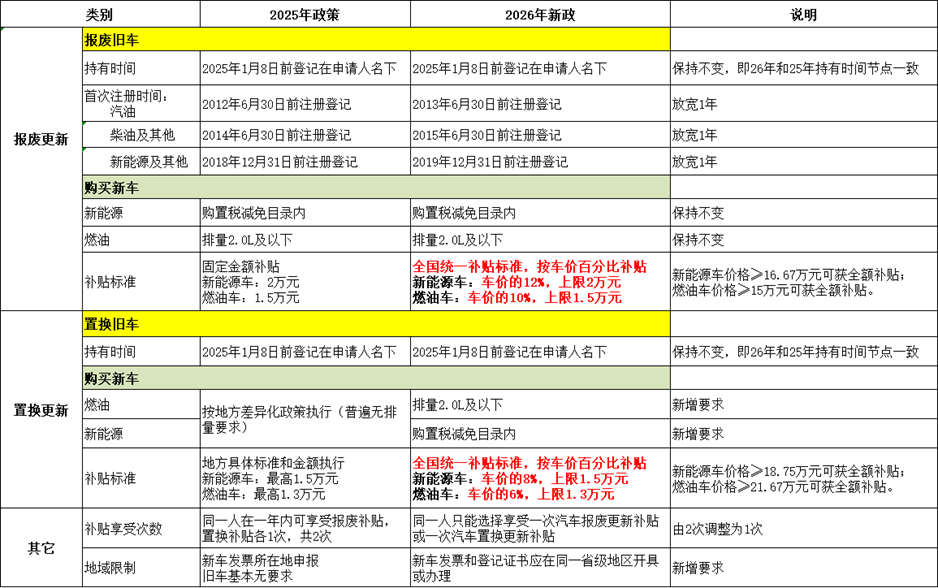
Core Viewpoint - The Chinese automotive market is shifting from a "price war" to a "value competition" as policies encourage technological upgrades and quality consumption, particularly with the implementation of new subsidy policies in 2026 [1][3][12] Policy Changes - The new policies for 2026 will include a shift from universal subsidies to percentage-based subsidies based on vehicle prices, with a maximum of 20,000 yuan for new energy vehicles priced above 166,700 yuan and 15,000 yuan for fuel vehicles priced at or above 150,000 yuan [2] - The holding time for scrapped vehicles remains unchanged, while the first registration date for vehicles eligible for scrapping has been relaxed by one year [2] - The number of vehicles eligible for subsidies is expected to decrease, indicating a move away from price-based competition [2] Market Trends - The market is showing a trend of "volume decline and price increase," with the average retail price of passenger cars rising from 151,000 yuan in 2019 to 183,000 yuan in 2023, and expected to stabilize around 184,000 yuan in 2024 [4] - Over 63% of consumers are setting their budget for the next vehicle at 300,000 yuan or more, indicating a shift towards higher-value purchases [4] Consumer Behavior - Consumers are increasingly focused on tangible luxury experiences rather than brand prestige, leading to a decline in demand for low-priced "pseudo-luxury" models [5][10] - The emphasis is shifting towards practical features such as comfort, driving assistance, and overall quality, with brands like GAC Toyota responding to these demands by enhancing their product offerings [6][11] Competitive Landscape - Traditional luxury brands are adjusting their strategies to focus on user needs rather than just selling brand prestige, with features like heated and ventilated seats becoming standard [10] - New energy vehicle brands are also learning from traditional automakers, focusing on core functionalities and improving user experience [11] - The automotive industry is entering a new competitive cycle centered on long-term user value, with companies that understand user needs and provide solid experiences likely to succeed [3][12]
AI 时代的 Super App 之战打响丨周亚辉投资笔记 AI 时代系列之二
晚点LatePost· 2026-01-20 03:26
Core Viewpoint - The article posits that ByteDance's Zhang Yiming is likely to become the richest person in China over the next decade due to his strong motivation, learning ability, execution power, and the resources of ByteDance, which are expected to drive significant growth in various sectors, including mobile, automotive, and space computing [4][5]. Industry Insights - In the mobile internet era, there were 10 apps in China with over 500 million MAU, but in the AI era, it is anticipated that only 3-4 Super Apps will achieve this milestone [4][5]. - The DAU/MAU ratio is expected to increase, with 500 million MAU likely corresponding to approximately 350 million DAU, enhancing the value of Super Apps compared to the mobile internet era [5]. - The article emphasizes that the value of Super Apps is greater than that of leading robotics companies, as Super Apps control entry points and can generate excess commercial returns [6]. Competitive Landscape - The competition for AI Native Super Apps is intensifying, with Alibaba's Qwen and ByteDance's Doubao positioned as key players. The article highlights the strategic moves of Alibaba to prevent Meituan from launching a competing Super App [8][9]. - Other companies like Tencent, Meituan, Pinduoduo, JD, and Baidu are also seen as potential contenders in the Super App battle, while smaller players may struggle to compete [9][10]. - The article suggests that Meituan's exit from community group buying is part of a broader AI strategy to position itself for the Super App market [10][11]. Future Projections - The article predicts that the AI Native Super App market could reach a revenue potential of 1 trillion RMB, urging companies to act quickly to launch their AI applications [11]. - Huawei is positioned to dominate the automotive sector but is unlikely to enter the Super App market due to its strategic focus on other areas [12]. - Tencent is recognized for its stability and product matrix, with the potential to maintain a significant role in the AI Native Super App landscape, although ByteDance's Doubao is gaining influence among younger users [12].