光迅科技

Search documents
光通信模块板块走弱 光库科技下跌4.79%
Mei Ri Jing Ji Xin Wen· 2025-09-30 02:52
Core Viewpoint - The optical communication module sector experienced a decline, with a notable drop of 1.52% on September 30, indicating a bearish trend in the industry [1] Company Performance - Guangxu Technology saw a significant decrease of 4.79% in its stock price [1] - Changfei Fiber's stock fell by 4.73% [1] - NewEase's stock declined by 4.62% [1] - Huagong Technology and Guangxun Technology both experienced declines of over 2% [1] - Changxin Bochuang also reported a drop of over 2% [1]



人工智能月度跟踪:CPO、CPC有望开启新一轮成长周期-20250929
Shanghai Aijian Securities· 2025-09-29 06:42
Investment Rating - The report rates the electronic industry as "Outperform the Market" [1][30]. Core Insights - The CPO (Co-Packaged Optics) and CPC (Co-Packaged Copper) technologies are expected to initiate a new growth cycle in the industry, driven by the exponential increase in AI model parameters and computational demands [5][11]. - The market for CPO is projected to grow significantly, with global port sales expected to reach 4.5 million units by 2027 and market revenue anticipated to hit $2.6 billion by 2033, reflecting a CAGR of 46% from 2022 to 2033 [15][17]. - The CPC technology is positioned to enhance general data center development, providing a reliable data transmission solution for AI computing clusters and short-distance interconnects [20][24]. Summary by Sections CPO Technology - CPO is a new optical integration technology that combines network switching chips and optical modules in a single package, enhancing data transmission speed and reducing losses [11][13]. - The technology is expected to enter commercial use between 2024 and 2025, with significant growth anticipated in the following years [17]. - Major companies like Intel, Marvell, and Broadcom are heavily investing in CPO technology, achieving notable advancements [18][19]. CPC Technology - CPC consists of connector modules, chip substrates, signal transmission layers, and shielding layers, designed to reduce signal transmission losses and improve performance [20]. - It is particularly suited for data center interconnects under 2 kilometers, providing flexibility in network architecture [22]. - CPC technology is complementary to CPO, focusing on cost-effectiveness and rapid deployment for general data centers [21]. Market Dynamics - The report highlights the increasing demand for data transmission solutions in data centers, driven by the rise of AI and high-performance computing [5][8]. - Traditional optical modules are becoming less efficient in high-frequency transmission scenarios, prompting a shift towards integrated solutions like CPO and CPC [8][11].
CPO概念震荡反弹 源杰科技涨超10%
Xin Lang Cai Jing· 2025-09-29 02:43
Core Viewpoint - The CPO concept experienced fluctuations but rebounded during trading, with several companies showing significant gains, particularly Yuanjie Technology, which rose over 10% [1] Company Performance - Yuanjie Technology saw an increase of more than 10% in its stock price [1] - Other companies that performed well include Huagong Technology, Xinyi Sheng, Guangku Technology, Zhongji Xuchuang, and Guangxun Technology, all of which had notable gains [1]

武汉4家上市公司冲刺“千亿俱乐部”
Chang Jiang Ri Bao· 2025-09-29 00:37
Group 1 - The core viewpoint is that the AI market is driving explosive growth in the optical communication industry in Wuhan, with multiple companies reaching significant market capitalizations [2][4]. - Wuhan's four AI concept stocks, including Huagong Technology, Changfei Fiber, Guangxun Technology, and Gaode Infrared, are collectively striving to join the "billion-dollar club" [1][2]. - Huagong Technology's market value surged from 687 billion to over 1 trillion in just one month, indicating a rapid upward trend [2][4]. Group 2 - Changfei Fiber, as the first "A+H" listed company in China's fiber optic cable industry, has launched the "AI-2030" strategy to pave the way for the AI era [2]. - Guangxun Technology reached a peak market value of 609 billion, focusing on optical module production, while its parent company, China Information Communication Technology Group, has multiple subsidiaries contributing to the AI sector [2][3]. - The total market capitalization of 47 A-share listed companies in the Wuhan Optical Valley reached 703.23 billion, reflecting an 85.4% year-on-year growth [3][4]. Group 3 - The rise of AI enterprises in Wuhan signifies the region's industrial strength and suggests that more companies will soon achieve billion-dollar valuations [4][5]. - The current market capitalization of the technology sector in A-shares exceeds 25% of the total market, significantly higher than that of banking, non-bank financials, and real estate [4]. - The city of Wuhan is entering a new phase of competition among billion-dollar market cap companies, with plans to enhance its technology financial center by 2027 [5].

阿里云栖大会观展反馈
2025-09-28 14:57
Summary of Key Points from Conference Call Records Industry Overview - The conference call primarily discusses the developments in the domestic computing power industry, particularly focusing on AI hardware and data center infrastructure in China, with significant contributions from companies like Alibaba, Huawei, and ByteDance [1][2][3]. Core Insights and Arguments - **Domestic Computing Power Commercialization**: A commercial closed loop for domestic computing power is expected to form and strengthen by October 2024, driven by advancements in AI models and breakthroughs in chip technology from companies like Huawei and Cambricon [1][3]. - **Data Center Growth**: Alibaba's data center capacity is projected to reach 10 times its 2022 levels by 2032, with annual additions of 6-7 GW [1][4]. - **AI Hardware Ecosystem**: The domestic AI hardware ecosystem is rapidly developing, with companies like ZTE and ByteDance entering the chip market, indicating strong demand for training and inference models [1][6]. - **Token Consumption**: ByteDance's token consumption has surpassed that of Google, highlighting a significant increase in demand for AI applications [4]. - **Profitability Improvements**: Companies in the domestic computing power sector, such as Huafeng and Ruijie Networks, have shown notable improvements in gross and net profit margins [22]. Important Developments - **Technological Innovations**: Alibaba's new Cube 5.0 data center design emphasizes rapid delivery and compatibility with future technologies, including both air and liquid cooling systems [16][17]. - **Interconnect Protocols**: The introduction of open interconnect protocols by Alibaba, Huawei, and Haiguang facilitates better integration among GPU and switch chip companies, enhancing overall system efficiency [5][9]. - **Liquid Cooling Demand**: There is a significant increase in demand for liquid cooling technologies, with many companies participating in various cooling components [11][26]. - **AI Server Cooling Technologies**: New materials like liquid metal and graphene are being explored for AI server cooling, with Alibaba adopting liquid metal solutions to manage high power outputs [18]. Additional Noteworthy Content - **Market Trends**: The global computing power market has experienced significant fluctuations, with domestic computing power previously facing challenges such as limited capital expenditure and restrictions on high-quality model training due to chip bans [2]. - **Future Infrastructure Needs**: The demand for data center infrastructure is expected to rise, with Alibaba planning to increase its energy consumption tenfold by 2032, indicating a positive outlook for the industry [19][20]. - **Emerging Competitors**: The domestic computing power landscape is evolving, with companies developing their own GPUs and launching new products, reflecting a shift towards self-sufficiency in technology [21]. This summary encapsulates the key points discussed in the conference call, highlighting the advancements and trends within the domestic computing power industry and the strategic moves by leading companies.

追光,阿里云栖&产业链更新
2025-09-28 14:57
Summary of Key Points from Conference Call Industry Overview - The conference call primarily discusses the **cloud computing** and **optical communication** industries, with a focus on **Alibaba Cloud** and its developments in the context of AI and data center operations [1][3][4]. Core Insights and Arguments - **Alibaba Cloud's Growth Projections**: - Expected data center operational energy consumption to increase by **10 times** by **2032** [1]. - Anticipated cloud computing revenue to reach between **300 billion to 500 billion RMB** over the next five years, with an annual growth rate of approximately **20% to 30%** [1][3]. - Significant capital expenditures are expected to drive domestic cloud service providers (CSPs) to accelerate AI investments and strategic layouts [1][4]. - **Opportunities in Domestic Computing Chip Market**: - Geopolitical factors are creating development opportunities in the domestic computing chip market, with a focus on **domestic computing chips** becoming a crucial direction [1][5]. - The domestic optical module market has achieved nearly **100% localization**, with increasing domestic production rates for switches, exemplified by Alibaba's **102.4T fully domestic switch** [1][5]. - **Optical Communication Market Dynamics**: - The optical communication industry is expected to see a doubling in data center share, driven by the continuous growth of GPU scale [2]. - Strong performance is anticipated from secondary companies in the optical communication sector, with optimism for 2026 performance based on material locking situations [6]. - **Technological Advancements**: - Alibaba Cloud showcased the **Panshi 128-node architecture** and plans to expand to **HPM 8.0**, aiming for a network of **100,000 cards** [1][8][9]. - The introduction of **400G and 800G ports** is set to provide a solid foundation for future expansions [9]. - **Market Demand for Optical Chips**: - The demand for optical chips is expected to remain strong from **late 2025 to 2027**, with companies like **Broadcom** and **Lumentum** adjusting prices upward due to high demand [13]. - Significant increases in delivery volumes for **800G** and **1.67T** products are anticipated, with **旭创** expected to deliver **20 million** units of **800G** by 2026 [13]. Other Important Insights - **Investment Opportunities**: - The optical communication sector is highlighted as a key area for investment, particularly in companies with strong performance and growth potential, such as **旭创**, **新易盛**, and **剑桥** [16][17]. - **Challenges in Material Supply**: - The supply of **indium phosphide substrates** is under pressure due to rising global demand, affecting major suppliers [15]. - **Future of DSP Market**: - The demand for **DSP** is projected to grow, with expectations that **博通** will exceed **5 million** units in deliveries by 2026 [14]. This summary encapsulates the critical insights and projections discussed during the conference call, providing a comprehensive overview of the current state and future outlook of the cloud computing and optical communication industries.
摩尔线程上市!国产算力双雄共振!华为海思迎超级风口,算力国产替代的浪潮已不可阻挡!
Xin Lang Cai Jing· 2025-09-28 12:28
Core Insights - The article highlights the significant growth and opportunities within the semiconductor industry, particularly focusing on companies that are integral to the Huawei HiSilicon ecosystem, which is experiencing a surge in demand for advanced chips and related technologies. Group 1: Key Companies and Their Roles - Longi Technology (600584) is a global leader in packaging and testing, uniquely handling the 4nm Chiplet packaging for Huawei's Kirin X90 chip, which enhances chip performance by three times. The new automotive-grade chip factory is expected to contribute 5 billion yuan in annual revenue, solidifying its dominance in advanced packaging [1]. - Tuo Wei Information (002261) is a major player in the AI server market with over 30% market share, deeply involved in Huawei's AI innovation centers across key sectors. The company has server orders booked until Q1 2026, indicating strong revenue visibility [2]. - Shenzhen Huaqiang (000062) serves as a key distributor for Huawei's entire product line, with a 120% year-on-year increase in sales of the Ascend 910B chip. The company is positioned to benefit from the explosive growth in Huawei's chip shipments [3]. - Chipone Technology (688521) provides essential IP cores for Huawei's Kirin and Ascend AI chips, contributing an estimated 1.5 billion yuan to revenue in 2025, which is over 30% of its total revenue [4]. - Tongfu Microelectronics (002156) is a primary packaging and testing provider for Ascend chips, with a projected 50% growth in AI packaging orders by 2025, benefiting from the mass production of Huawei's Chiplet architecture [5]. Group 2: Emerging Technologies and Market Trends - Runhe Software (300339) is a dual ecosystem partner for HarmonyOS and HiSilicon, with over 40% market share in smart terminal OS adaptation. The company is leveraging its collaboration with Huawei to enhance its product offerings in smart home and vehicle networking [6]. - Zhongke Chuangda (300496) is a core player in automotive-grade solutions, providing algorithm optimization for Huawei's AI chips, with a 61.54% market share in global in-car infotainment systems [7]. - North Huachuang (002371) is a leading equipment supplier for semiconductor manufacturing, providing critical etching and ALD equipment, with 35% of its products compatible with 5nm technology [8]. - Huazheng New Materials (603186) has developed a breakthrough material that replaces traditional substrates, achieving a 45% annual growth in semiconductor materials revenue [9]. - Liyuan Information (300184) has been a long-time agent for Huawei's chips, with a projected net profit increase of 43%-65% in Q1 2025, benefiting from the growing demand in IoT and industrial control sectors [10]. Group 3: Strategic Collaborations and Future Prospects - Skyworth Digital (000810) is a pioneer in implementing Huawei's StarFlash technology, significantly reducing latency in smart home devices, with a projected 200% growth in related orders by 2025 [11]. - Megmeet (002881) is a benchmark partner for Huawei's 5G modules, with a 217% increase in revenue from the new energy vehicle sector, indicating strong growth potential in the 5G and vehicle networking markets [12]. - Guangdian Yuntong (002152) is a leader in financial technology solutions based on Huawei's Ascend chips, with a revenue visibility of 1 billion yuan for 2025, focusing on digital transformation in finance [13]. - Jing Sai Technology is a core supplier of crystal oscillators for Huawei's 5G base station chips, with a 15% revenue contribution from the new energy vehicle sector [14]. - Feirongda (300602) specializes in thermal management solutions for Huawei's chips, with a projected 120% growth in automotive business revenue in 2024 [15].




阿里云千亿AI投资引爆市场,这些核心龙头站上风口!
Sou Hu Cai Jing· 2025-09-28 06:04
Core Insights - Alibaba announced a significant investment of 380 billion yuan in AI infrastructure, aiming to increase the energy efficiency of its global data centers by tenfold by 2032 compared to 2022 [1] Group 1: Core Partners in Computing Infrastructure - The computing infrastructure is the most direct beneficiary of Alibaba Cloud's investments, providing essential hardware and environmental support for AI computing [3] Group 2: Key Components and Technology Suppliers - Efficient operation of data centers relies on critical technologies and components, including: - **Optical Modules**: Core suppliers include Guoxun Technology and Zhongji Xuchuang, the latter being a global leader in optical modules [4] - **Network Equipment**: Ruijie Networks is a key supplier of switches for Alibaba Cloud data centers, holding a significant market share [4] - **Liquid Cooling**: Invek is a leader in precision temperature control for data centers, providing liquid cooling systems, while Gaolan Co. focuses on liquid cooling solutions [4] Group 3: Industry Applications and Ecosystem Partners - Various companies are integrating Alibaba Cloud's cloud computing and AI capabilities with specific industry scenarios to drive technology implementation, including: - **Data Port**: Considered Alibaba Cloud's core IDC supplier, closely tied to Alibaba Cloud's business [5] - **Inspur Information**: A leading domestic AI server provider and a core supplier of servers for Alibaba Cloud, particularly in the AI server sector [5] - **Hangzhou Steel**: Collaborating with Alibaba Group to invest 15.8 billion yuan in a cloud computing data center project in Zhejiang [5] - **Runjian Co.**: Partnering with Alibaba Cloud to co-build the "China-ASEAN Intelligent Computing Cloud" project, responsible for providing computing servers [5] - **Hengsheng Electronics**: A fintech leader and part of the Alibaba ecosystem, collaborating with Alibaba Cloud to develop financial-grade large model solutions [5] - **Shiji Information**: A leading company in hotel information technology, maintaining a long-term strategic partnership with Alibaba Cloud [5] - **Qianfang Technology**: Alibaba is a shareholder, and both companies are deeply collaborating on the "City Brain" smart transportation project [7]
三位连襟一台戏,双环系第2家公司上市在即
Xin Lang Cai Jing· 2025-09-27 12:39
Group 1 - The Shenzhen Stock Exchange held a roadshow in Seoul, South Korea, focusing on investment opportunities in China, with participation from five companies in sectors like artificial intelligence and new energy [1] - Among the participants, Shuanghuan Transmission was the only listed company from Zhejiang province, showcasing its prominence in the event [1] Group 2 - Shuanghuan Transmission, established in 1980, specializes in manufacturing mechanical transmission gears and components, and was listed on the Shenzhen Stock Exchange in 2010 [3] - The company has evolved from producing motorcycle gears to becoming a key supplier for major automotive manufacturers, including ZF Friedrichshafen in China [3] Group 3 - The company is family-controlled, with the founder's son-in-law, Wu Changhong, serving as chairman, and other family members holding significant shares [5] - As of now, Wu Changhong holds 7.07% of the shares, while other family members collectively control a substantial portion of the company [5] Group 4 - Shuanghuan Transmission's stock price has increased tenfold since 2021, driven by the rise of the new energy vehicle and robotics industries [6] - The company's market capitalization has reached 41.6 billion yuan, ranking second among 72 A-share listed companies in Taizhou [9] Group 5 - In 2020, Shuanghuan Transmission established a wholly-owned subsidiary, Zhejiang Huandong Robot Joint Technology Co., Ltd., to focus on robotics-related assets and technologies [8] - The subsidiary is preparing for an IPO on the Shanghai Stock Exchange's Sci-Tech Innovation Board, aiming to raise 1.408 billion yuan, with Shuanghuan Transmission retaining a 61.29% stake [13]
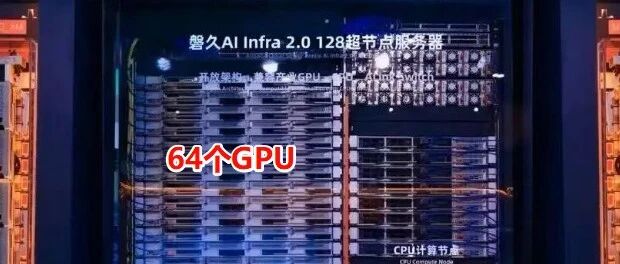
阿里的磐久超节点和供应链
傅里叶的猫· 2025-09-27 10:14
Core Viewpoint - The article provides a detailed comparison of Alibaba's super node with NVIDIA's NVL72 and Huawei's CM384, focusing on GPU count, interconnect technology, power consumption, and ecosystem compatibility. Group 1: GPU Count - Alibaba's super node, known as "Panjun," utilizes a configuration of 128 GPUs, with each of the 16 computing nodes containing 4 self-developed GPUs, totaling 16 x 4 x 2 = 128 GPUs [4] - In contrast, Huawei's CM384 includes 384 Ascend 910C chips, while NVIDIA's NVL72 consists of 72 GPUs [7] Group 2: Interconnect Technology - NVIDIA's NVL72 employs a cable tray interconnect method using NVLink proprietary protocol [8] - Huawei's CM384 also uses cable connections between multiple racks [10] - Alibaba's super node features an orthogonal interconnect without a backplane, allowing for direct connections between computing and switch nodes, reducing signal transmission loss [12][14] Group 3: Power and Optical Connections - NVIDIA's NVL72 uses copper for scale-up connections, while Huawei's CM384 employs optical interconnects, leading to higher costs and power consumption [15] - Alibaba's super node uses electrical interconnects for internal scale-up, with some connections made via PCB and copper cables, while optical interconnects are used between two ALink switches [18][19] Group 4: Parameter Comparison - Key performance metrics show that NVIDIA's GB200 NVL72 has a BF16 dense TFLOPS of 2,500, while Huawei's CM384 has 780, indicating a significant performance gap [21] - The HBM capacity for NVIDIA's GB200 is 192 GB compared to Huawei's 128 GB, and the scale-up bandwidth for NVIDIA is 7,200 Gb/s while Huawei's is 2,800 Gb/s [21] Group 5: Ecosystem Compatibility - Alibaba claims compatibility with multiple GPU/ASICs, provided they support the ALink protocol, which may pose challenges as major manufacturers are reluctant to adopt proprietary protocols [23] - Alibaba's GPUs are compatible with CUDA, providing a competitive advantage in the current market [24] Group 6: Supply Chain Insights - In the AI and general server integration market, Inspur holds a 33%-35% market share, while Huawei's share is 23% [33] - For liquid cooling, Haikang and Invec are key players, each holding 30%-40% of the market [35] - In the PCB sector, the number of layers has increased to 24-30, with low-loss materials making up over 60% of the composition, significantly increasing the value of single-card PCBs [36]