易方达基金

Search documents
基金大事件|公募重磅新规落地!有色金属大涨,诞生多只“翻倍基”
中国基金报· 2026-01-24 10:54
Group 1 - The core viewpoint of the article is the introduction of new regulations for public funds in China, specifically the "Guidelines for Performance Comparison Benchmarks of Publicly Raised Securities Investment Funds," which aims to address issues such as style drift and enhance long-term value investment in the public fund industry [1][4]. - The new guidelines are expected to strengthen benchmark constraints, directly addressing industry pain points and improving investor satisfaction [4]. - In the fourth quarter of 2025, public funds experienced a loss of 110.1 billion yuan, marking the first loss season since the fourth quarter of 2024, with stock, mixed, and QDII funds being the main contributors to the losses [5][6]. Group 2 - The Ministry of Finance released several policy documents aimed at optimizing various loan subsidy policies, which are seen as significant positive developments for the market [7]. - The Shanghai Futures Exchange announced adjustments to the price limits and trading margins for certain futures contracts, indicating regulatory changes in the commodities market [8]. - The resource sector saw significant growth, with the non-ferrous metals sector rising by 89.38% in 2025, leading to substantial gains for related equity funds [9]. Group 3 - The total management scale of public funds reached 37.63 trillion yuan by the end of the fourth quarter, reflecting a growth of 1.18 trillion yuan from the previous quarter [14]. - The People's Bank of China announced a 900 billion yuan medium-term lending facility (MLF) operation to maintain liquidity in the banking system [21]. - The first China ETF listed in Singapore, marking a significant step in the internationalization of China's capital markets [28]. Group 4 - The recent trend of fee reductions in public funds continues, with several funds announcing fee cuts to lower investment costs for investors [19][20]. - The Shenzhen financial sector reported a stable growth in total financial volume, with deposits reaching 14.63 trillion yuan, a year-on-year increase of 7.8% [15]. Group 5 - The recent personnel changes at Huatai Securities, including the election of a new chairman and management team, indicate a strategic shift within the company [18]. - The private equity sector is seeing active discussions on investment strategies, with notable figures emphasizing the importance of value investing and the potential of AI technology [31][35].


ETF基金周度跟踪(0119-0123):黄金股ETF领涨,资金大幅流出沪深300ETF-20260124
CMS· 2026-01-24 09:48
ETF 基金周度跟踪(0119-0123) 本报告重点聚焦 ETF 基金市场表现,总结过去一周 ETF 基金市场、不同热门 细分类型 ETF 基金、创新主题及细分行业 ETF 基金的业绩表现和资金流动, 供投资者参考。 ❑ 市场表现: 证券研究报告 | 基金研究(公募) 2026 年 1 月 24 日 黄金股 ETF 领涨,资金大幅流出沪深 300 ETF 本周(1 月 19 日-1 月 23 日)股票 ETF 涨跌分化,商品类 ETF 表现较好。 其中,沪港深主题(主要是黄金股)、商品和周期 ETF 涨幅靠前,规模以 上基金分别平均上涨 12.97%、6.82%、5.10%。相反,港股医药生物和沪 港深行业下跌,规模以上基金平均跌幅为 2.94%和 2.10%。 ❑ 资金流动: 资金主要净流入 A 股周期 ETF 和 A 股 TMT ETF,全周资金分别净流入 178.25 亿元、125.93 亿元。相反,A 股大盘 ETF 和 A 股中小盘 ETF 分别 大幅净流出 2719.92 亿元和 831.51 亿元。 ❑ 风险提示:图表中列示的数据结果仅为对市场及个基历史表现的客观描述, 并不预示其未来表现,亦 ...
25Q4主动权益基金季报分析:主动权益四季度加仓周期减持科技,永赢主动权益规模突破千亿
Shenwan Hongyuan Securities· 2026-01-24 09:14
1. Report Industry Investment Rating No relevant content provided. 2. Report's Core View - In Q4 2025, active equity funds decreased their scale, with the scale dropping from about 4 trillion yuan in Q3 to about 3.85 trillion yuan, a decline of 4.14%. Meanwhile, the scale of index funds slightly increased. [10] - The performance of active equity funds in Q4 2025 significantly declined compared to the previous quarter, with about 42.8% of the funds achieving positive returns, and the median return rate was -1.02%. [15] - Active equity funds reduced their holdings in technology and pharmaceutical sectors in Q4 2025 and increased their positions in cyclical sectors. [1] 3. Summary According to Relevant Catalogs 3.1 Fund Four - Quarter Report Investment Outlook Keywords - Technology, consumption, and computing power were the key areas of focus for active equity fund managers in Q4. The trend keywords included "repair", "recovery", and "resilience"; industry - related keywords were "technology", "consumption", and "electronics"; theme - related keywords were "computing power", "robotics", and "new energy"; and event - related keywords were "interest rate cuts", "exports", and "tariffs". [7] 3.2 Performance and Scale Dimension - **Scale Change**: The scale of active equity funds decreased in Q4 2025, while the scale of index funds slightly increased. Fund companies such as Yongying and Guojin saw significant growth in their active equity management scale, with Yongying's active equity scale exceeding 100 billion yuan. [10][14] - **Performance**: The overall performance of active equity funds in Q4 2025 declined significantly. About 42.8% of the funds achieved positive returns, and the median return rate was -1.02%. The top - performing funds in Q4 mainly focused on industries such as military, non - ferrous metals, and communications. [15][17] - **Position and Heavy - Holding Stock Allocation**: The overall position of active equity funds decreased in Q4 2025, with the average stock position dropping to 87.70% (-1.05%), and the Hong Kong stock position also significantly decreasing. The heavy - holding stocks in Hong Kong decreased, while the allocation ratios of heavy - holding stocks in CSI 300, CSI 500, and CSI 1000 increased. [18][19] - **Large - Scale Funds**: The scale of some large - scale active equity funds decreased in Q4 2025, but some funds such as Yongying Ruixin and Yongying Technology Smart Selection saw an increase in their shares. [24] - **New Issuance and Continued Management**: Among active equity products, Yongying Pioneer Semiconductor Smart Selection and Yongying High - end Equipment Smart Selection had the highest estimated net subscription amounts. The new - issue fund Guangfa Quality Selection had the largest issuance scale this quarter. [25] 3.3 Fund Company Dimension - **Performance**: Among active equity fund management companies with a management scale of over 10 billion yuan, Caitong Fund had the best average performance in Q4 2025, with an average return rate of 4.22%. Other companies with good performance included Western Lide, Yongying Fund, and Huashang Fund. [27] - **Scale**: E Fund remained the largest active equity management company in Q4 2025, although its scale decreased slightly compared to the previous quarter. Yongying Fund saw significant growth in its active equity scale in Q4 2025. [30] - **Heavy - Holding Stock Allocation**: Caitong Fund, the top - performing company in Q4, under - allocated non - ferrous metals and other industries and over - allocated electronics, communications, and other industries. Leading fund companies generally over - allocated non - ferrous metals and chemicals and under - allocated pharmaceutical biology. [32] - **Industry Allocation of Leading Fund Companies**: Leading active equity fund management companies' industry over - and under - allocations were mainly concentrated in several popular industries. For example, E Fund significantly over - allocated communications and food and beverages and significantly under - allocated power equipment and pharmaceuticals. [34] - **Market Value and Valuation Style of Heavy - Holding Stocks**: Companies with a relatively large - market - value style in their holdings included Ruiyuan, Morgan, and Huifutianfu; those with a relatively small - market - value style included Yongying, Dacheng, and Nuoyan; companies with relatively high PE in their holdings included Yongying, Huashang, and E Fund; and those with relatively low PE included Ruiyuan, Dacheng, and ABC Fortune. [37]
“专业买手”,持仓曝光
Zhong Guo Ji Jin Bao· 2026-01-24 08:04
Core Viewpoint - The latest quarterly report reveals that bond funds remain the primary focus for public FOFs, with significant investments in ETFs as well. The top five funds favored by FOFs in Q4 2025 include various bond and ETF products, indicating a strong preference for fixed-income investments [1]. Group 1: FOF Holdings Overview - As of the end of Q4 2025, bond funds dominate the top 50 holdings of public FOFs, with 40 out of 50 being bond-related [1]. - The top fund held by FOFs is the Hai Fu Tong Zhong Zheng Short Bond ETF, with a market value exceeding 5.98 billion yuan, held by 119 FOFs [2]. - Other notable funds include Guotai Li Xiang Short and Medium Bond C and Fu Guo State-Owned Enterprise Bond C, each with holdings exceeding 1.7 billion yuan [2]. Group 2: Active Equity Fund Holdings - The top active equity fund held by FOFs is Xing Quan Commercial Model Preferred A, with a total holding value of 406.73 million yuan, held by 16 FOFs [4]. - Following closely is Yi Fang Da Information Industry Selected C, with a holding value of 365.40 million yuan, held by 10 FOFs [5]. - Other significant active equity funds include Yi Fang Da Ke Rong and Yi Fang Da Supply Reform, each with holdings above 300 million yuan [4]. Group 3: Fund Increases in Q4 - The fund with the highest increase in holdings during Q4 2025 is the Hai Fu Tong Zhong Zheng Short Bond ETF, which saw an increase of 2.69 billion yuan, bringing its total holding value to 5.98 billion yuan [6]. - Guotai Li Xiang Short and Medium Bond C also experienced a significant increase of 1.14 billion yuan, with a total holding value of 1.80 billion yuan [7]. - Other funds with notable increases include Jing Shun Chang Zhong Short Bond F and Fu Guo State-Owned Enterprise Bond C, each with increases exceeding 600 million yuan [7]. Group 4: Investment Strategies and Focus Areas - FOF managers express confidence in the A-share market, with increased allocations in technology, resources, and non-bank financial sectors during Q4 2025 [8]. - Specific strategies include focusing on gold and silver stocks, rare earths, and other metals, as well as exploring opportunities in the tourism sector [8]. - Long-term asset allocation strategies remain a priority, with a focus on consumer sectors and non-bank financials, alongside participation in overseas bond markets and REITs [8].
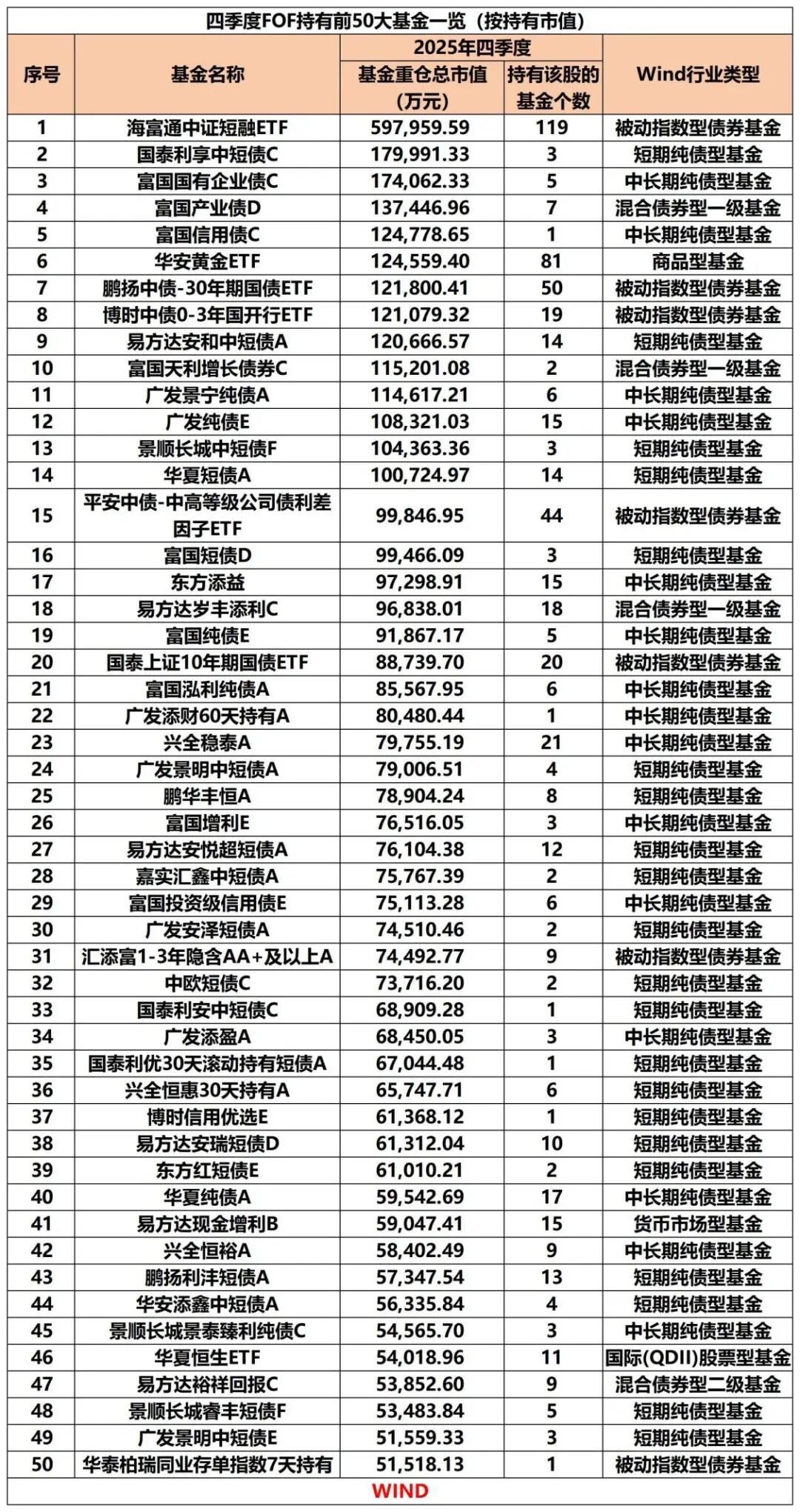
“专业买手” 持仓曝光!
Zhong Guo Ji Jin Bao· 2026-01-24 05:35
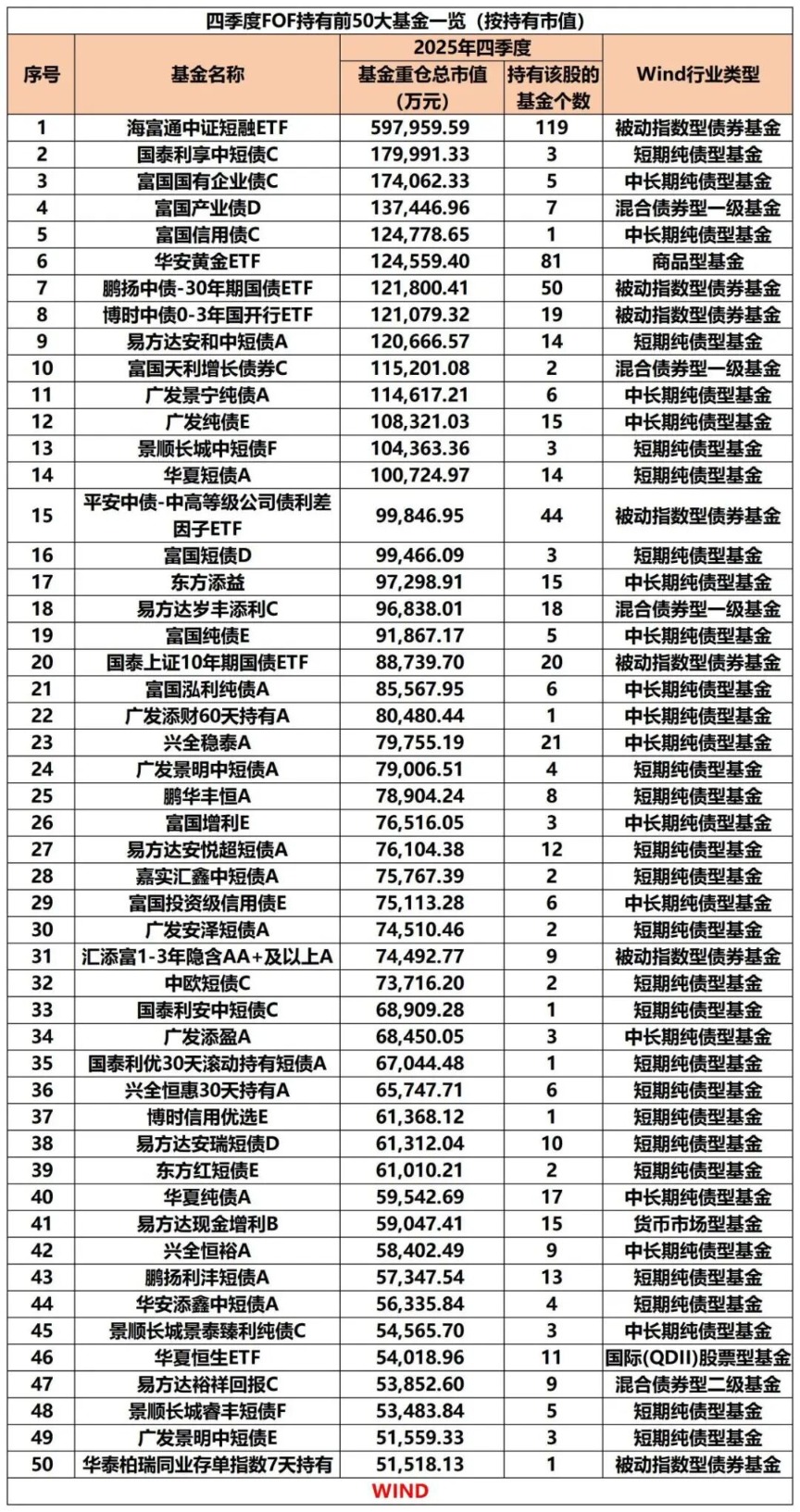
Core Viewpoint - The latest disclosures of public fund of funds (FOF) reveal a strong preference for bond funds and ETFs, indicating a strategic focus on stable income and passive investment strategies in the current market environment [1][3][10]. Group 1: FOF Holdings - As of the end of Q4 2025, bond funds dominate the FOF holdings, with 40 out of the top 50 funds being bond-related [3][4]. - The top five funds held by FOFs include Hai Fu Tong Zhong Zheng Short Bond ETF with a market value exceeding 5.98 billion yuan, followed by Guotai Li Xiang Short and Medium-term Bond C and Fu Guo State-owned Enterprise Bond C, each with over 1.7 billion yuan [3][4]. - The total market value of the top 50 funds held by FOFs reflects a significant investment in passive index products, highlighting a shift towards index-based strategies [3][10]. Group 2: Fund Increases - The most increased fund in Q4 2025 was Hai Fu Tong Zhong Zheng Short Bond ETF, which saw an increase of 2.69 billion yuan, bringing its total market value to 5.98 billion yuan [8][9]. - Other notable increases include Guotai Li Xiang Short and Medium-term Bond C, which was increased by 1.14 billion yuan, and several other funds with increases exceeding 600 million yuan [8][9]. - The trend of increasing holdings in bond funds suggests a cautious approach by FOF managers in the current economic climate [10]. Group 3: Manager Insights - FOF managers express confidence in the A-share market, with a focus on sectors such as technology, resources, and non-bank financials for future growth [10][11]. - Specific strategies include investing in precious metals and rare earths, as well as exploring opportunities in the tourism sector, indicating a diversified approach to asset allocation [10][11]. - The emphasis on long-term asset allocation strategies reflects a commitment to maintaining positions in high-value sectors while adapting to market conditions [10][11].
事关AI,这些基金四季报亮了
券商中国· 2026-01-24 02:50
Core Viewpoint - The article discusses the significant impact of "AI+" technology assets on the market, highlighting a structural market trend that has emerged, with mixed reflections from fund managers on their performance in the AI technology sector [1][2]. Group 1: Fund Performance and Reflections - A few funds have achieved excellent performance, but most fund managers' quarterly reports reflect a mix of reflection, questioning, and determination regarding the AI technology market [2]. - Fund managers express their human side through thoughtful analyses in their reports, acknowledging missed opportunities while maintaining a commitment to their investment philosophies [2]. Group 2: Insights from Fund Managers - Jiao Wei from Yinhua Fund notes that his fund missed the "bull market" in technology, viewing AI as part of a larger narrative that includes historical technological bubbles [3]. - Yang Ruiwen from Invesco Great Wall acknowledges the average performance of his fund and emphasizes the importance of investing in companies with long-term viability, reflecting on the need for deeper analysis of past performance [4]. Group 3: AI and Economic Transformation - Fund managers view AI as a crucial part of China's economic transformation, with government policies supporting advanced manufacturing and strategic innovation [5][6]. - Zhang Kun from E Fund highlights the importance of strong demand and profitability in attracting global resources for innovation, using examples like GPT and Gemini to illustrate subscription revenue's role in business sustainability [6]. Group 4: Interplay Between Technology and Consumption - Chen Jinwei from Penghua Fund emphasizes that technology and consumption are not opposing forces but rather mutually reinforcing, with a focus on new consumption patterns driven by income redistribution [7]. - Fund managers predict that the AI technology sector will create new consumption opportunities, particularly in lower-tier cities and among younger and older demographics [7]. Group 5: Investment Opportunities in AI - Li Wenbin from Yongying Fund identifies the potential for investment in the AI industry chain, noting that China's tech sector can achieve breakthroughs with lower costs and higher efficiency [8]. - Liu Huiying from Nuon Fund outlines two key investment opportunities in the AI application sector: the restructuring of existing traffic ecosystems and the enhancement of productivity through AI and robotics [9].

公募基金去年盈利2.6万亿元 单家机构最高盈利超3000亿元
Zheng Quan Ri Bao· 2026-01-23 16:16
Group 1 - The core viewpoint of the article highlights that despite a significant loss in the fourth quarter of 2025, the public fund industry achieved an overall profit of 26.285 trillion yuan for the year, driven primarily by equity funds [1][4] - In the fourth quarter of 2025, equity funds (including stock and mixed funds) were the main contributors to losses, with total losses exceeding 180 billion yuan, while fixed-income and commodity funds performed well [2][3] - The top-performing fund companies in the fourth quarter were those with strong capabilities in fixed-income or alternative investments, with 108 out of 167 fund managers reporting profits [3] Group 2 - For the entire year of 2025, equity funds were the primary profit contributors, generating over 19.9 trillion yuan, which accounted for 75.82% of the total annual profit [4] - The industry showed a significant head effect, with 162 out of 167 public fund institutions reporting profits, and 78 of them exceeding 3 billion yuan in profits [4][5] - The article suggests that the public fund performance in 2026 may continue to exhibit structural characteristics, with a recommendation for investors to adopt a diversified allocation strategy including equity, fixed-income, and commodity funds [5]
公募基金管理规模稳健扩张 10家跻身“万亿元俱乐部”
Zheng Quan Ri Bao· 2026-01-23 16:16
Group 1 - The public fund management industry demonstrated strong resilience, with a total asset management scale reaching a historical high of 37.64 trillion yuan by the end of 2025, an increase of approximately 1.85 trillion yuan from the end of the third quarter of 2025 [1] - Excluding money market funds, the public fund management scale was 22.67 trillion yuan in the fourth quarter of last year, reflecting a quarter-on-quarter growth of 0.62 trillion yuan, with equity funds (including QDII funds) at 10.38 trillion yuan, showing a slight increase of 0.03 trillion yuan [1] Group 2 - By the end of last year, 10 companies entered the "trillion yuan club," with E Fund and Huaxia Fund exceeding 2 trillion yuan in management scale, while several others managed between 1 trillion and 2 trillion yuan [2] - Excluding money market funds, only three companies had management scales exceeding 1 trillion yuan: E Fund, Huaxia Fund, and GF Fund, with only E Fund and Huaxia Fund surpassing 1 trillion yuan in equity fund scale [2] - The top five industries favored by public funds were technology, industrial, financial, transportation, and consumer sectors, with technology, industrial, and financial sectors each holding over 100 billion yuan in market value [2] Group 3 - Several fund companies expressed their market outlook, with a focus on the digital economy and financial technology as key long-term investment themes for 2026 [3] - The overall performance of the equity market was positive, particularly for technology stocks, with expectations that opportunities will outweigh risks in 2026 [3] - The public fund industry showed strong growth in the fourth quarter, contributing to the stability of the capital market and the real economy, while demonstrating professional asset management capabilities [3]
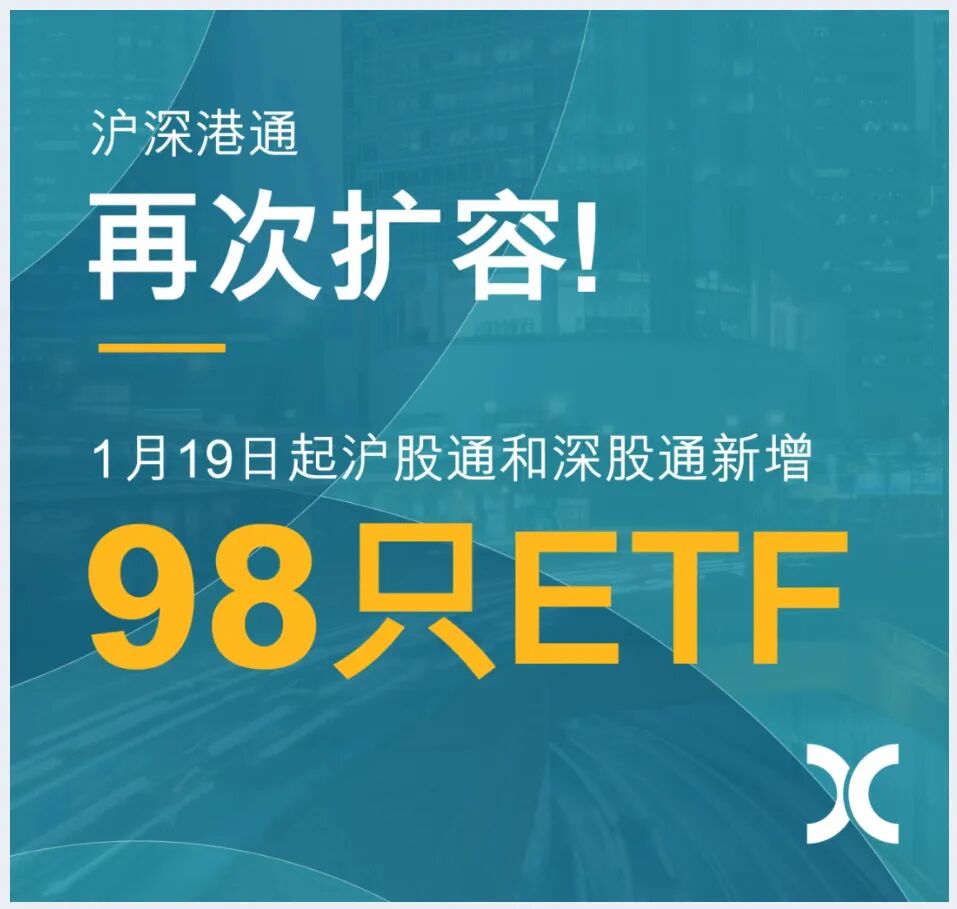
ETF通”再扩容,公募加速“出海
Guo Ji Jin Rong Bao· 2026-01-23 14:33
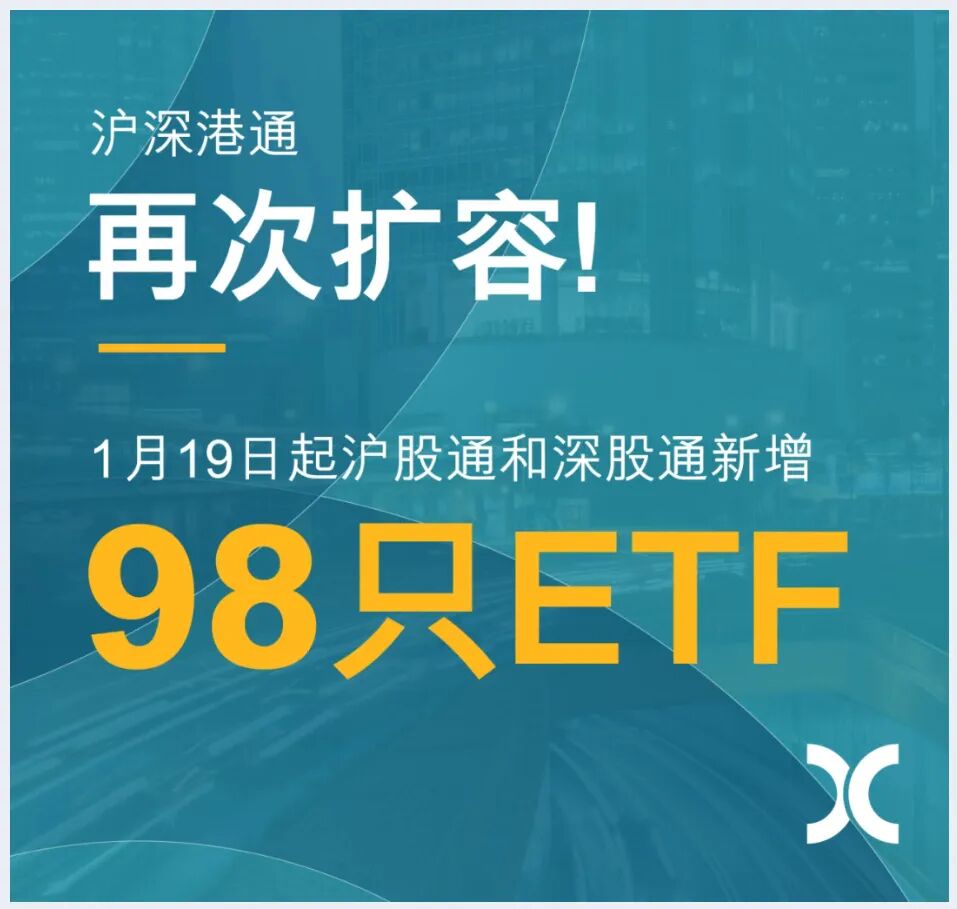
Core Viewpoint - The process of public ETF products "going abroad" is accelerating, with significant expansion in the mutual access ETF products between mainland China and Hong Kong, enhancing overseas investment channels for A-shares [1][3]. Group 1: ETF Expansion Details - As of January 19, 98 new ETF products have been included in the mutual access scheme, increasing the total from 273 to 364, marking a 33.3% growth and the largest single expansion since the mechanism's launch in July 2022 [1][3]. - The newly included ETFs consist of 54 from the Shanghai Stock Exchange and 44 from the Shenzhen Stock Exchange, with 7 ETFs temporarily removed from the scheme [4]. - The new ETFs cover a variety of categories, including broad-based, industry themes, and strategy-based products, with a notable inclusion of 25 ETFs tracking the CSI A500 index and nearly 20 ETFs focused on artificial intelligence or chip-related indices [4]. Group 2: Market Implications - The expansion involves 29 public fund companies, with a focus on leading firms such as Huaxia Fund, which has 14 ETFs included, and E Fund with 10 ETFs [5]. - Analysts suggest that the expansion reflects a shift in foreign investment strategies from broad market purchases to more structured and thematic investments, particularly in technology and high cash flow assets [5][8]. - The inclusion of dividend and cash flow ETFs indicates a strong demand for defensive assets among foreign investors [5]. Group 3: Internationalization of ETFs - The listing of the Southern Asset Management CSI A500 Index ETF on the Singapore Exchange marks the first instance of a CSI A500 ETF "going abroad" under the mutual access mechanism, providing Singaporean investors with efficient access to A-share core companies [7]. - This development is expected to enhance the global influence of A-share ETFs and facilitate the internationalization of Chinese capital markets [7][8]. - The ongoing expansion of the mutual access mechanism is anticipated to attract more long-term capital into the market, particularly in sectors favored by foreign investors [8].
“ETF通”再扩容,公募加速“出海”
Guo Ji Jin Rong Bao· 2026-01-23 14:29
Core Insights - The process of public ETF products "going abroad" is accelerating, with the Hong Kong Stock Exchange announcing an expansion of mutual access ETF products starting January 19, which includes 98 new ETFs [1][3] - The total number of products covered by the "ETF Connect" has increased from 273 to 364, marking a 33.3% growth and the largest single expansion since the mutual access mechanism was launched in July 2022 [3][4] Group 1: Expansion Details - The adjustment is not merely an increase in quantity but significantly enriches the investment options, with the new ETFs covering broad-based, industry themes, and strategy types [4] - The newly included 98 ETFs consist of 54 listed on the Shanghai Stock Exchange and 44 on the Shenzhen Stock Exchange, with a total of 364 products now available for northbound trading [4][5] - Notably, the inclusion of ETFs tracking the CSI 500 index marks a first for the "ETF Connect," with major funds from Huatai-PB, Southern, and Huaxia among those included [5] Group 2: Market Implications - The expansion reflects a shift in foreign investment strategies from "buying the index" to "buying structure," particularly in technology sectors, indicating a growing interest in China's hard technology and self-sufficiency [5][6] - The inclusion of dividend and cash flow ETFs suggests a strong demand from foreign investors for defensive assets with high cash flow returns [5][8] - The acceleration of public products "going abroad" is exemplified by the listing of the Southern CSI 500 Index ETF on the Singapore Exchange, enhancing access for Singaporean investors to A-share core companies [7][8] Group 3: Future Outlook - The ongoing expansion of the "ETF Connect" is expected to continue to grow the scale and investor base of domestic ETFs, potentially attracting significant capital inflows into A-shares [8] - Challenges remain, including differences in funding and trading systems between A-shares and overseas markets, as well as competition from similar products offered by foreign institutions [8]